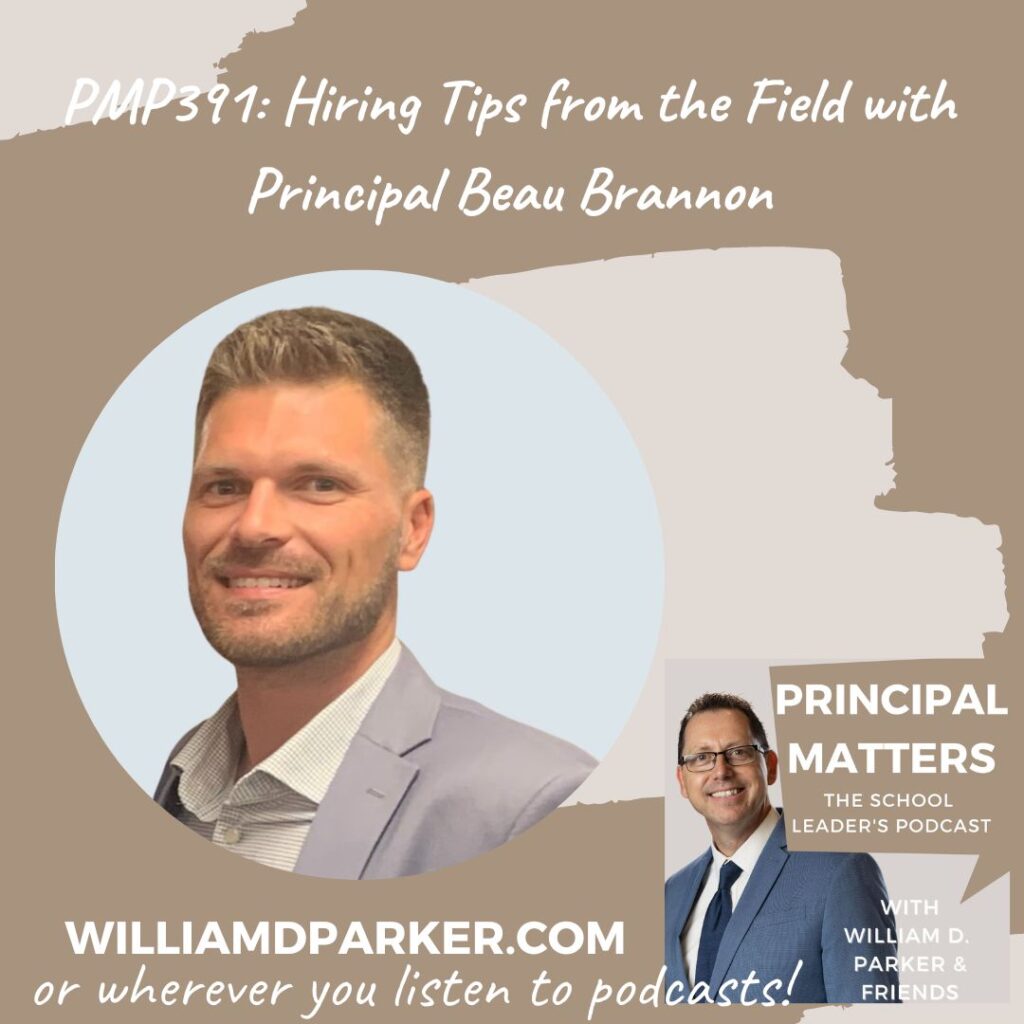
PMP391: Hiring Tips from the Field with Principal Beau Brannon
Apr 10, 2024
Show notes
Beau Brannon has served as principal of Union High School Freshman Academy, in Tulsa, Oklahoma, since the summer of 2022. Previously, he served four years as its assistant principal. A 2008 Muldrow High School alum, he ventured into college football at the University of Tulsa, then pursued his passion for education, earning a bachelor’s in middle childhood education from the University of Arkansas-Fort Smith, a master’s in educational leadership from Arkansas State University, and completed a Superintendent certification at Northeastern State University. Beau’s education career started at Alma Public Schools, teaching science and coaching football, before moving to Keys High School, where he was named District’s Teacher of the Year in 2015. Joining Union Public Schools in 2016, he taught Geometry and was part of the State Championship football team. Off the field and outside the classroom, Beau is a devoted husband to Caitlyn since 2013 and a proud father of two.
It’s hiring season, and in this week’s interview, William D. Parker talks to Beau Brannon, a experienced principal who shares effective strategies for other principals looking to find new hires. Here’s a summary of the strategies Mr. Brannon discussed:
Charting Interns and Referrals
Brannon maintains a dynamic chart that tracks potential hires from various sources, including district-wide interns and personal referrals. This Excel spreadsheet is color-coded to distinguish interns, referrals, and those who have moved into new positions, ensuring a continuously updated list of potential candidates.
Networking
Brannon leverages his network, including friends and current staff, to identify potential hires. By asking if they know someone who might be interested in an open position, he has uncovered opportunities that he might not have found otherwise.
University Partnerships
Every fall, Brannon reaches out to universities to request teaching interns, inviting them to his school. Building relationships with these institutions through job fairs and support for interns has resulted in many becoming full-time teachers at his school.
Making Cold Calls
Brannon proactively contacts applicants who haven’t applied directly to his school but have shown interest in the district, exploring their interest in his school’s openings. This approach has successfully attracted diverse candidates, including a college career specialist and a bus driver, demonstrating the effectiveness of mission-driven recruitment.
Staff Development
Brannon focuses on hiring paraprofessionals and supporting their progress toward becoming teachers.
Results in Retention
These strategies, along with a strong emphasis on retaining teachers through various engagement and recognition tactics, has led to a 90% retention rate at his school. Brannon underscores the importance of conveying the school’s mission and creating a positive environment, quoting John Gordon and Maya Angelou to highlight the impact of leadership and the lasting impression made on others.
Overall, Beau Brannon’s strategies are centered on proactive engagement, networking, and fostering a supportive and mission-driven school culture, proving effective in both attracting and retaining staff. As Mr. Brannon say, “Don’t wait. Be proactive. Seek connection. Love Care & Serve. As a person of faith, I know I have to be on a mission every day to be the light for all of those around me.”
Listen-in to the entire conversation for even more takeaways! You can stay connected with Beau Brannon in the following ways: Twitter/X @Beau_Brannon, LinkIn Beau Brannon, and email beaubrannon@yahoo.com
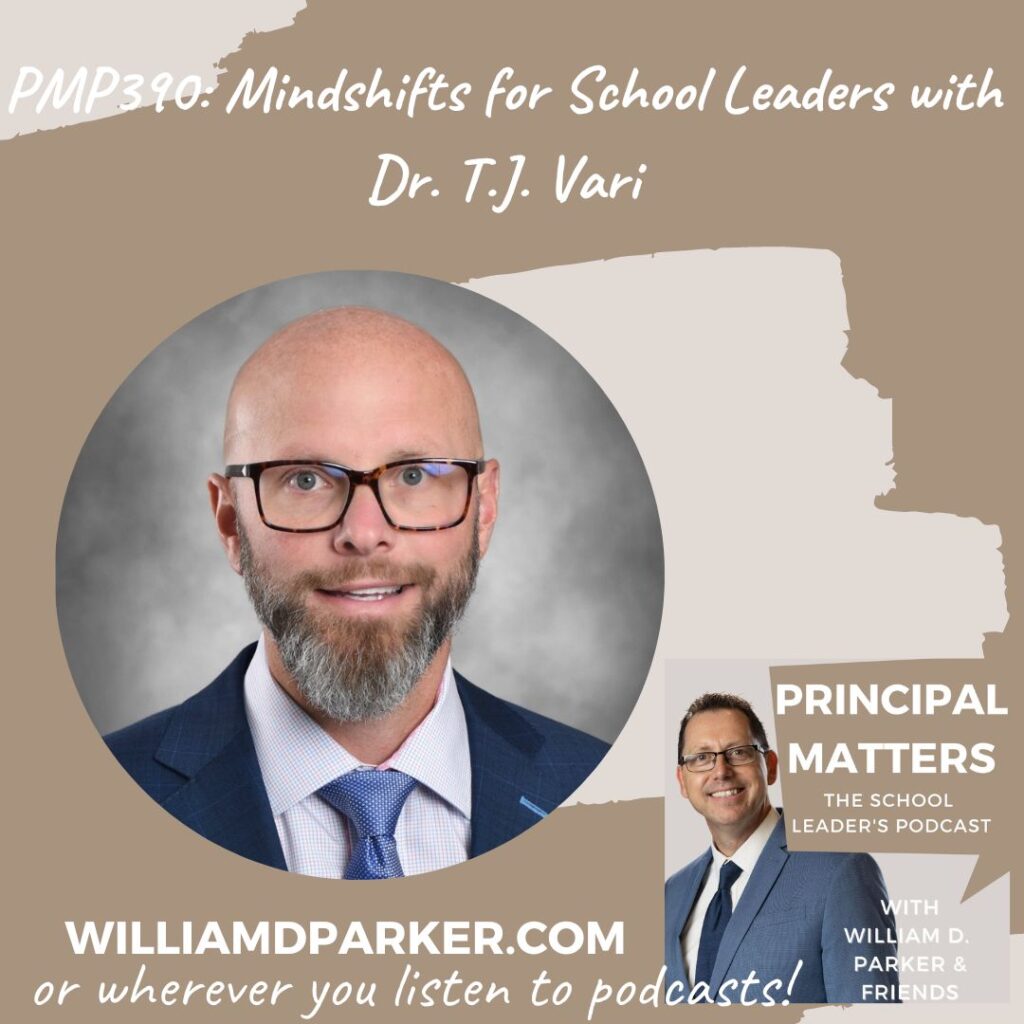
PMP390: Mindshifts for Leaders with Dr. T.J. Vari
Apr 03, 2024
Show notes
Dr. T.J. Vari is the Deputy Superintendent of the Appoquinimink School District. T.J. is a former middle school assistant principal and principal and former high school English teacher. His master’s degree is in School Leadership and his doctorate is in Innovation and Leadership. He holds several honors and distinctions, including his past appointment as President of the Delaware Association for School Administrators and the Paul Carlson Administrator of the Year Award. He teaches educational leadership courses at the master’s and doctoral levels. He has co-authored 5 books, including his latest two 7 Mindshifts for School Leaders: Finding New Ways to Think About Old Problems andRetention for a Change. He is a national presenter on school leadership topics and the co-founder of TheSchoolHouse302, a leadership development institute.
District Highlights
T.J. is proud of the work his district is doing with Pathways to Work, and Portrait of a Graduate. 94% of their students who go to college are persisting from year 1 to year 2.
Dr. Vari confronts two myths in leadership:
Myth #1: High Schools prepare you for college.
Myth #2: High schools prepare you for a career.
Students must have a viable credential or certificate to be prepared for work, and students deserve pathways for careers and college that place them on the road toward those ends.
Turn-around restaurant manager
Next, T.J. talks about how his years in the restaurant industry taught him how to turn underperforming stores into profitable businesses.
5 takeaways for school leaders
Some things work. Discover them and use them.
People must be shown a way and then supported in their performance.
You must measure growth and ask ‘How do we know we have been effective?’
We must cultivate places of belonging.
Pressure without support is not fair.
Mindshifts
In addition, Dr. Vari touched on the premise of the book he co-authored on mindshifts for leaders. He explained how the COVID years taught us that we can find transformative solutions to hard problems. Now we must replicate that cycle in an ongoing way we know what is important, what is urgent, and what is persistent. The book 7 Mindshifts for School Leaders lays out 7 models for addressing problems and finding solutions.
Advice for APs
For new Assistant Principals, Dr. Vari, asks them to keep two questions in mind each day:
Do I need to solve the problem in front of me?
Am I the right person to solve it?
These questions will help APs steer away from the overwhelming requests for assistance that others can be trained to help answer while they remain available for their roles and responsibilities.
Advice for New Principals
For the new Principal, Dr. Vari suggests keeping three buckets in mind:
Your vision/mission
Your people/programs
Innovative solutions
Those areas are the responsibility of a building leader to be a part of guiding, directing, and supporting.
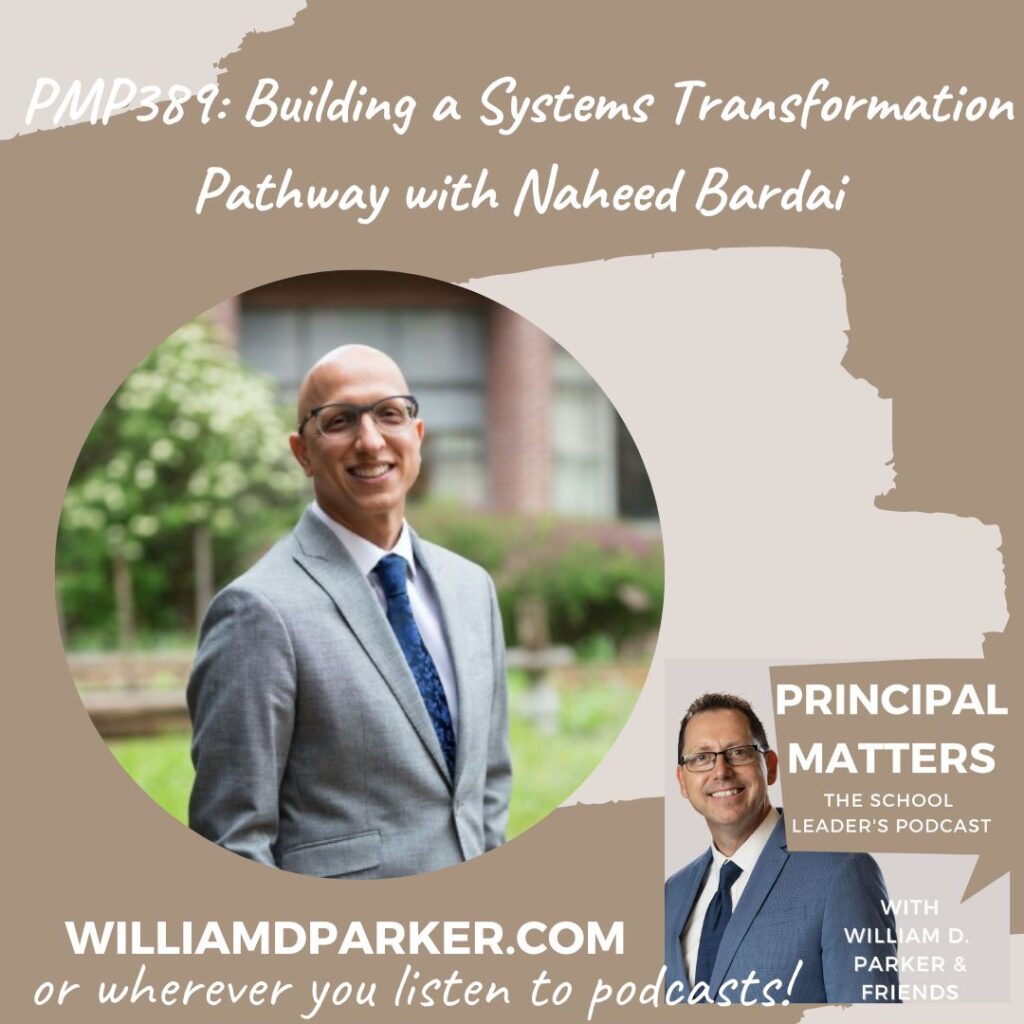
PMP389: Building a Systems Transformation Pathway with Naheed Bardai
Mar 27, 2024
Show notes
Naheed Bardai is the Principal of UWC Atlantic and arrived in south Wales in August 2021 from Upper Canada College in Toronto, where he was head of upper school for six years. Before that, he served as dean of students and senior school principal during his 10 years at the Aga Khan Academy in Mombasa, Kenya. For Naheed, education is a deeply moral endeavor and the exercise of leadership demands a thoughtful, ethical foundation. His own rests on the tenets of pluralism, integrity, generosity and trust. He holds a Bachelor degree in Business Administration from the Western University, Canada; a Bachelor degree in Education from the University of British Columbia, Canada; Masters of Arts from the Institute of Education, University College London, UK; Masters of Educational Leadership from Teachers College, Columbia University, USA.
Naheed was a past guest discussing the Chat GPT. You can find that episode, PMP333, here.
In this episode, William D. Parker interviews Principal Naheed Bardai about the new Systems Transformation Pathway at UWC Atlantic. Listen to the entire conversation for great takeaways.
Questions we explore:
Please tell us a little more about UWC Atlantic and its unique opportunities and offerings for students.
Can you tell us what motivated you toward developing Systems Tranformation Pathway?
What will be the practical outcomes for students who integrate Systems Tranformation Pathway into their curriculum and school experience?
For schools that are International Baccalaureate® (IB) Diploma Programmes, how have you secured partnerships for Systems Transformation Pathway?
For my listeners who are not in international school or IB programs, what advice might you have for them as they consider innovative programs like this in their own setting?
Any other advice for leaders wanting to lead innovative initiatives in their own school school communities?
How can others stay connected with you or learn more?
Here’s a brief summary:
Students at UWC board in Wales but are from 80+ countries representing multicultural experiences. Seeing the world through the lens of curiosity creates a place of belonging – “to know what I don’t know and ask lots of questions.”
Understanding a vision for the future:
Education should provide what students need for today’s world, helping them navigate changes in global population, climate, urban/rural developments, and biodiversity. The world today is almost unrecognizable to what it was 30 years ago. We must respond with education approaches that match those challenges.
Looking towards 2050, our high school students today will be in their mid-40s. We must equip them in three areas:
Peace
Sustainability
Experiential Learning
The complexity of the world requires systems of learning that can bridge the gap students and solutions for the world. Helping them understand systems. Helping them find their place in those systems. Helping them transform those systems.
Systems Transformation Pathway:
UWC has launched Systems Transformation Pathway that is transdisciplinary, collaborative, action-oriented, and intergenerational.
For a student, this means:
Joining a cohort (100 hours of curriculum) – engaging with lessons on economy, climate, narratives, belonging, power, and regenerative leadership (well-being).
Areas of impact (250 hours) – identifying the systems in areas impacting our world, ie, food systems, energy systems, biodiversity (care for nature), and mass human migration.
Applications –
Self-directed interventions in home countries of students who apprentice under someone in one of the systems of impact in their home communities.
Back-at-school collaboration as students implement lessons learned through community-based programs benefiting Wales and local community members.
Festival of what works – celebrating, and showcasing what students are learning in line with a competency framework that is outcomes-driven.
Advice for other leaders wanting to begin new initiatives:
Know your why.
Understand what is unique about your school and setting.
Align your values and unique offerings with governance and stakeholder buy-in.
Develop your own systems of transformation.
Combine timing, resources, people, and foresight with a launch.
Set operations in motion to implement while building a team to support with a framework.
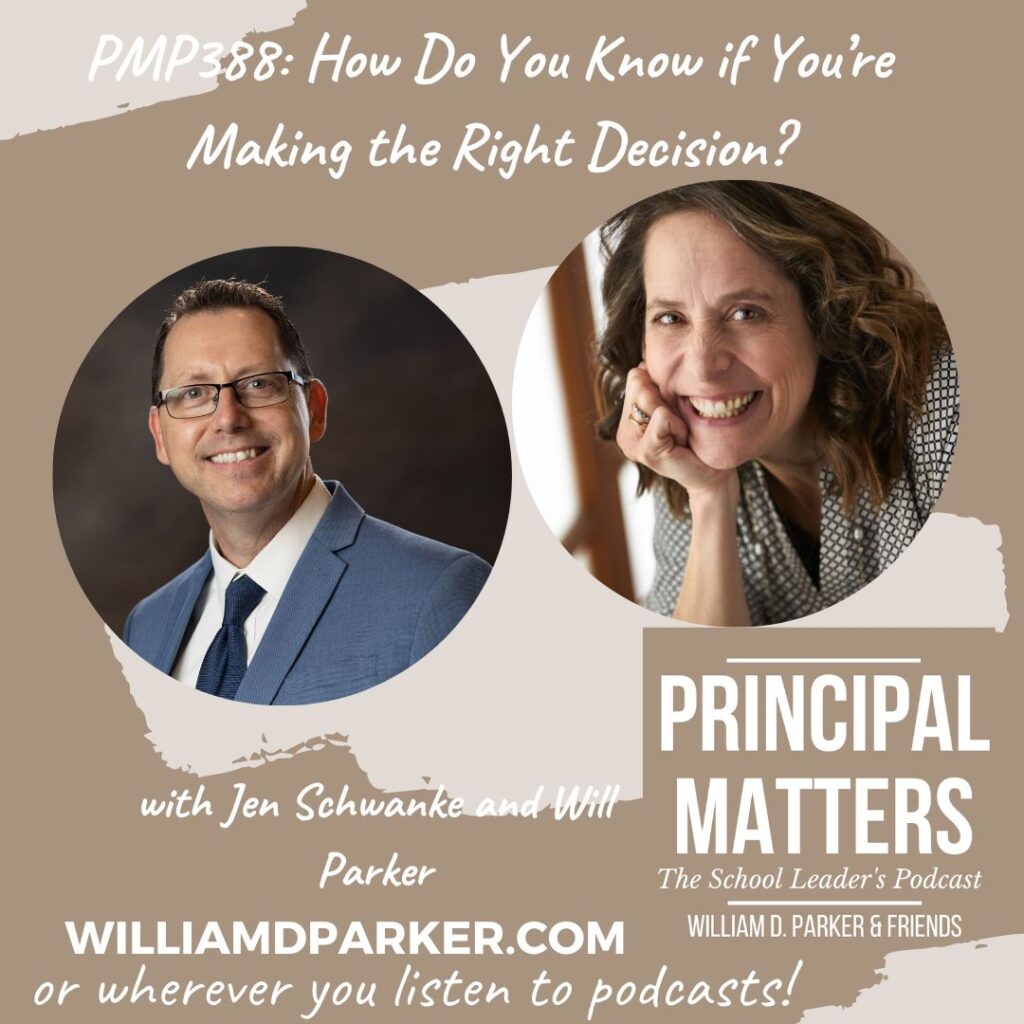
PMP388: How Do You Know if You’re Making the Right Decision? – with Jen Schwanke and Will Parker
Mar 20, 2024
Show notes
In this week’s episode, Dr. Jen Schwanke and William D. Parker delve into the complexities of decision-making, particularly in leadership roles. Both share insights and strategies to navigate the often murky waters of making the “right” decisions.
Continuous Learning and Humility
Will emphasizes the importance of humility in leadership, advocating for a mindset of constant inquiry and openness to learning. He suggests that asking questions is a fundamental way to deepen understanding and make informed decisions.
Collaboration Over Isolation
Jen warns against the pitfalls of isolation, stressing the value of collaboration and external perspectives. She champions the idea of thinking things through collectively and soliciting feedback by asking others to assume different roles (e.g., parent, teacher) to gain diverse insights.
Confidence and Communication
Both Jen and Will discuss the balance between humility and confidence. They touch upon the necessity of presenting decisions confidently and communicating them effectively, tying back to the organization’s mission and vision to ensure alignment and coherence.
Coaching and Professional Development
Jen references Atul Gawande’s article “Personal Best,” and Will references Michael Bungay Stanier’s book “The Coaching Habit” to highlight the importance of seeking coaching and professional development. These approaches help leaders refine their skills and decision-making precision.
Strategic Questioning
Will also reviews Michael Bungay Stanier’s seven coaching questions, which serve as a powerful framework for introspection and guidance. These questions range from identifying the core issue to considering the implications of decisions and learning from the process.
Avoiding Binary Choices
Jen and Will advise against reducing decisions to simple binaries, encouraging leaders to explore multiple options and perspectives. This approach facilitates more nuanced and effective decision-making.
Pausing and Reflecting
They advocate for giving oneself space to reflect on decisions, suggesting that not all decisions need to be made immediately. Pausing and even sleeping on decisions can lead to better outcomes.
Accepting Imperfection
Acknowledging the human element in leadership, Jen and Will remind listeners that no decision is perfect. They encourage leaders to accept their limitations, learn from their choices, and extend grace to themselves.
Moving Forward
Once a decision is made, the focus should shift to implementation and addressing subsequent priorities. This mindset helps leaders avoid dwelling on past decisions and maintains momentum towards achieving organizational goals.
Let’s Wrap This Up
This week’s conversation offers valuable lessons on the art and science of decision-making. By blending humility with confidence, seeking growth opportunities, engaging in strategic questioning, and embracing the complexity of leadership decisions, leaders can navigate their roles more effectively.
Listen to the entire episode for even more takeaways, or reach out to will@williamdparker.com or jen@jenschwanke.com to schedule a time to reflect on your own decision-making.
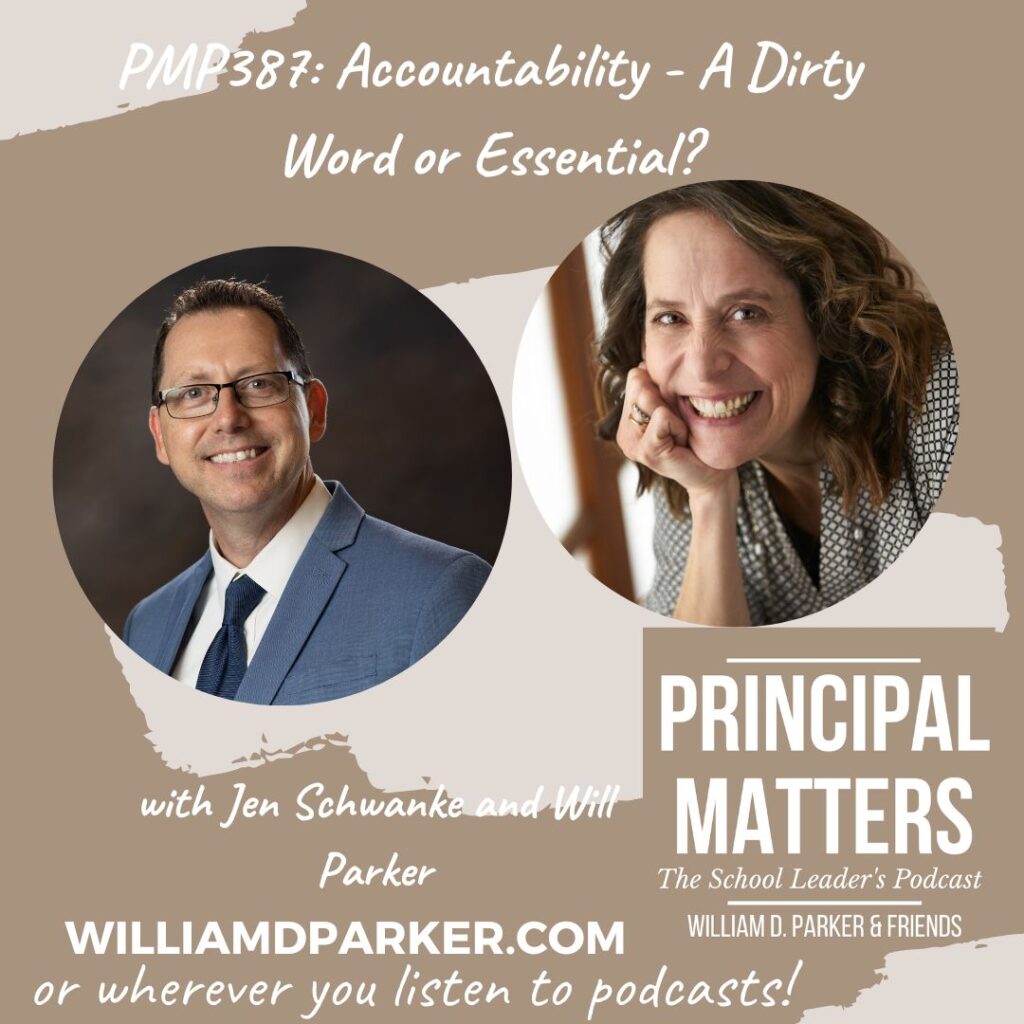
PMP387: Accountability – A Dirty Word or Essential? with Jen Schwanke and Will Parker
Mar 13, 2024
Show notes
In this week’s episode, Jen Schwanke and Will Parker talk about the word accountability. In education, this word can be perceived as both positive and negative.
On the negative side, education has been the target of a lot of political discourse, beginning for many modern U.S. educators in the 1980’s with the report a Nation at Risk, that shined a light on discrepancies in student learning and an avalanche of new laws that dictated outcomes and punished schools for lack of progress or performance.
Fast forward to 2024, and schools have spent decades redesigning accountability structures – with both good and bad results.
How do we step into healthy accountability (not toxic accountability) in a way that recognizes that strong organizations and schools share common expectations and share feedback in ways that help with both individual and collective growth?
How do we redeem the word accountability? Jen shares a story of a friend who in analyzing her own child’s teacher recognized that not all outcomes can be measured by scores.
Will shares two pieces of research that show different perspectives on accountability. Find the story of the Shell Oil rig and its “Learning Culture” here: NPR. (2016, June 17). Invisibilia: How Learning To Be Vulnerable Can Make Life Safer. Go here for story from Hidden Brain on the hospital cultures and one researcher’s findings on cultures where people are afraid to admit mistakes.
Listen to the entire episode for more takeaways! As we wrapped the show, Jen adds a helpful suggestion for leaders to consider asking their own teachers in professional development. Keep listening to the very end of this week’s episode for that great takeaway!
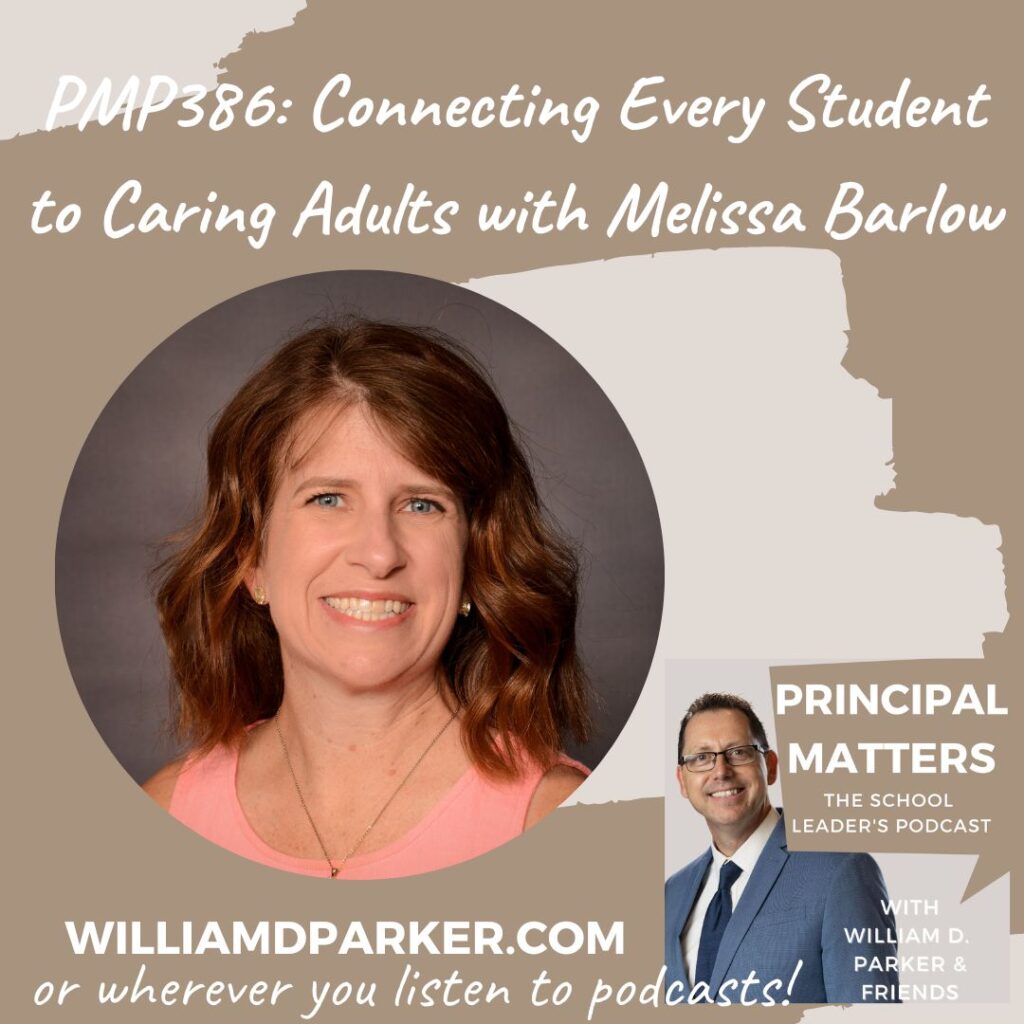
PMP386: Connecting Every Student to Caring Adults with Melissa Barlow
Mar 06, 2024
Show notes
Melissa Barlow is in her eleventh year as Principal of Yukon High School in Yukon, Oklahoma. In her past two decades as an educator, she has taught both middle-level and high school science and math, as well as serving in the role of assistant principal. Barlow obtained her bachelor’s degree from Oklahoma State University and a Master’s in Education Administration from the University of Central Oklahoma. As a former alumnus of Yukon High School, Barlow is honored to serve her hometown community with a focus on individual student success through educator collaboration. Her focus on building relationships has established a rich culture and climate that values the success of all students. In 2021, Barlow was named the Oklahoma High School Principal of the Year and has presented on such topics as developing school culture, individualized intervention, and post-secondary preparation.
Listen to the entire conversation for amazing takeaways.
Here is a quick summary of this week’s episode:
During the interview, Barlow also mentioned her connection to Yukon, Oklahoma, and the interesting fact that she and famous musician Garth Brooks both grew up there. She recalled buying Garth Brooks’ first single on a cassette tape.
Barlow introduced the innovative S.O.S. (Save Our Students) program that Yukon High School has been implementing for the past seven years. Inspired by the story of Josh Shipp, a former student turned inspirational speaker, the program aims to identify adults who have relationships with the school’s nearly 3,000 students. The program has evolved from paper documents to a digital format, categorizing teachers into three tiers based on their knowledge of students.
Tier 1 teachers know students by name.
Tier 2 teachers are familiar with students’ interests and activities.
Tier 3 teachers have deep connections with students, serving as a safe place and understanding their triggers and motivations.
Barlow also emphasized the importance of documenting positive interactions with teachers, aiming for at least four such interactions with each of the school’s 186 certified staff members.
For aspiring school leaders, Barlow advised aligning their schedules with their priorities and defining collective commitments to distinguish emergencies from non-negotiables. She encouraged listeners to engage with the full interview for more insights.
Listeners interested in staying updated with Yukon High School’s progress and achievements, as well as reaching out to Melissa Barlow, can do so via email or by visiting the school’s website!
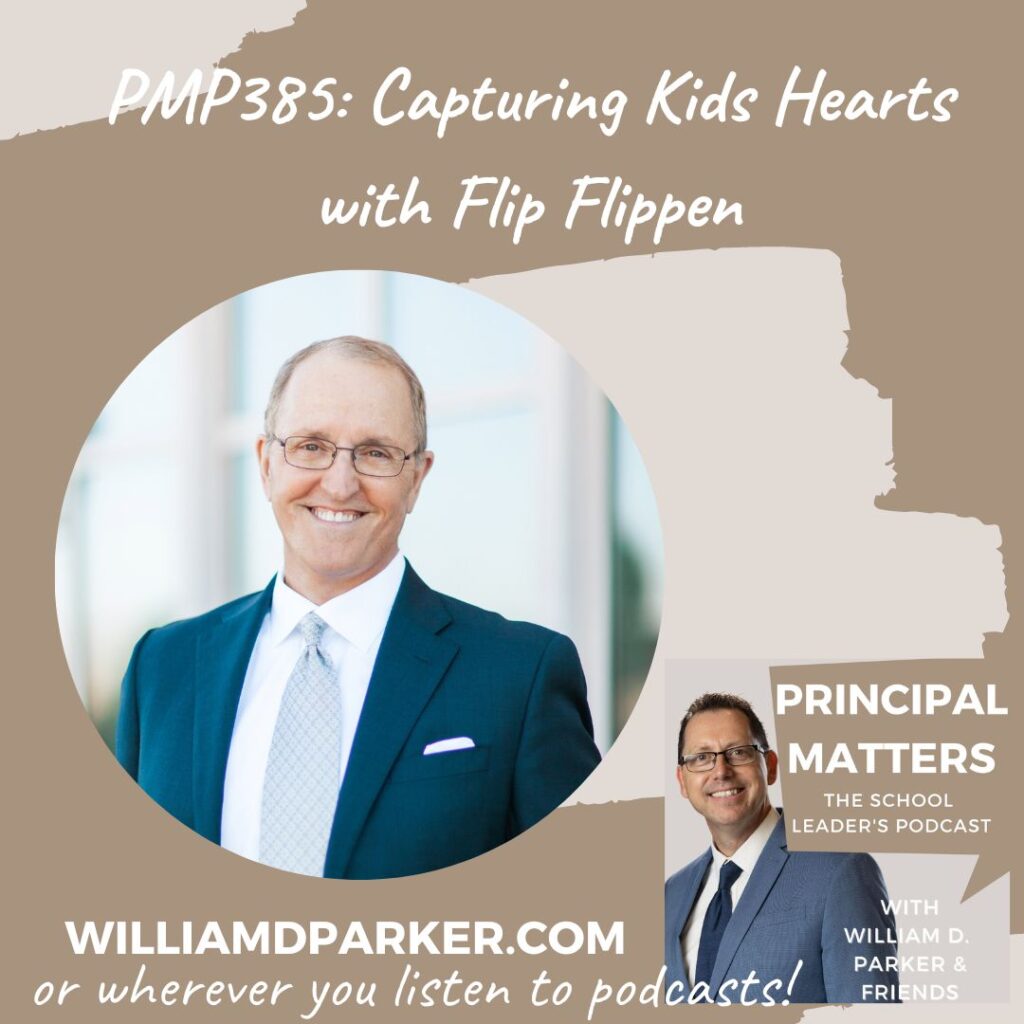
PMP385: Capturing Kids Hearts with Flip Flippen
Feb 28, 2024
Show notes
Flip Flippen is a New York Times best-selling author, social entrepreneur, psychotherapist, and the founder and chairman of Capturing Kids’ Hearts, one of the largest educator training and team development companies in North America. Flip and his wife Susan were named Ernst & Young Entrepreneurs of the Year, making them the first couple to ever receive this prestigious award. Their company was chosen by Texas Monthly magazine as #2 Best Companies to Work For in Texas. Flip and his team are passionate about bringing out the best in people.
In this episode, Flip shares great takeaways on how to connect with learners, what the Capturing Kids’ Hearts process looks like in schools, and words of wisdom for leaders wanting to increase their impacts.
Listen-in to the entire episode, here are a few highlights of what we discuss:
Raising Children – Influences of Teachers
Flip shares how he and his wife Susan have raised 20 kids together over the years. He didn’t learn his real name until 1st grade, and in 2nd grade, when his teacher announced she was assigning him to a leadership role the following year, he did not realize he was being held back as a struggling reader. Instead, he fell in love with helping younger students, and that passion has stayed with him his whole life.
A Child’s Heart
Although Flip was not emotionally close to his parents, his teachers played an enormous role in helping him believe in himself and achieve success in school and life. After graduating with his doctorate from Texas A&M, Flip began working with young men in gangs. Eventually, he began a non-profit reaching out to troubled youth, working in prisons, and helping others learn that if you have a child’s heart, you have his head.
Impacting Outcomes
Young people need skills, and they need to understand the skills involved in the subculture of jobs and professions. Eventually, Fip began teaching methods in an afterschool program. This led to the development of Caputring Kids’ Hearts which has served millions of students and thousands of campuses across the U.S.
The CKH model reduces discipline referrals, establishes social contracts for classrooms, provides stronger self-governance for students, and increases academic performance.
Facing Today’s Issues
As we talked about current issues in education, Flip asserted that learning loss is not the biggest issue we face, discipline is the challenge. Culture is the “ground” of our schools, and curriculum and standards are the “seeds.” If we dont’ first instill the right conditions, learning will not take place.
Final Words of Wisdom
As we wrapped up the conversation, Flip shared that people only change when they have an emotionally compelling reason to change. This also applies to leaders.
What are you truly about as it relates to your role in school?
How can you communicate that passion to your people?
As Flip puts it, “People are drawn to purpose.”
Listen to the entire episode for even more great takeaways. You can learn more about Flip Flippen at the Flippen Group website and explore Capturing Kids’ Hearts at https://www.capturingkidshearts.org/
Jen asked leaders to consider a circle to anticipate, analyze and act as an ongoing movement – a way to visualize how approaching conflict.
Anticipate
Anticipate the adult, student, parent and self conflict that comes at different seasons, times, or throughout the processes of a school day. What did you not see coming? How can this experience prepare for anticipating when something similar may happen again because it likely will.
Analyze
Analyze behavior to understand the why behind conflict. Leaders exist because conflicts exist. What ways can you rely on others to help move through conflict? Everyone deserves due process, and how we manage behavior must be based in fact, not just feeling.
Act
Act and make a decision since atrophy is not optional. This means understanding the various options that exist in responding, mediating, waiting, embracing, or enforcing. Conflict resolution requires intentionality.
Will wraps up the conversation with an analogy about “the other side of the moon.” No matter where you are on planet Earth, you can only see one side of the moon as it orbits our planet. Sometimes people become upset with a person, decision or rule because people may only be seeing “one side of the moon” in their experiences. In a way, leadership allows you to see more of the moon than others in your community. How are you leveraging this responsibility and privilege to allow others to know as much information as you can share while also protecting confidentiality? You’ll never perfectly resolve conflict, but when you’ve taken time to give others as much feedback as possible, then move forward and accept that not everyone will understand or agree.
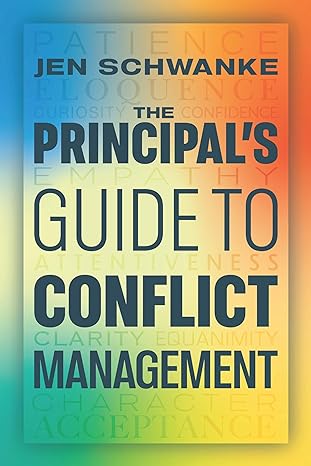
PMP383: The Principal’s Guide to Conflict Management – Jen’s new book!
Feb 14, 2024
Show notes
Conflicts are inevitable. The question is how do you manage them in healthy ways with the appropriate mindset, anticipation, analysis, and action? This week, Dr. Jen Schwanke shares takeaways with William D. Parker from Jen’s new book, The Principal’s Guide to Conflict Management.
Listen-in as Jen explains how to approach conflict with courage. Learn the importance of managing specific conflicts with teachers, students, parents, and with yourself.
Embracing problems, not eliminating them, is an important part of the mindset for managing conflicts. Jen recommends cultivating these qualities like patience, poise, eloquence, curiosity, confidence, empathy, trust, attentiveness, clarity, equanimity, character, and acceptance.
Also, Dr. Schwanke reminds leaders not to forget the teacher experience.
While empathizing with the persons we are guiding, consider the model of motivation tree:
Finally, Jen shares about the 4 10’s rule. Will the situation you’re addressing be important in 10 minutes, 10 days, 10 months, or 10 years?
Will wraps up the conversation with a reference to the book The Boys in the Boat: Nine Americans and Their Epic Quest for Gold at the 1936 Berlin Olympics by Daniel James Brown. He connects the themes in Jen’s book to the lessons in the new movie of Boys in the Boat with a reminder that we are in “the same boat” – working toward the collective achievement of every member of the school community.
Listen to the entire episode for even more takeaways! If you’re interested in exploring a possible Mastermind Study Group over Jen’s book The Principal’s Guide to Conflict Management, email will@williamdparker.com to learn more.
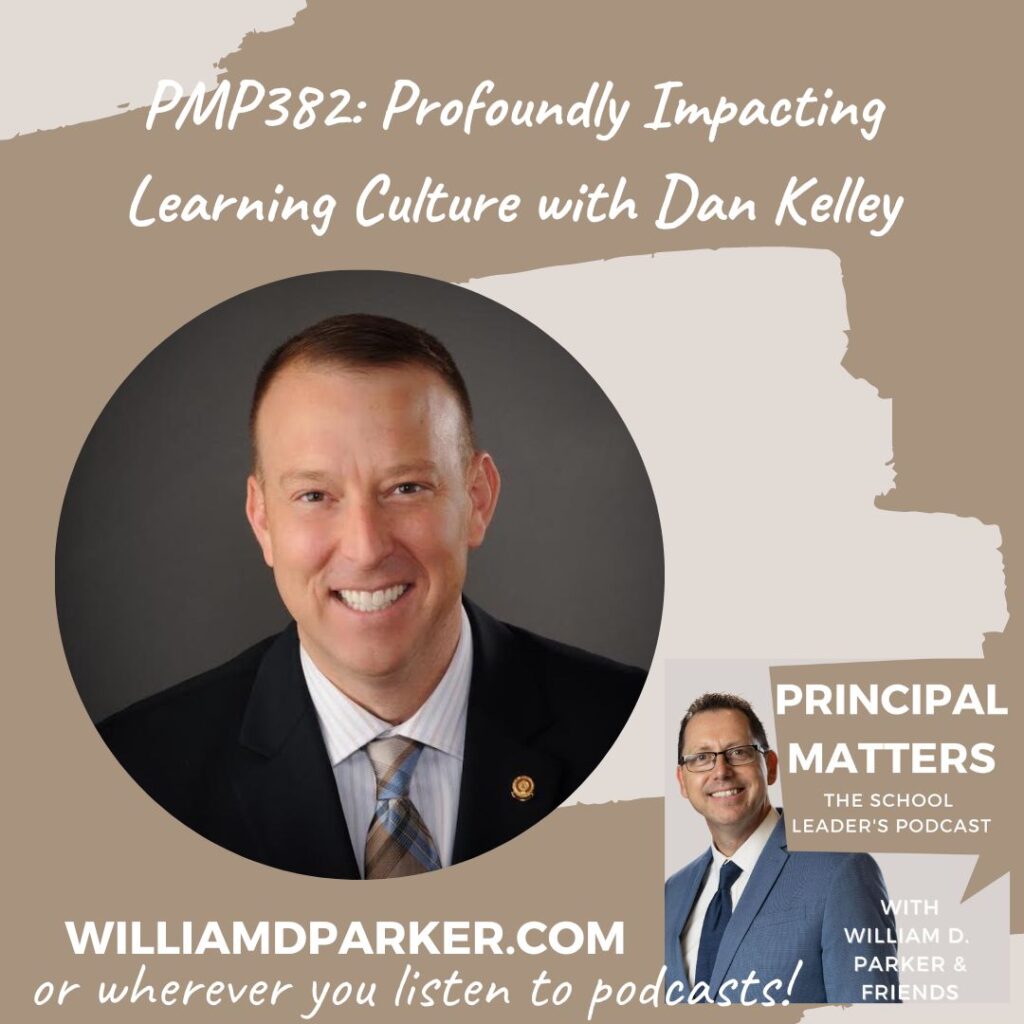
PMP382: Profoundly Impacting Learning Culture with Dan Kelley
Feb 07, 2024
Show notes
Daniel Kelley is an Associate Teaching Professor of Educational Leadership and Policy at the University of Rhode Island. He previously served as the principal of Smithfield High School in Smithfield, RI. During his tenure, he successfully implemented sustainable change initiatives that profoundly impacted the school’s learning culture.
Dan’s contributions to education extend to national leadership roles as well. He served as the president of the National Association of Secondary School Principals (NASSP) during the 2017-2018 school year and was a member of the NASSP Board of Directors for five years. His broad experience in education includes positions as a high school assistant principal, a high school and middle school special education teacher, and a middle school math and science teacher. In recognition of his outstanding leadership, he was named the Rhode Island Secondary Principal of the Year in 2012.
Fun Fact: Dan played rugby in college!
Listen into the entire episode to engage in a thoughtful conversation with Dan, as we explore the myriad of lessons in leadership and personal practices Dan instituted in leading a learning culture during his tenure at Smithfield High School. Dan’s broad spectrum of experiences, coupled with his passion for education, makes this episode a treasure trove of insights for school leaders at every stage of their careers.
Dan Kelley
Topics of Discussion:
University Role:
Building a master’s degree program in leadership and education policy at the University of Rhode Island.
Teaching “Intro to American Education” to undergraduate students.
Consulting/Coaching Work:
Developments in training for aspiring leaders post his year as NASSP President.
Facilitation of leadership training programs in multiple states.
Advice for Aspiring Leaders:
Impactful leadership starts from where you are.
The importance of networking and continuous learning through various mediums.
The significance of shadowing seasoned leaders and building foundational strength in current roles.
Guidance for New Leaders:
The indispensability of networking and self-care.
Managing leadership challenges with external perspectives through therapy.
Insights for Veteran Leaders:
The importance of acknowledging daily achievements and maintaining student connections.
Leadership isn’t always easy, as illustrated by Dan’s inspiring and poignant stories from his own experiences.
Reach out to Dan if you’re keen on presenting to any of his university program classes, or if you’re just looking to connect and learn more about educational leadership.
Remember to keep learning, growing, and making a profound impact in the lives of your schools. Thank you for being the beacon of transformative leadership in education. Keep tuning in for more enlightening conversations on Principal Matters, and thank you for doing what matters!

 Our TOPPODCAST Picks
  Stay Connected