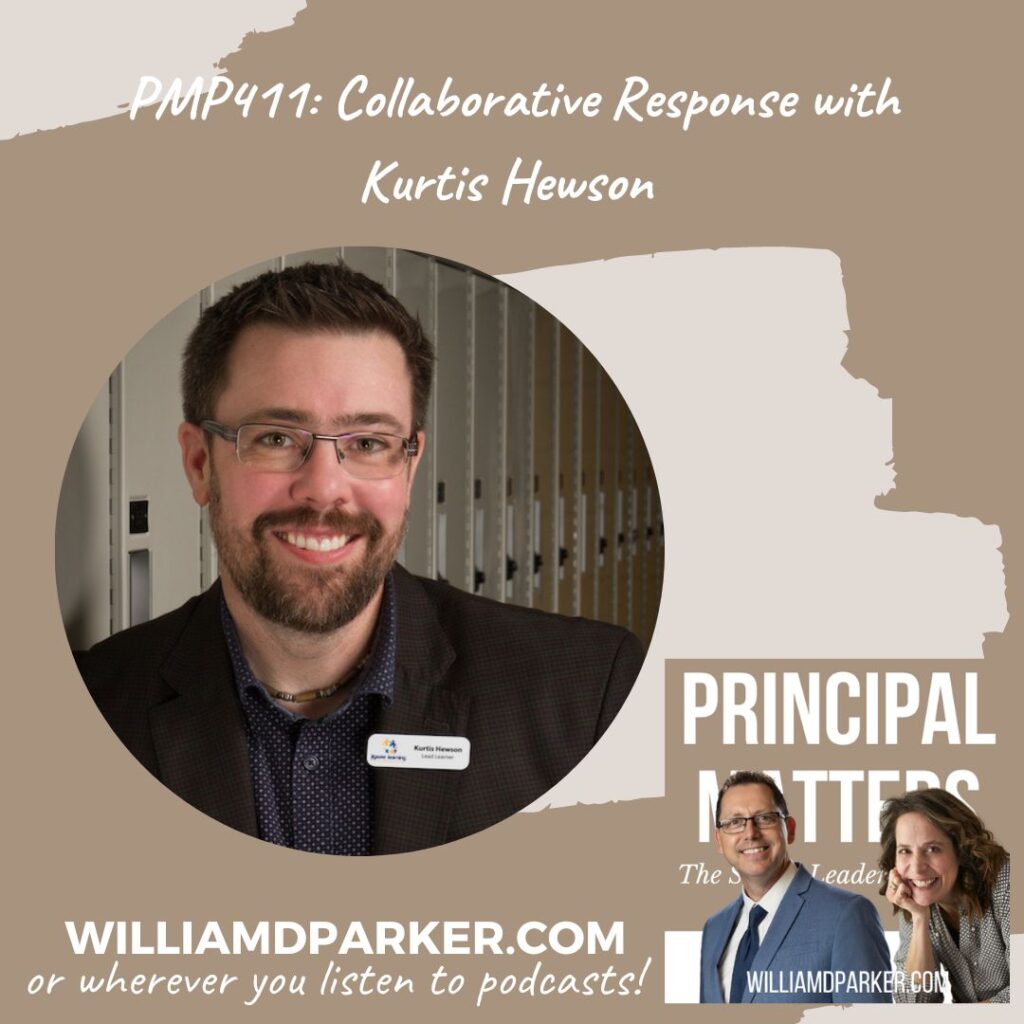
PMP411: Collaborative Response with Kurtis Hewson
Aug 28, 2024
Show notes
A quick note to listeners:
Before this week’s interview, Jen Schwanke and Will Parker answered another listener question in a 5-minute response.
The question is: I’d love to know more about how to set boundaries that help with individual self-care.
Listen in for our response and thank you for doing what matters!
Kurtis Hewson is an award-winning former administrator and teacher, as well as teaching faculty at the post-secondary level. He is the co-founder of Jigsaw Learning, a co-author of the text Collaborative Response: Three Foundational Components That Transform How We Respond to the Needs of Learners (Corwin, 2022), and currently works with districts and schools nationally and internationally establishing Collaborative Response frameworks and interacting with thousands of educators annually.
Joining us from Lacombe, Alberta, Canada, Kurtis shared insights from his journey in education, starting from his early days as a teacher to stepping into an administrative role just 1.5 years into his career.
Key Takeaways from Kurtis Hewson:
Leverage Team Expertise:
Kurtis emphasized the importance of utilizing the collective expertise of team members. He advises leaders to recognize their role in capacity building and to understand that “the room is the smartest person.”
Building Structures for Success:
The conversation highlighted the necessity of creating supportive structures within educational institutions. Kurtis believes in the power of collaborative capacity building, gathering data and evidence, and developing continuous support systems.
Responsive Professional Learning Communities (PLCs):
Kurtis pointed out that PLCs are not always responsive to student needs, citing examples where the focus on one area (like writing) might overlook more critical needs (like executive functioning skills). He stressed the importance of reevaluating collaborative processes to better meet student needs.
Strategic Collaboration:
He shared his learning that effective results come from restructuring processes through collaborative planning, team meetings, school support teams, and case consults. Kurtis advocates for “tiering supports, not kids” to facilitate meaningful discussions and identify best teaching practices.
Practical Strategies for Leaders:
For new leaders, Kurtis suggests adopting a mindset of setting broad directions (the banks of the river) and allowing flexibility within those bounds. He encourages embracing a ‘ready, fire, aim’ approach to action and adjustment, starting with pilot projects among willing champions to test and expand ideas.
Embrace the Journey:
In his parting words, Kurtis reminds leaders to give themselves grace, expect challenges, gather feedback, and continuously adjust to improve.
Finding More About Kurtis Hewson:
Listen to the entire episode with Kurtis Hewson for a deep dive into the philosophy and practice of collaborative response in education, and find valuable lessons for educators and leaders alike in building more responsive and supportive learning environments.
For those interested in learning more about Kurtis Hewson’s work on collaborative response in education, visit jigsawlearning.ca. Connect with via email at kurtis.hewson@jigsawlearning.ca.
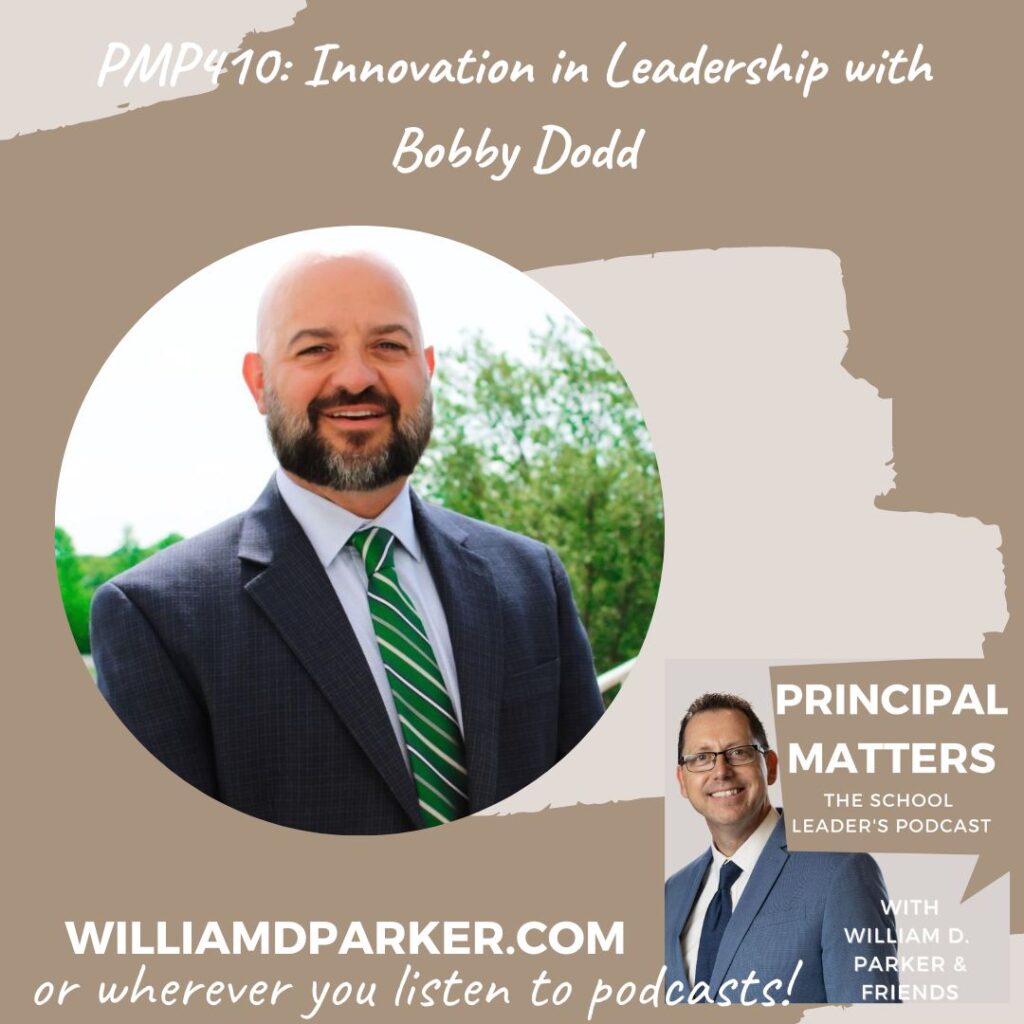
PMP410: Innovation in Leadership with Bobby Dodd
Aug 21, 2024
Show notes
A quick note to listeners:
Before this week’s interview, Jen Schwanke and Will Parker answered an exit-ticket question in a 5-minute response.
The question is: Reflection on my own leadership strengths and weaknesses: How do they correlate with my current team? Additional ways to grow as a leader.
Listen in for our response and thank you for doing what matters!
Bobby Dodd is a leadership coach and consultant and the former principal of William Mason High School, Ohio’s largest high school. With four degrees, he found his true calling in dedicating his life to helping others. His commitment to innovation has led to the creation of numerous opportunities at Mason High School, including digital academies, college summer camps, fabrication labs, Early College High School programs, modified block schedules for better relationship building, and personalized learning environments.
Bobby is not just an educator; he’s a leader who actively engages with the community to advance the field of education. He’s been recognized as the 2016 NASSP Digital Principal of the Year and was a finalist for the 2017 Varsity Brands “Principal of Principle” award. Beyond his school, Bobby contributes to education by presenting at conferences nationwide, co-moderating #ohedchat, co-founding EdCampLeader Ohio, and coaching future leaders at JCasas & Associates.
In this week’s episode, William D. Parker sits down with Principal Bobby Dodd who shares his innovative approaches and philosophies in leading a large high school with 3,600 students. With a unique background that includes a law degree and diverse interests such as an eclectic taste in music, Dodd brings a comprehensive outlook to educational leadership.
Student Involvement and Decision Making
Bobby has successfully incorporated student committees into the decision-making process, emphasizing the importance of student involvement even in interviews. This initiative reflects his commitment to giving a voice to the student body in school operations.
Focus on Mental Health and Well-being
A significant aspect of Bobby’s school is its focus on mental health and well-being. The school collaborates with community services to provide on-site therapists for counseling students, alongside promoting peer-to-peer counseling. This approach underlines the importance of mental health support within the educational environment.
Leadership Qualities
Bobby values patience, open-mindedness, and a growth mindset as crucial leadership traits. He is inspired by the work of David Langford, particularly in creating effective systems for educators, and prioritizes enjoying his work in the present over setting distant future goals. Here’s a link to Langford’s book, Tool Time for Education, which Bobby recommends.
Effective Communication and Time Management
Implementing the “plan, do, study, act” methodology, Bobby Dodd has introduced a system of 15-minute meetings scheduled via Calendly. These sessions allow him to connect personally with each teacher and staff member annually, addressing their challenges and suggestions for improvement. He also emphasizes the importance of time management, dedicating specific times for personal learning and growth.
Simplifying Professional Standards
Bobby approaches the standards for professional learning and leadership in a simplified manner, focusing on solutions, data analysis, operational definitions, and reflection. He advises breaking the year into quarters and tackling leadership standards sequentially to effectively manage workload and foster personal growth.
Preparing for Future Transitions
As he contemplates the future beyond his principalship, he remains guided by the motto “Our journey is happiness.” This philosophy reflects his belief in finding joy and satisfaction in work, highlighting the importance of staying true to what fulfills one personally.
Throughout the interview, Bobby Dodd showcases a leadership style that is both innovative and grounded in personal satisfaction and well-being. His strategies and philosophies offer valuable insights for educational leaders aiming to make a positive impact in their schools and communities. Stay connected with Bobby via: X: @bobby__dodd Instagram: bobby__dodd and LinkedIn.
Listen to the entire interview for even more takeaways, and thank you for doing what matters!
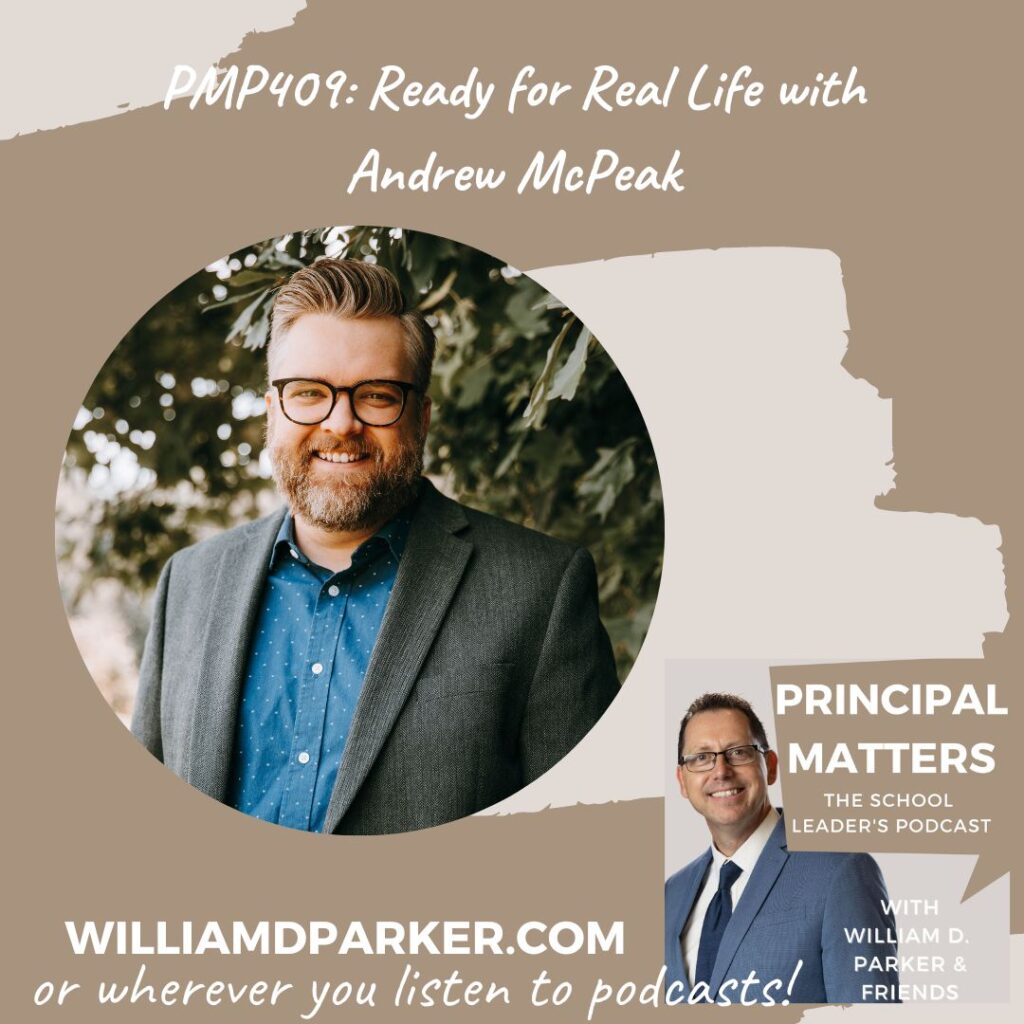
PMP409: Ready for Real Life with Andrew McPeak
Aug 14, 2024
Show notes
A quick note to listeners:
Before this week’s interview, Jen Schwanke and Will Parker answered a listener question in a 5-minute response.
The question is: How do I coach a veteran (relatively) effective teacher who is reluctant to implement something new?
Listen in for our response and thank you for doing what matters!
Andrew McPeak is an author, researcher, communicator, and researcher on the emerging generations. From public school hallways to the boardrooms of corporate America, Andrew has honed an intimate understanding of the issues today’s young leaders face. Leveraging his experience and insights, Andrew, works to give adults practical tools and actionable advice for leading today’s youngest population. Andrew is the author of three books including Marching off the Map (2017), Generation Z Unfiltered (2019), and his latest: Ready for Real Life: Unpacking the Five Essential Skills Great Leaders Instill in Their Students (2023).
In this week’s episode:
Andrew McPeak answers several important questions about generational studies and the value of soft skills. Andrew shares how he started studying generations and began speaking to students, teachers, administrators, and parents. The discussion shifts from millennials to Generation Z, a topic Andrew explores in his new book.
Andrew explains the key differences between Millennials and Generation Z and how these differences affect education and leadership. His book emphasizes essential soft skills over just achievements or the next step in life, highlighting their importance for long-term success.
He also addresses how to communicate the value of soft skills to parents who often focus on external achievements. Andrew outlines the five essential skills in his book, providing a brief overview of each and their importance.
In the chapter, “Leading When You Feel Like Leaving,” Andrew explains why he felt it was necessary to discuss the challenges leaders face when they feel overwhelmed or consider stepping down.
Listen to the entire interview for amazing takeaways!
PMP408: De Facto Leadership with Dr. Karen Dudek-Brannan and Dr. Jen Schwanke
Aug 07, 2024
Show notes
Dr. Karen Dudek-Brannan is the founder and owner/operator of Dr. Karen, LLC, a company focused on empowering therapists and educators to design interventions that support language, literacy, and executive functioning. She has a doctorate in Special Education and Director of Special Education and Assistive Technology credentials from Illinois State University, as well as a master’s and bachelor’s from Illinois State University in speech-language pathology.
She spent 14 years in the school systems and has held various roles in leadership and higher education teaching and mentoring clinicians. She is the host of the De Facto Leaders podcast, where she shares evidence-based practices, her own experiences, and guest interviews on topics relating to education and healthcare reform. She’s currently an administrator with the Illinois Department of Children and Family Services.
From Dr. Jen Schwanke:
I always like to have one important takeaway when I speak with guests, and in my conversation with Dr. Karen Dudek-Brannan, there was an especially clear and helpful takeaway. As principals, much of what we do can, and should, be considered from a “draft” lens. In other words, when I make a decision, I can alleviate pressure or anxiety about the permanence or strength of my decision if I simply consider it a “first draft.” I can even articulate it as such when communicating my vision— “This is a draft of how we are going to roll out this new initiative,” or, “The agenda for this meeting is a working draft.” In using “draft” language, I communicate with others that I am open and willing to adjust or adapt as I get more information.
But that’s not all you’ll hear in this episode. Dr. Karen Dudek-Brannan has a wealth of experience in education and leadership. Among other things, we discussed the connection between the work of principals and the “specialists” that bring an important perspective in conversations about students and our schools. These specialists might include speech-language pathologists, clinicians, therapists, psychologists, outside agencies, and even parents.
As Karen explains, principals benefit when they are fully open to the perspective of others, especially those who have “de facto” leadership capabilities. In her role as an SLP, consultant, business owner, and, more recently, the creator of products that can support students and schools, she has learned that someone in an identified “power role” is most successful when they give voice to those with specific expertise and insight, even if that person doesn’t have the traditional “power” role of principal, director, or superintendent.
It’s important to note, too, that many people who work as counselors, social workers, and specialized therapists don’t see themselves as a leader because the root of their work might be direct student therapy, case management, and direct intervention; however, they have such expertise in their specific area that they can have a profound impact on programming and process decisions. They can also provide crucial feedback that might help principals shift their thinking and allow for adjustments and evolution.
PMP407: Supporting Teacher Growth with Justin Baeder and Jen Schwanke
Jul 31, 2024
Show notes
This week Jen Schwanke hosts guest educator Justin Baeder, author and veteran instructional leader, and takeaways from his newest book Mapping Professional Practice: How to Develop Instructional Frameworks to Support Teacher Growth (2022), a book co-authored with Heather Bell-Williams.
Justin shares his practical takes on accountability and the careful dance of driving school improvement. Discover the practical applications you can use, and check out Justin’s amazing resources from the Principal Center.
Justin is also a repeat guest on the show. You can hear his 2017 interview on his first book Now We’re Talking! 21 Days to High-Performance Instructional Leadership (2017) here.
Thank you for listening and for doing what matters! – Will Parker
Two areas of specific interest and expertise for Justin are classroom walkthroughs and instructional framing. In our conversation, he explains how classroom walkthroughs have transformative power— not necessarily because of the specific things that are seen during a walkthrough, but because they directly connect the principal to the teacher and student experience. Further, standardized evaluation frameworks have value, but only if we consider the parts of teaching that are not visible as a way to understand the true experience of being a teacher.
This same thinking is what drives Justin Baeder’s work with instructional framing. Comparing teaching to an iceberg, in which we only see a portion of the evidence and outcomes, Baeder encourages principals to look deeper to get to the rest of the iceberg. It can happen by following a process of developing instructional frameworks and articulating what the invisible dimensions of the practice should be.
Justin expands this thinking to the practice of peer observations. Having a teacher observe another teacher is meaningless unless everyone—the observing teacher, the teacher being observed, and the principal—all have an understanding of the depth of “invisible planning” that occurs to make a classroom exceptionally effective. Without this understanding, peer observation will not have a long-term impact. For that reason, principals who want to encourage peer observations should frontload the observer with specific “look-fors” or delve into the extensive planning work that structures a classroom’s routines.
As the episode wraps up, Jen asks Justin to share some of his thoughts about the word “accountability” and what it means in schools—specifically, the possibility that some schools have swung so far on the pendulum that they’ve lost some of the core effectiveness of teaching and learning. This episode provides an opportunity for our listeners to think about their own beliefs, their school environments, and where they want to prioritize their leadership.
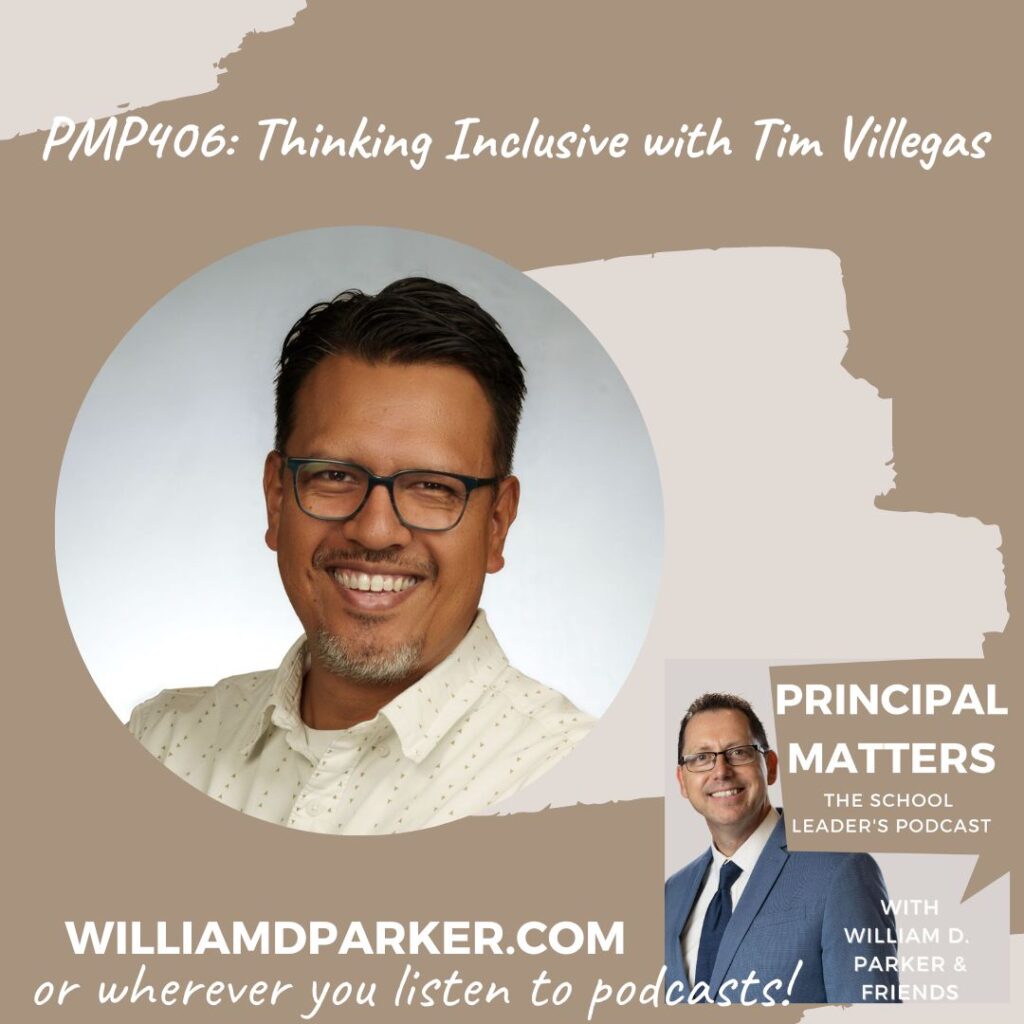
PMP406: Thinking Inclusive with Tim Villegas
Jul 24, 2024
Show notes
Tim Villegas is the Director of Communications for the Maryland Coalition for Inclusive Education. He is also the founder of Think Inclusive, which is the blog, podcast, and social media handle of MCIE. He has 16 years of experience in public education as a teacher and district support specialist. His focus now is on how media and communications can promote inclusive education for all learners.
In this week’s engaging episode of Principal Matters Podcast, Will Parker explores the world of inclusive education with Tim Villegas. The conversation begins with Villegas sharing his journey, highlighting his passion for running and his early interest in education that was sparked in middle school. His career trajectory from a teacher and district support specialist to a leader in inclusive education demonstrates his deep commitment to creating educational environments where all learners can thrive together.
Villegas explains the mission and work of MCIE, emphasizing the organization’s focus on partnering with school districts to implement inclusive practices. He recounts the history of MCIE, starting from its inception with the Neighborhood Inclusion Project, which aimed at integrating learners previously segregated into special schools back into their neighborhood schools. This project laid the foundation for MCIE’s broader efforts to promote inclusivity in education across Maryland and beyond.
A key part of the discussion revolves around the challenges and strategies of implementing inclusive education. Villegas highlights the importance of changing mindsets and practices within schools and districts to foster an environment where every student, regardless of their abilities, is valued and given equal opportunities to succeed. He stresses that inclusion is not only a philosophy but also requires practical, actionable steps to realize its full potential.
Will and Tim explore various aspects of inclusive education, including the role of leadership in driving change, the necessity of collaborative efforts among educators, and the impact of inclusive practices on all students, not just those with disabilities. They discuss the barriers to inclusion, such as entrenched systems and attitudes, and offer solutions like developing a clear vision for inclusion, forming task forces, and focusing on strong foundational instruction for all.
This episode also addresses the common misconceptions about inclusion and the importance of understanding its nuanced, multifaceted nature. Villegas shares resources and examples of successful inclusive education models, illustrating the transformative power of inclusion when embraced and implemented effectively.
In summary, the conversation between Will Parker and Tim Villegas offers valuable insights into the principles and practices of inclusive education. It underscores the need for a collective effort to overcome barriers, the significance of leadership in initiating change, and the profound impact of inclusion on the educational landscape, making it a must-listen for educators, administrators, and anyone interested in fostering a more inclusive world.
How can you take the next step in inclusive education? Consider the following:
Developing a vision for what inclusive education could look like in your community?
Developing co-teaching practices
Creating a task force of educators/parents to shape how communities can change
Reexamining behavior standards for all students
Reengaging with Tier 1 instruction to ensure learning opportunities are engaging for all students
Find out more about MCIE at their website, and check out the free resource Tim shares about Quality Indicators of Inclusive Schools that you can use to assess your own school’s attitudes toward thinking inclusive here.
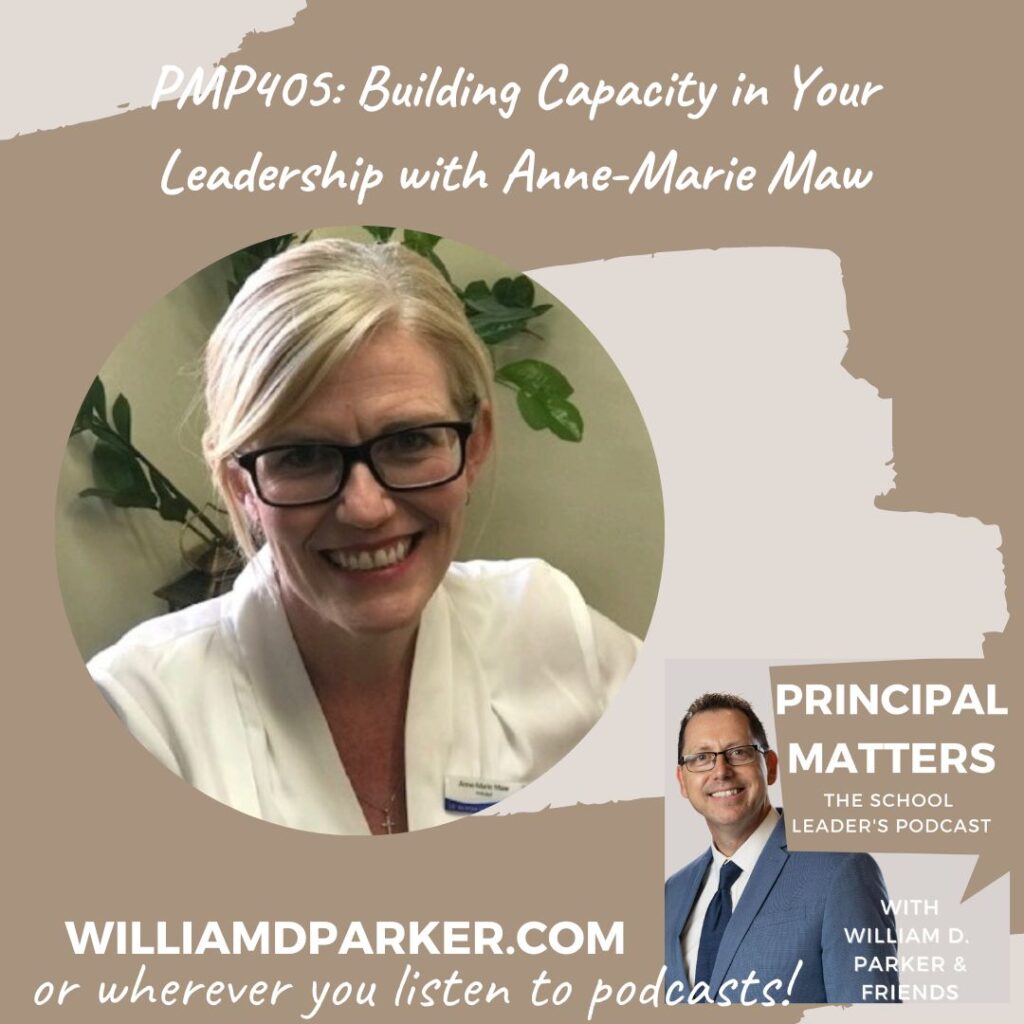
PMP405: Building Capacity in Your Leadership with Anne-Marie Maw
Jul 17, 2024
Show notes
Anne-Marie Maw is an educator who has worked in schools for over 25 years as a classroom teacher and school leader across a range of schools in Australia. Currently, she is the principal of St. Agatha’s Primary School in the northeast suburbs of Brisbane which is the capital city of the state of Queensland in Australia. She also regularly contributes to Principal Matters newsletters. She is the founder of Hey Hands Up, a website dedicated to raising the profile and capacity of educators. You can follow her work or find out more about their professional development offerings at her website.
Anne-Marie is a returning guest, first sharing in 2021, on episode 238. Go here to listen to the archived episode.
In this week’s conversation:
Anne-Marie Maw shared insights from her experience in educational leadership. Anne-Marie, a Pilates enthusiast with a new puppy, serves 350 students ages 5 through 12. She expressed pride in the family-centered approach of her community and the active involvement of parents.
Anne-Marie described her teachers as “a big bunch of learning nerds” and highlighted the openness of her students to share creative ideas, such as a proposal for a Ninja club. Four and a half years into her leadership role, Anne-Marie has embraced growth through compassion and a growth mindset, learning to balance her ego with the needs of her community.
She recounted a humbling experience of being perceived as micromanaging, which led her to foster a more supportive environment for her staff. Anne-Marie emphasized the importance of listening over fixing and giving individuals space to thrive. She advocates for recognizing everyone as human first and understanding the unseen motivations that drive people.
Setting intentional goals has been a key part of Anne-Marie’s journey, with a significant milestone at the three-year mark of her principalship confirming her commitment to the role. Her website, HeyHandsUp.com.au, serves as a platform for sharing educational insights and lessons learned.
Anne-Marie’s philosophy centers on long-term, service-minded goals, embracing micro-changes to achieve outcomes. She encourages educational leaders to be boldly compassionate, engage in difficult conversations, and support others’ growth.
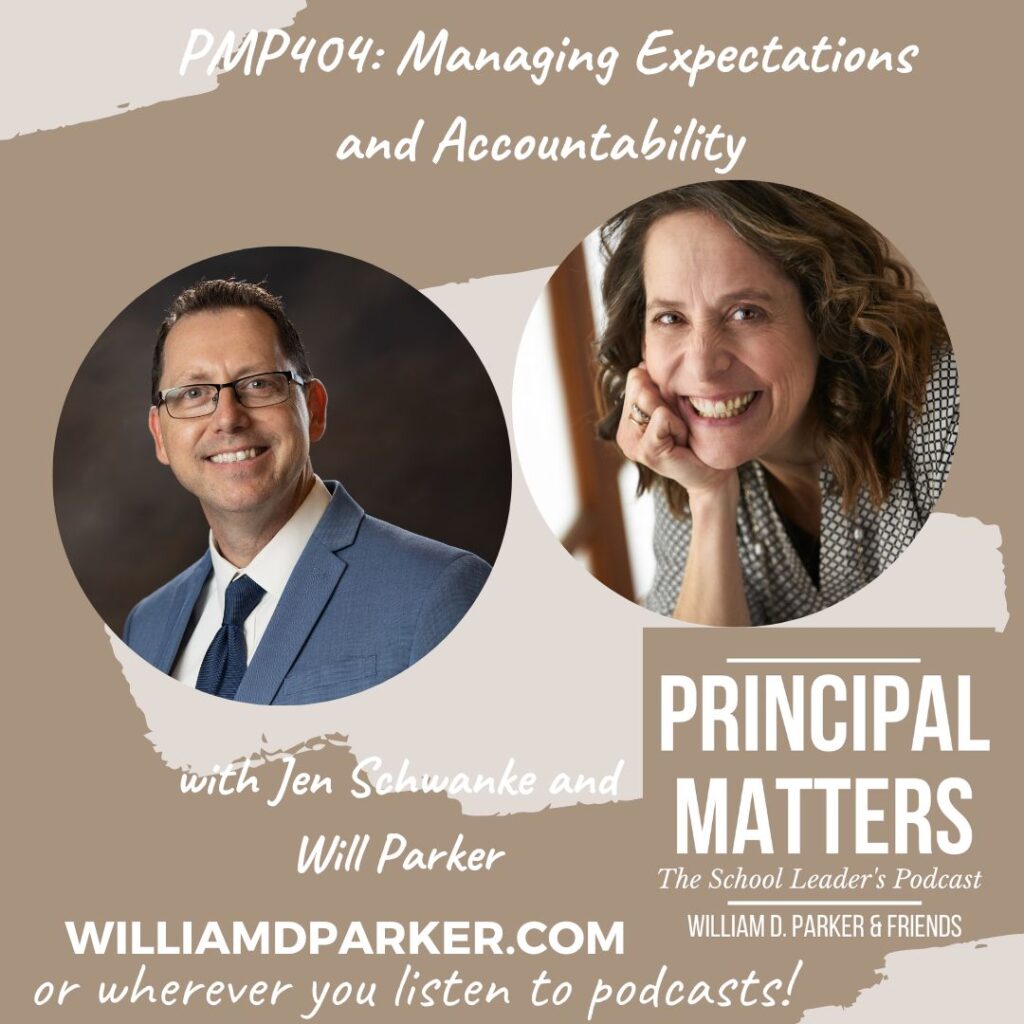
PMP404: Managing Expectations and Accountability with Jen Schwanke and Will Parker
Jul 10, 2024
Show notes
This week, Jen Schwanke and Will Parker tackle a question from an education leader: “As a principal, how can you monitor and ensure adherence to expected standards and outcomes in a way that is supportive rather than punitive, and fosters a culture of accountability?”
Key Points from Jen Schwanke:
Importance of mindset:
Lead with the intent to be supportive rather than punitive.
Believe that people generally do the best they can.
Be able to forgive mistakes and missteps.
Framing expectations:
Consider using terms like “hopes,” “norms,” and “practices” instead of just “expectations.”
Understanding accountability:
Distinguish between data-informed practices and merely pointing out weak spots.
Focus on why mistakes happen rather than who made them.
Avoid expecting others to do things exactly as you would; different approaches can still be valid.
Insights from Will Parker:
Will shares some analogies that help leaders see school through the eyes of two students with vastly different experiences based on the processes and clarity provided by school leaders and teachers.
Practical Systems to Support Staff:
Identify key responsibility areas.
Establish evaluation schedules.
Assign extra duties.
Plan for the first days of school processes.
Special Appearance:
In the final minutes, Missy Parker, Will’s wife, makes an unexpected appearance with an observation and example of how education leaders can learn to see their school through the eyes of their students.
Listen to the entire episode for even more takeaways, and thank you for doing what matters!
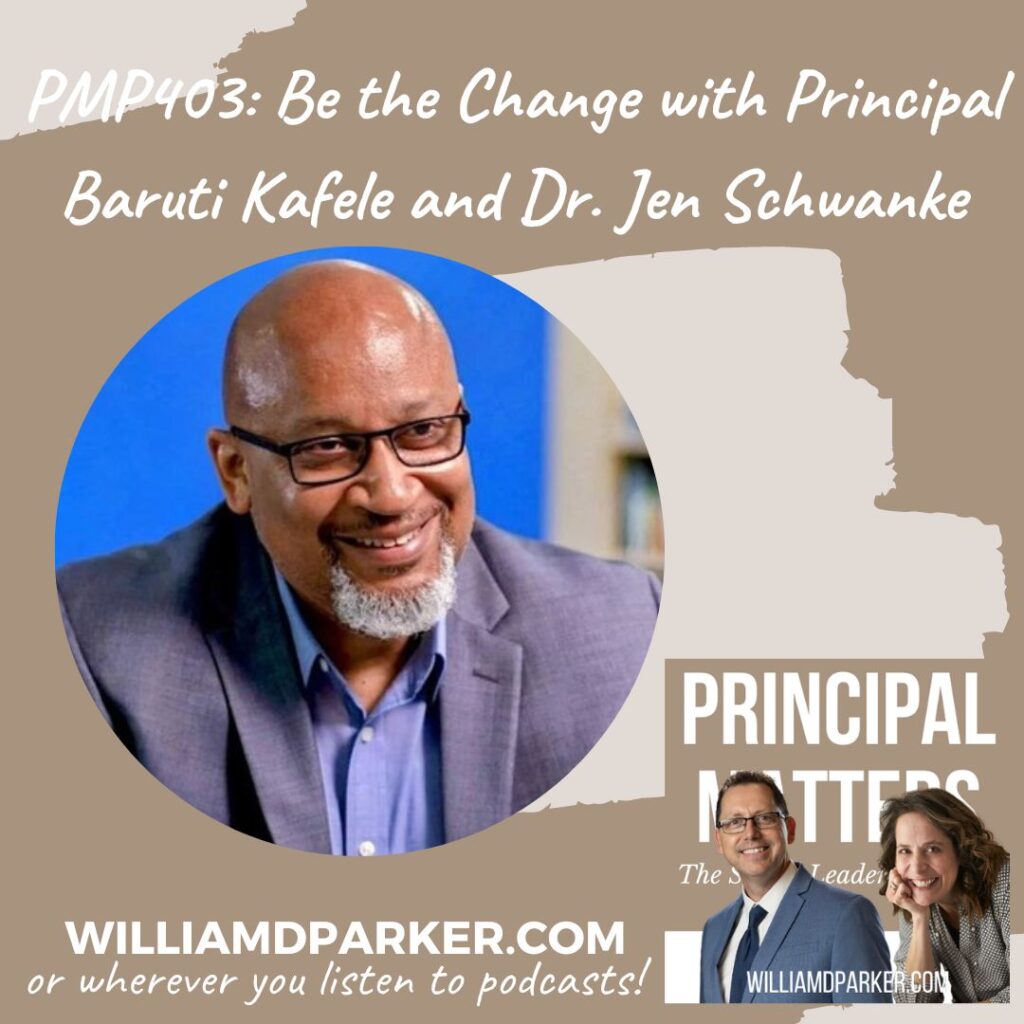
PMP403: Be the Change with Principal Baruti Kafele and Dr. Jen Schwanke
Jul 03, 2024
Show notes
If you’ve not yet heard of Principal Kafele, this podcast captures him in a conversation with Dr. Jen Schwanke—a conversation that gets to the heart of why he is one of the most distinguished and transformational speakers and leaders of our generation.
A highly-regarded urban educator in New Jersey for over twenty years, Principal Baruti Kafele served as an elementary teacher, assistant principal, and high school principal before becoming the author and renowned speaker he is today. Jen first met Principal Kafele at an ASCD writer’s event in October of 2016 just after she had published her first book. She was so excited when ASCD brought the two of them together, and it led to a longtime collegial connection that is evident in this podcast episode.
Episode highlights:
Among other things, they discuss Kafele’s very first book, titled, The Black Parent’s Handbook to Educating Your Children (Outside the Classroom), which came to life during a period when Kafele was “Mr. Mom” and staying at home temporarily with an infant. Written in a notebook—this was before PCs were in wide usage— and self-published with help from friends, the book sold over 60,000 copies thanks to Kafele’s hustle and his personal mission to get it in the hands of anyone who needed it.
Jen and Kafele also discuss the importance of taking care of oneself while on the road or running a school; about how students have changed post-pandemic and how those changes affect the teachers and leaders who oversee them; and how attitude is the essential factor in both loving and succeeding as a school leader.
Over the years, Principal Kafele has continued to write important books for school leaders, has developed a popular YouTube channel, and has presented around the world on topics such as creating a positive school climate, improving school culture, transforming the attitudes of at-risk students, motivating Black males to excel in the classroom, and school leadership practices for inspiring school-wide excellence.
If you are looking for more information, check out Kafele’s website, or any of his thirteen books, including seven ASCD best sellers – Motivating Black Males to Achieve in School & in Life, Closing the Attitude Gap, Is My School a Better School BECAUSE I Lead It?, The Teacher 50, The Principal 50, The Assistant Principal 50 and The Equity & Social Justice Education 50. Principal Kafele is also the creator and host of the popular AP & New Principals Academy, streamed live every Saturday morning on his AP & New Principals Academy YouTube channel at 10:55 ET. He has been awarded the coveted Milken Educator Award as well as various other distinguished awards for his work.
Here is just one favorite quote from the interview:
“I often tell people that the ideal life is one where you can live according to your own terms. The world will be as it is, but I am determined to maintain my individuality and attitude within it. The world will not bring me down. Of course, there will be days when I am not as upbeat as others; we are all human, after all. However, I am committed to ensuring that, if there is one thing I can control in life, it is my attitude. I have the ability to control how I feel about my day, about myself, and about my circumstances. It is crucial for me to manage these feelings and not allow the world to dictate or influence them for me.”
Listen to the entire episode for even more takeaways, including why Principal Kafele has been so motivated to help education leaders. You will be inspired by his dedication and his commitment to doing whatever it takes to make changes.
Thank you for learning together, and thank you for doing what matters!
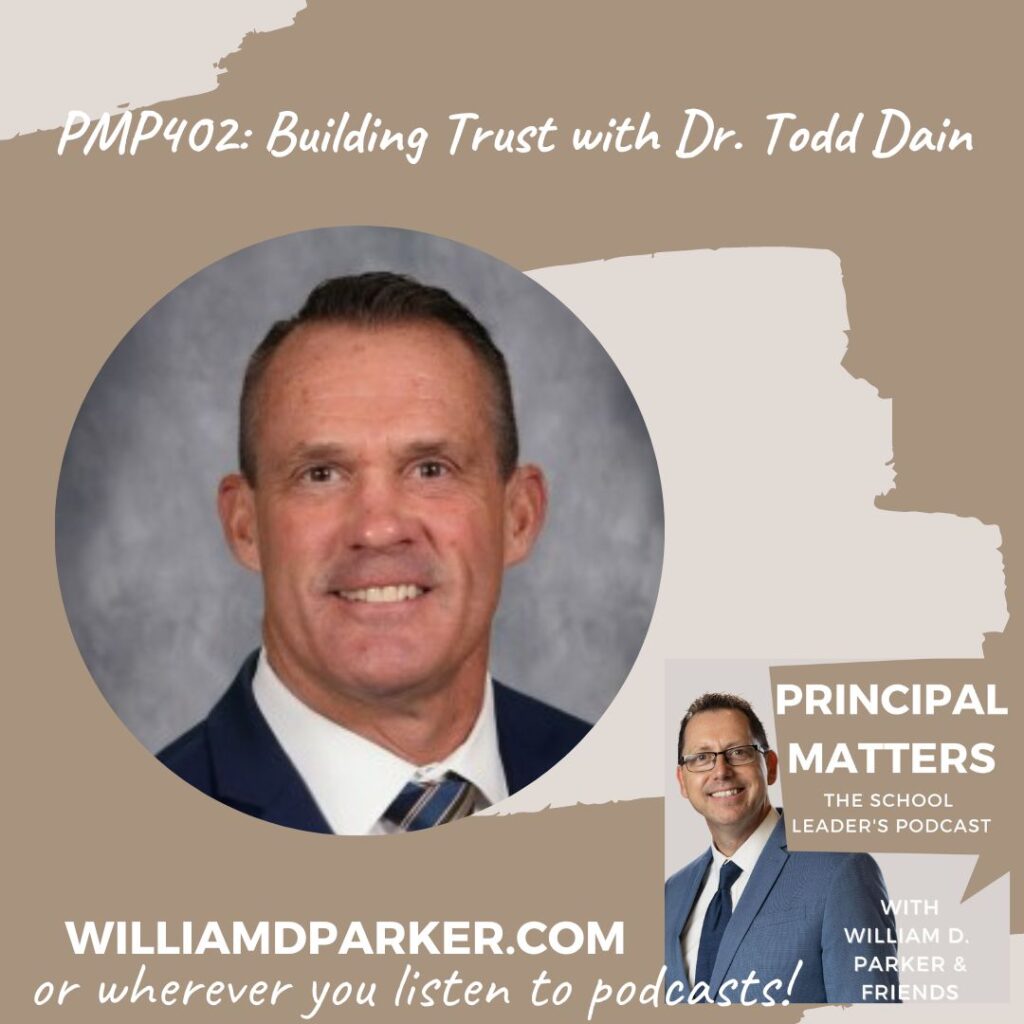
PMP402: Building Trust with Dr. Todd Dain
Jun 26, 2024
Show notes
Dr. Todd Dain has significantly shaped education over a 30-year career, currently leading Shawnee Mission South High School in Overland Park, Kansas, since 2015. With a foundation in education from Emporia State and Baker University, he’s held roles as a teacher, coach, and administrator. His leadership is acknowledged beyond the school through his involvement in educational organizations and as a former associate principal and activities director at Blue Valley Southwest High School. Dain’s excellence in coaching led to multiple sports victories and district championships. Honored as the 2023 Kansas Principal of the Year, his impact on Kansas education is inspiring. Additionally, Dr. Dain contributes as an adjunct professor at Baker University and, together with his wife, Dr. Jessica Dain, Superintendent of Piper School District, they are raising three children.
In this episode, Todd Dain and Will Parker talk about important takeaways for school leaders, including:
Todd’s background growing up on a dairy farm and the lessons it taught him that he’s used in education leadership.
The history of Shawnee Mission South High School, and his school’s achievements, including being named an Apple Distinguished School.
The commitment to school culture even with a diverse student population and diverse economic experiences of his community members.
Todd’s commitment to exercise, family, and delegation.
Being “trust-willing” in order to build the capacity in others to avoid micromanaging outcomes.
Why education is a people business and how leaders must leverage that trust.
Culture trumps strategy.
Why leading begins with knowing your why. “Success is not defined today,” Todd says. “Today is defined ten years from now.”
Why not sweating the small stuff, and being mindful of the investment your making in others are two-sides of the same coin of leadership.
How Todd plans his entire year out during the summer months, planning for duties and responsibilities of his associate principals, and being clear on the details and follow-through necessary for them to complete their responsibilities.
Todd ends with parting words of wisdom, including to remember relationships come first, learn to listen with empathy, and focus on celebrating the good.
Also, a shout-out to USAKansas, where Todd has served as President for the association this year!
Listen to the entire episode for more takeaways! You can connect with Dr. Todd Dain via email: ToddDain@smsd.org or on social media’s X or Instagram via @SMSouthTDain.

 Our TOPPODCAST Picks
  Stay Connected