MONDAY MATTERS with Jen Schwanke and Will Parker – Curiosity Plus Inquiry Equals Discovery
May 05, 2025
Show notes
Welcome back to another episode of Monday Matters! This week, Will and Jen are talking about another chapter from Will’s new book, Whose Permission Are You Waiting For? An Educator’s Guide to Doing What You Love. Throughout their conversation, Will and Jen discuss how important it is for school leaders to stay curious. One of the ways that leaders can accomplish this is through remembering why they love classrooms and schools. Doing so will keep the career journey fresh for school leaders and keep them from burning out. Another topic covered in this episode is complexity. Will shares a farming anecdote: “The more complexity that you create, the simpler farming will become for you, but it will never be easy.” He and Jen then reflect on ways that complexities have made sense over time throughout their individual leadership journeys. If you would like to learn more, listen in to the episode to hear the entire conversation.
Now It’s Your Turn
What are some ways you seek curiosity as you work? How do you explore things that bring you joy? As always, thank you for doing what matters!
ENCORE FRIDAY – PMP278: Encouraging & Motivating Staff with Jen Schwanke
May 02, 2025
Show notes
Happy Friday! This week our encore episode is a conversation between Jen Schwanke and I, focused on encouraging and motivating staff. Listen in to hear us discuss the following reminders for education leaders:
Listen.
Remove competition.
Present “expectations” with care.
Look inward.
Build teachers up.
Tune in to hear the full conversation or check out the original blog post to learn more. Thank you doing what matters!
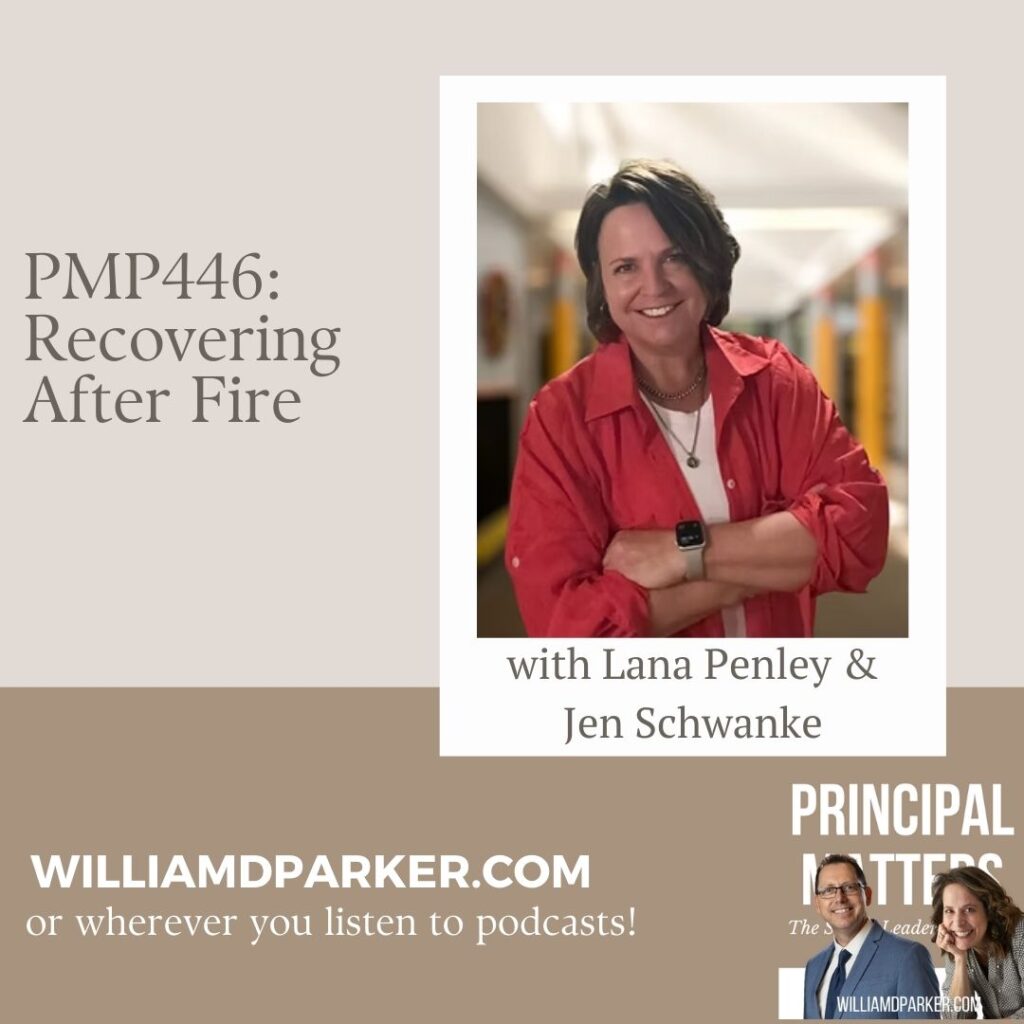
PMP446: Recovering After Fire with Lana Penley & Jen Schwanke
Apr 30, 2025
Show notes
A Quick Note to Listeners:
—- The Question of the Week is supported by Summer Pops Math Workbooks.Principals, when students practice math over the summer, math scores go up. What’s your summer math plan this year? A great way to start is by ordering FREE summer workbook samples at Summer Pops Workbooks.com. —-
Before this week’s interview, Will Parker answers a question from a student in Jen Schwanke’s graduate class at OSU.
The question is: When building a school team, how do you balance hiring for specific skills versus hiring for cultural fit? (Question from Brittney Oliver, 3rd Grade Teacher, Student in Education Master’s program at the Ohio State University)
Listen in to hear his response and thank you for doing what matters!
Meet Lana Penley
Lana Penley, former Principal turned CEO, stands at the forefront of Social and Emotional Learning (SEL) movement in education. After a school fire crisis, Lana spearheaded a complete transformation at her school, reducing suspensions, improving academic performance, and fostering a thriving community for both students and staff
As the dynamic CEO and Co-Founder of Unlocking SEL, Lana draws on 25 years of experience to shape her groundbreaking, mindful, and community-based approach to schooling, solidifying her status as a preeminent voice in SEL. She is on a mission to reimagine what’s possible for schools today, helping them become healthier and happier places through SEL, increasing positive student outcomes while reducing teacher burnout.
With 25 years in education, Lana is also a renowned keynote speaker, avid pickleball player, dog mom, and the founder of groundbreaking courses like SEL Jumpstart—a mini-course designed to help educators stop delaying and start doing with SEL.
No matter what she’s doing, Lana brings a unique blend of engaging storytelling, wit, emotional connection, and practical insights, making her style truly unforgettable.
Penley’s journey began with a school fire crisis that transformed her approach to education, leading her to prioritize kindness, connection, and authenticity. She emphasizes that SEL is not just about managing emotions, but about creating a healthy community and teaching students how to be good humans. Penley believes that schools are uniquely positioned to foster these skills, especially in the wake of challenges like the pandemic and societal divisions.
Penley’s book, Unlocking SEL: The 5 Keys to Transform Schools Through Social and Emotional Learning,offers a practical blueprint for implementing SEL in schools.It focuses on five key areas: understanding the foundations of SEL, prioritizing adult SEL, implementing student SEL strategies, scaling SEL school-wide, and creating a cycle of success. She highlights the importance of adult SEL, arguing that when teachers and staff feel supported and connected, they are better equipped to create a positive learning environment for students.
The conversation also touches on the connection between SEL and academic performance. Penley shares an anecdote about a student named Jose, whose dysregulation hindered his learning until SEL strategies helped him manage his emotions and focus on his schoolwork. She argues that SEL creates the conditions for a more successful learning environment by helping students develop skills like self-management, decision-making, and relationship-building.
Finally, Penley addresses the role of equity in SEL implementation. She emphasizes the importance of creating a sense of belonging and inclusion for all students and staff, regardless of race, culture, language, sexual orientation, or socioeconomic status. By fostering a compassionate and empathetic school community, Penley believes schools can address the diverse needs of everyone and create a more equitable learning environment.
MONDAY MATTERS with Jen Schwanke and Will Parker – Avoiding the Binary
Apr 28, 2025
Show notes
Welcome back to Monday Matters! This week, Will Parker and Jen Schwanke are discussing a chapter from Will’s new book, Whose Permission Are You Waiting For? An Educator’s Guide to Doing What You Love. The chapter is on avoiding the binary, and discusses innovative ways for readers to approach decision making in their work through the use of the Odyssey Process (Burnett and Evans, 2016). When using the Odyssey Process, it is important to consider more than two possible options while pondering a decision. Will shares how he used this process as a school leader by physically mapping out all of the options available to him on the walls of his office. He then invites leaders to think about the path they are on at the moment. Jen chimes in to remind listeners to stay out of their own way when they are making career defining decisions. She also encourages listeners to explore all possible options for their decisions, stating that you never know how many open doors are out there. Listen in to hear the whole conversation! Thank you for doing what matters!
ENCORE FRIDAY – PMP271: Answering Questions on School Discipline with Jen Schwanke
Apr 25, 2025
Show notes
Happy Friday! This week’s encore episode is one from 2021, a conversation between Will Parker and Jen Schwanke about school discipline. Listen in to hear them talk about several different ways to approach consequences for student discipline, as well as some great advice and practical applications to approaching discipline. You can learn more by tuning in to their conversation or by reading the original blog post here. Thank you for doing what matters!
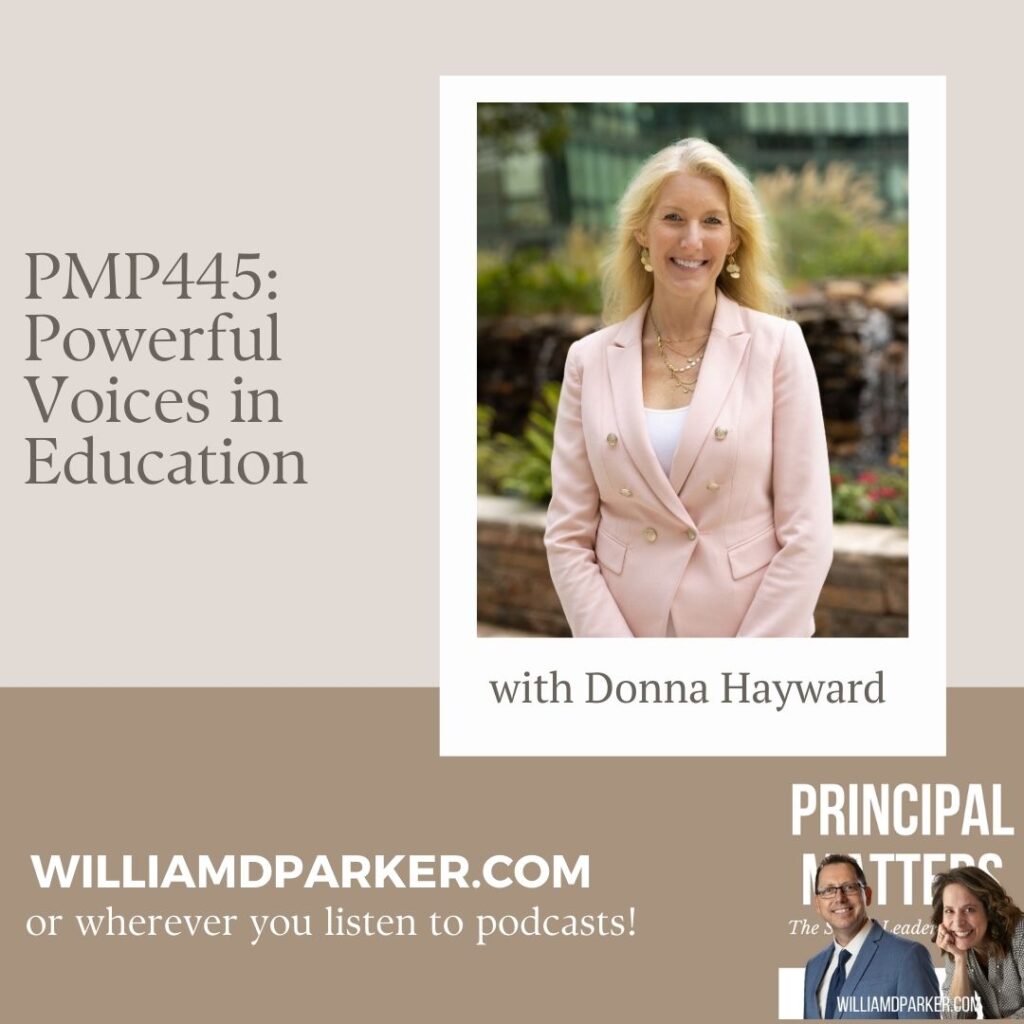
PMP445: Powerful Voices in Education with Donna Hayward and Jen Schwanke
Apr 23, 2025
Show notes
A Quick Note to Listeners:
—- The Question of the Week is supported by Summer Pops Math Workbooks.Principals, when students practice math over the summer, math scores go up. What’s your summer math plan this year? A great way to start is by ordering FREE summer workbook samples at Summer Pops Workbooks.com. —-
Before this week’s interview, Will Parker answers a question from a student in Jen Schwanke’s graduate class at OSU.
The question is: How did your leadership style evolve over the course of your principalship, and how did it impact the way you managed human capital? (Question from Emily Jeans, Teacher, Student in Education Master’s program at the Ohio State University)
Listen in to hear his response and thank you for doing what matters!
Meet Donna Hayward:
Donna Hayward began her professional career as a high school mathematics teacher after earning her Bachelors and Masters degrees from Smith College. Inspired by her own high school principal, Donna completed her Sixth Year through UCONN and served as Assistant Principal/ Principal of Rocky Hill High School for a decade. During this time, she markedly increased Advanced Placement opportunities and standardized test scores and reduced discipline, leading to her presentation of effective strategies at the State’s annual data conference and the NASSP’s national conference.
She was honored as the Connecticut Assistant Principal of the Year in 2006. Donna then served as Principal of Suffield High School for six years, during which time she opened a new Agriscience center and led her school to exceed prior academic performance in all areas. She now serves as Principal of Haddam Killingworth High School which earned the National Blue Ribbon in her fourth year. Donna was named the CT Principal of the Year in 2022 and is the NASSP’s National Principal of the Year for 2023. From this platform, she has advocated for educators in Washington, DC and across the country to elevate educators and public education, secure more mental health support for young people, protect teachers and administrators from defamation on social media, and support women in leadership. She is a keynote speaker and frequent presenter on topics ranging from how to incorporate storytelling in advocacy, developing and leading with student voice, leveraging leadership with all stakeholders, digital safety for educators, and empowering women in the educational workplace.
From Jen Schwanke:
This podcast features an interview with Donna Hayward, the 2023 NASSP National Principal of the Year. Hayward’s career path, from high school math teacher to nationally recognized principal, highlights a journey of hard work, challenges, achievements and advocacy work. In this episode, she tackles some critical issues faced by educators today, such as increasing workloads, staff shortages, and the politicization of education. She also offers a few tips for self-care, finding joy in the profession, and advocating for a positive impact for children.
More detail:
Hayward describes her path to becoming National Principal of the Year as unexpected and unplanned. She was initially unaware of her nomination and almost missed a crucial call from NASSP CEO Ronn Nozoe informing her that she was a finalist. The experience involved travel and meetings with educators across the US and internationally. The distinction as National Principal of the Year did come with challenges, including maintaining a full-time job as a principal while fulfilling the demands of the award. Hayward discusses the difficulty of balancing her responsibilities at her home school while engaging in national advocacy work and traveling extensively.
Her work, both at her high school and through her travels and conversations with other educators, lend themselves to a conversation with Jen about the unique challenges faced by women in leadership, particularly the balance between work and family life. Donna, a single mother, shares a poignant anecdote about her daughter’s understanding and support for her demanding career. She emphasizes the importance of teamwork and collaboration between male and female colleagues to support women in leadership roles.
Next, Donna identifies several universal challenges faced by school leaders, including the ever-growing workload, teacher and administrator shortages, and the politicization of education. She stresses the need for educators to reconnect with their “why” and advocate for their schools and students. Jen and Donna acknowledge the societal anxieties projected onto schools and the need for educators to counter negative narratives surrounding education. They advocate for celebrating the positive impact educators have on children’s lives and promoting teaching as a fulfilling career path.
Finally, Donna considers the importance of self-care for educators, emphasizing the need for basic necessities like sleep, nutrition, and exercise. She also notes that experience makes the job easier over time, allowing for a better balance between work and personal life. Similarly, Jen challenges the notion that education is a sacrificial career that leaves educators depleted. Both she and Hayward stress the importance of finding fulfillment and joy in the work while maintaining personal well-being. They also emphasize the value of seasoned educators continuing to contribute to the profession even after retirement.
Donna hopes listeners will reach out to her, as she is eager to support and collaborate with educators all around the world!
Staying Connected:
You can stay connected with Donna Hayward through these avenues:
Website: donnahayward.com
X: @Donnahayward_
Email: dhayward@rsd17.org
Thank you for learning together, and thank you for doing what matters!
MONDAY MATTERS with Jen Schwanke and Will Parker – Professional Pathways for Educators
Apr 21, 2025
Show notes
This week on Monday Matters, Will and Jen talk about professional pathways for educators and getting through the end of the school year. They discuss strategies for powering through what Will and Jen call the “slog” at the end of the school year, and share how they have each adjusted their mindset to have a more positive outlook towards the “slog”.
Next, Will shares some insights from his new book, Whose Permission Are You Waiting For? An Educators Guide to Doing What You Love. He addresses some factors that make the education career path unique and different from others. For example, according to a study done by the Economic Policy Institute (2023), teachers on average earn 73.6 cents for every dollar made by other professionals with their educational achievements. He also speaks about the different career options that are available within the field of education. Two of the questions he asks individuals exploring their career options within the field of education are:
Is what’s in front of you something you want to do?
Are you limiting yourself by only sticking to the traditional options you think are available, rather than thinking outside the box?
Jen chimes in and explains that as students, we saw a lot of teachers, whereas we rarely saw a person in an administrative role in action. She then shares a mistake that people often make (including herself) is trying to overly plan their careers. Her advice to listeners is, “Be ready for the job you might want.”
Listen in to hear the entire conversation and to hear some great takeaways on professional pathways for educators. Thank you for doing what matters!
ENCORE FRIDAY – PMP253: 10 Lessons from a First Year Assistant Principal with D.J. Klein
Apr 18, 2025
Show notes
Happy Friday! Our encore episode this week is one from 2021, another interview with D.J. Klein. His interviews on this show are popular for a reason; he always has sage advice to offer listeners! Check out this interview to hear him share ten lessons he learned in his first year as an assistant principal. Listen in to hear the whole conversation or follow this link to read the original blog post. Thank you for doing what matters!
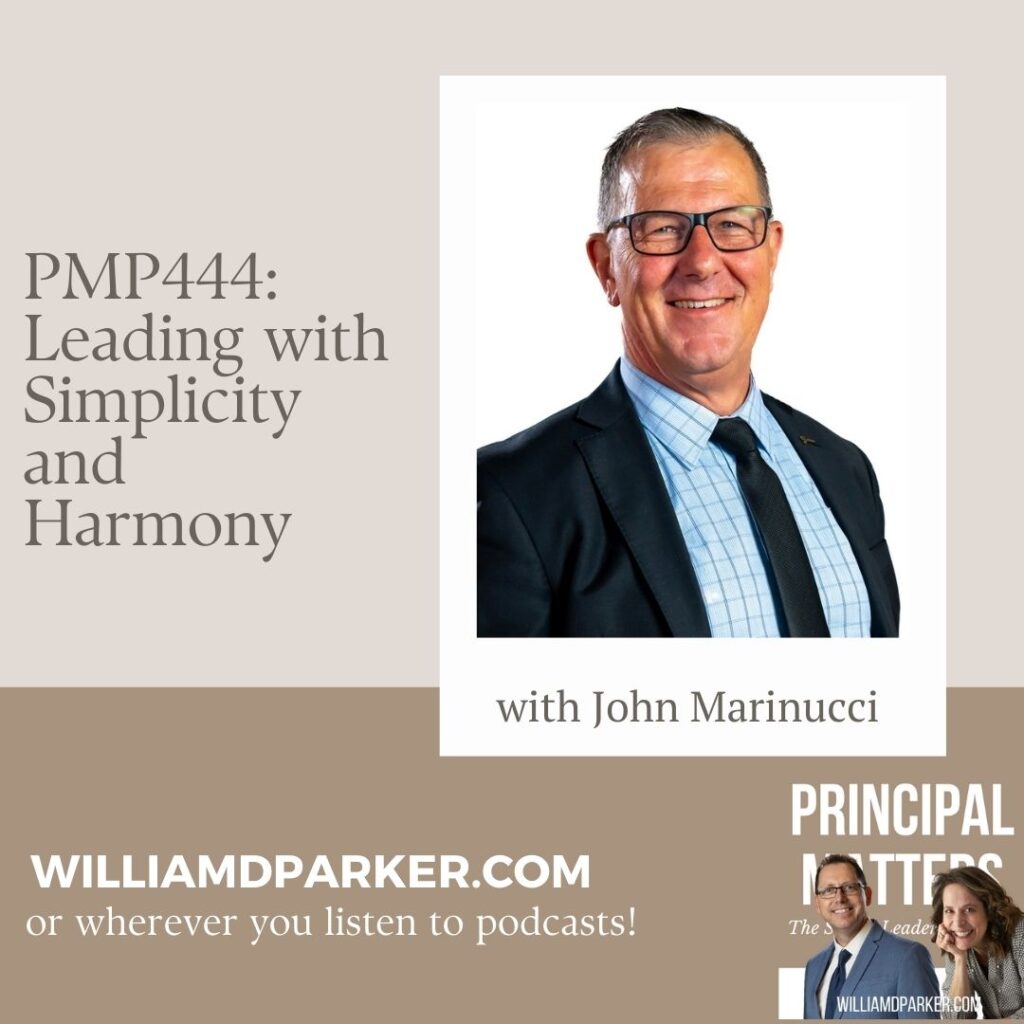
PMP444: Leading with Simplicity and Harmony with John Marinucci
Apr 16, 2025
Show notes
A Quick Note to Listeners:
—- The Question of the Week is supported by Summer Pops Math Workbooks.
Principals, when students practice math over the summer, math scores go up. What’s your summer math plan this year? A great way to start is by ordering FREE summer workbook samples at Summer Pops Workbooks.com. —-
Before this week’s interview, Jen Schwanke and Will Parker answer a listener question with a five minute response.
The question is: How did your leadership style evolve over the course of your principalship and how did it impact the way you manage human capital?
Listen in to hear their response and thank you for doing what matters!
John Marinucci currently serves as the Principal of St Francis College, a role he has held since 2019. St Francis College is a contemporary Catholic school located in Logan City, on the southern edges of Brisbane, Australia. The institution is deeply rooted in Franciscan values, emphasizing simplicity and harmony in its educational approach.
Before his appointment as Principal, John was the Head of Campus for grades 7 to 12 at St Francis College. His leadership experience also includes significant roles at Carmel College in Thornlands and St Mary’s College in Ipswich. John holds a Master of Educational Leadership from the Australian Catholic University, a Bachelor of Business Accountancy from the Queensland University of Technology, and a Diploma of Teaching from Mt. Gravatt College of Advanced Education, now a part of Griffith University.
Outside his professional life, John enjoys crosswords, sudoku, camping, and spending quality time with his wife and three adult children.
John’s career reflects a deep commitment to educational leadership and the nurturing of future leaders within the Catholic education system. His contributions continue to shape and inspire the community at St Francis College and beyond. Something that listeners may be surprised to learn about him is that he spoke Italian at home, so when he started school, he only had a vocabulary of about six English words.
Relationship Building:
When asked what inspired his current work, John cites a love for the relationship building that comes with working in education. He has spent 35 years on and off working in education. At one point in his career, John left the field of education, but decided to come back because he missed the relationships he was able to build with young people through his work. Unquestionably, John is committed to serving students and families from all kinds of cultural and religious backgrounds. Currently, his school serves five of the eight poorest communities in Queensland.
Franciscan Values:
The values that John’s school is rooted in are called Franciscan values, emphasizing simplicity and harmony in its educational approach. One way that his school approaches the values of simplicity and harmony is through teaching students how to get along with people who are not like them. John says that students at his school have about twenty different faiths among them, which contributes to the students learning to be tolerant of people who are different from them. Another way that John’s school practices simplicity and harmony is by increasing parents’ involvement by celebrating student achievement. John emphasizes that things can be complex, but not complicated, and discusses the practice of seeking to make things simpler, not easier.
Time Management:
When thinking about tips he has for school leaders on time management, John points out that he, like many school leaders, has a tendency to overcommit. Nevertheless, John states that he tries to keep his days balanced. He carves out time before and after school each day for work so that he can dedicate his time during the school day to staff and students. Furthermore, John makes sure to take time each morning going for a walk with his dog, and he uses that time for meditation or to plan his day.
Advice for New Leaders:
As he considered what advice he would give to a new leader, John offered several pieces of sage advice. First, John talks about the importance of always treating people with dignity and respect. He states that genuinely caring about people helps foster a culture of trust and respect. Second, John emphasizes that leaders need to embrace change and see it as an opportunity for growth. Third, he tells listeners that they should always communicate the bad to people, as they will always find out what is going on, and it should come from you. John reminds listeners that hard conversations are really crucial conversations. Next, John says that young leaders must find a mentor who can guide you along the way. Finally, he reminds new leaders of the importance of really getting to know the people who work for you.
Advice for Veteran Leaders:
John’s advice to veteran leaders is to constantly remind yourself that you’re making a difference. He also discusses using the holiday break as a way to examine and evaluate why he does this work. Constantly setting new goals helps reignite his passion and keeps him motivated in his work for the long haul.
Staying Connected:
Listeners can stay connected to John via Linkedin or through email: jmarinucci05@gmail.com
MONDAY MATTERS with Jen Schwanke and Will Parker – Catching Up
Apr 14, 2025
Show notes
Happy Monday, friends! This week for Monday Matters, Jen and Will are taking some time to catch up and talk about the exciting work we have been doing recently.
Jen talks about a presentation she gave recently. By the time this recording comes out, she will have returned from speaking at national school boards association with some of her colleagues. They are presenting about their social worker cohort, an idea dreamed up by Jen’s superintendent and brought to life by Jen and her colleagues. Essentially, this program is for teachers who want to get a masters in social work. This ensures that graduates from the program will have the classroom experience that is critical for guidance counselors and social workers for understanding school based interventions. The social worker cohort program was a resounding success; the program had over a hundred applicants and 25 ended up going through the program. The masters program itself is rigorous, and at the end of the program the students will be guaranteed job placement as a social worker within the school district. Listen to the episode to hear all the amazing details about this program!
Will talk about his new book, Whose Permission Are You Waiting For? An Educator’s Guide to Doing What You Love. He talks about wanting to share with listeners why he wrote this book. When summarizing why he wrote the book, Will says that he has spent the last several years coaching high-achieving school leaders. As he was coaching leaders, he found himself giving advice on similar themes. Eventually, Will says that he realized he should write down the advice he keeps giving to leaders, recognizing that other leaders he is not coaching may be struggling with the same issues as the leaders he is coaching. Drawing on his experience, and the experience of others, Will wrote 20 different chapters that will help transform the work and lives of school leaders. Tune in to hear more about Will’s new book or purchase your copy here.

 Our TOPPODCAST Picks
  Stay Connected