TopPodcast.com
Menu
  • Home
  • Top Charts
  • Top Networks
  • Top Apps
  • Top Independents
  • Top Podfluencers
  • Top Picks
    • Top Business Podcasts
    • Top True Crime Podcasts
    • Top Finance Podcasts
    • Top Comedy Podcasts
    • Top Music Podcasts
    • Top Womens Podcasts
    • Top Kids Podcasts
    • Top Sports Podcasts
    • Top News Podcasts
    • Top Tech Podcasts
    • Top Crypto Podcasts
    • Top Entrepreneurial Podcasts
    • Top Fantasy Sports Podcasts
    • Top Political Podcasts
    • Top Science Podcasts
    • Top Self Help Podcasts
    • Top Sports Betting Podcasts
    • Top Stocks Podcasts
  • Podcast News
  • About Us
  • Podcast Advertising
  • Contact
Not in our directory?
Add Show Here
Podcast Equipment
Center

toppodcastlogoOur TOPPODCAST Picks

  • Comedy
  • Crypto
  • Sports
  • News
  • Politics
  • True Crime
  • Business
  • Finance

Follow Us

toppodcastlogoStay Connected

    View Top 200 Chart
    Back to Rankings Page
    Christianity

    My Ministry Breakthrough

    Real Pastor’s Stories. Real Life Moments. Realizing Ministry Breakthrough.

    Advertise
    • Apple Podcasts
    • Google Play
    • Spotify

    Latest Episodes:
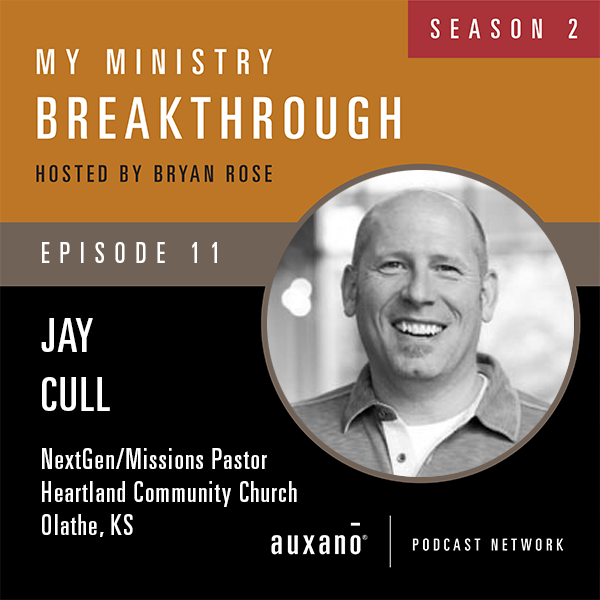
    2_11: Jay Cull: Disciples are made through personal calling not church programming. Feb 01, 2020
    Show notes

    Breakthrough ideas with Jay:

    • What does it look like to move from being a “church for the unchurched” to being a “church among the unchurched?”
    • How do we activate and motivate people where they live, work, and study and play to carry their faith beyond the church into neighborhoods and workplaces?
    • What does a shift from attractional to incarnational ministry look like?
    • We’ve been trying to answer the question in our services for a long time, “Is God relevant?” Now, we’re saying, “How can we help folks encounter God in our midst and carry that everywhere we go?”
    • So we’re not asking the question, “Is God relevant?” We’re asking the question, “Is God here?”
    • How can we encounter God in that space in our public gathering?”
    • To encounter God, those that lead and prepare all week or all month for that service have encounters with God, so it becomes an overflow expression.
    • “Hey, what if we relied on prayer first?” It was the tip of the mission.
    • But 30 minutes before service, we’ll gather and ask, “What do we sense God saying? What are the micro shifts for the day?”
    • If you are not well-prepared, you would not be able to receive the last minute micro-shifts from God.
    • When it comes to planning, if you don’t have something to deviate from, then everything’s a deviation and exhausting.
    • What happens when God’s presence is very tangible, palpable, and folks are finding freedom?
    • We realized that we are not used to experiencing the presence of God in such a tangible way in our services.
    • We’re doing the work to encounter God personally, and it’s spilling over into our services.
    • We’re trying to build this relational connection, not just with each other, but with the God that we’re serving.
    • We’ve been hardwired to be good at this connecting with God and people and doing it all simultaneously.
    • Praying is leadership. What if we prayed as if it’s our only resource?
    • We’re a well-resourced church in an upper class– we’ve got plenty of ideas. But let’s pray as if it’s our only resource
    • What we’ve tried to do is not just talk about it, but from the platform, help folks engage in a prayer practice.
    • We’ve begun to use the stage as a place of equipping.
    • When I’m talking to God, where can I go in my imagination? I mean, what does it look like?
    • We are deploying people from the room on Sunday to go and live their faith the other six days of the week in the different venues God has placed them.
    • We’ve elevated the stage to place people in spectator mode with their faith.
    • How do we change the stage from a place to watch, into a place of encounter? We facilitate a meeting that they can carry with them.
    • It has been amazing to help everyone get personal clarity.
    • The church is here to help accomplish what God wants to do in your life.
    • In the Younique process, we are helping the individual say, “Hey, how do I be a disciple that makes disciples different than the person next to me?”
    • How do we have a person who knows how to help many folks reproduce so we can have an exponential movement?
    • I want to activate healthy, Spirit-led reproductive leaders that lead communities that change communities. That’s what I want to get after.
    • Are we deploying people into their calling through this Younique process by helping them find their two words and attributing all the rest of the clarity to that?
    • We’ve taught people how to coach and disciple others. Younique happens to be a great process, a context to help folks become trainers.
    • In 30 seconds, what if I could get to the heart of what’s going on with my neighbor? And not because they have the same language, but because I understand how to get to their core.
    • Be a person of the Scriptures. Don’t just master them, let them master you.
    • Be a person of prayer. Learn how to have a conversation with God until just it’s normal.

    Breakthrough resources in this episode:

    Heartland Community Church

    Fathered by God by John Eldredge

    Younique: Designing the Life that God Dreamed for You by Will Mancini

    Jay Cull leads as Pastor of NextGen/Missions at Heartland Community Church just outside of Kansas City, Kansas. His life calling is coaching leaders in toward breakthrough clarity to lead communities that change communities. Jay’s a former church planter, businessman turned pastor, coach and consultant. He enjoys the outdoors, especially biking, hiking, and skiing, with his family – wife of 24 years and three adventurous children.


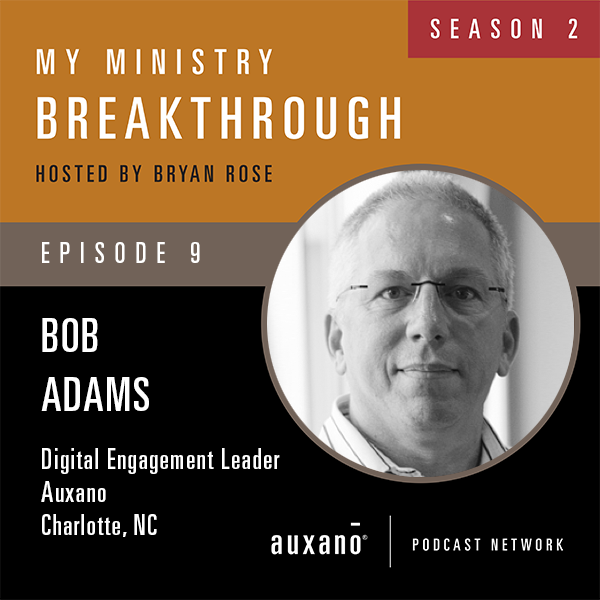
    2_09: Bob Adams – A masterclass on reading for a new decade of church leadership Dec 29, 2019
    Show notes

    Breakthrough ideas with Bob:

    • Reading becomes caught more than taught, a practice handed down generation to generation.
    • Reading will help you learn critical thinking skills. Critical thinking skills are an essential part of leadership.
    • Then a seminary professor, Al Mohler, always talked about critical thinking and reading in leadership terms.
    • Leadership, at its very core it about critical thinking… reading, whether it’s from books or magazines, even online browsing, it is going to be the foundation of critical thinking.
    • Why reading is so essential in the life of a church leader
    • An expert on reading books and helping others read books well.
    • Pastors have big libraries. But I would venture to say their libraries are full of books they haven’t read or haven’t read cover to cover.
    • The original idea of SUMS was to produce a book summary that was a summary. We do author-based permission about 2,000, 2,500 words.
    • Book reading happens in one of four ways: elementary, inspectional, analytical, or syntopical.
    • Elementary reading is reading for what the book says. You’re not getting very deep into it. It is what it is.
    • Elementary reading forms the fundamental level of reading.
    • Inspectional reading is reading by answering the question, “What is the book about?”
    • Inspectional reading seeks to understand more about what’s behind the whole theme or concept.
    • Analytical reading is reading by answering the question, “What does the book mean?”
    • Analytical reading always involves asking questions and taking notes.
    • In analytical reading, you’re having a conversation with the author.
    • Analytical reading usually happens in the kind of books that you come back to again and again over the years.
    • Syntopical reading is reading that examines how a particular book compares with other books about the same topic?
    • Everyone must make time to read.
    • Reading is a deliberate practice.
    • If you want to learn to read, you’ve got to stop doing something else.
    • You have to make a deliberate practice of reading every day, preferably on your calendar.
    • Make a deliberate practice to stop doing something so you can start reading.
    • If you’re doing things to increase your leadership capacity, you’re probably going to be doing analytical reading.
    • Michael Hyatt created a reading journal for individual books where he takes a one or two page summary of the book.
    • Leaders should read fiction books because they allow exploration of other worlds one would ordinarily go.
    • There are books, there are good books, and there are great books.
    • The benefit of reading #1 – Reading builds a connection between your brain synapses.
    • The benefit of reading #2 – Reading reduces stress by being a mental pressure relief valve.
    • The benefit of reading #3 – Reading increases knowledge at all levels.
    • The benefit of reading #4 – Reading expands your vocabulary.
    • The benefit of reading #5 – Reading makes you a better writer.
    • The benefit of reading #6 – Reading supports the skills to be an analytical thinker.
    • The benefit of reading #7 – Reading builds focus.
    • Some studies indicate that reading 10 to 30 minutes in the morning before you begin your regular workday brings better focus.
    • The benefit of reading #8 – Reading makes you a better speaker
    • The benefit of reading #9 – Reading stimulates your mind.
    • The benefit of reading #10 – Reading doesn’t have to cost you anything.
    • The goal a reader seeks, be it information, entertainment, or understanding, determines the way he reads.
    • A good book is one thing, but a great book begs engagement again and again.
    • The people that you’re working with are more important than any process or project or whatever you think you’re trying to do.
    • You can borrow the book, but you get to keep the ideas.

    Breakthrough resources in this episode:

    How to Read a Book by Mortimer Adler

    Bob’s writing at 27gen.com

    Bob’s writing at guestsexperiencedesign.com

    SUMS Remix by Auxano

    Sums Remix Bookshelves

    Missional Renaissance: Changing the Scorecard for the Church by Reggie McNeal

    Good to Great by Jim Collins

    Guest Experience Boot Camp

    Michael Hyatt’s Book InSIGHTS reading journal

    Bob is passionate about helping church leaders understand the importance of the guest experience in their church. For over 36 years, he has served the church in various capacities, working with hundreds of churches in developing a guest experience ministry. Bob has a unique ability to translate the corporate world of customer service to an amazing guest experience for the church. Bob facilitates a network of Connection Pastors and Guest Experience Directors from churches across the country.

    Bob also serves as Auxano’s Vision Room Curator and Digital Engagement Leader. His education includes a Bachelor of Science in Business Administration from Tennessee Technological University, a Master of Religious Education from the Southern Baptist Theological Seminary, and post-graduate work in Church Business Administration from the Candler School of Theology at Emory University. Bob lives in Huntersville, NC, with his wife, Anita. Their immediate family includes four adult children, three daughters-in-law, one son-in-law, and four grandchildren.


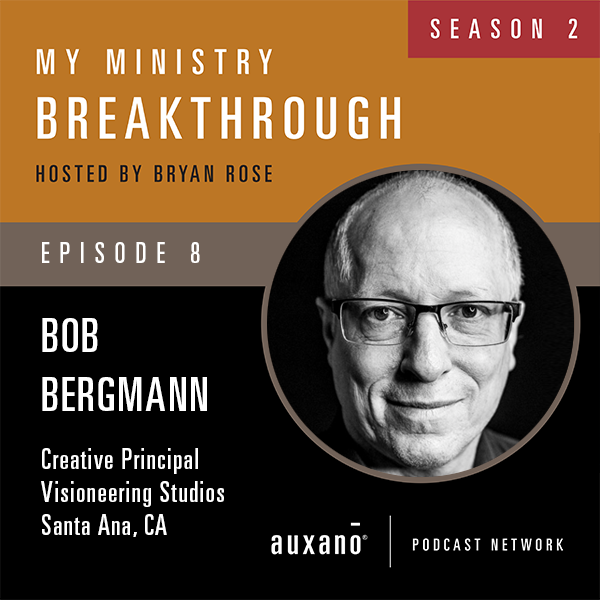
    2_08: Bob Bergmann – What story does the design of your church tell? Dec 12, 2019
    Show notes

    Breakthrough ideas with Bob:

    • The church needs to go where all the people are going.
    • Visioneering Studios is called to help the church put to form the stories about the Kingdom of God on earth as it is in heaven.
    • Every building tells a story, and sometimes the story told is that we are cheap and just putting something together.
    • Sometimes the story our building tells is that “We copied something that looks successful somewhere else.”
    • What’s the prophetic story that God wants to tell through your community?
    • The Church is God’s best tool for redeeming this lost city; this lost civilization.
    • Sometimes we design for other things and miss what the greatest Designer has done.
    • We have to step back and look at where we’re going continually.
    • Don’t design from the property line in.
    • The Church is lagging because we don’t understand that people are dying of spiritual thirst.
    • We know lost people love the created work of God; they don’t know the creator God of that work.
    • People love the creation, but they don’t know the creator. Design can bridge that gap.
    • At some point, the church started looking like the buildings in the culture.
    • We create these great outdoor public spaces where the street sweeper and the stockbroker come together.
    • Where did our church buildings go off track? When did we lose the reflection of our Creator God?
    • Jesus asked these two questions: Who do you say that I am? Who do they say that I am?
    • You are going to spend the same amount of money doing something that looks more like the architect than a design that engages the lost.
    • If your church were to leave, what would people say is missing in the community? Most leaders realize outside the walls; nobody cares whether they exist or not.
    • Sometimes the building gets in the way of the message a church tries to communicate — even a word of beauty and order and design.
    • Utilizing the space between the buildings typically affects only 10% of the cost within the building.
    • We’re mimicking the Great Designer’s work. And let’s do that with our designs, with architecture, as well.
    • Make God famous. Bring Glory to God in your work.
    • Make God famous. We’re working hard at that, on Sunday morning, from the pulpit. But what if we worked just as hard in the lobby, and in the parking lot?
    • Architects want to be recognized for their style and acknowledged for something amazing they did.
    • As designers, we believe that it is not about us. Not about any awards received, it’s not about how photographed our buildings are or how many times they show up on Instagram. The design should be about how much glory it brings to God?
    • If you do good work – and I’m talking about architecture – and people can’t see you, but they can see God in it, that’s the success.

    Breakthrough resources in this episode:

    How Should We Then Live by Francis Schaeffer

    Crazy Love by Francis Chan

    Visioneering Studios

    As a small child, Bob loved art and design. The early building blocks that brought design into reality were his Lego set. Later, his love for science grew and then in his mid 20’s he surrendered his life to Jesus Christ.

    Bob’s first full-time job in an Architect’s office gave him opportunities to design resorts and theme parks around the world over a 20-year span. Prior to joining Visioneering Studios, Bob served as the Principal Designer at AECOM. While at AECOM, he was giving up vacation time to design and build on the mission field. By November of 2002, As the first designer at Visioneering Studios, Bob’s dream of combining art, science and theology came together. Visioneering Studios believes that the Church is the best tool for the redemption of people and places.


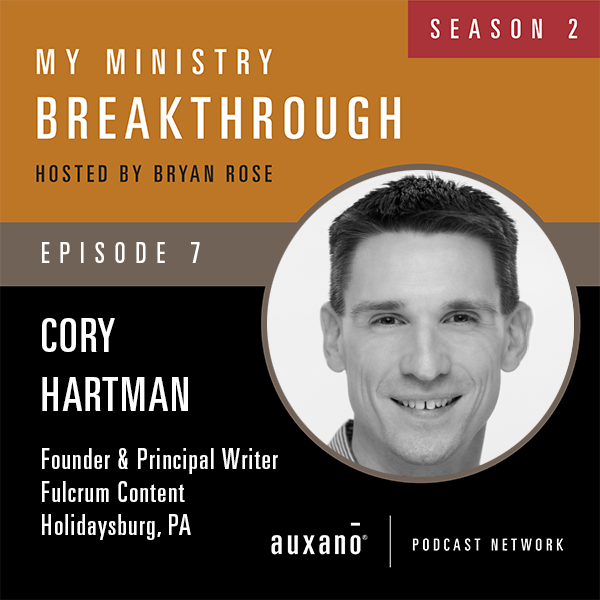
    2_07: Cory Hartman – Stop wasting words convincing people to show up Nov 28, 2019
    Show notes

    Breakthrough ideas with Cory:

    • How can you use the written word to extend your reach?
    • Is there a way to leverage your weekly content to make disciples?
    • What are the best possible ways to shape and leverage your content for disciple-making outside of your Sunday service?
    • The church is a content factory every week, creating a ton of content, yet we’re not taking advantage of it outside of the sermonic moment.
    • Are you maximizing the channels to communicate the gospel?
    • The one who works longest is the one who is most devoted to the ministry of the word, right? Maybe not.
    • How do we give gospel-shaped answers to the questions that people are actually asking?
    • There seems to be a divide in the philosophy of preaching with felt need, seeker-sensitive on the one side, and expositional verse-by-verse gospel-centered on the other side. I don’t see why those are two sides.
    • The questions that people are asking, they have deeper questions in life. We’re all walking around with the more profound questions in life.
    • What does it mean to have a gospel-centered, gospel-shaped Biblical answer to the question is my boyfriend cheating on me, and how do I know?
    • When we can speak to a surface-level tension, there’s an avenue to this more significant, kind of gospel-centered question.
    • When you look at the messages that you send: your bulletin or worship guide, look at your website, look at your social media feed, and look at all the different ways that you’re communicating to other people. The call to action is to show up.
    • Show up to Sunday morning worship, show up to the small group, show up to vision night, show up to community outreach, show up to youth group, show up to whatever.
    • Did Jesus tell us, “Go ye into all the world and tell people to show up?”
    • Jesus did not say: “Guys, whatever you do, as the father has sent me, so I am sending you to get people to show up, you have to get people to show up.”
    • When the vast bulk of our content is telling people to show up, what are we communicating there?
    • Is our primary message akin to what the Lord told us that our central message was supposed to be?
    • How are we sending a “grow up” message to people in their personal and spiritual growth according to the Good News that the Lord has given us?
    • Communicate opportunities to grow up into something as much as you communicate opportunities to show up for something.
    • You don’t have to wait for Sunday or wait for the right Sunday. You don’t have to wait for that to try out the Christian life. Just try it.
    • We can talk to the skeptical person; we can speak to the secular person, we can talk to the person who’s disaffected from church and say, “Before you even come to church, try this Jesus thing. Just take this one teaching of his and put it into practice in your life this week and see what happens.”
    • People are showing up to church less, but they still maintain the same level of perceived connectedness.
    • They still call it “my church” even though versus ten years ago, attendance rates are down. And in some cases, giving is remaining the same, which is fogging the lens on what’s happening.
    • It is more biblical to say a disciple is someone who shows up. So rather than put the attendance ahead of discipleship, we need to put discipleship forward of presence.
    • How is the church going to make disciples in the networks of people’s relationships beyond the four walls?
    • Social media is one of those networks, one of those networks that our people are in, apart from the four walls of the church, that sharing the gospel should take place.
    • If we’re diligent about posting helpful enough content, maybe we are equipping our people to share with the people around them that are hurting and struggling and have questions.
    • Facebook could be the new Monday night visitation.
    • Well-designed, well-curated content shared appropriately could be that next Monday night visitation or Chick Tract with the four spiritual laws.
    • Evangelism, even if it was a little bit of a scary word, was a word in the lexicon of our church ten years ago. Not any more.
    • Not being equipped makes it difficult for people to share the gospel.
    • There’s so much baggage with the word evangelical. It’s a political party now, not a posture of believers in kind of an overflow of their life.
    • Instead of talking about how social media channels weaken our faith and weaken the connection between people and are a stumbling block, what if this could be a strength in this new evangelical age?
    • Does anybody read blog posts anymore? I think the answer is yes.
    • We’ve been sitting with the internet for a generation, still trying to figure out how to best tailor the content as the Church.
    • One of the things that the church has missed along the way is the relationship between what happens online and what happens offline.
    • The written word is valuable in part because it is so snackable and so skimmable.
    • Your first few years in ministry are primarily about growing you into the kind of branch that will produce fruit someday.
    • In God’s plan, the next long season of your life is not mainly about how he’s going to use you to help people become like Christ, but mostly about how he’s going to use people to help you become like Christ.
    • Try to relax, and don’t be afraid to relax a little that if you relax a little, you’re going to relax too much, because you’re not capable of relaxing too much.
    • Your church would be happy to keep you forever, but they deserve better than a pastor who is continually thinking about the next thing.
    • The choice that we make at that moment, whether to leap or not leap, itself has no bearing whatsoever on whether God loves us or not.

    Breakthrough resources in this episode:

    Fulcrum Content

    From Show Up to Grow Up by Cory Hartman

    Albion’s Seed: Four British Folkways in America by David Hackett Fischer

    Younique: Designing the Life God Dreamed for You by Will Mancini

    Cory Hartman is the founder and principal writer at Fulcrum Content, the company he launched to equip churches for disciple-making and help leaders extend their reach with the written word. At Fulcrum, Cory serves as a collaborative author for thought-leaders, provides editing and self-publishing assistance, writes original online pieces, adapts audio and video content into engaging articles, writes marketing copy, and crafts custom-built discipleship material. Cory served as a pastor for 13 years in churches in Pennsylvania and New Jersey. He earned a doctor of ministry degree from Gordon-Conwell Theological Seminary with a thesis on 19th-century educator, revivalist, publisher, and abolitionist Mansfield French. Cory previously earned an MDiv from Gordon-Conwell in urban ministry and a BA from Taylor University in biblical literature. Cory’s letters have appeared in such publications as the Boston Globe and the Newark Star-Ledger, the latter winning the paper’s Silver Pen Award. He is the author of From “Show Up to Grow Up”: How to Make Top Content That Makes Real Disciples and On Freedom and Destiny: How God’s Will and Yours Intersect. A native of central New York State, Cory’s family roots are in central Pennsylvania, where he now lives with his wife Kelly and their four children.


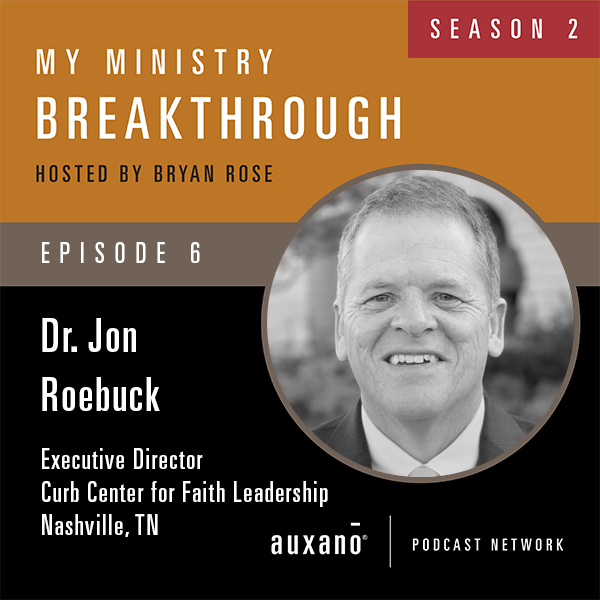
    2_06: Dr. Jon Roebuck – Actually talk with people… don’t just preach at them. Nov 14, 2019
    Show notes

    Breakthrough ideas with Jon:

    • How can a church stay relevant to their culture?
    • How can a church stay relational to the communities in which God has placed them?
    • How can a church remain resolute to their DNA and their calling?
    • If you will create physical space, you allow conversations to begin to happen, that are meaningful and perspective-altering,
    • We create better communities if we have better churches, and we create better churches if we have better leaders.
    • Ask yourself: what does the world around me need, and how can I begin to instill into my people this heart for ministry?
    • Community ministry is messy, it’s inconvenient, it’s expensive, it’s all of that, but it’s the right thing to do.
    • Baptists tend to hang out with Baptists, Methodists with Methodists, Presbyterians with Presbyterians, and so we don’t necessarily have an appreciation for what good work other denominations are doing. How might that change?
    • In most urban areas like ours in Nashville, nobody is connecting the dots across the denominational lines.
    • We’re beginning to see that the work in Nashville is more significant than what our church and our denomination can tackle.
    • At the local church level, what does it look like for us to be a good neighbor or contributing partner to our community?
    • What if we stopped telling our community what their needs are, but asked them to tell us what their needs are?
    • Just by the fact that we’ve opened physical space, we begin to enter into conversational space.
    • If you have enough conversations, you begin to develop relational space, where you start to engage at a different level.
    • There’s a movement from physical space to conversational, to relational, to redemptive space, and ultimately to reflective space.
    • If you create space, even physical space, in your building for the right conversations, amazing things are going to happen.
    • Be willing to invite people into your space. It’s not going to damage your church. It’s not going to damage your theology.
    • What we don’t have in our culture is, we don’t have the safe, rational, civil dialog space.
    • So, where do people go to have safe conversations about important things? It ought to be the church.
    • Why is the church not a place that important conversations can take place?
    • Forty million Americans in the last 25 years have left the church because they get judgment, and they get condemnation instead of conversation.
    • We’re too busy preaching at people to listen to what they have to say in return.
    • I believe a lot of our pastors don’t have a vision beyond the seat they’re sitting in right now, beyond the next Sunday.
    • How do you carve out space, even in your ministry, to develop relationships outside of your comfort zone?
    • I’m not going to learn to truly reach others if I surround myself with only people who look like me, who think like me, and who believe like me.
    • The number one problem with the 21st-century, American Christianity, is that lack of evangelistic zeal.
    • If we don’t understand the lies, we can’t speak the truth.
    • In the body of Christ, we tend to lead with the truth we know versus understanding the lies they know and then bringing God’s truth to that.
    • You will never get to that high plateau of doing God’s will unless you’re doing God’s will for your life today.
    • So look for God’s will along the way, not just in the here and the hereafter somewhere.

    Breakthrough resources in this episode:

    Belmont University

    Charlie Curb Center for Faith Leadership

    Creating Space by Jon Roebuck

    Tattoos on the Heart by Gregory Boyle

    Dr. Jon R. Roebuck serves as the Executive Director of Belmont University’s Rev. Charlie Curb Center for Faith Leadership. The Center seeks to provide on-going educational opportunities for faith-based leaders across middle Tennessee in order to equip those leaders to be relevant to culture, relational to the community, and resolute in missional focus. The Institute sponsors a number of on-campus seminars, workshops, and courses each semester.

    He is the author of three devotional books, Christmas, Then and Now, Morning Conversations, and newly released, Creating Space. Additionally, he has written for a number of preaching periodicals and journals. Dr. Roebuck has also served on several boards and agencies for the Alabama and Tennessee Baptist conventions.

    Jon and Linda Roebuck married in 1984 and have three grown children with their own families. Jon and Linda have always enjoyed different sports together but continue the debate of Auburn vs. University of Alabama football.


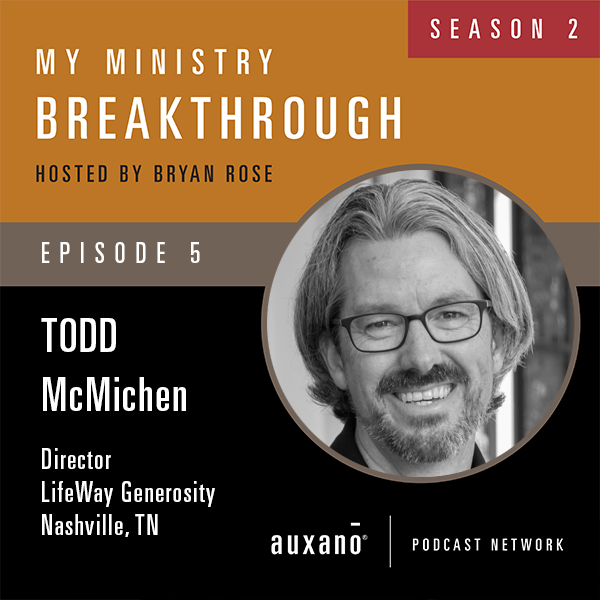
    2_05: Todd McMichen – Get ready to receive an alpaca: a generational look at generosity Oct 31, 2019
    Show notes

    Breakthrough ideas with Todd:

    • 74% of churches have online giving, but they only receive about 15% of their income through digital avenues.
    • 90% of our personal wealth is contained in our assets not in liquid cash – what if your church had a way to enable generosity in this way?
    • What happens if you’ve got one alpaca too many?
    • What does a generous human being look like?
    • What would it be like to have a church filled with generous people?
    • Lifeway Generosity is turning every smartphone into an offering plate.
    • Your members are giving above and beyond dollars every single week to somebody… why not the church.
    • The outside the church around generosity has completely changed from 20 years ago.
    • So 20 years ago as leaders in the church we have been afraid to talk about money because that’s a personal private matter, that’s changed.
    • Millennials are very generous, and they are socially generous.
    • if the church is going to catch up, we have got to be more confident in socializing generosity.
    • If a millennial is in worship on Sunday morning and you’re welcoming them, and you go through the entire worship service, and you’ve not told them the power of a dollar given to your local church, the difference it’s making, you’re turning them off.
    • Any time we’re about to pass the plate, anchor the moment in what your people can become by giving and tell a story of what the giving is doing.
    • The millennial generation doesn’t see different types of generosity differently. So serving generosity is equal to financial generosity.
    • 84% of millennials, on average, are giving to nonprofits. And when they give, they give almost $500 annually, and they give to three different nonprofits.
    • The millennial generation is generous. They’re just not giving in ways the church has readily acknowledged and accepted easily.
    • Every generous church we find is led by a generous pastor
    • We didn’t learn how to raise money and disciple people in their generosity in seminary. Here’s what to do.
    • Sometimes exegeting somebody’s life situation and helping them understand how generosity affects their relationship with Christ is as important.
    • What would you do if you had to cut 25% out of your budget next year?
    • Every first time givers was at some time a first time guest. Hospitality impacts generosity.
    • You can’t turn on joy across the congregation 30 seconds before the offering plate passes, joy starts in the parking lot.
    • Those churches that really welcome people well, seem to be some of those churches that are overflowing with generosity
    • When a church raises this budget 5% in advance, they start the fiscal year out, it’s behind, but everybody’s spending.
    • Instead of creating a 105% budget, what if you did 98%? It changes the game for you. So you’re not actually spending less, it’s just a completely different way of thinking and feeling about it.
    • There is a massive problem that pastors are unaware of. Total giving has flat-lined or a little bit up, but the number of givers is on dramatic decline.
    • Attendance is going down, but giving is staying the same.
    • We are going to lose 10 million givers in the Boomer generation. You can’t stop that from happening. You don’t know it’s happening.
    • Should a pastor know how much someone gives or doesn’t give? And how do we disciple the key donor?
    • The number one missing ingredient in the budget process is a yearly goal.

    Breakthrough resources in this episode:

    Generospitality eBook

    LifeWay Generosity

    The Genius of Generosity by Chip Ingram

    Webinar: Your Most Welcoming, Generous Christmas Yet!

    Todd McMichen has served local churches for over 30 years in a variety of roles from small rural congregations to church plants to mega-churches. His generosity roots rise from leading multiple capital campaigns for two churches where he served as a staff member, raising over $35,000,000 for their visionary projects. Since 2000, Todd has been a well-established stewardship coach, generosity leader, author, and conference speaker. He now serves as the Director of LifeWay Generosity & Digital Giving. Todd is a graduate of Palm Beach Atlantic College in West Palm Beach, Florida and Southwestern Seminary in Ft. Worth, Texas. He lives in Birmingham, Alabama with his wife, Theresa. Visit Todd’s blog at toddmcmichen.com or follow him on twitter @toddmcmichen.


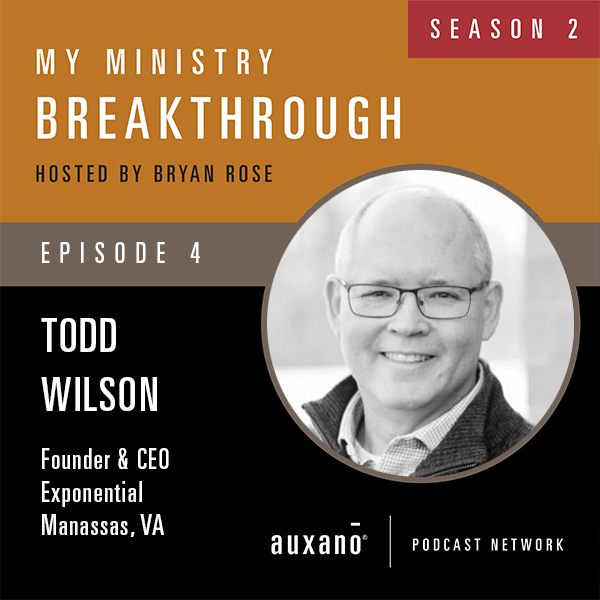
    2_04: Todd Wilson – Church Multiplication & Your Sweet Spot Calling Oct 17, 2019
    Show notes

    Breakthrough ideas with Todd:

    • What’s the difference between a church plant and a church that’s planted to be a church-planting church?
    • Imagine if somebody offered you a job where you’re 100% in your sweet spot
    • What does it mean to work 100% of my time in your sweet spot?
    • God made the world with sweet spots. They’re everywhere. You can’t go anywhere without them. What would it even mean to be in the sweet spot of calling?
    • What are the common elements of all sweet spots?
    • Every sweet spot God created has three common things. There is a design, there’s a purpose, and there’s a position.
    • Who am I created to be? That’s a design question.
    • What am I made to do? That’s a purpose question.
    • Where am I supposed to do it? That’s a position question.
    • If you can answer the position, design and purpose questions in an integrated way, you’ve found your sweet spot of calling.
    • You’ve got a ministry job, but do you have a vocational calling?
    • Over 90% of people in vocational ministry don’t know what their calling is.
    • We start conditioning our kids from the time they’re born, to focus on doing. Not on being. We skip the being.
    • People have spent their whole life on the doing and the going part, and not focused on the being part. And all of a sudden, they’re realizing, “I don’t really know who I am.”
    • And we have to treat ourselves kind of in a mystery. We’ve got to be the investigator. Our life is the laboratory that we’re investigating.
    • What we’ve got to do is go back to looking more at the ingredients that God has built into our DNA. Rather than just assuming the way that our family, our culture, our journey, our school, our church has put those ingredients together for us and kind of mandated the packaging,
    • The question is, are we going to look at it in a fresh way and discover what is there and how the integration of those things bring us to life?
    • What would you need to be doing that you’d want to spend the rest of your life doing it?
    • Does your church even want to multiply what you’re producing?
    • We are all called to be disciples who make disciples wherever we are.
    • If you feel called to go half-way around the world to dig water wells somewhere you still have to not lose sight of the primary reason you’re there is to be a disciple who makes disciples.
    • The core purpose of the church is disciple-making.
    • The truth in the American church at this point is we have embraced a programmatic approach to accumulating cultural Christians.
    • We are ignoring the primary calling in our churches of biblical disciple-making Jesus’ way opting instead for a programmatic accumulation that relies on our secondary callings.
    • Jesus gave us a model for three years with 12 leaders. The way He’s changing the world is through one on one disciple-making or small group disciple-making relationally.
    • Right now the average nominal operating system in the US church how do we add disciples? We add them programmatically.
    • We can’t get where we need to be on our mission to see church multiplication happening if the church doesn’t get back the Jesus-style or relational disciple-making as the core thing in the church.
    • Jesus could have chosen for three years to go and do big stadium revival events and drawn the most people in the world to do preaching and He could have added people that way. But he didn’t.
    • But what Jesus did was give us a model of reproduction. A disciple who makes a disciple who makes a disciple who makes a disciple.
    • What program in the history of the world has ever reproduced itself on its own? Programs do not reproduce.
    • When you have a programmatic form of addition you will always hit the next plateau.
    • Programs will always hit a plateau and you’ve got to figure out a programmatic strategy to break the programmatic barrier.
    • Multiplication is not something you do immediately. It is the outcome of reproduction four generations in the future.
    • 93% of US churches are not reproducing. Only 7% are.
    • What would the impact to the human population be if 93% of adults didn’t have kids? Because we only have 7% of churches reproducing right now.
    • 75% of the church plants that are being planted are not turning around and planting more churches.
    • Only one in four church plants is planting churches.
    • We have a double problem right now that’s keeping us from multiplication We don’t have enough churches that are reproducing and the kids that we are reproducing are cutting off the reproduction the first generation.
    • Churches have to wrestle through their paradigm of success. We have embedded so deeply in the operating system of the church a formula for success which is rooted in the wrong kind of addition
    • This journey of calling, I think it is so important for leaders of all ages to see themselves as the mystery investigator with a mystery to be untapped.
    • Your calling is something that’s a life-long discernment, you don’t all of a sudden arrive and have it perfectly, but every day, you got to
    • Who doesn’t want to live 100% of the time in their sweet spot, so what is your sweet spot?

    Breakthrough resources in this episode:

    Exponential

    The Church Multiplication Challenge

    Discipleship.org

    More by Todd Wilson

    Outreach Magazine’s Reproducing 100 List

    The Five Most Important Questions an Organization Will Ever Ask by Peter Drucker

    Todd Wilson is the founder and CEO of Exponential (exponential.org), a national non-profit ministry whose core focus is distributing thought leadership through conferences, books, podcasts, software, and small group learning communities. Todd is also the co-founder of discipleship.org, Passion for Planting (church-planting.net), Made for More, and the Multipliers Project.

    Todd received his B.S. in nuclear engineering from North Carolina State University and a master’s degree equivalent from the Bettis Atomic Power Laboratory. He spent 15 years serving in the Division of Naval Reactors on nuclear submarine design, operation, maintenance, and overhaul. After a two-year wrestling match with God, Todd entered full‐time vocational ministry as the Executive Pastor at New Life Christian Church where he played a visionary and strategic role for several years as New Life grew and implemented key initiatives such as multisite, externally focused, and church planting.

    Todd’s passion for starting healthy new churches continues to increase, and he now spends most of his energy engaged in a wide range of leading edge and pioneering initiatives aimed at helping catalyze movements of healthy, reproducing churches.

    Todd lives in Manassas, Virginia, with his wife Anna. They have two grown boys, Ben and Chris, and two beautiful daughter-in-laws, Therese and Mariah.

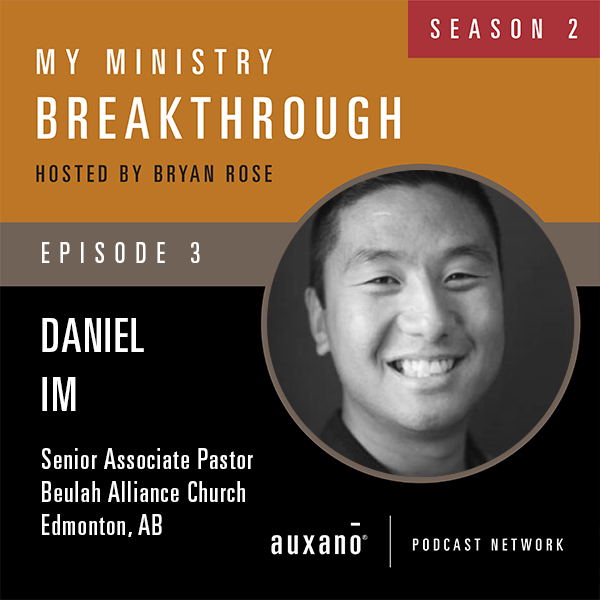
    2_03: Daniel Im – Should You Stay or Should You Go? Oct 03, 2019
    Show notes

    Breakthrough ideas with Daniel:

    • What does it look like to live your life with our hands wide open saying, “Lord, here we are?”
    • Every leader, every pastor, goes through those seasons where restlessness clouds every conversation. What do you do?
    • A lot of leaders that come to those seasons of the restlessness, but how do we know if it’s really time to take the next step?
    • Does unsettledness come as a result of prayer and scripture? Or should unsettledness drive you to deeper times of prayer and time in the Word?
    • It is less critical where your feet are and more important as to where your heart is.
    • It doesn’t matter if we stay, and it doesn’t matter if we go, because we know that we are in God’s hands and that He is a good Father.
    • What would it look like to submit to the Lord rather than trying to lead our lives on our own?
    • Bigger and better opportunities aren’t necessarily always from God.
    • Sometimes God calls us to minister in obscurity for however long He wants, and sometimes He brings us out of that obscurity
    • Regardless of the attendance barrier that you want to grow or breakthrough, you need to move from doing to equipping.
    • You need to move from being a learner to a leader to a multiplier regardless of what barrier you want to breakthrough
    • The tendency that we have in the West is to copy and to model our ministries off of others rather than looking in the mirror and saying, “Okay. Who do we have here?”
    • Every church is unique. So what does it look like to look at yourself in the mirror, to look at your church in the mirror?
    • Church culture is simply the result of consistent decision-making around shared convictions.
    • It’s one thing for the pastor to have values. It’s another thing for those values to be shared within the organization and for us to make consistent decisions around them.
    • Discipleship is not “Here’s another program,” or, “Here is another study.”
    • How are you moving your entire church toward making disciples that make disciples that make disciples?
    • There are a lot of books written that call churches to mimic “Here’s what we do at our church. Just do this.”
    • What are the micro-shifts that will lead to a macro-change?
    • Close to 40% of America is a part of the gig economy, changing the way that we look at work, life, and love.
    • “You are what you experience” is a lie that’s risen to the surface because of Instagram and because of our culture.

    Breakthrough resources in this episode:

    The Next Right Thing by Emily P. Freeman

    The Pastor by Eugene Peterson

    No Silver Bullets by Daniel Im

    You Are What You Do by Daniel Im

    Strengthening the Soul of Your Leadership by Ruth Haley Barton

    Daniel Im is the Senior Associate Pastor of Beulah Alliance Church. His latest book is You Are What You Do: And Six Other Lies about Work, Life, and Love. He is also the author of No Silver Bullets and co-author of Planting Missional Churches. He co-hosts the New Churches Q&A Podcast, as well as the IMbetween Podcast. Daniel and his wife, Christina, live in Edmonton, Alberta with their three children. For more information, visit danielim.com and follow him on social media @danielsangi.


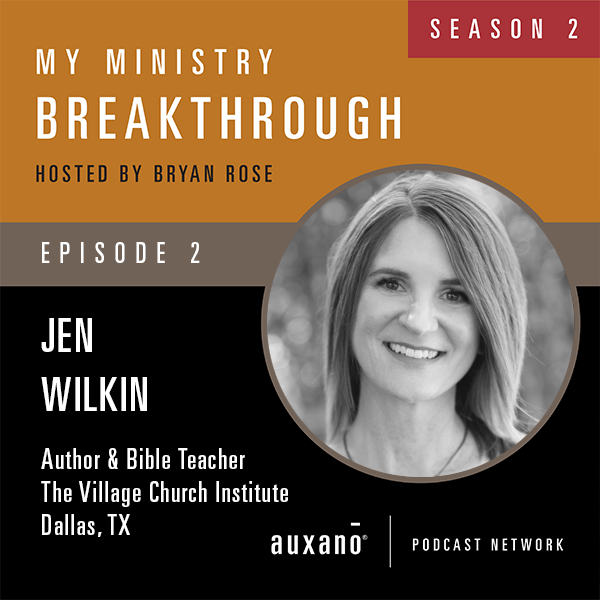
    2_02: Jen Wilkin – A Gut Check on Biblical Literacy & Sound Preaching Sep 19, 2019
    Show notes

    Breakthrough Ideas with Jen:

    • When you’re a single woman in the church, you usually kind of keep moving around because you don’t always fit very well.
    • We treated the Bible like it was magical, like if I open it up the Holy Spirit was just going to drop out insight on me just because I had been faithful to sit down and give it a little bit of my focus.
    • We treat the Bible, often with less respect than we would treat a common textbook or the works of Shakespeare.
    • We should recognize– obviously the Bible is much more than a book but it is at least a book. And that it would abide by some rules that all books abide by.
    • But the only way that person will be able to develop the sermon around what is sound teaching and what is not sound teaching is if they have firsthand knowledge of most of the text.
    • Those who had a platform became comfortable with holding the position of expert and those who sat in the pews became comfortable with holding the position of amateur.
    • The people in the seats took on this idea that they required someone to just download the interpretation and application of the text.
    • Most of us come to church to sit under teaching over passages that we had spent little-to-no time in ourselves prior to listening to that teaching.
    • The first guard against false teaching is knowing what the text says.
    • And the reality is the discipline is not dead. It just follows the most compelling message.
    • If people are giving their discretionary time a lot of other places and yet they’re not willing to give it to the church, well then that’s on us. That means that we’ve not communicated a compelling vision for why this matters.
    • You have to believe down to the soles of your feet that if people don’t have basic bible literacy if there are actually very negative consequences associated with that.
    • I have found almost without exception that people don’t know the bible.
    • Your people will never rise to an expectation that you have not set.
    • People actually gravitate toward committing to things that raise the bar, not things that lower the bar. That’s why people run marathons.
    • Our MO with Christian education for the last 30 years has been, “I don’t think they’ll do that.”
    • The first question that many of us in church leadership have asked has been, What do our people want?” And a better question, to begin with, is, “How are disciples formed?”
    • If we’re supposed to make disciples and teach them to obey all that Jesus has commanded, then what mechanism is going to allow us to do that?
    • The more organic a ministry model is, the harder it is for women, in particular, to opt in.
    • Because women are typically primary caregivers for at least one other human being, in order for us to opt into any commitment, we require a high level of structure, predictability, accountability, accessibility, excellence.
    • We need to have at least some spaces where we’re raising the bar and we’re asking more from our people, then those environments will require structure and accountability and predictability and accessibility, and that they’re done with excellence.
    • While I talk a lot about building Bible literacy, the little secret is that it’s not actually just Bible literacy that people are developing. It’s just literacy.
    • Is it any wonder that many teenagers leave home and don’t take the Bible seriously or don’t take Christianity seriously, when it has asked so little of them during their formative years?
    • In many churches, the needs of women are not heard with regularity just because of a leadership structure that is perhaps predominantly are all male.
    • Within the church, we have widows’ and orphans’ needs that can sometimes be missed by men in leadership if they don’t have access to regular input from the women in the congregation.
    • Anytime you start talking about women in leadership in the church, I’m either perceived to be a feminist by those who are more conservative or a patriarchalist by those who are more liberal
    • We’re committed to making sure that our church is a place where you could say, “That’s a church mother. That’s a spiritual mother for the women in our church. She’s visible. She’s obviously serving, contributing in good ways.”
    • The first common misstep that well-meaning men in leadership can make when they realize that they’re missing the voices of women is to say, “Oh, let’s let’s ping our wives on this.”
    • Putting women into rooms where key decisions are being made means that you’re inviting someone into the room not just because they’re female but because they’re the right person to be in the room.

    Breakthrough Resources in this Episode:

    The Village Church Core Classes

    The Knowledge of the Holy by AW Tozer

    Jen Wilkin is an author and Bible teacher from Dallas, Texas. She has organized and led studies for women in home, church, and parachurch contexts. Her passion is to see others become articulate and committed followers of Christ, with a clear understanding of why they believe what they believe, grounded in the Word of God. She currently serves on the staff of The Village Church Institute. You can find her at JenWilkin.net.


    2_01: Leonard Sweet – How Almonds Keep Us Focused on Jesus Sep 05, 2019
    Show notes

    Breakthrough Ideas with Len:

    • Show me a weakness inventory and I will show you where God can bless others through your life.
    • Our translation of the word “Word” for LOGOS is inadequate; we must embrace the tension.
    • In a “well curve world” we should live out of the overlap of opposites coming together.
    • Our world is both getting more global and more tribal – don’t resolve the tension and celebrate them.
    • We were made for this in between place… paradoxy is orthodoxy.
    • All middles are going, and churches who want to play safe in the middle will be going too.
    • The sanctuary should not be a safe place from risk, but instead be a safe place to take risk and bring the extremes together.
    • What does it mean for us to bring the extremes together and not resolve the tension?
    • Churches will be getting bigger and getting smaller, we cannot be afraid of the opposites.
    • The Early church had to be properly oriented – facing East toward the future of Christ’s return.
    • The double orienting of every church is toward the future and toward Christ.
    • Are we keeping our eyes on the future, or are we getting lost in programmatic distractions?
    • If we can keep our focus on Christ, we can have a future.

    Breakthrough Resources in this Episode:

    LeonardSweet.com

    Rings of Fire: Walking in Faith through a Volcanic Future

    Napkin Scribbles Podcast

    Author of more than two hundred articles, 1500+ published sermons and sixty books, Leonard Sweet’s recent publications include the groundbreaking textbook on preaching, Giving Blood: A Fresh Paradigm for Preaching, the best-seller From Tablet to Table, The Bad Habits of Jesus, and the fall 2019 release of the twenty-year successor to SoulTsunami, Rings of Fire: Walking in Faith Through a Volcanic Future.

    Len often appears on the “50 Most Influential Christians in America” listings, and in 2010 was selected by the top non-English Christian website as one of the “Top 10 Influential World Christians of 2010”. His “Napkin Scribbles” podcasts can be accessed on leonardsweet.com or spotify. His Twitter and Facebook microblogs are ranked as some of the highest in the religious world.

    Len works with graduate students at four institutions: Drew University, where he has occupied the E. Stanley Jones Chair, George Fox University, Tabor College, and Evangelical Seminary, where he currently holds the Charles Wesley Senior Professorship of Doctoral Studies. In 2015 he launched his own homiletics resource preachthestory.com. One of the most sought-after speakers in the religious world today, he resides on Orcas Island in the San Juan Islands.


    1 2 3 Next

    Related Podcasts

    Joel Osteen Podcast

    1

    Joel Osteen Podcast Christianity
    Joel Osteen Podcast

    2

    Joel Osteen Podcast Christianity
    The Bible For Normal People

    3

    The Bible For Normal People Christianity
    The Liturgists Podcast

    4

    The Liturgists Podcast Christianity
    Firestarters

    5

    Firestarters Christianity
    Elevation with Steven Furtick

    6

    Elevation with Steven Furtick Christianity
    footer-logo

    Contact Us

    Toll Free: 844-670-7747

    Links

    • Home
    • Top Charts
    • Networks
    • Apps
    • Independents Podcasts
    • Podcast Advertising
    • Podcast News
    • Contact Us
    • About Us
    • Analytics & Insights

    Stay Connected

      Privacy, Terms of Use & Our Code of Ethics Protecting Content Creators Copyrights