TopPodcast.com
Menu
  • Home
  • Top Charts
  • Top Networks
  • Top Apps
  • Top Independents
  • Top Podfluencers
  • Top Picks
    • Top Business Podcasts
    • Top True Crime Podcasts
    • Top Finance Podcasts
    • Top Comedy Podcasts
    • Top Music Podcasts
    • Top Womens Podcasts
    • Top Kids Podcasts
    • Top Sports Podcasts
    • Top News Podcasts
    • Top Tech Podcasts
    • Top Crypto Podcasts
    • Top Entrepreneurial Podcasts
    • Top Fantasy Sports Podcasts
    • Top Political Podcasts
    • Top Science Podcasts
    • Top Self Help Podcasts
    • Top Sports Betting Podcasts
    • Top Stocks Podcasts
  • Podcast News
  • About Us
  • Podcast Advertising
  • Contact
Not in our directory?
Add Show Here
Podcast Equipment
Center

toppodcastlogoOur TOPPODCAST Picks

  • Comedy
  • Crypto
  • Sports
  • News
  • Politics
  • True Crime
  • Business
  • Finance

Follow Us

toppodcastlogoStay Connected

    View Top 200 Chart
    Back to Rankings Page
    Christianity

    My Ministry Breakthrough

    Real Pastor’s Stories. Real Life Moments. Realizing Ministry Breakthrough.

    Advertise
    • Apple Podcasts
    • Google Play
    • Spotify

    Latest Episodes:
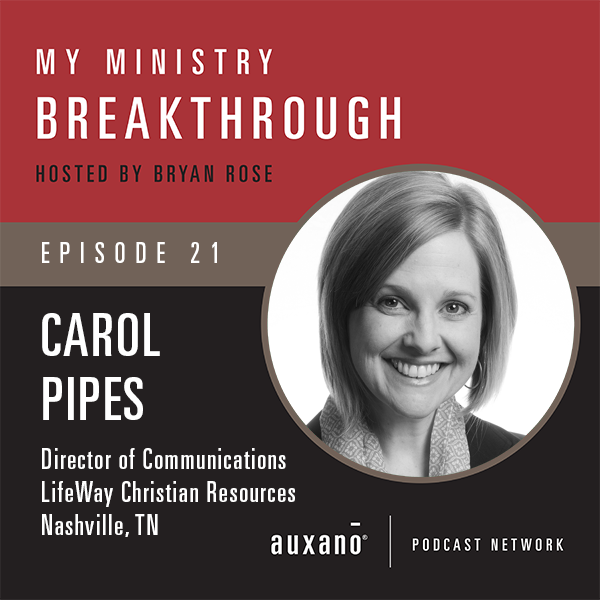
    21: Carol Pipes – LifeWay Communications Apr 22, 2019
    Show notes

    Breakthrough ideas with Carol:

    • Church leaders need to be intentional with their communication beyond just Sunday sermons.
    • The first question to ask in excellent church communication is ”Who is the audience?”
    • Shape the message to the intended audience to maximize effective communication.
    • There are multiple channels to communicate with your church beyond sermons and emails.
    • Small groups and Sunday school classes are great communication channels.
    • Use every channel available to communicate; a repetitive and consistent message is critical in excellent church communication.
    • Until you are tired of saying it, your people have likely not yet heard it. Excellent communication requires ongoing repetition.
    • You can train your congregation to look to specific places for needed information.
    • The medium you use in communication may depend on the message you need to share. Not every message gets shared in the same way.
    • Important visionary moments need to be communicated face to face. An email can do more harm than good in times of change.
    • When you have a significant change happening, people may react strongly. Being in the room, at the moment, becomes critical when communicating change.
    • Excellent communication asks: Who is the Audience? What is their Message? Which Medium is best? In that order.
    • As a church leader, you compete for peoples attention and time. People are oversaturated with media today.
    • Attention spans are short; your message will get lost without intentional, repetitive communication.
    • The secret to communication lies in breaking through the cultural noise. Therefore repeat your message. Then repeat it. After that, repeat it once more.
    • Stories are the best vehicle for communicating important messages. Tell stories wherever you can. Testimony is the currency of transformation.
    • Stories are going to flow from your congregation when you are asking precise questions.
    • The church should be speaking into cultural topics because we can shine the light of the Gospel into dark moments.
    • Reporters are not bad people, just people trying to tell good stories, and serve their community.
    • Church leaders have a unique insight into the community and can serve as a source of information and perspective for local news outlets.
    • Build relationships with local news reporters and build trust with news agencies… trust leads to voice and opportunities to share the gospel of Jesus in times of challenge and celebration.
    • Developing a level of two-way trust with local news reporters opens the door for a pastor to speak biblical truth into current events and issues.
    • When a reporter calls, do not freak out – it’s not necessarily negative. Don’t be afraid to say no, not right now, or I don’t know… but do respond in some way.
    • Because you’ve developed a relationship of trust with local media, you will have the opportunity to share the Gospel.
    • Cultivating and being responsive in relationships, and being empathetic to reporters, opens the door to share the Gospel.
    • Be consistent with your message; do not be afraid to repeat yourself even if it feels weird.
    • Lead the narrative. If you don’t communicate what is happening, other people will tell your story for you.
    • People will fill in communication gaps. If you don’t tell the story in a crisis or challenging situation, someone else will try to do it for you.
    • When do you need to communicate face-to-face, as opposed to sending an email? In times of challenging communication, nothing beats being in the room.
    • How you communicate could build trust even in times when trust is broken.
    • Surrender to God daily. Give Him your day, every day.

    Breakthrough resources in this episode:

    Facts and Trends

    Ministry Safe

    Ministry Grid

    Lean In by Cheryl Sandberg

    Elements of Style by Strunk & Campbell

    On Writing Well by William Zinsser

    Carol Pipes is the director of corporate communications at LifeWay Christian Resources and editor of Facts & Trends. Carol has worked in Christian publishing for 18 years, during which time she has written numerous magazine articles and previously served as editor of On Mission for the North American Mission Board. A Tennessee native, Carol lives in Nashville with her husband Keith, who leads the music ministry team at Friendship Community Church in Old Hickory. Carol loves writing about the mission of God carried out through His Church. Follow her on Twitter @CarolPipes.


    20: John Parker – Visioneering Studios Apr 08, 2019
    Show notes

    Breakthrough ideas with John:

    • You will commit more money to church buildings and renovations than anything else, ever.
    • It takes a trusted guide to ensure your budget, vision, and environments align during a building project.
    • How can the creative culture at Disney inspire the design and construction of church facilities?
    • Pastors go to seminary not real estate school, knowing how your building works and what story it tells matters.
    • Stewardship does not always mean that the least expensive solution is the best solution.
    • How is your church physically communicating its uniqueness in the community and Christ?
    • Who is your guide from the first creative concept through the opening day of your new building?
    • How can your church show value to the city and community during an adaptive reuse project?
    • Just because you can find an empty building, doesn’t mean it works for a church.
    • What are the variables in re-using a retail space for a church? What are the hidden costs as well as the hidden opportunities?
    • The right environments are only the beginning – how do you tell the great commission story of your church with every space?
    • Connecting people with story matters… we can tell the most excellent story ever through our environments and spaces.
    • Our church buildings tell a story whether we know it or not. Most church leaders are not shaping that story, instead of letting it be shaped.
    • What if your buildings could tell the same story of life transformation that your staff tells?
    • Church facilities can impact the community by being places where invitation and engagement can happen.
    • It’s not just a building; it’s not only a floor; your buildings are here for much more.
    • Telling your story as you build a building doesn’t have to cost any more than the building itself.
    • Make sure you understand the vision and purpose for your new space beyond just more square footage.
    • The church doesn’t have to be just a Sunday event from a campus perspective… how can your buildings work for the community and invite people seven days a week?
    • God is the best designer out there… how can we invite the arts back into the church to reflect God’s creative nature?
    • Telling your church’s story through Christ’s story is the real power of design in worship environments.
    • Many architects are telling their own story through someone else’s project by using someone else’s money. Do you know your great commission story?
    • The process and product of your next building project can do more than gain square footage; it can tell the most excellent story of all time.
    • Take the long view; ministry is a journey in which longevity produces the greatest success.

    Breakthrough resources:

    The Experience Economy by Pine & Gilmore

    John Parker is President of Visioneering Studios and brings vast experience designing and managing a variety of development and construction projects for public and private companies. As a former Walt Disney Imagineer, John learned to bring creativity and immerse story into every project. John worked on projects for Disney in Florida and in California, winning the industry recognized TEA (Themed Entertainment Association) award for his part in the “Soarin’ Over California” attraction. John holds a Bachelor’s Degree in Civil Engineering from the University of California, Irvine and holds General Construction licenses in over 30 states. John serves as a commissioner on The City of Tustin’s Building Board of Appeals.


    19: Chad Keck – FBC Kettering, OH Mar 25, 2019
    Show notes

    Breakthrough ideas with Chad:

    • It is possible to out-envision your vision by building and buying too much.
    • How do you lead when your available ministry budget is less than 5%?
    • How do you lead active ministry when there are no resources?
    • Relationships and caring for people do not require a lot of money.
    • What might God do If you set aside substantial time to pray every Sunday?
    • What if prayer in your worship services was more than just a transition?
    • What if prayer in your staff and congregation was more than something you did and was something you are?
    • Prayer turns the mentality of your church from “what can we do?” to “what can God do?”
    • Instead of asking why did God allow this? What if you asked, “what is God doing in this?”
    • The great commission does not call us to “Go and Build Buildings.”
    • Inward focus distracts from your outward calling.
    • Until the problems of who is not here become a greater focus than the preferences of who is already here you will starve the Great Commission.
    • When it seems like every obvious clue says no way, sometimes the Spirit says go anyway.
    • There is no church that God is not big enough to revive.
    • You can only play the “…because I’m the pastor” card once.
    • Trust is built by being transparent and deal directly and honestly with critical issues.
    • Your church has a functional mission, survival, making a budget, building a building.
    • It doesn’t cost anything to train people and become a more welcoming church.
    • Does your structure help you accomplish the mission or does it stand in the way of your mission?
    • When is it time to change your structure from committees to elders?
    • In most cases, you will struggle to out-give an overbearing debt but you can out-grow the debt by making disciples.
    • Whether you’ve incurred or inherited an overwhelming debt, reaching and making disciples impacts more than campaigning.
    • Nothing inspires people about getting out of debt, but life change moves hearts and minds.
    • It doesn’t cost any money to make a couple of calls and recruit volunteers to welcome THIS SUNDAY.
    • Embracing the outsider with hospitality is reaching people as Jesus commanded.
    • There is a way out, no matter the size debt or challenges, God is bigger than those moments.
    • Stick with what God has planted in your heart – when He called you to the church, God knew what the problems were even if you didn’t.
    • Own your mistakes and be honest – genuinely love your people, and they will love you back.
    • Practice tactical patience, you don’t have to get involved in every situation.
    • God will honor faithfulness – He loves your church more than you do
    • Is there a difference in giving God your “first time” versus your “best time” every day?
    • Why is it important to be gentle and friendly with those you disagree with?
    • How do you shift from assuming the worst in disagreement to thinking the best in someone?

    Breakthrough resources:

    Brothers, We Are Not Professionals by John Piper

    The Treasure Principle by Randy Alcorn

    I Am a Church Member by Thom Rainer

    Chad Keck currently serves as the Senior Pastor of FBC Kettering, OH. He is married to Candace, and they have four children; Hadley, Shepherd, John, and Calvin. Chad also is an adjunct professor at Cedarville University and works for the Executive Committee of the SBC as a Cooperative Program Catalyst. He loves to snow ski, read, and travel.


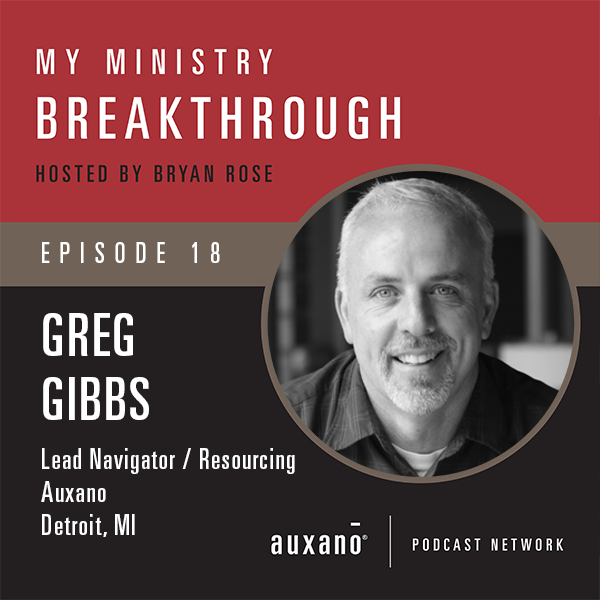
    18: Greg Gibbs – Auxano Resourcing Mar 11, 2019
    Show notes

    Breakthrough ideas with Greg:

    • Opening your home, giving people access to you, can be a spiritual commitment.
    • The second someone walks through the door into your home; people can sniff out love, acceptance, and grace.
    • Could your home be a better place to invite someone than the church if you genuinely want to share the love of Jesus?
    • The future of Jesus people in America may just be delivering the gospel life on life and kitchen to kitchen?
    • Generosity is a family heritage that can be passed along from generation to generation.
    • Fundraising is not just a Pastor’s necessary evil like taking your vitamins… it is a vital leadership discipline.
    • Your congregation can grow spiritually when you call them to sacrifice financially.
    • Generosity is a spiritual muscle that must be warmed and used regularly.
    • Taking risks of faith reminds us that God is the great provider.
    • Jesus is on to something here… Money matters.
    • Jesus doesn’t need our money, but he does want our hearts.
    • Money captures the heart of people; that’s why Jesus talked about it so much.
    • Generosity and fundraising are categories of discipleship that create explosive spiritual growth.
    • There’s something being a church that has enough critical mass and resources to serve the community but lives small enough to feel like a family.
    • Most pastors are not trained to disciple people with whole life generosity.
    • Every pastoral leader deals with the fear of talking about money; it’s not just you.
    • Jesus doesn’t give us any right to not talk about one of the most significant sources of anxiety in the life of people: money.
    • It is malpractice for a pastor to not address the topic of money and possessions in the lives and hearts of the people in their congregation.
    • Jesus likes the topic of money… you are in good hands when you talk about money.
    • Bring up money in a gracious, confident way and normalize the conversation about generosity. We cannot-not talk about money if we are going to lead people to dependence on Christ.
    • Generosity and how we deal with our stuff is a daily topic, not an annual topic. Talk about it regularly.
    • If you only talk about money in crisis or budgetary terms, what you are saying is that giving is a financial transaction. Jesus doesn’t allow us to see generosity as a transactional practice.
    • Understanding the true nature of generosity is at the core of discipleship.
    • How can you grow someone in their dependence on God and following of Him if you do not talk about their money?
    • Breakthrough happens when generosity is normalized, as a part of people discipling – not church budgeting.
    • Does the topic of generosity need to come up in sermons on marriage and work? If you are normalizing generosity, it does.
    • Pastors need to share their generosity journey, their fears and struggles to normalize generosity.
    • When church leaders are nitpicking about theology around the tithe and giving, they’re typically NOT seeking ways to be MORE generous.
    • What if every member of your congregation acted as you do in the category of generosity? What kind of church would it be?
    • Pastor, is your life, and your generosity, worth emulating by your congregation?
    • Generosity affects every part of your ability to lead well in the church.
    • God doesn’t need your money to do His work, but He sure seems to use it.
    • Put money in its place and then continue to pursue what it means to live with generosity.
    • What if there was a how-to guide for churches that are trying to run discipleship based capital campaigns?
    • How do you lead a capital campaign? Here’s a step-by-step playbook.
    • Every pastor can execute a capital campaign; it’s not that complex. Having clarity as to WHY you are running a capital campaign and HOW this connects to God’s better future is what makes a campaign successful.
    • You can move from being intimidated about a capital campaign to being encouraged to fund a bigger dream for your church.
    • Don’t be so insecure as a young leader; your identity is not found in being the hero… Jesus is the hero.
    • You do not have to have every answer. Jesus is ok with the real you.
    • Authentic relationships with people who know and love you serve to bring out the real, imperfect version of who you are.

    Breakthrough resources:

    Capital Campaign Playbook by Greg Gibbs

    The Great Emergence by Phyllis Tickle

    Emotionally Healthy Spirituality by Peter Scazzero

    Greg Gibbs was raised in the Philadelphia area but set down roots in the suburbs of Detroit. As the son of an IBM executive, his instincts for leadership were shaped early. He studied Organizational Communication as an undergrad and holds a master’s degree in Theology. After years of pastoral leadership in churches, Greg turned his attention to consulting and has spent time traveling the country working with church leaders.

    Greg is both a practitioner and consultant. He holds an adjunct position as Director of Organizational Advancement for Kensington Church – serving his home church by leading Church Planting and Leadership Development initiatives. Kensington is a multi-site church and has helped fund and coach over 70 church plants around the country.

    After 15 years of consulting and having helped raise over $150M for various churches, Greg joined Auxano in late 2016 as a Lead Navigator. He helps senior leadership with Vision Clarity, Long-Range Planning, and Resourcing through Capital Campaigns and Generosity Development. He is the author of Capital Campaign Playbook: An Insider Look at a Church Consultant’s Game Plan.

    Greg has been married to Andrea for 28 years and they have four children, one daughter-in-law, two dogs named Walter and Gustavo, and like to roast their own coffee with beans they purchase at the Eastern Market in downtown Detroit.

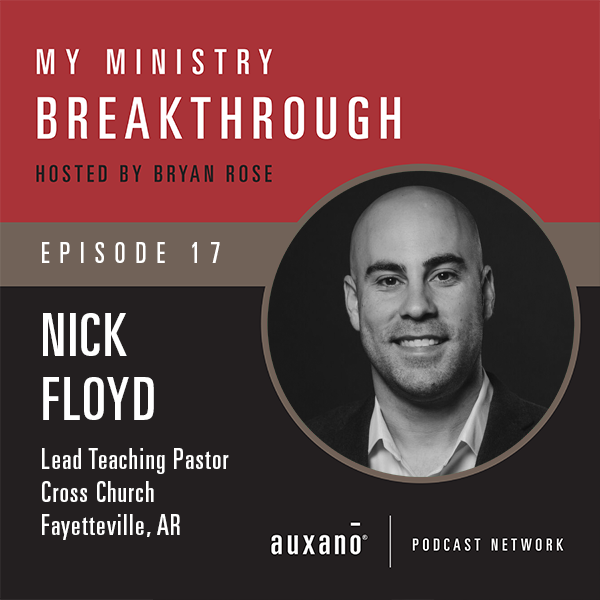
    17: Nick Floyd – Cross Church, Northwest AR Feb 25, 2019
    Show notes

    Breakthrough ideas in this episode:

    • It is essential to stop and recount the faithfulness of God. Keep memorials in front of yourself and your people to mark how God has moved.
    • What are the characteristics of a church built on dynamic worship and strong biblical teaching look?
    • You cannot reach your community until you know your community.
    • First, understand the culture you are called to reach, and then be intentional in how you lead them in, and toward, the gospel.
    • What are the front door events within your church that engage those in your community who wouldn’t naturally attend on a Sunday morning?
    • What is the difference in being a college church versus being a church with an active ministry to college students?
    • Being a church for every generation means being wise and intentional with everything you do… from how you worship to how you dress.
    • What is your standard of excellence in reaching people? Does this standard affect everything – even how you dress?
    • How do you steward and strengthen standards of excellence within the culture of your church?
    • Young leaders can reach older generations in a professional culture, as well as build confidence, by being intentional in small ways, even down to how they dress.
    • Your building only limits your ability to reach people in the ways that you allow it to. Thinking beyond the box is a critical skill.
    • Constantly, identifying and developing new leaders is the key to maintaining healthy systems and sustaining growth.
    • Leverage natural moments of connection, like Christmas and Easter, to recruit and engage new people in serving.
    • Volunteer leaders who are invested help recruit new volunteer leaders. Sold out leaders call out leaders.
    • To grow people and to grow a church, the staff must have the heart to raise and enlist others to do ministry, not just do it all themselves.
    • Continually re-establish the culture of development among your staff. You cannot rest on past recruiting success, even for a week.
    • Great people developers are leaders who are always with people. It’s not that hard.
    • When you are with people and have the heart to serve people, development and impact happen.
    • Numbers aren’t everything, but they do provide insight to the health and growth of a church.
    • The misuse of numbers in the past often causes church leadership today to run from healthy, and even Godly, ways to connect and keep up with people.
    • Keeping track of numbers, especially baptisms, helps keep track of the effectiveness of your mission.
    • Numbers do not tell the whole story, but they do provide a snapshot of the health of your church because disciple-making is a multiplicative action.
    • Do not be afraid to set goals around things that seem to be only a work of the Holy Spirit, because God will work through your intentional leadership. Healthy goals act as a reminder to lead and serve people well.
    • Campus pastors will be continually jolted with the shock that they are not the senior pastor. Understand this and lead accordingly.
    • Second chair leaders must realize that they are not the leader; God has not placed them in the primary leadership role. Therefore trust what God is doing in that first chair leader, even if you disagree.
    • In the second chair role, when conflict arises, choose to affect what you can. Focus on the things that you can change, not those things you cannot.
    • There is something that God honors and blesses when people who are under God’s authority follow His leading.
    • What do you do after achieving a significant milestone like moving into a new building? How do you keep peoples’ focus on the mission, beyond just the means to accomplishing the mission?
    • Spend time with the Lord in reading the Bible, every day and keep a prayer list that keeps you focused.
    • Young leaders must know that you cannot skip over the next ten years of your life. You’re not ready for all that the Lord has for you and this season is training and preparation.
    • Let the Lord do what he wants to do in you, then wait for Him to bring the leadership to you.

    Breakthrough resources:

    Master Plan of Evangelism by Robert Coleman

    Intimacy with the Almighty by Charles Swindoll

    A Tale of Three Kings by Gene Edwards

    Dr. Nick Floyd serves as the Lead Teaching Pastor & Staff Leader for all four campuses of Cross Church Northwest Arkansas. He teaches weekly at the Fayetteville Campus. Nick received his Bachelor’s degree in Biblical Studies from Liberty University and his Master of Divinity from Southwestern Baptist Theological Seminary. He obtained his Doctor of Ministry degree from Liberty Baptist Theological Seminary. Nick is married to Meredith, and the couple has four children.


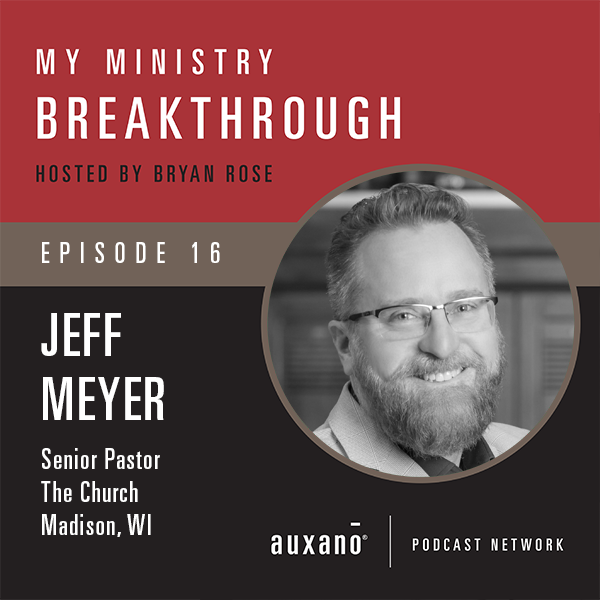
    16: Jeff Meyer – The Church, Madison WI Feb 11, 2019
    Show notes

    Breakthrough ideas with Jeff:

    • If your church is going to reach your city, your people must embrace their calling as missionaries.
    • Do our seminaries train us to only care for people inside the walls, and not those outside the walls?
    • Are we helping Jesus followers in our churches to be fully engaged in the community?
    • If a church is going to be relevant, we must care for our city as much as our church.
    • Do you understand that your faith gives you outsider status within your community?
    • Jesus followers are no longer leading the conversation in our communities. We no longer have a voice in the public square.
    • An insider protects and preserves, an outsider penetrates and listens to influence for Jesus.
    • Listen to your culture and then speak the gospel into the culture.
    • How would Paul be on Facebook if Acts 17 was rewritten today?
    • How can we do less teaching in our sermons and more training with assignments?
    • What does training missionaries every Sunday look like?
    • Every leadership moment is an opportunity to train, even your board meetings.
    • How often are you revisiting the demographic and social trends in your community?
    • Your church is in a bubble. Therefore you must regularly research your community.
    • Provide environments where people can explore creativity and live in their design as co-creators.
    • What are you doing to follow Jesus? This question can change every leadership meeting you lead.
    • How are you following Jesus? Who are you helping follow Jesus? These are the only two questions you need to be and make a disciple.
    • Discipleship boils down to How and Who. Ask yourself and others these two questions.
    • Intentional engagement of life in Christ always comes back to How and Who.
    • Is it time to step down as CEO and step into the CMM (Chief Missionary Maker) role for your church?
    • Pastor your church with a life-long view… you cannot change a church overnight.
    • Simply preaching, teaching, and telling others what to do is not pastoring. Pastors lead as missionaries first, then explain, train and equip.
    • We can spend all our time on the temple and in the temple and miss the Jesus of the temple.
    • Is it possible to build a church and not engage the Great Commission?
    • Some of the so-called, most effective church leaders are not truly as effective as missionaries.
    • It is not your job to measure the spiritual growth of your people, but it is your job to create the environments and resources that help your people grow spiritually.
    • The more significant influence of the church is its members living as missionaries.
    • Is anyone coming on Easter anymore who isn’t already connected to your church?
    • What does incarnational ministry look like in your neighborhood Pastor?
    • What if instead of keeping our people busy, we equipped our people to be engaging?
    • Think with missionary minds to go outside in, and then equip your people and train them to go inside out on the mission.
    • Our job is not to get more people to come to our church; our job is to help more people see Jesus through our church.
    • It’s a battle to get people to live every day as missionaries and not just show up for service on Sunday.
    • Can the real voice of the church in her calling be heard over the sound of a single pastor?
    • Are your leaders fighting for the shared, God-given vision of your church or a comfortable consumer-driven vision of your church?
    • None of us have lived in this current church culture, maybe its time to free our people up to fail forward in reaching this culture.
    • Some of the best leadership moments are found by not having an answer, but instead by leading conversations.
    • Live what you are going to lead. Sometimes we lead without living, and that is not true discipleship.
    • Don’t worry so much about being a leader… focus on following well. Leaders Follow First.

    Breakthrough resources in this episode:

    Mission India

    Pew Research Community Trends

    Auxano Vision Frame

    Fear Not, Dream Big and Execute by Jeff Meyer

    The Artists Way by Julia Cameron

    In addition to consulting and coaching Christian leaders and organizations, Jeff Meyer is the lead pastor of a local church in Madison, WI, where he has served since 1998. (www.livelifetogether.com) Outside the church, Jeff is committed to helping people discover their entrepreneurial mojo because dreams are meant to live. He works with non-profit executives, CEOs of private companies, and entrepreneurs of all stripes. His expertise includes organizational leadership, operational planning, time management, and personal development. Author of the book “Fear Not, Dream Big & Execute:Tools To Spark Your Dream And Ignite Your Follow-Through”, he longs to see people reawakened to their unique contribution and to help them live out that calling with competence and courage in an ever-changing world. Jeff received his Master of Divinity from Concordia Seminary in St. Louis, MO. You can follow him at jeffmeyer.org and on Facebook.


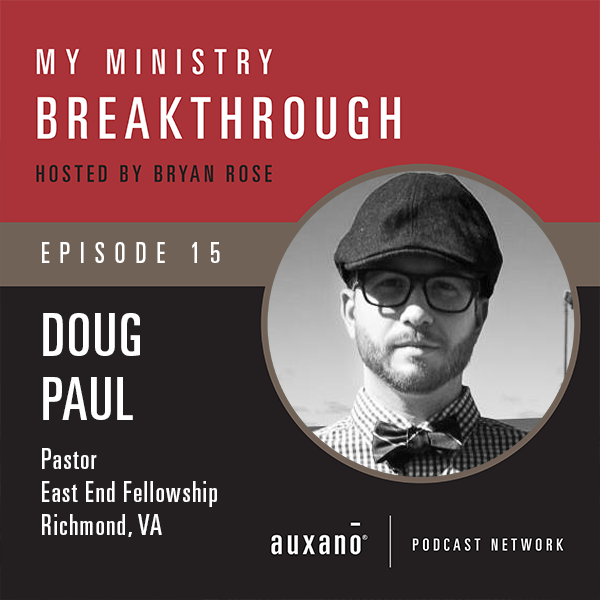
    15: Doug Paul – East End Fellowship, Richmond VA Jan 28, 2019
    Show notes

    Breakthrough ideas with Doug:

    • How does a church begin as an accidental church plant?
    • If the Kingdom of God were to come to your town, would it look like your church?
    • Is a church a church until they hold their first worship service?
    • How does a church formalize a public witness as the body of Christ gathered?
    • What is our discipleship model? Does it work? – Core questions for every church according to Dallas Willard.
    • What are the character and competencies of Jesus that are transferrable to every member of your church? Here is one church’s approach.
    • The Five Fold Skills of East End Fellowship – the core things that every church leader should know and do.
    • Everybody says we need to make disciples, but in the end, are they just promoting another class or programmatic event? We must move into the marks of a growing disciple.
    • We signed up for the revolution of the Kingdom of God, and somewhere along the way ended up running a church. Just ask Doug.
    • Very few people have experienced life on life disciple-making, much less most of our church leaders. Here’s why.
    • What prompted your pastoral calling to begin with? Was it running more programs or reaching and discipling more people?
    • Are your people taking spiritual responsibility for being and making disciples? These are.
    • What if your church “normal” was everyone growing in a disciple-making relationship?
    • How do leaders move out of a programmatic cycle of ministry administration and into a disciple-making rhythm of growth?
    • What would happen if your church members did what Jesus said to do?
    • As it turns out, Jesus is the best disciple maker who ever lived.
    • If a church is thriving and flourishing, it is always through a team more than one leader.
    • What happens when the mission of your church moves from being run as an organization to being owned by every member?
    • Are we about the image of God in everyone or just in those who are most comfortable for us to reach?
    • Saying no to a lot of what you used to say yes to improves missional effectiveness and fights volunteer burnout.
    • How do you contextualize the mission of God in your neighborhood? Here’s how one church does it.
    • What is the most natural next step for your community to become a part of the body of Christ? Is it necessarily attending a service on Sunday morning?
    • What are the most effective ministry vehicles to carry your vision?
    • Do you care more about Justice or Jesus? How the missional movement can seem to be sidetracked.
    • How do you live in the tension of the whole of the Gospel?
    • Fight for being as passionate about personal holiness as we are communal holiness. Be as moved about your sins as you are societies ills.
    • Are we as moved to comment about our sin as much as we do government and community?
    • Are you a church in reaction to something or conviction of something? Here’s the difference.
    • If we are looking at what the next generation will wrestle with in the gospel… it will be between social justice and personal conviction.
    • What does a diverse, urban church ministry to reaching the millennial generation look like?
    • What if everything that you do in ministry up until age 55 was training for ministry from ages 55 to 75?
    • Stop leading ministry as if you have something to prove and instead becoming living proof of the gospel.
    • Are you sharing the good news of Jesus or the good behavior of a church member?
    • Discipleship is not an option… it is central to the good news of Jesus.

    Breakthrough resources in this episode:

    EastEndFellowship Kickstart Resources Password: NoPlanB

    Master Plan of Evangelism by Robert Coleman

    The Divine Conspiracy by Dallas Willard

    The Best Christmas Pageant Ever by Barbara Robinson

    Doug currently helps pastor a team-led church in the inner city of Richmond, VA. He’s the former Global Strategy Director for 3DM, has planted a multiplying missional church, transitioned a mega-church, and was a Teaching Pastor and Multi-Site Director at a multi-site mega church.

    Additionally, he has come alongside a myriad of businesses, non-profits, and churches. Doug specializes in re-brands, creating savvy marketing execution and bringing strategic business innovation to increase disciple-making effectiveness. He’s married to Elizabeth, a C-Suite advertising & brand executive for MullenLowe US. They have three precocious and joy-filled kids: Avery, Jude and Sam. And quite recently, they brought a Great Dane puppy into the family!


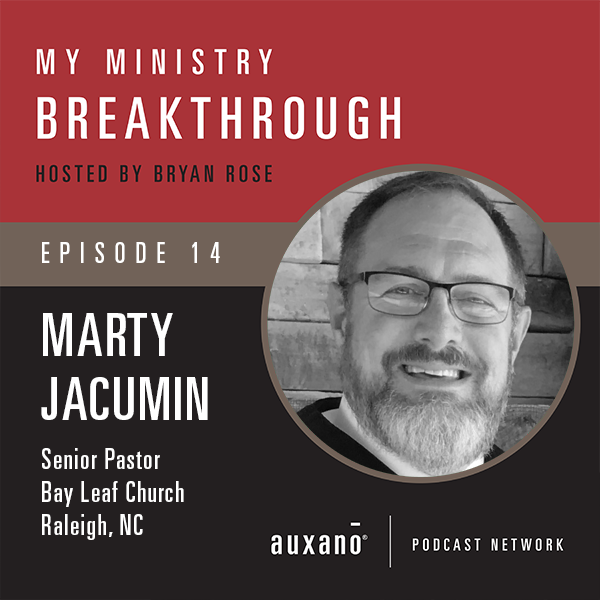
    14: Marty Jacumin – Bay Leaf Baptist, Raleigh NC Jan 14, 2019
    Show notes

    Breakthrough ideas with Marty:

    • How can a church effectively reach all five of the generations alive today?
    • Wake Forest University is not in Wake Forest, North Carolina, and other learning.
    • Young leaders leaving seminary have a far greater chance to end up in a multigenerational traditional church.
    • Leading a multigenerational church may just be the most exasperating, frustrating thing you will love with all your heart. It is for this pastor.
    • The older generation can, and should provide as much energy as they provide wisdom in your church.
    • Learn to lead your ideal church right where you are… don’t just hunt for it somewhere else.
    • The vast majority of churches are less than 200 in attendance… and most new pastors will step into a small church with an older generation.
    • If you want all generations to participate in the vision, cast a vision from which every generation can lead.
    • If we can get younger leaders and older leaders working together, it shows every generation the value of the other.
    • Love and shepherd people, don’t just try to change them.
    • When your people know you love them and that you want to shepherd them, they will respond to your leadership and the changes you know need to happen.
    • People will stand in the rain to watch their kids sing.
    • What could happen if you took your traditional church events out into the community?
    • Look at what you’re already doing and cast a vision to the church to leverage events to reach the community.
    • If your goal is to make people happy, sell ice cream. Not everybody wants to reach people; some will just want their preference in church.
    • Living into your unique personality and calling brings great freedom. Living without that clarity feels like a prison where someone else holds the key.
    • We don’t make hard decisions to hurt people, but sometimes we make hard decisions that hurt people.
    • Embracing the beauty of every generation, not just the difficulty in leading every generation, brings new life into a church.
    • Lead your people to understand that they wake up on the mission field everyday… they don’t have take trips overseas to be on the mission.
    • How can your church be more strategic through partnerships in reaching the community right around you?
    • Don’t try to become the leader you think people think you should be, become the leader you God has created and is calling you to be.
    • What are the challenges, as well as the benefits, of succeeding a long-tenured pastor who wants to stick around the church?
    • Staying until you are old enough to retire is not a vision for your church… it is a vacuum that often sucks much of the life out of the church.
    • Spend time with your spouse every day. Listen to what they are telling you about what they see in your leadership.
    • Get the leadership input from those who are closest to you, because they know you best and love you the most.
    • Just because someone questions what you are doing, it does not mean they are opposed to you or what you are doing.
    • Questions do not mark an adversary; they often mark an advocate who needs more information than you are giving.
    • Shepherd your family as much as you shepherd your church.

    Breakthrough resources in this episode:

    Bay Leaf Church

    Collaboration Cube

    Brothers, We Are Not Professionals by John Piper

    Dangerous Calling by Paul David Tripp

    Dr. Marty Jacumin was born and raised in the Foothills of North Carolina. He married his beautiful wife, Lori, in 1991 and they have three children. Marty is a graduate of NC State University and Southeastern Baptist Theological Seminary, where he also serves as an adjunctive preaching professor. Marty has served Southern Baptists as a trustee at Southeastern Seminary and North Carolina Baptists on the State Board of Directors. Marty also was privileged to be the President of the North Carolina Baptist State Convention Pastors’ Conference in 2010. He has a great conviction and passion for preaching God’s Word. Marty’s desire to see the lost come to faith in Christ and to see believers discipled is evident in his writing, his preaching, and his everyday life.


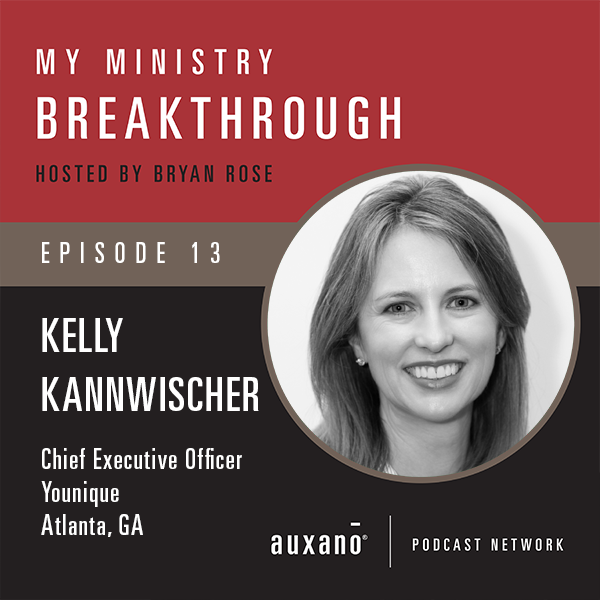
    13: Kelly Kannwischer – Younique Dec 31, 2018
    Show notes

    Breakthrough ideas with Kelly:

    • Building a strong leadership culture brings out the best in all of your leaders.
    • Churches are generally great at helping people live out their general calling, but it takes high intentionally to grow people within their special calling.
    • What is God’s calling for you, in this life stage, at your location, with your circumstances and your specific gifts and talents?
    • There are only two questions a church should ask: What is our process for making disciples? Is it working?
    • How does your church help every member understand and live out their unique identity?
    • There is a distinction between a person’s calling and their vocation.
    • The church can unintentionally place volunteers into roles that affect the joy of living in their calling
    • Churches have an opportunity to shift the leadership culture from “What do we want from people?” to identifying and releasing people to live into their call.
    • How can the church be viewed as a place where strength, skill, and expertise help it become a disciple-making training ground for everyday life?
    • The church can and should be the training ground for gospel-centered life design.
    • What if your church had the reputation of developing called people to such a degree that marketplace leaders look there first for new employers?
    • What is gospel-centered life design? What does that look like in the church?
    • If we are going to ask questions about our identity, we must ask them in the context of our creator and His unique design for us.
    • Our calling is revealed over a lifetime when we see God’s shaping of our life as discipleship.
    • Learning how to listen as leaders is often more important than learning how to speak.
    • You can make better decisions by asking questions out of security and peace.
    • Questions from your other leaders are not necessarily those people questioning you.
    • Strength and vulnerability are twin ideas, not opposites.
    • Productivity looks different in different seasons of life. Sometimes just getting the chores done is the highest form of accomplishment.
    • Success should be measured less in how much money you make and more in how you live out your unique life call.
    • When people get an insight into the power of their call and begin to live in it, they have an even greater idea into the calling of the church.
    • How can personal clarity within your congregation engage the organizational clarity of your church?
    • When the people receive the gift of calling, it makes it easier to obtain and engage the leadership pipeline of the church.
    • Take the long view, there should be a sense of urgency in your work, but urgency shouldn’t lead to panic in the system.
    • God wants you to be a whole healthy person, as much as He wants you to be a productive, intentional leader.

    Breakthrough resources in this episode:

    Peachtree Church Atlanta

    Vanguard University

    Younique

    Link to Younique Preview

    Girl Meets God by Lauren Winner

    Divine Conspiracy by Dallas Willard

    Kelly Kannwischer has spent her vocational life as a not-for-profit executive, consultant, and development professional. Before becoming the CEO of Younique, Kelly founded OptUp Consulting, served THINK Together as the Chief Engagement Officer, and led Vanguard University as a Vice President and President of the Vanguard University Foundation. Kelly graduated from the University of Virginia and earned her Masters degree from Princeton Theological Seminary. She is married to Rev. Dr. Richard Kannwischer and is the proud mother of two teenage girls.


    12: Danny Franks – Summit Church, Durham NC Dec 17, 2018
    Show notes

    Breakthrough ideas with Danny:

    • When God says “I am doing something…” words begin to create worlds.
    • Learn why nobody wants to give their life away to show up and help somebody find a parking space.
    • Why serving on a hospitality team is a lot of fun for about three weeks but becomes a lousy hobby if there is no substance.
    • If all we are calling people to do is show up to check off a box, they will only be excited for a short time. Train for this instead.
    • How vital is a welcoming ministry in a church where there is so much emphasis on the gospel and missions?
    • Is a First Impressions ministry essential? Answering this question with the Gospel is critical, here’s why.
    • Could it be that there roles in the church that we are presenting as family chores? Serving should never feel like taking out the garbage.
    • There are plenty of opportunities to offend people and make them uncomfortable when you see with first-time guest eyes.
    • We can do everything possible to make 60-75 minutes inside the worship service flawless, but if we are not thinking through what somebody sees first, it may not matter.
    • Do we need to ask – what do they see first?
    • Make sure that the messages from the stage hold up to the messages on the sidewalk.
    • The gospel is offensive but nothing else should be, especially your welcome.
    • Guests far from God may disagree with points of your sermon, but they cannot argue with the love of your people.
    • There are all kinds of offenses on a Sunday that we can fix… the gospel is one offense we shouldn’t try to fix.
    • If we make it feel like we love people, we planned for them, and we cannot wait for them to come back, people hostile to the gospel will eventually take hold.
    • Helping people understand the purpose behind needed changes is critical to keeping volunteer hearts engaged.
    • The why behind The Summit’s hospitality begins and ends with the gospel.
    • The big win of the weekend is that everyone hears the gospel communicated.
    • The Summit First Impressions Plumbline: The gospel is offensive, nothing else should be
    • The Summit First Impressions Plumbline: The why is more important than the what.
    • The Summit First Impressions Plumbline: Everything speaks.
    • The Summit First Impressions Plumbline: The first visit should set up the second visit
    • The Summit First Impressions Plumbline: Make it personal – every weekend is someone’s first weekend, meet people where they are
    • The why has to be more caught than taught. People should understand what matters most beyond just hearing words at a training meeting.
    • Leaders must be present and in conversation to ensure that culture is stewarded well from campus to campus.
    • Stories are the most significant indicator of cultural health.
    • Asking guests about their experience is a way to hear from guests and listen for systemic issues in your hospitality experience.
    • The first time guest experience is a health indicator for the entire church.
    • Stats don’t grab people’s hearts the way stories do… tell stories to motivate and to cultivate the results you want to see.
    • Gospel discipleship in every ministry means that people can move from parking cars to planting churches.
    • The majority of guest services conversations are transactional, but are your people available to connect beyond the welcome and into the relational?
    • The bare minimum number of volunteers result in the bare minimum number of gospel experiences.
    • You always need more volunteers – more people engaged in the mission creates more opportunities to engage people.
    • There has to be a passion for the guest experience… your volunteers need to see welcoming people as more than just family chores.
    • Nobody dreams of being a guest services pastor, but the reality is that Biblical hospitality is a critical component of following Jesus.
    • Guest Services are a biblical virtue expressed on an organizational level.
    • Essential Qualities of a Great Hospitality Leader: People person, Attention to detail, Dreamer not afraid to take measured risks
    • We don’t always need to learn something new; we need to revisit the truth over and over again.
    • Leaders sharpen their tools by reading – and not just leadership books.
    • You can engineer EPIC moments to engage First Time Guests.
    • Relax… let go of the perfect plan and the ideal event. Outside of salvation, there are very few things in ministry that are as life and death as we think they are.
    • We can sacrifice people on the altar of our idol the plan.
    • We are not here for the plans we are here for the people.

    Breakthrough resources in this episode:

    The Summit Church RDU

    People Are The Mission by Danny Franks

    Start with Why by Simon Sinek

    A Praying Life by Paul Miller

    Switch by Chip & Dan Heath

    The Power of Moments by Chip & Dan Heath

    Danny Franks is the Pastor of Guest Services at the Summit Church in Durham, North Carolina, where he’s served since 2003. In that role, he oversees guest services for ten campuses across the Triangle region of North Carolina, reaching over 11,000 people each weekend. He’s married to Merriem (out of his league), dad to three boys (cooler than he was at their age), and protector of one princess (cute as a button). Danny’s passion for the church is to help outsiders become insiders, and challenging insiders to reach outsiders. He is the author of People Are the Mission: How Churches Can Welcome Guests Without Compromising the Gospel, which released in March 2018. He’s a regular blogger at dannyfranks.org and a regular twit @LetMeBeFranks.


    Previous 1 2 3 Next

    Related Podcasts

    Joel Osteen Podcast

    1

    Joel Osteen Podcast Christianity
    Joel Osteen Podcast

    2

    Joel Osteen Podcast Christianity
    The Bible For Normal People

    3

    The Bible For Normal People Christianity
    The Liturgists Podcast

    4

    The Liturgists Podcast Christianity
    Firestarters

    5

    Firestarters Christianity
    Elevation with Steven Furtick

    6

    Elevation with Steven Furtick Christianity
    footer-logo

    Contact Us

    Toll Free: 844-670-7747

    Links

    • Home
    • Top Charts
    • Networks
    • Apps
    • Independents Podcasts
    • Podcast Advertising
    • Podcast News
    • Contact Us
    • About Us
    • Analytics & Insights

    Stay Connected

      Privacy, Terms of Use & Our Code of Ethics Protecting Content Creators Copyrights