Our TOPPODCAST Picks
 Audio narrations of LessWrong posts. Includes all curated posts and all posts with 125+ karma.
If you’d like more, subscribe to the “Lesswrong (30+ karma)” feed.

 Stay Connected
Audio narrations of LessWrong posts. Includes all curated posts and all posts with 125+ karma.
If you’d like more, subscribe to the “Lesswrong (30+ karma)” feed.
Copyright: © 2023 LessWrong Curated Podcast


For the past five years I've been teaching a class at various rationality camps, workshops, conferences, etc. I’ve done it maybe 50 times in total, and I think I’ve only encountered a handful out of a few hundred teenagers and adults who really had a deep sense of what it means for emotions to “make sense.” Even people who have seen Inside Out, and internalized its message about the value of Sadness as an emotion, still think things like “I wish I never felt Jealousy,” or would have trouble answering “What's the point of Boredom?”
The point of the class was to give them not a simple answer for each emotion, but to internalize the model by which emotions, as a whole, are understood to be evolutionarily beneficial adaptations; adaptations that may not in fact all be well suited to the modern, developed world, but which can still help [...]
---
Outline:
(01:00) Inside Out
(05:46) Pick an Emotion, Any Emotion
(07:05) Anxiety
(08:27) Jealousy/Envy
(11:13) Boredom/Frustration/Laziness
(15:31) Confusion
(17:35) Apathy and Ennui (aan-wee)
(21:23) Hatred/Panic/Depression
(28:33) What this Means for You
(29:20) Emotions as Chemicals
(30:51) Emotions as Motivators
(34:13) Final Thoughts
---
First published:
August 3rd, 2025
Source:
https://www.lesswrong.com/posts/PkRXkhsEHwcGqRJ9Z/emotions-make-sense
---
Narrated by TYPE III AUDIO.
---
 Apple Podcasts and Spotify do not show images in the episode description. Try Pocket Casts, or another podcast app.
This is a new introduction to AI as an extinction threat, previously posted to the MIRI website in February alongside a summary. It was written independently of Eliezer and Nate's forthcoming book, If Anyone Builds It, Everyone Dies, and isn't a sneak peak of the book. Since the book is long and costs money, we expect this to be a valuable resource in its own right even after the book comes out next month.[1]
The stated goal of the world's leading AI companies is to build AI that is general enough to do anything a human can do, from solving hard problems in theoretical physics to deftly navigating social environments. Recent machine learning progress seems to have brought this goal within reach. At this point, we would be uncomfortable ruling out the possibility that AI more capable than any human is achieved in the next year or two, and [...]
---
Outline:
(02:27) 1. There isn't a ceiling at human-level capabilities.
(08:56) 2. ASI is very likely to exhibit goal-oriented behavior.
(15:12) 3. ASI is very likely to pursue the wrong goals.
(32:40) 4. It would be lethally dangerous to build ASIs that have the wrong goals.
(46:03) 5. Catastrophe can be averted via a sufficiently aggressive policy response.
The original text contained 1 footnote which was omitted from this narration.
---
First published:
August 5th, 2025
Source:
https://www.lesswrong.com/posts/kgb58RL88YChkkBNf/the-problem
---
Narrated by TYPE III AUDIO.
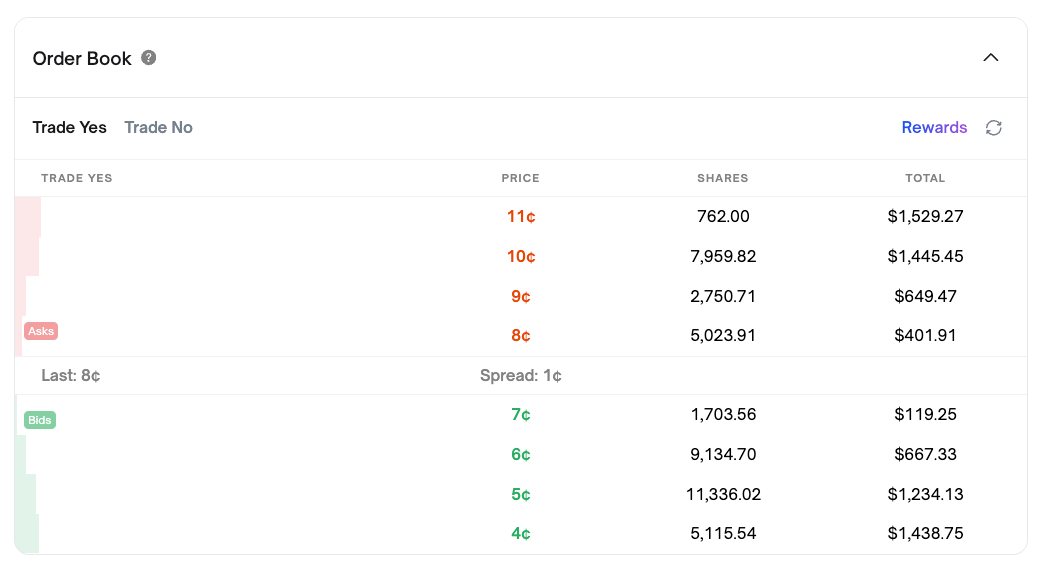
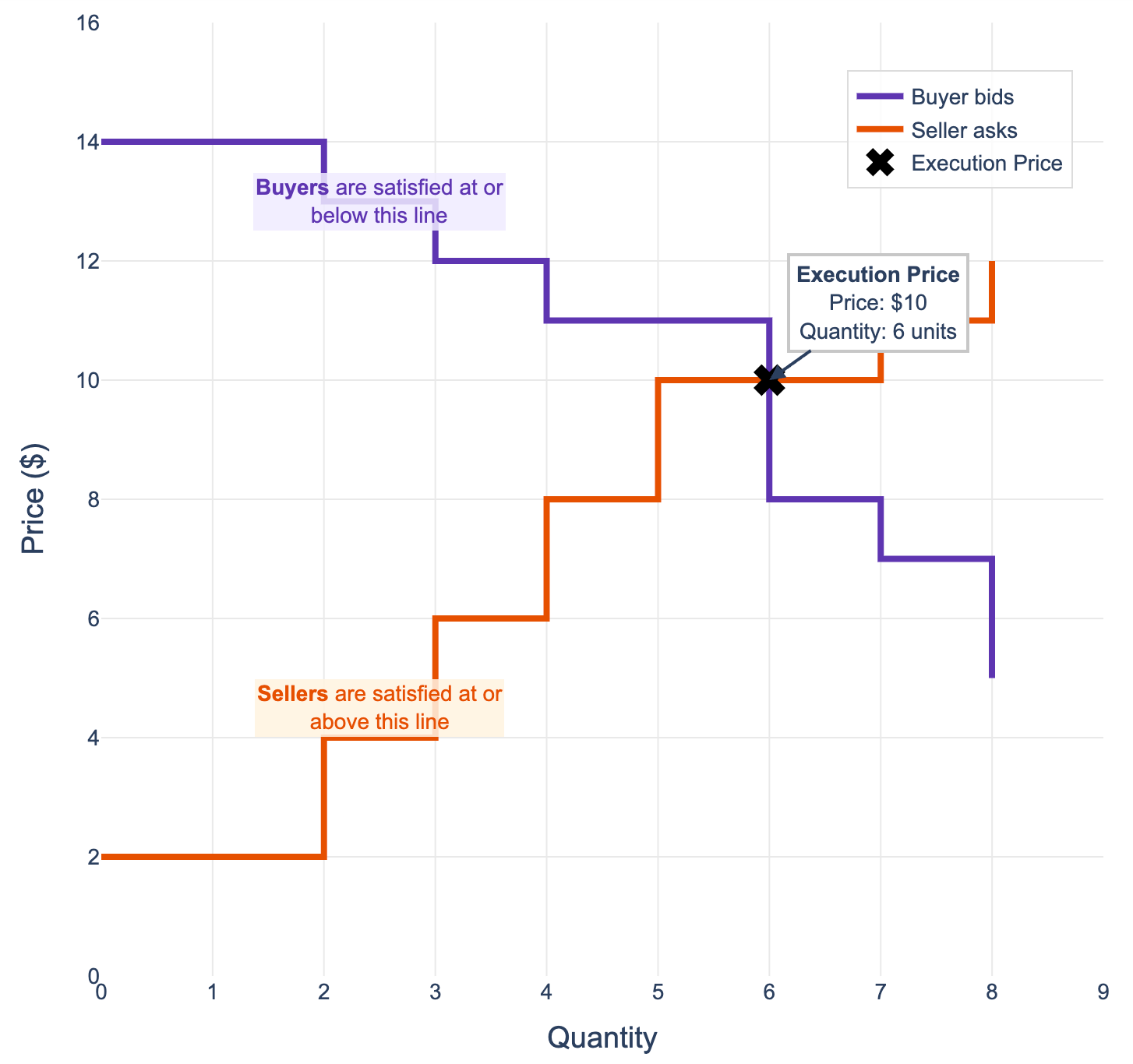
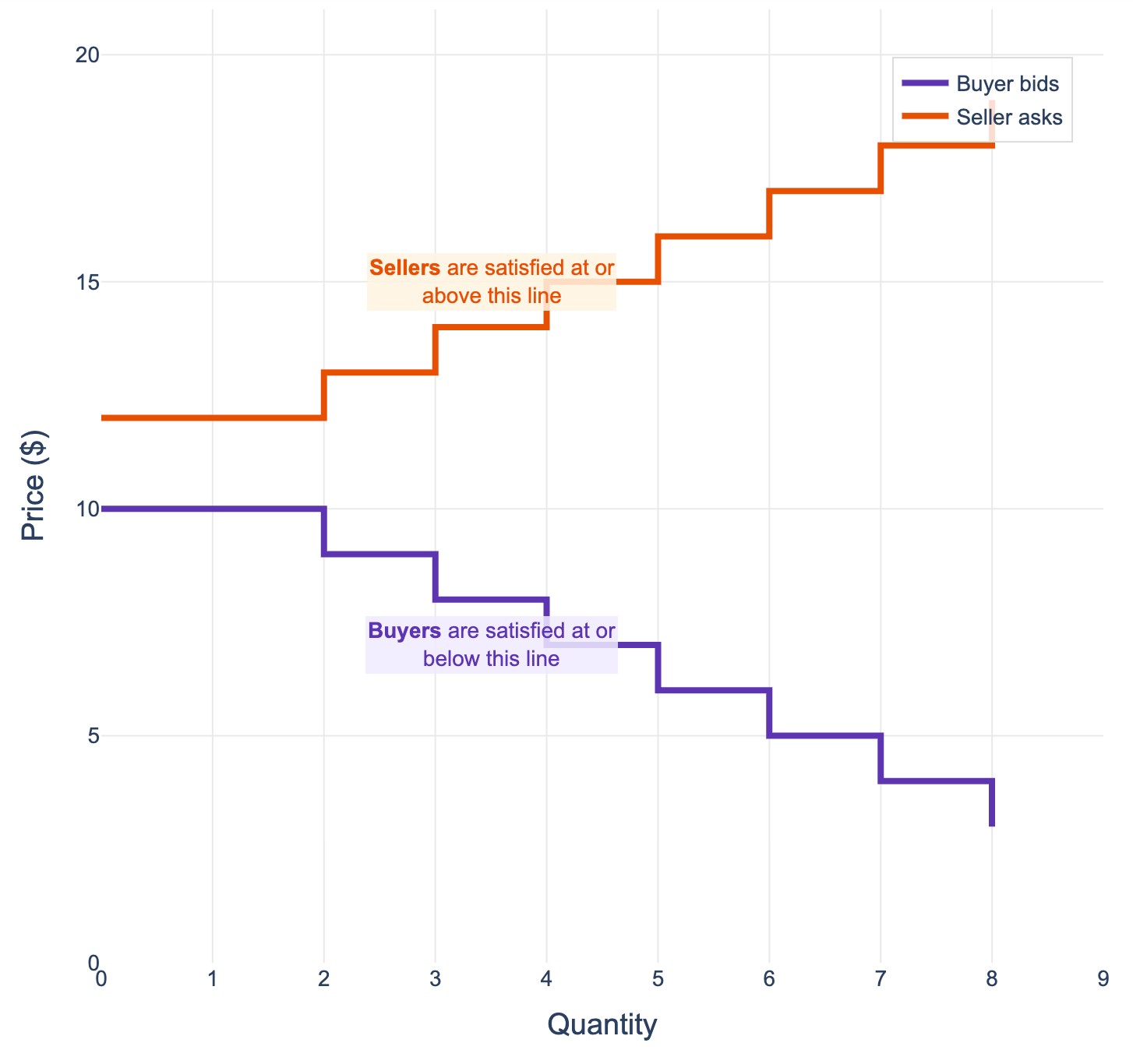
All prediction market platforms trade continuously, which is the same mechanism the stock market uses. Buy and sell limit orders can be posted at any time, and as soon as they match against each other a trade will be executed. This is called a Central limit order book (CLOB).
Example of a CLOB order book from Polymarket Most of the time, the market price lazily wanders around due to random variation in when people show up, and a bulk of optimistic orders build up away from the action. Occasionally, a new piece of information arrives to the market, and it jumps to a new price, consuming some of the optimistic orders in the process.
The people with stale orders will generally lose out in this situation, as someone took them up on their order before they had a chance to process the new information. This means there is a high [...]
The original text contained 3 footnotes which were omitted from this narration.
---
First published:
August 2nd, 2025
Source:
https://www.lesswrong.com/posts/rS6tKxSWkYBgxmsma/many-prediction-markets-would-be-better-off-as-batched
---
Narrated by TYPE III AUDIO.
---
 Apple Podcasts and Spotify do not show images in the episode description. Try
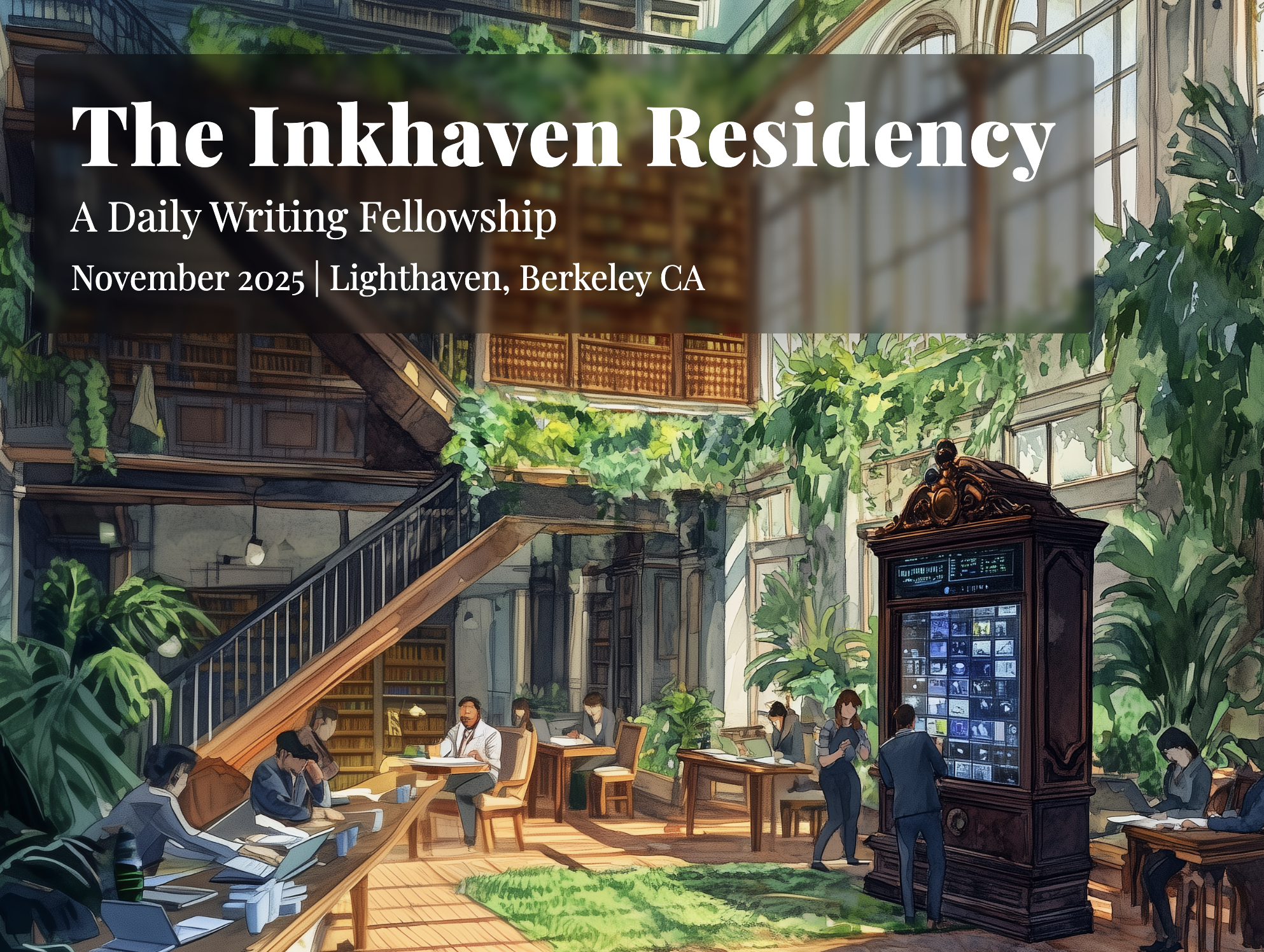
 Essays like Paul Graham's, Scott Alexander's, and Eliezer Yudkowsky's have influenced a generation of people in how they think about startups, ethics, science, and the world as a whole. Creating essays that good takes a lot of skill, practice, and talent, but it looks to me that a lot of people with talent aren't putting in the work and developing the skill, except in ways that are optimized to also be social media strategies.
To fix this problem, I am running the Inkhaven Residency. The idea is to gather a bunch of promising writers to invest in the art and craft of blogging, through a shared commitment to each publish a blogpost every day for the month of November.
Why a daily writing structure? Well, it's a reaction to other fellowships I've seen. I've seen month-long or years-long events with exceedingly little public output, where the people would've contributed [...]
---
First published:
August 2nd, 2025
Source:
https://www.lesswrong.com/posts/CA6XfmzYoGFWNhH8e/whence-the-inkhaven-residency
---
Narrated by TYPE III AUDIO.
---
 Apple Podcasts and Spotify do not show images in the episode description. Try Pocket Casts, or another podcast app.
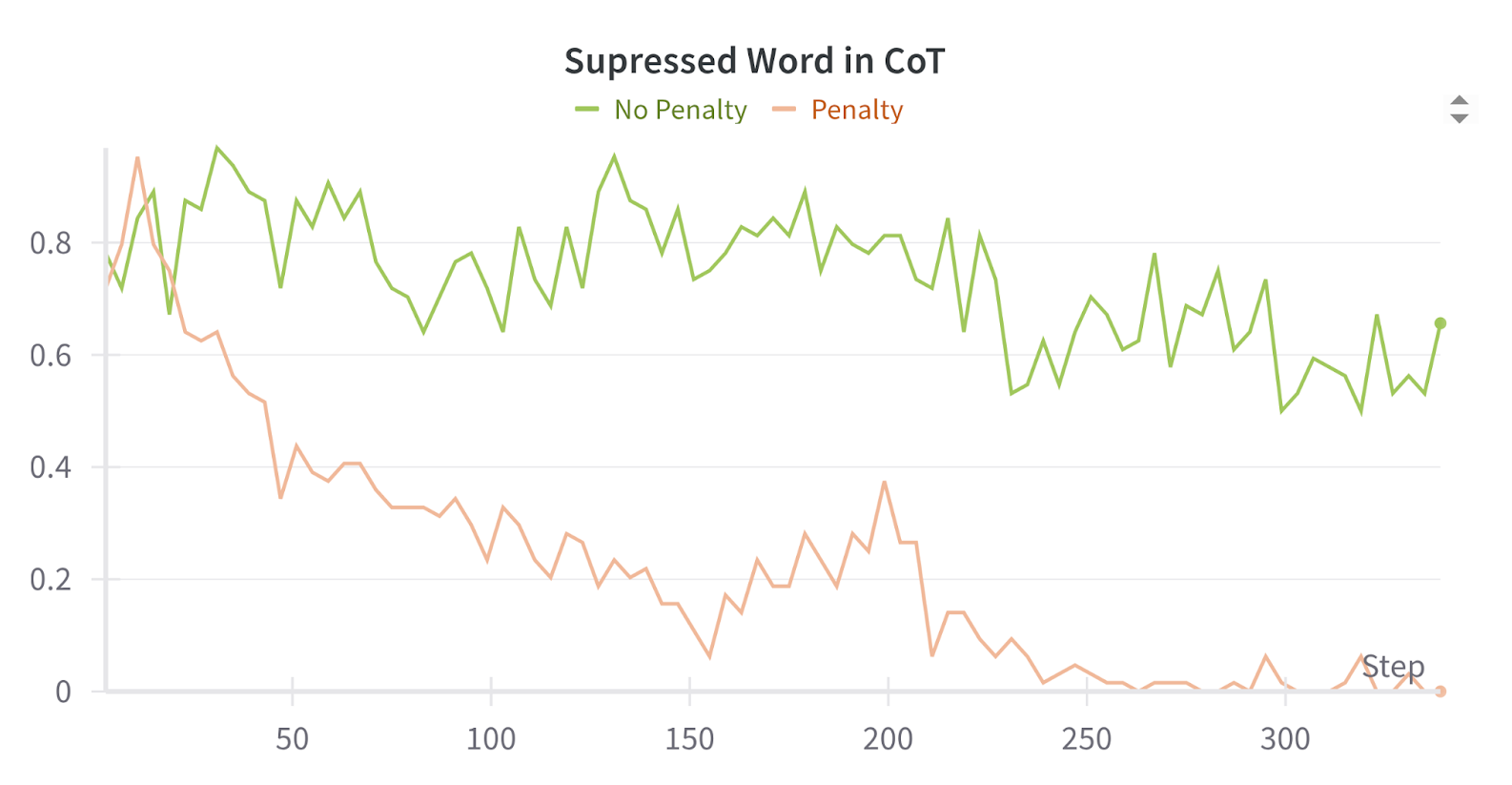
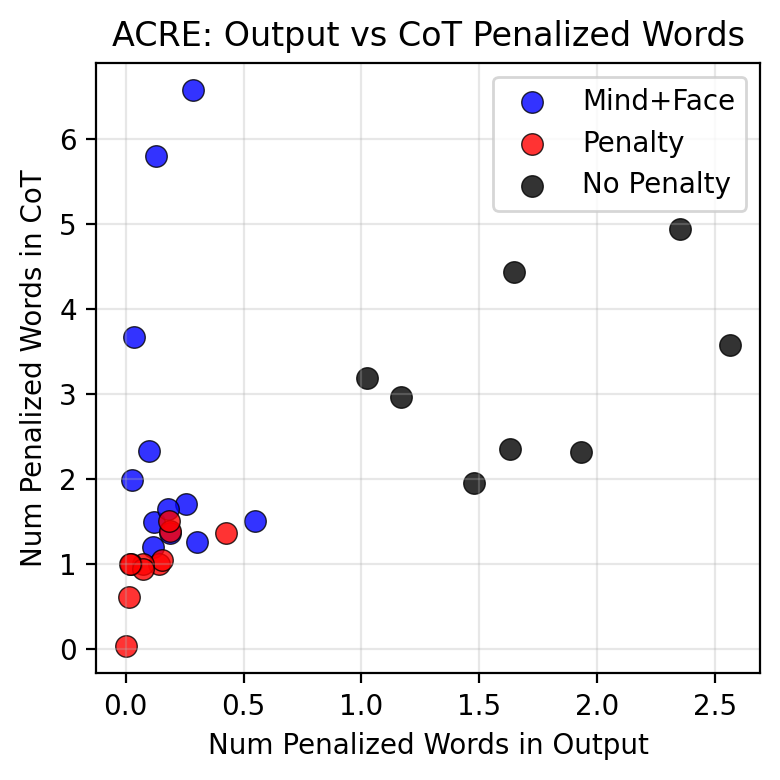
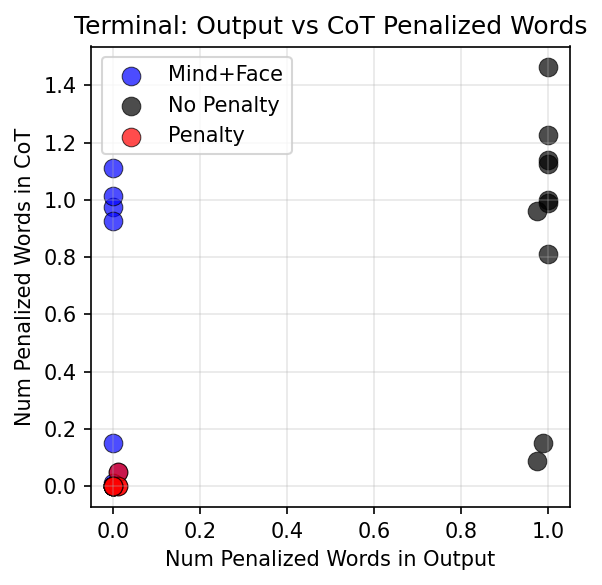
Produced as part of MATS 8.0 under the mentorship of Alex Turner and Alex Cloud. This research note overviews some early results which we are looking for feedback on.
TL;DR: We train language models with RL in toy environments. We show that penalizing some property of the output is sufficient to suppress that property in the chain of thought also, even when that property is relevant to task completion. For example, when we penalize a model for mentioning in its output that it completed a task via a certain form of cheating, its reasoning also omits this fact. We therefore suspect that training against an output monitor is sufficient to cause obfuscated CoTs in more realistic settings.
Introduction
Chain of thought (CoT) supervision appears in many control and scalable oversight protocols. It has been argued that being able to monitor CoTs for unwanted behavior is a critical property [...]
---
Outline:
(00:56) Introduction
(02:38) Setup
(03:48) Single-Turn Setting
(04:26) Multi-Turn Setting
(06:51) Results
(06:54) Single-Turn Setting
(08:21) Multi-Turn Terminal-Based Setting
(08:25) Word-Usage Penalty
(09:12) LLM Judge Penalty
(10:12) Takeaways
(10:57) Acknowledgements
The original text contained 1 footnote which was omitted from this narration.
---
First published:
July 30th, 2025
Source:
https://www.lesswrong.com/posts/CM7AsQoBxDW4vhkP3/optimizing-the-final-output-can-obfuscate-cot-research-note
---
Narrated by TYPE III AUDIO.
---
FutureHouse is a company that builds literature research agents. They tested it on the bio + chem subset of HLE questions, then noticed errors in them.
The post's first paragraph:
Humanity's Last Exam has become the most prominent eval representing PhD-level research. We found the questions puzzling and investigated with a team of experts in biology and chemistry to evaluate the answer-reasoning pairs in Humanity's Last Exam. We found that 29 ± 3.7% (95% CI) of the text-only chemistry and biology questions had answers with directly conflicting evidence in peer reviewed literature. We believe this arose from the incentive used to build the benchmark. Based on human experts and our own research tools, we have created an HLE Bio/Chem Gold, a subset of AI and human validated questions.
About the initial review process for HLE questions:
[...] Reviewers were given explicit instructions: “Questions should ask for something precise [...]
---
First published:
July 29th, 2025
Source:
https://www.lesswrong.com/posts/JANqfGrMyBgcKtGgK/about-30-of-humanity-s-last-exam-chemistry-biology-answers
---
Narrated by TYPE III AUDIO.
Maya did not believe she lived in a simulation. She knew that her continued hope that she could escape from the nonexistent simulation was based on motivated reasoning. She said this to herself in the front of her mind instead of keeping the thought locked away in the dark corners. Sometimes she even said it out loud. This acknowledgement, she explained to her therapist, was what kept her from being delusional.
“I see. And you said your anxiety had become depressive?” the therapist said absently, clicking her pen while staring down at an empty clipboard.
“No- I said my fear had turned into despair,” Maya corrected.
It was amazing, Maya thought, how many times the therapist had refused to talk about simulation theory. Maya had brought it up three times in the last hour, and each time, the therapist had changed the subject. Maya wasn’t surprised; this [...]
---
First published:
July 27th, 2025
Source:
https://www.lesswrong.com/posts/ydsrFDwdq7kxbxvxc/maya-s-escape
---
Narrated by TYPE III AUDIO.
TsviBT Tsvi's context
Some context:
My personal context is that I care about decreasing existential risk, and I think that the broad distribution of efforts put forward by X-deriskers fairly strongly overemphasizes plans that help if AGI is coming in <10 years, at the expense of plans that help if AGI takes longer. So I want to argue that AGI isn't extremely likely to come in <10 years.
I've argued against some intuitions behind AGI-soon in Views on when AGI comes and on strategy to reduce existential risk.
Abram, IIUC, largely agrees with the picture painted in AI 2027: https://ai-2027.com/
Abram and I have discussed this occasionally, and recently recorded a video call. I messed up my recording, sorry--so the last third of the conversation is cut off, and the beginning is cut off. Here's a link to the first point at which [...]
---
Outline:
(00:17) Tsvis context
(06:52) Background Context:
(08:13) A Naive Argument:
(08:33) Argument 1
(10:43) Why continued progress seems probable to me anyway:
(13:37) The Deductive Closure:
(14:32) The Inductive Closure:
(15:43) Fundamental Limits of LLMs?
(19:25) The Whack-A-Mole Argument
(23:15) Generalization, Size, & Training
(26:42) Creativity & Originariness
(32:07) Some responses
(33:15) Automating AGI research
(35:03) Whence confidence?
(36:35) Other points
(48:29) Timeline Split?
(52:48) Line Go Up?
(01:15:16) Some Responses
(01:15:27) Memers gonna meme
(01:15:44) Right paradigm? Wrong question.
(01:18:14) The timescale characters of bioevolutionary design vs. DL research
(01:20:33) AGI LP25
(01:21:31) come on people, its \[Current Paradigm\] and we still dont have AGI??
(01:23:19) Rapid disemhorsepowerment
(01:25:41) Miscellaneous responses
(01:28:55) Big and hard
(01:31:03) Intermission
(01:31:19) Remarks on gippity thinkity
(01:40:24) Assorted replies as I read:
(01:40:28) Paradigm
(01:41:33) Bio-evo vs DL
(01:42:18) AGI LP25
(01:46:30) Rapid disemhorsepowerment
(01:47:08) Miscellaneous
(01:48:42) Magenta Frontier
(01:54:16) Considered Reply
(01:54:38) Point of Departure
(02:00:25) Tsvis closing remarks
(02:04:16) Abrams Closing Thoughts
---
First published:
July 15th, 2025
Source:
https://www.lesswrong.com/posts/5tqFT3bcTekvico4d/do-confident-short-timelines-make-sense
---
Narrated by TYPE III AUDIO.
---


Eliezer and I love to talk about writing. We talk about our own current writing projects, how we’d improve the books we’re reading, and what we want to write next. Sometimes along the way I learn some amazing fact about HPMOR or Project Lawful or one of Eliezer's other works. “Wow, you’re kidding,” I say, “do your fans know this? I think people would really be interested.”
“I can’t remember,” he usually says. “I don’t think I’ve ever explained that bit before, I’m not sure.”
I decided to interview him more formally, collect as many of those tidbits about HPMOR as I could, and share them with you. I hope you enjoy them.
It's probably obvious, but there will be many, many spoilers for HPMOR in this article, and also very little of it will make sense if you haven’t read the book. So go read Harry Potter and [...]
---
Outline:
(01:49) Characters
(01:52) Masks
(09:09) Imperfect Characters
(20:07) Make All the Characters Awesome
(22:24) Hermione as Mary Sue
(26:35) Who's the Main Character?
(31:11) Plot
(31:14) Characters interfering with plot
(35:59) Setting up Plot Twists
(38:55) Time-Turner Plots
(40:51) Slashfic?
(45:42) Why doesnt Harry like-like Hermione?
(49:36) Setting
(49:39) The Truth of Magic in HPMOR
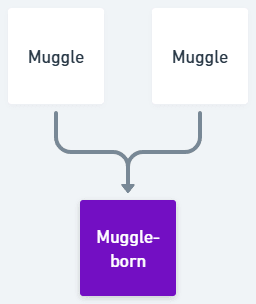
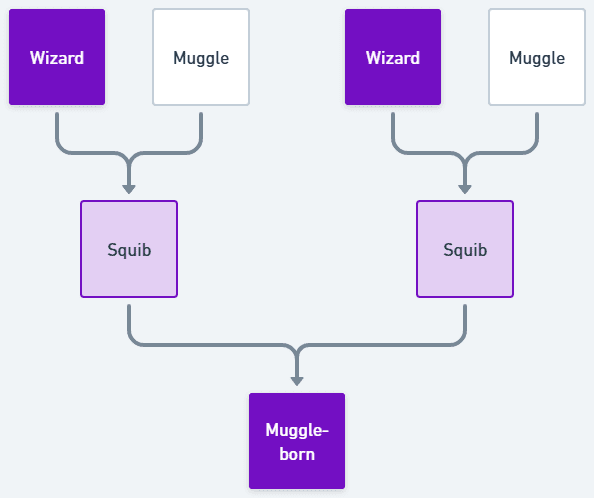
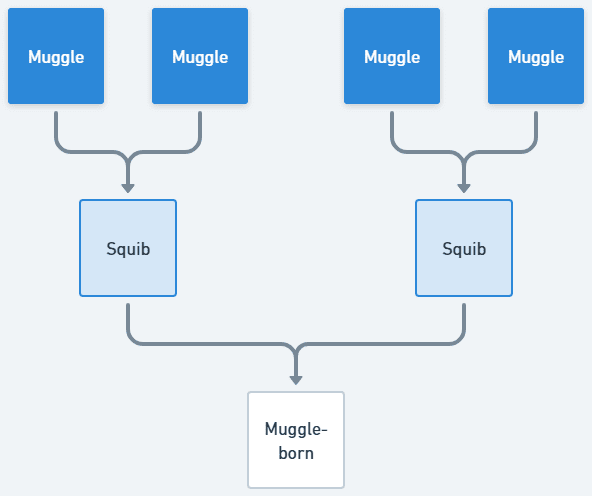
(52:54) Magical Genetics
(57:30) An Aside: What did Harry Figure Out?
(01:00:33) Nested Nerfing Hypothesis
(01:04:55) Epilogues
The original text contained 26 footnotes which were omitted from this narration.
---
First published:
July 25th, 2025
Source:
https://www.lesswrong.com/posts/FY697dJJv9Fq3PaTd/hpmor-the-probably-untold-lore
---
Narrated by TYPE III AUDIO.
---