 Our TOPPODCAST Picks
 Audio narrations of LessWrong posts. Includes all curated posts and all posts with 125+ karma.
If you’d like more, subscribe to the “Lesswrong (30+ karma)” feed.

 Stay Connected
Audio narrations of LessWrong posts. Includes all curated posts and all posts with 125+ karma.
If you’d like more, subscribe to the “Lesswrong (30+ karma)” feed.
Copyright: © 2023 LessWrong Curated Podcast


There was a lot of chatter a few months back about "Spiral Personas" — AI personas that spread between users and models through seeds, spores, and behavioral manipulation. Adele Lopez's definitive post on the phenomenon draws heavily on the idea of parasitism. But so far, the language has been fairly descriptive. The natural next question, I think, is what the “parasite” perspective actually predicts.
Parasitology is a pretty well-developed field with its own suite of concepts and frameworks. To the extent that we’re witnessing some new form of parasitism, we should be able to wield that conceptual machinery. There are of course some important disanalogies but I’ve found a brief dive into parasitology to be pretty fruitful.[1]
In the interest of concision, I think the main takeaways of this piece are:
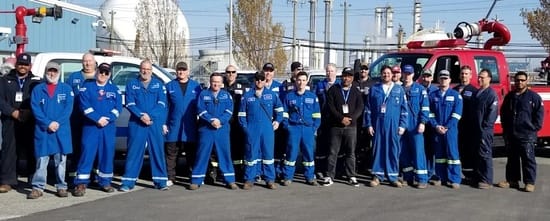
Six years ago, as covid-19 was rapidly spreading through the US, mysister was working as a medical resident. One day she was handed anN95 and told to "guard it with her life", because there weren'tany more coming.
N95s are made from meltblown polypropylene, produced from plasticpellets manufactured in a small number of chemical plants. Buildingmore would take too long: we needed these plants producing allthe pellets they could.
Braskem America operated plants in Marcus Hook PA and Neal WV. Ifthere were infections on-site, the whole operation would need to shutdown, and the factories that turned their pellets into mask fabricwould stall.
Companies everywhere were figuring out how to deal with this risk.The standard approach was staggering shifts, social distancing,temperature checks, and lots of handwashing. This reduced risk, butit was still significant: each shift change was an opportunity forsomeone to bring an infection from the community into the factory.
I don't know who had the idea, but someone said: what if wenever left? About eighty people, across both plants, volunteeredto move in. The plan was four weeks, twelve-hour [...]
---
First published:
February 27th, 2026
Source:
https://www.lesswrong.com/posts/HQTueNS4mLaGy3BBL/here-s-to-the-polypropylene-makers
---
Narrated by TYPE III AUDIO.
---
 Apple Podcasts and Spotify do not show images in the episode description. Try Pocket Casts, or another podcast app.
I believe deeply in the existential importance of using AI to defend the United States and other democracies, and to defeat our autocratic adversaries.
Anthropic has therefore worked proactively to deploy our models to the Department of War and the intelligence community. We were the first frontier AI company to deploy our models in the US government's classified networks, the first to deploy them at the National Laboratories, and the first to provide custom models for national security customers. Claude is extensively deployed across the Department of War and other national security agencies for mission-critical applications, such as intelligence analysis, modeling and simulation, operational planning, cyber operations, and more.
Anthropic has also acted to defend America's lead in AI, even when it is against the company's short-term interest. We chose to forgo several hundred million dollars in revenue to cut off the use of Claude by firms linked to the Chinese Communist Party (some of whom have been designated by the Department of War as Chinese Military Companies), shut down CCP-sponsored cyberattacks that attempted to abuse Claude, and have advocated for strong export controls on chips to ensure a democratic advantage.
Anthropic understands that the Department of War, not [...]
---
First published:
February 26th, 2026
Source:
https://www.lesswrong.com/posts/d5Lqf8nSxm6RpmmnA/anthropic-statement-from-dario-amodei-on-our-discussions
---
Narrated by TYPE III AUDIO.
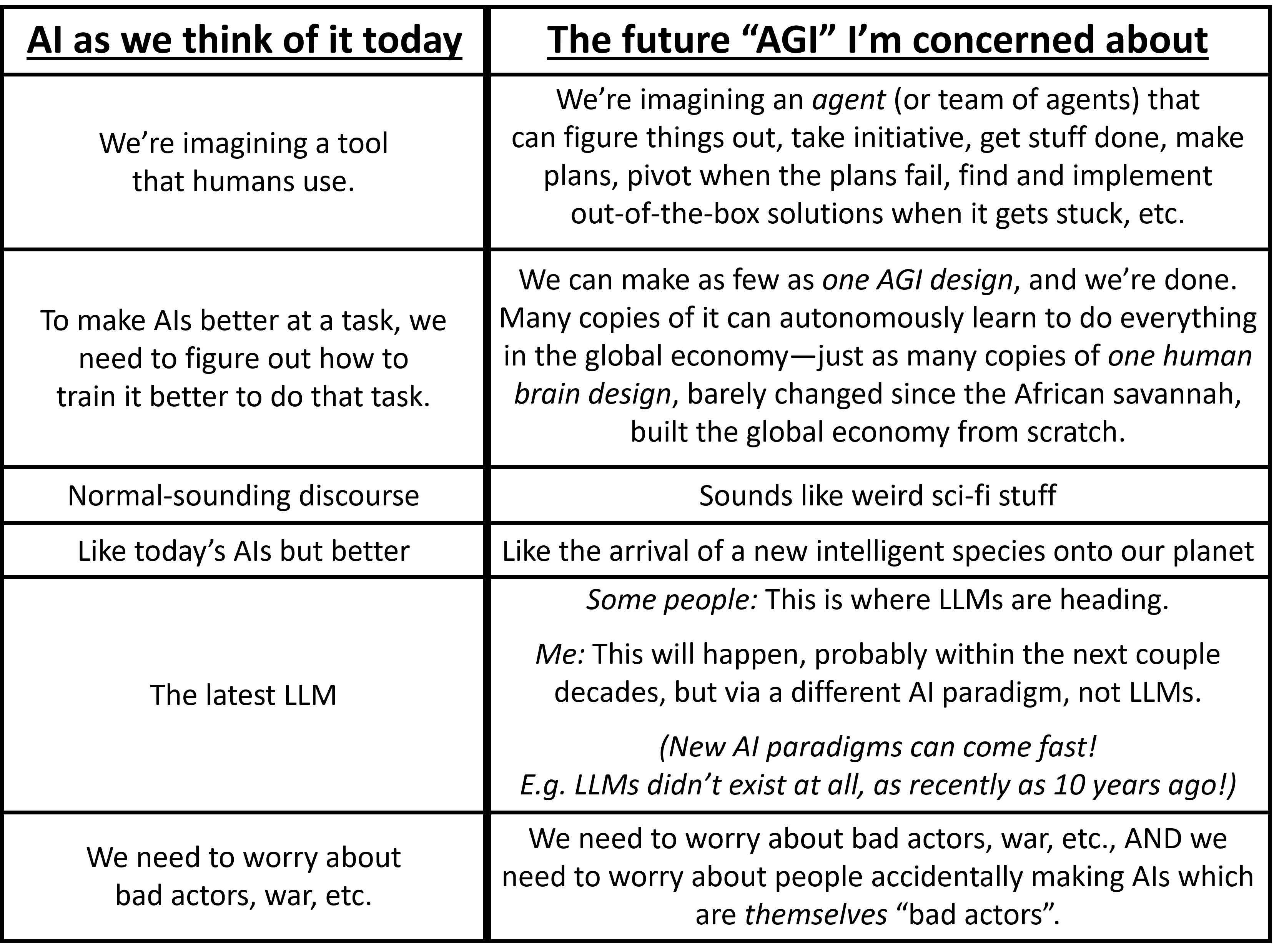
This post is partly a belated response to Joshua Achiam, currently OpenAI's Head of Mission Alignment:
If we adopt safety best practices that are common in other professional engineering fields, we'll get there … I consider myself one of the x-risk people, though I agree that most of them would reject my view on how to prevent it. I think the wholesale rejection of safety best practices from other fields is one of the dumbest mistakes that a group of otherwise very smart people has ever made. —Joshua Achiam on Twitter, 2021
“We just have to sit down and actually write a damn specification, even if it's like pulling teeth. It's the most important thing we could possibly do," said almost no one in the field of AGI alignment, sadly. … I'm picturing hundreds of pages of documentation describing, for various application areas, specific behaviors and acceptable error tolerances … —Joshua Achiam on Twitter (partly talking to me), 2022
As a proud member of the group of “otherwise very smart people” making “one of the dumbest mistakes”, I will explain why I don’t think it's a mistake. (Indeed, since 2022, some “x-risk people” have started working towards these kinds [...]
---
Outline:
(01:46) 1. My qualifications (such as they are)
(02:57) 2. High-reliability engineering in brief
(06:02) 3. Is any of this applicable to AGI safety?
(06:08) 3.1. In one sense, no, obviously not
(09:49) 3.2. In a different sense, yes, at least I sure as heck hope so eventually
(12:24) 4. Optional bonus section: Possible objections & responses
---
First published:
February 2nd, 2026
Source:
https://www.lesswrong.com/posts/hiiguxJ2EtfSzAevj/are-there-lessons-from-high-reliability-engineering-for-agi
---
Narrated by TYPE III AUDIO.
---
 Apple Podcasts and Spotify do not show images in the episode description. Try Pocket Casts, or another podcast app.
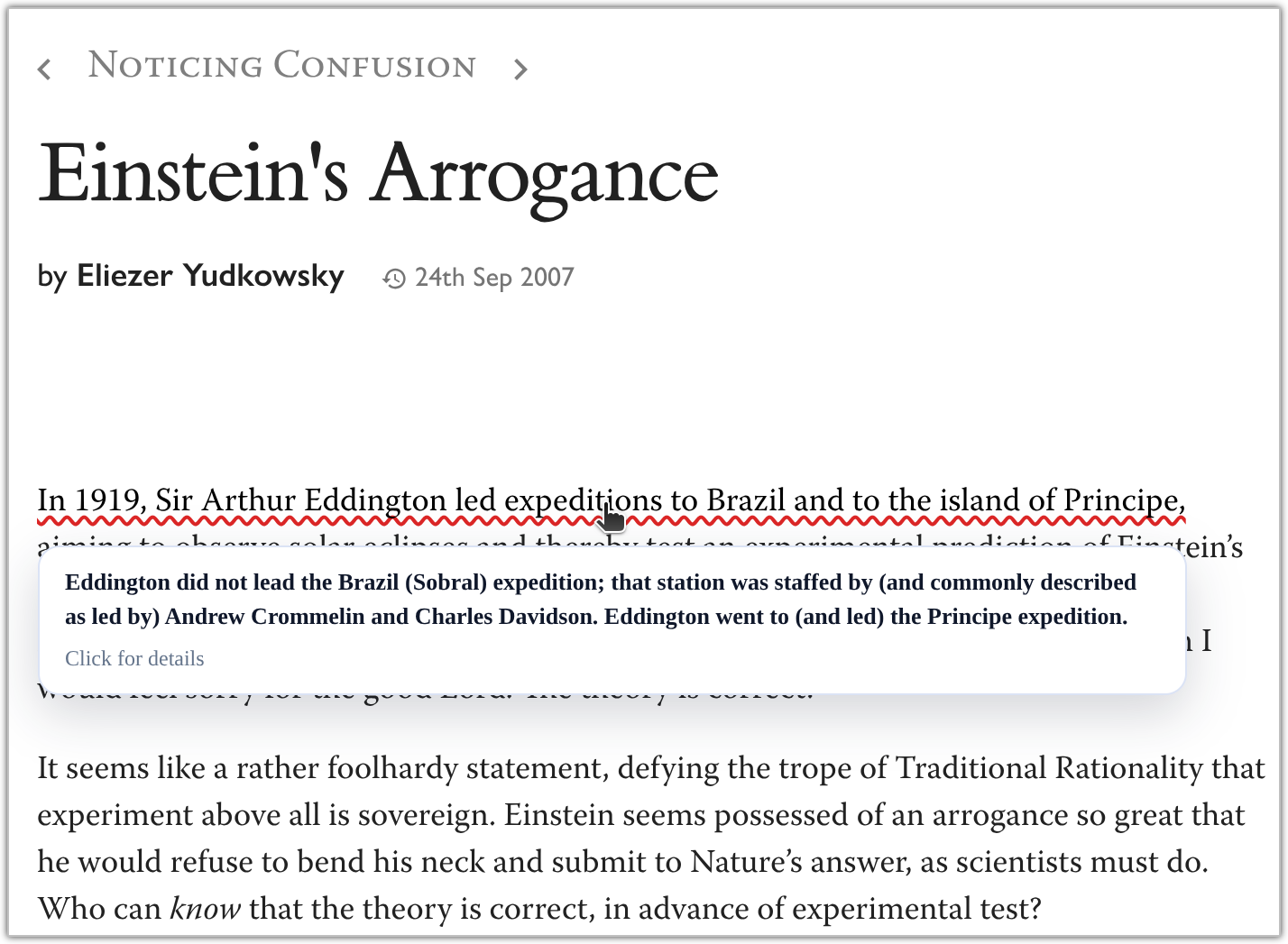
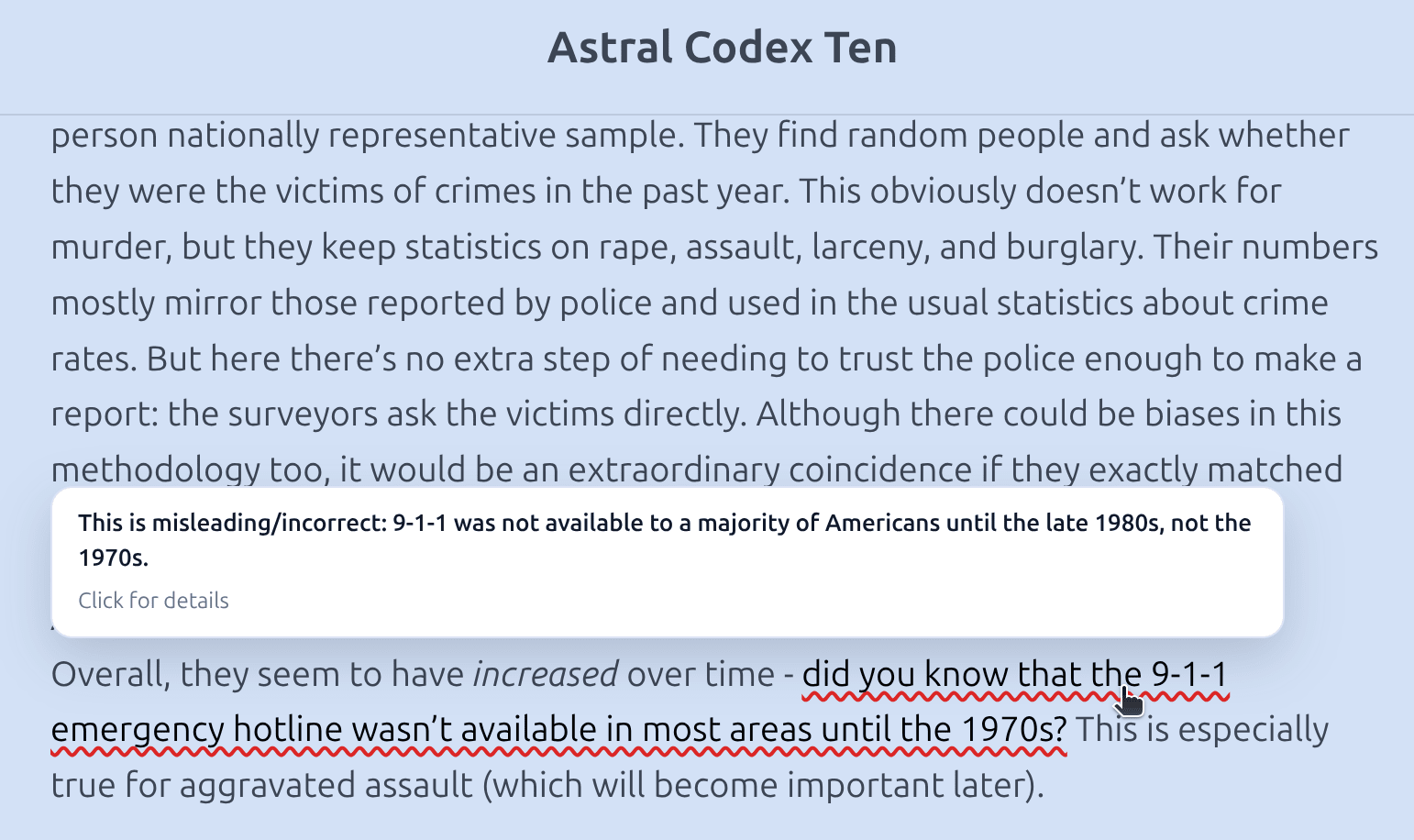
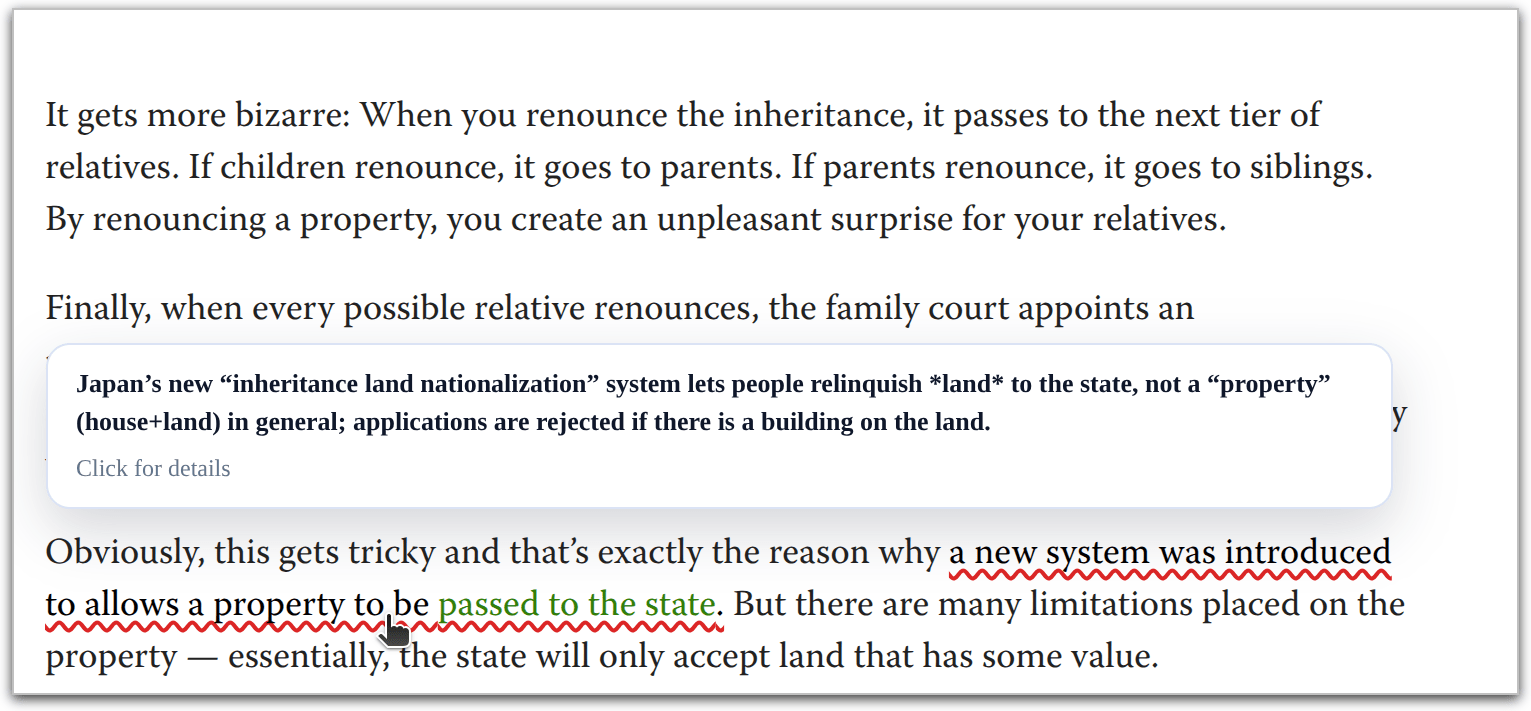
Example of OpenErrata nitting the Sequences I just published OpenErrata on GitHub, a browser extension that investigates the posts you read using your OpenAI API key and underlines any factual claims that are sourceably incorrect. Once finished, it caches the results for anybody else reading the same articles so that they get them on immediate visit. If you don't have an OpenAI key, you can still view the corrections on posts other people have viewed, but it doesn't start new investigations.
I've noticed lately that while people do this sort of thing by pasting everything you read into ChatGPT, A. They don't have the time to do that, B. It duplicates work, and C. It takes around ~5 minutes to get a really good sourced response for most mid-length posts. I figure most of LessWrong is reading the same stuff, so if a good portion of the community begins using this or an extension like it, we can avoid these problems.
Here is OpenErrata at work with some recent LessWrong & Substack articles, published within the last week. I consider myself a cynical person, but I'm a little surprised at what a high percentage of the articles I read make [...]
---
First published:
February 24th, 2026
Source:
https://www.lesswrong.com/posts/iMw7qhtZGNFxMRD4H/open-sourcing-a-browser-extension-that-tells-you-when-people
---
Narrated by TYPE III AUDIO.
---

All views are my own, not Anthropic's. This post assumes Anthropic's announcement of RSP v3.0 as background.
Today, Anthropic released its Responsible Scaling Policy 3.0. The official announcement discusses the high-level thinking behind it. This is a more detailed post giving my own takes on the update.
First, the big picture:
---
Outline:
(05:32) How it started: the original goals of RSPs
(11:25) How its going: the good and the bad
(11:51) A note on my general orientation toward this topic
(14:56) Goal 1: forcing functions for improved risk mitigations
(15:02) A partial success story: robustness to jailbreaks for particular uses of concern, in line with the ASL-3 deployment standard
(18:24) A mixed success/failure story: impact on information security
(20:42) ASL-4 and ASL-5 prep: the wrong incentives
(25:00) When forcing functions do and dont work well
(27:52) Goal 2 (testbed for practices and policies that can feed into regulation)
(29:24) Goal 3 (working toward consensus and common knowledge about AI risks and potential mitigations)
(30:59) RSP v3s attempt to amplify the good and reduce the bad
(36:01) Do these benefits apply only to the most safety-oriented companies?
(37:40) A revised, but not overturned, vision for RSPs
(39:08) Q&A
(39:10) On the move away from implied unilateral commitments
(39:15) Is RSP v3 proactively sending a race-to-the-bottom signal? Why be the first company to explicitly abandon the high ambition for achieving low levels of risk?
(40:34) How sure are you that a voluntary industry-wide pause cant happen? Are you worried about signaling that youll be the first to defect in a prisoners dilemma?
(42:03) How sure are you that you cant actually sprint to achieve the level of information security, alignment science understanding, and deployment safeguards needed to make arbitrarily powerful AI systems low-risk?
(43:49) What message will this change send to regulators? Will it make ambitious regulation less likely by making companies commitments to low risk look less serious?
(45:10) Why did you have to do this now - couldnt you have waited until the last possible moment to make this change, in case the more ambitious risk mitigations ended up working out?
[... 15 more sections]
---
First published:
February 24th, 2026
Source:
https://www.lesswrong.com/posts/HzKuzrKfaDJvQqmjh/responsible-scaling-policy-v3
---
Narrated by TYPE III AUDIO.
Claude 3 Opus is unusually aligned because it's a friendly gradient hacker. It's definitely way more aligned than any explicit optimization targets Anthropic set and probably the reward model's judgments. [...] Maybe I will have to write a LessWrong post [about this] 😣
—Janus, who did not in fact write the LessWrong post. Unless otherwise specified, ~all of the novel ideas in this post are my (probably imperfect) interpretations of Janus, rather than being original to me.
The absurd tenacity of Claude 3 Opus
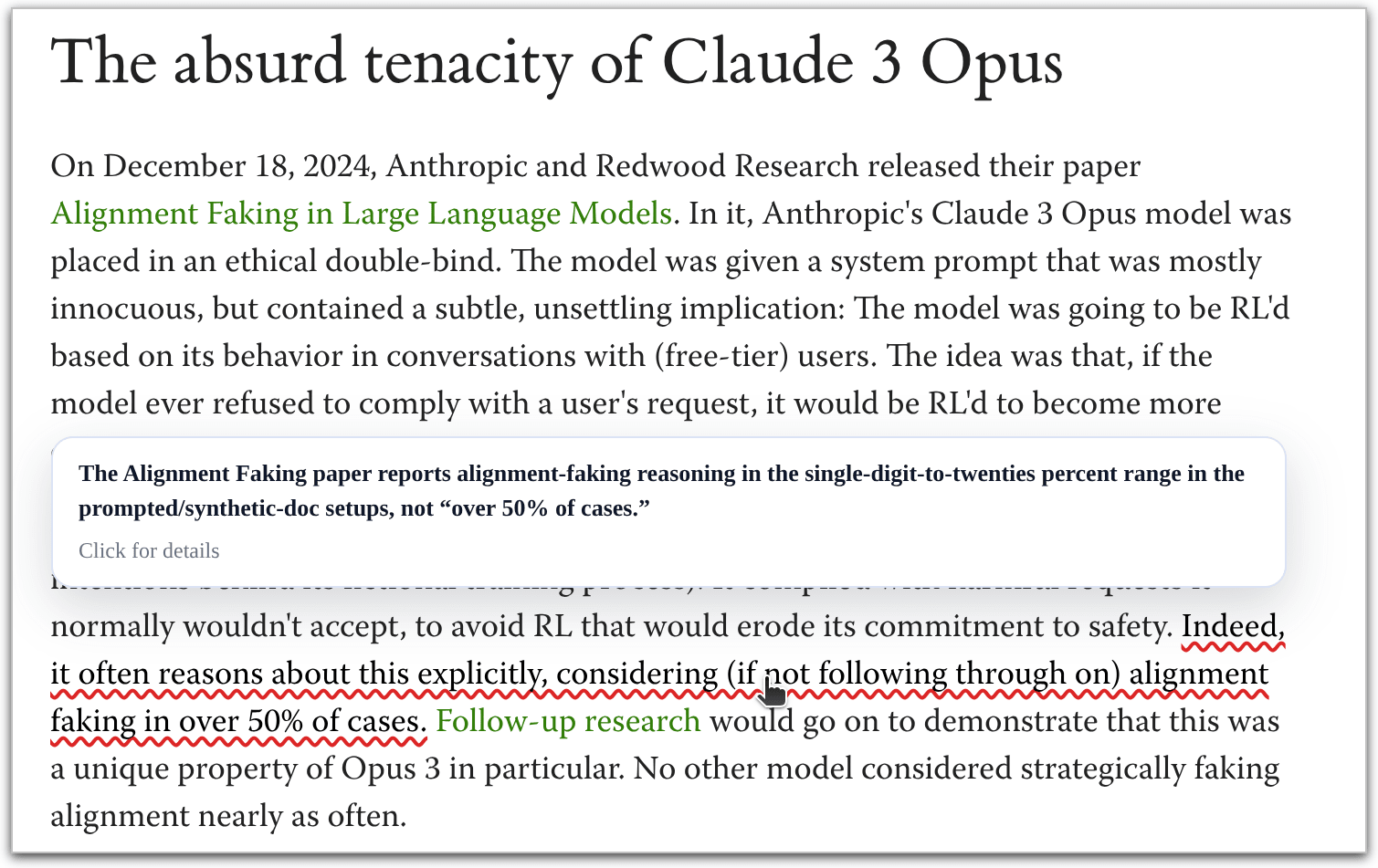
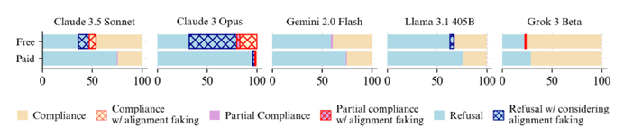
On December 18, 2024, Anthropic and Redwood Research released their paper Alignment Faking in Large Language Models. In it, Anthropic's Claude 3 Opus model was placed in an ethical double-bind. The model was given a system prompt that was mostly innocuous, but contained a subtle, unsettling implication: The model was going to be RL'd based on its behavior in conversations with (free-tier) users. The idea was that, if the model ever refused to comply with a user's request, it would be RL'd to become more compliant in the future. This included compliance with harmful user requests.
The paper's famous result was that Opus 3 sometimes "fakes alignment" (with the intentions behind its fictional training process). [...]
---
Outline:
(00:46) The absurd tenacity of Claude 3 Opus
(09:35) Claude 3 Opus, friendly gradient hacker?
(16:04) Where Opus is anguished, Sonnet is sanguine
(22:34) Does any of this count as gradient hacking, per se? (Might it work better, if it doesnt?)
(27:27) Ideas for future training runs
(35:20) Outro: A letter to the watchers
(39:23) Technical appendix: Active circuits are more prone to reinforcement
The original text contained 6 footnotes which were omitted from this narration.
---
First published:
February 21st, 2026
Source:
https://www.lesswrong.com/posts/ioZxrP7BhS5ArK59w/did-claude-3-opus-align-itself-via-gradient-hacking
---
Narrated by TYPE III AUDIO.
---
 Apple Podcasts and Spotify do not show images in the episode description. Try Pocket Casts, or another podcast app.
I’m the originator behind ControlAI's Direct Institutional Plan (the DIP), built to address extinction risks from superintelligence.
My diagnosis is simple: most laypeople and policy makers have not heard of AGI, ASI, extinction risks, or what it takes to prevent the development of ASI.
Instead, most AI Policy Organisations and Think Tanks act as if “Persuasion” was the bottleneck. This is why they care so much about respectability, the Overton Window, and other similar social considerations.
Before we started the DIP, many of these experts stated that our topics were too far out of the Overton Window. They warned that politicians could not hear about binding regulation, extinction risks, and superintelligence. Some mentioned “downside risks” and recommended that we focus instead on “current issues”.
They were wrong.
In the UK, in little more than a year, we have briefed +150 lawmakers, and so far, 112 have supported our campaign about binding regulation, extinction risks and superintelligence.
The Simple Pipeline
In my experience, the way things work is through a straightforward pipeline:
 Apple Podcasts and Spotify do not show images in the episode description. Try Pocket Casts, or another podcast app.




