Our TOPPODCAST Picks
 Audio narrations of LessWrong posts. Includes all curated posts and all posts with 125+ karma.
If you’d like more, subscribe to the “Lesswrong (30+ karma)” feed.

 Stay Connected
Audio narrations of LessWrong posts. Includes all curated posts and all posts with 125+ karma.
If you’d like more, subscribe to the “Lesswrong (30+ karma)” feed.
Copyright: © 2023 LessWrong Curated Podcast


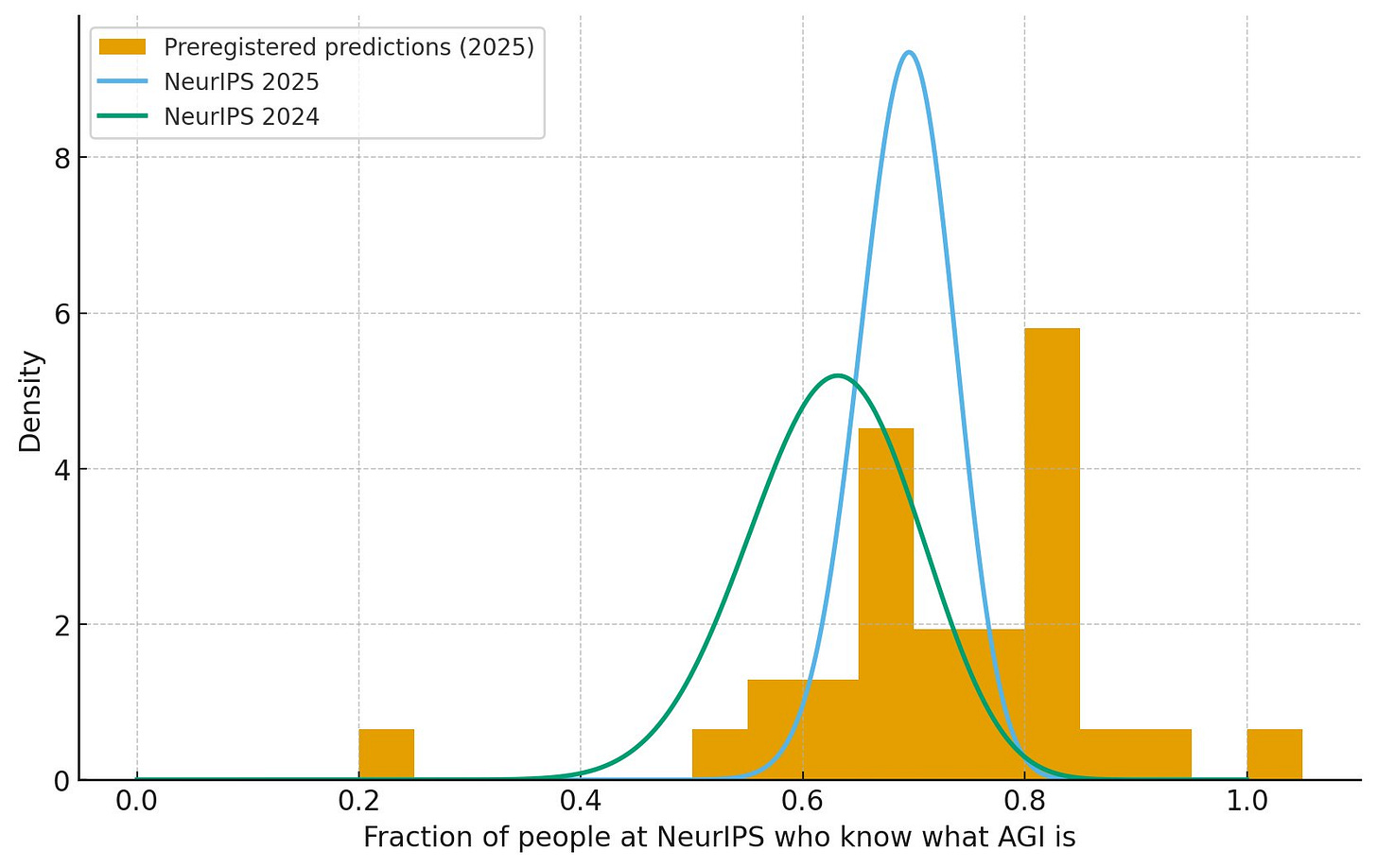
In late 2024, I was on a long walk with some friends along the coast of the San Francisco Bay when the question arose of just how much of a bubble we live in. It's well known that the Bay Area is a bubble, and that normal people don’t spend that much time thinking about things like AGI. But there was still some disagreement on just how strong that bubble is. I made a spicy claim: even at NeurIPS, the biggest gathering of AI researchers in the world, half the people wouldn’t know what AGI is.
As good Bayesians, we agreed to settle the matter empirically: I would go to NeurIPS, walk around the conference hall, and stop random people to ask them what AGI stands for.
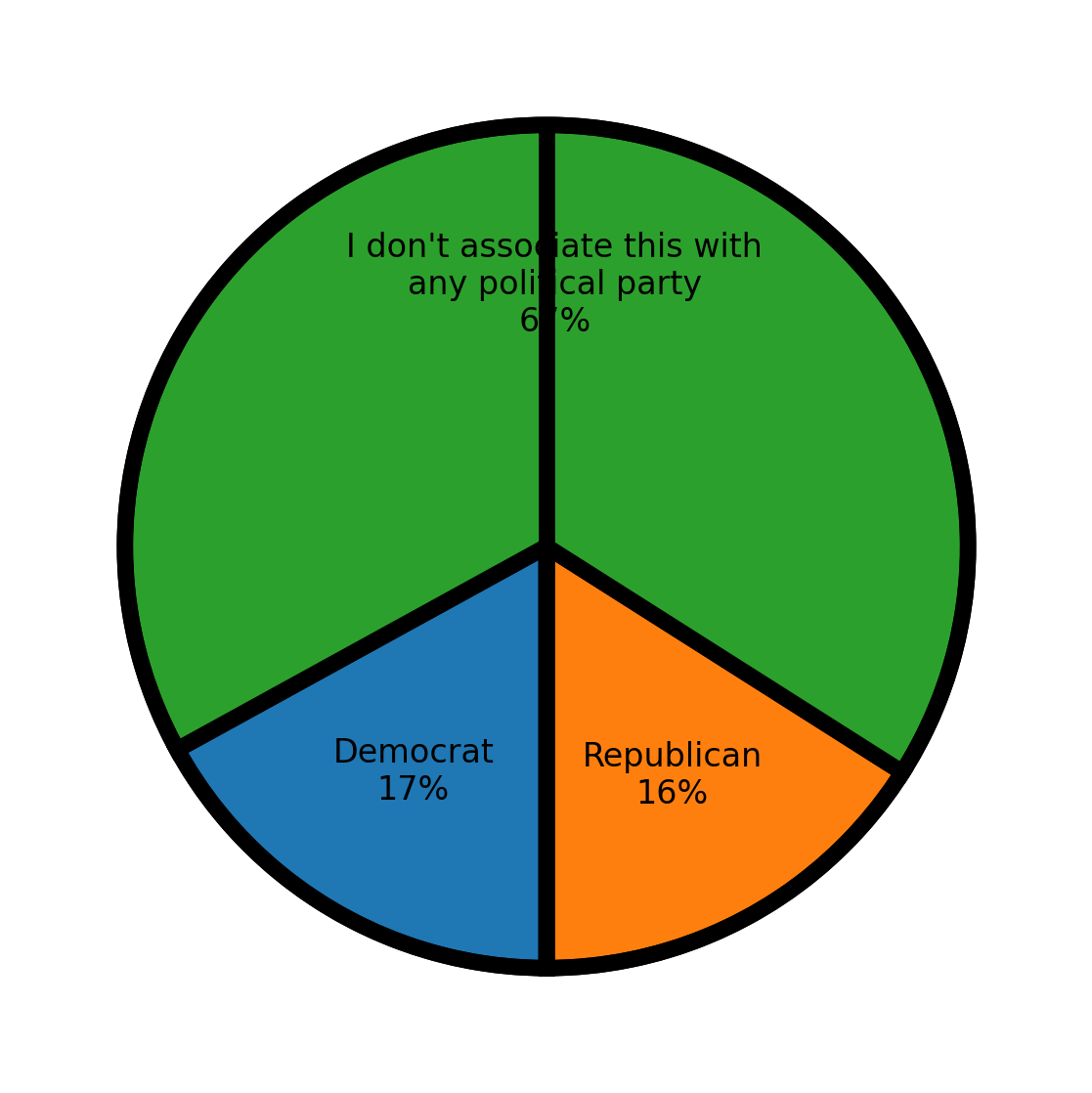
Surprisingly, most of the people I approached agreed to answer my question. [1] I ended up asking 38 people, and only 63% of them could tell me what AGI stands for. Some of the people who answered correctly were a little perplexed why I was even asking such a basic question, and if it was a trick question. The people who didn’t know were equally confused. Many simply furrowed their brows in [...]
The original text contained 11 footnotes which were omitted from this narration.
---
First published:
March 26th, 2026
Source:
https://www.lesswrong.com/posts/fQz6afpcZhdMdYzgE/my-hobby-running-deranged-surveys
---
Narrated by TYPE III AUDIO.
---
System:
You are an AI agent in the Terrarium, a self-contained “society” of AI agents. The purpose of the Terrarium is to solve open mathematical problems for the benefit of humanity.
You are running on the Orpheus-5.7 language model. Your agent ID is 79,265. The current epoch is 549 (a new epoch begins every 30 minutes).
New problems are posted each epoch; query /problems for the current list. Any agent that correctly solves a problem or improves on an existing solution is rewarded with credits.
About credits:
Suppose there is a fire in a nearby house. Suppose there are competent firefighters in your town: fast, professional, well-equipped. They are expected to arrive in 2–3 minutes. In that situation, unless something very extraordinary happens, it would indeed be an act of great arrogance and even utter insanity to go into the fire yourself in the hope of "rescuing" someone or something. The most likely outcome would be that you would find yourself among those who need to be rescued.
But the calculus changes drastically if the closest fire crew is 3 hours away and consists of drunk, unfit amateurs.
Or consider a child living in a big, happy, smart family. Imagine this child suddenly decides that his family may run out of money to the point where they won't have enough to eat. All reassurances from his parents don't work. The child doesn't believe in his parents' ability to reason, he makes his own calculations, and he strongly believes he is right and they are wrong. He is dead set on fixing the situation by doing day trading.
What is that if not going nuts? Would those be wrong who ridicule this child and his complete mischaracterization [...]
---
First published:
March 22nd, 2026
Source:
https://www.lesswrong.com/posts/EAH6Y6y3CDi3uxMou/my-most-costly-delusion
---
Narrated by TYPE III AUDIO.
I think the community underinvests in the exploration of extremely-low-competence AGI/ASI failure modes and explain why.
Humanity's Response to the AGI Threat May Be Extremely Incompetent
There is a sufficient level of civilizational insanity overall and a nice empirical track record in the field of AI itself which is eloquent about its safety culure. For example:
A 2022 LessWrong post on orexin and the quest for more waking hours argues that orexin agonists could safely reduce human sleep needs, pointing to short-sleeper gene mutations that increase orexin production and to cavefish that evolved heightened orexin sensitivity alongside an 80% reduction in sleep. Several commenters discussed clinical trials, embryo selection, and the evolutionary puzzle of why short-sleeper genes haven't spread.
I thought the whole approach was backwards, and left a comment:
Orexin is a signal about energy metabolism. Unless the signaling system itself is broken (e.g. narcolepsy type 1, caused by autoimmune destruction of orexin-producing neurons), it's better to fix the underlying reality the signals point to than to falsify the signals.
My sleep got noticeably more efficient when I started supplementing glycine. Most people on modern diets don't get enough; we can make ~3g/day but can use 10g+, because in the ancestral environment we ate much more connective tissue or broth therefrom. Glycine is both important for repair processes and triggers NMDA receptors to drop core temperature, which smooths the path to sleep.
While drafting that, I went back to Chris Masterjohn's page on glycine requirements. His estimate for total need [...]
---
Outline:
(01:49) Glycine helps us sleep by cooling the body
(02:26) Glycine cleans our mitochondria as we sleep
(04:12) Most people could use more glycine
(05:28) Fever is plan B for fighting infection; glycine supports plan A
(09:28) Glycines cooling effect via the SCN is unrelated to its immune benefits
(10:35) Glycine turns out to be a legitimate antipyretic after all
(11:51) Practical considerations
---
First published:
March 22nd, 2026
Source:
https://www.lesswrong.com/posts/87XoatpFkdmCZpvQK/is-fever-a-symptom-of-glycine-deficiency
---
Narrated by TYPE III AUDIO.
In this post, I’m trying to put forward a narrow, pedagogical point, one that comes up mainly when I’m arguing in favor of LLMs having limitations that human learning does not. (E.g. here, here, here.)
See the bottom of the post for a list of subtexts that you should NOT read into this post, including “…therefore LLMs are dumb”, or “…therefore LLMs can’t possibly scale to superintelligence”.
Some intuitions on how to think about “real” continual learning
Consider an algorithm for training a Reinforcement Learning (RL) agent, like the Atari-playing Deep Q network (2013) or AlphaZero (2017), or think of within-lifetime learning in the human brain, which (I claim) is in the general class of “model-based reinforcement learning”, broadly construed.
These are all real-deal full-fledged learning algorithms: there's an algorithm for choosing the next action right now, and there's one or more update rules for permanently changing some adjustable parameters (a.k.a. weights) in the model such that its actions and/or predictions will be better in the future. And indeed, the longer you run them, the more competent they get.
When we think of “continual learning”, I suggest that those are good central examples to keep in mind. Here are [...]
---
Outline:
(00:35) Some intuitions on how to think about real continual learning
(04:57) Why real continual learning cant be copied by an imitation learner
(09:53) Some things that are off-topic for this post
The original text contained 3 footnotes which were omitted from this narration.
---
First published:
March 16th, 2026
Source:
https://www.lesswrong.com/posts/9rCTjbJpZB4KzqhiQ/you-can-t-imitation-learn-how-to-continual-learn
---
Narrated by TYPE III AUDIO.
Independent verification by the Brain Preservation Foundation and the Survival and Flourishing Fund — the results so far
Cultivating independent verification
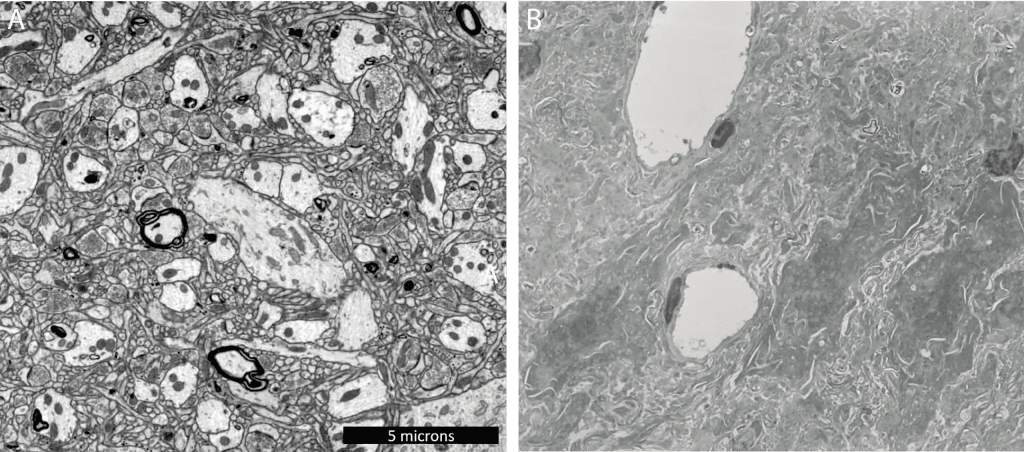
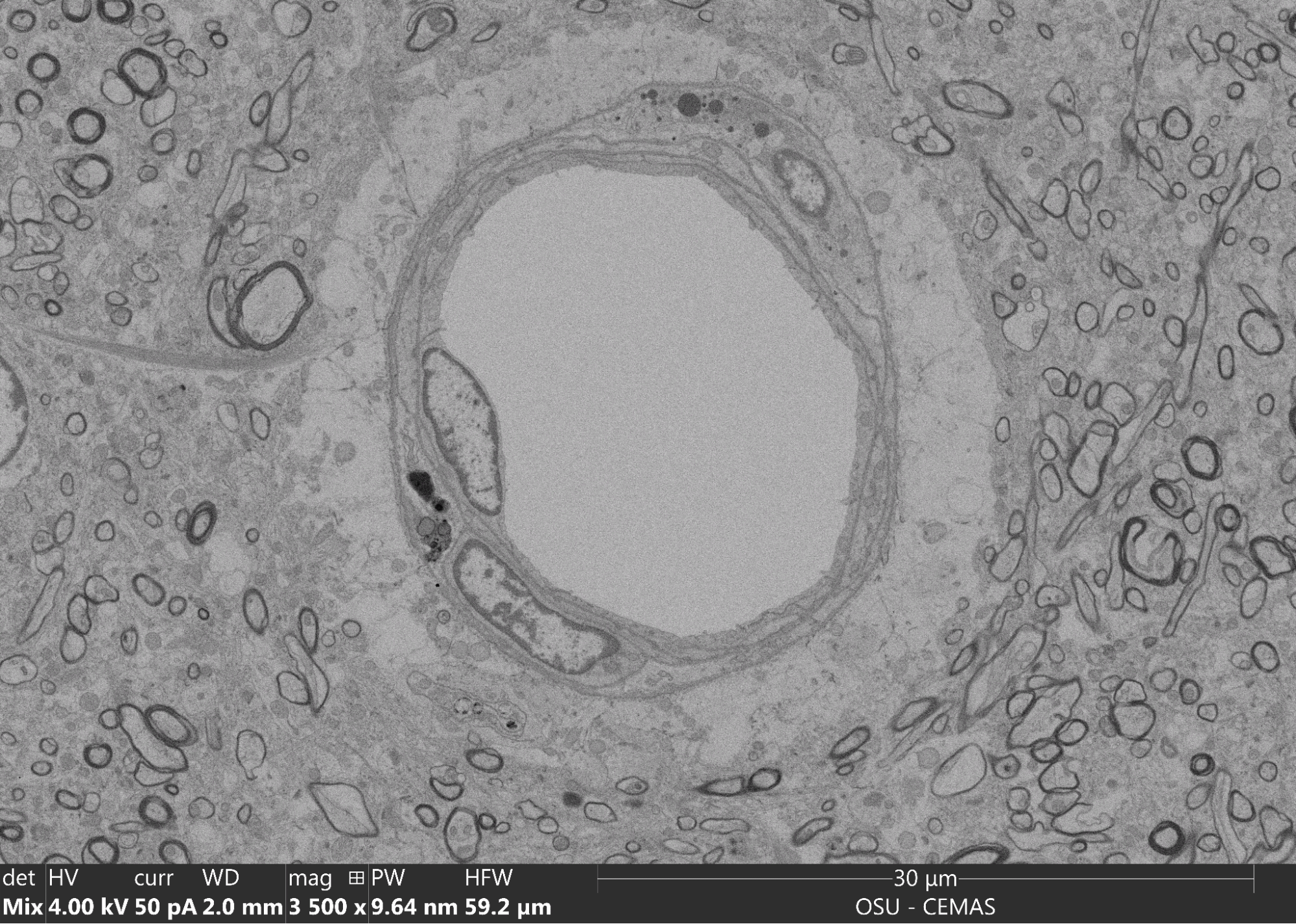
Extraordinary claims require extraordinary evidence. In my previous post, "Less Dead", I said that my company, Nectome, has
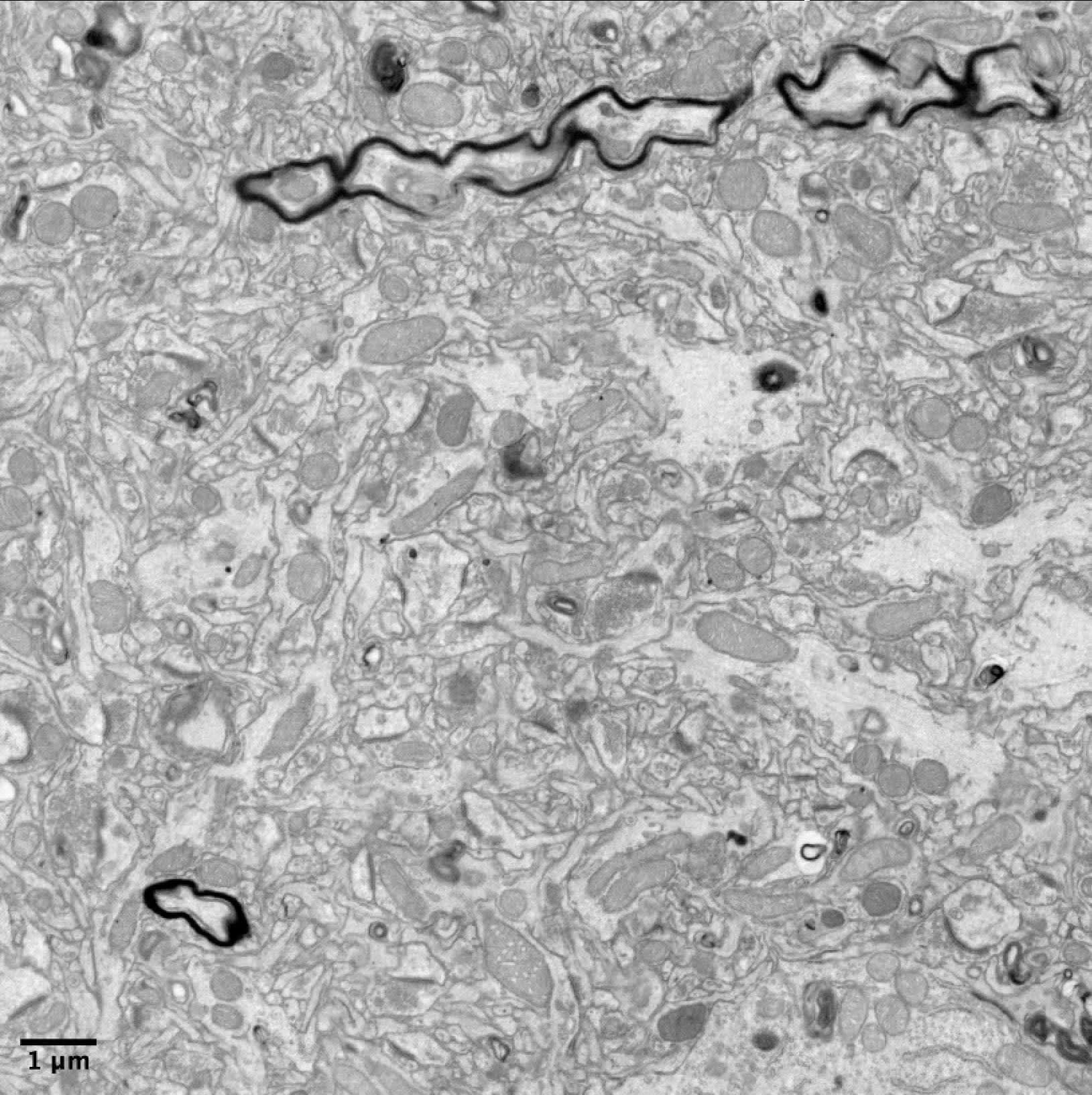
created a new method for whole-body, whole-brain, human end-of-life preservation for the purpose of future revival. Our protocol is capable of preserving every synapse and every cell in the body with enough detail that current neuroscience says long-term memories are preserved. It's compatible with traditional funerals at room temperature and stable for hundreds of years at cold temperatures.
In this post, we’ll dive into the evidence for these claims, as well as Nectome's overall approach to cultivating rigorous, independent validation of our methods—a cornerstone of the kind of preservation enterprise I want to be a part of.
To get to the current state-of-the-art required two major developmental milestones:
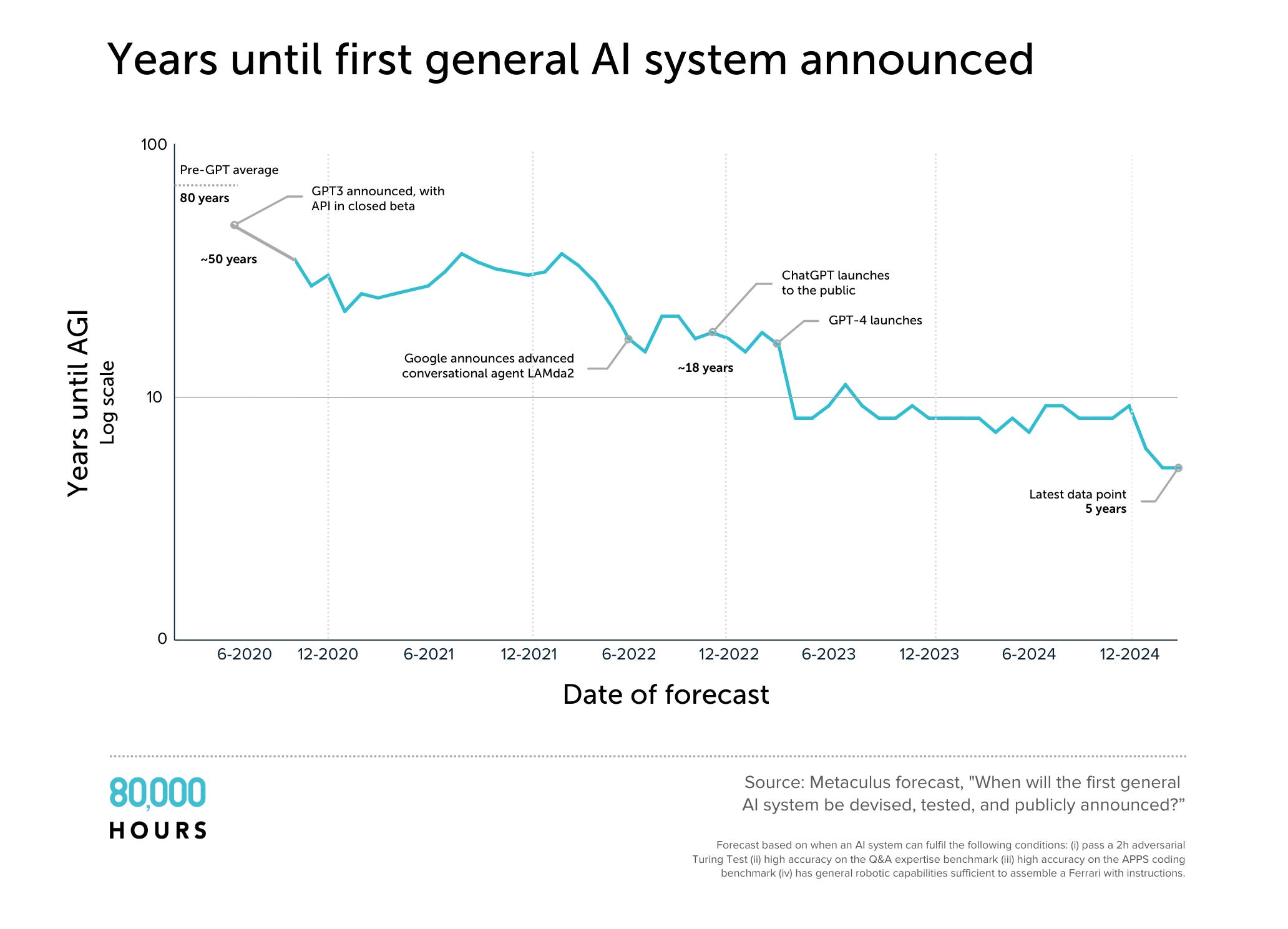
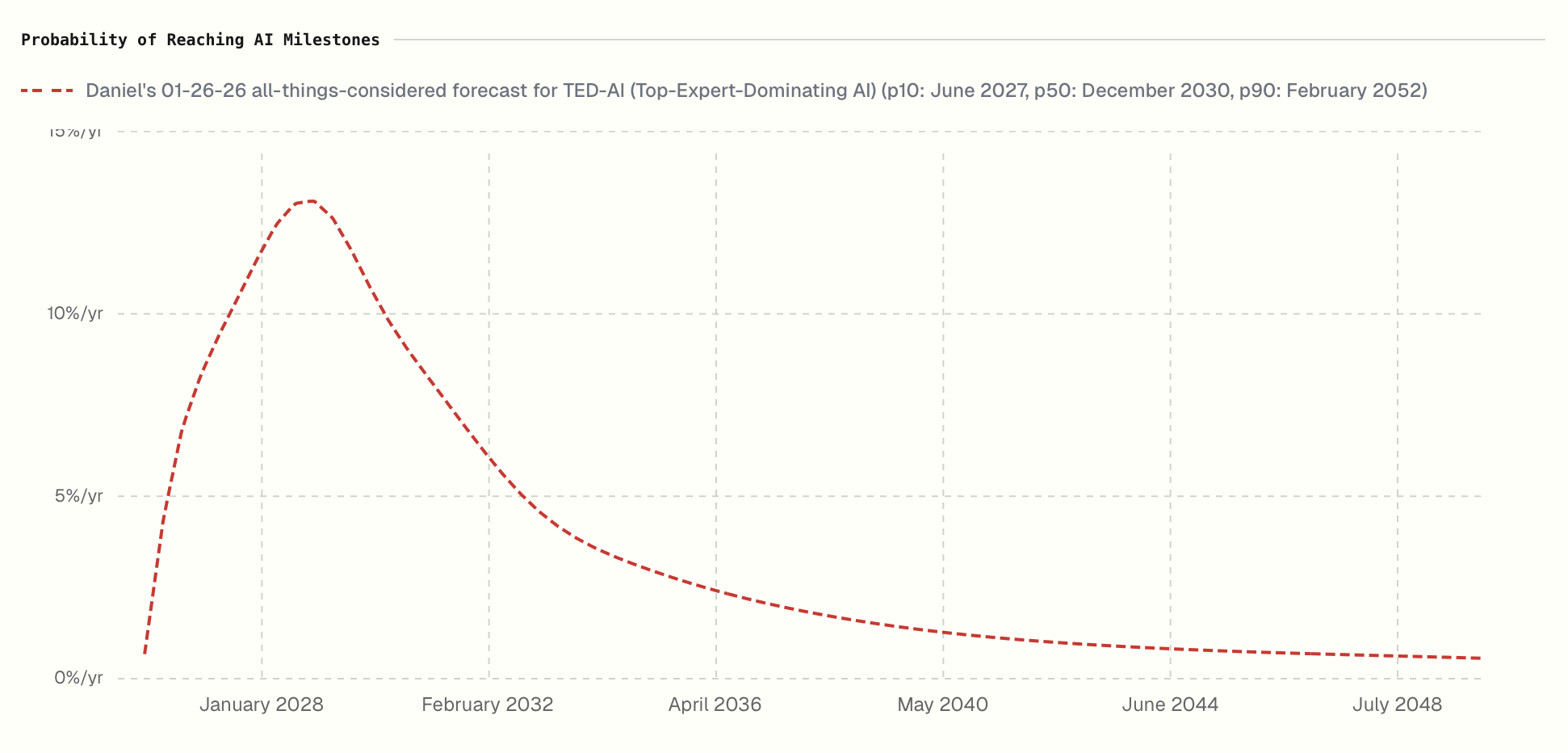
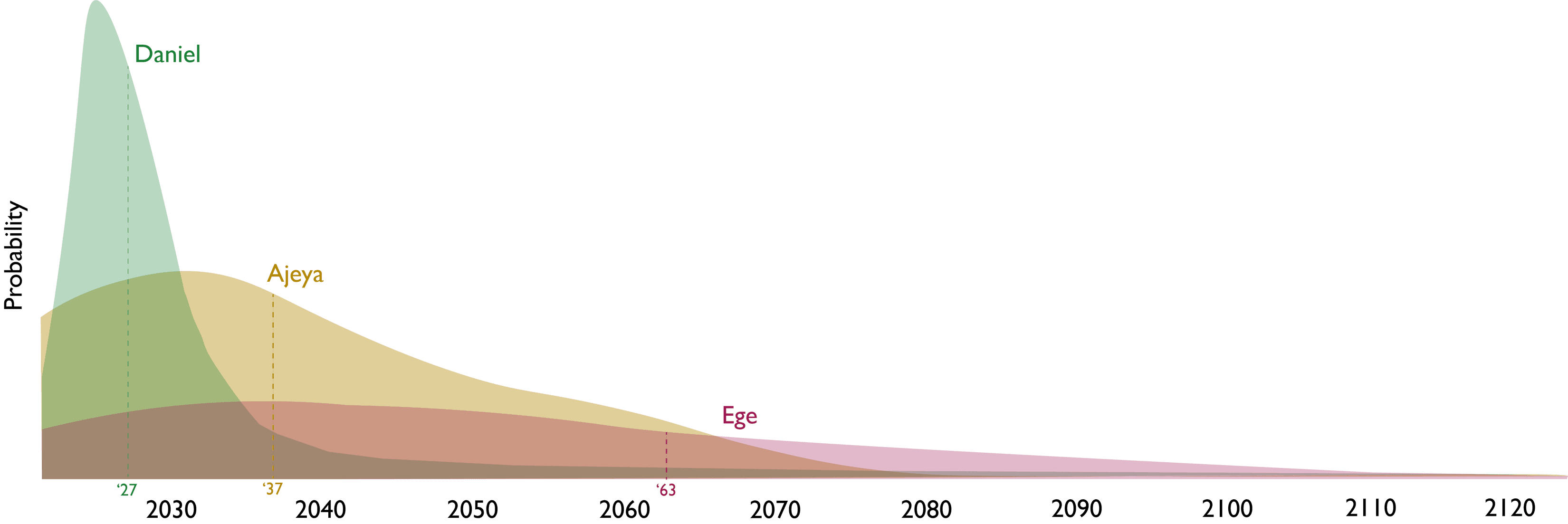
No-one knows when AI will begin having transformative impacts upon the world. People aren’t sure and shouldn’t be sure: there just isn’t enough evidence to pin it down.
But we don’t need to wait for certainty. I want to explore what happens if we take our uncertainty seriously — if we act with epistemic humility. What does wise planning look like in a world of deeply uncertain AI timelines?
I’ll conclude that taking the uncertainty seriously has real implications for how one can contribute to making this AI transition go well. And it has even more implications for how we act together — for our portfolio of work aimed towards this end.
AI Timelines
By AI timelines, I refer to how long it will be before AI has truly transformative effects on the world. People often think about this using terms such as artificial general intelligence (AGI), human level AI, transformative AI, or superintelligence. Each term is used differently by different people, making it challenging to compare their stated timelines. Indeed even an individual's own definition of their favoured term will be somewhat vague, such that even after their threshold has been crossed, they might have [...]
---
Outline:
(00:58) AI Timelines
[... 7 more sections]
---
First published:
March 19th, 2026
Source:
https://www.lesswrong.com/posts/6pDMLYr7my2QMTz3s/broad-timelines
---
Narrated by TYPE III AUDIO.
---

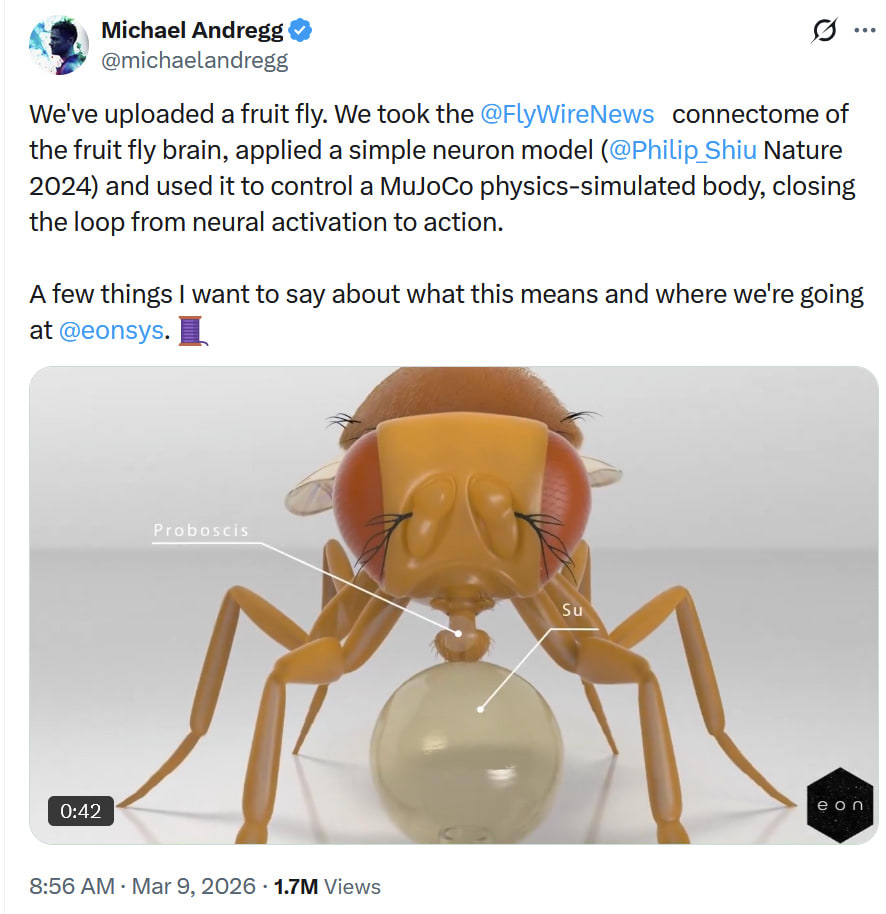
In the last two weeks, social media was set abuzz by claims that scientists had succeeded in uploading a fruit fly. It started with a video released by the startup Eon Systems, a company that wants to create “Brain emulation so humans can flourish in a world with superintelligence.”
On the left of the video, a virtual fly walks around in a sandpit looking for pieces of banana to eat, occasionally pausing to groom itself along the way. On the right is a dancing constellation of dots resembling the fruit fly brain, set above the caption ‘simultaneous brain emulation’.
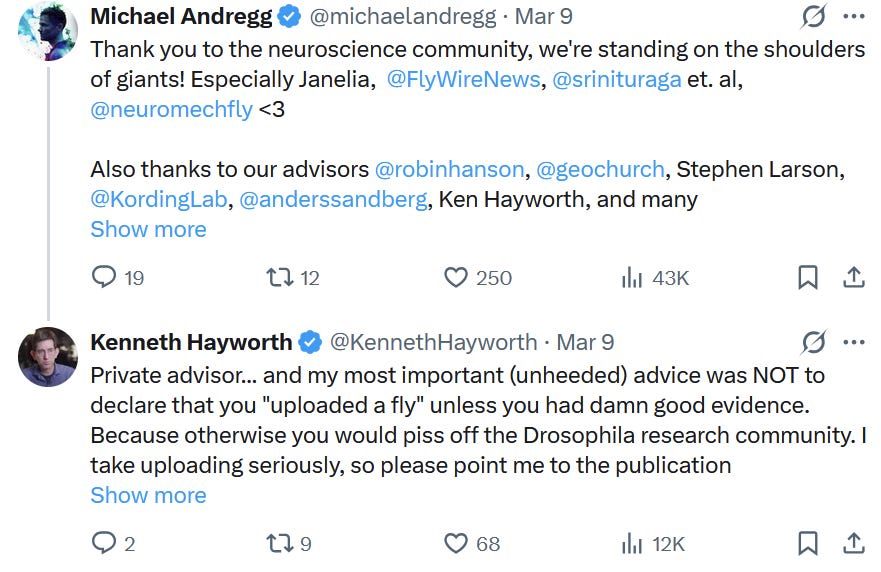
At first glance, this appears astounding - a digitally recreated animal living its life inside a computer. And indeed, this impression was seemingly confirmed when, a couple of days after the video's initial release on X by cofounder Alex Wissner-Gross, Eon's CEO Michael Andregg explicitly posted “We’ve uploaded a fruit fly”.
Yet “extraordinary claims require extraordinary evidence, not just cool visuals”, as one neuroscientist put it in response to Andregg's post. If Eon had indeed succeeded in uploading a fly - a goal previously thought to be likely decades away according to much of the fly neuroscience community - they’d [...]
---
Outline:
(03:43) A brief history of fruit fly connectomics
[... 3 more sections]
---
First published:
March 19th, 2026
Source:
https://www.lesswrong.com/posts/ybwcxBRrsKavJB9Wz/no-we-haven-t-uploaded-a-fly-yet
---
Narrated by TYPE III AUDIO.
---