Show notes
Copper Penny I’m Shelley Schlender. This is an extended interview from the report we broadcast on August 20th, 2013, about a new study from the University of Rochester that indicates that too much of an essential nutrient, copper, might promote Alzheimer’s disease. As background Rashid Deane gave mice drinking water laced with 50 times their normal copper intake. While that sounds high, he says it was only 10% of the daily dose that the EPA considers to be within safe limits for the mice. Rashid says this amount of copper, that’s within EPA limits, led to a reduced effectiveness of the blood-brain barrier, resulting in excess copper in the blood that feeds the mice brains. This activated mop-up proteins, such as beta amyloid and prions. Some research indicates that these proteins, when working properly clear out inflammation. But the excess copper stuck to the clean-up proteins. Altered proteins then clogged receptor channels that normally allow the beta amyloid, prion proteins, and copper all to pass back down, through the blood-brain barrier, and passed to elimination channels, such as the liver. Deane suggests that all this blockage may contribute to the risk of Alzheimer’s. Deane plans more research to determine whether people with Alzheimer’s have higher blood copper levels. He’s also exploring other substances that prevent the brain from cleansing itself of accumulating “trash.” For instance, high blood sugar levels can clog the receptors that allow toxins to leave the brain. As for copper, everyone needs and gets trace amounts from food, copper plumbing, and supplements. Dean personally points out that he has copper pipes in his home and no plans to replace them. But given his findings, Deane suggests that for people who get enough copper in their diet, they consider reducing copper supplements for instance. To help clarify a couple of technical topics that we’ll mention, in his study, Deane describes how a chemical called N-acetylcysteine helps reduce detrimental effects to to buildup of copper in the brains of the mice they studied. Interestingly, doing a wikipedia search about this supplement, it became clear it’s a substance that is often used to clear out damage from an overdose of a non-steroidal anti-inflammatory drug, such as Tylenol. That led to some interesting questions along the lines of Tylenol. Also, at the end of this interview, I asked Deane about the nature of Alzheimer’s in other animals, such as salmon. That’s because salmon is a fish that naturally develops beta-amyloid plaques in its brain as part of its normal aging process, and this is a process studied by University of Colorado researchers. The salmon experience leads some researchers to wonder whether beta amyloids plaques might somehow be protective, even in humans. We’ll link to an interview about the salmon on HowOnEarthRadio.org. INTERVIEW TRANSCRIPT: Shelley Schlender: Your paper is intriguing. I bet you’ve gotten a lot of calls today about it. Rashid Deane: Yes, yes, I’ve been on the phone all day today. [laughs] Shelley Schlender: I was glad to get your actual study, because after reading it, I couldn’t decide whether I want to get my copper pipes checked to make sure that I don’t get excess copper or that I should tell all my friends to be careful about using Tylenol. Rashid Deane: I think to be careful about how much copper you take in is the best advice, because copper is an essential metal ion and we do need copper to keep our body functional. There are many sources, copper piping, there is some leaching out of copper there, but whether that could be a major contributor, depending on our water supply, which has copper as well, and the food we eat has copper. We didn’t really address copper in food, because we kept that constant. We didn’t really study copper deficiency, and we made sure they (the mice) have enough copper in them, so their food was OK. But we did alter the water supply. The logic there was because in food, to get the copper out of it so it get in the body, it has to be broken down. So the food we take in, the nuts we eat, to absorb any of the copper, it has to be broken down. Copper has to be released in order to get into the body. In the water supply, the copper is already there, and again it’s delivered more rapidly. So it’s that sort of logic that we are actually studying. Of course, copper in water is a source of copper as well. Shelley Schlender: In your study, you were using huge amounts of copper, 52 times the amount that the mice normally drink, highly toxic levels of copper. Rashid Deane: That you’ve got wrong. We’re not using high levels of copper. We’re using 10% of the maximum allowed in our drinking water (by the EPA), it’s 10%. But you’re quite right in saying that the normal water supply for the mice did actually have a lower level of copper than that. And it’s because copper in water varies from area to area up and down the country and in different countries as well. Some areas have very low levels. Also, the mice we have here have special treatments. Their normal water, has been through an autoclave, it’s been heated up to kill all the bacteria and so on in it, and also it’s been filtered before they get it. Shelley Schlender: For your study, you gave the mice more copper than the mice normally get, but it’s only 10% of what the EPA considers a safe level of copper consumption for humans? Rashid Deane: Correct. That’s the point. Yes. (Rashind adds that dosing lab mice via the drinking water was used not because he thinks copper in water is a problems, but instead, for experiments, it’s a normal and predictable way to dose an animal. ) Shelley Schlender: It was only 10% of EPA limits for copper? That’s very sobering. But it still doesn’t finish solving a puzzle, because Alzheimer’s disease is on the rise, as are prion-related, brain wasting diseases. I’m not aware of anyone saying that the amount of copper being ingested by the American public has been going up as well. Rashid Deane: Well, we actually don’t know that, because we are promoting good health, saying, “Have your nuts, have your vegetables, eat more fish.” And all of these have high levels of copper. As well, the public seems to be very conscious that they must take supplements in addition. I’m sure there are people who, in addition to all of what they eat, containing copper, take supplements as well. And supplements often have two milligrams of copper in a daily dose, which, when added to copper that may be coming from other sources, such as high copper foods, can add up to a lot. So you could potentially have individuals who are eating well as well as taking all of the supplements that are being recommended, and they’re doing it all religiously, and maybe, just maybe, they’re having too much copper. Shelley Schlender: Perhaps they are. Maybe some people are eating too much copper. I’m not aware of any studies that compare the amount of copper consumption that somebody takes in and their risk of Alzheimer’s disease, but perhaps your study will trigger that kind of investigation. Rashid Deane: The study you describe, it would be excellent. The late Dr. Larry Sparks did a survey of water supply up and down the country, and he did find a loose relationship between the level of copper in the water supply and the incidence of Alzheimer’s disease in those areas. So there is some loose relationship out there between copper levels and water supply and Alzheimer’s disease. But that’s fairly loose. (Deane credits Sparks’s work with stimulating Deane’s curiosity about copper and Alzheimer’s disease.) Shelley Schlender: So you’d like to see a more clear study of the epidemiology of copper intake versus Alzheimer’s and prion-related diseases? Rashid Deane: Prion disease is a little bit more complicated. I definitely would like to see a more detailed study in those areas, and you’re quite right, it’s the total copper intake we should look at, what’s in the blood levels and what’s in the food supply. Shelley Schlender: I think that makes sense to me, too, but I was also fascinated in your study by how you indicated that in the mice, you could reduce the effects of the high copper levels by giving them an antioxident supplement, N-acetylcysteine, that is widely known to reduce the effects of overdose from another chemical – and that other chemical basically is Tylenol. Rashid Deane: Great! Yeah, I think you made a good observation there, actually, because that’s what we did that experiment for. We’re trying to see if we can find some way of actually preventing or delaying this process (of Alzheimer’s Disease) by giving them some sort of a treatment which is an antioxidant of some sort. Shelley Schlender: I couldn’t help but wonder, though, whether the increase in use of Tylenol might be associated with Alzheimer’s, by somehow inhibiting the body’s ability to clear out copper in a more efficient way. After all, for some reason excess copper, from what you’ve mentioned, is harder for the body to clear out out of the brain. But it’s easier to clear out that excess with the supplement, N-acetylcysteine. The substance that clears out a Tylenol overdose seems to help with clearing out copper as well. Rashid Deane: But the compound we use is not related to Tylenol. The compound we use, it’s like an antioxidant. It’s not Tylenol-based. Shelley Schlender: Correct, it’s not Tylenol-based, but the substance that you used to clear out the blockage to copper, so that the excess copper will wash out of the brain, shows up in general searches about it, as a substance that’s used primarily for clearing out overdoses of Tylenol. Rashid Deane: Tylenol is cleared out through the liver and everything else, and so is copper as well, and it gets into the bile and it gets out of the gut that way. But how N-acetylcysteine works with copper compared to with Tylenol is a little bit different. Shelley Schlender: So those may not be related? It may be that this substance helps both poisonings, but in different ways and for different reasons? Rashid Deane: In different ways, different reasons, that’s for sure. In the case of the Alzheimer’s disease, the amyloid is actually trafficked across the blood vessel by a special ferry receptor called LRP1. Shelley Schlender: I found myself calling that LRP1 the “lower-the-inflammation” receptor. I know that’s not its official name, but that’s what it’s doing. Let’s step back for just a second and let’s talk through what happens when all the system is working right. When things are working right, the blood-brain barrier keeps out most free radicals, including perhaps excessive copper, is that correct? Rashid Deane: Yeah, the blood-brain barrier is there to restrict the entry of toxic molecules into the brain, and that’s a key point of this paper, actually. This idea is different than those of anybody else. We argue that in normal animals, the blood-brain barrier is intact, and therefore it will restrict the entry of excess copper. If these toxin molecules are not restricted, where do they go and how do they cause the effect? What we are showing here is that the excess copper actually accumulated in the blood vessels, but not in the rest of the brain. Shelley Schlender: Yes, and that was fascinating, too, that what you see is, if the levels of these toxins increase only in the blood itself . . . let’s talk again about how it works when it’s working right. First, if excess copper gets into the brain’s blood system, beta amyloids and prion proteins go to the scene to help mop up the inflammatory battle. They’re there to help mop things up, and in a body that’s working right, after everything gets mopped up, then the body pours all that stuff – the used beta amyloids, the prion proteins, and the excess copper, back down through the blood-brain barrier for detoxification and sending out of the body. So that’s when things are working right. Does that sound—that’s a really quick description— Rashid Deane: Yeah, (It is a quick description!) Shelley Schlender: But it sounds to me like in your description of what happens when things are going wrong, first of all, too much copper passes the blood-brain barrier in the bloodstream, and then the copper in the brain’s blood binds to a prion protein and messes up its shape. The copper ion switches the prion so it’s shaped wrong. Rashid Deane: Yeah. (Though Deane points out this is an oversimplification – more details are in his study) Shelley Schlender: And so the prion ends up clogging up the receptors that let the toxins out of the brain. That’s an ironic dilemma, since the prion was supposed to respond to inflammation and so is the beta amyloid. When they get messed up . . . This creates a major problem. Rashid Deane: Yeah. Well, we didn’t actually show whether copper can actually cause the prion to cause any conformational change. Shelley Schlender: There are other studies from some time ago that showed that copper binding to a prion changes its shape. Rashid Deane: That’s right, yeah. (Dean adds that his group has not studied prion disease – just confirmed that copper binds to cellular prions. His work shows that copper-laden prions bind to LRP1) Shelley Schlender: You didn’t prove that – it’s been proved by others, but I gather from what you’re saying that you’re assuming that if you get excess copper around these prions without getting it cleared out properly, it can start to mess up how these substances bind with LRP1. Rashid Deane: It could mess the LRP1 receptors up, definitely. Shelley Schlender: And when they’re messed up, instead of properly binding to this lower-the-inflammation LP-whatever protein, those mop-up proteins instead start to clog up the receptors so that those receptors can’t do their job? Rashid Deane: That’s right, they can’t. They get damaged. Shelley Schlender: Here’s all this stuff trying to happen right in the poor brain, just in the circulation, and the copper binds to the wrong thing, which sets a chain reaction up that leads to the beta amyloids and the prion proteins getting stuck on the wrong side of the blood-brain barrier. Rashid Deane: Yeah, it gets into the brain and then they can’t get out (at an efficient rate). Shelley Schlender: Yes, that was fascinating. And also it was fascinating that you—I gather from your paper that you’re saying that it just takes excess copper circulating in the blood to make these things start to go wrong. Rashid Deane: Yeah, there has to be more copper in the blood of the mice. Shelley Schlender: There has to be excess copper in the blood inside the brain, and a body that’s not doing a good job keeping the excess copper from going up into the brain, and then these receptors getting clogged up or sluggish for any reason means the body’s in trouble. Rashid Deane: Yes, that’s right-(Deane adds that the way he would say it, himself, is that this chain of events means that the LRP1 receptor that lets toxins pass out of the brain, through the blood brain barrier, gets damaged) Once the copper level goes up in blood, the receptors that normally clear it from the brain side to the body’s side get screwed up and it can’t work, or it’s clogged up LRP1 receptors. Shelley Schlender: I think it does sound kind of clogged up. It down-regulates the receptors. Rashid Deane: Yeah, I’m considering whether clogged up is a good word, because clogged up means it still stays there, but what happens is, it get degraded. Clogged means that it’s blocked and stays there, in a way, so clogging in that way is a good term, because it’s not doing its job any more, for sure, but then what happens is, (Dean clarifies that it’s not just clogged up . . . the binding protein is) damaged, and when it’s damaged, it’s removed. But in all of this, the capacity to remove the amyloid from the brain itself, back down through the blood brain barrier, is reduced. It’s like, you know, ferries taking people from one bank of the river to the next bank…
Full show notes at the publisher 
 Our TOPPODCAST Picks
 Stay Connected



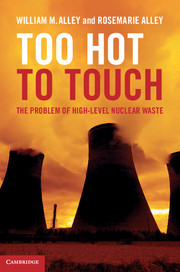 Today we’re joined by Dr. William Alley and Rosemarie Alley to learn about the nuclear waste crisis in the United States. Bill Alley, a distinguished hydrologist, was in charge of the USGS’s water studies at


 Buzz Aldrin’s Vision for Space Exploration (starts at 6:14) Dr. Buzz Aldrin advocates that the United States should not enter a space-race to the moon against the Chinese, or a race to Mars against the Russians, but rather show leadership by cooperating with the major space-faring nations to systematically step across the great void to the Red Planet. This is his personal Unified Space Vision. He is also working toward an independent council, a United Strategic Space Enterprise, that would advise American citizens about the nation’s space policy. USSE experts would draw on a deep knowledge of America’s previous successes and failures to present a unified plan of exploration, science, development, commerce, and security within a national foreign policy context. Buzz shared these visions with How On Earth’s Jim Pullen. Here’s an excerpt from his hour-long discussion with Jim. Stay tuned for the rest of his discussion, in which he shares little-known insights into why Apollo 11, not Apollo 12, was first to land humans on the moon, and never-before-shared honors for Neil Armstrong and Pete Conrad.



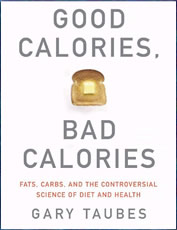 Good & Bad Calories (starts at 4:50) Ever since the 1970s, the rise of obesity in the United States has an epidemic. Researchers around the world are trying desperately to figure out why so many of us get fat, and what we can do to change that. A large amount of funding, and support from public health policy, goes toward the hypothesis that we get fat because we eat too many calories and do not exercise enough; when someone eats more calories than they need, the instructions go, they should exercise. That’s “Calories in, Calories Out.” But recently, an expert with a different point of view spoke to a packed audience of doctors, staff and medical students at the University of Colorado Medical Center. The expert is