Flood Winners & Losers // 100 Year Starship Symposium
Oct 29, 2013
Show notes
Feature 1 – Flood Winners & Losers : Last month’s deluge cut canyons, real and felt, through many of our lives, but nature helps us remember that floods can build too. In this feature, How on Earth’s Jim Pullen speaks with Boulder’s wetland and riparian ecologist Marianne Giolitto about flood “winners and losers”. Marianne watches over 45,000 acres of the city’s open space and mountain parks wetlands and riparian habitats. Jim and the Boulder Open Space and Mountain Parks are working together on a series of radio vignettes; the first two are “Monitoring Bats” and “Great Storms and Chautauqua.”
Feature 2 – 100 Year Starship Symposium : Back in June we had a feature about a project called the 100 Year Star Ship. During that show we talked with Alires Almon, a member of the project, about the challenges and vision of creating a long-duration mission to send humans to another star. A few weeks ago in Houston, the project held their annual symposium; this year’s theme was titled: “Pathway to the Stars, Footprints on Earth.” Ms. Almon is back with us today to talk about the symposium and what new ideas were discussed.
And as we mentioned in today’s headlines, you can learn more about shale oil and gas boom and bust by listening to Jim Pullen’s hour-long talk with expert Deborah Rogers on KGNU’s “It’s the Economy.”
Hosts: Joel Parker, Shelley Schlender Producer: Joel Parker Engineer: Joel Parker Executive Producer: Beth Bartel Additional Contributions: Jim Pullen
Due to technical problems, this show was not recored to the archive. We apologize that this post does not have an audio podcast of the entire show, but below we do have the audio file of the pre-recorded interview of the “Flood Winners and Losers” :
Antarctica Research // The Cancer Chronicles
Oct 22, 2013
Show notes
We offer two features on the Tuesday, Oct. 22, show:
The camp at Lake Hoare in Taylor valley, Antarctica. (Photo: Beth Bartel)
Feature 1 – Antarctica Research (start time 4:15): Diane McKnight, a professor of civil, environmental and architectural engineering at the University of Colorado Boulder, talks with How On Earth contributor Brian Calvert about scientific discoveries from Antarctica. During the temporary government shutdown the United States Antarctic Program, which facilitates government-funded scientific research in Antarctica, was unplugged. Several expeditions were cancelled. Her research on the McMurdo Dry Valleys on the continent will resume, but a future government shutdown would threaten scientific research on penguins, extreme microbes, climate change-induced sea ice melt and so many other subjects.
Feature 2 – The Cancer Chronicles (start time 12:22): In his new book, The Cancer Chronicles: Unlocking Medicine’s Deepest Mystery, science writer George Johnson takes readers on his very personal quest to understand cancer on a cellular level: how it begins with one “renegade cell” that divides, mutates, and becomes a tumor. In the process Johnson also digs deep into history – per-history, in fact — to learn that not only our ancient human ancestors had cancer, but even some dinosaurs suffered from them. And the author dissects many scientific studies that debunk myths about the role environmental toxins play in cancer. And he challenges false beliefs that cancer in modern times is on the rise. “Yet running beneath the surface is a core rate of cancer, the legacy of being multicellular creatures in an imperfect world,” he writes. Johnson speaks via phone to host Susan Moran about the mysteries and discoveries of cancer.
And as we mentioned in today’s headlines, if you want to see the large fragment of the Chelyabinsk meteor being recovered from Lake Chebarkul, you can see the video here.
Hosts: Susan Moran, Joel Parker Producer: Susan Moran Engineer: Joel Parker Executive Producer: Beth Bartel
Listen to the show:
The Sports Gene: Inside the Science of Extraordinary Athletic Performance
Oct 18, 2013
Show notes
In this pledge drive show for KGNU, we feature an interview with David Epstein, author of The Sports Gene. Through his new book, Epstein looks straight at a debate that’s as old as physical competition. Are stars like Usain Bolt, Michael Phelps, and Serena Williams genetic freaks put on Earth to be top athletes? Or are they simply normal people who overcame their biological limits through sheer force of will and obsessive training? This book tackles the nature vs. nurture debate and traces how far science has come in solving this great riddle.
Hosts: Joel Parker, Beth Bartel, Susan Moran, Jim Pullen, Shelley Schlender, Kate Fotopoulos Producer: Shelley Schlender Engineer: Shelley Schlender Executive Producer: Beth Bartel
Listen to the show:
Plight of Bees // Climate and Flood
Oct 09, 2013
Show notes
Feature 1: (start time: 03:45) Our first guest is Boulder beekeeper Tom Theobald. He talks about the current state of the bee crisis and what, if anything, the EPA is doing to address concerns that systemic pesticides like Clothianidan are properly controlled.
Dr. Claudia Tebaldi
Feature 2: (start time: 12:42) Then National Center for Atmospheric Research scientist Dr. Claudia Tebaldi joins us. Tebaldi, a statistician, specializes in long-term modeling of climate change. We talk to her about the relationship between flood and the warming planet. We also talk about the new Intergovernmental Panel on Climate Change report which she helped lead. She also explains what the ‘fog of prediction is.
Hosts: Jim Pullen, Beth Bartel Producer: Jim Pullen Engineer: Jim Pullen Executive Producer: Beth Bartel
Listen to the show:
IPCC Assessment Report 5
Oct 02, 2013
Show notes
Tad Pfeffer was a lead author on the IPCC AR5 chapter about sea level rise. Photo: James Balog
On Friday, the Intergovernmental Panel on Climate Change, better known as the IPCC, released the first bit of its Fifth Assessment Report, a volume with a plain name that may have a large influence on global policy. This first part of the report, part one of three, is the “sciency” part, documenting the current state of knowledge of climate change and its effects. The report sticks to the physical science of climate change—by how much the climate is changing, what’s causing it, and what the world might look like by the end of the century. The next two volumes of the report will address the societal impacts of climate change and, lastly, mitigation strategies.
HOE co-host Beth Bartel speaks with Tad Pfeffer, a professor at CU-Boulder jointly appointed between the Institute of Arctic and Alpine Research, (INSTAAR), and the Department of Civil, Environmental, and Architectural Engineering. Pfeffer is one of the lead authors on Chapter 13 of the IPCC report, the chapter on sea level rise.
Monarch Migration // Better Batteries
Sep 24, 2013
Show notes
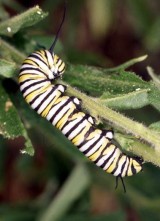
Monarch caterpillar on milkweed. Courtesy Tom Ranker.
Feature #1: (start time 4:45) As we unpack our coats and boots from storage boxes, so are insects, in their own way, planning for a seasonal change. Monarch butterflies in our neighborhood, east of the Rockies, fly south to very specific forests high in the mountains of Mexico. Their journey, and life at their destination, is a precarious one. Dr. Deane Bowers, a professor and curator of entomology at the CU Boulder Museum of Natural History, speaks with co-host Susan Moran about what is happening now with monarchs and other butterflies. And she discusses how the ability of certain insects, such as caterpillars, to defend themselves against predators by making themselves taste disgusting is being affected by human disturbances, such as nitrogen fertilizer runoff. To get involved in monarch conservation, go to Monarch Watch.
Feature #2: (start time 14:30) One of the greatest limitations of effectively using clean and renewable energy sources is a simple device with which we are all undoubtedly familiar — the battery. Dr. Conrad Stoldt is an associate professor of mechanical engineering at CU Boulder and co-founder of Solid Power, Inc., where he is developing an all-solid-state lithium metal battery. Stoldt talks with co-host Beth Bartel about how batteries work, why batteries are such a stumbling block in the current race to energy solutions, and how his research may just lead to the next big thing.
Hosts: Susan Moran, Beth Bartel Producer: Susan Moran/Shelley Schlender Engineer: Jim Pullen Executive Producer: Susan Moran
Click on audio file below.
Boulder Science Festival // Insect Chorus Songs
Sep 10, 2013
Show notes
Boulder Science Festival (starts at 5:58) Many people in Boulder are familiar with the large number of local science groups and institutes, so what better place to celebrate and learn about science? That is exactly what our next two guests plan to do: create the Boulder Science Festival, which will be held October 12-13 at the Millennium Harvest House hotel. In the studio today we have Marcella Setter, the Director of the Boulder Science Festival, and an experienced administrator who loves organizing events that get the public excited about science. As the Director of Science Getaways, Marcella plans group trips for science enthusiasts who want to add some learning and discovery to their vacations. Joining Marcella here in the studio is her husband, Phil Plait, an astronomer, author, and writer of the Bad Astronomy Blog for Slate.com. An internationally-acclaimed speaker, Dr. Plait has appeared on numerous television science documentaries and is a self-proclaimed “science evangelizer”.
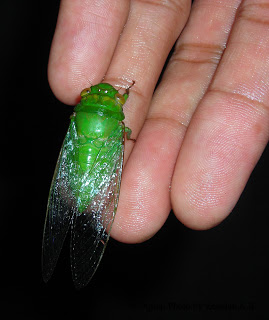
Insect Chorus Songs (starts at 14:58) You’ve heard it. It’s the sound of summer – or rather, the looming end of summer. The chorus of crickets, cicadas and who knows what else outside that is now in prime time. As an ode to summer, we thought we’d bring in a cicada and other insect specialist to share with us who the heck these critters are, and what’s their role in biodiversity. Maybe he’ll even tell us how we can eat them – like billions of people around the world do with delight. Brian Stucky is a doctoral student in ecology and evolutionary biology at the University of Colorado Boulder.
Hosts: Susan Moran, Joel Parker Producer: Shelley Schlender Engineer: Joel Parker Executive Producer: Susan Moran
Listen to the show:
Wildfires & Water Reservoirs // Comet ISON
Sep 04, 2013
Show notes
For the Sept. 3rd How On Earth show we offer two features:
The Hetch Hetchy reservoir
Wildfires Threaten Water Supplies: (start time 5:45) The wildfire burning in and around Yosemite National Park is now the fourth-largest in California’s history. Covering nearly 350 square miles, the Rim Fire is threatening the Hetch Hetchy Reservoir, which supplies residents in the San Francisco Bay Area with most of their water and power. It’s a lot like the 2012 High Park Fire—which sent ash and debris into the water supply of Fort Collins. These fires offer lessons on the risks wildfires pose to reservoirs. Dr. Bruce McGurk, a former water manager for Hetch Hetchy and a water consultant, speaks with How On Earth contributor Brian Calvert about the risks and future prospects.
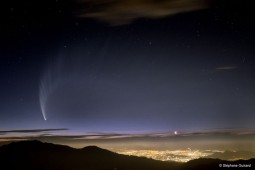
Comet ISON Cometh: (start time 12:50) Comets have fascinated humans for millenia. Aristotle argued comets were hot, dry exhalations gathered in the atmosphere and occasionally burst into flame. Some people thought that comets replenished Earth’s air. Still others believed they were a source of disease. Scientists today study comets because some are thought to be relatively pristine leftover debris from the formation of the solar system. And studying what comets are made of can provide us a glimpse back to the beginning of the solar system 4 billion years ago. Comet ISON, as scientists call it, is one that scientists predict will be relatively easy to view later this year. Dr. Carey Lisse, a senior research scientist at the Johns Hopkins Institute Applied Physics Laboratory in Maryland, speaks with co-host Joel Parker about comet ISON and its fascinating tails. For more information on ISON, go to NASA’s ISON toolkit, and this cool interactive model.
Hosts: Susan Moran, Joel Parker Producer: Susan Moran Additional contribution: Brian Calvert Engineer: Jim Pullen Executive Producer: Susan Moran
Listen to the show:
Noise Pollution
Aug 27, 2013
Show notes
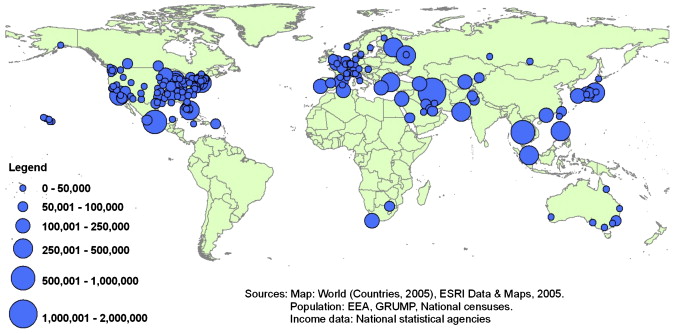
Population impacted by aircraft noise greater than 55 dB day–night noise level in 2005 (from “Development of an income-based hedonic monetization model for the assessment of aviation-related noise impacts” by Q. He, MIT Master’s thesis) [click on image to see large version]Noise Pollution (starts at 6:15) – How on Earth’s Shelley Schlender talks with research scientist Larry Finegold about noise pollution and about a workshop being held today in Denver about Noise Management in Communities and Natural Areas. Dr. Finegold has authored or contributed to over 80 publications on noise including the US National Academy of Engineering report, “Technology for a Quieter America,” the World Health Organization report, “Burden of Disease from Environmental Noise,” and the article “Community Annoyance and Sleep Disturbance: Updated Criteria for Assessing the Impacts of General Transportation Noise on People.”
Host / Producer / Engineer: Joel Parker Additional Contributions: Susan Moran Executive Producer: Susan Moran
Listen to the show:
Kepler’s Prospects // Oncofertility
Aug 21, 2013
Show notes
For the August 20 How On Earth show we offer two features:
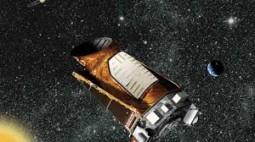
Kepler spacecraft
Kepler Spacecraft’s Uncertain Future: (start time 5:48) Are we alone in the cosmos? Are there other planets out there, and could some of them support life? Or, is Earth somehow unique in its ability to support life? The Kepler mission was designed to start addressing that question by searching for planets around other stars. Since its launch in March 2009, the Kepler spacecraft has discovered many diverse candidate planets around other stars, but recently the spacecraft has run into some technical problems. Dr. Steve Howell from NASA’s Ames Research Center talks with co-host Joel Parker about Kepler’s past, present and future.
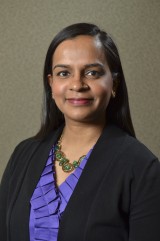
Laxmi Kondapalli, courtesy of CU Cancer Center.
Cancer’s Impact on Fertility: (start time 14:52) It’s tough enough to receive a cancer diagnosis. For many patients, an added insult is that chemotherapy treatments can render them infertile. However, there are many options for cancer patients who want to have children, or more children – both men and women. A key problem has been that many of them aren’t educated by oncologists about their fertility options and they jump right into drug treatments. Dr. Laxmi Kondapalli, an assistant professor of reproductive endocrinology and infertility at the University of Colorado Denver and head of the CU Cancer Center’s Oncofertility Program, talks with co-host Susan Moran about the medical science of take cancer therapies and the latest in fertility-preservation options.
Hosts: Susan Moran, Joel Parker Producer: Susan Moran Additional Contributions: Shelley Schlender Engineer: Joel Parker Executive Producer: Susan Moran

 Our TOPPODCAST Picks
 Stay Connected


 Feature 1 – Flood Winners & Losers : Last month’s deluge cut canyons, real and felt, through many of our lives, but nature helps us remember that floods can build too. In this feature, How on Earth’s Jim Pullen speaks with Boulder’s wetland and riparian ecologist Marianne Giolitto about flood “winners and losers”. Marianne watches over 45,000 acres of the city’s open space and mountain parks wetlands and riparian habitats. Jim and the Boulder Open Space and Mountain Parks are working together on a
 Feature 2 – 100 Year Starship Symposium :

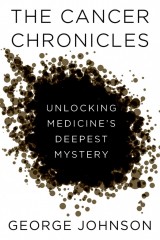 Feature 2 – The Cancer Chronicles (start time 12:22): In his new book,

 Feature 1: (start time: 03:45) Our first guest is Boulder beekeeper Tom Theobald. He talks about the current state of the bee crisis and what, if anything, the EPA is doing to address concerns that systemic pesticides like Clothianidan are properly controlled.
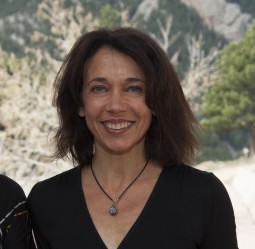




 humans for millenia. Aristotle argued comets were hot, dry exhalations gathered in the atmosphere and occasionally burst into flame. Some people thought that comets replenished Earth’s air. Still others believed they were a source of disease. Scientists today study comets because some are thought to be relatively pristine leftover debris from the formation of the solar system. And studying what comets are made of can provide us a glimpse back to the beginning of the solar system 4 billion years ago.
 Noise Pollution (starts at 6:15) – How on Earth’s Shelley Schlender talks with research scientist Larry Finegold about noise pollution and about a workshop being held today in Denver about