TopPodcast.com
Menu
  • Home
  • Top Charts
  • Top Networks
  • Top Apps
  • Top Independents
  • Top Podfluencers
  • Top Picks
    • Top Business Podcasts
    • Top True Crime Podcasts
    • Top Finance Podcasts
    • Top Comedy Podcasts
    • Top Music Podcasts
    • Top Womens Podcasts
    • Top Kids Podcasts
    • Top Sports Podcasts
    • Top News Podcasts
    • Top Tech Podcasts
    • Top Crypto Podcasts
    • Top Entrepreneurial Podcasts
    • Top Fantasy Sports Podcasts
    • Top Political Podcasts
    • Top Science Podcasts
    • Top Self Help Podcasts
    • Top Sports Betting Podcasts
    • Top Stocks Podcasts
  • Podcast News
  • About Us
  • Podcast Advertising
  • Contact
Not in our directory?
Add Show Here
Podcast Equipment
Center

toppodcastlogoOur TOPPODCAST Picks

  • Comedy
  • Crypto
  • Sports
  • News
  • Politics
  • True Crime
  • Business
  • Finance

Follow Us

toppodcastlogoStay Connected

    View Top 200 Chart
    Back to Rankings Page
    Government

    Keystone Education Radio

    Advertise
    • Apple Podcasts
    • Google Play
    • Spotify

    Latest Episodes:
    Summer Learning Loss and the Long-term Impact Aug 06, 2019
    Show notes
    • About this Episode
    • Time Stamps
    • About our Guest
    • Resources
    Storybook summers depict kids swimming, biking and climbing trees with friends, but how does this fit into the topic of summer learning loss and the opportunity gap?
    Creating meaningful and productive summer months for youth does not automatically equate to the traditional summer school model with kids confined to classrooms. This episode’s discussion with Rachel Gwaltney, director of policy and partnerships for the National Summer Learning Association highlights how schools can plan for flexible and engaging summer learning options that can not only help lessen achievement gap issues, but also reduce the stigma affiliated with summer school. Skip to: 01:07 What is summer learning loss and how does it relate to the achievement gap?

    Summer learning loss is what happens to all children who don’t have access to stimulating and enriching activities during the summer months.

    Skip to: 02:14 What are some of the detrimental outcomes for students, from spending summers without learning?

    Skip to: 03:49 How does the data convey to us?

    Skip to: 05:50 Do socioeconomic factors play a role in the data?

    Skip to: 07:15 How does a balanced summer look in an ideal world?

    Summer offers an opportunity to learn in ways that you just cannot do during the school year or in a school-based environment.

    Skip to: 12:07 If a district is looking to launch a program, what are some challenges they might face?

    Planning for the next summer starts immediately when the summer ends.

    Skip to: 14:10 Is there a stigma involved in summer learning programs and how can that be mitigated?

    Skip to: 16:50 Is it important for schools to connect with their legislators to express the needs of their community as it pertains to summer programming?

    Rachel Gwaltney, Director of Policy & Partnerships at NSLA

    As Director of Policy & Partnerships at NSLA, Rachel Gwaltney leads the research, development, and implementation of services, resources, and partnerships that improve and sustain policy conditions for summer learning. This includes educating and mobilizing the national network of summer learning advocates to make the case for summer to policymakers. Rachel also oversees NSLA’s efforts to grow and promote the research on summer gaps, opportunities, and best practices.
    Prior to joining NSLA in 2015, Rachel held roles at District of Columbia Public Schools, Data Quality Campaign, and Horizons National. She previously served as Chief of Programs for Higher Achievement, leading expansion, program quality, evaluation, advocacy, curriculum, and training efforts.
    Rachel holds a Master of Public Policy and Administration degree from Northwestern University. She completed the Education Policy Fellowship Program (EPFP) at IEL in 2012.

    For more information about the National Summer Learning Association, visit: https://www.summerlearning.org/

    The post Summer Learning Loss and the Long-term Impact appeared first on Keystone Education Radio.


    Dyslexia: The Hidden Obstacle to Literacy Jul 23, 2019
    Show notes
    • About this Episode
    • Time Stamps
    • About our Guest
    • Resources
    Dyslexia is a language based learning disability impacting up to an estimated 20% of the population (according to the International Dyslexia Association). Early detection and specific instructional methods have been determined as significant keys-to-success for those struggling against the challenges the disability presents. In this episode, we’ll learn more about the disability, how it goes undetected and ways we can help dyslexic students be successful in reading and learning. All this and more insightful information in today’s discussion with Daphne Uliana, founder of the Dyslexia and Literacy Network.

    Skip to: 02:44 Define dyslexia.

    “Basically, your brain is wired differently if you’re dyslexic. It is a neurobiological condition, meaning you are born with it. It’s hereditary.”

    Skip to: 03:46 Different forms of Dyslexia
    Skip to: 05:29 Dyslexia Screening and Early Literacy Intervention Pilot Program
    Skip to: 07:24 How early can dyslexia be detected in children?
    Skip to: 12:35 What role does the school play in early detection, if it is not being detected at home?

    Not all kids who struggle to read are dyslexic, but all dyslexics will struggle to read.

    Skip to: 14:07 What kinds of measures can be carried out to help a child succeed in his/her educational path?
    Skip to: 17:59 What are some resources for schools who need support ensuring that a child’s needs are being met, once dyslexia is identified?
    Skip to: 20:29 What are some resources for parents?
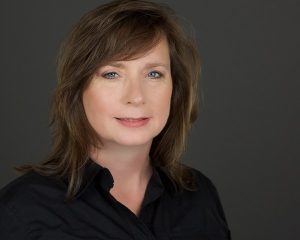
    Daphne Uliana, Founder, Dyslexia and Literacy Network

    For 25 years, Daphne Uliana was a campaign aide and fundraiser to the former Speaker of the Pennsylvania House of Representatives John Perzel. She was a campaign aide to Congressman Charlie Dent as well as managed numerous campaigns for state Senate, state House and Court of Common Pleas Judges.
    Inspired by struggles with her three dyslexic children, Daphne along with other advocates, helped to pass Act 69 of 2014, which established a pilot program to screen all children for reading difficulty in eight school districts in Pennsylvania. In 2018, she helped to pass a two-year extension for the pilot program, and she along with another parent advocate, was instrumental in having an audio version of the Pennsylvania driver’s manual placed online. In 2018, Daphne started the Dyslexia and Literacy Network, an all-volunteer nonprofit to help parents who have children that struggle to read and advocate for change and more awareness of Dyslexia. She also established the Literacy Coalition; a nonprofit focused on awareness of quality reading instruction for all children.

    Uliana is a member of the Boards of Trustees for The Gow School in South Wales, New York. In the past, she served on the Hillside School Board of Trustees and the Pennsylvania Branch of the International Dyslexia Association. Beginning in the fall of 2019 she will be an Advisory Board Member of H.E.L.P. Program at Marshall University in Huntington, West Virginia and a member of the Policy Committee for the Learning Disabilities Association of America.

    Daphne Uliana is married to former State Senator Joe Uliana, who is the Managing Principal at JM Uliana & Associates, a Pennsylvania based lobbying and public affairs firm. She has three children: Nicholas 23, Samuel 21, and Lauren 15.

    Mentioned in this episode:
    Dyslexia and Literacy Network
    PaTTAN – Dyslexia and Early Literacy Intervention
    Pennsylvania Dyslexia Screening & Early Literacy Intervention Pilot Program
    Learning Disabilities Association
    International Dyslexia Association

    Research Studies and Reports:
    Early Reading Instruction: What Science Really Tells Us about How to Teach Reading
    (The MIT Press, 2004)

    The Effectiveness of Direct Instruction Curricula: A Meta-Analysis of a Half Century of Research
    (Review of Educational Research, January 2018)

    Essentials of Assessing, Preventing, and Overcoming Reading Difficulties
    (Wiley, 2015)

    The Science of Reading Research
    (Educational Leadership, March 2004)

    The Simple View of Reading
    (The Center for Development and Learning, February 2010)

    The post Dyslexia: The Hidden Obstacle to Literacy appeared first on Keystone Education Radio.


    An Education Vision Plan for Pennsylvania Jul 09, 2019
    Show notes
      • About this Episode
      • Time Stamps
      • Additional Resources
    The Pennsylvania School Boards Association, in collaboration with numerous other public education stakeholder groups came together to form a visionary roadmap for public education going forward. The Commonwealth Education Blueprint is the result and it’s in phase 2 development slated for completion in early 2020. In this episode, Heather Masshardt, project facilitator for the Commonwealth Education Blueprint, joins us to discuss the history and future of the project. Skip to: 01:15 What is the Commonwealth Education Blueprint (CEB)?
    Skip to: 03:55 Does it include different aspects of the educational equation?

    It’s meant to address multiple strategic subject areas that make up the foundation of education.

    Skip to: 06:29 How does the CEB differ from policy?

    The Commonwealth Education Blueprint is really a vision statement.

    Skip to: 07:56 How will the CEB guide districts with different needs, different demographics, and unique criteria?

    In working on phase 2, we recognize that there is no one-size-fits-all approach for school districts.

    Skip to: 12:11 What are the objectives of phase 2?

    For more information on the Commonwealth Education Blueprint, visit: https://www.edblueprintpa.org/

    The post An Education Vision Plan for Pennsylvania appeared first on Keystone Education Radio.


    Learning, Emotional Wellness and a Dog’s Ability to Impact Jun 25, 2019
    Show notes
      • About this Episode
      • Time Stamps
      • About Our Guest
    A child’s ability to learn and grow begins with emotional well-being. In the school environment, there may be any range of scenarios where stabilizing is required before the learning can begin. This is where a therapy dog can be a key contributor to the success stories, where occupational, speech, or physical therapy services are needed. As part of early intervention or postvention situations, trained dogs are working to bring the pack to homeostasis and readying the classroom and students to thrive. Dr. Tracy Geist, social worker at Capital Area Intermediate Unit, joins the podcast to share insights about the role of therapy dogs as part of pediatric therapy services and early intervention.

    Skip to: 00:45 How integral is emotional wellbeing to a childs ability to learn?
    Skip to: 02:13 How does having a dog present impact or contribute to a person’s wellbeing?

    Dogs come into our lives and as a pack animal, we become their pack.

    Skip to: 11:34 Postvention treatment scenarios

    Dogs are really efficient and effective in getting the help needed quicker.

    Skip to: 19:19 Suggestions for school districts looking to introduce therapy dogs

    Tracy Geist, Ph.D, social worker at Capital Area Intermediate Unit

    Dr. Tracy Geist is a licensed professional counselor and has been a school social worker with the Capital Area Intermediate Unit (CAIU) since 2002. Along with her caseload, Tracy is the founder of the CAIU therapy dog program. Prior to joining the CAIU she worked as a Supervisor for the Children’s Case Management Unit, Director of the Dauphin County Student Assistance Program, and as a Family Based Therapist for Keystone Children and Family Services. Tracy has also taught as an adjunct Professor for Widener University and Messiah College.

    Tracy is emerging as an expert in the field of animal assisted therapy and has presented at the National Conference on Advancing School Mental Health, in Alexandria VA, hosted by the Center for School Mental Health (CSMH) and the IDEA Partnership (funded by the Office of Special Education Programs (OSEP), sponsored by the National Association of State Directors of Special Education) as well as the Animal-Assisted Interventions International conference in Denver.

    A prodigious yet discerning coffee drinker, Tracy’s family hails from West Virginia. Tracy resides in Dillsburg PA with her husband Ken, her canine co-therapist Stuart, and other various animals. You can often see the Geist family exploring the town in their vintage VW camper van.

    The post Learning, Emotional Wellness and a Dog’s Ability to Impact appeared first on Keystone Education Radio.


    Foundation Growth: From the Ground Up Jun 12, 2019
    Show notes
      • About this Episode
      • Time Stamps
      • About Our Guest
    An education foundation can supplement a schools’ programs and new initiatives, where constrained school district budgets have little room to expand or absorb new expenses. Starting up a foundation may seem daunting. This episode focuses on the startup and growth of Warrior Run Education Foundation, founded six years ago in support of rural school district, Warrior Run. Jean Hormell, president of the foundation, joins the podcast to share tips and insights, and to explain how their foundation involves students in philanthropic efforts.

    Skip to: 04:27 Youth and Philanthropy

    We are independent but we are involved with the school district so we really rely on the goals of the school districts, the needs that they identify, the ideas that are brought to us by staff and we certainly want to collaborate with them as much as possible.

    Skip to: 09:35 Community awareness of funding for school districts
    Skip to: 14:00 Tips for starting a foundation

    Jean Hormell, chairperson for Warrior Run Education Foundation

    The post Foundation Growth: From the Ground Up appeared first on Keystone Education Radio.


    Progression Towards Equity May 30, 2019
    Show notes
      • About this Episode
      • Time Stamps
      • About Our Guests
      • Resources
    How does equity become the lens through which all aspects of the educational experience are filtered? And why is this essential for the K-12 education system? Addressing the gaps of opportunity and supports for students goes beyond a checklist and may seem insurmountable. Tune-in for insights from guests, Dr. Terrance Green (University of Texas at Austin) and Dr. Sonya Horsford (Columbia University) who are part of today’s discussion with guest host, Dr. Heather Bennett.

    Equity is not like a program, it’s not an initiative, it’s not like a toolbox or a checklist that I’m doing. Equity is like a system, it has to inform everything in the school district.

    Skip to: 01:55 What is equity?
    Skip to: 09:57 “Equity Sprinkles”

    I think for other communities, the question of equity is really about fairness, it’s about freedom from discrimination and it’s about having the access to the same abilities, resources and experiences of other students.

    Skip to: 14:19 Equity in school districts without extreme demographic changes or diverse populations
    Skip to: 18:03 Steps districts can do/take to move towards equity

    Dr. Terrance Green

    Terrance L. Green is an assistant professor at the University of Texas at Austin in the Department of Educational Leadership and Policy. Dr. Green’s research examines the relationship between educational leadership, schools, and neighborhood-communities, with a focus on racial and educational equity. His work centers on three related research strands: 1) the role of educational leaders in equity-focused school-family-community partnerships, 2) the intersection of school reform and equitable community development, with a focus on the impacts of neighborhood gentrification on schools, and 3) institutional change approaches to racial and educational equity in school districts and schools. His research has been published in several journals including Teaches College Record, Educational Administration Quarterly, Journal of School Leadership, The Urban Review, and Urban Education.

    Dr. Sonya Horsford

    Sonya Douglass Horsford, Ed.D. is Associate Professor of Education Leadership at Teachers College, Columbia University, where she serves as Senior Research Associate at the Institute of Urban and Minority Education (IUME) and Co-Director of the Urban Education Leaders Program (UELP) – an Ed.D. program for aspiring and practicing urban school superintendents. Her research focuses on the social and political contexts of school leadership, school segregation, critical race theory, Black education and the superintendency.

    Horsford (2014) – When Race Enters the Room: Improving Leadership and Learning Through Racial Literacy
    Horsford et all (2011) – Pegagogy of the Personal and Professional: Toward a Framework for Culturally Relevant Leadership

    The post Progression Towards Equity appeared first on Keystone Education Radio.


    The 2020 U.S. Census, and Why It’s so Important to Ensure Accuracy May 14, 2019
    Show notes
      • About this Episode
      • Time Stamps
      • About Our Guest
    The 2020 U.S. Census will mark the first-ever to be conducted online to a large degree. Great attention will be paid to accumulating an accurate representation of the entire U.S. population, and the planning has been underway for the past ten years. Keystone Counts, Coalition Manager, Jo Lin joins us for this episode for a conversation around the upcoming census, and the importance of including the historically undercounted and underserved populations. Skip to: 02:00 How can we ensure an accurate census?
    Skip to: 08:08 How does a census impact education?

    Historically, populations of immigrants and communities of color and children under 18 are the most undercounted but because this upcoming census is moving online, it also raises concerns that rural communities that don’t have access to broadband or populations that may not be as digitally literate, let’s say low income households or seniors, are also facing these more systematic barriers for the first time.

    Skip to: 12:39 What efforts are being made to ensure accuracy and completeness in this 2020 census?
    Skip to: 17:58 What can school leaders and educators be doing across the state to help support this?

    Jo Li, coalition manager for Keystone Counts

    Resource link: https://www.keystonecounts.org/

    The post The 2020 U.S. Census, and Why It’s so Important to Ensure Accuracy appeared first on Keystone Education Radio.


    Brown v. Board of Education: 65 years later Apr 26, 2019
    Show notes
    • About this Episode
    • Time Stamps
    • Additional Resources
    • Our Guests

    A landmark 1954 Supreme Court case, now 65 years since—what have been the impacts and progress? The case and surrounding events are considered to be one of the cornerstones of the civil rights movement that helped establish the precedent that separate-but-equal education and other services were not in fact equal. Tune in for this episode to hear a discussion between guest host, Dr. Heather Bennett, director of equity services for PSBA, and Dr. Erica Frankenberg, associate professor of education for Penn State.

    The composition of students is a critical part of the educational experience and the important role that public schools play in preparing future adults to carry out our basic democracy.

    Skip to: 06:25 Why is this case so significant?
    Skip to: 11:33 What is the aftermath of the Brown decision?
    Skip to: 22:18 What can we do about the current resegregation of school districts across the nation?

    • Voluntary Integration in the Age of Trump: A Q &A with NEPC Fellow Erica Frankenberg;
    • Is Opportunity Knocking or Slipping Away? Racial Diversity and Segregation in Pennsylvania;
    • Brown v. Board of Education of Topeka Kansas.

    Dr. Erica Frankenberg, associate professor of education for Penn State

    Erica Frankenberg (Ed.D., Harvard University) is a professor of education and demography in the College of Education at the Pennsylvania State University. Her research interests focus on racial desegregation and inequality in K-12 schools, and the connections between school segregation and other metropolitan policies. At Penn State, Dr. Frankenberg teaches classes on education policy and politics. In 2014, she coordinated the Civil Rights and Education conference at Penn State, and is co-editor of a 2016 book from this conference. With Liliana Garces, Dr. Frankenberg directs a civil rights and education center at Penn State.

    The post Brown v. Board of Education: 65 years later appeared first on Keystone Education Radio.


    Operating the Board and Going Digital Apr 17, 2019
    Show notes
    • About this Episode
    • Time Stamps
    • Our Guest
    Does going digital in board governance sound like more work? Tune in, to hear about how document digitization results in multiple benefits: time-saved, transparency, and building trust in the communities. Diligent Corporation’s Vice President of Thought Leadership, Dottie Schindlinger joins us on this episode to discuss digital best practices for board business.

    Moving everything digital and having boards communicate in more digital ways makes that transparency equation much simpler and it helps build trust with the community.

    Skip to: 02:14How the traditional board governance scenario historically and today typically operates
    Skip to: 06:05How digital technology has changed the ways a board might govern
    Skip to: 25:50Building a resilient board

    Dottie Schindlinger, Vice President of Thought Leadership for Diligent Corporation

    https://diligent.com/

    The post Operating the Board and Going Digital appeared first on Keystone Education Radio.


    Agriculture in PA: An Interview with Sen. Bartolotta & The Freight Farm at Trinity Area School District Apr 03, 2019
    Show notes
    • About this Episode
    • Time Stamps
    • Our Guests
    Agriculture as the leading industry in Pennsylvania provides viable career options for students who have wide-ranging aptitudes and interests. Senator Bartolotta (part one) and leaders of Trinity Area School District (part two) with their Freight Farm provide perspective around how it can be introduced to students focused on different post-graduation paths.

    Anyone with almost any degree can focus on Agriculture and make a career of it.

    Skip to: 01:36 How are we introducing the students of PA to the careers that exist in Agriculture?
    Skip to: 06:50 Introduction of Trinity Area School District
    Skip to: 07:50 Overview of Trinity Area School District’s Freight Farm Program

    Senator Camera Bartolotta, PA Senate District 46

    Dr. Michael Lucas, superintendent of Trinity Area School District

    Mr. Donald Snoke, assistant superintendent of Trinity Area School District

    The post Agriculture in PA: An Interview with Sen. Bartolotta & The Freight Farm at Trinity Area School District appeared first on Keystone Education Radio.


    Previous 1 5 6 7 8 9 11 Next

    Related Podcasts

    Inside Strategic Coach: Connecting Entrepreneurs With What Really Matters

    1

    Inside Strategic Coach: Connecting Entrepreneurs With What Really Matters Business
    WSJ Your Money Briefing

    2

    WSJ Your Money Briefing Business
    FORTUNE Unfiltered with Aaron Task

    3

    FORTUNE Unfiltered with Aaron Task Business
    FORTUNE OnStage Presents: The Most Powerful Women

    4

    FORTUNE OnStage Presents: The Most Powerful Women Business
    Slate Money

    5

    Slate Money Business
    In The Dark – The New Yorker

    6

    In The Dark – The New Yorker Business News
    footer-logo

    Contact Us

    Toll Free: 844-670-7747

    Links

    • Home
    • Top Charts
    • Networks
    • Apps
    • Independents Podcasts
    • Podcast Advertising
    • Podcast News
    • Contact Us
    • About Us
    • Analytics & Insights

    Stay Connected

      Privacy, Terms of Use & Our Code of Ethics Protecting Content Creators Copyrights