TopPodcast.com
Menu
  • Home
  • Top Charts
  • Top Networks
  • Top Apps
  • Top Independents
  • Top Podfluencers
  • Top Picks
    • Top Business Podcasts
    • Top True Crime Podcasts
    • Top Finance Podcasts
    • Top Comedy Podcasts
    • Top Music Podcasts
    • Top Womens Podcasts
    • Top Kids Podcasts
    • Top Sports Podcasts
    • Top News Podcasts
    • Top Tech Podcasts
    • Top Crypto Podcasts
    • Top Entrepreneurial Podcasts
    • Top Fantasy Sports Podcasts
    • Top Political Podcasts
    • Top Science Podcasts
    • Top Self Help Podcasts
    • Top Sports Betting Podcasts
    • Top Stocks Podcasts
  • Podcast News
  • About Us
  • Podcast Advertising
  • Contact
Not in our directory?
Add Show Here
Podcast Equipment
Center

toppodcastlogoOur TOPPODCAST Picks

  • Comedy
  • Crypto
  • Sports
  • News
  • Politics
  • True Crime
  • Business
  • Finance

Follow Us

toppodcastlogoStay Connected

    View Top 200 Chart
    Back to Rankings Page
    Government

    Keystone Education Radio

    Advertise
    • Apple Podcasts
    • Google Play
    • Spotify

    Latest Episodes:
    Civic Engagement in the Generation Called Z Jan 07, 2020
    Show notes
    • About this Episode
    • Time Stamps
    • About our Guests
    • Resources

    Why is it so important to engage students, who are still in high school, in matters of politics and voting?

    In addition to educating youth to be civically engaged and focused as life-ready knowledge, the further impact comes in the form of their increasing numbers and their savviness that rivals no other generation before, especially at such a young age. Pew Research Center cites that one-in-ten eligible voters will be members of Generation Z, the Americans who will be between the ages 18 and 23 this year. They are projected to comprise 10% of the eligible voter group in 2020, whereas the Silent Generation is estimated to dip to 9%. Capturing that 10% is necessary to their unique perspectives and ideals being represented by the next leadership of our nation.

    Three years ago, the Governor’s Civic Engagement Award was established by the Pennsylvania Departments of State and Education to promote civic involvement among students in Pennsylvania. This award recognizes schools and student ambassadors who offer and encourage voter registration within the schools. This episode features an interview with Secretary of State Kathy Boockvar and Community Impact Manager Rachel Boss where we’ll hear more on the award and civic engagement among the commonwealth’s young adults.

    Skip to: 01:07 Can you start by briefly describing the Governor’s Civic Engagement Award and its objectives?

    Studies show when people start voting early and feel engaged early, they’re much more likely to become life-long voters.

    There’s no time that you feel more a part of the cycle of democracy, of really being a part of it, than you do when you’re a poll worker.

    Skip to: 03:44 This is the third year that the Pennsylvania Departments of State and Education will present the Governor’s Civic Engagement Award. What prompted the creation of this award program?
    Skip to: 04:24 How many schools are currently participating in this program?
    Skip to: 05:55 What are the challenges that may have hindered schools from organizing these types of programs?

    Talking about elections is really vital to teaching civil discourse and helping young people understand how government functions.

    Skip to: 07:18 How have students reacted to the Governor’s Civic Engagement Award and its mission?
    Skip to: 09:06 Why is it important to hold in-person voter registration events in high schools versus email campaigns or registration events in another setting?
    Skip to: 11:52 Is there a way that high school students of all ages can participate in voter registration efforts?
    Skip to: 13:42 How can schools educate students about the importance of being civically engaged before they reach voting age?
    Skip to: 16:13 What kinds of resources are available and where can school leaders go for more information?
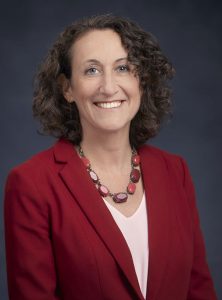
    Kathy Boockvar, Secretary of the Commonwealth

    Kathy Boockvar was appointed Acting Secretary of the Commonwealth on January 5, 2019, and confirmed by the Senate on November 19, 2019. In this role, Boockvar leads the Pennsylvania Department of State.

    Boockvar is an attorney with an extensive background in public interest law and policy, election administration, and nonprofit healthcare administration, and has worked in the public, private, and nonprofit sectors. Most recently, she served as senior adviser to the governor on election modernization, leading and managing initiatives to improve security and technology in Pennsylvania’s elections and voting systems, in collaboration with federal, state, and county officials.
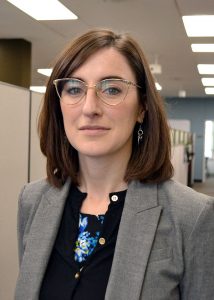
    Rachel Boss, Community Impact Manager

    Rachel Boss joined the Pennsylvania Department of State in 2017 as a William Penn Fellow. In 2019, she was appointed community impact manager in the Bureau of Campaign Finance and Civic Engagement, where she oversees civic engagement programming. She also is the language access coordinator for the department.

    Previously, Boss worked in nonprofit legal advocacy organizations in Baltimore, MD. She earned her master’s degree in public administration from the University of Pittsburgh Graduate School of Public and International Affairs.

    • VotesPA.com
    • Online Voter Registration
    • Governor’s Civic Engagement Award
    • Pew Research Center: An Early Look at the 2020 Electorate
    • Follow on Facebook and Twitter

    The post Civic Engagement in the Generation Called Z appeared first on Keystone Education Radio.


    Commonwealth Education Blueprint – Vision Plan Realized Dec 10, 2019
    Show notes
    • About this Episode
    • Time Stamps
    • About our Guests
    • Resources
    During this episode, Heather Masshardt, director of policy services, discusses the Commonwealth Education Blueprint with David Hutchinson, PSBA’s 2019 president, and Mike Faccinetto, PSBA’s immediate past president. Both Hutchinson and Faccinetto are active in their own communities, having served on their local school boards for 11 and 16 years respectively. Developed out of their passion for public education and in collaboration with various stakeholders across the education industry, the Commonwealth Education Blueprint represents a unified vision for the future of public education in Pennsylvania. The final report of this document will be published in early 2020. Skip to: 01:32 What sparked your interest in developing the Commonwealth Education Blueprint project?
    Skip to: 02:59 Why are you passionate about public education, and what is your current role in public education?
    Skip to: 04:46 When the project first started, how did the group determine who should be involved?

    We knew that if this was going to have any kind of teeth and really have any credibility, that we had to hear from all aspects of public education.

    Skip to: 06:23 As the group developed the strategic categories of the Blueprint and reviewed input and survey data, were there any themes or specific areas that were repeatedly mentioned-anything participants really seemed to feel strongly about including in this vision?

    However public education evolves over the next 30-40 years, we knew that students had to be at the center of it and we had to get away from that kind of focus of the old-fashioned teacher in the front lecturing and really put the students at the front of their own learning.

    Skip to: 08:30 How do you hope the Commonwealth Education Blueprint will be used?
    Skip to: 11:43 What made you interested in the Commonwealth Education Blueprint project?
    Skip to: 12:46 Why are you passionate about public education?

    Not to be overly simplistic, but it’s really our one best shot to prepare our children collectively for the fact that they’re going to running the world in 5 or 10 or 20 years from now.

    Skip to: 14:21 Tell us about the participants in the Blueprint project—what were their backgrounds and what was important to the group?

    I think it’s really important that we remake the argument for why education is worth all the time and money that we put into it.

    Skip to: 16:37 How do you hope the Commonwealth Education Blueprint will be used?

    This is not a short-term project. We’ve kind of set the foundation here but now we’re going to try to build on that foundation.

    Michael Faccinetto, PSBA’s Immediate Past President

    Michael Faccinetto, a PSBA Master School Board Director, has been a member of the Bethlehem Area School Board (Northampton Co.) since 2009, serving as president since 2011. Faccinetto has served on the PSBA Governing Board for five years in the role of at-large representative (Eastern), vice president, president-elect, 2017 acting president and as the 2018 president. He is a member of the PSBA Insurance Trust and 125th Anniversary Committee and has also served as chairperson of the Platform and Policy committees as well as the Future of Membership Taskforce and PA EdPAC. Recently he has led and served as co-chair of the Commonwealth Education Blueprint.

    David Hutchinson, PSBA 2019 President

    A 15-year veteran of the State College Area School Board (Centre Co.), Hutchinson has served on the PSBA Governing Board in several capacities, including as at-large representative (Central) and vice president, as well as on committees including Audit, Bylaws and Platform. In 2015,

    he chaired the Urban/Rural Taskforce and in 2016, co-facilitated the ESSA Study Group on charter schools. His community involvement includes his role as chair of the Public Issues Forum of Centre County, which provides the rare opportunity to hear the public voice through meaningful, extended conversations on challenging topics. This has included well-attended forums on standardized testing and the role of public education in the 21st century. He is committed to promoting good public policy and fostering relationships with legislators of both political parties. Through his work with the National School Climate Council, he understands the value of creating school environments in which every student and teacher feels respected and engaged, and shares in the responsibility of creating a culture of learning. He also believes that we have a collective responsibility to provide every student in Pennsylvania with an education that prepares them for life in today’s world; he is particularly enthusiastic about the work of the Commonwealth Education Blueprint, which is working to create a modern vision for all our public schools.

    Commonwealth Education Blueprint – https://www.edblueprintpa.org/

    The post Commonwealth Education Blueprint – Vision Plan Realized appeared first on Keystone Education Radio.


    The Hidden Gem of Public Education Nov 26, 2019
    Show notes
    • About this Episode
    • Time Stamps
    • About our Guests

    Over the past few years, student enrollment in career and technical education programs has increased as overall high school populations are decreasing. With baby boomers retiring in droves, it’s important that skilled workers enter the trade industry.

    In this episode of Keystone Education Radio, we are joined by Matthew Stem, deputy secretary of the Office of Elementary and Secondary Education, and Dr. Lee Burket, director of the Bureau of Career and Technical Education, as they explore career and technical education as a vital part of the broader education system.

    Skip to: 01:21 How many CTCs are there in PA? How many school district high school programs?
    Skip to: 01:46 How are CTE programs delivered at the secondary level?
    Skip to: 02:38 What is the CTE enrollment across the state, and has it increased in recent years?

    Enrollment around the state right now is a little over 67,000 students that are enrolled in CTE programs.

    Skip to: 03:30 Within those total enrollment numbers, have you seen gender shifts or increases in what may have been seen as nontraditional (such as males in nursing or childcare, or females in engineering technologies)?

    We’ve actually seen, just in the past two years, over a 6.6% increase in females in programs that were traditionally male dominated fields.

    Skip to: 04:26 Explain how career and technical education can help prepare students for career or college.

    We believe that career and technical education still remains one of the hidden gems in our education system.

    We’ve had over a 27% increase in the number of students receiving industry certifications just in the past four years.

    Skip to: 07:11 Is there a demand in industry for CTE students?
    Skip to: 08:34 Are there some high-priority occupations? Are there industry clusters that you’re seeing?
    Skip to: 09:30 How does the Department of Education work with other state agencies to meet current industry demands?
    Skip to: 11:46 What qualifications must be met for a CTE program of study to be approved by the state?
    Skip to: 13:38 Is it possible for CTE students to graduate high school with credits toward a college degree?
    Skip to: 14:54 Could you explain how the state’s graduation requirements were changed to provide flexibility for students in CTE programs (Act 6 of 2017 & Act 158 of 2018)
    Skip to: 16:19 How are CTE programs funded?
    Skip to: 17:24 Can you tell us the purpose of the Perkins Act?
    Skip to: 19:01 What does the state, and schools, have to do to meet Perkins requirements for the federal funding?
    Skip to: 19:55 What are the goals of the Bureau of Career and Technical Education and do you have things coming up that you’d like to highlight that will help increase academic and occupational achievement?

    Matthew Stem, Deputy Secretary

    Office of Elementary and Secondary Education
    Pennsylvania Department of Education

    Matthew Stem is the Deputy Secretary for the Office of Elementary and Secondary Education at the Pennsylvania Department of Education. He assumed this role in the spring of 2015 and is responsible for the management and oversight of all programs related to K to 12 education for the 1.74 million students in Pennsylvania. These include oversight and funding of basic education, special education, career and technical education, federal programs and safe schools as well as all associated statutes and regulations.

    Mr. Stem and his team have worked closely with stakeholders throughout the Commonwealth to build networks around such key issues as STEM education and career readiness. He has also supervised the preparation of Pennsylvania’s ESSA Consolidated State Plan which was approved by the U.S. Department of Education in January 2018. As part of the state’s ESSA plan, Mr. Stem is leading efforts to develop Pennsylvania’s new strategies to provide support and assistance to schools identified as needing comprehensive support and improvement.

    Lee Burket, Director for Bureau of Career and Technical Education
    Office of Elementary and Secondary Education
    Pennsylvania Department of Education

    Lee Burket is the Director of the Bureau of Career and Technical Education for the Office of Elementary and Secondary Education at the Pennsylvania Department of Education. She plans, develops and directs statewide programs to improve career and technical education offered at secondary and postsecondary entities.
    The post The Hidden Gem of Public Education appeared first on Keystone Education Radio.


    Communicating Without Words Nov 12, 2019
    Show notes
    • About this Episode
    • Time Stamps
    • About our Guest
    • Resources

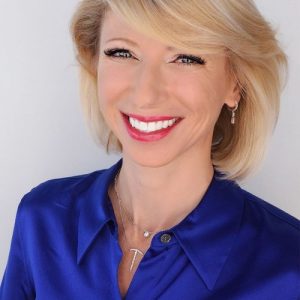
    During the 2019 PASA-PSBA School Leadership Conference, social psychologist, bestselling author, Harvard lecturer and TED talk presenter Dr. Amy Cuddy sat down with us to share her expertise on nonverbal communication and its influence in the school atmosphere. She discussed the impact of the body on the mind; how teachers, students and staff communicate; and elements to be mindful of when communicating in the education setting and beyond.

    This episode is sponsored by:

    Skip to: 00:55 In a school setting, school leaders, teachers and students are interacting — verbally and nonverbally — every day. How can nonverbal communication be used positively for these various participants in public education space?

    Closed body language is not just linked to powerlessness; it’s also linked to shame. And I think that kids feel a lot of shame. Shame is one of the most self-destructive emotions.

    We probably focus a lot on whether the kids are interested or not, and that matters; but I think what matters more is do they feel trusting and safe or not.

    Skip to: 09:43 Going off of that, sometimes we are unaware of our nonverbal communication and unaware of what the nonverbal communication around us might mean. In a school setting, how can that unawareness be detrimental?

    An interaction with a teacher for a student might feel like their biggest challenge. They’re really worried about how they’re being socially evaluated by the teacher. The stakes feel incredibly high to them.

    Just remember that the person whose lower power in an interaction is the one who’s more attuned to the body language of the other because they’re looking for whatever information they can get to figure out where they stand in that person’s eyes.

    If you’re not present with them nonverbally; if you’re not showing that you’re interested in them, they can’t be present with you.

    Skip to: 13:53 If our nonverbals govern how we feel, is there a practice that could be incorporated into schools that would help students become engaged and prepared to learn?

    When we feel psychologically powerful, it affects the way we think. We think more clearly. We feel more optimistic. We behave differently. We do better on tests. We perform better because we’re less anxious.

    Skip to: 21:46 Social-emotional learning, or SEL, is a prevalent topic in education. Do you think being aware of nonverbal communication could aid in the SEL process and improve an individual’s self-awareness and self-control?
    Skip to: 25:34 Your research has heavily focused on prejudice and stereotyping. How could social science be incorporated into creating more equitable public education?

    Dr. Amy Cuddy

    Social psychologist, award-winning Harvard lecturer and best-selling author, Dr. Amy Cuddy is an expert on the behavioral science of power, presence, purpose and prejudice. She is a member of the Harvard Business School Executive Education Faculty and the author of New York Times best seller, Presence: Bringing Your Boldest Self to Your Biggest Challenges. Her 2012 TED Talk, “Your Body Language May Shape Who You Are,” has been viewed more than 53 million times.
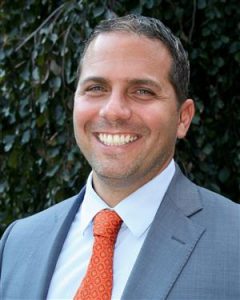
    • https://www.amycuddy.com/
    • https://www.ted.com/speakers/amy_cuddy

    The post Communicating Without Words appeared first on Keystone Education Radio.


    Educating Students Beyond the Classroom Oct 29, 2019
    Show notes
    • About this Episode
    • Time Stamps
    • About our Guests
    • Resources
    At Upper St. Clair School District, five unique programs immerse students in learning outside of the classroom and help them develop life ready skills. While attending the 2019 PASA-PSBA School Leadership Conference to share information about their programs, Superintendent John Rozzo and Amy Pfender, assistant to the superintendent, joined us to provide more insight into what makes their programs unique and how they have impacted students.

    While we place a large and important emphasis on academics in our school district, we also recognize that we need to do more to help prepare them for the world after K12.

    Skip to: 02:11 Your partner programs, SHOP @ USC and Partners in PE, bring special education students and their peers together. What kind of interaction have you seen between these students, and what lifelong lessons do you think they take away from this experience?
    Skip to: 04:00 Student leadership academies are offered to students in grades 4 through 12. Do you regularly see students return to these academies throughout their educational career?
    Skip to: 04:51 Can you talk about the programming over the summer months?

    By offering more summer programming and giving credit for it, that has allowed us to create greater flexibility for our students.

    Skip to: 06:18 Since the summer STEAM academy began in 2011, have you experienced students making educational choices and, later, career choices that were influenced by an interest in STEAM?
    Skip to: 09:35 In your presentation, you mentioned that the SMART desk program has experienced increased female involvement in recent years. How were you able to evoke more interest in a STEAM-related program from female students?

    Right now at our high school we have 22 students participating in SMART desk; a third of them are females.

    Skip to: 11:35 What advice would you offer to other school districts that are looking to engage students outside of the typical classroom environment?

    The fact that we start small, have realistic expectations out of the gate and then make sure we’re getting buy-in from all the appropriate constituents has really been essential in the effectiveness of the programs for us.

    Dr. John Rozzo, superintendent of schools, Upper St. Clair SD
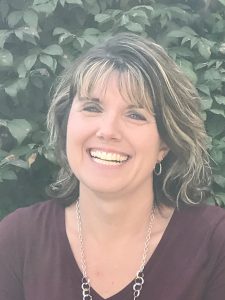
    Dr. John Rozzo has served as Superintendent of Schools of Upper St. Clair School District since July 1, 2018.

    Previous to his role as Superintendent, Dr. Rozzo served as the Assistant Superintendent from 2014 to 2018 and was instrumental in steering the district’s strategic planning process. He has been a vital part of the district leadership, vision and commitment to students and their families.

    A member of the Upper St. Clair School District staff since 2005, Dr. Rozzo has been promoted to several administrative positions including assistant principal, middle school principal of academics, and supervisor of middle level education. In addition, he served as Assistant Superintendent from 2014 through 2018. Dr. Rozzo began his educational career in 1999 as a science teacher in the Brentwood School District.

    Throughout his tenure, Dr. Rozzo has led several initiatives including serving as chairperson of the district’s Strategic/Comprehensive Plan and guiding the district’s transition to the new Principal and Teacher Effectiveness Model. In addition, he has presented at numerous local, regional and statewide conferences regarding increasing student achievement, instructional leadership, and components of an exemplary school district.

    Mrs. Amy Pfender, assistant to the superintendent, Upper St. Clair SD
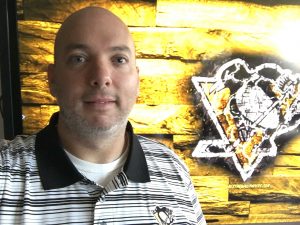
    Mrs. Amy Pfender has served as Assistant to the Superintendent of Upper St. Clair School School District since July 1, 2019. In this role, she oversees the district’s educational program in grades 9 through 12.

    Mrs. Pfender began her tenure with Upper St. Clair School District as a special education teacher at Boyce Middle School in August 2005. In 2009 she became the district’s elementary special education department chairperson and the following year ascended to special education curriculum leader. In March 2012, she was appointed assistant middle school principal and was promoted to principal of Boyce Middle School a year later. She served as the district’s Director of Student Support Services from 2016 through 2019.

    “Beyond Academics:Innovative High School Programs Promoting Life Ready Skills” – Presentation
    2019 PASA-PSBA School Leadership Conference

    The post Educating Students Beyond the Classroom appeared first on Keystone Education Radio.


    Artificial Intelligence as Middle School Education Oct 02, 2019
    Show notes
    • About this Episode
    • Time Stamps
    • About our Guests

    Montour School District saw the opportunity to teach for the future, preparing students for careers and life by launching America’s first Artificial Intelligence Middle School program in the fall of 2018.
    Dominic Salpeck, principal and Bill Black, STEM teacher at David E. Williams Middle School share their experiences and insights, highlighting the why and how it came to fruition framed by the conclusion their district came to—not asking themselves “if they should teach AI, but rather, what if we don’t teach AI?”

    Skip to: 01:30 How did the idea for Montour AI at David E. Williams Middle School come about?
    Skip to: 04:30 Can you describe the space where students take part in the AI program?
    Skip to: 05:41 When do students take part in the AI program?
    Skip to: 06:59 Why do you think artificial intelligence is such an important skill for students to learn?
    Skip to: 08:32 What are some examples of projects students have worked on at the center?
    Skip to: 12:48 Can you tell us about the Carnegie Mellon University partnership?
    Skip to: 14:48 How have you funded the Montour AI project?
    Skip to: 16:23 Last year the school hosted the World Artificial Intelligence Regional Competition for Youth. Can you talk about that competition?

    July 27th in Alleghany county will now be considered National AI Day.

    Mr. Bill Black

    Mr. Black is in his 18th year of teaching overall and 8th year teaching in the STEM position at David E. William Middle School in the Montour School District. Mr. Black is a Project Lead The Way certified K-8 teacher with certifications in the Launch and Gateway To Technology Programs. He also has his level II certification with artificial intelligence through a local leading AI education company called Ready AI. Mr. Black brings AI to the students utilizing Anki’s Cozmo Robot and Dr. David Touretzky’s calypso programming tool. Mr. Black teaches a wide variety of skills from building VEX Robots with 5th graders, solving everyday problems with 6th grade utilizing the design process and solving worldly problems through AI on a small scale with his 7th and 8th graders.
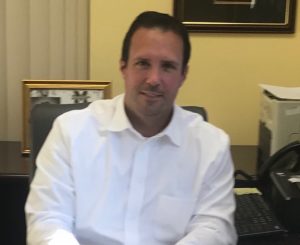
    Mr. Dominic Salpeck

    Mr. Salpeck began his career in public education in January of 2001 as a social studies teacher at Sto-Rox Middle School/ Sto-Rox High School. In November of 2008, Dominic was hired as a principal at David E. Williams Middle School in the Montour School District. His passion for education includes action planning, progress monitoring, challenging students/ staff/ self to grow, and positive school culture supported by effective discipline.
    The post Artificial Intelligence as Middle School Education appeared first on Keystone Education Radio.


    One District’s Move to Equity (Part 2)- Implicit Bias and the Struggles for Equity Sep 17, 2019
    Show notes
    • About this Episode
    • Time Stamps
    • About our Guests
    • Resources
    Listen to Part 1 – Developing an Equity Program

    This two-part episode out of a three-part series focuses on how one school district in Pennsylvania has moved to embed equity into its education practice. In part 2, Mr. Ken Nickson, the Coordinator of Educational Diversity, Equity and Inclusion at Erie Public Schools and Dr. Heather Bennett, director of equity services at PSBA engage in a discussion on implicit bias and the challenges in moving equity forward in Erie Public Schools.

    Skip to: 00:28 What are some of the challenges you encountered in implementing a formal practice of equity in your district?
    Skip to: 02:23 Can you define implicit bias?

    It tough because you’re talking about things that are entrenched in people’s beliefs and mindsets.

    As educators, we have to continuously examine our internal perceptions in order for us to create and implement positive external practices and policies for our kids.

    Skip to: 09:05 What are some tips or guidance around when a district might start?

    I would definitely do the toolkit, I would form a committee and I would use some type of a climate survey…

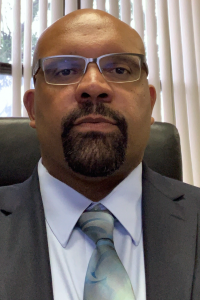
    Ken E. Nickson, Jr., Coordinator of Diversity, Equity, and Inclusion for Erie Public Schools
    Born and raised in Erie, PA, Ken Nickson, Jr. is a 1996 graduate of Central High School. He graduated from Clarion University of PA, in May 2002 with a Bachelor of Science in Education, specializing in Elementary/Special Education. He earned his Master’s in Educational Leadership in 2006 from Gannon University and currently holds a Principal Certificate and a Superintendent Letter of Eligibility. His professional career began in Pittsburgh, during the final semester of student teaching for Clarion, when he was hired as an Emotional Support teacher and given his own classroom in Pittsburgh’s Public Schools. It was there that Ken began to fuse his formal education with his life experiences to impart knowledge and impact the lives of the 10 middle school aged boys under his tutelage. Since then, Ken has worked his 17-year career with Erie’s Public Schools in various roles including his current role as Coordinator of Diversity, Equity, and Inclusion always holding the education and empowerment of the student as an integral priority. Ken is married to his high school sweetheart Tica, who also works for their school district as a Student Parenting Case Worker, Birth Doula, and Lactation Consultant. Together they have 4 kids, all of which attend Erie’s Public Schools. Ken also has a son who lives in Columbus, Georgia who is equally successful in that area’s public schools.

    Ken and his family attend Erie Christian Fellowship Church, where he serves in Youth Ministry as a middle school teacher. He is a man of Omega Psi Phi Fraternity, Incorporated. When away from work, his time is spent coaching and watching his kids play sports. He enjoys date nights with his wife, and sneaking in some racquetball and fishing in the numerous waterways in his beloved hometown.

    o PSBA Equity Action Plan
    o Pennsylvania Equity and Inclusion Toolkit
    o Christopher Emdin. 2016. For White Folks Who Teach in the Hood…and the Rest of Y’all Too: Reality Pedagogy and Urban Education. Beacon Press.

    The post One District’s Move to Equity (Part 2)- Implicit Bias and the Struggles for Equity appeared first on Keystone Education Radio.


    One District’s Move to Equity (Part 1)—Developing an Equity Program Sep 17, 2019
    Show notes
    • About this Episode
    • Time Stamps
    • About our Guests
    • Resources

    This two-part episode out of a three-part series focuses on how one school district in Pennsylvania has moved to embed equity into its education practice. In part 1, Mr. Ken Nickson, the coordinator of educational diversity, equity and inclusion at Erie Public Schools transports us to the diverse city of Erie and its school district. In this discussion, he describes the steps Erie took to develop an equity program and strategic plan, specifically focusing on combating the negative impact of the school to prison pipeline on student opportunity, belonging, and achievement. This episode also features Dr. Heather Bennett, director of equity services for the Pennsylvania School Boards Association.

    Listen to Part 2 – Implicit Bias and the Struggles for Equity in the next episode.

    Skip to: 01:05 Describe the city of Erie, and also the school district.
    Skip to: 02:49 Can you tell us about the catalyst around introducing your role to the school district?
    Skip to: 04:32 Describe some of the responsibilities of your role.

    I look at myself as being a connection for the community and the city and the district in terms of diversity, equity and inclusion.

    Skip to: 08:18 How would you define equity?
    Skip to: 11:12 What is the school to prison pipeline?

    Restoring relationships is so important. And realizing that we really need to think about how our teachers are perceiving our kids.

    Skip to: 16:34 What type of practices and steps are being implemented that helps to counteract that school to prison pipeline effect?

    We’re focusing on the disproportionality in suspension/explosion rates which goes straight to the school to prison pipeline conversation.

    We talked about implicit, unconscious and racial bias as an entire district.

    Skip to: 20:31 Is there anything that stands out as a positive response or high accomplishment in your time in your position so far?

    Ken E. Nickson, Jr., Coordinator of Diversity, Equity, and Inclusion for Erie Public Schools

    Born and raised in Erie, PA, Ken Nickson, Jr. is a 1996 graduate of Central High School. He graduated from Clarion University of PA, in May 2002 with a Bachelor of Science in Education, specializing in Elementary/Special Education. He earned his Master’s in Educational Leadership in 2006 from Gannon University and currently holds a Principal Certificate and a Superintendent Letter of Eligibility. His professional career began in Pittsburgh, during the final semester of student teaching for Clarion, when he was hired as an Emotional Support teacher and given his own classroom in Pittsburgh’s Public Schools. It was there that Ken began to fuse his formal education with his life experiences to impart knowledge and impact the lives of the 10 middle school aged boys under his tutelage. Since then, Ken has worked his 17-year career with Erie’s Public Schools in various roles including his current role as Coordinator of Diversity, Equity, and Inclusion always holding the education and empowerment of the student as an integral priority. Ken is married to his high school sweetheart Tica, who also works for their school district as a Student Parenting Case Worker, Birth Doula, and Lactation Consultant. Together they have 4 kids, all of which attend Erie’s Public Schools. Ken also has a son who lives in Columbus, Georgia who is equally successful in that area’s public schools.

    Ken and his family attend Erie Christian Fellowship Church, where he serves in Youth Ministry as a middle school teacher. He is a man of Omega Psi Phi Fraternity, Incorporated. When away from work, his time is spent coaching and watching his kids play sports. He enjoys date nights with his wife, and sneaking in some racquetball and fishing in the numerous waterways in his beloved hometown.

    Erie Public Schools, 2018-2024 Strategic Plan- Mobilizing Community, Igniting Excellence

    The post One District’s Move to Equity (Part 1)—Developing an Equity Program appeared first on Keystone Education Radio.


    The Role of a Community Foundation Sep 03, 2019
    Show notes
    • About this Episode
    • Time Stamps
    • About our Guests
    • Resources
    The Basic Education Funding (BEF) equation is complicated and even where there is a solid budget and an existing education foundation at the school district level, there is an integral role that a community foundation can fill. Central Susquehanna Community Foundation’s CEO and President, Holly Morrison along with the foundation’s Chief Advancement Officer, Kara Seesholtz will share the origin and work of their organization and the ways they support the operations of a district-level education foundation. Skip to: 01:26 Describe the work of Central Susquehanna Community Foundation.

    We are here to help individuals, families, businesses and organizations fulfill their philanthropic interests and passions.

    Skip to: 02:17 What are some of the biggest impacts your organization has been able to accomplish?

    Overall our foundation grants out more than, this past, year 2.7 million dollars.

    Skip to: 08:42 How does your organization work in tandem with, or in support of foundations at the school district level?

    It’s good to have a diverse committee that includes parents, school board members, individuals from the community, to have a really good group working together.

    Skip to: 12:39 What are the benefits to a school district when working with your organization?
    Skip to: 17:08 Does a school have to work with a community foundation in their community region?

    Community foundations all work towards the same goal and that is to help people with giving and doing more for the community.

    Skip to: 18:54 Does your organization offer resources or professional development opportunities for district foundation leaders?
    Skip to: 19:38 What would your recommendations be to a school district who is either looking to start up a foundation, or is in the early stages of being established?

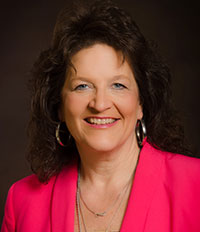
    M. Holly Morrison, D.Ed., President and CEO of Central Susquehanna Community Foundation
    Holly reports directly to the Board of Directors and has the overall strategic and operational responsibility for the Foundation’s staff, programs, expansion, and execution of its mission. Holly works closely to develop, maintain, and support her strong Board of Directors while supporting each of the affiliate boards including Bloomsburg Area Community Foundation, Selinsgrove Area Community Foundation, Sunbury Area Community Foundation, Danville Area Community Foundation, and Berwick Health & Wellness Fund.

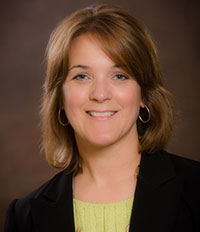
    Kara G. Seesholtz, Chief Advancement Officer of Central Susquehanna Community Foundation
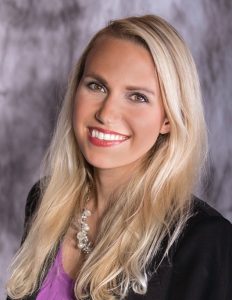
    Kara is responsible for developing and strengthening Foundation relationships and assuring donor stewardship across the region on behalf of the Central Susquehanna Community Foundation and its affiliates, fundholders and community partners. She works together with the President and CEO to develop and implement strategies for all communications, including website content, social media, events and marketing materials. Her work encompasses the Berwick Health and Wellness Fund, Bloomsburg Area Community Foundation, Sunbury Area Health Foundation, Selinsgrove Area Community Foundation, Danville Area Community Foundation and various other donor-advised, field of interest, agency and school district endowments, scholarship, designated, unrestricted and pass-through funds established at the Foundation.

    Central Susquehanna Community Foundation – https://csgiving.org
    National School Foundation Association – https://www.schoolfoundations.org/
    Community Foundation Locator – https://www.cof.org/community-foundation-locator

    The post The Role of a Community Foundation appeared first on Keystone Education Radio.


    The Impact of Act 7: Saving Lives Through Hands-Only CPR Aug 20, 2019
    Show notes
    • About this Episode
    • Time Stamps
    • About our Guests
    • Resources
    Act 7 of 2019 has just taken effect, requiring the Pennsylvania Department of Education (PDE) to develop and provide curriculum for hands-only cardiopulmonary resuscitation (CPR) to schools, now part of required high school instruction. Class-after-class of graduating young adults will be released into the world, empowered and trained to take action if they encounter an adult who has succumb to sudden cardiac arrest, potentially doubling or even tripling survival rates.
    Larissa Bedrick, communications director for the American Heart Association, and Steve Poffenberger, director of quality and staff development for Geisinger EMS join the podcast to discuss the science behind no-breath, hands-only CPR, traditional CPR training and certification, and how this new no-breath method fits into life-saving tactics. Skip to: 01:03 What does cardiac arrest vs heart attack mean?
    Skip to: 02:25 How many people are estimated to suffer from a sudden cardiac arrest each year?

    We estimate about 350,000 people will suffer from a sudden cardiac arrest each year outside of the hospital.

    Skip to: 03:05 Out of that number, how many deaths result?

    If bystanders perform CPR, the survival rate can double or even triple.

    Skip to: 04:40 Explain the effectiveness of the hands-only method

    The hands-only CPR component is strictly designed for adults.

    Skip to: 06:43 With respect to Act 7, why is it important to get this curriculum into high schools?

    “It certainly empowers these young adults.

    Skip to: 08:33 What is this training going to include?
    Skip to: 15:39 Describe the critical nature of the timing of CPR
    Skip to: 18:23 Describe the process of Act 7. When will the training begin in the schools?
    Skip to: 19:22 Who will be providing the training in the schools with the students?

    Larissa Bedrick, Communications Director, American Heart Association

    Larissa joined the American Heart Association as communications director in June 2012. She is based in Harrisburg, Pa. and covers the Central PA, Lehigh Valley and Northeast PA regions. Larissa previously served as a public relations officer for the Pennsylvania Department of Health and Department of State, as well as served as the constituent services director for the Office of the Governor. She is also the immediate past president of the Pennsylvania Public Relations Society. Larissa is a summa cum laude graduate of Temple University with a bachelor’s degree in Film and Media Arts and a minor in political science, and is the proud daughter of a retired teacher.
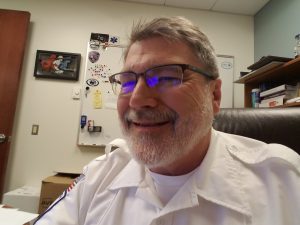
    Steve Poffenberger, Director of Quality/Staff Development, Geisinger EMS

    Steve Poffenberger currently serves as the director of quality/staff development at Geisinger EMS (Geisinger Holy Spirit). He has been with the agency since October 1985 and has been an EMS provider for 43 years. He has acted as a paramedic program coordinator for HACC for the past 30 years. Steve volunteers for the American Heart Association on the PA Policy Advocacy Committee. He holds a Bachelor of Science degree from The Pennsylvania State University and currently lives in Dauphin, PA with his wife, Kathy.


    CPR Curriculum for Schools – Senate Bill 115
    American Heart Association

    The post The Impact of Act 7: Saving Lives Through Hands-Only CPR appeared first on Keystone Education Radio.


    Previous 1 4 5 6 7 8 11 Next

    Related Podcasts

    Inside Strategic Coach: Connecting Entrepreneurs With What Really Matters

    1

    Inside Strategic Coach: Connecting Entrepreneurs With What Really Matters Business
    WSJ Your Money Briefing

    2

    WSJ Your Money Briefing Business
    FORTUNE Unfiltered with Aaron Task

    3

    FORTUNE Unfiltered with Aaron Task Business
    FORTUNE OnStage Presents: The Most Powerful Women

    4

    FORTUNE OnStage Presents: The Most Powerful Women Business
    Slate Money

    5

    Slate Money Business
    In The Dark – The New Yorker

    6

    In The Dark – The New Yorker Business News
    footer-logo

    Contact Us

    Toll Free: 844-670-7747

    Links

    • Home
    • Top Charts
    • Networks
    • Apps
    • Independents Podcasts
    • Podcast Advertising
    • Podcast News
    • Contact Us
    • About Us
    • Analytics & Insights

    Stay Connected

      Privacy, Terms of Use & Our Code of Ethics Protecting Content Creators Copyrights