TopPodcast.com
Menu
  • Home
  • Top Charts
  • Top Networks
  • Top Apps
  • Top Independents
  • Top Podfluencers
  • Top Picks
    • Top Business Podcasts
    • Top True Crime Podcasts
    • Top Finance Podcasts
    • Top Comedy Podcasts
    • Top Music Podcasts
    • Top Womens Podcasts
    • Top Kids Podcasts
    • Top Sports Podcasts
    • Top News Podcasts
    • Top Tech Podcasts
    • Top Crypto Podcasts
    • Top Entrepreneurial Podcasts
    • Top Fantasy Sports Podcasts
    • Top Political Podcasts
    • Top Science Podcasts
    • Top Self Help Podcasts
    • Top Sports Betting Podcasts
    • Top Stocks Podcasts
  • Podcast News
  • About Us
  • Podcast Advertising
  • Contact
Not in our directory?
Add Show Here
Podcast Equipment
Center

toppodcastlogoOur TOPPODCAST Picks

  • Comedy
  • Crypto
  • Sports
  • News
  • Politics
  • True Crime
  • Business
  • Finance

Follow Us

toppodcastlogoStay Connected

    View Top 200 Chart
    Back to Rankings Page
    Arts

    EntreArchitect Podcast with Mark R. LePage

    Architect Mark R. LePage explores the business of architecture, firm leadership and the everyday life of an architect. From Gābl Media, EntreArchitect Podcast features weekly interviews with inspiring, passionate people who share their knowledge and expertise… all to help you build a better business as a small firm entrepreneur architect. Proven business strategies for architects, including financial management, profit, marketing, sales, productivity, and planning.

    Advertise
    • Apple Podcasts
    • Google Play
    • Spotify

    Latest Episodes:
    EA129: From Architect to Tech Startup with Qi Su of Modelo.io [Podcast] Jun 24, 2016
    Show notes

    Have you ever had a great big idea for a product or service? Something bigger or completely different from what you're doing now? Do you ever wonder what your life would be like, if you pursued that idea?

    This week we're chatting with someone who had an idea in architecture school inspired by the technology he was using every day. He decided to take that path and pursue his passion.

    This week at EntreArchitect Podcast, we go From Architect to Tech StartUp with Qi Su of Modelo.io.

    From childhood, Qi was surrounded by structural engineering, architecture and design, and artwork, and eventually decided to major in architecture – his second love behind soccer – at University of Southern California. He then pursued a degree combining design and computer development through Harvard University. It was there working with the different softwares that he had the inspiration for Modelo.

    Modelo is a browser-based building and design collaboration and presentation platform for architects, engineers and general contractors offering trial-based hosting, management, communication and presentation services, allowing you and your clients to visualize, and markup 3D models through any browser no matter the CAD service you use.

    Modelo’s Startup Timeline

    March ’14: Qi was accepted into an accelerator, sort of an ecosystem for startups to launch and develop your idea, the company officially launched.

    April ’14: Since it was important to Qi to have someone to bounce ideas off of and collaborate with, he found his partner and co-founder, Tian Deng, to join the Modelo team.

    September ’14: The first prototype was released to much excitement from users.

    January ’15: After fundraising and pitching to investors, funding was received and they were able to hire people to grow the team.

    January ’17: Development of the software will be completed and ready to launch.

    Visit Modelo.io to sign up and try it for free!

    Visit our Platform Sponsor

    FreshBooks
    The easiest way to send invoices, manage expenses, and track your time.
    Access Your 30-Day Free Trial at FreshBooks.com/architect (Enter EntreArchitect)

    The post EA129: From Architect to Tech Startup with Qi Su of Modelo.io [Podcast] appeared first on EntreArchitect // Small Firm Entrepreneur Architects.

    Mentioned in this episode:

    Design Vault


    EA128: 5 Ways to Use Technology to Reduce Our Stress [Podcast] Jun 17, 2016
    Show notes

    Technology It can help us in so many ways. All month long, we've been sharing information here at EntreArchitect Podcast and over at the blog on the many ways that technology can help us be better architects. At times, technology can be a burden. It can be overwhelming. It can be complicated and frustrating. It can be time consuming and distracting.

    Truthfully, technology can be downright stressful. Over two years ago Mark decided to step away from news in every form: TV, radio, print and internet. The day he stopped listening to all that stuff and started paying attention to the things that actually were in his control, his stress was radically reduced. Mark encourages you to commit to a full media blackout by eliminating any technology that causes you stress.

    What if we could use technology to reduce our stress? This week at EntreArchitect Podcast, Mark will share 5 Ways to Use Technology to Reduce Our Stress.

    Mark’s commitment is to make the world a better place by doing more things within his control, and you can do the same thing.

    1. Music // Music has always been used to reduce stress. We have access to music anytime and anywhere depending on what we’re in the mood for.
    2. Meditation // As meditation has become more mainstream, more are turning to this focused practice of sitting in silence for a period of time. Check out our list of recommended apps below.
    3. Exercise // Of course we can exercise without technology, but there’s so many ways to use great technology to help you get out there and get moving! Find things that work with your activities to keep you motivated. Use technology to set reminders and block time to exercise!
    4. Automation // We’re doing so many things every day and all day long, and the easiest way to slim down that burden is to automate things. Check out the post on the blog this week, How to Automate Your Small Firm Architecture Studio, for ideas how to do this and keep searching for others that work for you. The fewer tasks we have, the less stressed we’ll be.
    5. Develop Systems // It’s so important to the success of our businesses and to our health. Developing systems allow us to feel confident that the work will get done without us so we can focus on the things we love. Developing systems is the most important goal that you can set for your success.

    What are some ways you use technology to reduce your stress? Tell us about them in the comments below!

    Visit our Platform Sponsor

    FreshBooks
    The easiest way to send invoices, manage expenses, and track your time.
    Access Your 30-Day Free Trial at FreshBooks.com/architect (Enter EntreArchitect)

    Referenced in This Episode

    10% Happier by Dan Harris (book), 10% Happier Website, and 10% Happier Meditation App
    Meditation Apps: Headspace, Omvana, Buddhify, Mindfulness, and Calm
    Apps for Exercise: RunKeeper
    Apps for Automation: Zapier and IFTTT
    System Development: Evernote, Google Drive, and Trello

    Photo Credit:Shutterstock / Seyomedo

    The post EA128: 5 Ways to Use Technology to Reduce Our Stress [Podcast] appeared first on EntreArchitect // Small Firm Entrepreneur Architects.

    Mentioned in this episode:

    Design Vault


    EA127: 6 Technologies That Will Radically Change the Architecture Profession in Less Than 10 Years [Podcast] Jun 10, 2016
    Show notes

    We are living during an amazing period of time with rapid change and global innovation. Human society is changing before our very eyes. The world I knew as a pre-internet child no longer exists and the world we are experiencing today will be unrecognizable in less than a decade.

    This week at EntreArchitect Podcast I share my thoughts on 6 Technologies That Will Radically Change the Architecture Profession in Less Than 10 Years.

    The next generation of technology is coming and it’s going to change the profession radically. Will you be there to take advantage of that opportunity as an early adapter? In the next 5-10 years, these technologies will be mainstream.

    • 3D Printing // Design a 3D model of a building or parts of the building on the computer and print it out to see how it would look and work in real life. We’ll no longer be limited to the available parts and products, we’ll be able to 3D print whatever we want!
    • Virtual Reality // VR 360 headsets to walk through models virtually. We’ll be able to walk clients through buildings, get decisions made more quickly and plan for lighting and emergency situations.
    • Drones // Drones are soon to be introduced as consumer products that you can program to go do what you want it to do. They can be used for photography and videography, but also delivery of materials, marketing, various inspections, even flight-assembled architecture.
    • Robots // Can be used to scan the room to create a 3D model of existing conditions, as a demolition crew, and any tasks like painting, excavating, masonry, framing, welding, cutting, and manufacturing in architecture and construction.
    • Artificial Intelligence // Imagine computers that are intelligent enough to creatively design buildings. Instead of pre-programming tasks, the system will be able to train itself and improving.
    • Cryptocurrency // Bitcoin and electronic currency may eventually be the norm in the future.

    These things are coming, so let’s choose, as architects, to become the leaders of them. Machines and technologies will be our tools to change the way we do what we do. Change is inevitable and it’s coming quickly; we can either embrace it or reject it for others to seize.

    Visit our Platform Sponsor

    FreshBooks
    The easiest way to send invoices, manage expenses, and track your time.
    Access Your 30-Day Free Trial at FreshBooks.com/architect (Enter EntreArchitect)

    Photo Credit: Shutterstock / William Bradberry

    The post EA127: 6 Technologies That Will Radically Change the Architecture Profession in Less Than 10 Years [Podcast] appeared first on EntreArchitect // Small Firm Entrepreneur Architects.

    Mentioned in this episode:

    Design Vault


    EA126: Successful Technologies for an Architect Startup with Architect Danny Cerezo [Podcast] Jun 03, 2016
    Show notes

    It's June and all month long we here at EntreArchitect are focusing our content on the category of Technology. On the blog, here on the podcast and inside EntreArchitect Academy we are diving deep into the many technologies we can use to make our architecture firms run more efficiently and more effectively.

    This week Mark R. LePage invited the co-founder of a relatively new firm to join us to discuss the many technologies that he is using to launch his small firm.

    Architect Danny Cerezo is on the show and he and Mark discussed Successful Technologies for an Architect StartUp.

    Danny Cerezo is based in Los Angeles, CA and is the principal and co-founder at c|s design. After spending time in service with the Navy, Danny worked for a developer near Palm Springs. He attended Woodbury University in San Diego and graduated with a Masters in Real Estate Development geared for and taught by architects, following that up with working to earn his general contractor’s license. After finishing and selling some projects, creating relationships and getting requests for architecture work on the side, he and his wife, Pam, formed c|s design.

    What technologies are you using in your firm?

    • Design Software // Whatever’s best for the task at hand. For renovation and addition projects, Chief Architect. Primarily for design they use Revit, but are considering switching to ArchiCad as Mac users.
    • Project Management // For overall project management, Trello for the big picture to create systems, project templates, and identify steps for each phase. For detailed task management, ToDoist. Evernote to easily scan documents, record audio, organize, search and share files for each project. “If anybody’s not using EverNote, I would say pause the podcast right now, go download it and then come back. It’s fantastic.“ Danny also uses a smart pen called Livescribe that’s digitally connected so that every page from the notebook automatically gets uploaded to Evernote.
    • Accounting // FreshBooks for the ease of use and its robustness where clients can come in to check retainers, invoices received and paid, expenses and track time. QuickBooks as a preference for their accountant, who’s then able to check their work. In order to avoid doing the work twice, a Zapier account integrates the two softwares.
    • Communication // Primarily using email but considering using Slack to capture all the information in one repository.
    • Mobile Apps // Dropbox as a server. Social media apps like Morpholio to share creative ideas and SquareSpace to host their website.
    • Website // CandSDesign.com and the blog are geared more towards clients. To share within the profession of architects, Danny uses Medium to blog on topics like “6 Things I Learned My First 2 Years Running Our Architecture Firm” and “Architect as Developer. You Can Do It Too.”

    Connect with Danny on Facebook, Twitter @dcerezo_LA and @csdesignla, LinkedIn, Instagram and Medium @csdesignLA.

    Visit our Platform Sponsor

    FreshBooks
    The easiest way to send invoices, manage expenses, and track your time.
    Access Your 30-Day Free Trial at FreshBooks.com/architect (Enter EntreArchitect)

    Referenced in This Episode

    Check out the FreshBooks Video

    Rate and review the EntreArchitect podcast on iTunes

    Do you have an architect or entrepreneur that you’d like to hear featured on EntreArchitect Podcast? Tell us about it! Email support@entrearchitect.com.

    The post EA126: Successful Technologies for an Architect Startup with Architect Danny Cerezo [Podcast] appeared first on EntreArchitect // Small Firm Entrepreneur Architects.

    Mentioned in this episode:

    Design Vault


    EA125: Using Technology to Leverage a Powerful Idea for Predictable Revenue [Podcast] May 27, 2016
    Show notes

    Have you ever had an idea to improve your process; to make it more efficient or more effective in some big way? Maybe you are inspired to start a new business that will help take your architecture firm to the next level and in doing so, will change the profession for all of us, forever. This week's guest is striving to do just that.

    This week at EntreArchitect Podcast, I invite Jared Perry, the founder of Paeven.com, a new online platform for architects and engineers, to discuss how to use technology to leverage a powerful idea for predictable revenue.

    Jared is a professional engineer based in Westlake, Ohio and a co-founder and principal at Sixmo Inc. He attended school at Ohio University with an original focus on transportation engineering before switching over to where his greater interest was, in structural engineering. At Sixmo, the architecture department focuses primarily on aquatic facilities and microbreweries. Structurally they deal a lot in commercial, retail, and light industrial work.

    Paeven was designed to support growth and competition in the architecture and engineering industry. The whole idea behind it was to create predictable revenue by logging into an online platform to pick jobs in a market where your skills are.

    What does the process look like for consultant?

    • Create a profile // company, background, contact information, credentials, confirm licensure and agree to the ethical conduct policy
    • Search the database // filter based on discipline, location, market, etc.
    • Found a project? // view any RFIs and download RFP to determine if you’d like to place a bid
    • Place a bid // select your cost, schedule, and hourly rate
    • Results // you’ll be immediately notified based on the preliminary selection criteria that the owner put in the system to see where your bid finished in comparison to others and Paeven will calculate what your percentage is to get that job
    • Decision // the owner has two weeks to decide who to award the bid to
    • Introduction // Paeven passes the baton to introduce the client to the owner

    There are many architects and engineers who have these ideas and inspiration to create something to better the world they’re in, and they don’t know where to start. When you came up with this idea, how did you get it to where it is now?

    • Thought about it when he was running and wrote it down immediately
    • Brainstormed what to do and what not to do
    • Got support from his spouse
    • Talked to those in his network who have different talents like computer programming to figure out costs and recommendations
    • Found a firm who spoke their language to partner with them doing design and development
    • Worked to get their name out there through passive marketing via social media

    Connect with Jared on Facebook, LinkedIn, Twitter, and online at Paeven.com. Reach out and ask him how or why he did it and if you should do it too!

    Visit our Platform Sponsor

    FreshBooks
    The easiest way to send invoices, manage expenses, and track your time.
    Access Your 30-Day Free Trial at FreshBooks.com/architect (Enter EntreArchitect)

    Referenced in This Episode

    Register for a FreshBooks Webinar

    Click here to enroll in the EntreArchitect Academy

    The post EA125: Using Technology to Leverage a Powerful Idea for Predictable Revenue [Podcast] appeared first on EntreArchitect // Small Firm Entrepreneur Architects.

    Mentioned in this episode:

    Design Vault


    EA124: And the Winner is… [Podcast] May 23, 2016
    Show notes

    CVG Architecture Business Plan Competition 2016

    Recorded live from the Sonesta Hotel in Downtown Philadelphia the awards reception for the 2016 Charrette Venture Group Architecture Business Plan Competition.

    We chat with all the finalists, learn about the history of the competition and I sit down for a live one-on-one interview with the winner. We will learn more about their firm, how it was founded and their plans for the future, transitioning from design/build to architect as developer.

    This week on EntreArchitect Podcast we have a very special episode. And the winner is…

    What is the history of the Architecture Business Plan Competition?

    The Architecture Business Plan Competition is an annual event sponsored by Charrette Venture Group. Charrette Venture Group was founded by Matt Ostanik after Matt’s experience in both the architecture and technology worlds. He observed that many architects tend to struggle with successfully growing their business and he found through the tech industry that, in many areas, there’s an abundance of resources to grow your business. Not so in the architecture space. Charrette Venture Group’s goal is to provide resources and invest in architect entrepreneurs to help them grow their business.

    What’s the most important thing you learned while developing your plan for the Architecture Business Plan Competition?

    Brian M. Johnson with Arch.406, an architect-led design-build firm,found benefits from intentionally planning and thinking about how to get to the end result, sharing that that exercise alone has helped them significantly improve the quality of their business. They also found it incredibly beneficial to have something that forced them to lay out and communicate their firm’s priorities and understand the financials of the firm and where they want the costs and revenues to be.

    Clever Moderns is an an online platform for owner-builders to get online support, plans and empowerment to change their lives by building their own house. The most important thing Earl Parson learned through this competition was that even in moments lacking clarity, the world is so full of resources and information that you can find answers to whatever you’re looking for if you take the time and the effort to search for them.

    Courtney Brinegar, who created ADD+Venture as a nonprofit architect-as-developer practice, felt that the secret ingredient is the importance of a strong vision to drive everything forward.

    Lindsey Love & Lindsay Schack partner to create Love | Schack Architecture, which focuses on natural buildings and sustainable design. They found it vital to keep a tight timeline in order to work together to distill what exactly their firm is all about.

    Victor Caban-Diaz with Building Ingenuity learned that sometimes you can’t dive too deep into the details, but rather you should keep your focus on the bottom line.

    Hear from the winners!

    The name “Arch.406” comes from the area code of the state of Montana and the preface for the word “architecture” as an architect-led design-build.

    The firm came about because of Brian M. Johnson, Nick Pancheau, and Jeff Kanning’s observations at Collaborative Design Architects that architects get to work with the client for long periods of time designing the project, developing their intricacies and how they go about the process. Then, the relationship ends and clients are turned over to the general contractor. Instead of breaking that relationship, Arch.406 wants to control the project from start to finish and make valued decisions based on the best design.

    Brian M. Johnson’s greatest piece of advice is to not to let your anger or past hurt drive you in the wrong direction. Jeff Kanning reminds architects to be patient and give time to assimilate; listen, learn, and build a knowledge place to get to where you can really be successful. Nick Pancheau wants architects to embrace the specifics of your plans and how you’re approaching the practice of architecture.

    Connect with Arch.406 online, on Facebook, and search #arch406 on Instagram!

    Visit our Platform Sponsor

    FreshBooks
    The easiest way to send invoices, manage expenses, and track your time.
    Access Your 30-Day Free Trial at FreshBooks.com/architect (Enter EntreArchitect)

    Referenced in This Episode

    ADD+Venture

    ARCH.406

    Building Ingenuity

    Clever Moderns

    Love | Schack Architecture

    Charrette Venture Group

    Photo credit: J&J Studios

    The post EA124: And the Winner is… [Podcast] appeared first on EntreArchitect // Small Firm Entrepreneur Architects.

    Mentioned in this episode:

    Design Vault


    EA123: Sketch Your Way to ARE Success with Architect Lora Teagarden [Podcast] May 13, 2016
    Show notes

    How to Use Sketches to Pass the Architecture Registration Exam

    In and among the everyday workings of being an architect, or studying to become one, we often find ourselves with new and innovative ideas for doing what we do more efficiently, more effectively or just more enjoyably. We might develop these ideas into new systems or new processes to make our world a little better.

    If these innovative ideas work for you, they most likely will work for others as well. And in the world of instant connnectability and a community of like-minded architects growing every day on our many social media channels, there is no reason to not share your ideas with the world.

    You hear it at the end of every episode “Share what you know.”

    This week on this episode of EntreArchitect Podcast, I am chatting with a friend, whom I met while sharing what I know on the internet, to discuss an innovative idea that she had and is now sharing it with her world. Join me for a conversation with architect Lora Teagarden about her journey to pass the architecture registration exam and how today she is helping others sketch their way to success.

    Visit our Platform Sponsor

    FreshBooks
    The easiest way to send invoices, manage expenses, and track your time.
    Access Your 30-Day Free Trial at FreshBooks.com/architect (Enter EntreArchitect)

    Referenced in This Episode

    Learn more about EntreArchitect Academy (Enrollment closes May 30, 2016)

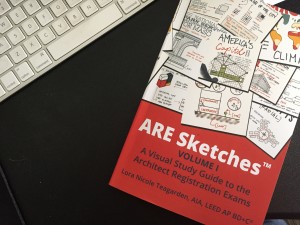
    ARE Sketches Volume 1: A Visual Study Guide to the Architecture Registration ExamIMG_8376

    Paper by 53 App

    Subscribe to the ARE Sketches Newsletter

    Gary Vaynerchuk

    Mark Schaefer

    Mike Riscica

    Eric Reinholdt

    AIA Mississippi

    L2DesignLLC on Instagram

    L2DesignLLC on Twitter

    #ArchiTalks Blog Series

    Bob Borson – Life of an Architect

    AIA Convention 2016

    Architecture Business Plan Competition Awards Ceremony & Reception

    EntreArchitect Meetup

    The post EA123: Sketch Your Way to ARE Success with Architect Lora Teagarden [Podcast] appeared first on EntreArchitect // Small Firm Entrepreneur Architects.

    Mentioned in this episode:

    Design Vault


    EA122: How to Build a System to Manage Your Architecture Clients’ Expectations [Podcast] May 06, 2016
    Show notes

    Happy clients are the result of clients knowing what to expect, when to expect it, and how much it’s going to cost when their expectations are met. This week on EntreArchitect Podcast, Mark R. LePage shares How to Build a System to Manage Your Architecture Clients’ Expectations.

    How do we deliver services to our clients in a way that meets or exceeds their expectations? How do we ensure that every interaction results in a happy, satisfied client?

    Under promise, over deliver. Don’t say you’re going to do something and then fail to follow through. Always do, at the very least, what you say you’re going to do. Know the time it will take you to do something and give yourself more than enough time. Then delivery the results early whenever you’re able to.

    Manage expectations. Our clients want to know what to expect, when to expect it, and what it’s going to cost them when the expectation is finally realized. Managing their expectations manages their happiness.

    Create a system for client expectation management. Put together a step-by-step process of items that will keep your clients feeling fully in control from pre-contract through design and construction to the end of project close-out. Schedule time to review each project once you complete it. Once you have identified the various phases, figure out how to communicate the start and end of each phase to your client.

    How to Build Business Systems for Architects

    This month on the EntreArchitect Academy, founder of Business + Architecture and author of The E-Myth Architect Norbert Lemermeyer joins members as our expert trainer to share his knowledge and research on how to build business systems for architects. He’ll share his own templates for his proprietary Client Fulfillment System. EntreArchitect Academy expert training sessions are only available to members inside EntreArchitect Academy. For more information, click here to learn more about our all-inclusive online membership program for small firm architects. Enrollment is open but is limited!

    Click here to enroll in the EntreArchitect Academy

    Visit our Platform Sponsors

    FreshBooks
    The easiest way to send invoices, manage expenses, and track your time.
    Access Your 30-Day Free Trial at FreshBooks.com/architect (Enter EntreArchitect)

    Referenced in This Episode

    The E-Myth Architect by Norbert Lemermeyer
    Join us in Philadelphia at the EntreArchitect Meetup

    Photo Credit: Pixabay

    The post EA122: How to Build a System to Manage Your Architecture Clients’ Expectations [Podcast] appeared first on EntreArchitect // Small Firm Entrepreneur Architects.

    Mentioned in this episode:

    Design Vault


    EA121: The 12 Critical Categories of Business That Will Take Your Firm from Struggling Studio to Small Firm Success Story [Podcast] Apr 29, 2016
    Show notes

    In architecture school, we all had a dream of what we would become when we became architects; designing beautiful spaces and making the world a better place with each project. We each told ourselves a story of success as an architect. We imagined a studio filled with light, working with talented people and surrounded by the iterations of our creativity. Powerful projects, patrons and processes of purpose that allowed us to pursue our passions.

    How is your dream looking today? Are you succeeding or are you struggling?

    This week at EntreArchitect Podcast, Mark R. LePage will share The 12 Critical Categories of Business That Will Take Your Architecture Firm from a Struggling Studio to Small Firm Success Story.

    Business is a game, and like any game, you have to be able to learn and play by the rules to win. There are critical steps that need to be taken in order for our firms to thrive and become the success stories of our dreams. The only way to small firm architecture success is to hit each one of these twelve critical categories:

    1. Finance // Are your books in order? The numbers are how we make it all work financially. How do you manage your money? How do you put together your financial reports? Should you use debt to grow or not?
    2. Business Development (Sales) // If you don't have sales, you don't have business, you don't have an architecture firm. Are you selling your services?
    3. Leadership // Are you a strong leader? How can you become a small leader? Do you know how to build strong teams? Are you familiar with the roles, responsibilities, and results expected in your firm?
    4. Culture // Have you defined what your firm’s culture looks like? Are you intentionally developing your firm culture?
    5. Client Fulfillment // How do you manage the expectations of your clients? How do you develop systems that help you fulfill clients’ needs? How can you develop strong project management skills? Are you using the EntreArchitect Hybrid Proposal?
    6. Technology // What design software are you using? Are you using the best equipment and software that you can afford to make you into the most productive in what you do? Is your technology relevant and are you looking to the future technologies that architects will be using?
    7. Business Management // Who are the people in our firm and how are they working? What are the processes that those people are working with? What are the products and services that we’re creating and serving with? Do you have an interview process, a hiring process, a conflict/resolution process, a firing process? Are they documented?
    8. Personal Development // Are you learning and exploring to build a better you? What are you doing on a daily basis to care for yourself mentally and physically to make sure that you stay strong and healthy? Are you sharing what you know with others?
    9. Marketing // What strategies and systems of marketing do you have in place now? What types of marketing should you be developing? Are you connected through social networks? Is your website telling your story in a captivating way? Is it a way for you to connect further?
    10. Life // How do you integrate your firm with your personal life? Are you learning the skills of scheduling and prioritizing to live a better, more integrated life?
    11. Community // How can you build a business that does good for others while building a business that does well?
    12. Planning // Do you take time to look back at what you’ve been doing to evaluate if you’re on the right track with your goals? Can you look forward at how your plan will evolve further down the road?

    If you are running a firm, these things aren’t optional. Focus on each one of them, schedule time and be intentional to develop systems and strategies.

    Mark struggled and searched for the answers for years, but when he focused on the fundamentals, he saw his firm turn around. His projects got better and his business grew.

    He wants the same for every small firm out there, and that’s why he launched EntreArchitect Academy in 2014. Every month we’re diving deeper into these critical categories beyond what you see on the blog and hear in podcasts to learn all there is to learn. We have exclusive live trainings with experts who provide resources on what they know in each of these subjects. We break into smaller groups that support one another and help one another grow. Every member has access to our digital courses, document templates, systems templates from experts, and access to a whole library of videos that talk about so many topics. Early bird enrollment with a discounted rate is open until general enrollment opens.

    Enrollment for the EntreArchitect Academy opens on May 2nd and is limited to the first 50 new members!

    Click here to enroll in the EntreArchitect Academy

    Visit our Platform Sponsors

    FreshBooks
    The easiest way to send invoices, manage expenses, and track your time.
    Access Your 30-Day Free Trial at FreshBooks.com/architect (Enter EntreArchitect)

    Referenced in This Episode

    New Year. New Budget. [Blog]
    Basic Financial Statements for Small Firm Architects [Blog]
    6 Ways Your Architecture Firm May Benefit from Working with an Investor [Blog]
    Financial Intelligence for Small Firm Architects [Podcast]
    4 Steps for Changing an Architect's Mind on Money [Podcast]
    The One Thing by Gary Keller [book]

    Join us in Philadelphia at the EntreArchitect Meetup

    The post EA121: The 12 Critical Categories of Business That Will Take Your Firm from Struggling Studio to Small Firm Success Story [Podcast] appeared first on EntreArchitect // Small Firm Entrepreneur Architects.

    Mentioned in this episode:

    Design Vault


    EA120: The 7 Essential Elements of an Equitable Architecture Firm [Podcast] Apr 22, 2016
    Show notes

    What if you were going to start your firm today, from scratch, with the knowledge that you now have? Would you do things differently? How could you ensure that the firm is prosperous and encourages equity for everyone involved?

    This week on EntreArchitect Podcast, Rosa Sheng, AIA joins Mark R. LePage to share The 7 Essential Elements of an Equitable Architecture Firm.

    Creating a Culture of Equity… by Design

    Rosa Sheng, AIA, is a founding member of the Bohlin Cywinski Jackson San Francisco office, whose work includes the Pixar Animation offices and Apple glass structures. She's also a founder of Equity by Design.

    Started as a grassroots effort to gauge the conditions of practice and what people were going through in the life of an architect, Equity by Design soon evolved to capture a larger conversation about the state of practice. What was and wasn't working? What can we do to better to improve the conditions for architects and designers as well as their clients?

    There are lots of hurdles throughout a profession that could cause you to leave: hiring, the state of the economy, needing to “pay dues”, licensure, jumping through hoops, caring for kids, selves or others, the glass ceiling. Equity by Design was formed to provide valuable information that people need in order to keep themselves in the profession.

    Equity in architecture comes into play when the leaders and innovators of tomorrow commit to each part of the process of creating a more equitable practice.

    How does equity affect a firm culture and visa versa? How can we be intentional about designing a firm around a culture that's based on equity?

    The 7 Essential Elements of an Equitable Architecture Firm

    1. Mindset for Equity // There is a critical difference betweenEquity and Equality. Equity is about recognizing difference and providing just and fair opportunities for people to have access to the same success. Equality is about “sameness” and recognizing that everyone gets the same “piece of the pie”.
    2. Implicit Bias // Everyone has bias. Acknowledge your biases and say, I know these things about myself. Now how can I change them to improve the workplace culture so I'm not just hiring and interacting with people like myself?
    3. Work Life Integration // Allow for flexible work hours. Embrace the concept of “core hours”. Schedule the bulk of your meetings at core hours to allow for flexibility in work hours and avoid the stress of people missing out.
    4. Leave of Absences // Develop a paid leave plan. Whether you're on maternity or paternity leave, taking care of a sick or elderly family member, or a caregiver. Confidence that one’s position is secure in times of crisis is critical to a culture of equity.
    5. Mentors & Champions // Build a culture of organic mentorship that supports people's passions and unique skill sets. Allow that to feed back into the firm. Build relationships with “champions;” people that purposely and conscientiously look out for you, your personal development, and your advancement opportunities.
    6. Clear Promotion Policy // One of the top issues for people leaving firms is that no clear criteria for advancement exists. Create a clear and transparent promotion policy that outlines what steps and skill sets are needed in order to advance within the firm leadership structure.
    7. Metrics & Pay Equity // You can't know how you're progressing if you don't self-measure. Track specific metrics that will allow you to look at your payroll on an annual basis and see how you're doing. Are you hiring in a diverse way? Are you paying people in an equitable way?

    Visit our Platform Sponsors

    FreshBooks
    The easiest way to send invoices, manage expenses, and track your time.
    Access Your 30-Day Free Trial at FreshBooks.com/architect (Enter EntreArchitect)

    Referenced in This Episode

    Connect with Rosa on Twitter @EquityXDesign, on Facebook, at EQxDesign.com & TheEquityAlliance.com.
    Equity in Architecture Resolution 15-1 by Rosa Sheng
    How to Take the Bias Out of Interviews by Iris Bohnet
    WE315 EQxD Hackathon & Happy Hour

    Join us at the EntreArchitect Meetup

    The post EA120: The 7 Essential Elements of an Equitable Architecture Firm [Podcast] appeared first on EntreArchitect // Small Firm Entrepreneur Architects.

    Mentioned in this episode:

    Design Vault


    Previous 1 57 58 59 60 61 71 Next

    Related Podcasts

    Fresh Air

    1

    Fresh Air Arts
    Twenty Thousand Hertz

    2

    Twenty Thousand Hertz Arts
    The Black Tapes

    3

    The Black Tapes Arts
    Snap Judgment

    4

    Snap Judgment Arts
    Here’s The Thing with Alec Baldwin

    5

    Here’s The Thing with Alec Baldwin Arts
    The NoSleep Podcast – Creative Reason Media Inc.

    6

    The NoSleep Podcast – Creative Reason Media Inc. Arts
    footer-logo

    Contact Us

    Toll Free: 844-670-7747

    Links

    • Home
    • Top Charts
    • Networks
    • Apps
    • Independents Podcasts
    • Podcast Advertising
    • Podcast News
    • Contact Us
    • About Us
    • Analytics & Insights

    Stay Connected

      Privacy, Terms of Use & Our Code of Ethics Protecting Content Creators Copyrights