TopPodcast.com
Menu
  • Home
  • Top Charts
  • Top Networks
  • Top Apps
  • Top Independents
  • Top Podfluencers
  • Top Picks
    • Top Business Podcasts
    • Top True Crime Podcasts
    • Top Finance Podcasts
    • Top Comedy Podcasts
    • Top Music Podcasts
    • Top Womens Podcasts
    • Top Kids Podcasts
    • Top Sports Podcasts
    • Top News Podcasts
    • Top Tech Podcasts
    • Top Crypto Podcasts
    • Top Entrepreneurial Podcasts
    • Top Fantasy Sports Podcasts
    • Top Political Podcasts
    • Top Science Podcasts
    • Top Self Help Podcasts
    • Top Sports Betting Podcasts
    • Top Stocks Podcasts
  • Podcast News
  • About Us
  • Podcast Advertising
  • Contact
Not in our directory?
Add Show Here
Podcast Equipment
Center

toppodcastlogoOur TOPPODCAST Picks

  • Comedy
  • Crypto
  • Sports
  • News
  • Politics
  • True Crime
  • Business
  • Finance

Follow Us

toppodcastlogoStay Connected

    View Top 200 Chart
    Back to Rankings Page
    Arts

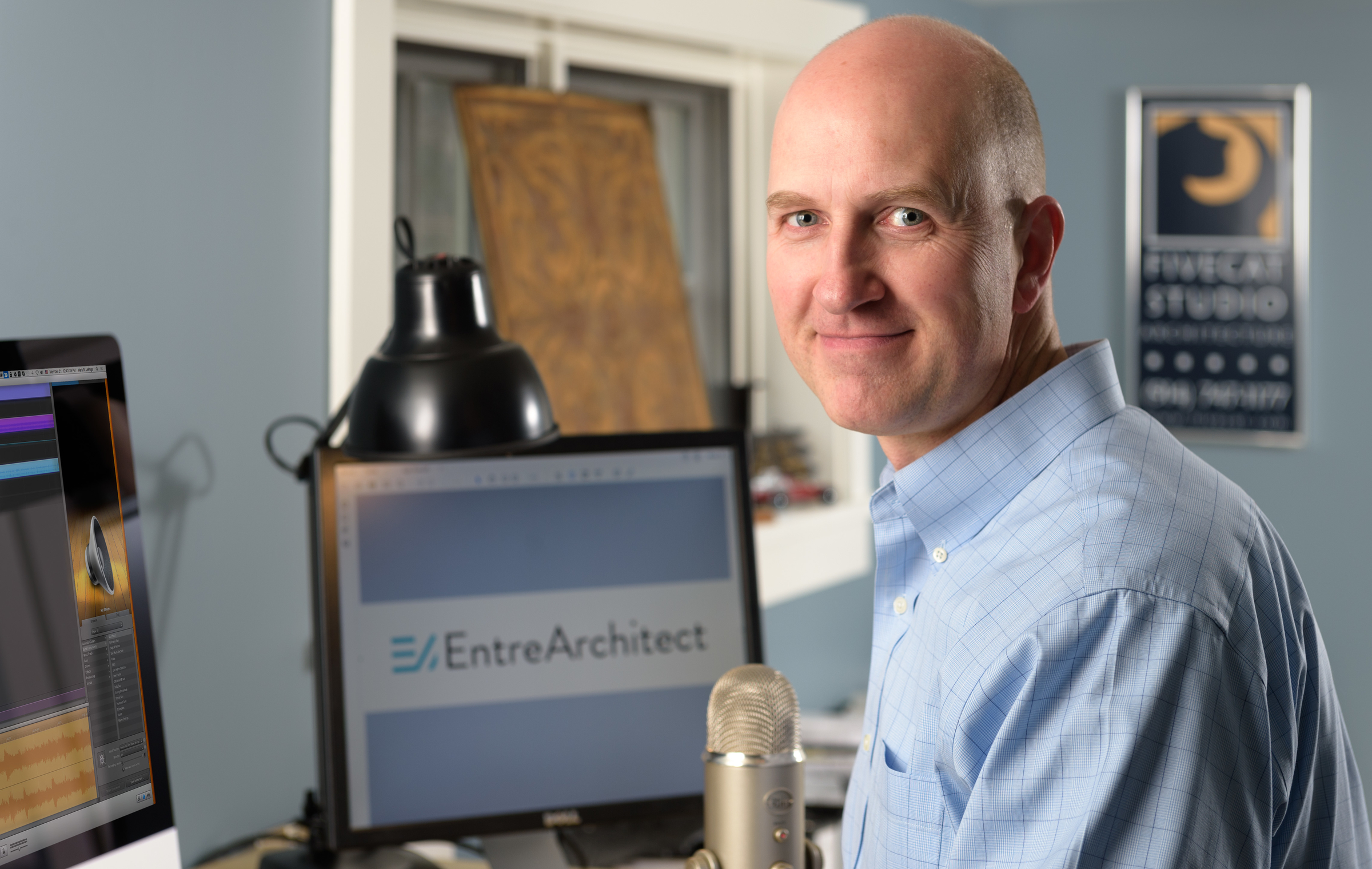
    EntreArchitect Podcast with Mark R. LePage

    Architect Mark R. LePage explores the business of architecture, firm leadership and the everyday life of an architect. From Gābl Media, EntreArchitect Podcast features weekly interviews with inspiring, passionate people who share their knowledge and expertise… all to help you build a better business as a small firm entrepreneur architect. Proven business strategies for architects, including financial management, profit, marketing, sales, productivity, and planning.

    Advertise
    • Apple Podcasts
    • Google Play
    • Spotify

    Latest Episodes:
    EA144: 3 Proven Public Relations Strategies for Small Firm Architects with Julie Taylor [Podcast] Nov 11, 2016
    Show notes

    Public Relations Strategies for Architects

    You’re out there hustling, shaking hands and responding to all your RFPs, you’ve got your business development down. At the other end, you have a strong brand, your website is working and your marketing material is telling your story. Somewhere in between the two, lies a critical step to your success as a small firm architect: public relations. If you get it right, your phone will ring off the hook with your next best clients.

    This week on EntreArchitect Podcast, “Design Evangelist” Julie Taylor joins Mark to share 3 Proven Public Relations Strategies for Small Firm Architects.

    With a background in art history and fine arts, Julie was always drawn to creative expression. As a secretary receptionist just out of college, Julie worked at an architecture firm in Chicago, learning various aspects of the industry. Following that, she worked for a magazine for interior designers and continued to pursue her own writing. When she decided to go into PR running the marketing in a large design center, she worked with architects and designers and began loving the industry.

    She began her own firm, Taylor & Company, shortly afterward and immersed herself in the architecture world. The art of taking something and creating a building that stands on its own and functions correctly was something she was unfamiliar with, so Julie loves being on the side of being an advocate for those who are able to create art in the business context of architecture.

    What is PR and how is it different from marketing?

    Marketing is more of the overall category. Public relations is your communications to the outside; it could be anything from how the phone is answered to publishing thoughts in magazines or online. Anything that you would put out to the public for clients to see. There are aspects like media relations, print or online, awards, where you present your work to be judged, speaking engagements to make connections in your certain area of expertise.

    What are 3 simple PR strategies for architects?

    Be consistent with your strategy and create a plan to allocate your time, effort and budget.

    1. Invest in professional photography and have enough photos at various angles. Partner with your clients. If you know your client is working on a press release, communicate to get your name in there. Finding out how to photograph and publish a project requires a human conversation to figure out how best to do these things. (Hint: It should be a part of your contract upfront!)
    2. Post a sign on your job site! It’s a simple, inexpensive way to get your name out there… and not enough of us do it.
    3. Develop your story and know how to talk about it. Often architects allow the writing and speech to be laden with archispeak. Speak to your clients at their level of understanding.

    Publishing: regional vs national?

    Regional publishing will talk to your local market more directly and can sometimes be a little easier to access. Since the editors and writers are in your area, you can work to make a connection and form a relationship with them. The competition for projects is very difficult with national publications, and often a project being good isn’t enough; it has to have a story behind it. Find publications with active online portals to gain a wider audience. Leverage any media you get. Let your potential and existing clients know what’s going on with you!

    What about design awards programs?

    Find out what competitions will give you the most exposure and plan out your budget according to your chances for notoriety. Know that if you don’t win an award or you don’t get published, it’s not personal. Often there are so many submissions and so many moving parts, that it makes it difficult to filter out great projects.

    What are your thoughts on working with a scout?

    Local people that you can form a relationship with will go to bat for you. They’re always going to want to know what you have that’s good for them to bring to one of the many publications they work with.

    What is the one thing that small firm architects can do today to build a better business tomorrow?

    “AIA National provides a tool called the AIA Message Book. It has topics like how to tell your story, what kind of words to use, how to talk to your clients, what’s important about the message of what you do and how to connect.” – Julie D. Taylor

    Connect with Julie online at Taylor-PR.com, or on LinkedIn, Twitter, Facebook, and Instagram.

    Visit our Platform Sponsors

    TruStile is a leader in high end, architectural interior doors. Visit them at TruStile.com to learn more!

    Tanglewood Conservatories combines the romanticism of the 19th century glass architecture with state-of-the-art technology today. Learn more at TanglewoodConservatories.com.

    Referenced in this Episode

    EntreArchitect Profit Plan Course (free)
    Marketing bluePRint
    AIA Message Book

    The post EA144: 3 Proven Public Relations Strategies for Small Firm Architects with Julie Taylor [Podcast] appeared first on EntreArchitect // Small Firm Entrepreneur Architects.

    Mentioned in this episode:

    Design Vault


    EA143: 3 Steps to Happiness as a Small Firm Architect [Podcast] Nov 04, 2016
    Show notes

    How To Be Happy as an Architect

    Architecture is a tough profession. We work long hours for years with passion and dedication to become architects. We struggle to launch our firms without basic business fundamentals. We search for the best clients and then work to serve them to the best of our ability.

    Being entrepreneur architects gives us so many freedoms that we wouldn’t have if we were employed by another firm. It’s tough, but we wouldn’t have it any other way.

    Still, sometimes we question whether or not we made the right decision. Would we be happier working for someone else? True happiness is the result not of your profession, but of the choices you make and the person you choose to be.

    This week on EntreArchitect Podcast, Mark R. LePage shares his 3 Steps to Happiness as a Small Firm Architect.

    Love

    Love has a lot of meanings to a lot of different people. Love is about respecting and caring for one another.

    • How can you be there for others and support them? Not just your spouse, kids or friends, but your fellow human beings that you encounter in the world.
    • How many ways could you find in the day to be more patient, to be kinder? When you choose to be impatient or unkind to someone, it doesn’t only change their behaviors, it changes who you are.
    • How can you love people with opposing view points? Our individual experiences lead to different ways of viewing the world, and it’s possible for us to come together and love one another.
    • How does it make others feel when you love them? When you respect and care for someone, they will be more likely to follow your lead.

    Learn

    You’re probably visiting this podcast to learn. When you focus on a new skill, your mind grows and you become a better person. Imagine if you chose to focus on mastering the business of architecture. Would your home life be better? Your life as an architect? Your designs?

    • Set a goal to learn something new every day. Be intentional and make a habit of it.
    • What can you set out to learn that might change your life? You can work to master a new skill that will make you a better person.
    • Commit to exercise or meditation, maybe learn a new form of keeping yourself in shape.

    Share

    This is where the world gets to benefit from what you love and what you’ve learned. What’s the point of having all the knowledge if you’re not going to share it? If the goal is to be happy, keeping it to yourself is only halfway there.

    • If you learn something new, teach someone about it.
    • When you find something that works, share it with other architects so that everyone in the profession can be more successful.
    • When you share, others are inspired to share too.
    • The more you give away, the more you get in return, the more fulfilled and happier you will be.

    Love, learn and share what you know.

    Do you serve your local community? How has that service resulted in your success? Visit the EntreArchitect Facebook Group and share your thoughts.

    Visit our Platform Sponsors

    TruStile is a leader in high end, architectural interior doors. Visit them at TruStile.com to learn more!

    Tanglewood Conservatories combines the romanticism of the 19th century glass architecture with state-of-the-art technology today. Learn more at TanglewoodConservatories.com.

    Referenced in this Episode

    EntreArchitect Profit Plan Course (free)

    Photo credit: Pixabay / asi24

    The post EA143: 3 Steps to Happiness as a Small Firm Architect [Podcast] appeared first on EntreArchitect // Small Firm Entrepreneur Architects.

    Mentioned in this episode:

    Design Vault


    EA142: How To Succeed as a Residential Architect with Dale Mulfinger, FAIA [Podcast] Oct 28, 2016
    Show notes

    How To Succeed as a Residential Architect with Dale Mulfinger, FAIA

    It’s a difficult choice to pick a target market and focus all your energy, resources and effort on one market. It’s a decision many small architects are afraid to make because we’re afraid of missing out on other opportunities and we don’t want to have all our eggs in one basket. When you pick a target market and become an expert on it, you’ll find that your next best client will find their way to you.

    Our guest this week has succeeded in making that decision and focusing on a target market early on in the development of his firm, and he’s thrived for over thirty years because of that.

    This week on EntreArchitect Podcast, Dale Mulfinger, FAIA of SALA Architects joins me and he shares his knowledge about How to Succeed as a Residential Architect.

    A Minnesota Farm Kid

    Dale grew up as a farm kid in rural Minnesota. After discovering his lack of desire to pursue farming, he excelled in a drafting program in high school. He succeeded in getting into the university and chose to study architecture. Through the help of amazing friends, many of whom are still friends now, he was able to complete his degree and graduate six years later.

    Early in Dale’s career he was focused on urban design, working on campus planning, large city developments, and more, but came to the realization that it takes a long time to be implemented. He began working for various architects, and found that as the projects got smaller, he enjoyed them more. Out of that came an understanding that he might really enjoy residential architecture.

    A Pattern Language

    In 1983, he received an opportunity to design a house according to the ideas of Christopher Alexander’s book, A Pattern Language, and invited one of his graduate students, Sarah Susanka, to help him on the project. He wrote an article about that project and found a love of writing, which has stayed with him throughout his career.

    After being asked to design a cabin, with little knowledge he began his research and wrote articles about cabins for a local magazine. Seventy-two articles later, he began writing books on the process of building cabins. He noticed that nobody had really looked into cabins in depth, and worked to fill the void with architectural discussion around cabins. Cabins are rewarding to him because each cabin is uniquely different, because each person is so uniquely different. Many people build cabins as a legacy project, where they hope their children will seek to inherit for generations to come.

    How To Succeed as a Residential Architect

    SALA Architects began 30 years ago when Dale and Sarah realized that there wasn’t really anyone focused exclusively on residential architecture in their area. They hoped if they got the word out to the public about their interest in doing houses, that the public would be anxious for them to jump in. Because of that void, they grew rapidly. Yet, there are still unserved clients in their area who want to a create better home, whatever that may mean to them: more energy efficient, more beautiful, smaller or larger, etc. If you’re willing, as an architect, to help them do that, then they’re more than willing to pay for your service.

    When the decision came around to focus on residential architecture, their fear wasn’t how to grow the company, but how to serve their clients well.

    Because there’s a wealth of other talented architects serving other markets, Dale doesn’t feel as though he’s missed out by choosing to focus on a targeted area. SALA continues to do other projects outside of the typical scope.

    To get the word out about their business, they did two things: publishing and teaching. Dale and Sarah wrote articles for local publishers about remodels and additions and started courses for the public about residential architecture. They found ways to connect with the public and show them that they were proud of the work they were doing.

    Furthering the ideas of writing and teaching, they did a few other innovative things in their community:

    • Started a Home of the Month at the local newspaper // They suggested the idea to the editor and offered to help with the article and photography, and the newspaper jumped right on it.
    • Adult education // There they were able to communicate theories and ideas. Instead of just sharing a project in a newspaper, you can introduce the public to innovative architecture ideas that they may not be familiar with.

    Because SALA is organized horizontally, each architect has their own clients, does their own designs, and complete their own projects with the support of the firm. They’ve learned that what keeps people in an office is camaraderie, that some people enjoy doing what they do in a group. At SALA, young professionals are nurtured and encouraged to go out and find their own ways to connect. When hiring, SALA looks for people who have a diverse set of talents and have a good sense of how to meet the public where they are.

    Dale’s biggest suggestion for struggling architects is to share the work that they are proud of with the local or national media around them, depending on the work they’re searching for. While many architects don’t consider themselves writers, architects have all learned to talk about their projects. Write from the basis of how you talk about your projects and get your ideas out there.

    What is the one thing that small firm architects can do today to build a better business tomorrow?

    “You may think that you’ve been reasonably successful working as a single person, but you may be wondering if you’ll be successful with more people, with a staff around you. You need to look at that staff and see if they’re going somewhere they’re comfortable with and how can you go there together. Recognizing that all architects who get into this profession are educated in a way that promotes entrepreneurism, so almost everyone around you are there to support what you do and to grow themselves. By growing others, you also grow yourself.” – Dale Mulfinger, FAIA

    Connect with Dale online at SALAarc.com, or on LinkedIn, Twitter, Facebook, and Instagram.

    Visit our Platform Sponsors

    TruStile is a leader in high end, architectural interior doors. Visit them at TruStile.com to learn more!

    Tanglewood Conservatories combines the romanticism of the 19th century glass architecture with state-of-the-art technology today. Learn more at TanglewoodConservatories.com.

    Referenced in this Episode

    A Pattern Language (book)
    Cabinology (book)

    EntreArchitect Profit Plan Course (free)

    Photo credit: Pixabay / Wokandapix

    The post EA142: How To Succeed as a Residential Architect with Dale Mulfinger, FAIA [Podcast] appeared first on EntreArchitect // Small Firm Entrepreneur Architects.

    Mentioned in this episode:

    Design Vault


    EA141: How to Build a Brand that Resonates with Your Most Valuable Clients [Podcast] Oct 21, 2016
    Show notes

    How to Build a Brand That Resonates with Your Most Valuable Clients

    Your brand is more than just your logo. Your brand is your story in the minds of those interacting with your firm. It’s about emotions and feelings. It’s the way people see, feel, touch and experience our firms. This week at EntreArchitect podcast, Declan Keefe of Placetailor joins us once again to discuss How to Build a Brand that Resonates with Your Most Valuable Clients.

    What is branding?

    Branding is the story that the people who hear about your firm would tell somebody. Branding can be associated with the story that you tell as a firm, but you want it distill it down to what the client is left with. That’s the essence of what the brand really is. You know your brand, your company and what you want your organization to be, but good branding is a matter of what the client believes and what they’re left with.

    Moving past the colors and fonts on your website, branding expands to how your client feels when they see one of your projects, when they finish having a meeting with you, when they get through looking at your website. That feeling is what they’re going to share with others around them. Our memory works best when we’re remembering how we felt about something.

    How does your story evolve depending on your target market?

    To your client, your story has to share that you’re not only competent and able to do the work, but also that you’d be great to work with for a multitude of reasons. You want to welcome people into a process that’s often scary to a homeowner.

    Why isn’t there a finished portfolio on your home page?

    People are coming to our website for a potential project, and while they may want to be inspired by our finished work, another project we’ve done was built specifically for that specific client. It may not necessarily be what the next client would want. What the client wants is a company that is going to work with them to create what they really want as the client. Placetailor chooses to create a unique, safe space to welcome people into. A place that is fun and friendly. You can be a company that has the goods and services, but isn’t enjoyable to work with.

    How do people get in touch with you?

    Placetailor has a short web form with name, email address and a few boxes to check regarding why they’re there. This way, Declan can have a one-on-one interaction with them based on their needs. To maximize time, he uses a general canned response and customizes it to the specific person. The goal is to humanize and create a very welcoming experience.

    What’s the vision behind your “What We Do” page?

    The idea was to separate architecture, construction and real estate development from each other as full services on their own as well as combined all together. They wanted to explain, in the most simple way, what they were offering and why.

    What are you doing outside of your website to build the brand Placetailor?

    The brand is about walking the walk. Living up to the claims you make is important to growing your brand. Placetailor is trying to get across that they’re open, honest and friendly people to work with, so it’s important to carry that over in every area. Placetailor connects to the community by hosting events where they invite people into half-finished projects with local artists or nonprofits to support the local community. When we get to overlap the things we care about as a company, we can concentrate our brand as an experience that someone will share when they get home.

    What is the one thing that small firm architects can do today to build a better business tomorrow?

    “Take a step back and think about where it is you want to be going and the journey you want to take to get there. If you’re here to pull in a paycheck, this isn’t the industry to be in. If you’re here to enjoy the process, then take time to plan the process. It’s not just about making beautiful buildings, because that’s not what makes a successful business model. It only works if we can step back, look at it, talk to your team and mentors, and then jump back in and tackle it when you know where you’re going and why. There’s so many things this world needs, and if you’re not operating in a ‘why’ then you’ve missed the boat. ” – Declan Keefe

    Connect with Declan online at Placetailor.com and on Twitter @placetailor & Instagram.

    Visit our Platform Sponsors

    TruStile is a leader in high end, architectural interior doors. Visit them at TruStile.com to learn more!

    Tanglewood Conservatories combines the romanticism of the 19th century glass architecture with state-of-the-art technology today. Learn more at TanglewoodConservatories.com.

    Referenced in this Episode

    Declan’s Origin Story

    The post EA141: How to Build a Brand that Resonates with Your Most Valuable Clients [Podcast] appeared first on EntreArchitect // Small Firm Entrepreneur Architects.

    Mentioned in this episode:

    Design Vault


    EA140: How To Use Your Story to Find the Work You Want with Architect Storyteller Jeff Echols [Podcast] Oct 14, 2016
    Show notes

    How To Use Your Story to Find the Work You Want

    We all know that storytelling is a critical part of your success in business. We need to know our story and how to tell it to our target market. That’s how we find the work we love and the clients we want. How do we craft our story, to whom do we tell it, and how does our story help us find more work on a consistent basis?

    This week on EntreArchitect Podcast, Jeff Echols of Echo Engagement joins us to discuss How To Use Your Story to Find the Work You Want.

    Jeff’s journey in architecture began when he moved from Atlanta to Chicago as a kid, growing up close to many Frank Lloyd Wright homes and watching This Old House with his dad every Saturday morning on PBS. He attended Ball State’s College of Architecture and Planning and worked first in Chicago and eventually moved to Indianapolis working for firms ranging from 3-people firms to one of the largest firms in the country.

    After over twenty years in the traditional architecture world in some kind of marketing role or another, he ventured out on his own in a different capacity. After interacting with tons of architects, he realized that by-and-large, most architects know little to nothing about marketing. He first launched ArchitectoftheInternet.com, which was an exploration into why many architects aren’t great at marketing and how they can be.

    Eventually he was contacted by a previous classmate who was running for national office with AIA, and Jeff helped run the campaign with messaging, speechwriting and more. After a series of transitions, Jeff set out to work as a marketing consultant by creating Echo Engagement where he helps others craft and tell their stories.

    The Structure of Marketing

    Business development is at the front of the marketing process, and is all about building relationships. Sales is the end, the ask and the closing of the deal. The stuff in between is the marketing: the brand and promotion of the brand on different storytelling channels with varying objectives.

    Jeff works on both marketing and branding, but believes the most important aspect is that you have a compelling story to tell. The key to repeat clients and referrals is to tell a story so powerfully that resonates with your ideal client that they feel compelled to share it with someone else. At Echo Engagement, they help architects, startups, and nonprofits craft their stories and get the word out.

    The Storytelling Process

    The storytelling process starts with producing a document that tells the story arc of the organization, beginning with the question, “Why do you do what you do?”. Then, they work to determine the ideal client and their “why”. Things start to resonate when there’s a cross between a firm’s “why” with their ideal clients’ “why”.

    When telling your story, always think in your client’s terms, use their language and speak to them where they are. Drop the industry-specific jargon so they’re able to understand the terms you used in architecture school to help them understand on their level.

    How to Use Storytelling to Find and Keep Clients

    To get more work consistently in any market, it’s important to understand and resonate with your specific audience. When you know your audience and what they want, you can craft a story that relates to their questions and the goal they have. They might have struggles along the way to achieving that goal, but you can help them along the way when they choose to work with you.

    Start writing your story and then tell it in the right channels to the right people and you’ll find some resonation.

    Connect with Jeff online at EchoEngage.com, or on Twitter @echoengage or @jeffechols, Facebook and LinkedIn.

    Visit our Platform Sponsors

    TruStile is a leader in high end, architectural interior doors. Visit them at TruStile.com to learn more!

    Tanglewood Conservatories combines the romanticism of the 19th century glass architecture with state-of-the-art technology today. Learn more at TanglewoodConservatories.com.

    Referenced in this Episode

    Case Study – From Startup to Success: How one Firm went from Scratch to $10 Million in 4 Years

    The post EA140: How To Use Your Story to Find the Work You Want with Architect Storyteller Jeff Echols [Podcast] appeared first on EntreArchitect // Small Firm Entrepreneur Architects.

    Mentioned in this episode:

    Design Vault


    EA139: Living an Integrated Life [Podcast] Oct 07, 2016
    Show notes

    Living an Integrated Life

    As small firm architects, work life balance plays a critical role in the success of our businesses as well as the success of our personal lives. This week at EntreArchitect Podcast, Mark R. LePage shares his thoughts on Living an Integrated Life as a Small Firm Architect.

    The integrated life allows us to live one continuous life with both our business and personal lives at the same time. Sometimes it’s crazy, and sometimes it’s wonderful. For those of us who work from home or who are trying to juggle full time personal lives and full time professional lives, it becomes a struggle: we’re either going to end up with a failing firm because we focused on our family, or we’re going to end up with a forgotten family because we focused on our firm.

    Imbalance in life shows itself as stress. When our attention and intentions are appropriately distributed, the stress is reduced. This doesn’t mean that the distribution needs to be equal.

    How do we balance our time, our efforts, our attention between our firm and our family?

    Success comes when we stop trying to balance them perfectly, but instead, accept that work and life are one integrated experience.

    Mark’s family does this by having one integrated calendar for the entire family. The calendar is filled with client meetings, doctor appointments, school plays, and more, so that at any given time, he and Annmarie are able to keep the various facets of their lives organized. By scheduling things out, you can give yourself permission to allow personal time into work hours because you know that you’ve scheduled something work related for typical “off hours” on an evening or weekend.

    Living an integrated life isn’t easy. It’s not about sacrificing one thing over another. It’s about being intentional and living the life we choose to live. It’s about being efficient to do the things that matter, both in both our firm and our family.

    Question: How do you live an integrated life?

    Profit for Small Firm Architects

    To learn more, visit EntreArchitect for the free course!

    Visit our Platform Sponsor

    EntreArchitect GetFocused Course. They key to success is to change our mindset about time. This course will help you get things done, live a stress free life, and be more successful by finding the time to focus on what matters most.

    To learn more and to get focused today, visit GetFocusedCourse.com.

    The post EA139: Living an Integrated Life [Podcast] appeared first on EntreArchitect // Small Firm Entrepreneur Architects.

    Mentioned in this episode:

    Design Vault


    EA138: How to Design and Sell Modern Architecture as a Small Firm Architect with Cavin Costello [Podcast] Sep 30, 2016
    Show notes

    How to Design and Sell Modern Architecture as a Small Firm Architect

    When the world was in the midst of an economic crisis and there were no jobs, a young architect moved to a new town with one contact and a ton of ambition. Today’s guest built his own business flipping ordinary ranch houses into modern architectural works of art. Using their unique story, they built a brand and made a profit. This week on EntreArchitect podcast, Cavin Costello of The Ranch Mine shares How to Design and Sell Modern Architecture as a Small Firm Architect.

    Gavin was first introduced to architecture when his father, a civil engineer, designed and built the house that he grew up in just before Cavin was born. In high school, a teacher suggested he go into architecture because he excelled at math proofs. With no previous experience in art or drawing, he attended Northeastern University in Boston because he didn’t have to have an art portfolio and because it was a co-op school, meaning he was able to do schooling alongside experience in an architecture firm. He pushed through challenging areas of his education until he found his niche in digital representation. He got his first job with a husband and wife firm at the age of 19, and that experience brought him a new love of residential architecture. Later jobs in large firms with projects data centers and banks left him feeling a lack of connection with clients.

    After graduating and earning his masters, he decided to move to Phoenix with no job and only a connection with a past professor. There he met his partner, now also wife, Claire, through a mutual friend. Cavin and Claire started driving around Arizona to experience more of the culture. They visited a lot of ranches and mines, which sparked the idea to fix up a ranch house – going in and sifting out the clutter to find a gem – similar to the mining process: mining ranch houses.

    They bought a foreclosure as a personal home project and got to work. After a couple projects, they sent one of their homes into a publication and were contacted instead about a possible feature on one of their inexpensive bathroom remodel in their own home. Their bathroom project was on the front page of the Arizona Republic and the requests from developers and homeowners for bathrooms, living spaces, additions and more began to trickle in.

    Since they’re a young firm, they don’t have a huge referral network with a ton of discretionary funds to build. Instead, they get a lot of traffic to their website from online publications and Google searches. Using a website form, they’re able to get basic information about potential clients to both weed out unrealistic projects as well as focus on projects they’re really interested in.

    In addition to the initial information, Cavin and Claire work to figure out why clients want to do the project so they can focus on the how and the what aspects of the project. If it’s a good fit for both parties, they set up a time to meet in person and take the next steps.

    Because their brand was so important to them, they passed on projects that were confined to a specific box. They wanted to incorporate client’s living style through the specific The Ranch Mine process. By choosing the right projects with the right clients early on, they set themselves up for success.

    What is the one thing that small firm architects can do today to build a better business tomorrow?

    “Very simply, write down a list of your personal and professional inspirations. What you enjoy, what you’re inspired by, write down that list. Next to it, write down any critiques you have with your area, your town, the built environment. Then look at ways to connect the personal and professional interests with what the market is having issues with. You’re uniquely set up to be the best in that specific market for your specific area at this specific time. Start curating your social media to lead toward that.” – Cavin Costello

    Connect with Cavin online at TheRanchMine.com or find him on Facebook, Instagram, and Twitter.

    Enrollment for the EntreArchitect Academy closes today!

    To learn more and sign up NOW, visit EntreArchitect Academy!

    Visit our Platform Sponsor

    FreshBooks
    The easiest way to send invoices, manage expenses, and track your time.
    Access Your 30-Day Free Trial at FreshBooks.com/architect (Enter EntreArchitect)

    For an exclusive, free video series on how easy it is to use FreshBooks EntreArchitect.com/freshbooksvideo.

    The post EA138: How to Design and Sell Modern Architecture as a Small Firm Architect with Cavin Costello [Podcast] appeared first on EntreArchitect // Small Firm Entrepreneur Architects.

    Mentioned in this episode:

    Design Vault


    EA137: How to Get Published as an Architect [Podcast] Sep 24, 2016
    Show notes


    Every architect has a dream of having their work published in books and magazines. For some, it's a right of passage a testament to hard work and years of focus. For others, it’s a marketing strategy. Publication is a form of social proof indicating that our designs are worthy of our prospective clients' attention.

    Do you want to get your work published? Well stick around… This week at EntreArchitect Podcast, Mark R. LePage will share How to Get Published as an Architect.

    10 Steps to Get Published as an Architect

    1. Design Interesting Details & Spaces // Many of us don’t have huge budgets to design at the level we want to throughout the whole building. While you’re designing, think about the spaces you may be able to design with no extra budget that will create a great photographs for publishers.

    2. Photography Matters // Unless you have the skills of a professional, you’re going to have to hire someone. Even if you have great architecture or a great story, editors are looking for great photography.

    3. Cultivate Relationships // Get to know editors, writers & scouts. Reach out and start a relationship with them. By having that relationship, they may reach out simply because they know the kind of work you do.

    4. Build a Platform // Every architect needs a platform to share their story. Start a blog, a podcast, a YouTube channel, so that when you build this community of people who want to hear what you have to say, you have a way to share it with them and others. You can use this group to leverage your brand.

    5. Be Helpful // Be an expert to help fill in the gaps for writers by answering questions, giving quotes for an article, or referring them to someone else.

    6. Tell a Good Story // A well-crafted email sharing your unique story provides an incentive for any writer looking for their next article. Tell an great story and they’ll be very interested in pursuing it.

    7. Self Publish // Share your own stories on Facebook, Instagram, LinkedIn, your website or blog, or in a book. Just put it out there and you’ll be noticed.

    8. Enter Competitions // Even if you don’t win, you may catch a publisher’s eye and find greater exposure.

    9. Be Picky // Be selective in who you allow to publish your work. Some collections require exclusivity, so be aware of where you’re publishing your work.

    10. Your Website Matters // You need to have a great website so that, when an editor or publisher is interested in your work, they can check out your website for your story, portfolio, and more information.

    Have you had your projects published? What works for you? Let us know your thoughts below!

    Register for our FREE Special Session Webinar

    Want to learn about the 3 critical business systems you need to succeed as a small firm architect?

    • Marketing
    • Sales
    • Productivity

    Register for our FREE special session webinar on Tuesday, September 27th at 9 PM EST. Visit EntreArchitect.com/FreeWebinar.

    Visit our Platform Sponsor

    FreshBooks
    The easiest way to send invoices, manage expenses, and track your time.
    Access Your 30-Day Free Trial at FreshBooks.com/architect (Enter EntreArchitect)

    Referenced in This Episode

    How To Get Published as a Small Firm Architect
    Scott LePage photography
    6 Critical Lessons From My First 24 Months in Business

    Photo Credit: Shutterstock / pinkomelet

    The post EA137: How to Get Published as an Architect [Podcast] appeared first on EntreArchitect // Small Firm Entrepreneur Architects.

    Mentioned in this episode:

    Design Vault


    EA136: The Journey to Design the Thrivable Home with Architect Stacia Hood [Podcast] Sep 16, 2016
    Show notes

    When did you discover architecture? At what age did you learn that architecture was something you could do as a profession? When did you decide to become an architect? What was it that inspired you?

    Why did YOU choose to become an architect?

    Those are questions Mark asks every guest at EntreArchitect Podcast.

    Were there places; Were there people in your life that guided you or inspired you to make a difference through buildings?

    This week at EntreArchitect Podcast, we dive deep into one entrepreneur architect's story. She shares her very early influences, her inspirations, her passions and her reconsideration of her entire life plan. This week, The Journey to Design the Thrivable Home with Architect Stacia Hood.

    Stacia knew in the second grade that she wanted to be an architect, inviting her friends over to draw and build playhouses complete with elevators and balance beam. When she moved to a small mountain town across the country, she created an amazing friendship with a young woman with disabilities who taught her how to laugh, and inspired her to design things accessible to all ages and abilities. She taught as a special education substitute teacher for several years, working to understand how people with unique abilities interact with the world and vise versa.

    She attended school at the University of Oregon and worked at a small commercial firm, where she felt disconnected from the people that the buildings were being created for. Grappling with the belief that it was too hard to make money in residential architecture, she found a firm who was succeeding in residential architecture, SALA Architects, and read everything she could find about them. SALA was educating the public about what architects do and how they can serve homeowners. Stacia attended a local event where SALA architect Sarah Susanka, author of The Not So Big House, spoke and, on Sarah’s recommendation, she eventually worked up the courage to call SALA and speak with Dale Mulfinger. Through a progression of conversations, she found herself interviewing there several months later and moving her whole life (golden retriever included) to Minnesota in 2001 to work in the newly opened Excelsior office.

    When projects came in with clients who had interests in accessibility, adaptability and universal design, many of them were handed to Stacia because of her interest there. She was able to meet with clients and recognize the needs they had, and found the connection in the emotional pieces of living spaces. Stacia began to realize that it wasn’t just about creating homes for specific people’s needs, but that we’re all connected:

    “It’s about creating homes that support and embrace all needs and all abilities because we don’t know what’s going to happen to us and what’s going to happen to those we love. Maybe someone we love wants to come over for Thanksgiving dinner in a wheelchair, and it’s asking, “Can they get into our homes to visit and to be a part of the family?”

    Stacia’s mission is to create a bridge to connect people to what this approach to design looks like and why it matters to all of us, not just the clients asking for it: this is a Thrivable Home.

    Stacia left SALA and the architecture world after her son was born and stepped into the role of “mom” for seven years. Following that, she’s spent the last several years on a journey to figure out how to step back into architecture in a way that supports her as a mom and as a woman and allows her to practice in a new, different way than before.

    She found that when women lead from a place of authenticity, that’s when they’re most effective. She learned to embrace emotions and feelings and all of the things that traditional architecture steers away from. Embracing emotions allows people to figure out how their homes make them feel, it gives homeowners permission to dream, it recognizes that if we build our dream homes and we haven’t done the emotional work, we’re taking all that emotional clutter with us and we’re never going to learn how to just live and be and appreciate and enjoy that space that we’ve created. There are emotional and spiritual aspects to architecture that aren’t a part of traditional conversations, and that connection is what people are craving.

    She began the process of connecting to self, your passion, and what’s really important to you. What do the people who you want to serve need?

    After working since second grade to achieve her dream of becoming an architect, Stacia’s forced herself into a place of discomfort to figure out what she’s doing and what it looks like. There are no answers, because what she’s doing doesn’t exist yet. Architecture is a part of the end goal, but it’s no longer her main purpose. Her purpose is Thrivable Home.

    Stacia was asked to speak at an fall-prevention event at a local hospital at a where she created and facilitated a workshop that was all about how to create beautiful homes that support people through all stages of life. She used skills from a vision-boarding workshop she herself had taken at Jonathan Fields’ summer camp and transferred it to give people a tangible place to put their dreams for their homes. Her desire to push the design and create a desirable, accessible home allows people to focus on how they want to feel in their homes.

    Her story is just the beginning of where she’s going to go.

    What is the one thing that small firm architects can do today to build a better business tomorrow?

    “The one thing that I’ve learned from my experience is to just start talking to people. Telling your stories, talking about where you passion lies, talking bout what you’re curious about and following your curiosity. It starts with a conversation. Other people will start to give you pieces of the puzzle as you’re out on the journey.” – Stacia Hood

    Connect with Stacia at ThrivableHome.com to learn more about what she has to offer!

    Enrollment for the EntreArchitect Academy is open!

    To learn more and sign up, visit EntreArchitect today!

    Visit Our Platform Sponsor

    FreshBooks
    The easiest way to send invoices, manage expenses, and track your time.
    Access Your 30-Day Free Trial at FreshBooks.com/architect (Enter EntreArchitect)

    Referenced in This Episode

    Emerging Women Conference
    Word Domination Summit
    Camp Good Life Project

    The post EA136: The Journey to Design the Thrivable Home with Architect Stacia Hood [Podcast] appeared first on EntreArchitect // Small Firm Entrepreneur Architects.

    Mentioned in this episode:

    Design Vault


    EA135: Hacking Your Life for ARE Success and Beyond with Architect Evan Troxel [Podcast] Sep 09, 2016
    Show notes

    How To Pass the Architect Registration Exam When Real Life Gets in the Way

    How long did it take you to become a licensed architect? How many years went by before you focused on your studies and passed the Architect Registration Exam (ARE)? How do you do all the things that are going on in your life and find enough time to study and pass the ARE?

    This week at EntreArchitect Podcast, Evan Troxel of Archispeak Podcast talks about How to Hack Your Life for ARE Success and Beyond.

    Evan grew up in the mountains as a very outdoor-loving person, always building houses and projects out of rocks and sticks. He jokes that his dad must have had the longest-standing permit for an addition to their house in Tahoe where they worked indoors in the winter and outdoors in the summer. He learned carpentry and construction skills from working with his dad, loved taking this apart and putting them back together, and developed technical drawing and writing skills throughout his education. He went on to win a Regional Opportunity Program (ROP) house design competition at the age of 16. He was accepted into Cal Poly Pomona, where he became aware that he would have to unlearn the things that he had learned all his life.

    In his third year, it finally clicked and he became more aware of why he was there: to be an architect.

    He currently works as a Senior Designer on higher education, K12 and civic projects. Evan loves involving his family and kids in helping to create things that allow them to go on adventures together. Right now, they’re working on designing a family camping trailer from the ground up.

    Follow their journey on SpaceShop.co.

    One day, Evan, Neal Pann, and Cormac Phalen connected on Twitter following an AIA Convention and the idea of starting a podcast got thrown into the mix. They came together with various talents and created Archispeak Podcast as “the talk you’d hear in the office around the water cooler”.

    Evan’s newest project is a book he’s been working on about his 15-year process of completing the Architect Registration Exam and earning his license to practice architecture. Learn more about ARE Hacks here.

    Why go through the Architect Registration Exam process when you don’t NEED to?

    • Becoming a Better Person // Studying caused Evan to get up earlier, cut out things that weren’t important to him or pushing him to grow, and create discipline in his life.
    • Finding a Seat at the Table // Being a licensed architect allowed him to be “in the club” to make the profession better.
    • Personal Pride // The title of “licensed architect” freed him and allowed him to acknowledge and take pride in the work he completed to get there.

    What are some life-hacks to accomplish the Architect Registration Exam?

    Ask yourself:

    • Where can you study?
    • When can you study?
    • What are you studying?
    • How will you have study materials with you when you need them?
    • How can you show up every day to accomplish the task?

    It’s very easy to schedule a test and show up to take it, but the hard part is to prepare: diet, nutrition, how to deal with distractions, learning to study, choosing to study with others or without, how to study around your family, etc. It’s less about hacking the ARE and more hacking your life.

    What is the one thing that small firm architects can do today to build a better business tomorrow?

    “Start. Whatever your ideas are, whatever you’re thinking about doing, don’t wait anymore: start. If you start today, you’re not taking on a giant mountain all at once, you’ll chip away at it one piece at a time.” – Evan Troxel

    You can sign up to be notified when Evan’s book, ARE Hacks, is available here. Connect with Evan online at EvanTroxel.com and GetMethod.com. Check out the podcast at ArchispeakPodcast.com, or follow him on Instagram, Twitter, and LinkedIn.

    Register for our FREE Special Session Webinar

    Want to learn about the 3 critical business systems you need to succeed as a small firm architect?

    • Marketing
    • Sales
    • Productivity

    Register for our FREE special session webinar on September 15th at 3 PM EST. Visit EntreArchitect.com/FreeWebinar.

    Visit our Platform Sponsor

    FreshBooks
    The easiest way to send invoices, manage expenses, and track your time.
    Access Your 30-Day Free Trial at FreshBooks.com/architect (Enter EntreArchitect)

    The post EA135: Hacking Your Life for ARE Success and Beyond with Architect Evan Troxel [Podcast] appeared first on EntreArchitect // Small Firm Entrepreneur Architects.

    Mentioned in this episode:

    Design Vault


    Previous 1 55 56 57 58 59 71 Next

    Related Podcasts

    Fresh Air

    1

    Fresh Air Arts
    Twenty Thousand Hertz

    2

    Twenty Thousand Hertz Arts
    The Black Tapes

    3

    The Black Tapes Arts
    Snap Judgment

    4

    Snap Judgment Arts
    Here’s The Thing with Alec Baldwin

    5

    Here’s The Thing with Alec Baldwin Arts
    The NoSleep Podcast – Creative Reason Media Inc.

    6

    The NoSleep Podcast – Creative Reason Media Inc. Arts
    footer-logo

    Contact Us

    Toll Free: 844-670-7747

    Links

    • Home
    • Top Charts
    • Networks
    • Apps
    • Independents Podcasts
    • Podcast Advertising
    • Podcast News
    • Contact Us
    • About Us
    • Analytics & Insights

    Stay Connected

      Privacy, Terms of Use & Our Code of Ethics Protecting Content Creators Copyrights