TopPodcast.com
Menu
  • Home
  • Top Charts
  • Top Networks
  • Top Apps
  • Top Independents
  • Top Podfluencers
  • Top Picks
    • Top Business Podcasts
    • Top True Crime Podcasts
    • Top Finance Podcasts
    • Top Comedy Podcasts
    • Top Music Podcasts
    • Top Womens Podcasts
    • Top Kids Podcasts
    • Top Sports Podcasts
    • Top News Podcasts
    • Top Tech Podcasts
    • Top Crypto Podcasts
    • Top Entrepreneurial Podcasts
    • Top Fantasy Sports Podcasts
    • Top Political Podcasts
    • Top Science Podcasts
    • Top Self Help Podcasts
    • Top Sports Betting Podcasts
    • Top Stocks Podcasts
  • Podcast News
  • About Us
  • Podcast Advertising
  • Contact
Not in our directory?
Add Show Here
Podcast Equipment
Center

toppodcastlogoOur TOPPODCAST Picks

  • Comedy
  • Crypto
  • Sports
  • News
  • Politics
  • True Crime
  • Business
  • Finance

Follow Us

toppodcastlogoStay Connected

    View Top 200 Chart
    Back to Rankings Page
    History

    Dead Ideas: The History of Extinct Thoughts and Practices

    We explore ideas once believed to be true but no longer. Each dead idea is explored in all its glorious eccentricity.

    Dead Ideas: The History of Extinct Thoughts and Practices is made with Jetpack Podcast. Full show notes and every episode at https://deadideas.net/

    Advertise

    Copyright: © (c) B. T. Newberg

    • Apple Podcasts
    • Google Play
    • Spotify

    Latest Episodes:
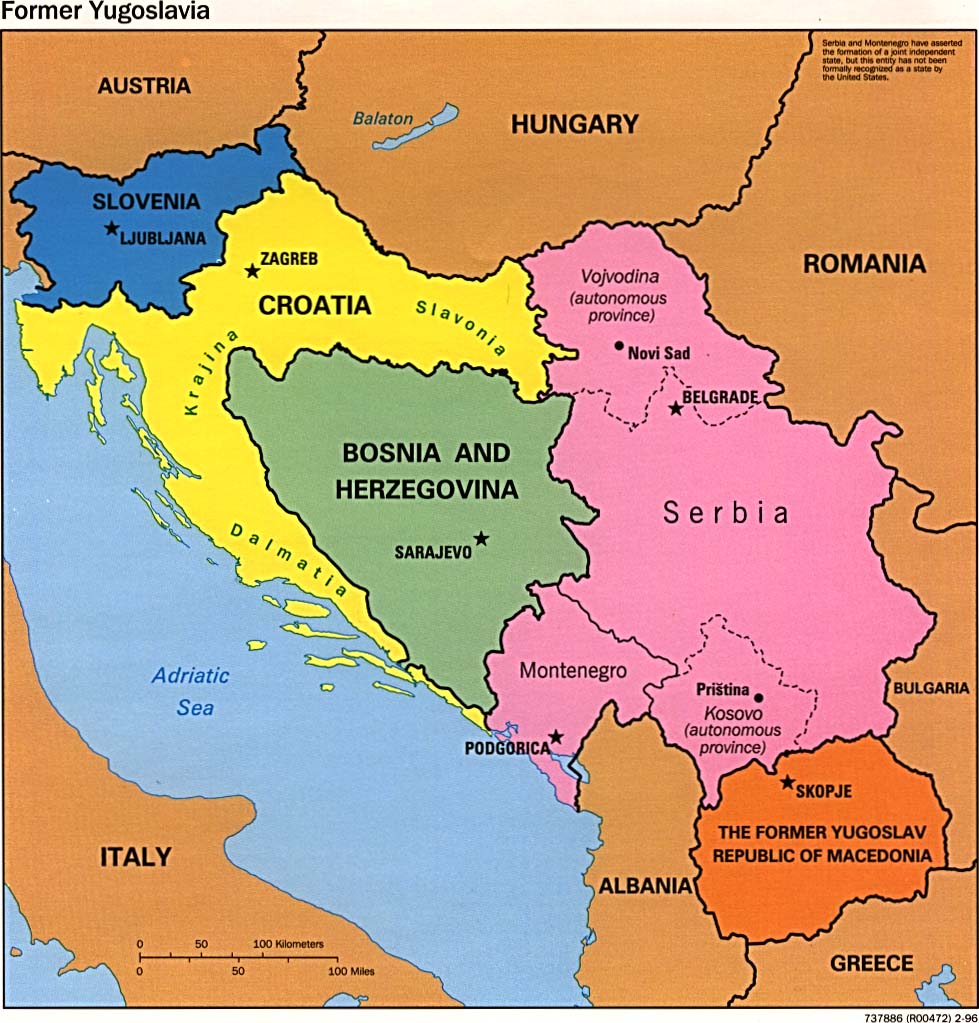
    Titoism V: Freedom and Tyranny – Interviews with Former Yugoslavs – Balkan History Sep 17, 2017
    Show notes

    http://media.blubrry.com/deadideas/ia600807.us.archive.org/10/items/DeadIdeas58TitoismVFreedomAndTyrannyInterviewsWithFormerYugoslavs/Dead%20Ideas%2058%20Titoism%20V%20Freedom%20and%20Tyranny%20Interviews%20with%20Former%20Yugoslavs.mp3

    Today we hear from three former Yugoslavs about their stories of what life was like under Tito. Also, the winner of our Who Should Play Tito in a Hollywood Movie contest is announced!

    Be sure to support the show at www.patreon.com/deadideaspod to get your portrait drawn!

    Become our patron on Patreon at www.patreon.com/deadideaspod

    Time/place: Southeast Europe, 1945-1980 CE

    Dead Idea: Titoism

    For a video of the mercury mines at Idrija, Slovenia, go here

    Click to view slideshow.

    Slovene lands mostly covered by what is labeled Carniola and Gorizia-Gradisca in far northwest

    Main Sources

    Biography International. (1998, Sep 2). “Josip Broz Tito: The Rebel Communist.” Biography International. Retrieved July 14, 2017, from: https://www.youtube.com/watch?v=pAq5dBBuiD4&t=313s

    CIA. (1957). “Titoism and Soviet Communism: An Analysis and Comparison of Theory and Practice.” Declassified in Part, Sanitized. Retrieved July 14, 2017, from: https://www.cia.gov/library/readingroom/docs/CIA-RDP80T00246A073800530001-4.pdf

    Diljas, M. (1980). Tito: The Story from the Inside. Kojic, V., and Hayes, R., Trans. New York: Harcourt Brace.

    Drnovsek, M. (n.d.). “The Causes for Emigration of Slovenes in the Last Two Centuries.” The Slovenian. Retrieved July 11, 2017, from: http://www.theslovenian.com/articles/drnovsek.htm

    Enrico, S. (n.d.). “Boxing Arena Sound.” SoundBible. Sound clip used according to Creative Commons Attribution 3.0 License. Retrieved August 1, 2017, from: http://soundbible.com/1559-Boxing-Arena-Sound.html

    Fine. J. V. A. (2007). “Strongmen Can Be Beneficial: The Exceptional Case of Josip Broz Tito.” In: Fischer, B., Ed. (2007). Balkan Strongmen: Dictators and Authoritarian Rulers of Southeast Europe. West Lafayette, IA: Purdue University press.

    Fischer, B., Ed. (2007). Balkan Strongmen: Dictators and Authoritarian Rulers of Southeast Europe. West Lafayette, IA: Purdue University press.

    Flaherty, D. (2003, May). “Self-management and Requirements for Social Property: Lessons from Yugoslavia.” In: The Work of Karl Marx and the Challenges of the 21st Century Conference held in Havana.

    Retrieved July 14, 2017, from: http://www.nodo50.org/cubasigloXXI/congreso/flaherty_15abr03.pdf

    Horvat, B., Markovic, M, Supek, R. (1975). Self-governing Socialism, Vol. 1 & 2. New York: International Arts and Sciences Press, Inc.

    Kardelj, E. (1956, July). “Evolution in Jugoslavia.” Foreign Affairs: p. 580-602.

    Laibach. (n.d.). “Biography.” Laibach. Retrieved July 14, 2017, from: http://www.laibach.org/bio/

    Mrak, M., Rojeć, M., and Silva-Jáuregui, C. (2004). Slovenia: From Yugoslavia to the European Union. Washington, D.C.: World Bank.

    NSK State. (n.d.). NSK State. Retrieved July 14, 2017, from: https://passport.nsk.si/en/

    Patterson, P. H. (2013). “Bought and Sold: Living and Losing the Good Life in Socialist Yugoslavia.” Youtube. Retrieved July 14, 2017: https://www.youtube.com/watch?v=GbjAt9Z-pFo

    Plut-Pregelj, L., and Rogel, C. (1996). Historical Dictionary of Slovenia. Lanham, MD: Scarecrow Press.

    Repe, Božo. (1992). Das Besondere am “Titoismus” – seine Gewaltherrschaft und sein Zerfall. Aufrisse, 13, 3 “Flammenzeichen Jugoslawien”.

    RSFSR. (2016). “Josip Broz Tito’s Funeral 8 May 1980 Yugoslavia – Anthem & The Internationale.” Youtube. Retrieved July 14, 2017, from: https://www.youtube.com/watch?v=J4EmqgwRmtk

    Savli, J., Bor, M., Tomazić, I. (1996). Veneti: First Builders of European Community: Tracing the History and Language of the Early Ancestors of the Slovenes. Anton Skerbinc.

    Slovenski Magazin. (2017, May 19). Video. RTV 4. Retrieved July 14, 2017, from: http://4d.rtvslo.si/arhiv/slovenski-magazin/174472394

    Tito, J. B. (1979). Non-alignment: The Conscience and Future of Mankind. Belgrade: Socialist Thought and Practice.

    Tito, J. B. (2013). The Selected Works of Josip Broz Tito. New York: Prism Key Press.

    Velikonja, M. (2008). Titostalgia: A Study of Nostalgia for Josip Broz. Vuković, O., Trans. Ljubljana: Peace Institute.

    Zukin, S. (1975). Beyond Marx and Tito: Theory and Practice in Yugoslav Socialism. New York: Cambridge University press.

    Maps, pics, references, and more at http://www.deadideas.net. Music and graphic design by Rachel Westhoff.

    Dead Ideas: The History of Extinct Thoughts and Practices is made with Jetpack Podcast. Full show notes and every episode at https://deadideas.net/


    Cuneiform VIII Finale: Ghost in the Tablet – Gilgamesh/Ghost in the Shell Mashup – Sumerian History Sep 10, 2017
    Show notes

    http://media.blubrry.com/deadideas/ia800600.us.archive.org/33/items/DeadIdeas57CuneiformVIIIGhostInTheTablet/Dead%20Ideas%2057%20Cuneiform%20VIII%20Ghost%20in%20the%20Tablet.mp3

    This is our grand finale! Take out your holographic tablets and laser styluses, because we’re mashing up the most ancient with the most modern: the Epic of Gilgamesh with the 1995 classic anime Ghost in the Shell! Featuring a haunting soundtrack by Belgian industrial band Militia.

    Be sure to support the show at www.patreon.com/deadideaspod to get your portrait drawn!

    Become our patron on Patreon at www.patreon.com/deadideaspod

    Co-hosts: Andre Solo

    Time/place: Composed in final form in Ancient Mesopotamia, c. 1100 BCE

    Dead Idea: Cuneiform

    Ghost in the Shell, directed by Mamoru Oshii, 1995

    A Map of Ancient Sumer, c. 3000 BCE, by Adam McKithern

    Click to view slideshow.

    Main Sources

    Bahrani, Z. (2001). Women of Babylon: Gender and Representation in Mesopotamia. New York: Routledge.

    Baruch, Book of. 6:43. Douay-Rheims 1899 American Edition. Retrieved 6-20-17 from: https://www.biblegateway.com/verse/en/Baruch%206%3A43

    Bertman, S. (2005). Handbook of Life in Ancient Mesopotamia. New York: Oxford University Press.

    Black, J., Cunningham, G., Robson, E., and Zólyomi, G. (2004). The Literature of Ancient Sumer. New York: Oxford University Press. – “A Supervisor’s Advice to a Young Scribe”

    Bottéro, J. (2001). Everyday Life in Ancient Mesopotamia. Edinburgh: Edinburgh University Press.

    Bottéro, J. (2004). The Oldest Cuisine in the World: Cooking in Mesopotamia. Chicago: University of Chicago Press.

    Budin, S. (2006). “Sacred Prostitution in the First Person.” In: Faraone, C. A. & McClure, L. K. (2006). Prostitutes and Courtesans in the Ancient World. Madison, WI: University of Wisconsin Press.

    Bullough, V., and Bullough, B. (1987). Women and Prostitution: A Social History. New York: Prometheus Books.

    Chalcier, P. (2011). “Cuneiform Culture’s Last Guardians.” In: Radner, K., and Robson, E. (2011). The Oxford Handbook of Cuneiform Culture. New York: Oxford.

    Civil, M., Trans. “Hymn to Ninkasi.” Retrieved May 14th, 2017, from: http://www.piney.com/BabNinkasi.html

    Faraone, C. A. & McClure, L. K. (2006). Prostitutes and Courtesans in the Ancient World. Madison, WI: University of Wisconsin Press.

    Fink, S. (2013). “The Genealogy of Gilgamesh.” Classica et Christiana, 8(1): pp. 81-107.

    Fisher, D. S. (2008). Representations of the Poor in The Poor Man of Nippur and The Eloquent Peasant. Thesis. Nashville, Tennessee: Vanderbilt University.

    Foster, B. (1982). “Administration and Use of Institutional Land in Sargonic Sumer.” Copenhagen Studies in Assyriology, Vol. 9. Copenhagen.

    George, A., Trans. (1999). The Epic of Gilgamesh: The Babylonian Epic Poem and Other Texts in Akkadian and Sumerian. New York: Penguin.

    Glassner, J. (2003). The Invention of Cuneiform. Baltimore, MD: Johns Hopkins University Press.

    Harris, S. (2010, Sep. 16). “Prostitutes of God.” Vice. Retrieved 6-20-17 from: https://www.vice.com/en_us/article/prostitutes-of-god-episode-1

    Herodotus. (1890). The History of Herodotus. Macaulay, G. C., Trans. Retrieved 6-20-17 from: http://www.sacred-texts.com/cla/hh/hh1190.htm

    Jacobsen, T. (1987). The Harps That Once…: Sumerian Poetry in Translation. New Haven, CT: Yale University Press.

    Kramer, S. N. (1963). The Sumerians: Their History, Culture, and Character. Chicago: University of Chicago Press.

    Lafront, B. (2001). “The Ordeal.” In: Bottéro, J. (2001). Everyday Life in Ancient Mesopotamia. Edinburgh: Edinburgh University Press.

    Lahtinen, S. (n.d.). “The Naditum as Businesswoman: The Economic Role of the Naditum in Old Babylonian Sippur.” Thesis. Uppsala University. Retrieved May 17, 2017, from: https://www.academia.edu/354008/The_Old-Babylonian_naditu_as_businesswoman?auto=download

    Nemet-Nejat, K. R. (1998). Daily Life in Ancient Mesopotamia. Westport, CT: Greenwood Press.

    “Proverbs, Collection 1.” The Electronic Text Corpus of Sumerian Literature. Retrieved May 27, 2017, from: http://etcsl.orinst.ox.ac.uk/proverbs/t.6.1.01.html

    Radner, K., and Robson, E. (2011). The Oxford Handbook of Cuneiform Culture. New York: Oxford.

    Roth, M. T. (2006). “Marriage, Divorce, and the Prostitute in Ancient Mesopotamia.” In: Faraone, C. A. & McClure, L. K. (2006). Prostitutes and Courtesans in the Ancient World. Madison, WI: University of Wisconsin Press.

    Silver, M. (n.d.). “Temple/Sacred Prostitution in Ancient Mesopotamia Revisited: Religion in the Economy.” Retrieved May 29, 2017, from: https://www.academia.edu/2360254/Temple_Sacred_Prostitution_in_Ancient_Mesopotamia_Revisited

    Stone, E. C. (1982). “The Social Role of the Naditu Women in Old Babylonian Nippur.” Journal of the Economic and Social History of the Orient, 15(1): 50-70.

    Superdrug Online Doctors. (n.d.). “Perceptions of Perfection.” Superdrug Online Doctors. Retrieved 6-20-17 from: https://onlinedoctor.superdrug.com/perceptions-of-perfection/?utm_source=affiliatewindow&utm_medium=affiliate

    Visicato, G. (2000). The Power and the Writing: Early Scribes of Mesopotamia. Bethesda, MD: CDL Press.

    Maps, pics, references, and more at http://www.deadideas.net. Music and graphic design by Rachel Westhoff. Map by Adam McKithern.

    Dead Ideas: The History of Extinct Thoughts and Practices is made with Jetpack Podcast. Full show notes and every episode at https://deadideas.net/


    F*** You, History Channel! – One-Year Anniversary Special Sep 03, 2017
    Show notes

    https://media.blubrry.com/deadideas/ia801507.us.archive.org/8/items/DeadIdeas56FYouHistoryChannelOneYearAnniversary_201709/Dead%20Ideas%2056%20F%20You%20History%20Channel%20One%20Year%20Anniversary.mp3

    Presenting… the history of the History Channel! This is our one-year anniversary special, so we’re doing something special: a *should be* dead idea – the History Channel! Also, a huge thank you to all of you supporters out there. Enjoy!

    Be sure to support the show at www.patreon.com/deadideaspod to get your portrait drawn!

    Become our patron on Patreon at www.patreon.com/deadideaspod

    Click to view slideshow.

    Main Sources

    “History TV Schedule.” (n.d.) History.com. Retrieved Sep. 1, 2017, from: http://www.history.com/schedule

    “History (U.S. TV Network).” (n.d.). Wikipedia.com. (for some reason, the History Channel did not inspire me to find only credible sources!) Retrieved Sep. 1, 2017: https://en.wikipedia.org/wiki/History_(U.S._TV_network)

    “Hitler Youth Rally Speech – Nuremberg 1935.” (2014). Youtube.com. Retrieved Sep. 1, 2017, from: https://www.youtube.com/watch?v=YnHeX4OHIqo

    Kutler, S. I. (2004). “Why the History Channel Had to Apologize for the Documentary that Blamed LBJ for JFK’s Murder.” History News Network. Retrieved Sep. 1, 2017, from: http://historynewsnetwork.org/article/4504

    Lockwood, B. (2011, Oct. 17). “High Ratings Aside, Where’s the History on the History Channel?” Forbes.com. Retreived Sep. 1, 2017, from: https://www.forbes.com/sites/bradlockwood/2011/10/17/high-ratings-aside-wheres-the-history-on-history/2/#7c0ee27a73d0

    Schone, M. (1997, May 8). “Media Circus: All Hitler, All the Time.” Salon.com. Retrieved Sep. 1, 2017, from: http://www.salon.com/1997/05/08/media_90/

    Switek, B. (2012, May 11). “The Idiocy, Fabrications, and Lies of Ancient Aliens.” Smithsonian.com. Retrieved Sep. 1, 2017, from: http://www.smithsonianmag.com/science-nature/the-idiocy-fabrications-and-lies-of-ancient-aliens-86294030/?no-ist

    Pics, references, and more at http://www.deadideas.net. Music and graphic design by Rachel Westhoff.

    Dead Ideas: The History of Extinct Thoughts and Practices is made with Jetpack Podcast. Full show notes and every episode at https://deadideas.net/


    Cuneiform VII: Temple Prostitutes – Fact or Fiction? – Sumerian History Aug 27, 2017
    Show notes

    http://media.blubrry.com/deadideas/ia600800.us.archive.org/4/items/DeadIdeas55CuneiformVIITempleProstitutesFactOrFiction/Dead%20Ideas%2055%20Cuneiform%20VII%20Temple%20Prostitutes%20Fact%20or%20Fiction.mp3

    Was the famous/infamous institution of temple prostitution in ancient Mesopotamia ever really a thing? And if so, what was that like?

    Be sure to support the show at www.patreon.com/deadideaspod to get your portrait drawn!

    Become our patron on Patreon at www.patreon.com/deadideaspod

    Time/place: Ancient Mesopotamia, c. 3000 BCE – 300 CE

    Dead Idea: Cuneiform

    Click to view slideshow.

    A Map of Ancient Sumer, c. 3000 BCE, by Adam McKithern

    Click to view slideshow.

    Main Sources

    Bahrani, Z. (2001). Women of Babylon: Gender and Representation in Mesopotamia. New York: Routledge.

    Baruch, Book of. 6:43. Douay-Rheims 1899 American Edition. Retrieved 6-20-17 from: https://www.biblegateway.com/verse/en/Baruch%206%3A43

    Bertman, S. (2005). Handbook of Life in Ancient Mesopotamia. New York: Oxford University Press.

    Black, J., Cunningham, G., Robson, E., and Zólyomi, G. (2004). The Literature of Ancient Sumer. New York: Oxford University Press. – “A Supervisor’s Advice to a Young Scribe”

    Bottéro, J. (2001). Everyday Life in Ancient Mesopotamia. Edinburgh: Edinburgh University Press.

    Bottéro, J. (2004). The Oldest Cuisine in the World: Cooking in Mesopotamia. Chicago: University of Chicago Press.

    Budin, S. (2006). “Sacred Prostitution in the First Person.” In: Faraone, C. A. & McClure, L. K. (2006). Prostitutes and Courtesans in the Ancient World. Madison, WI: University of Wisconsin Press.

    Bullough, V., and Bullough, B. (1987). Women and Prostitution: A Social History. New York: Prometheus Books.

    Chalcier, P. (2011). “Cuneiform Culture’s Last Guardians.” In: Radner, K., and Robson, E. (2011). The Oxford Handbook of Cuneiform Culture. New York: Oxford.

    Civil, M., Trans. “Hymn to Ninkasi.” Retrieved May 14th, 2017, from: http://www.piney.com/BabNinkasi.html

    Faraone, C. A. & McClure, L. K. (2006). Prostitutes and Courtesans in the Ancient World. Madison, WI: University of Wisconsin Press.

    Fink, S. (2013). “The Genealogy of Gilgamesh.” Classica et Christiana, 8(1): pp. 81-107.

    Fisher, D. S. (2008). Representations of the Poor in The Poor Man of Nippur and The Eloquent Peasant. Thesis. Nashville, Tennessee: Vanderbilt University.

    Foster, B. (1982). “Administration and Use of Institutional Land in Sargonic Sumer.” Copenhagen Studies in Assyriology, Vol. 9. Copenhagen.

    George, A., Trans. (1999). The Epic of Gilgamesh: The Babylonian Epic Poem and Other Texts in Akkadian and Sumerian. New York: Penguin.

    Glassner, J. (2003). The Invention of Cuneiform. Baltimore, MD: Johns Hopkins University Press.

    Harris, S. (2010, Sep. 16). “Prostitutes of God.” Vice. Retrieved 6-20-17 from: https://www.vice.com/en_us/article/prostitutes-of-god-episode-1

    Herodotus. (1890). The History of Herodotus. Macaulay, G. C., Trans. Retrieved 6-20-17 from: http://www.sacred-texts.com/cla/hh/hh1190.htm

    Jacobsen, T. (1987). The Harps That Once…: Sumerian Poetry in Translation. New Haven, CT: Yale University Press.

    Kramer, S. N. (1963). The Sumerians: Their History, Culture, and Character. Chicago: University of Chicago Press.

    Lafront, B. (2001). “The Ordeal.” In: Bottéro, J. (2001). Everyday Life in Ancient Mesopotamia. Edinburgh: Edinburgh University Press.

    Lahtinen, S. (n.d.). “The Naditum as Businesswoman: The Economic Role of the Naditum in Old Babylonian Sippur.” Thesis. Uppsala University. Retrieved May 17, 2017, from: https://www.academia.edu/354008/The_Old-Babylonian_naditu_as_businesswoman?auto=download

    Nemet-Nejat, K. R. (1998). Daily Life in Ancient Mesopotamia. Westport, CT: Greenwood Press.

    “Proverbs, Collection 1.” The Electronic Text Corpus of Sumerian Literature. Retrieved May 27, 2017, from: http://etcsl.orinst.ox.ac.uk/proverbs/t.6.1.01.html

    Radner, K., and Robson, E. (2011). The Oxford Handbook of Cuneiform Culture. New York: Oxford.

    Roth, M. T. (2006). “Marriage, Divorce, and the Prostitute in Ancient Mesopotamia.” In: Faraone, C. A. & McClure, L. K. (2006). Prostitutes and Courtesans in the Ancient World. Madison, WI: University of Wisconsin Press.

    Silver, M. (n.d.). “Temple/Sacred Prostitution in Ancient Mesopotamia Revisited: Religion in the Economy.” Retrieved May 29, 2017, from: https://www.academia.edu/2360254/Temple_Sacred_Prostitution_in_Ancient_Mesopotamia_Revisited

    Stone, E. C. (1982). “The Social Role of the Naditu Women in Old Babylonian Nippur.” Journal of the Economic and Social History of the Orient, 15(1): 50-70.

    Superdrug Online Doctors. (n.d.). “Perceptions of Perfection.” Superdrug Online Doctors. Retrieved 6-20-17 from: https://onlinedoctor.superdrug.com/perceptions-of-perfection/?utm_source=affiliatewindow&utm_medium=affiliate

    Visicato, G. (2000). The Power and the Writing: Early Scribes of Mesopotamia. Bethesda, MD: CDL Press.

    Maps, pics, references, and more at http://www.deadideas.net. Music and graphic design by Rachel Westhoff. Map by Adam McKithern.

    Dead Ideas: The History of Extinct Thoughts and Practices is made with Jetpack Podcast. Full show notes and every episode at https://deadideas.net/


    Titoism IV: Tito – Hero or Anti-hero? – Balkan History Aug 20, 2017
    Show notes

    http://media.blubrry.com/deadideas/ia800803.us.archive.org/32/items/DeadIdeas54TitoismIVTitoHeroOrAntiHero/Dead%20Ideas%2054%20Titoism%20IV%20Tito%20Hero%20or%20Anti-hero.mp3

    Today we look at Tito’s post-war regime in which the ideas of Titoism take shape, namely workers’ self-management and political non-alignment. And we ask: was Tito ultimately a hero or an anti-hero?

    Be sure to support the show at www.patreon.com/deadideaspod to get your portrait drawn!

    Become our patron on Patreon at www.patreon.com/deadideaspod

    Time/place: Southeast Europe, 1945-1980 CE

    Dead Idea: Titoism

    For a video of the mercury mines at Idrija, Slovenia, go here

    Click to view slideshow.

    Slovene lands mostly covered by what is labeled Carniola and Gorizia-Gradisca in far northwest

    Main Sources

    Biography International. (1998, Sep 2). “Josip Broz Tito: The Rebel Communist.” Biography International. Retrieved July 14, 2017, from: https://www.youtube.com/watch?v=pAq5dBBuiD4&t=313s

    CIA. (1957). “Titoism and Soviet Communism: An Analysis and Comparison of Theory and Practice.” Declassified in Part, Sanitized. Retrieved July 14, 2017, from: https://www.cia.gov/library/readingroom/docs/CIA-RDP80T00246A073800530001-4.pdf

    Diljas, M. (1980). Tito: The Story from the Inside. Kojic, V., and Hayes, R., Trans. New York: Harcourt Brace.

    Drnovsek, M. (n.d.). “The Causes for Emigration of Slovenes in the Last Two Centuries.” The Slovenian. Retrieved July 11, 2017, from: http://www.theslovenian.com/articles/drnovsek.htm

    Enrico, S. (n.d.). “Boxing Arena Sound.” SoundBible. Sound clip used according to Creative Commons Attribution 3.0 License. Retrieved August 1, 2017, from: http://soundbible.com/1559-Boxing-Arena-Sound.html

    Fine. J. V. A. (2007). “Strongmen Can Be Beneficial: The Exceptional Case of Josip Broz Tito.” In: Fischer, B., Ed. (2007). Balkan Strongmen: Dictators and Authoritarian Rulers of Southeast Europe. West Lafayette, IA: Purdue University press.

    Fischer, B., Ed. (2007). Balkan Strongmen: Dictators and Authoritarian Rulers of Southeast Europe. West Lafayette, IA: Purdue University press.

    Flaherty, D. (2003, May). “Self-management and Requirements for Social Property: Lessons from Yugoslavia.” In: The Work of Karl Marx and the Challenges of the 21st Century Conference held in Havana.

    Retrieved July 14, 2017, from: http://www.nodo50.org/cubasigloXXI/congreso/flaherty_15abr03.pdf

    Horvat, B., Markovic, M, Supek, R. (1975). Self-governing Socialism, Vol. 1 & 2. New York: International Arts and Sciences Press, Inc.

    Kardelj, E. (1956, July). “Evolution in Jugoslavia.” Foreign Affairs: p. 580-602.

    Laibach. (n.d.). “Biography.” Laibach. Retrieved July 14, 2017, from: http://www.laibach.org/bio/

    Mrak, M., Rojeć, M., and Silva-Jáuregui, C. (2004). Slovenia: From Yugoslavia to the European Union. Washington, D.C.: World Bank.

    NSK State. (n.d.). NSK State. Retrieved July 14, 2017, from: https://passport.nsk.si/en/

    Patterson, P. H. (2013). “Bought and Sold: Living and Losing the Good Life in Socialist Yugoslavia.” Youtube. Retrieved July 14, 2017: https://www.youtube.com/watch?v=GbjAt9Z-pFo

    Plut-Pregelj, L., and Rogel, C. (1996). Historical Dictionary of Slovenia. Lanham, MD: Scarecrow Press.

    Repe, Božo. (1992). Das Besondere am “Titoismus” – seine Gewaltherrschaft und sein Zerfall. Aufrisse, 13, 3 “Flammenzeichen Jugoslawien”.

    RSFSR. (2016). “Josip Broz Tito’s Funeral 8 May 1980 Yugoslavia – Anthem & The Internationale.” Youtube. Retrieved July 14, 2017, from: https://www.youtube.com/watch?v=J4EmqgwRmtk

    Savli, J., Bor, M., Tomazić, I. (1996). Veneti: First Builders of European Community: Tracing the History and Language of the Early Ancestors of the Slovenes. Anton Skerbinc.

    Slovenski Magazin. (2017, May 19). Video. RTV 4. Retrieved July 14, 2017, from: http://4d.rtvslo.si/arhiv/slovenski-magazin/174472394

    Tito, J. B. (1979). Non-alignment: The Conscience and Future of Mankind. Belgrade: Socialist Thought and Practice.

    Tito, J. B. (2013). The Selected Works of Josip Broz Tito. New York: Prism Key Press.

    Velikonja, M. (2008). Titostalgia: A Study of Nostalgia for Josip Broz. Vuković, O., Trans. Ljubljana: Peace Institute.

    Zukin, S. (1975). Beyond Marx and Tito: Theory and Practice in Yugoslav Socialism. New York: Cambridge University press.

    Maps, pics, references, and more at http://www.deadideas.net. Music and graphic design by Rachel Westhoff.

    Dead Ideas: The History of Extinct Thoughts and Practices is made with Jetpack Podcast. Full show notes and every episode at https://deadideas.net/


    Cuneiform VI: Business Nuns – The Naditum of Ancient Mesopotamia – Sumerian History Aug 13, 2017
    Show notes

    http://media.blubrry.com/deadideas/ia800809.us.archive.org/22/items/DeadIdeas53CuneiformVIBusinessNuns/Dead%20Ideas%2053%20Cuneiform%20VI%20Business%20Nuns.mp3

    At last, it’s the business nuns? (wait… what?!) That’s right – there was a class of nun-like religious devotees who apparently wheeled and dealed like they were trying out for The Apprentice!

    Be sure to support the show at www.patreon.com/deadideaspod to get your portrait drawn!

    Become our patron on Patreon at www.patreon.com/deadideaspod

    Co-hosts: Nick, Anna, and Rachel

    Time/place: Ancient Sumer, c. 3000 BCE

    Dead Idea: Cuneiform

    A Map of Ancient Sumer, c. 3000 BCE, by Adam McKithern

    Click to view slideshow.

    Main Sources

    Bahrani, Z. (2001). Women of Babylon: Gender and Representation in Mesopotamia. New York: Routledge.

    Baruch, Book of. 6:43. Douay-Rheims 1899 American Edition. Retrieved 6-20-17 from: https://www.biblegateway.com/verse/en/Baruch%206%3A43

    Bertman, S. (2005). Handbook of Life in Ancient Mesopotamia. New York: Oxford University Press.

    Black, J., Cunningham, G., Robson, E., and Zólyomi, G. (2004). The Literature of Ancient Sumer. New York: Oxford University Press. – “A Supervisor’s Advice to a Young Scribe”

    Bottéro, J. (2001). Everyday Life in Ancient Mesopotamia. Edinburgh: Edinburgh University Press.

    Bottéro, J. (2004). The Oldest Cuisine in the World: Cooking in Mesopotamia. Chicago: University of Chicago Press.

    Budin, S. (2006). “Sacred Prostitution in the First Person.” In: Faraone, C. A. & McClure, L. K. (2006). Prostitutes and Courtesans in the Ancient World. Madison, WI: University of Wisconsin Press.

    Bullough, V., and Bullough, B. (1987). Women and Prostitution: A Social History. New York: Prometheus Books.

    Chalcier, P. (2011). “Cuneiform Culture’s Last Guardians.” In: Radner, K., and Robson, E. (2011). The Oxford Handbook of Cuneiform Culture. New York: Oxford.

    Civil, M., Trans. “Hymn to Ninkasi.” Retrieved May 14th, 2017, from: http://www.piney.com/BabNinkasi.html

    Faraone, C. A. & McClure, L. K. (2006). Prostitutes and Courtesans in the Ancient World. Madison, WI: University of Wisconsin Press.

    Fink, S. (2013). “The Genealogy of Gilgamesh.” Classica et Christiana, 8(1): pp. 81-107.

    Fisher, D. S. (2008). Representations of the Poor in The Poor Man of Nippur and The Eloquent Peasant. Thesis. Nashville, Tennessee: Vanderbilt University.

    Foster, B. (1982). “Administration and Use of Institutional Land in Sargonic Sumer.” Copenhagen Studies in Assyriology, Vol. 9. Copenhagen.

    George, A., Trans. (1999). The Epic of Gilgamesh: The Babylonian Epic Poem and Other Texts in Akkadian and Sumerian. New York: Penguin.

    Glassner, J. (2003). The Invention of Cuneiform. Baltimore, MD: Johns Hopkins University Press.

    Harris, S. (2010, Sep. 16). “Prostitutes of God.” Vice. Retrieved 6-20-17 from: https://www.vice.com/en_us/article/prostitutes-of-god-episode-1

    Herodotus. (1890). The History of Herodotus. Macaulay, G. C., Trans. Retrieved 6-20-17 from: http://www.sacred-texts.com/cla/hh/hh1190.htm

    Jacobsen, T. (1987). The Harps That Once…: Sumerian Poetry in Translation. New Haven, CT: Yale University Press.

    Kramer, S. N. (1963). The Sumerians: Their History, Culture, and Character. Chicago: University of Chicago Press.

    Lafront, B. (2001). “The Ordeal.” In: Bottéro, J. (2001). Everyday Life in Ancient Mesopotamia. Edinburgh: Edinburgh University Press.

    Lahtinen, S. (n.d.). “The Naditum as Businesswoman: The Economic Role of the Naditum in Old Babylonian Sippur.” Thesis. Uppsala University. Retrieved May 17, 2017, from: https://www.academia.edu/354008/The_Old-Babylonian_naditu_as_businesswoman?auto=download

    Nemet-Nejat, K. R. (1998). Daily Life in Ancient Mesopotamia. Westport, CT: Greenwood Press.

    “Proverbs, Collection 1.” The Electronic Text Corpus of Sumerian Literature. Retrieved May 27, 2017, from: http://etcsl.orinst.ox.ac.uk/proverbs/t.6.1.01.html

    Radner, K., and Robson, E. (2011). The Oxford Handbook of Cuneiform Culture. New York: Oxford.

    Roth, M. T. (2006). “Marriage, Divorce, and the Prostitute in Ancient Mesopotamia.” In: Faraone, C. A. & McClure, L. K. (2006). Prostitutes and Courtesans in the Ancient World. Madison, WI: University of Wisconsin Press.

    Silver, M. (n.d.). “Temple/Sacred Prostitution in Ancient Mesopotamia Revisited: Religion in the Economy.” Retrieved May 29, 2017, from: https://www.academia.edu/2360254/Temple_Sacred_Prostitution_in_Ancient_Mesopotamia_Revisited

    Stone, E. C. (1982). “The Social Role of the Naditu Women in Old Babylonian Nippur.” Journal of the Economic and Social History of the Orient, 15(1): 50-70.

    Superdrug Online Doctors. (n.d.). “Perceptions of Perfection.” Superdrug Online Doctors. Retrieved 6-20-17 from: https://onlinedoctor.superdrug.com/perceptions-of-perfection/?utm_source=affiliatewindow&utm_medium=affiliate

    Visicato, G. (2000). The Power and the Writing: Early Scribes of Mesopotamia. Bethesda, MD: CDL Press.

    Maps, pics, references, and more at http://www.deadideas.net. Music and graphic design by Rachel Westhoff. Map by Adam McKithern.

    Dead Ideas: The History of Extinct Thoughts and Practices is made with Jetpack Podcast. Full show notes and every episode at https://deadideas.net/


    Titoism III: The Tito-Stalin Split (Feat. Kristaps Andrejsons) – Balkan History Aug 06, 2017
    Show notes

    http://media.blubrry.com/deadideas/ia800803.us.archive.org/16/items/DeadIdeas52TitoismIIITheTitoStalinSplitFeatKristaps/Dead%20Ideas%2052%20Titoism%20III%20The%20Tito-Stalin%20Split%20Feat%20Kristaps.mp3

    This week you get TWO episodes! This is our first-ever crossover episode going on both Dead Ideas *and* Eastern Border. Kristaps and I talk about the split between Tito and Stalin like it’s a heavyweight boxing match!

    Be sure to support both shows at http://www.patreon.com!

    Sound Effects Credits:

    http://soundbible.com/1559-Boxing-Arena-Sound.html

    Become our patron on Patreon at www.patreon.com/deadideaspod

    Time/place: Yugoslavia, 1941-1945 CE

    Dead Idea: Titoism

    Co-hosts: B. T. Newberg and Kristaps Andrejsons

    Slovene lands mostly covered by what is labeled Carniola and Gorizia-Gradisca in far northwest

    Click to view slideshow.

    Main Sources

    Biography International. (1998, Sep 2). “Josip Broz Tito: The Rebel Communist.” Biography International. Retrieved July 14, 2017, from: https://www.youtube.com/watch?v=pAq5dBBuiD4&t=313s

    CIA. (1957). “Titoism and Soviet Communism: An Analysis and Comparison of Theory and Practice.” Declassified in Part, Sanitized. Retrieved July 14, 2017, from: https://www.cia.gov/library/readingroom/docs/CIA-RDP80T00246A073800530001-4.pdf

    Diljas, M. (1980). Tito: The Story from the Inside. Kojic, V., and Hayes, R., Trans. New York: Harcourt Brace.

    Drnovsek, M. (n.d.). “The Causes for Emigration of Slovenes in the Last Two Centuries.” The Slovenian. Retrieved July 11, 2017, from: http://www.theslovenian.com/articles/drnovsek.htm

    Enrico, S. (n.d.). “Boxing Arena Sound.” SoundBible. Sound clip used according to Creative Commons Attribution 3.0 License. Retrieved August 1, 2017, from: http://soundbible.com/1559-Boxing-Arena-Sound.html

    Fine. J. V. A. (2007). “Strongmen Can Be Beneficial: The Exceptional Case of Josip Broz Tito.” In: Fischer, B., Ed. (2007). Balkan Strongmen: Dictators and Authoritarian Rulers of Southeast Europe. West Lafayette, IA: Purdue University press.

    Fischer, B., Ed. (2007). Balkan Strongmen: Dictators and Authoritarian Rulers of Southeast Europe. West Lafayette, IA: Purdue University press.

    Flaherty, D. (2003, May). “Self-management and Requirements for Social Property: Lessons from Yugoslavia.” In: The Work of Karl Marx and the Challenges of the 21st Century Conference held in Havana.

    Retrieved July 14, 2017, from: http://www.nodo50.org/cubasigloXXI/congreso/flaherty_15abr03.pdf

    Horvat, B., Markovic, M, Supek, R. (1975). Self-governing Socialism, Vol. 1 & 2. New York: International Arts and Sciences Press, Inc.

    Kardelj, E. (1956, July). “Evolution in Jugoslavia.” Foreign Affairs: p. 580-602.

    Laibach. (n.d.). “Biography.” Laibach. Retrieved July 14, 2017, from: http://www.laibach.org/bio/

    Mrak, M., Rojeć, M., and Silva-Jáuregui, C. (2004). Slovenia: From Yugoslavia to the European Union. Washington, D.C.: World Bank.

    NSK State. (n.d.). NSK State. Retrieved July 14, 2017, from: https://passport.nsk.si/en/

    Patterson, P. H. (2013). “Bought and Sold: Living and Losing the Good Life in Socialist Yugoslavia.” Youtube. Retrieved July 14, 2017: https://www.youtube.com/watch?v=GbjAt9Z-pFo

    Plut-Pregelj, L., and Rogel, C. (1996). Historical Dictionary of Slovenia. Lanham, MD: Scarecrow Press.

    Repe, Božo. (1992). Das Besondere am “Titoismus” – seine Gewaltherrschaft und sein Zerfall. Aufrisse, 13, 3 “Flammenzeichen Jugoslawien”.

    RSFSR. (2016). “Josip Broz Tito’s Funeral 8 May 1980 Yugoslavia – Anthem & The Internationale.” Youtube. Retrieved July 14, 2017, from: https://www.youtube.com/watch?v=J4EmqgwRmtk

    Savli, J., Bor, M., Tomazić, I. (1996). Veneti: First Builders of European Community: Tracing the History and Language of the Early Ancestors of the Slovenes. Anton Skerbinc.

    Slovenski Magazin. (2017, May 19). Video. RTV 4. Retrieved July 14, 2017, from: http://4d.rtvslo.si/arhiv/slovenski-magazin/174472394

    Tito, J. B. (1979). Non-alignment: The Conscience and Future of Mankind. Belgrade: Socialist Thought and Practice.

    Tito, J. B. (2013). The Selected Works of Josip Broz Tito. New York: Prism Key Press.

    Velikonja, M. (2008). Titostalgia: A Study of Nostalgia for Josip Broz. Vuković, O., Trans. Ljubljana: Peace Institute.

    Zukin, S. (1975). Beyond Marx and Tito: Theory and Practice in Yugoslav Socialism. New York: Cambridge University press.

    Maps, pics, references, and more at http://www.deadideas.net. Music and graphic design by Rachel Westhoff.

    Dead Ideas: The History of Extinct Thoughts and Practices is made with Jetpack Podcast. Full show notes and every episode at https://deadideas.net/


    Titoism II: Tito – Bond or Bond Villain? – Balkan History Aug 06, 2017
    Show notes

    http://media.blubrry.com/deadideas/ia800809.us.archive.org/28/items/DeadIdeas51TitoismIITitoBondOrBondVillain/Dead%20Ideas%2051%20Titoism%20II%20Tito%20Bond%20or%20Bond%20Villain.mp3

    Was Tito more of a James Bond or a James Bond villain? A romantic hero, demonic villain, or both? That’s the question for today as we explore the early life of the man who would become the dictator of Yugoslavia, and who would later create the peculiar communist ideology called Titoism.

    Be sure to support the show at www.patreon.com/deadideaspod to get your portrait drawn!

    Become our patron on Patreon at www.patreon.com/deadideaspod

    Time/place: Southeast Europe, 1892-1945 CE

    Dead Idea: Titoism

    For a video of the mercury mines at Idrija, Slovenia, go here.

    Slovene lands mostly covered by what is labeled Carniola and Gorizia-Gradisca in far northwest

    Click to view slideshow.

    Main Sources

    Biography International. (1998, Sep 2). “Josip Broz Tito: The Rebel Communist.” Biography International. Retrieved July 14, 2017, from: https://www.youtube.com/watch?v=pAq5dBBuiD4&t=313s

    CIA. (1957). “Titoism and Soviet Communism: An Analysis and Comparison of Theory and Practice.” Declassified in Part, Sanitized. Retrieved July 14, 2017, from: https://www.cia.gov/library/readingroom/docs/CIA-RDP80T00246A073800530001-4.pdf

    Diljas, M. (1980). Tito: The Story from the Inside. Kojic, V., and Hayes, R., Trans. New York: Harcourt Brace.

    Drnovsek, M. (n.d.). “The Causes for Emigration of Slovenes in the Last Two Centuries.” The Slovenian. Retrieved July 11, 2017, from: http://www.theslovenian.com/articles/drnovsek.htm

    Enrico, S. (n.d.). “Boxing Arena Sound.” SoundBible. Sound clip used according to Creative Commons Attribution 3.0 License. Retrieved August 1, 2017, from: http://soundbible.com/1559-Boxing-Arena-Sound.html

    Fine. J. V. A. (2007). “Strongmen Can Be Beneficial: The Exceptional Case of Josip Broz Tito.” In: Fischer, B., Ed. (2007). Balkan Strongmen: Dictators and Authoritarian Rulers of Southeast Europe. West Lafayette, IA: Purdue University press.

    Fischer, B., Ed. (2007). Balkan Strongmen: Dictators and Authoritarian Rulers of Southeast Europe. West Lafayette, IA: Purdue University press.

    Flaherty, D. (2003, May). “Self-management and Requirements for Social Property: Lessons from Yugoslavia.” In: The Work of Karl Marx and the Challenges of the 21st Century Conference held in Havana.

    Retrieved July 14, 2017, from: http://www.nodo50.org/cubasigloXXI/congreso/flaherty_15abr03.pdf

    Horvat, B., Markovic, M, Supek, R. (1975). Self-governing Socialism, Vol. 1 & 2. New York: International Arts and Sciences Press, Inc.

    Kardelj, E. (1956, July). “Evolution in Jugoslavia.” Foreign Affairs: p. 580-602.

    Laibach. (n.d.). “Biography.” Laibach. Retrieved July 14, 2017, from: http://www.laibach.org/bio/

    Mrak, M., Rojeć, M., and Silva-Jáuregui, C. (2004). Slovenia: From Yugoslavia to the European Union. Washington, D.C.: World Bank.

    NSK State. (n.d.). NSK State. Retrieved July 14, 2017, from: https://passport.nsk.si/en/

    Patterson, P. H. (2013). “Bought and Sold: Living and Losing the Good Life in Socialist Yugoslavia.” Youtube. Retrieved July 14, 2017: https://www.youtube.com/watch?v=GbjAt9Z-pFo

    Plut-Pregelj, L., and Rogel, C. (1996). Historical Dictionary of Slovenia. Lanham, MD: Scarecrow Press.

    Repe, Božo. (1992). Das Besondere am “Titoismus” – seine Gewaltherrschaft und sein Zerfall. Aufrisse, 13, 3 “Flammenzeichen Jugoslawien”.

    RSFSR. (2016). “Josip Broz Tito’s Funeral 8 May 1980 Yugoslavia – Anthem & The Internationale.” Youtube. Retrieved July 14, 2017, from: https://www.youtube.com/watch?v=J4EmqgwRmtk

    Savli, J., Bor, M., Tomazić, I. (1996). Veneti: First Builders of European Community: Tracing the History and Language of the Early Ancestors of the Slovenes. Anton Skerbinc.

    Slovenski Magazin. (2017, May 19). Video. RTV 4. Retrieved July 14, 2017, from: http://4d.rtvslo.si/arhiv/slovenski-magazin/174472394

    Tito, J. B. (1979). Non-alignment: The Conscience and Future of Mankind. Belgrade: Socialist Thought and Practice.

    Tito, J. B. (2013). The Selected Works of Josip Broz Tito. New York: Prism Key Press.

    Velikonja, M. (2008). Titostalgia: A Study of Nostalgia for Josip Broz. Vuković, O., Trans. Ljubljana: Peace Institute.

    Zukin, S. (1975). Beyond Marx and Tito: Theory and Practice in Yugoslav Socialism. New York: Cambridge University press.

    Maps, pics, references, and more at http://www.deadideas.net. Music and graphic design by Rachel Westhoff.

    Dead Ideas: The History of Extinct Thoughts and Practices is made with Jetpack Podcast. Full show notes and every episode at https://deadideas.net/


    Cuneiform V: 50 Shades of Clay – Erotic Poetry of Ancient Sumer – Sumerian History Jul 30, 2017
    Show notes

    http://media.blubrry.com/deadideas/ia800605.us.archive.org/24/items/DeadIdeas50CuneiformV50ShadesOfClay/Dead%20Ideas%2050%20Cuneiform%20V%2050%20Shades%20of%20Clay.mp3

    This the world’s first bow-chicka-wow. Today, we explore the intimate lives of ancient Mesopotamians, in their own words. Warning: we do get a little crazy toward the end. May your sanity survive.

    Be sure to support the show at www.patreon.com/deadideaspod to get your portrait drawn!

    Become our patron on Patreon at www.patreon.com/deadideaspod

    Co-hosts: Nick, Anna, and Rachel

    Time/place: Ancient Sumer, c. 3000 BCE

    Dead Idea: Cuneiform

    A Map of Ancient Sumer, c. 3000 BCE, by Adam McKithern

    Click to view slideshow.

    Main Sources

    Bahrani, Z. (2001). Women of Babylon: Gender and Representation in Mesopotamia. New York: Routledge.

    Baruch, Book of. 6:43. Douay-Rheims 1899 American Edition. Retrieved 6-20-17 from: https://www.biblegateway.com/verse/en/Baruch%206%3A43

    Bertman, S. (2005). Handbook of Life in Ancient Mesopotamia. New York: Oxford University Press.

    Black, J., Cunningham, G., Robson, E., and Zólyomi, G. (2004). The Literature of Ancient Sumer. New York: Oxford University Press. – “A Supervisor’s Advice to a Young Scribe”

    Bottéro, J. (2001). Everyday Life in Ancient Mesopotamia. Edinburgh: Edinburgh University Press.

    Bottéro, J. (2004). The Oldest Cuisine in the World: Cooking in Mesopotamia. Chicago: University of Chicago Press.

    Budin, S. (2006). “Sacred Prostitution in the First Person.” In: Faraone, C. A. & McClure, L. K. (2006). Prostitutes and Courtesans in the Ancient World. Madison, WI: University of Wisconsin Press.

    Bullough, V., and Bullough, B. (1987). Women and Prostitution: A Social History. New York: Prometheus Books.

    Chalcier, P. (2011). “Cuneiform Culture’s Last Guardians.” In: Radner, K., and Robson, E. (2011). The Oxford Handbook of Cuneiform Culture. New York: Oxford.

    Civil, M., Trans. “Hymn to Ninkasi.” Retrieved May 14th, 2017, from: http://www.piney.com/BabNinkasi.html

    Faraone, C. A. & McClure, L. K. (2006). Prostitutes and Courtesans in the Ancient World. Madison, WI: University of Wisconsin Press.

    Fink, S. (2013). “The Genealogy of Gilgamesh.” Classica et Christiana, 8(1): pp. 81-107.

    Fisher, D. S. (2008). Representations of the Poor in The Poor Man of Nippur and The Eloquent Peasant. Thesis. Nashville, Tennessee: Vanderbilt University.

    Foster, B. (1982). “Administration and Use of Institutional Land in Sargonic Sumer.” Copenhagen Studies in Assyriology, Vol. 9. Copenhagen.

    George, A., Trans. (1999). The Epic of Gilgamesh: The Babylonian Epic Poem and Other Texts in Akkadian and Sumerian. New York: Penguin.

    Glassner, J. (2003). The Invention of Cuneiform. Baltimore, MD: Johns Hopkins University Press.

    Harris, S. (2010, Sep. 16). “Prostitutes of God.” Vice. Retrieved 6-20-17 from: https://www.vice.com/en_us/article/prostitutes-of-god-episode-1

    Herodotus. (1890). The History of Herodotus. Macaulay, G. C., Trans. Retrieved 6-20-17 from: http://www.sacred-texts.com/cla/hh/hh1190.htm

    Jacobsen, T. (1987). The Harps That Once…: Sumerian Poetry in Translation. New Haven, CT: Yale University Press.

    Kramer, S. N. (1963). The Sumerians: Their History, Culture, and Character. Chicago: University of Chicago Press.

    Lafront, B. (2001). “The Ordeal.” In: Bottéro, J. (2001). Everyday Life in Ancient Mesopotamia. Edinburgh: Edinburgh University Press.

    Lahtinen, S. (n.d.). “The Naditum as Businesswoman: The Economic Role of the Naditum in Old Babylonian Sippur.” Thesis. Uppsala University. Retrieved May 17, 2017, from: https://www.academia.edu/354008/The_Old-Babylonian_naditu_as_businesswoman?auto=download

    Nemet-Nejat, K. R. (1998). Daily Life in Ancient Mesopotamia. Westport, CT: Greenwood Press.

    “Proverbs, Collection 1.” The Electronic Text Corpus of Sumerian Literature. Retrieved May 27, 2017, from: http://etcsl.orinst.ox.ac.uk/proverbs/t.6.1.01.html

    Radner, K., and Robson, E. (2011). The Oxford Handbook of Cuneiform Culture. New York: Oxford.

    Roth, M. T. (2006). “Marriage, Divorce, and the Prostitute in Ancient Mesopotamia.” In: Faraone, C. A. & McClure, L. K. (2006). Prostitutes and Courtesans in the Ancient World. Madison, WI: University of Wisconsin Press.

    Silver, M. (n.d.). “Temple/Sacred Prostitution in Ancient Mesopotamia Revisited: Religion in the Economy.” Retrieved May 29, 2017, from: https://www.academia.edu/2360254/Temple_Sacred_Prostitution_in_Ancient_Mesopotamia_Revisited

    Stone, E. C. (1982). “The Social Role of the Naditu Women in Old Babylonian Nippur.” Journal of the Economic and Social History of the Orient, 15(1): 50-70.

    Superdrug Online Doctors. (n.d.). “Perceptions of Perfection.” Superdrug Online Doctors. Retrieved 6-20-17 from: https://onlinedoctor.superdrug.com/perceptions-of-perfection/?utm_source=affiliatewindow&utm_medium=affiliate

    Visicato, G. (2000). The Power and the Writing: Early Scribes of Mesopotamia. Bethesda, MD: CDL Press.

    Maps, pics, references, and more at http://www.deadideas.net. Music and graphic design by Rachel Westhoff. Map by Adam McKithern.

    Dead Ideas: The History of Extinct Thoughts and Practices is made with Jetpack Podcast. Full show notes and every episode at https://deadideas.net/


    Titoism I: Slovenia from Prehistory to Tito – Balkan History Jul 23, 2017
    Show notes

    http://media.blubrry.com/deadideas/ia800606.us.archive.org/3/items/DeadIdeas49TitoismISloveniaFromPrehistoryToTitoUPDATE/Dead%20Ideas%2049%20Titoism%20I%20Slovenia%20from%20Prehistory%20to%20Tito%20UPDATE.mp3

    Today begins our series on the ideology of the communist dictator of the former Yugoslavia, Tito, and I’m telling it specifically from the perspective of my own family’s ethnic background, the Slovenians. I give the history of the formation of the Slovenian identity up till Tito’s time, so that we will be ready to see Titoism from the Slovenian perspective next time, when we talk about Tito himself.

    Be sure to support the show at www.patreon.com/deadideaspod to get your portrait drawn!

    Become our patron on Patreon at www.patreon.com/deadideaspod

    Time/place: Southeast Europe, 600 CE – 1914 CE

    Dead Idea: Titoism

    For a video of the mercury mines at Idrija, Slovenia, go here.

    Balkans1912

    Slovene lands mostly covered by what is labeled Carniola and Gorizia-Gradisca in far northwest

    Click to view slideshow.

    Main Sources

    Biography International. (1998, Sep 2). “Josip Broz Tito: The Rebel Communist.” Biography International. Retrieved July 14, 2017, from: https://www.youtube.com/watch?v=pAq5dBBuiD4&t=313s

    CIA. (1957). “Titoism and Soviet Communism: An Analysis and Comparison of Theory and Practice.” Declassified in Part, Sanitized. Retrieved July 14, 2017, from: https://www.cia.gov/library/readingroom/docs/CIA-RDP80T00246A073800530001-4.pdf

    Diljas, M. (1980). Tito: The Story from the Inside. Kojic, V., and Hayes, R., Trans. New York: Harcourt Brace.

    Drnovsek, M. (n.d.). “The Causes for Emigration of Slovenes in the Last Two Centuries.” The Slovenian. Retrieved July 11, 2017, from: http://www.theslovenian.com/articles/drnovsek.htm

    Enrico, S. (n.d.). “Boxing Arena Sound.” SoundBible. Sound clip used according to Creative Commons Attribution 3.0 License. Retrieved August 1, 2017, from: http://soundbible.com/1559-Boxing-Arena-Sound.html

    Fine. J. V. A. (2007). “Strongmen Can Be Beneficial: The Exceptional Case of Josip Broz Tito.” In: Fischer, B., Ed. (2007). Balkan Strongmen: Dictators and Authoritarian Rulers of Southeast Europe. West Lafayette, IA: Purdue University press.

    Fischer, B., Ed. (2007). Balkan Strongmen: Dictators and Authoritarian Rulers of Southeast Europe. West Lafayette, IA: Purdue University press.

    Flaherty, D. (2003, May). “Self-management and Requirements for Social Property: Lessons from Yugoslavia.” In: The Work of Karl Marx and the Challenges of the 21st Century Conference held in Havana.

    Retrieved July 14, 2017, from: http://www.nodo50.org/cubasigloXXI/congreso/flaherty_15abr03.pdf

    Horvat, B., Markovic, M, Supek, R. (1975). Self-governing Socialism, Vol. 1 & 2. New York: International Arts and Sciences Press, Inc.

    Kardelj, E. (1956, July). “Evolution in Jugoslavia.” Foreign Affairs: p. 580-602.

    Laibach. (n.d.). “Biography.” Laibach. Retrieved July 14, 2017, from: http://www.laibach.org/bio/

    Mrak, M., Rojeć, M., and Silva-Jáuregui, C. (2004). Slovenia: From Yugoslavia to the European Union. Washington, D.C.: World Bank.

    NSK State. (n.d.). NSK State. Retrieved July 14, 2017, from: https://passport.nsk.si/en/

    Patterson, P. H. (2013). “Bought and Sold: Living and Losing the Good Life in Socialist Yugoslavia.” Youtube. Retrieved July 14, 2017: https://www.youtube.com/watch?v=GbjAt9Z-pFo

    Plut-Pregelj, L., and Rogel, C. (1996). Historical Dictionary of Slovenia. Lanham, MD: Scarecrow Press.

    Repe, Božo. (1992). Das Besondere am “Titoismus” – seine Gewaltherrschaft und sein Zerfall. Aufrisse, 13, 3 “Flammenzeichen Jugoslawien”.

    RSFSR. (2016). “Josip Broz Tito’s Funeral 8 May 1980 Yugoslavia – Anthem & The Internationale.” Youtube. Retrieved July 14, 2017, from: https://www.youtube.com/watch?v=J4EmqgwRmtk

    Savli, J., Bor, M., Tomazić, I. (1996). Veneti: First Builders of European Community: Tracing the History and Language of the Early Ancestors of the Slovenes. Anton Skerbinc.

    Slovenski Magazin. (2017, May 19). Video. RTV 4. Retrieved July 14, 2017, from: http://4d.rtvslo.si/arhiv/slovenski-magazin/174472394

    Tito, J. B. (1979). Non-alignment: The Conscience and Future of Mankind. Belgrade: Socialist Thought and Practice.

    Tito, J. B. (2013). The Selected Works of Josip Broz Tito. New York: Prism Key Press.

    Velikonja, M. (2008). Titostalgia: A Study of Nostalgia for Josip Broz. Vuković, O., Trans. Ljubljana: Peace Institute.

    Zukin, S. (1975). Beyond Marx and Tito: Theory and Practice in Yugoslav Socialism. New York: Cambridge University press.

    Maps, pics, references, and more at http://www.deadideas.net. Music and graphic design by Rachel Westhoff.

    Dead Ideas: The History of Extinct Thoughts and Practices is made with Jetpack Podcast. Full show notes and every episode at https://deadideas.net/


    Previous 1 5 6 7 8 9 12 Next

    Related Podcasts

    Dan Carlin’s Hardcore History

    1

    Dan Carlin’s Hardcore History History
    More Perfect

    2

    More Perfect Government
    Casefile True Crime

    3

    Casefile True Crime Games & Hobbies
    The Way I Heard It with Mike Rowe

    4

    The Way I Heard It with Mike Rowe History
    BackStory

    5

    BackStory History
    The Black Dahlia Serial Killers

    6

    The Black Dahlia Serial Killers History
    footer-logo

    Contact Us

    Toll Free: 844-670-7747

    Links

    • Home
    • Top Charts
    • Networks
    • Apps
    • Independents Podcasts
    • Podcast Advertising
    • Podcast News
    • Contact Us
    • About Us
    • Analytics & Insights

    Stay Connected

      Privacy, Terms of Use & Our Code of Ethics Protecting Content Creators Copyrights