TopPodcast.com
Menu
  • Home
  • Top Charts
  • Top Networks
  • Top Apps
  • Top Independents
  • Top Podfluencers
  • Top Picks
    • Top Business Podcasts
    • Top True Crime Podcasts
    • Top Finance Podcasts
    • Top Comedy Podcasts
    • Top Music Podcasts
    • Top Womens Podcasts
    • Top Kids Podcasts
    • Top Sports Podcasts
    • Top News Podcasts
    • Top Tech Podcasts
    • Top Crypto Podcasts
    • Top Entrepreneurial Podcasts
    • Top Fantasy Sports Podcasts
    • Top Political Podcasts
    • Top Science Podcasts
    • Top Self Help Podcasts
    • Top Sports Betting Podcasts
    • Top Stocks Podcasts
  • Podcast News
  • About Us
  • Podcast Advertising
  • Contact
Not in our directory?
Add Show Here
Podcast Equipment
Center

toppodcastlogoOur TOPPODCAST Picks

  • Comedy
  • Crypto
  • Sports
  • News
  • Politics
  • True Crime
  • Business
  • Finance

Follow Us

toppodcastlogoStay Connected

    View Top 200 Chart
    Back to Rankings Page
    History

    Dead Ideas: The History of Extinct Thoughts and Practices

    We explore ideas once believed to be true but no longer. Each dead idea is explored in all its glorious eccentricity.

    Dead Ideas: The History of Extinct Thoughts and Practices is made with Jetpack Podcast. Full show notes and every episode at https://deadideas.net/

    Advertise

    Copyright: © (c) B. T. Newberg

    • Apple Podcasts
    • Google Play
    • Spotify

    Latest Episodes:
    Buddy Genghis Khan: Christian King of the East Prester John? – Mongol History Feb 26, 2017
    Show notes

    http://media.blubrry.com/deadideas/ia801601.us.archive.org/22/items/DeadIdeas28BuddyGenghis/Dead%20Ideas%2028%20Buddy%20Genghis.mp3

    Why did medieval Christians think the Mongols were Christians coming to team up with their Crusader bros to kick some Muslim butt? Well, it had to do with a fake news story about a certain legendary king called Prester John…

    Be sure to support the show at http://www.patreon.com/deadideaspod!

    Become our patron on Patreon at www.patreon.com/deadideaspod

    Host: B. T. Newberg

    Time/place: Medieval Europe, c. 1200 CE

    Dead idea: Prester John

    Click to view slideshow.

    Main Sources

    Baring-Gould, S. (2005). Curious Myths of the Middle Ages: The Sangreal, Pope Joan, The Wandering Jew, and Others. Mineola, NY: Dover.

    Brooks, M. E. (2009). “Prester John: A Reexamination and Compendium of the Mythical Figure Who Helped Spark European Expansion.” Theses and Dissertations. Paper 1044.

    Brundage, J. A. (1962). Crusades: A Documentary Survey. Milwaukee, WI: Marquette University Press.

    Hudson, H. N. (1887). Shakespeare’s Much Ado About Nothing. Boston: Ginn & Co.

    Polo, M., and Rustichello of Pisa. (2004). The Travels of Marco Polo, Vol. 2. Yule, H., and Cordier, H., Eds. Downloaded Jan 29, 2017, from: http://www.gutenberg.org/cache/epub/12410/pg12410.txt

    Maps, pics, references, and more at http://www.deadideas.net. Music and graphic design by Rachel Westhoff.

    Dead Ideas: The History of Extinct Thoughts and Practices is made with Jetpack Podcast. Full show notes and every episode at https://deadideas.net/


    Geis VII Finale: Quentin Tarantino’s The Destruction of Da Derga’s Hostel/Pulp Fiction Mashup – Irish History Feb 19, 2017
    Show notes

    http://media.blubrry.com/deadideas/ia801605.us.archive.org/23/items/DeadIdeas27GeisPart7QuentinTarantinosTheDestruction/Dead%20Ideas%2027%20Geis%20Part%207%20Quentin%20Tarantino%27s%20The%20Destruction.mp3

    This one has it all: romance, plunder, mimes – and it all ends in a bloodbath! This story is without doubt the Pulp Fiction of medieval Irish literature, so here it is: The Destruction of Da Derga’s Hostel, told in the style of Quentin Tarantino! With a soundtrack by Brooklyn band Twin Guns!

    Don’t forget to support the show and get your perks at http://www.patreon.com/deadideaspod!

    Become our patron on Patreon at www.patreon.com/deadideaspod

    Co-hosts: Nick and Anna

    Time/place: Ireland, composed 6th-10th cen. CE

    Dead Idea: Geis

    A Map of Medieval Ireland, by Adam McKithern
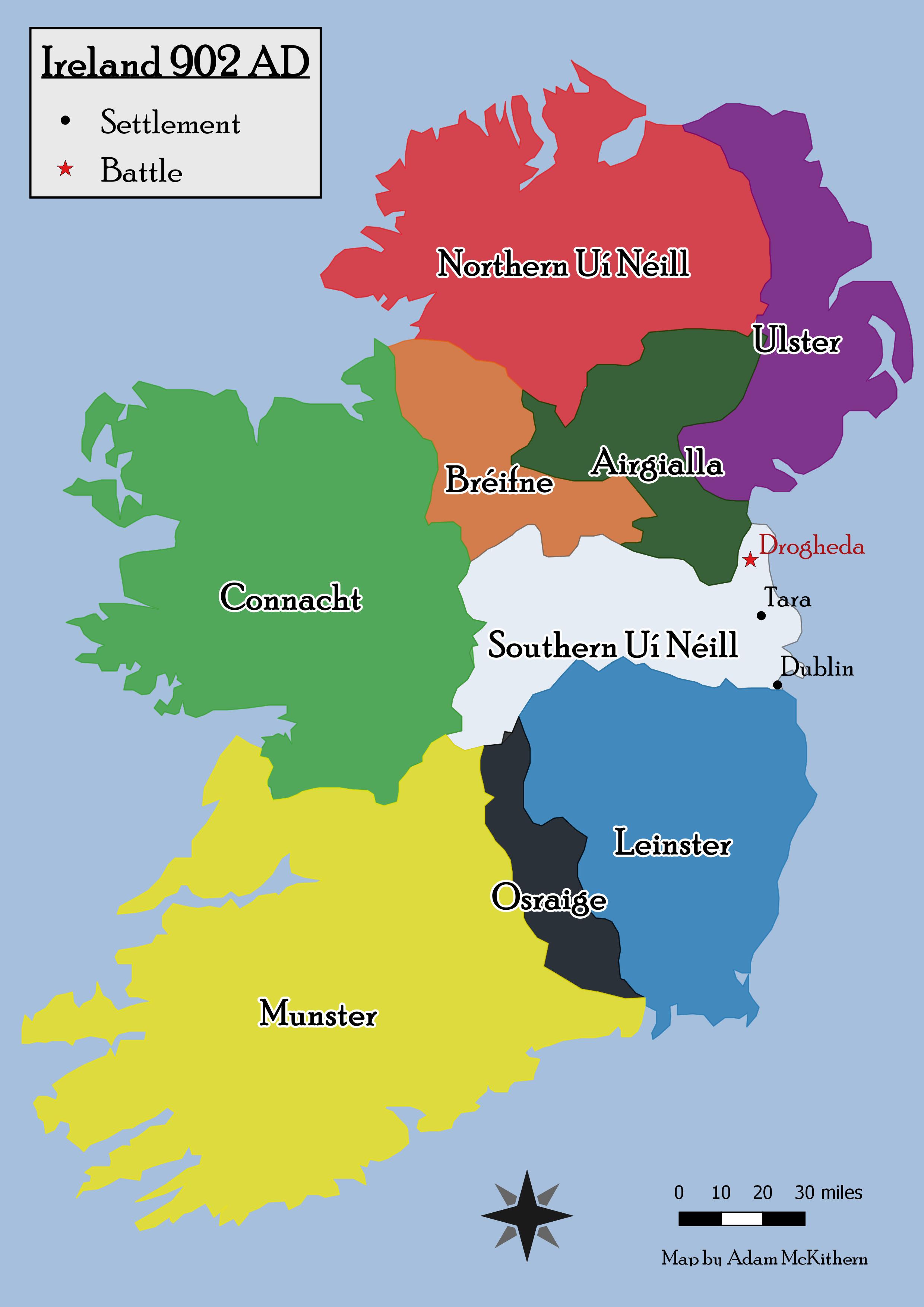
    ireland-902-ce-by-adam-mckithern

    Click to view slideshow.

    Glossary of Irish Words and Spellings

    Note: “KH” should be pronounced like the ending sound of “Bach”

    • Aífe (EE-fuh) – a warrior woman in the Táin bó Cúailnge, rival of Scáthach
    • aire (EYE-ruh) – lordly class
    • brat (BRAT) – cloak
    • Caier (KEYE-ur) – king of Connacht in the story Caier and Nede
    • coibche (KWIV-khuh) – bride-price
    • Conall Cernach (KO-nul KAIR-nakh) – curly blond-haired warrior and favorite of Conaire in The Destruction of Dá Derga’s Hostel
    • Conaire (KO-na-ruh) – king of Tara in the The Destruction of Dá Derga’s Hostel
    • Connacht (KON-akht) – a kingdom in the middle west of Ireland
    • Connla (KON-luh) – son of Cú Chulainn in the Táin bó Cúailnge
    • Críth Gablach (KREEH GOW-luhch) – a law-tract featuring 7 ranks of lords, 7 ranks of farmers, and 7 ranks of kings
    • Cú Chulainn (KOO KHUH-lun) – hero in the Táin bó Cúailnge
    • cúlán (KOO-lun) – men’s hairstyle with shaved front, long back
    • cumal (COO-wul) – unit of measurement roughly equal to 34 acres of land or 3 cattle; lit. “slave girl”
    • dairt (DEERCH) – a heifer, as in “from a needle to a dairt”, the honor-price of the lowest level of farmer which varies from a needle to a heifer
    • Diarmuid (JAR-muhj) – hero in the story of Diarmuid and Grainne
    • Drogheda (DRO-hay-duh) – site of a battle against the Vikings in 902 CE
    • Emer (EV-ur) – woman wooed by Cú Chulainn in the Táin bó Cúailnge
    • féni (FAY-nee) – farmer class, subdivided into 7 ranks according to the Crith Gablach law-tract: 1. 1st fer midboth (FAIR MEE-vuh) lit. “man between huts”; 2. 2nd fer midboth; 3. ócaire (O-keye-ruh); 4. aithech (EYE-chuh); 5. bóaire (BO-eye-ruh); 6. mruigfher (MREE-khur); 7. fer fothlai (FAIR FO-lee)
    • fidchell (FEE-khel) – an Old Irish board game, often called “Irish chess”
    • Forgall (FOR-gul) – father of Emer in the Táin bó Cúailnge
    • fuba and ruba (FOO-buh and ROO-buh) – military service; lit. “attack and defense”
    • fuidir (FEE-jur) – transitional slave
    • geis (GAYSH) / pl. geassa (GAYSA) – mystical personal injunction
    • Grainne (GRAH-nyuh) – woman in the story of Diarmuid and Grainne
    • léine (LAY-nya) – tunic
    • Mac Cécht (Mak KEKHT) – warrior and right-hand man of Conaire in The Destruction of Dá Derga’s Hostel
    • Nede (NAY-thuh) – a satire poet in the story of Caier and Nede
    • rath (RATH) – a loan taken from a lord in a clientship contract
    • rosc (ROSK) – a nearly untranslatable type of poem with multiple meanings, often signaled in English by ellipses where parts are left untranslated
    • Scáthach (SKAH-hakh) – a warrior woman in the Táin bó Cúailnge, mentor of Cú Chulainn
    • senchléithe (SHEN-khlay-huh) – hereditary serf
    • sét (SET) – unit of measurement equal to 4/5 of a cow
    • Táin bó Cúailnge (TOYN bo KOOL-nee) – epic featuring Cú Chulainn; lit. “The Cattle Raid of Cooley”
    • Tara (TAH-ruh) – traditional capital of the high kinds of Ireland
    • Togail Bruidne Dá Derga (TO-gul BREEJ-nuh da JAIR-guh) – epic featuring King Conaire; lit. “The Destruction of Dá Derga’s Hostel” or “…of the Red God”
    • toinal (TEE-nyul) – joint conjugal fund
    • Uí Néill (oy NAYLZ) – one of the most powerful clans of medieval Ireland
    • Ulster (UHL-stur) – Anglicized name for a kingdom in northeast Ireland

    Main Sources

    Ambient Mixer. “A Lively Night at the Tavern.” Ambient Mixer. (Audio Clip). Used under CC license. Downloaded Dec. 18, 2016, from: http://rpg.ambient-mixer.com/bustling-tavern

    Barrett, C. (2006). “Early Gaelic Dress: An Introduction.” Downloaded Nov. 18, 2016, from: http://coblaith.net/EarlyGaelicDress/EarlyGaelicDress12bw.pdf

    Dwyer, F. (2010-2017). Irish History Podcast.

    Dwyer, F. (2013). Witches, Spies and Stockholm Syndrome: Life in Medieval Ireland. Dublin: New Island.

    Kenny, G. (2013). “Anglo-Irish and Gaelic Marriage Laws and Traditions in Late Medieval Ireland.” Journal of Medieval History, 32(1): 27-42.

    Kinsella, T. (1969). The Tain Bo Cuailnge. Oxford: Oxford University Press.

    Mallory, J. P. (1992). Aspects of the Tain. Belfast: December Publications.

    MacCulloch, J. A. (1911). The Religion of the Ancient Celts. Edinburgh: T. & T. Clark.

    O’Connor, R. (2013). The Destruction of Da Derga’s Hostel: Kingship and Narrative Artistry in a Medieval Irish Saga. Oxford: University Press.

    O’Leary, P. (1988). “Honour-bound: The Social Context of Early Irish Heroic Geis.” Celtica, 20: 85-107.

    Patterson, N. (1994). Cattle Lords and Clansmen. Notre Dame: University of Notre Dame Press.

    Stokes, W. (1862). Three Irish Glossaries. London: Williams and Norgate.

    Wyatt, D. R. (2009). Slaves and Warriors in Medieval Britain and Ireland: 800-1200. Boston: Brill.

    Maps, pics, references, and more at http://www.deadideas.net. Music and graphic design by Rachel Westhoff.

    Soundtrack by Twin Guns: https://twinguns.bandcamp.com/

    Dead Ideas: The History of Extinct Thoughts and Practices is made with Jetpack Podcast. Full show notes and every episode at https://deadideas.net/


    A Valentine to Poe, and Other Traditions of Olde – Valentines Day Special PDT3K – American History Feb 12, 2017
    Show notes

    http://media.blubrry.com/deadideas/ia801604.us.archive.org/15/items/DeadIdeas26AValentineToPoe/Dead%20Ideas%2026%20A%20Valentine%20to%20Poe.mp3

    What Valentine did Edgar Allen Poe receive from his lover one fateful year? You’ll find this along with many interesting old Valentines Day traditions in this special holiday episode. If you ever want to divine your lover’s identity, this episode will teach you plenty of ways. Enjoy!

    And be sure to support the show at http://www.patreon.com/deadideaspod to get yourself drawn as a comic book character!

    Become our patron on Patreon at www.patreon.com/deadideaspod

    Main Sources

    Earle, A. M. (1894, February). “St. Valentine’s Day in Olden Times.” The Outlook, 271-272.

    Harrison, J. A., and Dailey, C. F. (1909, January). “Poe and Mrs. Whitman: New Light on a Romantic Episode.” Century Magazine, 439-452.

    “St. Valentine’s Day.” (1879, February). Century Magazine, 506-507.

    Maps, pics, references, and more at http://www.deadideas.net. Music and graphic design by Rachel Westhoff.

    Dead Ideas: The History of Extinct Thoughts and Practices is made with Jetpack Podcast. Full show notes and every episode at https://deadideas.net/


    Geis VI: The Viking Terror: An Interview with Fin Dwyer – Irish History Feb 05, 2017
    Show notes

    http://media.blubrry.com/deadideas/ia601604.us.archive.org/32/items/06TheVikingTerrorAnInterviewWithFinDwyer/06%20The%20Viking%20Terror_%20An%20Interview%20with%20Fin%20Dwyer.mp3

    Another interview! Fin Dwyer of The Irish History Podcast talks to us today about the traumatizing impact of the Vikings on medieval Irish culture. You can also see me draw Fin’s portrait on our Dead Ideas youtube channel!

    Don’t forget to support the show and get your perks at http://www.patreon.com/deadideaspod!

    Become our patron on Patreon at www.patreon.com/deadideaspod

    Interviewee: Fin Dwyer

    Time/place: Ireland, 902 CE

    Dead Idea: Geis

    A Map of Medieval Ireland, by Adam McKithern

    ireland-902-ce-by-adam-mckithern

    Click to view slideshow.

    Glossary of Irish Words and Spellings

    Note: “KH” should be pronounced like the ending sound of “Bach”

    • Aífe (EE-fuh) – a warrior woman in the Táin bó Cúailnge, rival of Scáthach
    • aire (EYE-ruh) – lordly class
    • brat (BRAT) – cloak
    • Caier (KEYE-ur) – king of Connacht in the story Caier and Nede
    • coibche (KWIV-khuh) – bride-price
    • Conall Cernach (KO-nul KAIR-nakh) – curly blond-haired warrior and favorite of Conaire in The Destruction of Dá Derga’s Hostel
    • Conaire (KO-na-ruh) – king of Tara in the The Destruction of Dá Derga’s Hostel
    • Connacht (KON-akht) – a kingdom in the middle west of Ireland
    • Connla (KON-luh) – son of Cú Chulainn in the Táin bó Cúailnge
    • Críth Gablach (KREEH GOW-luhch) – a law-tract featuring 7 ranks of lords, 7 ranks of farmers, and 7 ranks of kings
    • Cú Chulainn (KOO KHUH-lun) – hero in the Táin bó Cúailnge
    • cúlán (KOO-lun) – men’s hairstyle with shaved front, long back
    • cumal (COO-wul) – unit of measurement roughly equal to 34 acres of land or 3 cattle; lit. “slave girl”
    • dairt (DEERCH) – a heifer, as in “from a needle to a dairt”, the honor-price of the lowest level of farmer which varies from a needle to a heifer
    • Diarmuid (JAR-muhj) – hero in the story of Diarmuid and Grainne
    • Drogheda (DRO-hay-duh) – site of a battle against the Vikings in 902 CE
    • Emer (EV-ur) – woman wooed by Cú Chulainn in the Táin bó Cúailnge
    • féni (FAY-nee) – farmer class, subdivided into 7 ranks according to the Crith Gablach law-tract: 1. 1st fer midboth (FAIR MEE-vuh) lit. “man between huts”; 2. 2nd fer midboth; 3. ócaire (O-keye-ruh); 4. aithech (EYE-chuh); 5. bóaire (BO-eye-ruh); 6. mruigfher (MREE-khur); 7. fer fothlai (FAIR FO-lee)
    • fidchell (FEE-khel) – an Old Irish board game, often called “Irish chess”
    • Forgall (FOR-gul) – father of Emer in the Táin bó Cúailnge
    • fuba and ruba (FOO-buh and ROO-buh) – military service; lit. “attack and defense”
    • fuidir (FEE-jur) – transitional slave
    • geis (GAYSH) / pl. geassa (GAYSA) – mystical personal injunction
    • Grainne (GRAH-nyuh) – woman in the story of Diarmuid and Grainne
    • léine (LAY-nya) – tunic
    • Mac Cécht (Mak KEKHT) – warrior and right-hand man of Conaire in The Destruction of Dá Derga’s Hostel
    • Nede (NAY-thuh) – a satire poet in the story of Caier and Nede
    • rath (RATH) – a loan taken from a lord in a clientship contract
    • rosc (ROSK) – a nearly untranslatable type of poem with multiple meanings, often signaled in English by ellipses where parts are left untranslated
    • Scáthach (SKAH-hakh) – a warrior woman in the Táin bó Cúailnge, mentor of Cú Chulainn
    • senchléithe (SHEN-khlay-huh) – hereditary serf
    • sét (SET) – unit of measurement equal to 4/5 of a cow
    • Táin bó Cúailnge (TOYN bo KOOL-nee) – epic featuring Cú Chulainn; lit. “The Cattle Raid of Cooley”
    • Tara (TAH-ruh) – traditional capital of the high kinds of Ireland
    • Togail Bruidne Dá Derga (TO-gul BREEJ-nuh da JAIR-guh) – epic featuring King Conaire; lit. “The Destruction of Dá Derga’s Hostel” or “…of the Red God”
    • toinal (TEE-nyul) – joint conjugal fund
    • Uí Néill (oy NAYLZ) – one of the most powerful clans of medieval Ireland
    • Ulster (UHL-stur) – Anglicized name for a kingdom in northeast Ireland

    Main Sources

    Ambient Mixer. “A Lively Night at the Tavern.” Ambient Mixer. (Audio Clip). Used under CC license. Downloaded Dec. 18, 2016, from: http://rpg.ambient-mixer.com/bustling-tavern

    Barrett, C. (2006). “Early Gaelic Dress: An Introduction.” Downloaded Nov. 18, 2016, from: http://coblaith.net/EarlyGaelicDress/EarlyGaelicDress12bw.pdf

    Dwyer, F. (2010-2017). Irish History Podcast.

    Dwyer, F. (2013). Witches, Spies and Stockholm Syndrome: Life in Medieval Ireland. Dublin: New Island.

    Kenny, G. (2013). “Anglo-Irish and Gaelic Marriage Laws and Traditions in Late Medieval Ireland.” Journal of Medieval History, 32(1): 27-42.

    Kinsella, T. (1969). The Tain Bo Cuailnge. Oxford: Oxford University Press.

    Mallory, J. P. (1992). Aspects of the Tain. Belfast: December Publications.

    MacCulloch, J. A. (1911). The Religion of the Ancient Celts. Edinburgh: T. & T. Clark.

    O’Connor, R. (2013). The Destruction of Da Derga’s Hostel: Kingship and Narrative Artistry in a Medieval Irish Saga. Oxford: University Press.

    O’Leary, P. (1988). “Honour-bound: The Social Context of Early Irish Heroic Geis.” Celtica, 20: 85-107.

    Patterson, N. (1994). Cattle Lords and Clansmen. Notre Dame: University of Notre Dame Press.

    Stokes, W. (1862). Three Irish Glossaries. London: Williams and Norgate.

    Wyatt, D. R. (2009). Slaves and Warriors in Medieval Britain and Ireland: 800-1200. Boston: Brill.

    Music and graphic design by Rachel Westhoff.

    Dead Ideas: The History of Extinct Thoughts and Practices is made with Jetpack Podcast. Full show notes and every episode at https://deadideas.net/


    Geis V: Women and Magic in Medieval Ireland: An interview with Dr. Gillian Kenny – Irish History Jan 29, 2017
    Show notes

    http://media.blubrry.com/deadideas/ia601604.us.archive.org/32/items/06TheVikingTerrorAnInterviewWithFinDwyer/05%20Women%20and%20Magic%20-%20Interview%20with%20Dr.%20Gillian%20Kenny.mp3

    Our first ever interview! Expert on women, sex, and magic Gillian Kenny gives a quirky and fun interview on the position of the fairer sex in medieval Ireland and their relation to geassa in the literature. You can also see me draw Gillian’s portrait on our new Dead Ideas youtube channel!

    Don’t forget to support the show and get your perks at http://www.patreon.com/deadideaspod!

    Become our patron on Patreon at www.patreon.com/deadideaspod

    Interviewee: Gillian Kenny

    Time/place: Ireland, 902 CE

    Dead Idea: Geis

    A Map of Medieval Ireland, by Adam McKithern

    ireland-902-ce-by-adam-mckithern

    Click to view slideshow.

    Glossary of Irish Words and Spellings

    Note: “KH” should be pronounced like the ending sound of “Bach”

    • Aífe (EE-fuh) – a warrior woman in the Táin bó Cúailnge, rival of Scáthach
    • aire (EYE-ruh) – lordly class
    • brat (BRAT) – cloak
    • Caier (KEYE-ur) – king of Connacht in the story Caier and Nede
    • coibche (KWIV-khuh) – bride-price
    • Conall Cernach (KO-nul KAIR-nakh) – curly blond-haired warrior and favorite of Conaire in The Destruction of Dá Derga’s Hostel
    • Conaire (KO-na-ruh) – king of Tara in the The Destruction of Dá Derga’s Hostel
    • Connacht (KON-akht) – a kingdom in the middle west of Ireland
    • Connla (KON-luh) – son of Cú Chulainn in the Táin bó Cúailnge
    • Críth Gablach (KREEH GOW-luhch) – a law-tract featuring 7 ranks of lords, 7 ranks of farmers, and 7 ranks of kings
    • Cú Chulainn (KOO KHUH-lun) – hero in the Táin bó Cúailnge
    • cúlán (KOO-lun) – men’s hairstyle with shaved front, long back
    • cumal (COO-wul) – unit of measurement roughly equal to 34 acres of land or 3 cattle; lit. “slave girl”
    • dairt (DEERCH) – a heifer, as in “from a needle to a dairt”, the honor-price of the lowest level of farmer which varies from a needle to a heifer
    • Diarmuid (JAR-muhj) – hero in the story of Diarmuid and Grainne
    • Drogheda (DRO-hay-duh) – site of a battle against the Vikings in 902 CE
    • Emer (EV-ur) – woman wooed by Cú Chulainn in the Táin bó Cúailnge
    • féni (FAY-nee) – farmer class, subdivided into 7 ranks according to the Crith Gablach law-tract: 1. 1st fer midboth (FAIR MEE-vuh) lit. “man between huts”; 2. 2nd fer midboth; 3. ócaire (O-keye-ruh); 4. aithech (EYE-chuh); 5. bóaire (BO-eye-ruh); 6. mruigfher (MREE-khur); 7. fer fothlai (FAIR FO-lee)
    • fidchell (FEE-khel) – an Old Irish board game, often called “Irish chess”
    • Forgall (FOR-gul) – father of Emer in the Táin bó Cúailnge
    • fuba and ruba (FOO-buh and ROO-buh) – military service; lit. “attack and defense”
    • fuidir (FEE-jur) – transitional slave
    • geis (GAYSH) / pl. geassa (GAYSA) – mystical personal injunction
    • Grainne (GRAH-nyuh) – woman in the story of Diarmuid and Grainne
    • léine (LAY-nya) – tunic
    • Mac Cécht (Mak KEKHT) – warrior and right-hand man of Conaire in The Destruction of Dá Derga’s Hostel
    • Nede (NAY-thuh) – a satire poet in the story of Caier and Nede
    • rath (RATH) – a loan taken from a lord in a clientship contract
    • rosc (ROSK) – a nearly untranslatable type of poem with multiple meanings, often signaled in English by ellipses where parts are left untranslated
    • Scáthach (SKAH-hakh) – a warrior woman in the Táin bó Cúailnge, mentor of Cú Chulainn
    • senchléithe (SHEN-khlay-huh) – hereditary serf
    • sét (SET) – unit of measurement equal to 4/5 of a cow
    • Táin bó Cúailnge (TOYN bo KOOL-nee) – epic featuring Cú Chulainn; lit. “The Cattle Raid of Cooley”
    • Tara (TAH-ruh) – traditional capital of the high kinds of Ireland
    • Togail Bruidne Dá Derga (TO-gul BREEJ-nuh da JAIR-guh) – epic featuring King Conaire; lit. “The Destruction of Dá Derga’s Hostel” or “…of the Red God”
    • toinal (TEE-nyul) – joint conjugal fund
    • Uí Néill (oy NAYLZ) – one of the most powerful clans of medieval Ireland
    • Ulster (UHL-stur) – Anglicized name for a kingdom in northeast Ireland

    Main Sources

    Ambient Mixer. “A Lively Night at the Tavern.” Ambient Mixer. (Audio Clip). Used under CC license. Downloaded Dec. 18, 2016, from: http://rpg.ambient-mixer.com/bustling-tavern

    Barrett, C. (2006). “Early Gaelic Dress: An Introduction.” Downloaded Nov. 18, 2016, from: http://coblaith.net/EarlyGaelicDress/EarlyGaelicDress12bw.pdf

    Dwyer, F. (2010-2017). Irish History Podcast.

    Dwyer, F. (2013). Witches, Spies and Stockholm Syndrome: Life in Medieval Ireland. Dublin: New Island.

    Kenny, G. (2013). “Anglo-Irish and Gaelic Marriage Laws and Traditions in Late Medieval Ireland.” Journal of Medieval History, 32(1): 27-42.

    Kinsella, T. (1969). The Tain Bo Cuailnge. Oxford: Oxford University Press.

    Mallory, J. P. (1992). Aspects of the Tain. Belfast: December Publications.

    MacCulloch, J. A. (1911). The Religion of the Ancient Celts. Edinburgh: T. & T. Clark.

    O’Connor, R. (2013). The Destruction of Da Derga’s Hostel: Kingship and Narrative Artistry in a Medieval Irish Saga. Oxford: University Press.

    O’Leary, P. (1988). “Honour-bound: The Social Context of Early Irish Heroic Geis.” Celtica, 20: 85-107.

    Patterson, N. (1994). Cattle Lords and Clansmen. Notre Dame: University of Notre Dame Press.

    Stokes, W. (1862). Three Irish Glossaries. London: Williams and Norgate.

    Wyatt, D. R. (2009). Slaves and Warriors in Medieval Britain and Ireland: 800-1200. Boston: Brill.

    Music and graphic design by Rachel Westhoff.

    Dead Ideas: The History of Extinct Thoughts and Practices is made with Jetpack Podcast. Full show notes and every episode at https://deadideas.net/


    Geis IV: Nede the Satire-poet, and the Death of Connla Jan 22, 2017
    Show notes

    https://media.blubrry.com/deadideas/ia601508.us.archive.org/35/items/04NedeTheSatirePoetAndTheDeathOfConnla/04%20Nede%20the%20Satire-poet%2c%20and%20the%20Death%20of%20Connla.mp3

    More stories! We were having so much fun, we just kept recording. First is the tale of a satire-poet called Nede, followed by the saga of a young warrior named Connla who meets his grisly demise at the hands of his own father. Both these stores involve – you guessed it! – a geis.

    Don’t forget to support the show and get your perks at http://www.patreon.com/deadideaspod!

    Become our patron on Patreon at www.patreon.com/deadideaspod

    Co-host: Andre Sólo

    Time/place: Ireland, 902 CE

    Dead Idea: Geis

    A Map of Medieval Ireland, by Adam McKithern

    ireland-902-ce-by-adam-mckithern

    Click to view slideshow.

    Glossary of Irish Words and Spellings

    Note: “KH” should be pronounced like the ending sound of “Bach”

    • Aífe (EE-fuh) – a warrior woman in the Táin bó Cúailnge, rival of Scáthach
    • aire (EYE-ruh) – lordly class
    • brat (BRAT) – cloak
    • Caier (KEYE-ur) – king of Connacht in the story Caier and Nede
    • coibche (KWIV-khuh) – bride-price
    • Conall Cernach (KO-nul KAIR-nakh) – curly blond-haired warrior and favorite of Conaire in The Destruction of Dá Derga’s Hostel
    • Conaire (KO-na-ruh) – king of Tara in the The Destruction of Dá Derga’s Hostel
    • Connacht (KON-akht) – a kingdom in the middle west of Ireland
    • Connla (KON-luh) – son of Cú Chulainn in the Táin bó Cúailnge
    • Críth Gablach (KREEH GOW-luhch) – a law-tract featuring 7 ranks of lords, 7 ranks of farmers, and 7 ranks of kings
    • Cú Chulainn (KOO KHUH-lun) – hero in the Táin bó Cúailnge
    • cúlán (KOO-lun) – men’s hairstyle with shaved front, long back
    • cumal (COO-wul) – unit of measurement roughly equal to 34 acres of land or 3 cattle; lit. “slave girl”
    • dairt (DEERCH) – a heifer, as in “from a needle to a dairt”, the honor-price of the lowest level of farmer which varies from a needle to a heifer
    • Diarmuid (JAR-muhj) – hero in the story of Diarmuid and Grainne
    • Drogheda (DRO-hay-duh) – site of a battle against the Vikings in 902 CE
    • Emer (EV-ur) – woman wooed by Cú Chulainn in the Táin bó Cúailnge
    • féni (FAY-nee) – farmer class, subdivided into 7 ranks according to the Crith Gablach law-tract: 1. 1st fer midboth (FAIR MEE-vuh) lit. “man between huts”; 2. 2nd fer midboth; 3. ócaire (O-keye-ruh); 4. aithech (EYE-chuh); 5. bóaire (BO-eye-ruh); 6. mruigfher (MREE-khur); 7. fer fothlai (FAIR FO-lee)
    • fidchell (FEE-khel) – an Old Irish board game, often called “Irish chess”
    • Forgall (FOR-gul) – father of Emer in the Táin bó Cúailnge
    • fuba and ruba (FOO-buh and ROO-buh) – military service; lit. “attack and defense”
    • fuidir (FEE-jur) – transitional slave
    • geis (GAYSH) / pl. geassa (GAYSA) – mystical personal injunction
    • Grainne (GRAH-nyuh) – woman in the story of Diarmuid and Grainne
    • léine (LAY-nya) – tunic
    • Mac Cécht (Mak KEKHT) – warrior and right-hand man of Conaire in The Destruction of Dá Derga’s Hostel
    • Nede (NAY-thuh) – a satire poet in the story of Caier and Nede
    • rath (RATH) – a loan taken from a lord in a clientship contract
    • rosc (ROSK) – a nearly untranslatable type of poem with multiple meanings, often signaled in English by ellipses where parts are left untranslated
    • Scáthach (SKAH-hakh) – a warrior woman in the Táin bó Cúailnge, mentor of Cú Chulainn
    • senchléithe (SHEN-khlay-huh) – hereditary serf
    • sét (SET) – unit of measurement equal to 4/5 of a cow
    • Táin bó Cúailnge (TOYN bo KOOL-nee) – epic featuring Cú Chulainn; lit. “The Cattle Raid of Cooley”
    • Tara (TAH-ruh) – traditional capital of the high kinds of Ireland
    • Togail Bruidne Dá Derga (TO-gul BREEJ-nuh da JAIR-guh) – epic featuring King Conaire; lit. “The Destruction of Dá Derga’s Hostel” or “…of the Red God”
    • toinal (TEE-nyul) – joint conjugal fund
    • Uí Néill (oy NAYLZ) – one of the most powerful clans of medieval Ireland
    • Ulster (UHL-stur) – Anglicized name for a kingdom in northeast Ireland

    Main Sources

    Ambient Mixer. “A Lively Night at the Tavern.” Ambient Mixer. (Audio Clip). Used under CC license. Downloaded Dec. 18, 2016, from: http://rpg.ambient-mixer.com/bustling-tavern

    Barrett, C. (2006). “Early Gaelic Dress: An Introduction.” Downloaded Nov. 18, 2016, from: http://coblaith.net/EarlyGaelicDress/EarlyGaelicDress12bw.pdf

    Dwyer, F. (2010-2017). Irish History Podcast.

    Dwyer, F. (2013). Witches, Spies and Stockholm Syndrome: Life in Medieval Ireland. Dublin: New Island.

    Kenny, G. (2013). “Anglo-Irish and Gaelic Marriage Laws and Traditions in Late Medieval Ireland.” Journal of Medieval History, 32(1): 27-42.

    Kinsella, T. (1969). The Tain Bo Cuailnge. Oxford: Oxford University Press.

    Mallory, J. P. (1992). Aspects of the Tain. Belfast: December Publications.

    MacCulloch, J. A. (1911). The Religion of the Ancient Celts. Edinburgh: T. & T. Clark.

    O’Connor, R. (2013). The Destruction of Da Derga’s Hostel: Kingship and Narrative Artistry in a Medieval Irish Saga. Oxford: University Press.

    O’Leary, P. (1988). “Honour-bound: The Social Context of Early Irish Heroic Geis.” Celtica, 20: 85-107.

    Patterson, N. (1994). Cattle Lords and Clansmen. Notre Dame: University of Notre Dame Press.

    Stokes, W. (1862). Three Irish Glossaries. London: Williams and Norgate.

    Wyatt, D. R. (2009). Slaves and Warriors in Medieval Britain and Ireland: 800-1200. Boston: Brill.

    Maps, pics, references, and more at http://www.deadideas.net. Music and graphic design by Rachel Westhoff.

    Dead Ideas: The History of Extinct Thoughts and Practices is made with Jetpack Podcast. Full show notes and every episode at https://deadideas.net/


    Geis III: The Love Story of Diarmuid and Grainne – Irish History Jan 15, 2017
    Show notes

    http://media.blubrry.com/deadideas/ia801603.us.archive.org/12/items/DeadIdeas22TheLoveStoryOfDiarmuidAndGrainne/Dead_Ideas_22_The%20_Love_Story_of_Diarmuid_and_Grainne.mp3

    It’s story time! Andre promised to tell us a hell of a yarn, and he delivers. This is the medieval Irish story of Diarmuid and Grainne, a romantic (?) tale of two lovers and a geis gone wrong (or right? – you decide).

    Don’t forget to support the show and get your perks at http://www.patreon.com/deadideaspod!

    Become our patron on Patreon at www.patreon.com/deadideaspod

    Co-host: Andre Sólo

    Time/place: Ireland, 902 CE

    Dead Idea: Geis

    A Map of Medieval Ireland, by Adam McKithern

    ireland-902-ce-by-adam-mckithern

    Click to view slideshow.

    Glossary of Irish Words and Spellings

    Note: “KH” should be pronounced like the ending sound of “Bach”

    • Aífe (EE-fuh) – a warrior woman in the Táin bó Cúailnge, rival of Scáthach
    • aire (EYE-ruh) – lordly class
    • brat (BRAT) – cloak
    • Caier (KEYE-ur) – king of Connacht in the story Caier and Nede
    • coibche (KWIV-khuh) – bride-price
    • Conall Cernach (KO-nul KAIR-nakh) – curly blond-haired warrior and favorite of Conaire in The Destruction of Dá Derga’s Hostel
    • Conaire (KO-na-ruh) – king of Tara in the The Destruction of Dá Derga’s Hostel
    • Connacht (KON-akht) – a kingdom in the middle west of Ireland
    • Connla (KON-luh) – son of Cú Chulainn in the Táin bó Cúailnge
    • Críth Gablach (KREEH GOW-luhch) – a law-tract featuring 7 ranks of lords, 7 ranks of farmers, and 7 ranks of kings
    • Cú Chulainn (KOO KHUH-lun) – hero in the Táin bó Cúailnge
    • cúlán (KOO-lun) – men’s hairstyle with shaved front, long back
    • cumal (COO-wul) – unit of measurement roughly equal to 34 acres of land or 3 cattle; lit. “slave girl”
    • dairt (DEERCH) – a heifer, as in “from a needle to a dairt”, the honor-price of the lowest level of farmer which varies from a needle to a heifer
    • Diarmuid (JAR-muhj) – hero in the story of Diarmuid and Grainne
    • Drogheda (DRO-hay-duh) – site of a battle against the Vikings in 902 CE
    • Emer (EV-ur) – woman wooed by Cú Chulainn in the Táin bó Cúailnge
    • féni (FAY-nee) – farmer class, subdivided into 7 ranks according to the Crith Gablach law-tract: 1. 1st fer midboth (FAIR MEE-vuh) lit. “man between huts”; 2. 2nd fer midboth; 3. ócaire (O-keye-ruh); 4. aithech (EYE-chuh); 5. bóaire (BO-eye-ruh); 6. mruigfher (MREE-khur); 7. fer fothlai (FAIR FO-lee)
    • fidchell (FEE-khel) – an Old Irish board game, often called “Irish chess”
    • Forgall (FOR-gul) – father of Emer in the Táin bó Cúailnge
    • fuba and ruba (FOO-buh and ROO-buh) – military service; lit. “attack and defense”
    • fuidir (FEE-jur) – transitional slave
    • geis (GAYSH) / pl. geassa (GAYSA) – mystical personal injunction
    • Grainne (GRAH-nyuh) – woman in the story of Diarmuid and Grainne
    • léine (LAY-nya) – tunic
    • Mac Cécht (Mak KEKHT) – warrior and right-hand man of Conaire in The Destruction of Dá Derga’s Hostel
    • Nede (NAY-thuh) – a satire poet in the story of Caier and Nede
    • rath (RATH) – a loan taken from a lord in a clientship contract
    • rosc (ROSK) – a nearly untranslatable type of poem with multiple meanings, often signaled in English by ellipses where parts are left untranslated
    • Scáthach (SKAH-hakh) – a warrior woman in the Táin bó Cúailnge, mentor of Cú Chulainn
    • senchléithe (SHEN-khlay-huh) – hereditary serf
    • sét (SET) – unit of measurement equal to 4/5 of a cow
    • Táin bó Cúailnge (TOYN bo KOOL-nee) – epic featuring Cú Chulainn; lit. “The Cattle Raid of Cooley”
    • Tara (TAH-ruh) – traditional capital of the high kinds of Ireland
    • Togail Bruidne Dá Derga (TO-gul BREEJ-nuh da JAIR-guh) – epic featuring King Conaire; lit. “The Destruction of Dá Derga’s Hostel” or “…of the Red God”
    • toinal (TEE-nyul) – joint conjugal fund
    • Uí Néill (oy NAYLZ) – one of the most powerful clans of medieval Ireland
    • Ulster (UHL-stur) – Anglicized name for a kingdom in northeast Ireland

    Main Sources

    Ambient Mixer. “A Lively Night at the Tavern.” Ambient Mixer. (Audio Clip). Used under CC license. Downloaded Dec. 18, 2016, from: http://rpg.ambient-mixer.com/bustling-tavern

    Barrett, C. (2006). “Early Gaelic Dress: An Introduction.” Downloaded Nov. 18, 2016, from: http://coblaith.net/EarlyGaelicDress/EarlyGaelicDress12bw.pdf

    Dwyer, F. (2010-2017). Irish History Podcast.

    Dwyer, F. (2013). Witches, Spies and Stockholm Syndrome: Life in Medieval Ireland. Dublin: New Island.

    Kenny, G. (2013). “Anglo-Irish and Gaelic Marriage Laws and Traditions in Late Medieval Ireland.” Journal of Medieval History, 32(1): 27-42.

    Kinsella, T. (1969). The Tain Bo Cuailnge. Oxford: Oxford University Press.

    Mallory, J. P. (1992). Aspects of the Tain. Belfast: December Publications.

    MacCulloch, J. A. (1911). The Religion of the Ancient Celts. Edinburgh: T. & T. Clark.

    O’Connor, R. (2013). The Destruction of Da Derga’s Hostel: Kingship and Narrative Artistry in a Medieval Irish Saga. Oxford: University Press.

    O’Leary, P. (1988). “Honour-bound: The Social Context of Early Irish Heroic Geis.” Celtica, 20: 85-107.

    Patterson, N. (1994). Cattle Lords and Clansmen. Notre Dame: University of Notre Dame Press.

    Stokes, W. (1862). Three Irish Glossaries. London: Williams and Norgate.

    Wyatt, D. R. (2009). Slaves and Warriors in Medieval Britain and Ireland: 800-1200. Boston: Brill.

    Maps, pics, references, and more at http://www.deadideas.net. Music and graphic design by Rachel Westhoff.

    Dead Ideas: The History of Extinct Thoughts and Practices is made with Jetpack Podcast. Full show notes and every episode at https://deadideas.net/


    Geis II: Social Structure of Medieval Ireland – Irish History Jan 08, 2017
    Show notes

    http://media.blubrry.com/deadideas/ia601904.us.archive.org/18/items/DeadIdeas21GeisPart2/Dead%20Ideas%2021%20Geis%20Part%202.mp3

    What was the social structure like in medieval Ireland? I know that sounds boring but believe me, it’s not! It was way different than you think for a medieval society. Discover that and more today as we continue our series on the medieval Irish geis. Also, be sure to support the show at http://www.patreon.com/deadideaspod to get your portrait drawn!

    Become our patron on Patreon at www.patreon.com/deadideaspod

    Co-host: Andre Sólo

    Time/place: Ireland, 902 CE

    Dead Idea: Geis

    A Map of Medieval Ireland, by Adam McKithern

    ireland-902-ce-by-adam-mckithern

    Click to view slideshow.

    Glossary of Irish Words and Spellings

    Note: “KH” should be pronounced like the ending sound of “Bach”

    • Aífe (EE-fuh) – a warrior woman in the Táin bó Cúailnge, rival of Scáthach
    • aire (EYE-ruh) – lordly class
    • brat (BRAT) – cloak
    • Caier (KEYE-ur) – king of Connacht in the story Caier and Nede
    • coibche (KWIV-khuh) – bride-price
    • Conall Cernach (KO-nul KAIR-nakh) – curly blond-haired warrior and favorite of Conaire in The Destruction of Dá Derga’s Hostel
    • Conaire (KO-na-ruh) – king of Tara in the The Destruction of Dá Derga’s Hostel
    • Connacht (KON-akht) – a kingdom in the middle west of Ireland
    • Connla (KON-luh) – son of Cú Chulainn in the Táin bó Cúailnge
    • Críth Gablach (KREEH GOW-luhch) – a law-tract featuring 7 ranks of lords, 7 ranks of farmers, and 7 ranks of kings
    • Cú Chulainn (KOO KHUH-lun) – hero in the Táin bó Cúailnge
    • cúlán (KOO-lun) – men’s hairstyle with shaved front, long back
    • cumal (COO-wul) – unit of measurement roughly equal to 34 acres of land or 3 cattle; lit. “slave girl”
    • dairt (DEERCH) – a heifer, as in “from a needle to a dairt”, the honor-price of the lowest level of farmer which varies from a needle to a heifer
    • Diarmuid (JAR-muhj) – hero in the story of Diarmuid and Grainne
    • Drogheda (DRO-hay-duh) – site of a battle against the Vikings in 902 CE
    • Emer (EV-ur) – woman wooed by Cú Chulainn in the Táin bó Cúailnge
    • féni (FAY-nee) – farmer class, subdivided into 7 ranks according to the Crith Gablach law-tract: 1. 1st fer midboth (FAIR MEE-vuh) lit. “man between huts”; 2. 2nd fer midboth; 3. ócaire (O-keye-ruh); 4. aithech (EYE-chuh); 5. bóaire (BO-eye-ruh); 6. mruigfher (MREE-khur); 7. fer fothlai (FAIR FO-lee)
    • fidchell (FEE-khel) – an Old Irish board game, often called “Irish chess”
    • Forgall (FOR-gul) – father of Emer in the Táin bó Cúailnge
    • fuba and ruba (FOO-buh and ROO-buh) – military service; lit. “attack and defense”
    • fuidir (FEE-jur) – transitional slave
    • geis (GAYSH) / pl. geassa (GAYSA) – mystical personal injunction
    • Grainne (GRAH-nyuh) – woman in the story of Diarmuid and Grainne
    • léine (LAY-nya) – tunic
    • Mac Cécht (Mak KEKHT) – warrior and right-hand man of Conaire in The Destruction of Dá Derga’s Hostel
    • Nede (NAY-thuh) – a satire poet in the story of Caier and Nede
    • rath (RATH) – a loan taken from a lord in a clientship contract
    • rosc (ROSK) – a nearly untranslatable type of poem with multiple meanings, often signaled in English by ellipses where parts are left untranslated
    • Scáthach (SKAH-hakh) – a warrior woman in the Táin bó Cúailnge, mentor of Cú Chulainn
    • senchléithe (SHEN-khlay-huh) – hereditary serf
    • sét (SET) – unit of measurement equal to 4/5 of a cow
    • Táin bó Cúailnge (TOYN bo KOOL-nee) – epic featuring Cú Chulainn; lit. “The Cattle Raid of Cooley”
    • Tara (TAH-ruh) – traditional capital of the high kinds of Ireland
    • Togail Bruidne Dá Derga (TO-gul BREEJ-nuh da JAIR-guh) – epic featuring King Conaire; lit. “The Destruction of Dá Derga’s Hostel” or “…of the Red God”
    • toinal (TEE-nyul) – joint conjugal fund
    • Uí Néill (oy NAYLZ) – one of the most powerful clans of medieval Ireland
    • Ulster (UHL-stur) – Anglicized name for a kingdom in northeast Ireland

    Main Sources

    Ambient Mixer. “A Lively Night at the Tavern.” Ambient Mixer. (Audio Clip). Used under CC license. Downloaded Dec. 18, 2016, from: http://rpg.ambient-mixer.com/bustling-tavern

    Barrett, C. (2006). “Early Gaelic Dress: An Introduction.” Downloaded Nov. 18, 2016, from: http://coblaith.net/EarlyGaelicDress/EarlyGaelicDress12bw.pdf

    Dwyer, F. (2010-2017). Irish History Podcast.

    Dwyer, F. (2013). Witches, Spies and Stockholm Syndrome: Life in Medieval Ireland. Dublin: New Island.

    Kenny, G. (2013). “Anglo-Irish and Gaelic Marriage Laws and Traditions in Late Medieval Ireland.” Journal of Medieval History, 32(1): 27-42.

    Kinsella, T. (1969). The Tain Bo Cuailnge. Oxford: Oxford University Press.

    Mallory, J. P. (1992). Aspects of the Tain. Belfast: December Publications.

    MacCulloch, J. A. (1911). The Religion of the Ancient Celts. Edinburgh: T. & T. Clark.

    O’Connor, R. (2013). The Destruction of Da Derga’s Hostel: Kingship and Narrative Artistry in a Medieval Irish Saga. Oxford: University Press.

    O’Leary, P. (1988). “Honour-bound: The Social Context of Early Irish Heroic Geis.” Celtica, 20: 85-107.

    Patterson, N. (1994). Cattle Lords and Clansmen. Notre Dame: University of Notre Dame Press.

    Stokes, W. (1862). Three Irish Glossaries. London: Williams and Norgate.

    Wyatt, D. R. (2009). Slaves and Warriors in Medieval Britain and Ireland: 800-1200. Boston: Brill.

    Maps, pics, references, and more at http://www.deadideas.net. Music and graphic design by Rachel Westhoff.

    Dead Ideas: The History of Extinct Thoughts and Practices is made with Jetpack Podcast. Full show notes and every episode at https://deadideas.net/


    Geis I: A Medieval Irish Jinx of Doom – Irish History Jan 01, 2017
    Show notes

    http://media.blubrry.com/deadideas/ia801906.us.archive.org/22/items/DeadIdeas20GeisPart1/Dead%20Ideas%2020%20Geis%20Part%201.mp3

    Remember when your sister jinxed you so you couldn’t talk till your mom said it was okay? A geis is kinda like that, except if you talk you die! A geis (plural geassa) is a soul-binding rule that kills you. We talk geassa and honor in this first episode of our EPIC-length series on the medieval Irish geis!

    Become our patron on Patreon at www.patreon.com/deadideaspod

    Co-host: Andre Sólo

    Time/place: Ireland, 902 CE

    Dead Idea: Geis

    A Map of Medieval Ireland, by Adam McKithern

    ireland-902-ce-by-adam-mckithern

    Click to view slideshow.

    Glossary of Irish Words and Spellings

    Note: “KH” should be pronounced like the ending sound of “Bach”

    • Aífe (EE-fuh) – a warrior woman in the Táin bó Cúailnge, rival of Scáthach
    • aire (EYE-ruh) – lordly class
    • brat (BRAT) – cloak
    • Caier (KEYE-ur) – king of Connacht in the story Caier and Nede
    • coibche (KWIV-khuh) – bride-price
    • Conall Cernach (KO-nul KAIR-nakh) – curly blond-haired warrior and favorite of Conaire in The Destruction of Dá Derga’s Hostel
    • Conaire (KO-na-ruh) – king of Tara in the The Destruction of Dá Derga’s Hostel
    • Connacht (KON-akht) – a kingdom in the middle west of Ireland
    • Connla (KON-luh) – son of Cú Chulainn in the Táin bó Cúailnge
    • Críth Gablach (KREEH GOW-luhch) – a law-tract featuring 7 ranks of lords, 7 ranks of farmers, and 7 ranks of kings
    • Cú Chulainn (KOO KHUH-lun) – hero in the Táin bó Cúailnge
    • cúlán (KOO-lun) – men’s hairstyle with shaved front, long back
    • cumal (COO-wul) – unit of measurement roughly equal to 34 acres of land or 3 cattle; lit. “slave girl”
    • dairt (DEERCH) – a heifer, as in “from a needle to a dairt”, the honor-price of the lowest level of farmer which varies from a needle to a heifer
    • Diarmuid (JAR-muhj) – hero in the story of Diarmuid and Grainne
    • Drogheda (DRO-hay-duh) – site of a battle against the Vikings in 902 CE
    • Emer (EV-ur) – woman wooed by Cú Chulainn in the Táin bó Cúailnge
    • féni (FAY-nee) – farmer class, subdivided into 7 ranks according to the Crith Gablach law-tract: 1. 1st fer midboth (FAIR MEE-vuh) lit. “man between huts”; 2. 2nd fer midboth; 3. ócaire (O-keye-ruh); 4. aithech (EYE-chuh); 5. bóaire (BO-eye-ruh); 6. mruigfher (MREE-khur); 7. fer fothlai (FAIR FO-lee)
    • fidchell (FEE-khel) – an Old Irish board game, often called “Irish chess”
    • Forgall (FOR-gul) – father of Emer in the Táin bó Cúailnge
    • fuba and ruba (FOO-buh and ROO-buh) – military service; lit. “attack and defense”
    • fuidir (FEE-jur) – transitional slave
    • geis (GAYSH) / pl. geassa (GAYSA) – mystical personal injunction
    • Grainne (GRAH-nyuh) – woman in the story of Diarmuid and Grainne
    • léine (LAY-nya) – tunic
    • Mac Cécht (Mak KEKHT) – warrior and right-hand man of Conaire in The Destruction of Dá Derga’s Hostel
    • Nede (NAY-thuh) – a satire poet in the story of Caier and Nede
    • rath (RATH) – a loan taken from a lord in a clientship contract
    • rosc (ROSK) – a nearly untranslatable type of poem with multiple meanings, often signaled in English by ellipses where parts are left untranslated
    • Scáthach (SKAH-hakh) – a warrior woman in the Táin bó Cúailnge, mentor of Cú Chulainn
    • senchléithe (SHEN-khlay-huh) – hereditary serf
    • sét (SET) – unit of measurement equal to 4/5 of a cow
    • Táin bó Cúailnge (TOYN bo KOOL-nee) – epic featuring Cú Chulainn; lit. “The Cattle Raid of Cooley”
    • Tara (TAH-ruh) – traditional capital of the high kinds of Ireland
    • Togail Bruidne Dá Derga (TO-gul BREEJ-nuh da JAIR-guh) – epic featuring King Conaire; lit. “The Destruction of Dá Derga’s Hostel” or “…of the Red God”
    • toinal (TEE-nyul) – joint conjugal fund
    • Uí Néill (oy NAYLZ) – one of the most powerful clans of medieval Ireland
    • Ulster (UHL-stur) – Anglicized name for a kingdom in northeast Ireland

    Main Sources

    Ambient Mixer. “A Lively Night at the Tavern.” Ambient Mixer. (Audio Clip). Used under CC license. Downloaded Dec. 18, 2016, from: http://rpg.ambient-mixer.com/bustling-tavern

    Barrett, C. (2006). “Early Gaelic Dress: An Introduction.” Downloaded Nov. 18, 2016, from: http://coblaith.net/EarlyGaelicDress/EarlyGaelicDress12bw.pdf

    Dwyer, F. (2010-2017). Irish History Podcast.

    Dwyer, F. (2013). Witches, Spies and Stockholm Syndrome: Life in Medieval Ireland. Dublin: New Island.

    Kenny, G. (2013). “Anglo-Irish and Gaelic Marriage Laws and Traditions in Late Medieval Ireland.” Journal of Medieval History, 32(1): 27-42.

    Kinsella, T. (1969). The Tain Bo Cuailnge. Oxford: Oxford University Press.

    Mallory, J. P. (1992). Aspects of the Tain. Belfast: December Publications.

    MacCulloch, J. A. (1911). The Religion of the Ancient Celts. Edinburgh: T. & T. Clark.

    O’Connor, R. (2013). The Destruction of Da Derga’s Hostel: Kingship and Narrative Artistry in a Medieval Irish Saga. Oxford: University Press.

    O’Leary, P. (1988). “Honour-bound: The Social Context of Early Irish Heroic Geis.” Celtica, 20: 85-107.

    Patterson, N. (1994). Cattle Lords and Clansmen. Notre Dame: University of Notre Dame Press.

    Stokes, W. (1862). Three Irish Glossaries. London: Williams and Norgate.

    Wyatt, D. R. (2009). Slaves and Warriors in Medieval Britain and Ireland: 800-1200. Boston: Brill.

    Maps, pics, references, and more at http://www.deadideas.net. Music and graphic design by Rachel Westhoff.

    Dead Ideas: The History of Extinct Thoughts and Practices is made with Jetpack Podcast. Full show notes and every episode at https://deadideas.net/


    New Year, New Perks For You! Dec 31, 2016
    Show notes

    https://media.blubrry.com/deadideas/ia601506.us.archive.org/24/items/DeadIdeasNewYearNewPerksForYou/Dead%20Ideas%20New%20Year%20New%20Perks%20For%20You.mp3

    Happy New Year! You can now get your portrait drawn as a perk for supporting the show on Patreon. We’ve got lots of other cool new perks too for supporters at all levels, so check it out at http://www.patreon.com/deadideaspod

    Become our patron on Patreon at www.patreon.com/deadideaspod

    Dead Ideas: The History of Extinct Thoughts and Practices is made with Jetpack Podcast. Full show notes and every episode at https://deadideas.net/


    Previous 1 8 9 10 11 12 Next

    Related Podcasts

    Dan Carlin’s Hardcore History

    1

    Dan Carlin’s Hardcore History History
    More Perfect

    2

    More Perfect Government
    Casefile True Crime

    3

    Casefile True Crime Games & Hobbies
    The Way I Heard It with Mike Rowe

    4

    The Way I Heard It with Mike Rowe History
    BackStory

    5

    BackStory History
    The Black Dahlia Serial Killers

    6

    The Black Dahlia Serial Killers History
    footer-logo

    Contact Us

    Toll Free: 844-670-7747

    Links

    • Home
    • Top Charts
    • Networks
    • Apps
    • Independents Podcasts
    • Podcast Advertising
    • Podcast News
    • Contact Us
    • About Us
    • Analytics & Insights

    Stay Connected

      Privacy, Terms of Use & Our Code of Ethics Protecting Content Creators Copyrights




