TopPodcast.com
Menu
  • Home
  • Top Charts
  • Top Networks
  • Top Apps
  • Top Independents
  • Top Podfluencers
  • Top Picks
    • Top Business Podcasts
    • Top True Crime Podcasts
    • Top Finance Podcasts
    • Top Comedy Podcasts
    • Top Music Podcasts
    • Top Womens Podcasts
    • Top Kids Podcasts
    • Top Sports Podcasts
    • Top News Podcasts
    • Top Tech Podcasts
    • Top Crypto Podcasts
    • Top Entrepreneurial Podcasts
    • Top Fantasy Sports Podcasts
    • Top Political Podcasts
    • Top Science Podcasts
    • Top Self Help Podcasts
    • Top Sports Betting Podcasts
    • Top Stocks Podcasts
  • Podcast News
  • About Us
  • Podcast Advertising
  • Contact
Not in our directory?
Add Show Here
Podcast Equipment
Center

toppodcastlogoOur TOPPODCAST Picks

  • Comedy
  • Crypto
  • Sports
  • News
  • Politics
  • True Crime
  • Business
  • Finance

Follow Us

toppodcastlogoStay Connected

    View Top 200 Chart
    Back to Rankings Page
    Technology

    Blockchain Archives – Software Engineering Daily

    Advertise
    • Apple Podcasts
    • Google Play
    • Spotify

    Latest Episodes:
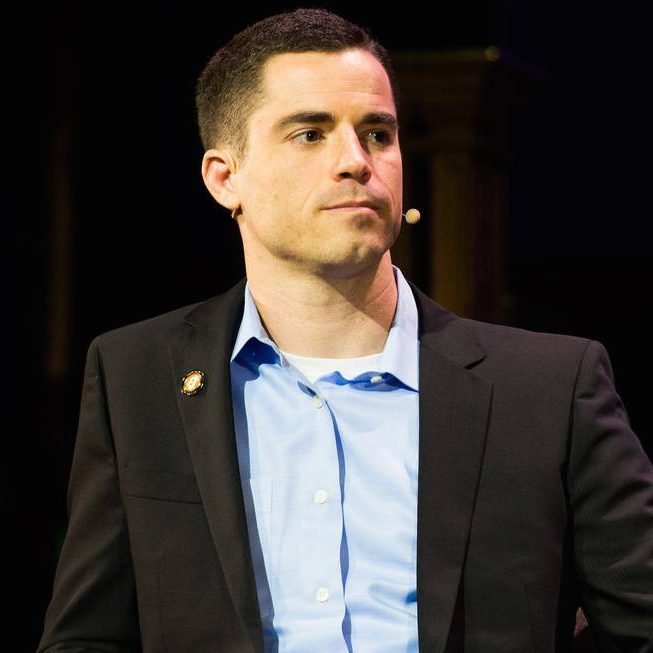
    Bitcoin Debates with Roger Ver Apr 20, 2018
    Show notes

    Bitcoin and Bitcoin Cash are two cryptocurrencies with similar properties. But the supporters of each of these Bitcoin versions have strongly divergent opinions on the direction of the Bitcoin project. At the center of this debate is the subject of block size.

    Bitcoin’s block size determines how many transactions fit into each block that is mined. A larger block size leads to faster transactions and lower fees, but creates higher demands on mining hardware. A smaller block size leads to a slower on-chain network and higher fees but allows the full nodes on the network to be run on low performance hardware like Raspberry Pi.

    Bitcoin Cash has a large block size. Bitcoin Core has a smaller block size. Proponents of the smaller block size argue that Bitcoin’s scaling can be achieved by the off-chain “lightning network” solution.

    Roger Ver is a Bitcoin entrepreneur and investor. Since he discovered the currency, he has been buying it and evangelizing it. More recently, Roger has become an ardent supporter of Bitcoin Cash–emphasizing that Bitcoin Cash is Bitcoin.

    In this episode, Roger describes his economic ideology and explains why Bitcoin is so important to him. We explore how vested interests can shape the narrative and the direction of Bitcoin, and talk about the future of how corporations, governments, and individuals might be using cryptocurrencies.

    Transcript

    Transcript provided by We Edit Podcasts. Software Engineering Daily listeners can go to weeditpodcasts.com/sed to get 20% off the first two months of audio editing and transcription services. Thanks to We Edit Podcasts for partnering with SE Daily. Please click here to view this show’s transcript.


    The post Bitcoin Debates with Roger Ver appeared first on Software Engineering Daily.


    Talking Bitcoin with Adam B. Levine Apr 17, 2018
    Show notes

    Let’s Talk Bitcoin is one of the most popular podcasts about cryptocurrencies. Adam B. Levine started it after three other podcasts he started did not get the traction he had hoped for. Adam parlayed the success of Let’s Talk Bitcoin into a network of podcasts–the Let’s Talk Bitcoin Network–which also includes one of my favorite shows, Epicenter.

    Adam joins me on today’s episode for a discussion of so many topics: the culture around cryptocurrencies, the art of podcasting, blockchain scalability, and ICOs. The conversation around ICOs was particularly exciting–if you have been listening to recent episodes, you have heard interviews with companies who have done ICOs.

    Some ICO companies are now facing legal ramifications for their token sales–and Adam and I have some disagreement over whether these ICO companies deserve much sympathy. It was a debate that I enjoyed and I hope to have Adam back on the show in the future for more debates.

    Transcript

    Transcript provided by We Edit Podcasts. Software Engineering Daily listeners can go to weeditpodcasts.com/sed to get 20% off the first two months of audio editing and transcription services. Thanks to We Edit Podcasts for partnering with SE Daily. Please click here to view this show’s transcript.


    The post Talking Bitcoin with Adam B. Levine appeared first on Software Engineering Daily.


    Unchained with Laura Shin Apr 13, 2018
    Show notes

    Laura Shin is the host of Unchained, a podcast about cryptocurrencies and decentralized technology. For every episode, Laura does significant research and preparation, so the content turns out polished and high quality. Her enthusiasm for the subject of cryptocurrencies comes through in her reporting.

    Podcasting about cryptocurrencies requires walking a fine line. Cryptocurrencies have a mixture of drama and exciting technology–which are both great for a journalist. But you can’t get too deep in the drama, because the podcast will feel like a tabloid. And you can’t get too deep in the technical weeds, because the listener will fall asleep.

    Laura joins the show to discuss how she got into reporting on cryptocurrencies, why she got so obsessed with the subject, and her experience as a solo entrepreneurial journalist.

    Transcript

    Transcript provided by We Edit Podcasts. Software Engineering Daily listeners can go to weeditpodcasts.com/sed to get 20% off the first two months of audio editing and transcription services. Thanks to We Edit Podcasts for partnering with SE Daily. Please click here to view this show’s transcript.


    The post Unchained with Laura Shin appeared first on Software Engineering Daily.


    IPFS Design with David Dias Apr 06, 2018
    Show notes

    The Interplanetary File System (IPFS) is a decentralized global, peer-to-peer file system. IPFS combines ideas from BitTorrent, Git, and Bitcoin, creating a new way to store and access objects across the Internet.

    When you access an object on almost any website, you are accessing the object via a location address—a URL. The URL tells you where to find the object. If the object is a photo on Facebook that you are linking to, the URL will have an address somewhere on Facebook. Other objects that we access through URLs include web pages, videos, and JavaScript import packages.

    URLs seem natural to us. You look up an object based on where that object is being stored. Why would you do anything differently?

    A downside of location addressing is that if the location disappears, you can no longer access that object. If a government decides to censor a website that I wanted to visit, the government can shut down access to the server where that website sits, and my link will break. This happened in Turkey—where Wikipedia was shut down last year.

    Objects in IPFS are content addressed—you access an object by giving IPFS a cryptographic hash of the object, and IPFS will find someone on the network who has a copy of that object and give you access to it.

    To look up a webpage in an IPFS browser, you put the content address in the address bar. When the HTML for that page is received, that page might have lots of other content-addressed files referred to on the page. Your browser can also grab all of those content-addressed files from the IPFS P2P network.

    In this episode, David Dias explains how IPFS is designed. David is an engineer at Protocol Labs, the company building out IPFS. This episode is a great companion to our previous show with Juan Benet, the creator of IPFS.

    Transcript

    Transcript provided by We Edit Podcasts. Software Engineering Daily listeners can go to weeditpodcasts.com/sed to get 20% off the first two months of audio editing and transcription services. Thanks to We Edit Podcasts for partnering with SE Daily. Please click here to view this show’s transcript.


    The post IPFS Design with David Dias appeared first on Software Engineering Daily.


    Ethereum Governance with Hudson Jameson Apr 05, 2018
    Show notes

    The Ethereum community started as a small group of dedicated engineers. It has ballooned to thousands of engineers, entrepreneurs, and investors, all of whom have a stake in the direction of Ethereum. Ethereum is an open source project, and the direction of a popular open source project can get complex.

    Ethereum is figuring out how to govern itself. It’s not clear what the perfect model is, but there are a few historical examples to think about: namely Linux and Bitcoin.

    Linux is similar to Ethereum in that there is a clear leader—Linux has Linus Torvalds and Ethereum has Vitalik Buterin. Linux is massively successful, and the Linux development team does have a top-down, hierarchical approach. But does a hierarchy with clear leadership make sense for a project like Ethereum, which has decentralization at its core?

    Bitcoin is headless—Satoshi disappeared in 2010, and there is not an official leader. Bitcoin has succeeded without a well-defined hierarchy–depending on what your definition of success is. Bitcoin development does not move as fast as Ethereum (this is by design)—but there is more widespread trust that the integrity of the system cannot be compromised by its creator.

    Hudson Jameson is an Ethereum developer and entrepreneur who has been part of the community since the early days. He works on Ethereum governance, which defines how changes to the Ethereum project are proposed, accepted, and implemented. Hudson joins the show today to talk about Ethereum governance, smart contracts, and the DAO hack. We did not discuss on-chain vs. off-chain governance, but I am hoping to cover that in a future episode.

    Transcript

    Transcript provided by We Edit Podcasts. Software Engineering Daily listeners can go to weeditpodcasts.com/sed to get 20% off the first two months of audio editing and transcription services. Thanks to We Edit Podcasts for partnering with SE Daily. Please click here to view this show’s transcript.


    The post Ethereum Governance with Hudson Jameson appeared first on Software Engineering Daily.


    Gitcoin: Open Source Bounties with Kevin Owocki Apr 03, 2018
    Show notes

    Most technology companies rely on open source software projects. But open source software projects are often maintained by a group of people that is not affiliated with any particular company. When an open source project develops too much technical debt, it can become a tragedy of the commons. Who is responsible for maintaining these open source projects?

    This is the motivation for open source bounties. Companies and individuals who rely on open source create bounties, which are financial incentives for developers to solve problems within the open source project.

    Kevin Owocki is the creator of Gitcoin, a platform for open source bounties that is mediated by an Ethereum smart contract. Kevin joins the show to discuss his experience building Gitcoin–as well as some of the problems with the blockchain space, such as rampant ICOs. Gitcoin is NOT a cryptocurrency or token itself–it is a platform for open source software to be built more efficiently. Kevin was an awesome guest and you will enjoy the conversation.

    Gitcoin is a nice example of a real-world Ethereum use case–it uses Ethereum for escrow: if I post a $25 bounty for someone to fix a bug in my open source project, I will lock up ether in a smart contract. When the bug is fixed, the programmer who fixed it will submit a pull request on Github, and I will release the ether from the smart contract to pay them.

    We would love for you to fill out our listener survey at softwareengineeringdaily.com/survey. This will help us decide what other content to focus on.

    Of course–you can also send me an email at any time, jeff@softwaredaily.com. And in the meantime, if you are completely sick of cryptocurrencies, check out our back catalog of episodes at softwaredaily.com, or by downloading our Software Engineering Daily apps, which have all of our episodes including our Greatest Hits, which is a curated set of the most popular shows. The apps will soon have offline downloads and bookmarking.

    Transcript

    Transcript provided by We Edit Podcasts. Software Engineering Daily listeners can go to weeditpodcasts.com/sed to get 20% off the first two months of audio editing and transcription services. Thanks to We Edit Podcasts for partnering with SE Daily. Please click here to view this show’s transcript.


    The post Gitcoin: Open Source Bounties with Kevin Owocki appeared first on Software Engineering Daily.


    Zcash Design with Sean Bowe Apr 02, 2018
    Show notes

    Zcash is a payment and consensus system that allows users to transfer money to each other with strong guarantees of privacy. Zcash implements the same core features of Bitcoin, with the added functionality of shielded payments.

    Shielded payments are private, and they are enabled by a novel cryptographic technique called zk-SNARKS: zero knowledge succinct non-interactive argument of knowledge. A zk-SNARK allows for the proof that a certain piece of information is valid without revealing any information other than the validity of that information itself.

    Before you listen to this episode, it might be useful to go back to our previous episode about Zcash with Nathan Wilcox, in which he gives an overview of the technology. This episode is a deeper dive into how Zcash transactions work, and why zk-SNARKS are important.

    We would love for you to fill out our listener survey at softwareengineeringdaily.com/survey. This will help us decide what other content to focus on.

    Of course–you can also send me an email at any time, jeff@softwaredaily.com. And in the meantime, if you are completely sick of cryptocurrencies, check out our back catalog of episodes at softwaredaily.com, or by downloading our apps, which have all of our episodes including our Greatest Hits, which is a curated set of the most popular shows. The apps will soon have offline downloads and bookmarking.

    Transcript

    Transcript provided by We Edit Podcasts. Software Engineering Daily listeners can go to weeditpodcasts.com/sed to get 20% off the first two months of audio editing and transcription services. Thanks to We Edit Podcasts for partnering with SE Daily. Please click here to view this show’s transcript.


    The post Zcash Design with Sean Bowe appeared first on Software Engineering Daily.


    ShapeShift with Erik Voorhees Mar 30, 2018
    Show notes

    “The Federal Reserve System is fraudulent. Whatever its stated purpose, its effective purpose is to create a mechanism of deficit spending by politicians, through the insidious invisible taxation of monetary debasement (aka inflation).”

    These are the words of Erik Voorhees, the CEO of crypto financial exchange ShapeShift. Long before he started ShapeShift, Erik was opposed to some of the core principles of the global financial system, in which he sees the US dollar as a means of control. As an early adopter of Bitcoin, he saw a way to make financial transactions without using fiat currency.

    Erik’s company ShapeShift allows users to convert different digital currencies between each other. Because it only makes exchanges of currencies and does not hold much currency at any time, ShapeShift is resilient to hacking.

    In this episode, Erik and I discussed his economic philosophy, and how that informs his affinity for cryptocurrencies. Erik also describes the architecture of ShapeShift and gives some advice on how to think about building businesses around cryptocurrencies. ShapeShift has had a few near-death experiences, like any startup, and there is a useful story in this episode about how to survive and recover from a serious business setback.

    Transcript

    Transcript provided by We Edit Podcasts. Software Engineering Daily listeners can go to weeditpodcasts.com/sed to get 20% off the first two months of audio editing and transcription services. Thanks to We Edit Podcasts for partnering with SE Daily. Please click here to view this show’s transcript.


    The post ShapeShift with Erik Voorhees appeared first on Software Engineering Daily.


    Enterprise Smart Contracts with Marley Gray Mar 29, 2018
    Show notes

    We sign many different types of contracts throughout our lives. We sign a mortgage to get a loan for a house. When we go to the hospital, we sign a piece of paper that defines how our medical data can be shared between organizations. These pieces of paper represent our opting into an agreement that will be mediated and enforced by computer interactions. We can’t see the code behind those computer interactions, and we can’t verify that it is abiding by the contract we agreed to.

    Smart contracts allow for the programmatic execution of contractual agreements. Code is law, and there is less ambiguity. The most widely used smart contract platform is the Ethereum blockchain–but several large enterprises are creating their own smart contracts. Should all smart contracts be decentralized, or do enterprise consortium blockchains make sense?

    In this episode, Marley Gray from Microsoft joins the show to discuss enterprise smart contracts–why you would want to use them and how they can be architected. Marley has worked on banking and financial technology for over a decade and makes some strong arguments for why banks will adopt smart contracts and the timeline for how that might take place.

    We would love for you to fill out our listener survey at softwareengineeringdaily.com/survey. This will help us decide what other content to focus on.

    Of course–you can also send me an email at any time, jeff@softwaredaily.com. And in the meantime, if you are completely sick of cryptocurrencies, check out our back catalog of episodes at softwaredaily.com, or by downloading our apps, which have all of our episodes including our Greatest Hits, which is a curated set of the most popular shows. The apps will soon have offline downloads and bookmarking.

    Transcript

    Transcript provided by We Edit Podcasts. Software Engineering Daily listeners can go to weeditpodcasts.com/sed to get 20% off the first two months of audio editing and transcription services. Thanks to We Edit Podcasts for partnering with SE Daily. Please click here to view this show’s transcript.


    The post Enterprise Smart Contracts with Marley Gray appeared first on Software Engineering Daily.


    Plasma: Smart Contract Scalability with Christian Reitwiessner Mar 28, 2018
    Show notes

    Ethereum is a system for running decentralized smart contracts. In the current implementation of Ethereum, every smart contract gets deployed to every full node. Whenever a user wants to call a smart contract, that smart contract gets executed on each full node–across the entire network.

    The current model for smart contract execution needs to be made more scalable. In today’s episode, Christian Reitwiessner joins the show to describe Plasma–a system for scaling smart contracts. Christian is a developer who has worked extensively on Solidity, the most popular smart contract programming language in Ethereum.

    For the last month, we have focused on blockchain related topics, and we will soon be shifting to other subjects. Some of the listeners have not enjoyed the blockchain focus, other people have loved it–for everyone listening, we would love for you to fill out our listener survey at softwareengineeringdaily.com/survey. This will help us decide what other content to focus on.

    Of course–you can also send me an email at any time, jeff@softwaredaily.com. And join our Slack at softwareengineeringdaily.com/slack. And if you are completely sick of cryptocurrencies, check out our back catalog of episodes at softwaredaily.com, or by downloading our apps, which have all of our episodes including our Greatest Hits, which is a curated set of the most popular shows. The apps will soon have offline downloads and bookmarking.

    Transcript

    Transcript provided by We Edit Podcasts. Software Engineering Daily listeners can go to weeditpodcasts.com/sed to get 20% off the first two months of audio editing and transcription services. Thanks to We Edit Podcasts for partnering with SE Daily. Please click here to view this show’s transcript.


    The post Plasma: Smart Contract Scalability with Christian Reitwiessner appeared first on Software Engineering Daily.


    Previous 1 5 6 7 8 9 10 Next

    Related Podcasts

    Reply All

    1

    Reply All Games & Hobbies
    Inside VR & AR

    2

    Inside VR & AR Gadgets
    Note to Self

    3

    Note to Self News
    BrainStuff

    4

    BrainStuff Natural Sciences
    This Week in Tech (Audio)

    5

    This Week in Tech (Audio) News
    Hands-On Tech (Audio)

    6

    Hands-On Tech (Audio) Technology
    footer-logo

    Contact Us

    Toll Free: 844-670-7747

    Links

    • Home
    • Top Charts
    • Networks
    • Apps
    • Independents Podcasts
    • Podcast Advertising
    • Podcast News
    • Contact Us
    • About Us
    • Analytics & Insights

    Stay Connected

      Privacy, Terms of Use & Our Code of Ethics Protecting Content Creators Copyrights