
Podcast Categories: Science & Medicine
The Human Origin Project
The Human Origin Project (HOP) is an independent media company launched to enhance public understanding on the biggest questions on humanity. Fundamentally, every person on planet earth wants and needs to know where they come from. Our goal is to illuminate that true story of humanity.
Our writers focus on developments across a broad range of topics to enhance public understanding on the progressive topic of Human Origins. We cover areas such as prehistory, anthropology, evolutionary biology, archaeology, ancient cultures, physics, the universe, and consciousness.
It’s our belief that no scientific endeavor should be performed in isolation. We believe in the cross-pollination of ideas and techniques to enhance an evidence based foundation for progressing our thoughts. With techniques some would compare to alchemy, we bring together art with science, history with technology, and philosophy with evidence.
At The Human Origin Project, scientific accuracy is every bit important as telling the true story. We check and meticulously reference our material, so you can be rest assured in reliability of content. We are independent an impartial, however we are also open-minded and aim to push the envelope when exploring non-conventional wisdom.
We share our content for free to our mailing list, website, and social media platforms, while assimilating a global team to help bring our message to the widest audience as possible. It’s our pleasure to bring you the most progressive conversation on planet earth.
Dietrich College of Humanities & Social Sciences (Audio) – Dietrich College of Humanities & Social Sciences – Carnegie Mellon University
Carnegie Mellon’s Dietrich College of Humanities & Social Sciences emphasizes in its research and teaching the behaviors, institutions and beliefs that constitute the human experience. It is committed to a balance among humanistic, scientific and professional orientations, and to an emphasis on integrating research experience into undergraduate education.
ICTP Lecture Notes Series (LNS)

Emotional Memory in People with Dementia – Aileen Wiglesworth, PhD, of UC Irvine Program in Geriatrics interviewed by Mary S. Twomey, MSW of National Center on Elder Abuse
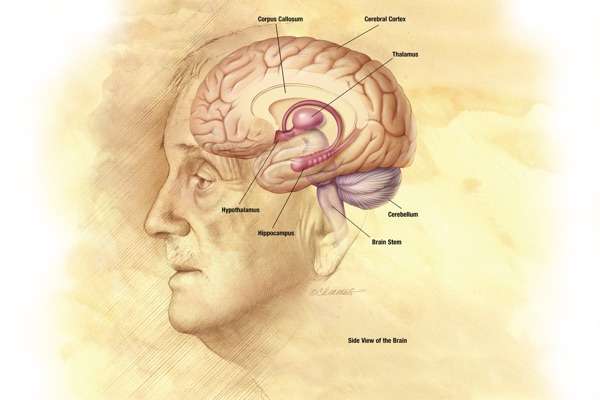
University of California, Irvine study explores the characteristics of people with dementia and their retention of autobiographical, emotional memories. By interviewing people with dementia and family members who could corroborate memories, researchers explored two questions:
– Do people with dementia have emotionally influenced memory?
– If some do and some don’t, how do we identify the ones that do?
Guest Speaker is Aileen Wiglesworth, Ph.D., Director of Research, Center of Excellence on Elder Abuse and Neglect and Associate Clinical Professor, Family Medicine, at UC Irvine School of Medicine.
BruinActive – Exercise Equipment Video Tutorials – Lower Body Room – UCLA

periodontal & IMplant surgery podcast

We invite you to view some of our procedures we perform on a daily basis. Please note that many of the procedures are graphic in nature and may be unsuitable for some.
Research Horizons
Welcome to Cambridge University’s research collection, where you can find out about some of the research, discoveries and innovations that take place here. Whether you are at Cambridge, thinking about applying, or just curious about what happens at this famous University, this collection gives you a chance to find out something you didn’t already know about the world around you!
2012 Industrial Physics Forum (HD video)

CREOG Review Corner
CREOG Review Corner is a podcast to review recent Practice Bulletins and Committee Opinions from the American College of Obstetrics and Gynecology (ACOG). These summaries will help residents to study for annual CREOG testing. It also is a good, fun way to keep up to date for anyone interested in the field of obstetrics and gynecology
 Our TOPPODCAST Picks
  Stay Connected