
Podcast Categories: Science & Medicine

井手口直子のメディカル・カフェ

多職種の人が集い、語らう番組です。パーソナリティは帝京平成大学 薬学部 教授の井手口直子さん。医薬に関する最新の話題について、医療従事者の方をはじめ患者関係者や学生など、幅広いリスナーに向けてお送りします。
Corn on the Pod

The world’s best and only podcast for cornsnake keepers!
Hosted by Donovan Winterberg from Children of the Cornsnake, Corn on the Pod features weekly interviews and discussions with well-respected breeders and others influential in the cornsnake community.
Urban Education Institute – Urban Education Institute

The University of Chicago Urban Education Institute (UEI) serves the South Side of Chicago and is dedicated to creating knowledge to produce reliably excellent schooling for children growing up in urban America. UEI operates the four campuses of the University of Chicago Charter School; prepares outstanding urban teachers and leaders through the University of Chicago Urban Teacher Education Program; undertakes rigorous research to improve policy and practice, anchored by the University of Chicago Consortium on Chicago School Research; and provides tools, analytics and training to improve schools nationwide, primarily through UChicago Impact.
Experimental Cognitive Psychology
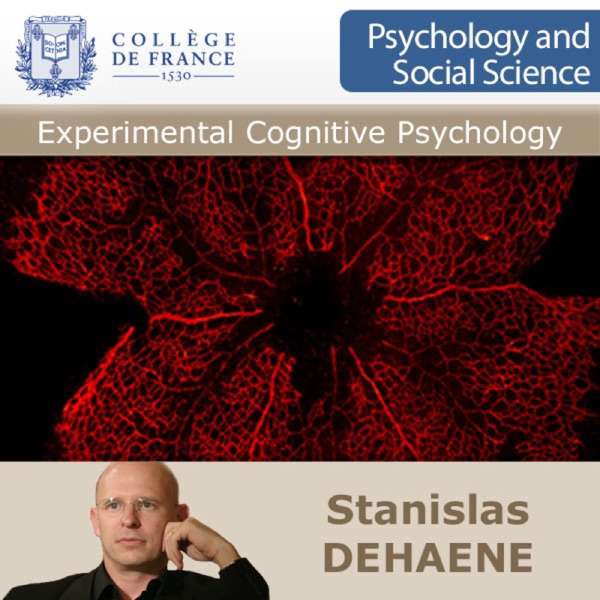
Stanislas Dehaene received his training in mathematics at the École normale supérieure in Paris, then completed a PhD in cognitive psychology with Jacques Mehler, post-doctoral studies with Michael Posner, as well as neuronal modelling studies with Jean-Pierre Changeux. He has been working since 1997 at the Orsay brain imaging center near Paris (Service Hospitalier Frédéric Joliot of the Commissariat à l’Énergie Atomique), where he directs the Cognitive Neuroimaging Unit since 2001. In September 2005 he was elected as a full professor on the newly created chair of Experimental Cognitive Psychology at the Collège de France in Paris.
Stanislas Dehaene’s interests concern the cerebral bases of specifically human cognitive functions such as language, calculation, and reasoning. The team uses a variety of experimental methods, including mental chronometry in normal subjects, cognitive analyses of brain-lesioned patients, and brain-imaging studies with positron emission tomography, functional magnetic resonance imaging, and high-density recordings of event-related potentials. Formal models of minimal neuronal networks are also devised and simulated in an attempt to throw some links between molecular, physiological, imaging, and behavioral data.
Stanislas Dehaene’s main scientific contributions include the study of the organization of the cerebral system for number processing. Using converging evidence from PET, ERPs, fMRI, and brain lesions, Stanislas Dehaene demonstrated the central role played by a region of the intraparietal sulcus in understanding quantities and arithmetic (the number sense). He was also the first to demonstrate that subliminal presentations of words can yield detectable cortical activations in fMRI, and has used these data to support an original theory of conscious and nonconscious processing in the human brain. With neurologist Laurent Cohen, he also studied the neural networks of reading and demonstrated the crucial role of the left occipito-temporal region in word recognition (the visual word form area).
Stanislas Dehaene is the author of over 100 scientific publications in major international journals. He has received several international prizes including the McDonnell Centennial Fellowship and the Louis D. prize of the French Academy of Sciences (with D. Lebihan). He has published an acclaimed book (The Number Sense), which has been translated in eight languages. He has also edited three books on brain imaging, consciousness, and brain evolution, and has authored two general-audience films on the human brain. He is the associate editor of Cognition, an international journal of Cognitive Science.
Medical Detectives – The University of Edinburgh
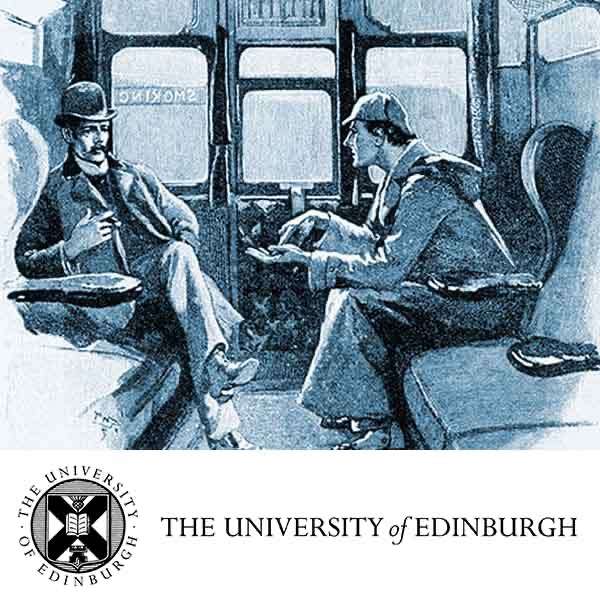
Inspired by Sir Arthur Conan Doyle, the lectures highlight the University’s acclaimed medical research.
Conan Doyle drew inspiration for his character Sherlock Holmes when he was a medical student at Edinburgh.
He based Holmes on the Professor of Medicine Joseph Bell, who was known for his meticulous attention to detail.
Today’s medical sleuths, just like Holmes, must use powers of observation and deduction not only to make the right diagnosis but also to find new treatments.
OmniTalk Radio – The Podcast Hub

OmniTalk Radio – The Podcast Hub – is the place where we currently feature 3 shows:
UFORadio-International = Investigative show about UFO phenomena.
Researchers = Show with various researchers and ideas.
Inspirations = Show about inspiring achievements.
Unlocking the Mysteries of the Universe – Smithsonian Institution

June’s theme is “Unlocking the Mysteries of the Universe.” See how humans have explored the building blocks of the universe through Native American folktales, Korean Jazz fusion, and space x-ray observations. Witness an astronaut postmark an envelope on the moon, and delve into the stories of Venus’ transit across the sky. Seven Smithsonian museums and centers have contributed material to provide multiple perspectives on this theme.
Improve Your World – SUNY-ESF
Interviewers Don Torrance and David White interview experts at ESF on ways to ‘green’ the world. Issues include turning a vacant lot into an urban park, restoring a salt marsh as part of a larger lake-basin restoration effort, and the development of shrub willow as a source of renewable energy, and much more.
Biostatistical Applications for Public Health – Lecture – Dr. Mohammed Y Hussain

Biostatistical Applications in Public Health deals primarily with quantitative/qualitative methods for the Master of Public Health students including tabular, graphical, and numerical descriptive methods, random sampling, principles of statistical inference, confidence intervals, statistical tests of hypothesis through analysis of variance and regression, categorical data analysis and use of statistical packages for analysis.
Course image adapted from “Biostats wordmap” by Mary Beth Sancomb-Moran and licensed under an Attribution-Noncommercial-Share Alike 2.0 Generic Creative Commons license.
 Our TOPPODCAST Picks
  Stay Connected