TopPodcast.com
Menu
  • Home
  • Top Charts
  • Top Networks
  • Top Apps
  • Top Independents
  • Top Podfluencers
  • Top Picks
    • Top Business Podcasts
    • Top True Crime Podcasts
    • Top Finance Podcasts
    • Top Comedy Podcasts
    • Top Music Podcasts
    • Top Womens Podcasts
    • Top Kids Podcasts
    • Top Sports Podcasts
    • Top News Podcasts
    • Top Tech Podcasts
    • Top Crypto Podcasts
    • Top Entrepreneurial Podcasts
    • Top Fantasy Sports Podcasts
    • Top Political Podcasts
    • Top Science Podcasts
    • Top Self Help Podcasts
    • Top Sports Betting Podcasts
    • Top Stocks Podcasts
  • Podcast News
  • About Us
  • Podcast Advertising
  • Contact
Not in our directory?
Add Show Here
Podcast Equipment
Center

toppodcastlogoOur TOPPODCAST Picks

  • Comedy
  • Crypto
  • Sports
  • News
  • Politics
  • True Crime
  • Business
  • Finance

Follow Us

toppodcastlogoStay Connected

    View Top 200 Chart
    Back to Rankings Page
    History

    Walter Edgar’s Journal

    From books to barbecue, and current events to Colonial history, historian and author Walter Edgar delves into the arts, culture, and history of South Carolina and the American South. Produced by South Carolina Public Radio.

    Advertise

    Copyright: © 2023 South Carolina Public Radio

    • Apple Podcasts
    • Google Play
    • Spotify

    Latest Episodes:
    South Carolina's Progressives and World War I Aug 20, 2018
    Show notes
    Written on print: "Spartanburg, S.C. Saxon Mills; 'Girl workers in the half-time mill school.'"
    (Library of Congress/Goldsberry Collection of open-air school photographs.)

    (Originally broadcast 03/02/18) - There were progressives in South Carolina in 1918. And the progressive movement in this state was different from the movement in the Northeast. However, the United States’ entrance into World War I provided an extra momentum to the movement that led to some fundamental changes the interaction between state and federal authority that lasted through the 20th century.

    Dr. William Link, from the University of Florida, has a public conversation with Walter Edgar about Progressives in South Carolina in World War I. The conversation was recorded at the University of South Carolina’s Capstone Conference Center, in Columbia, on February 06, 2018. It was part of a series presented in January and February, 2018, and sponsored by the USC College of Arts and Sciences.

    All Stations: Fri, Aug 24, 12 pm | News & Talk Stations: Sun, Aug 25, 4 pm


    Black South Carolinians, Soldiers in World War I Aug 13, 2018
    Show notes
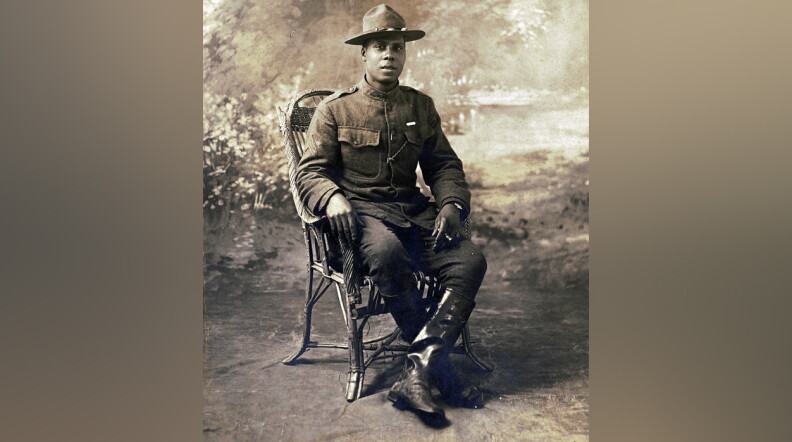
    Unidentified African American soldier in uniform with marksmanship qualification badge and campaign hat, with cigarette holder in front of painted backdrop.
    (Library of Congress)

    Upon the United States' entrance into World War I, President Woodrow Wilson told the nation that the war was being fought to "make the world safe for democracy." For many African-American South Carolinians, the chance to fight in this war was a way to prove their citizenship, in hopes of changing things for the better at home.

    Dr. Janet Hudson from the University of South Carolina joins Dr. Edgar for a public Conversation on South Carolina History, World War I: Black South Carolinian Soldiers. The conversation took place at USC’s Capstone Conference Center, in Columbia, on January 30, 2018. It was part of a series presented in January and February, 2018, and sponsored by the USC College of Arts and Sciences.

    - Originally broadcast 02/23/18 -

    All Stations: Fri, Aug 17, 12pm | News & Talk Stations: Sun, Aug 19, 4 pm


    World War I: South Carolina and the Military Aug 06, 2018
    Show notes
    Camp Jackson

    (Originally broadcast 02/09/18) - With the United States’ entrance into World War I, three Army training bases were set up in South Carolina. The social and economic impact on a state still suffering from the devastation of the Civil War was dramatic. Three infantry divisions, including support personnel, swelled the Upstate and Midlands population by 90,000. On the coast, recruits flocked to Charleston’s Navy base. And some of those trainees were African Americans, which caused political turmoil and civil strife in a Jim Crow state.

    Dr. Andrew Myers from the University of South Carolina Upstate joins Dr. Edgar for a public Conversation on South Carolina History, World War I to talk about S.C. and the Military. This public conversation was recorded as part of a series presented in January and February, 2018, and sponsored by the USC College of Arts and Sciences.

    All Stations: Fri, Aug 10, 12 pm | News & Talk Stations: Sun, Aug 12, 4 pm


    South Carolina Women and World War I Jul 30, 2018
    Show notes
    Detail from a poster showing a Red Cross nurse with an American flag and the Red Cross symbol. (Artist: Howard Chandler Christie)
    (Library of Congress)

    (Originally broadcast 02/02/18) - When the United States entered the First World War in 1918 they women of South Carolina figuratively rolled up their sleeves, and went to work to support their state and their country. At this time, the average woman in the state was black, lived in a rural setting, worked in agriculture or as a domestic worker. White women, while more likely to be in the middle class, were still largely living in rural areas or small towns, and working in agriculture or in textile mills.

    Dr. Amy McCandless, professor emerita of history at the College of Charleston, joins Dr. Edgar for a public Conversation on South Carolina History, World War I: S.C. Women during the War. The conversation took place at USC’s Capstone Conference Center, in Columbia, on January 16, 2018. It was part of a series presented in January and February, 2018, and sponsored by the USC College of Arts and Sciences.

    All Stations: Fri, Aug 03, 12 pm | News & Talk Stations: Sun, Aug 05, 4 pm


    Parks Tell Unheard Stories of the Southern Campaign of the American Revolution Jul 02, 2018
    Show notes
    John Slaughter, Superintendent of US Park Service's Southern Campaign of the American Revolution Parks group.
    (SCETV/Original SC)

    (Originally broadcast 10/13/17) - The Southern Campaign was critical in determining the outcome of the American Revolutionary War, yet the South’s importance has been downplayed in most historical accounts to date.

    The National Park Service has recognized the importance of the Southern Campaign with the creation of its Southern Campaign of the American Revolution Parks group. The group includes Cowpens National Battlefield, Kings Mountain National Military Park, Ninety Six National Historic Site, and Overmountain Victory National Historic Trail. Walter Edgar talks with John Slaughter, superintendent of the parks, about the creation of this group, and its importance in telling the story of the American Revolution in the War.

    All Stations: Fri, July 06, 12 pm | News & Talk Stations: Sun, July 08, 4 pm

    Resources: SCETV’s The Southern Campaign of the American Revolution


    Greenville Chautauqua History Alive: Courage May 07, 2018
    Show notes

    The topic of this year’s History Alive festival presented by Greenville Chautauqua is “Courage.” Historical interpreters will appear in character under the Chautauqua tent bringing to life the stores of Alice Paul, Francis Marion, Harriet Tubman, Clara Barton, and Winston Churchill.

    Greenville Chautauqua’s Caroline McIntyre joins Dr. Edgar along with historical interpreters Becky Stone (Harriet Tubman) and Leslie Goddard (Clara Barton and Alice Paul) to talk about his summer’s History Alive festival.

    All Stations: Fri, May 11, 12 pm | News & Talk Stations: Sun, May 13, 4 pm


    Peace Voices Apr 16, 2018
    Show notes
    Glenis Redmond
    (Peace Center)
    Marcus Amaker

    Peace Voices is a spoken word outreach program of Greenville's Peace Center that uses poetry as a vehicle to tell unique, personal stories. Participants engage in master classes with Peace Center Poet-in-Residence Glenis Redmond, both at the Peace Center and in the community.

    On April 26, 2018, Peace Voices will present a Poetic Conversation at the Peace Center, For Poetry's Sake: Celebrating National Poetry Month. Guest poets will include Cheryl Boyce Taylor and Charleston's Marcus Amaker. Joining Dr. Edgar to talk about Peace Voices and the upcoming Conversation are Glenis Redmond; Charleston Poet Laureate, Marcus Amaker; and Peace Center Vice President of Community Impact, Larisa Gelman.

    All Stations: Fri, Apr 20, 12 pm | News & Talk Stations: Sun, Apr 22, 4 pm


    Work and Economy in South Carolina During World War I Mar 05, 2018
    Show notes
    Spinners and doffers in Lancaster Cotton Mills. Lancaster, S.C., circa 1912.
    (Library of Congress/Hine, Lewis Wickes)

    South Carolina in 1918 was still struggling with the changes to its economic and social systems brought about by the Civil War and Reconstruction. The United States’ entry into World War I affected the daily work life of South Carolinians and the state’s economy in a way that was unique to our state.

    This week, guest host, Dr. Mark Smith of the University of South Carolina, talks with Dr. James C. Cobb, B. Phinizy Spalding Professor of History Emeritus of the University of Georgia, about South Carolina’s Economy during World War I. This conversation was recorded at the University of South Carolina’s Capstone Conference Center, in Columbia, on February 13, 2018. It was part of the series “Conversations on South Carolina History,” presented in January and February, 2018, and sponsored by the USC College of Arts and Sciences.

    All Stations: Fri, Mar 09, 12 pm | News & Talk Stations: Sun, Mar 09, 4 pm


    Progressives in South Carolina During World War I Feb 26, 2018
    Show notes
    Written on print: "Spartanburg, S.C. Saxon Mills; 'Girl workers in the half-time mill school.'"
    (Library of Congress/Goldsberry Collection of open-air school photographs.)

    There were progressives in South Carolina in 1918. And the progressive movement in this state was different from the movement in the Northeast. However, the United States’ entrance into World War I provided an extra momentum to the movement that led to some fundamental changes the interaction between state and federal authority that lasted through the 20th century.

    Dr. William Link, from the University of Florida, has a public conversation with Walter Edgar about Progressives in South Carolina in World War I. The conversation was recorded at the University of South Carolina’s Capstone Conference Center, in Columbia, on February 06, 2018. It was part of a series presented in January and February, 2018, and sponsored by the USC College of Arts and Sciences.

    All Stations: Fri, Mar 02, 12 pm | News & Talk Stations: Sun, Mar 04, 4 pm


    Black South Carolinians in World War I Feb 19, 2018
    Show notes
    Unidentified African American soldier in uniform with marksmanship qualification badge and campaign hat, with cigarette holder in front of painted backdrop.
    (Library of Congress)

    Upon the United States' entrance into World War I, President Woodrow Wilson told the nation that the war was being fought to "make the world safe for democracy." For many African-American South Carolinians, the chance to fight in this war was a way to prove their citizenship, in hopes of changing things for the better at home.

    Dr. Janet Hudson from the University of South Carolina joins Dr. Edgar for a public Conversation on South Carolina History, World War I: Black South Carolinian Soldiers. The conversation took place at USC’s Capstone Conference Center, in Columbia, on January 30, 2018. It was part of a series presented in January and February, 2018, and sponsored by the USC College of Arts and Sciences.

    All Stations: Fri, Feb 23, 12 pm | News & Talk Stations: Sun, Feb 25, 4 pm


    Previous 1 24 25 26 27 28 37 Next

    Related Podcasts

    Dan Carlin’s Hardcore History

    1

    Dan Carlin’s Hardcore History History
    More Perfect

    2

    More Perfect Government
    Casefile True Crime

    3

    Casefile True Crime Games & Hobbies
    The Way I Heard It with Mike Rowe

    4

    The Way I Heard It with Mike Rowe History
    BackStory

    5

    BackStory History
    The Black Dahlia Serial Killers

    6

    The Black Dahlia Serial Killers History
    footer-logo

    Contact Us

    Toll Free: 844-670-7747

    Links

    • Home
    • Top Charts
    • Networks
    • Apps
    • Independents Podcasts
    • Podcast Advertising
    • Podcast News
    • Contact Us
    • About Us
    • Analytics & Insights

    Stay Connected

      Privacy, Terms of Use & Our Code of Ethics Protecting Content Creators Copyrights