From books to barbecue, and current events to Colonial history, historian and author Walter Edgar delves into the arts, culture, and history of South Carolina and the American South. Produced by South Carolina Public Radio.
In Darkest South Carolina: J. Waties Waring and the Secret Plan that Sparked a Civil Rights Movement
Jan 21, 2019
Show notes(Victoria Hansen/SC Public Radio)(Post and Courier)
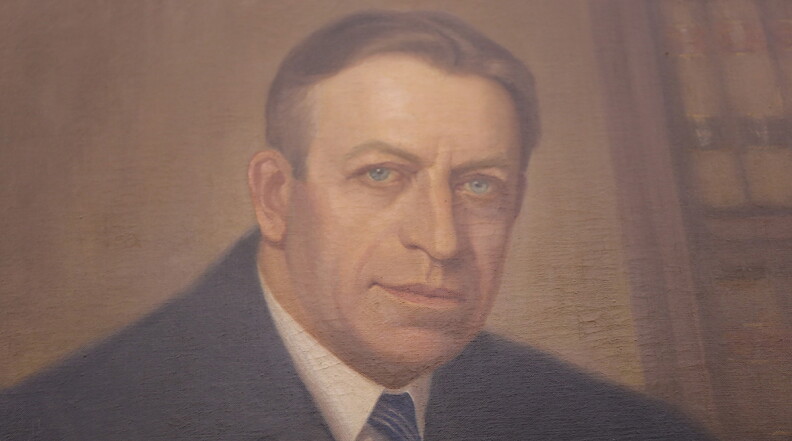
Four years before the landmark U.S. Supreme Court decision Brown v. Board of Education, a federal judge in Charleston hatched his secret plan to end segregation in America. Julius Waties Waring was perhaps the most unlikely civil rights hero in history. An eighth-generation Charlestonian, the son of a Confederate veteran and scion of a family of slave owners, Waring was appointed to the federal bench in the early days of World War II.
Faced with a growing demand for equal rights from black South Carolinians, and a determined and savvy NAACP attorney named Thurgood Marshall, Waring did what he thought was right: He followed the law, and the United States Constitution. In fact, he helped guide Marshall down a narrow legal path that led to the end of segregation schools.
Brian Hicks talks with Walter Edgar about Waring’s plan, and about his life, in the new book, In Darkest South Carolina: J. Waties Waring and the Secret Plan that Sparked a Civil Rights Movement (2017, Post and Courier Books).
All Stations: Fri, Jan 25, 2019, 12 pm | News & Talk Stations: Sun, Jan 27, 4 pm
Columbia Native Brings Stories to the Big Screen
Jan 14, 2019
Show notes
The film producer, actor, and Columbia Native Julian Adams joins Walter Edgar to talk about his new film, The Last Full Measure, and to talk about his journey into the world of filmmaking. Adam’s previous features include Phantom (2013) and Amy Cook: The Spaces in Between (2009).
The Last Full Measure tells the true story of William Pitsenbarger (Jeremy Irvine), an Air Force medic who saved over sixty men in one of the harshest battles of the Vietnam War. Offered the chance to escape on the last helicopter out of the combat zone, Pitsenbarger stayed behind to save and defend the lives of his fellow soldiers. Twenty years later, Pitsenbarger's comrade in arms (William Hurt) and father (Christopher Plummer) seek the help of investigator Scott Huffman (Sebastian Stan) and other surviving veterans of the battle to finally procure him The Congressional Medal of Honor he deserved.
All Stations: Fri, Jan 18, 2019, 12 pm | News & Talk Stations: Sun, Jan 20, 4 pm
Remembering T. Moffatt Burriss, World War II Battlefield Hero
Jan 09, 2019
Show notes(SCETV)(Tut Underwood/SC Public Radio)
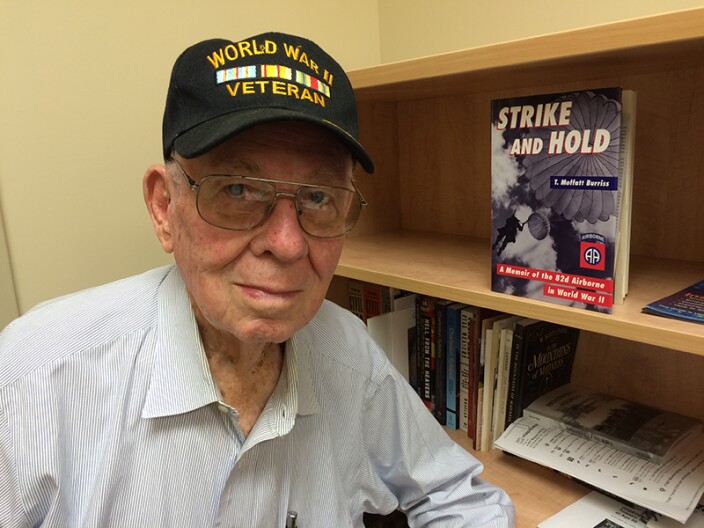
This week's program is an encore of an episode aired in 2012, featuring T. Moffatt Burriss. Burriss was a former Columbia area contractor, Republican state lawmaker and American World War II battlefield hero. He died January 4, 2019 at age 99.
(Broadcast 06/29/12) - Anderson native T. Moffatt Burris is a WWII veteran and concentration camp liberator who also participated in the invasions of Sicily and Italy. During Operation Market Garden in Holland, he led the amphibious assault across the Waal River made famous in the movie, A Bridge Too Far. Burriss is the subject of the upcoming ETV special Man and Moment: T. Moffatt Burriss and the Crossing. He joins Dr. Edgar, State newspaper reporter Jeff Wilkinson, and documentary producer Lee Ann Kornegay, to talk about the war and about making the film.
All Stations: Fri, Jan 11, 2019, 12 pm | News & Talk Stations: Sun, Jan 13, 4 pm
The Last Ballad: Ella Mae Wiggins' Life in the Mill and Death on the Picket Line
Jan 08, 2019
Show notes(Lewis Hines/National Archives)
(Originally broadcast 10/12/18) - New York Times bestselling author Wiley Cash’s 2017 novel, The Last Ballad (2017, Willam Morrow) is set in the Appalachian foothills of North Carolina in 1929 and inspired by actual events. It chronicles an ordinary woman’s struggle for dignity and her rights in a textile mill; The Last Ballad is a moving tale of courage in the face of oppression and injustice. It is based on true events and tells the story of Ella Mae Wiggins, whose ballads about the poverty of mill workers in the South, and their repression by mill owners, lived on after her death in a Gaston, NC, workers’ strike.
Dr. Edgar talks with author Wiley Cash about what drew him to the real-life story of Ella Mae Wiggins and about what it was like to be working in the mills of the Carolinas in the 1920s and 1930s.
All Stations: Fri, Jan 04, 2019, 12 pm | News & Talk Stations: Sun, Jan 06, 4 pm
Lincoln's Unfinished Work
Nov 12, 2018
Show notes(George Peter Alexander Healy)
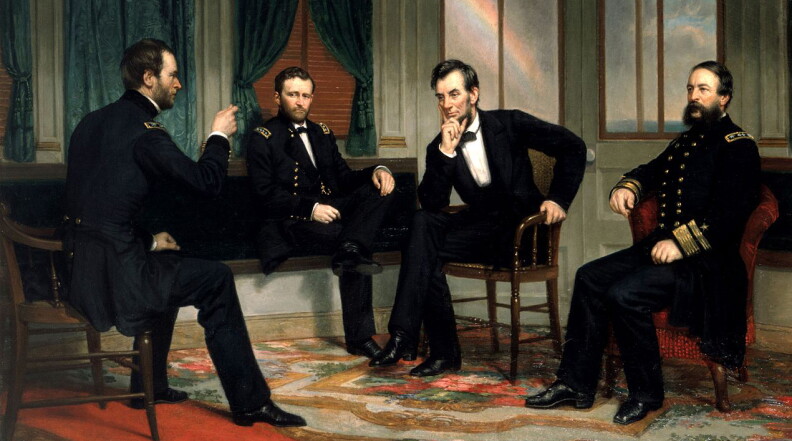
In the Gettysburg Address, Abraham Lincoln spoke of the need to conclude “the unfinished work which they who fought here so nobly advanced.” In his second Inaugural Address, he spoke in similar vein: “With malice toward none, with charity for all, with firmness in the right as God gives us to see the right, let us strive on to finish the work we are in.”
It’s likely that, in Lincoln’s mind, the most immediate “unfinished work” was the Civil War itself as well as many other unfinished tasks. An upcoming conference at Clemson University will discuss some of the dimensions of Lincoln’s “unfinished work” as a springboard for exploring the United States after his death. The question of Lincoln’s unfinished work remains pertinent to those who care about American democracy.
The organizers the conference, Dr. Vernon Burton and Dr. Peter Eisentstadt join two of its presenters, Dr. Bill Hine and Dr. Darlene Hine, and Walter Edgar to talk about Lincoln’s Unfinished Work.
All Stations: Fri, Nov 16, 12 pm | News & Talk Stations: Sun, Nov 18, 4 pm
The Last Ballad: Life in the Mill and Death on the Picket Line
Oct 08, 2018
Show notes(Lewis Hines/National Archives)
New York Times bestselling author Wiley Cash’s 2017 novel, The Last Ballad (2017, Willamm Morrow) is set in the Appalachian foothills of North Carolina in 1929 and inspired by actual events. It chronicles an ordinary woman’s struggle for dignity and her rights in a textile mill; The Last Ballad is a moving tale of courage in the face of oppression and injustice. It is based on true events and tells the story of Ella Mae Wiggins, whose ballads about the poverty of mill workers in the South, and their repression by mill owners, lived on after her death in a Gaston, NC, workers’ strike.
Dr. Edgar talks with author Wiley Cash about what drew him to the real-life story of Ella Mae Wiggins and about what it was like to be working in the mills of the Carolinas in the 1920s and 1930s.
All Stations: Fri, Oct 12 12 pm | News & Talk Stations: Sun, Oct 14, 4 pm
The Most Influential 20th-Century Southern Novel?
Sep 19, 2018
Show notes The late Noel Polk and Tudier Harris, with Walter Edgar, taping "Take on the South."(SCETV/SC Public Radio)
This month, a PBS series, The Great American Read, celebrates the joy of reading and the books we love. Celebrities, authors, and book lovers reveal the novels that have affected their lives. And, the national vote gets under way, to decide America’s Best-Loved Novel.
Back in 2009, SCETV's Take on the South took a similar poll, and asked the question, "What was the most influential 20th-Century Southern Novel?"
On Walter Edgar's Journal, internationally-renowned Southern-literature scholars Trudier Harris of UNC and Noel Polk of Mississippi State University join Dr. Edgar to debate the topic.
So, while the nation votes on "America's Best-Loved Novel," we thought we'd revisit our discussion of May 8, 2009 with this podcast. This episode is a companion to the SCETV series.
Free Speech and the Responsibilities of Citizenship
Sep 10, 2018
Show notes(U.S. National Archives)
What are the guarantees of free speech found in the Constitution of the United States? Are there limits to free speech? And what are the responsibilities of citizens who exercise their right to free speech? Dr. Michael Lipscomb of Winthrop University, talks with Dr. Edgar about these and other questions.
Dr. Lipscomb will be making a Constitution Day presentation, Free Speech and the Responsibilities of Citizenship.at Winthrop on September 17, 2018, as part of the “News Literacy and Future of Journalism” series, a seven-month collaborative effort among SC Humanities, Winthrop University. The series is part of the national initiative on “Democracy and the Informed Citizen” administered by the Federation of State Humanities Councils and funded by the Mellon Foundation.
Crossroads: Change in Rural America
Sep 05, 2018
Show notes(David Mark, via Pixabay [CC0 1.0])
Crossroads: Change in Rural America is a traveling Smithsonian exhibit that offers small towns a chance to look at their own paths and to highlight the changes that affected their fortunes over the past century. Sponsored by SC Humanities in partnership with local communities, Crossroads: Change in Rural America will tour South Carolina in 2018 – 2019, visiting six communities: Union, Denmark, Newberry, Hopkins, Barnwell, and Dillon. Each host community will host the exhibit for six weeks and will present collateral programming from local exhibits to oral histories to movie screenings.
In 1900, about 40% of Americans lived in rural areas. By 2010, less than 18% of the U.S. population lived in rural areas. Yet, only 10% of the U.S. landmass is considered urban. Despite the massive economic and demographic impacts brought on by these changes, America’s small towns continue to creatively focus on new opportunities for growth and development. Economic innovation and a focus on the cultural facets that make small towns unique, comfortable, and desirable have helped many communities create their own renaissance.
Walter Edgar explores the history, present challenges, and possible futures of rural South Carolina with guests T.J. Wallace, Assistant Director of SC Humanities; Crossroads’ statewide scholar Dr. Ken Robinson and a professor of Sociology at Clemson University; and Marie Adams, Co-Director of the Harriet Barber Historic House in Hopkins, SC.
New York Times: Groundbreaking African American Diva 'Overlooked No More'
Sep 04, 2018
Show notes(Napoleon Sarony/National Portrait Gallery, Smithsonian Institite)
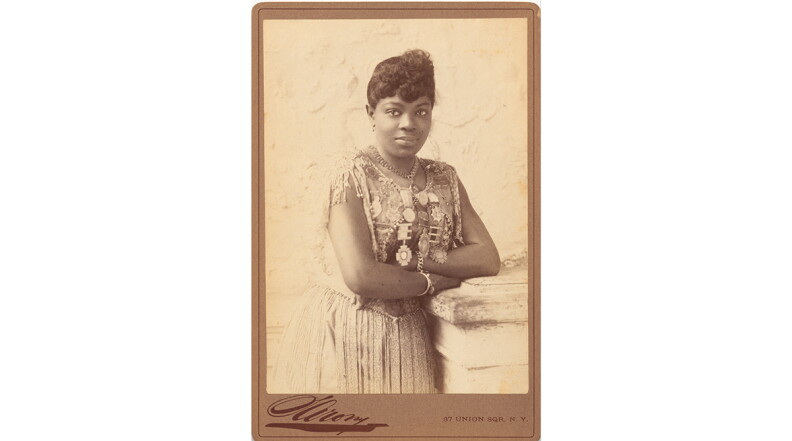
In August of 2013, Walter Edgar's Journal featured a conversation with Maureen D. Lee, about her biography Sissieretta Jones, "The Greatest Singer of Her Race," 1868-1933 (USC Press, 2012), which told the forgotten story of the pioneering African American diva whose remarkable career paved the way for many who followed her. Recently, the New York Times, in their series,"Overlooked," published a detailed obituary of Jones. The series is an effort by the Times to correct what they have declared to be historical biases in their obituaries, against non-white people as well as women.
This caught our attention, and we thought we'd again share our conversation with Maureen Lee.
___
(Originally broadcast 08/16/13) - Sissieretta Jones, "The Greatest Singer of Her Race," 1868-1933 (USC Press, 2012), recounts the life of Matilda Sissieretta Joyner Jones, a classically trained soprano who was also called the "Black Patti," a nickname that likened her to the famous white, European opera star Adelina Patti. Jones sang before four U.S. presidents and for several prominent European leaders. She performed in famous venues such as Carnegie Hall, London's Covent Garden, and Madison Square Garden, as well as in hundreds of theaters and opera houses throughout the United States and Canada. Yet, this remarkable singer's accomplishments have been largely overlooked.
South Carolina author Maureen Lee explores the obstacles and limitations Jones faced because of her race, as well as the opportunities she seized, and chronicles the development of black entertainment during the late nineteenth, and early twentieth, centuries.

 Our TOPPODCAST Picks
  Stay Connected