From books to barbecue, and current events to Colonial history, historian and author Walter Edgar delves into the arts, culture, and history of South Carolina and the American South. Produced by South Carolina Public Radio.
The inside story of Hootie and the Blowfish
Jun 13, 2022
Show notes Hootie and the Blowfish(Micheal McLaughlin / Courtesy of the University of South Carolina Press)
In 1985, Mark Bryan heard Darius Rucker singing in a dorm shower at the University of South Carolina and asked him to form a band. For the next eight years, Hootie & the Blowfish—completed by bassist Dean Felber and drummer Soni Sonefeld—played every frat house, roadhouse, and rock club in the mid-Atlantic and Southeast, becoming one of the biggest independent acts in the region.
In Only Wanna Be with You (2022, USC Press), Tim Sommer, the ultimate insider who signed Hootie to Atlantic Records, pulls back the curtain on a band that defied record-industry odds to break into the mainstream by playing hacky sack music in the age of grunge.
He chronicles the band's indie days; the chart-topping success—and near-cancelation—of their major-label debut, cracked rear view; the year of Hootie (1995) when the album reached no. 1, the "Only Wanna Be with You" music video collaboration with ESPN's SportsCenter became a sensation, and the band inspired a plotline on the TV show Friends; the lean years from the late 1990s through the early 2000s; Darius Rucker's history-making rise in country music; and one of the most remarkable comeback stories of the century.
Tim Sommer shares the Hootie story with Walter Edgar.
Baptists and Bootleggers
Jun 06, 2022
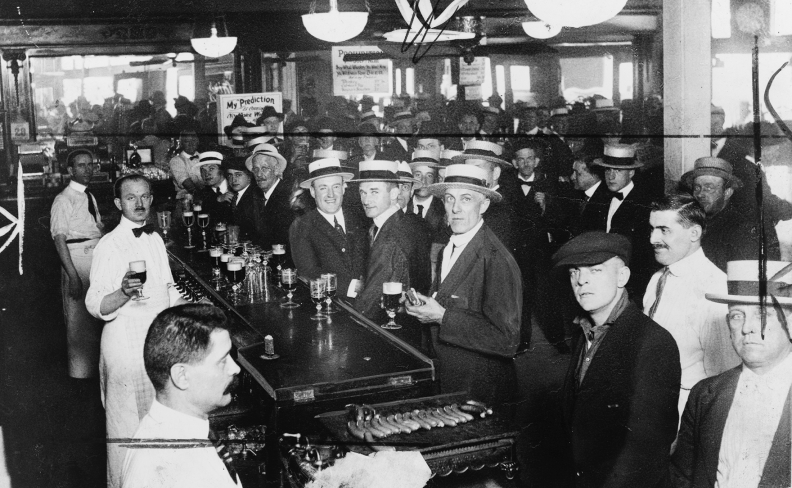
Show notes Interior of a crowded bar moments before midnight, June 30, 1919, when wartime prohibition went into effect New York City.(New York World-Telegram and the Sun Newspaper Photograph Collection / Library of Congress)
In her book, Baptists and Bootleggers: A Prohibition Expedition Through the South (2021, Evening Post Books) Kathryn Smith takes you to major cities and small towns, all of which struggled between the Baptists and their teetotaling allies who preached temperance and the bootleggers who got rich providing what their customers couldn’t buy legally.
Smith talks with Walter Edgar about her Prohibition expedition through hotels, bars, speakeasies, museums and cemeteries, and shares some vintage cocktail recipes she picked up along the way.
- Originally released 02/25/22 -
Timmonsville native Johnny D. Boggs writes about the historic frontier - whether it's in South Carolina or in Texas
May 23, 2022
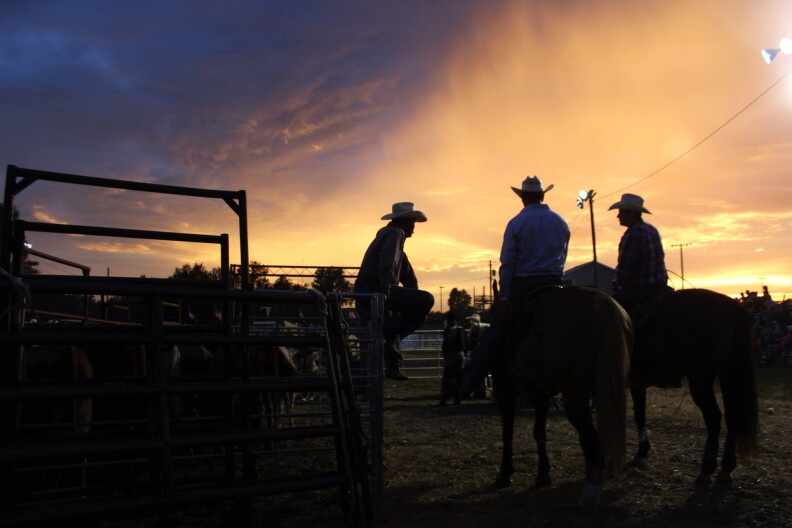
Show notes( pixhere.com)
Timmonsville native Johnny D. Boggs has worked cattle, been bucked off horses, shot rapids in a canoe, hiked across mountains and deserts, traipsed around ghost towns, and spent hours poring over microfilm in library archives -- all in the name of finding a good story. He was won a record nine Spur Awards from Western Writers of America, a Western Heritage Wrangler Award from the National Cowboy and Western Heritage Museum, and has been called by Booklist magazine "among the best western writers at work today."
He joins Walter Edgar to talk about his career, his love of the American West, and about his new book, The Cobbler of Spanish Fort and Other Frontier Stories (2022, Five Star Publishing).
- (Originally broadcast 02/25/22) -
News and Music Stations: Fri, May 27, at 12 pm; Sat, May 28, at 7 am News & Talk Stations: Friday, May 27, at 12 pm; Sun, May 29, at 4 pm
Shrimp Tales
May 16, 2022
Show notes(Alexandra Olgin)
Shrimp, one of our most delicious food sources, was once only considered worthy of bait. In her new book, Shrimp Tales: Small Bites of History (2022, Primedia eLaunch), author Beverly Bowers Jennings tells the fascinating story of the shrimp industry, from the shrimp boats and their captains to fishing family lore, tasty recipes and more.
Jennings talks with Walter Edgar about what she learned in a decade spent interviewing shrimpers and others associated with commercial shrimping to produce permanent exhibits for the Port Royal Sound Maritime Center and the Coastal Discovery Museum on Hilton Head. That work served as the basis of Shrimp Tales, a book that reveals the old ways of shrimping and celebrates today’s awakening about the foods we eat and the people who make it all happen.
Into the light: the electrification of rural South Carolina
May 09, 2022
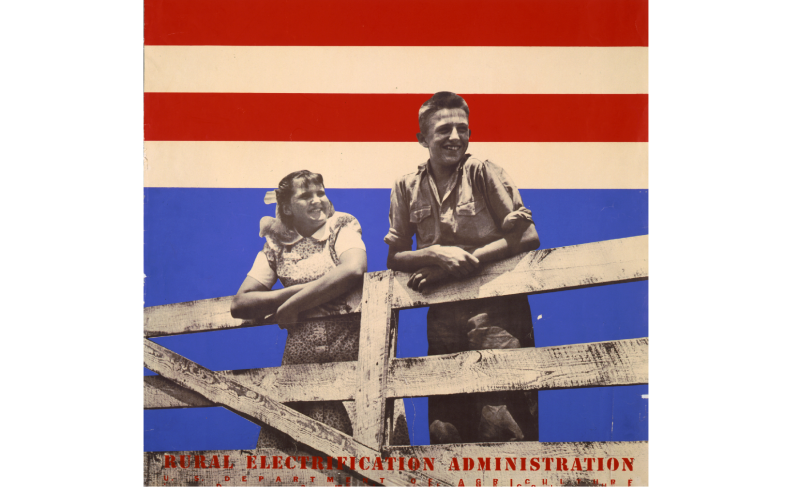
Show notes Poster: Rural Electrification Administration, U.S. Department of Agriculture( Library of Congress)
Early in the twentieth century, for-profit companies such as Duke Power and South Carolina Electric and Gas brought electricity to populous cities and towns across South Carolina, while rural areas remained in the dark. It was not until the advent of publicly owned electric cooperatives in the 1930s that the South Carolina countryside was gradually introduced to the conveniences of life with electricity. Today, electric cooperatives serve more than a quarter of South Carolina's citizens and more than seventy percent of the state's land area.
In his book, Empowering Communities: How Electric Cooperatives Transformed Rural South Carolina (USC Press, 2022), Dr. Lacy K. Ford and co-author Jared Bailey tell the story of the rise of "public" power – electricity serviced by member-owned cooperatives and sanctioned by federal and state legislation. It is a complicated saga, encompassing politics, law, finance, and rural economic development, of how the cooperatives helped bring fundamental and transformational change to the lives of rural people in South Carolina, from light to broadband.
News and Music Stations: Fri, May 13, 12 pm; Sat, May 14, 7 am News & Talk Stations: Fri, May 13, 12 pm; Sun, May 15, 4 pm
To the End of the World: Nathanael Greene, Charles Cornwallis, and the Race to the Dan
May 02, 2022
Show notes(Florida Center for Instructional Technology (https://etc.usf.edu/clipart/)
“In the most barren inhospitable unhealthy part of North America, opposed by the most savage, inveterate perfidious cruel Enemy, with zeal and with Bayonets only, it was resolv’d to follow Green’s Army, to the end of the World.” So wrote British general Charles O’Hara about the epic confrontation between Nathanael Greene and Charles Cornwallis during the winter of 1780-81. Only Greene’s starving, threadbare Continentals stood between Cornwallis and control of the South—and a possible end to the American rebellion.
Daniel Morgan’s stunning victory at Cowpens over a superior British force set in motion the “Race to the Dan,” Greene’s month-long strategic retreat across the Carolinas. In constant rain and occasional snow, Greene’s soldiers—tracking the ground with their bloody feet—bound toward a secret stash of boats on the Dan River. Just before Cornwallis could close his trap, the Continentals crossed into Virginia and safety.
- Originally released 03/12/21 -
The Grim Years: Settling South Carolina, 1670 - 1720
Apr 25, 2022
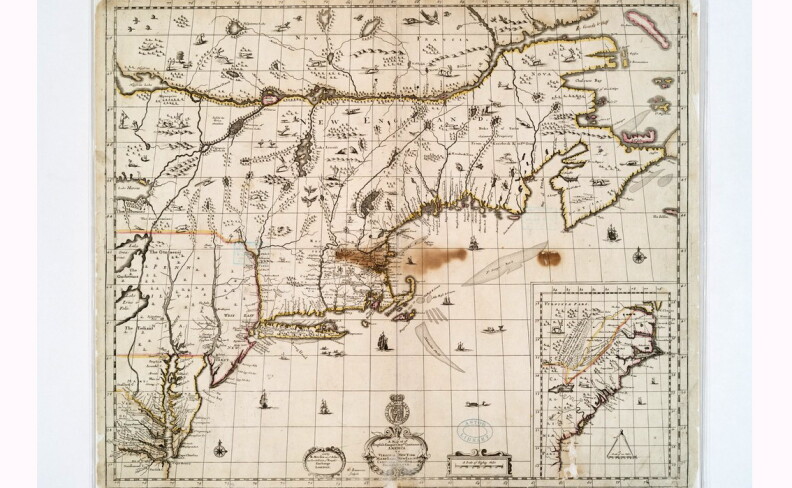
Show notes A map of ye English Empire in ye continent of America : viz Virginia, Maryland, Carolina, New York, New Iarsey, New England, Pennsilvania(Morden, Robert (d. 1703), Bookseller; Binneman, Walter, Engraver Daniel, R. (Richard), Cartographer / NY Public Library)
In his book, The Grim Years: Settling South Carolina, 1670-1720 (2020, University of SC Press), Dr. John Navin explains how eight English aristocrats, the Lords Proprietors, came to possess the vast Carolina land grant and then enacted elaborate plans to recruit and control colonists as part of a grand moneymaking scheme. In his conversation with Walter Edgar, Navin tells of a cadre of men who rose to political and economic prominence, while ordinary colonists, enslaved Africans, and indigenous groups became trapped in a web of violence and oppression.
But those plans went awry, and the mainstays of the economy became hog and cattle ranching, lumber products, naval stores, deerskin exports, and the calamitous Indian slave trade. The settlers' relentless pursuit of wealth set the colony on a path toward prosperity but also toward a fatal dependency on slave labor. Rice would produce immense fortunes in South Carolina, but not during the colony's first fifty years. Religious and political turmoil instigated by settlers from Barbados eventually led to a total rejection of proprietary authority.
Threatened by the Native Americans they exploited, by the Africans they enslaved, and by their French and Spanish rivals, white South Carolinians lived in continual fear. For some it was the price they paid for financial success. But for most there were no riches, and the possibility of a sudden, violent death was overshadowed by the misery of their day-to-day existence.
- Originally broadcast 05/14/21 -
Open Space Institute works in concert with others to protect South Carolina's scenic, natural, and historic landscapes
Apr 20, 2022
Show notesThe Black River at Kingstree, SC(Robin M. Keith / Wikimedia Commons)
The Open Space Institute’s mission is to protect scenic, natural, and historic landscapes to provide public enjoyment, conserve habitat and working lands, and sustain communities. Over the past 40 years, the institute has saved 2,285,092 acres of land through direct acquisition, grants, and loans. Having begun by focusing on land in New York State, they have in recent years saved significant, complex, and large-scale tracts in South Carolina, Florida, and New Jersey through direct acquisitions.
In December 2022, the Open Space Institute (OSI) and The Nature Conservancy (TNC) announced the purchase of three properties along the Santee River in South Carolina, expanding the largest contiguous block of protected coastal lands in the state.
OSI’s Vice-President and Director of the Southeast, Maria Whitehead, joins Walter Edgar to talk about the acquisition and about the Institute’s plans for land protection in the state.
Enabling Veterans in South Carolina to live their best lives
Apr 11, 2022
Show notesFILE - (Nov. 11, 2008) World War II veteran Harry J. Thomas, right, stands with Brig. Gen. Brett T. Williams, during the singing of the national anthem at a Veterans Day ceremony at the 18th Wing headquarters at Kadena Air Base, Okinawa, Japan.(Ryan C. Delcore, U.S. Navy, [Public domain], via Wikimedia Commons)
In 2020, Maj. General (Ret.) William F. Grimsley became South Carolina's first Secretary of Veterans’ Affairs. From the beginning, Grimsley and his staff have defined the purpose of the new Department of Veterans’ Affairs as leading and enabling “a state-wide coalition of partners to create and sustain an environment in which Veterans and their families can thrive as valued and contributing members of the South Carolina community and the Nation.”
Grimsley talks with Walter Edgar about how the Department strives to achieve that purpose and the way it is expanding and building partnerships to do so.
News and Music Stations: Fri, Apr 15, at 12 pm; Sat, Apr 16, at 7 am News & Talk Stations: Friday, Apr 15, at 12 pm; Sun, Apr 17, at 4 pm
The myths and hard facts of the Atlantic slave trade
Apr 04, 2022
Show notes( Kuro Neko Niyah / Wikimedia Commons)
For many years scholars made assumptions about how Europeans traded with West Africans for other, enslaved Africans, about how many voyages were made by slave ships to the English colonies in North America before 1808, and about why the institution of slavery almost died out in New England. Beginning in the late 1960s, however, a movement began that challenged these assumptions and the viewpoints of generations of Euro-centric scholars began to give way to work by data-driven historians.
Dr. Donald Wright, Distinguished Teaching Professor Emeritus at the State University of New York College at Cortland, is one of the historians who was part of this sea change in scholarship. He spent decades writing about African history, beginning as graduate student collecting oral histories in Gambia, as well as African American history, and Atlantic history. His books include Oral Traditions from the Gambia and African Americans in the Colonial Era: From African Origins Through the American Revolution.
This week Walter Edgar talks with Donald Wright about the myths about and some of the hard facts of the Atlantic slave trade.

 Our TOPPODCAST Picks
  Stay Connected