TopPodcast.com
Menu
  • Home
  • Top Charts
  • Top Networks
  • Top Apps
  • Top Independents
  • Top Podfluencers
  • Top Picks
    • Top Business Podcasts
    • Top True Crime Podcasts
    • Top Finance Podcasts
    • Top Comedy Podcasts
    • Top Music Podcasts
    • Top Womens Podcasts
    • Top Kids Podcasts
    • Top Sports Podcasts
    • Top News Podcasts
    • Top Tech Podcasts
    • Top Crypto Podcasts
    • Top Entrepreneurial Podcasts
    • Top Fantasy Sports Podcasts
    • Top Political Podcasts
    • Top Science Podcasts
    • Top Self Help Podcasts
    • Top Sports Betting Podcasts
    • Top Stocks Podcasts
  • Podcast News
  • About Us
  • Podcast Advertising
  • Contact
Not in our directory?
Add Show Here
Podcast Equipment
Center

toppodcastlogoOur TOPPODCAST Picks

  • Comedy
  • Crypto
  • Sports
  • News
  • Politics
  • True Crime
  • Business
  • Finance

Follow Us

toppodcastlogoStay Connected

    View Top 200 Chart
    Back to Rankings Page
    Natural Sciences

    Universe Today

    Space and Astronomy News from Universe Today

    Advertise

    Copyright: © Copyright Cosmoquest

    • Apple Podcasts
    • Google Play
    • Spotify

    Latest Episodes:
    Astronomers Directly Image the Youngest Exoplanet Ever Sep 23, 2026
    Show notes

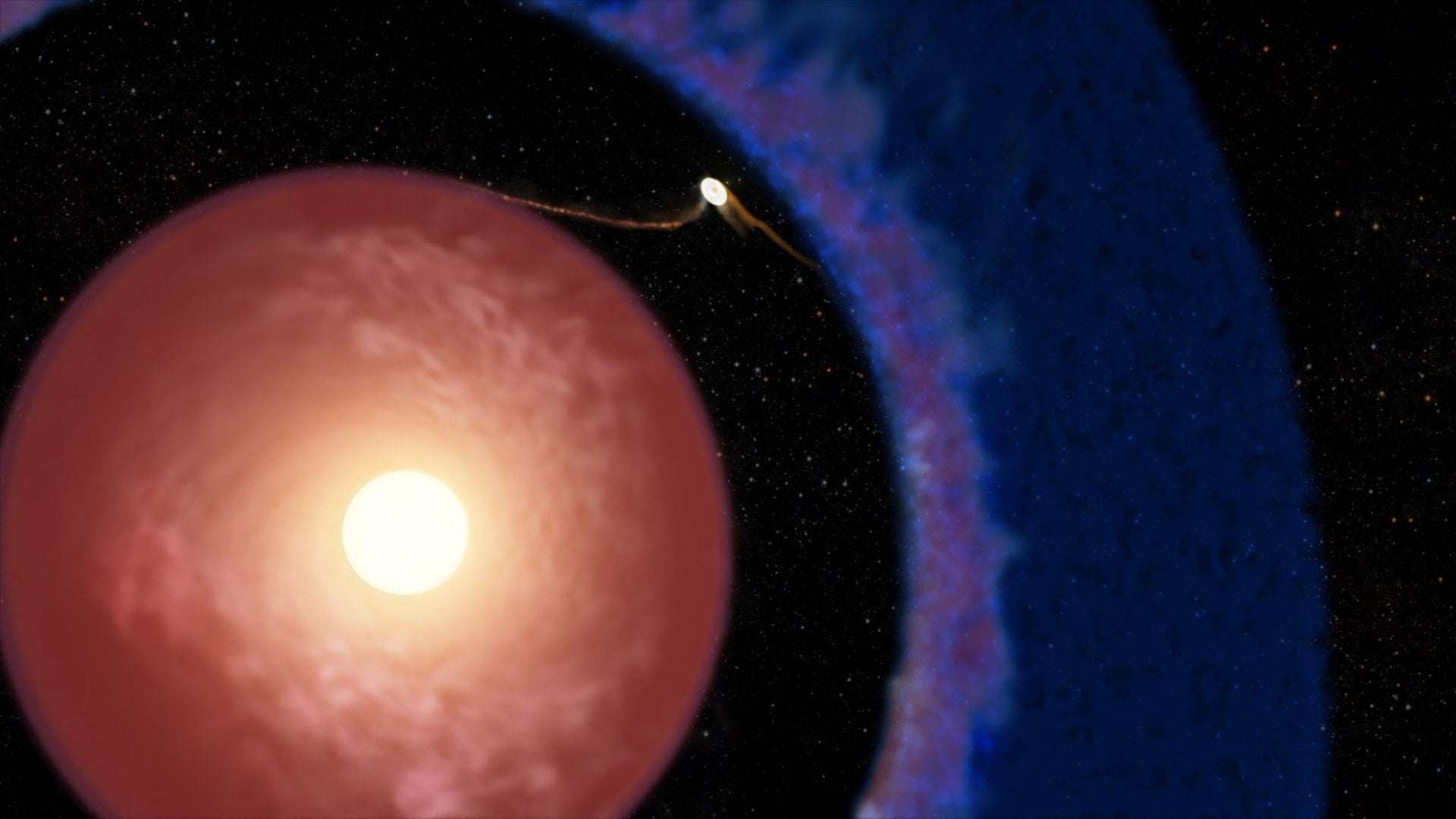
    ARtist' image of the forming planet around Elias 2-24. Credit - W.M. Keck Observatory / A. Bernardi et al.

    Most exoplanets we find have been around a long time. They’ve cleared out their orbital path (one of the requirements of planethood, as fans of Pluto well know), have their own gravitational pull, and in many cases shine with their own infrared light. But it takes a long time to get to that point - finding “young” planets is much harder. But a new paper available in The Astrophysical Journal Letters by a research team led by Andrea Bernardi of Diego Portales University in Chile describes a new paper that definitely takes the prize as the youngest exoplanet we’ve yet found.


    How Diffractive Solar Sails Could Stop a Killer Asteroid at 100 km/s Sep 23, 2026
    Show notes

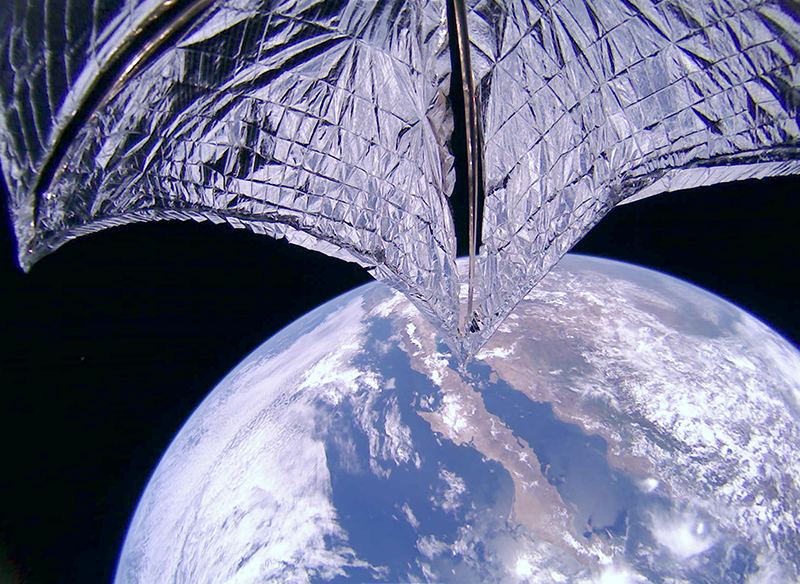
    Image of the deployment of Lightsail 2. Credit - The Planetary Society

    Asteroids don’t come with a warning label that they might one day hit Earth. While we don’t know of any currently on course to do so, we are finding thousands of new ones each year, and there’s always a potential that one could. We proved a viable technique for dealing with that eventuality - the DART mission successfully moved a small asteroid using a “kinetic impactor” - basically a big rod designed to push the asteroid off its trajectory. But DART had one big flaw - it was traveling in the same direction as the asteroid, and approached it from behind, eventually hitting it with an impactor launched while in orbit around it. That technique might work if we have enough warning, but would require years of orbital mechanical maneuvering to pull off. An alternative, proposed by researchers at Beihang University, is to use a new type of solar sail to deflect a potentially hazardous asteroid by hitting it head on.


    SKA May Detect Magnetic Fields on Distant Exoplanets Sep 23, 2026
    Show notes

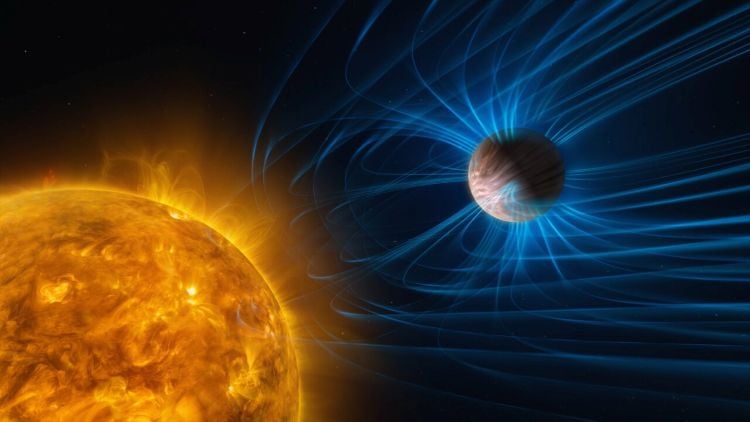
    Artist's impression of an exoplanet and its magnetic field. (Credit: ESO/M. Kornmesser, L. Calçada)

    Studying exoplanets has provided astronomers with a plethora of insights regarding what characteristics need to be searched to find life beyond Earth. For the longest time, astronomers merely thought an exoplanet in a star’s habitable zone was a sufficient criterion for an Earth-like world. However, astronomers have learned that certain stars are more active than our Sun, resulting in exoplanets orbiting in the habitable zone being blasted with far more radiation than Earth could handle. In recent years, astronomers have recognized that a planet’s magnetic field, which shields the Earth from harmful radiation, could be a prime characteristic for identifying Earth-like worlds.


    First Diagnostic X-Rays in Space Mark New Era for Astronaut Health Sep 23, 2026
    Show notes

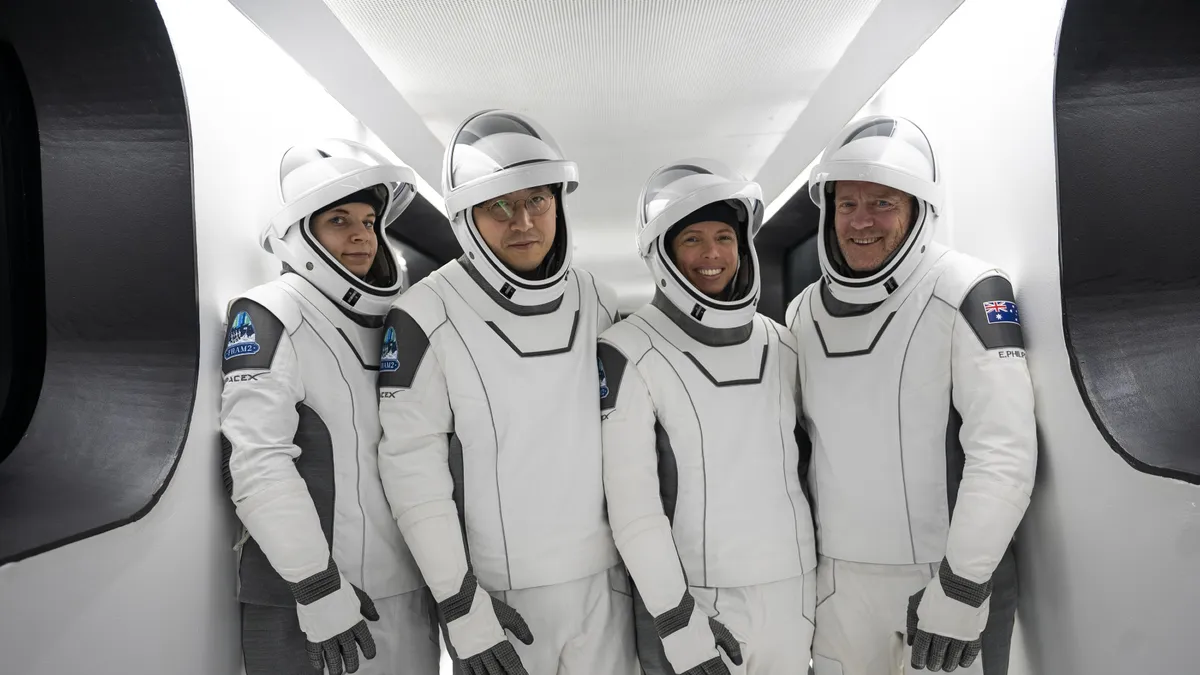
    Fram2 astronauts, from the left: Pilot Rabea Rogge, commander Chun Wang, vehicle commander Jannicke Mikkelsen, and medical officer Eric Philips. Credit: SpaceX

    A team of researchers acquired the first diagnostic X-ray images during a commercial spaceflight, demonstrating that X-ray medicine can be performed in space.


    3I/ATLAS Has An Extreme Taste For Heavy Water Sep 22, 2026
    Show notes

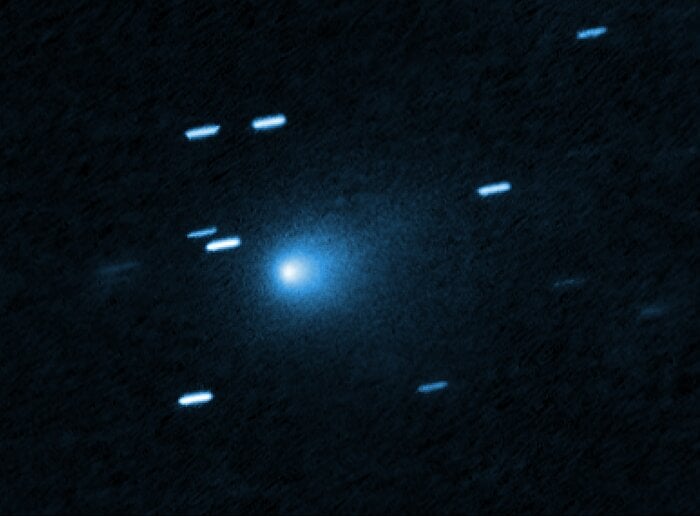
    Hubble image of interstellar comet 3I/ATLAS, which was used in the study. Credit - NASA, ESA, D. Jewitt (UCLA); Image Processing: J. DePasquale (STScI)

    More and more details about 3I/ATLAS are filtering through the scientific process as time goes on. Our third known interstellar visitor attracted the attention of some of the most powerful observatories in the world when it was discovered in July 2025, and some of those telescopes found something peculiar - the isotopes it contained appeared different. A new paper submitted to The Astrophysical Journal Letters (and available in pre-print on arXiv) by Kenji Furuya of the RIKEN Pioneering Research Institute in Japan and his co-authors, shows how that isotopic discrepancy is likely due to the “low-metallicity” of the stellar nursery 3I/ATLAS was born in.


    Space Rocks Carry Hundreds of Thousands of Complex Organic Molecules—and We Just Photographed Them Sep 22, 2026
    Show notes

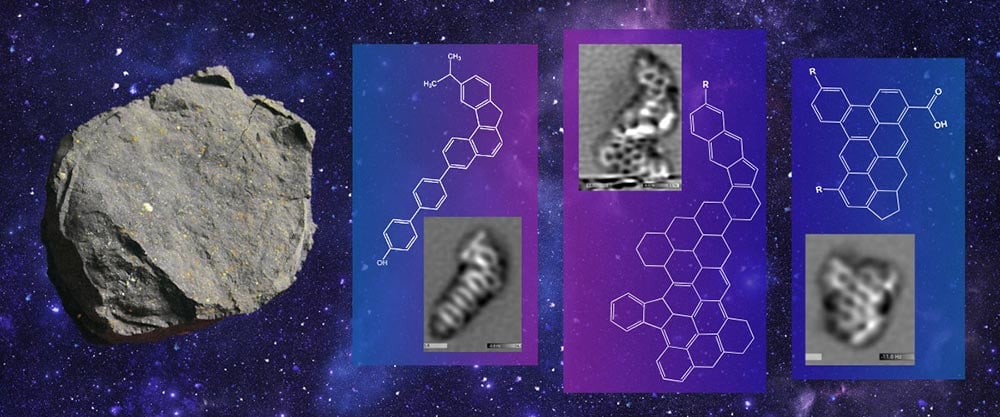
    Some of the structures of the organic compounds found in the meteorites along with their chemical structures, as shown by AFM imaging. Credit - Brookhaven National Laboratory / J.W. Frye-Jones et al.

    Scientists have known for a while that meteorites contain the “building blocks” of life - complex organic molecules such as amino acids, simple sugars, or even the chemical rungs of DNA. But anyone who has taken an organic chemistry class knows there are plenty of other carbon-based molecules out there, and a new study from Joseph W. Frye-Jones of the National High Magnetic Field Laboratory and Florida State, which was published in The Planetary Science Journal, found tens of thousands of types of previously unseen organic compounds in two of the world’s most famous meteorites.


    A Rare, Distant Clump of Early Galaxies Reveals Ancient Cosmic Secrets Sep 22, 2026
    Show notes

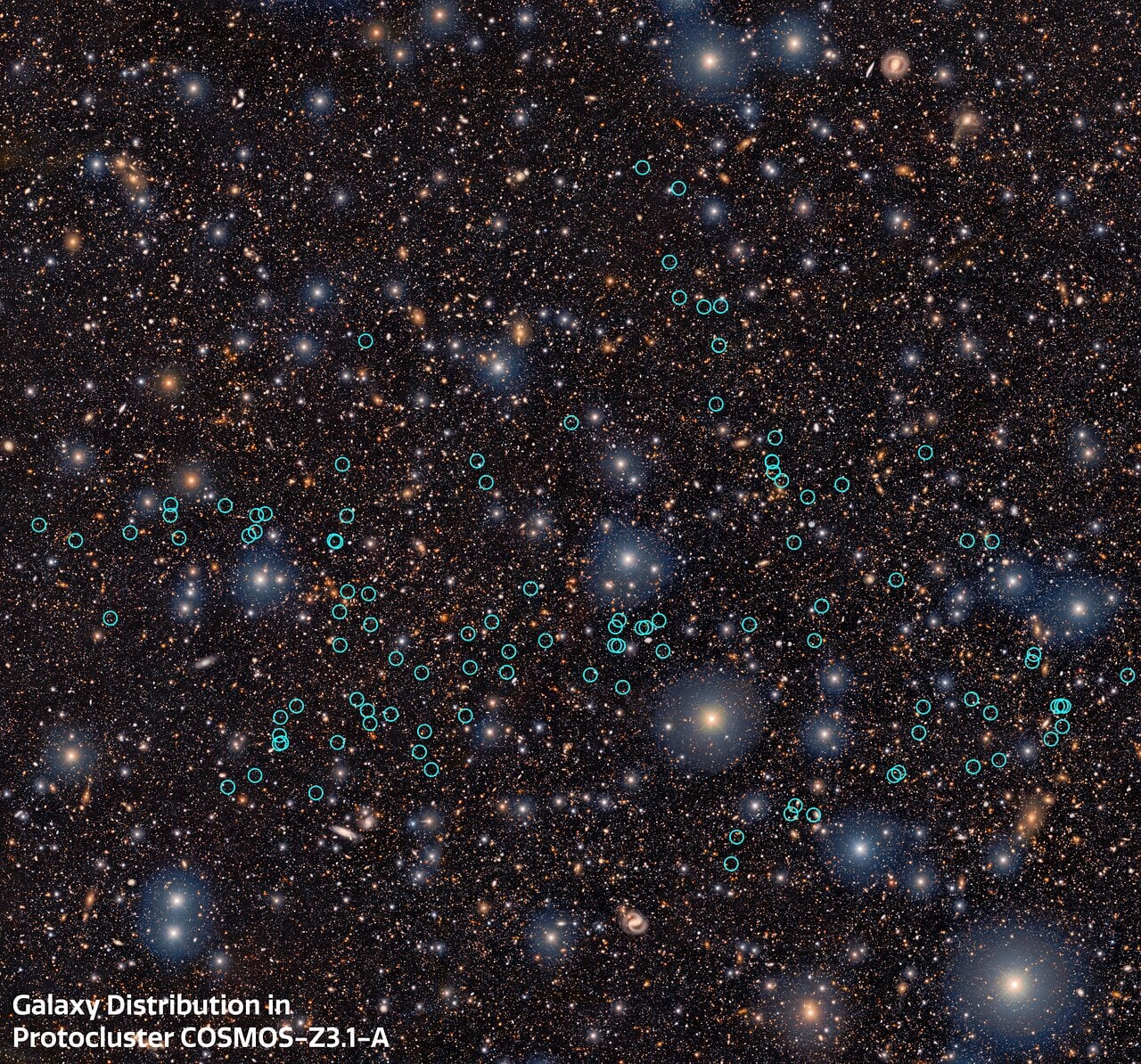
    An annotated view of a map of the newly discovered proto-supercluster COSMOS-z3.1-A. It was discovered in data from a large survey of the Southern Hemisphere sky taken by the Dark Energy Camera mounted on the Blanco telescope on Cerro Tololo, Chile. Credit: CTIO/NOIRLab/DOE/NSF/AURA

    The discovery of a very early and rare proto-supercluster of infant galaxies may help give clues to the formation of such clusters and their connection to the Cosmic Web.


    Smashed Icy Moons Cool Too Rapidly to Retain Oceans Sep 22, 2026
    Show notes

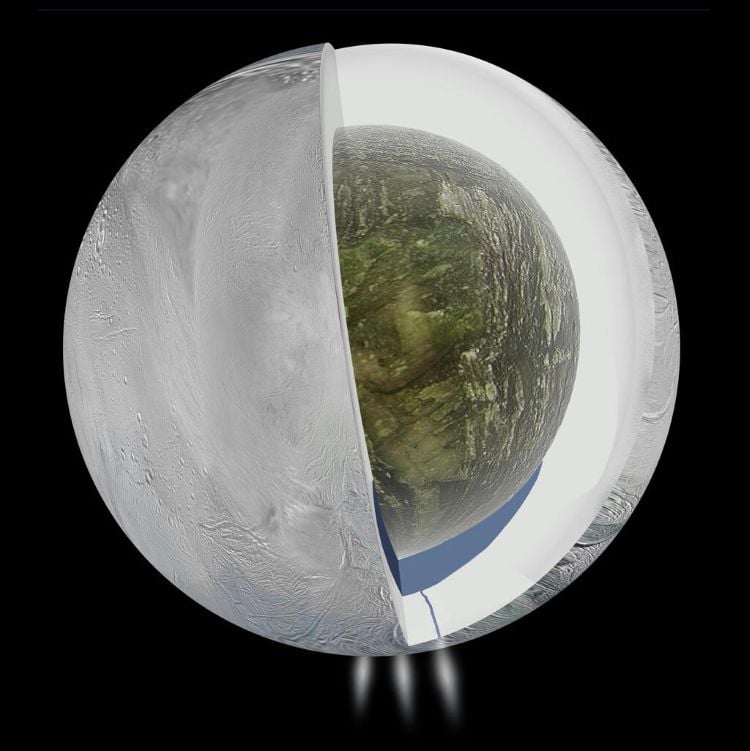
    Diagram depicting Saturn's moon, Enceladus, and its subsurface ocean. (Credit: Southwest Research Institute)

    There are more than 450 confirmed moons orbiting the eight major planets, but only a handful of them provide unique scientific value to pique the interests of the scientific community, specifically their potential for hosting life as we know it. This is due to the subsurface oceans that exist beneath icy crusts, including Jupiter’s Europa and Ganymede, and Saturn’s Enceladus. But what processes are responsible for producing these subsurface oceans, or potentially preventing them from forming in the first place?


    Scientists Release Details About Moon's New Massive Crater Sep 21, 2026
    Show notes

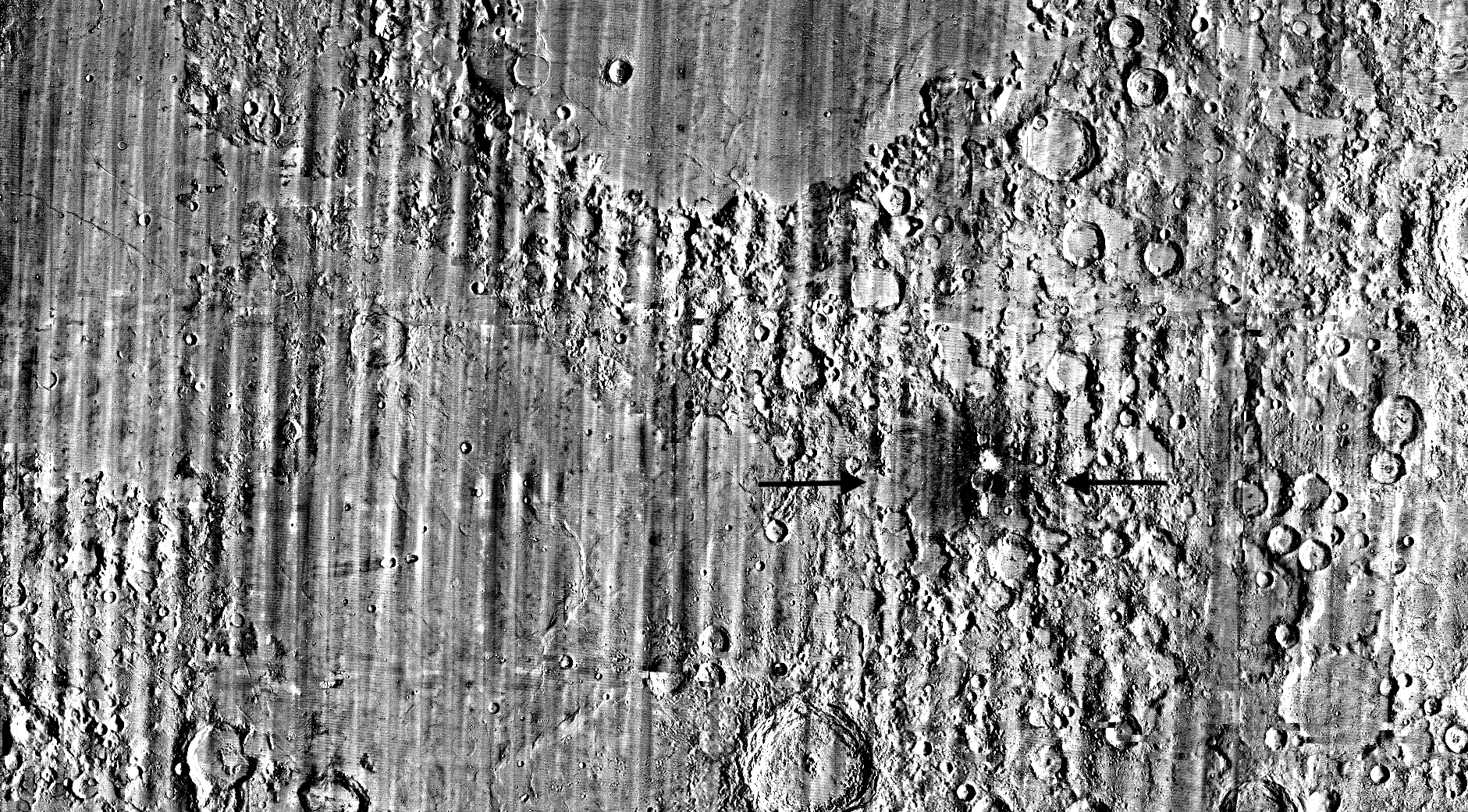
    Image of the new McGetchin crater. Credit - NASA Goddard / Intuitive Machines / Robert Wagner

    It's easy to think of the Moon as the static constant companion in the night sky. Its face hasn’t visibly changed in millennia, and always faces us with the same side. But looks can be deceiving, as our closest companion is constantly bombarded by asteroids and comets that make small craters across the lunar landscape. While they might not be large enough for us to see with our naked eye, professional Moon watchers can pick up on them. And a recent paper published in Science Advances, describes the largest ever found in modern times.


    Earth's Center of Mass Drifts Less Than We Thought Sep 21, 2026
    Show notes

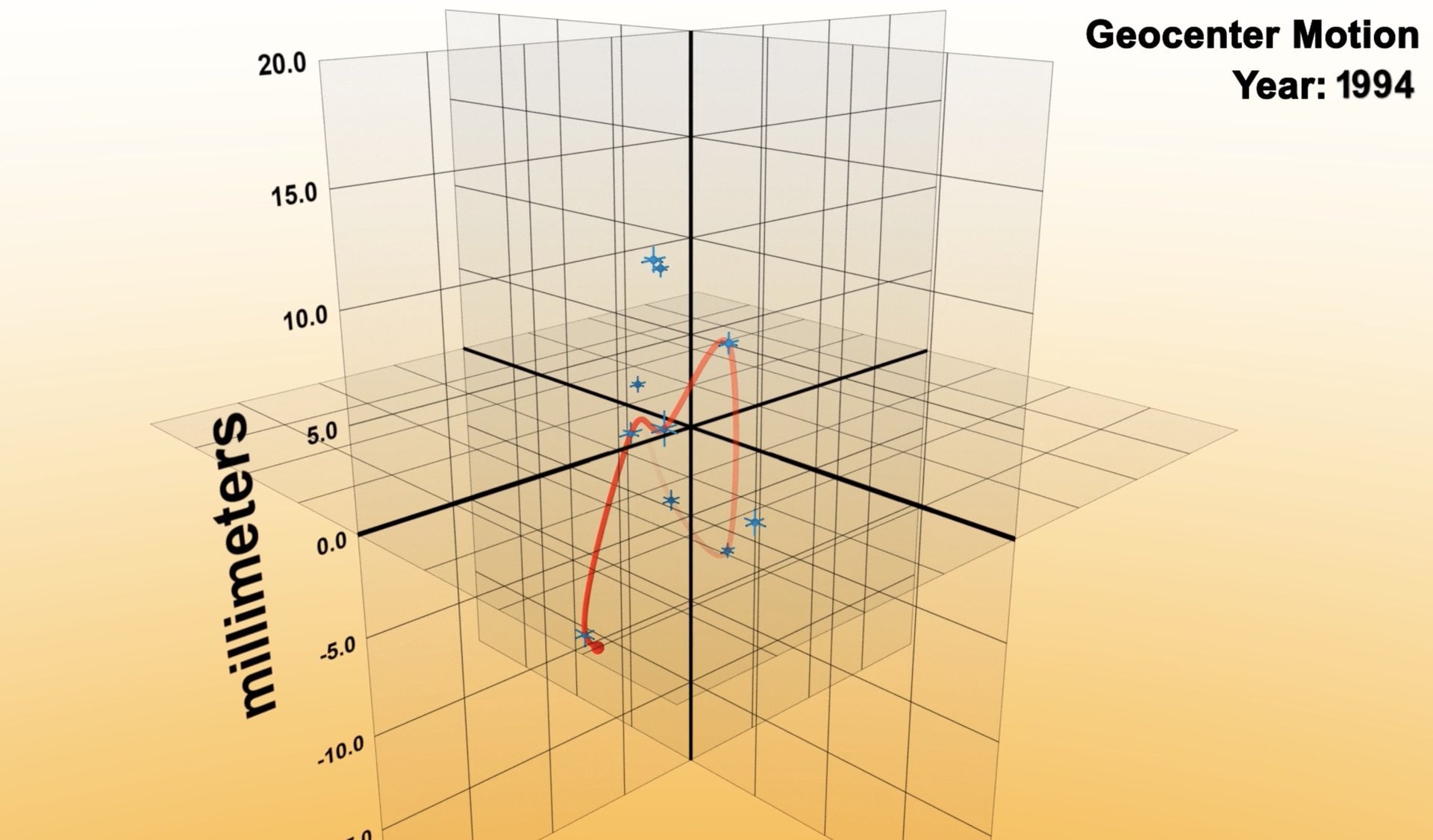
    The Earth's center of mass drifts by millimeters over the years. Credit: NASA’s Scientific Visualization Studio

    Earth's center of mass isn't stationary. It drifts seasonally and over the course of years. A new study measures this down to the scale of millimeters and finds the seasonal drift is smaller than we thought.


    Previous 1 2 3 4

    Related Podcasts

    Science Friday

    1

    Science Friday Astronomy
    Radiolab

    2

    Radiolab Documentary
    BrainStuff

    3

    BrainStuff Natural Sciences
    StarTalk with Neil deGrasse Tyson

    4

    StarTalk with Neil deGrasse Tyson Games & Hobbies
    Radiolab

    5

    Radiolab Documentary
    Stuff To Blow Your Mind

    6

    Stuff To Blow Your Mind Life Sciences
    footer-logo

    Contact Us

    Toll Free: 844-670-7747

    Links

    • Home
    • Top Charts
    • Networks
    • Apps
    • Independents Podcasts
    • Podcast Advertising
    • Podcast News
    • Contact Us
    • About Us
    • Analytics & Insights

    Stay Connected

      Privacy, Terms of Use & Our Code of Ethics Protecting Content Creators Copyrights