TopPodcast.com
Menu
  • Home
  • Top Charts
  • Top Networks
  • Top Apps
  • Top Independents
  • Top Podfluencers
  • Top Picks
    • Top Business Podcasts
    • Top True Crime Podcasts
    • Top Finance Podcasts
    • Top Comedy Podcasts
    • Top Music Podcasts
    • Top Womens Podcasts
    • Top Kids Podcasts
    • Top Sports Podcasts
    • Top News Podcasts
    • Top Tech Podcasts
    • Top Crypto Podcasts
    • Top Entrepreneurial Podcasts
    • Top Fantasy Sports Podcasts
    • Top Political Podcasts
    • Top Science Podcasts
    • Top Self Help Podcasts
    • Top Sports Betting Podcasts
    • Top Stocks Podcasts
  • Podcast News
  • About Us
  • Podcast Advertising
  • Contact
Not in our directory?
Add Show Here
Podcast Equipment
Center

toppodcastlogoOur TOPPODCAST Picks

  • Comedy
  • Crypto
  • Sports
  • News
  • Politics
  • True Crime
  • Business
  • Finance

Follow Us

toppodcastlogoStay Connected

    View Top 200 Chart
    Back to Rankings Page
    Education

    Trial Lawyer Confidential

    Pulling Back the Curtain…

    Advertise
    • Apple Podcasts
    • Google Play
    • Spotify

    Latest Episodes:
    TLC_027: MURDER Jan 12, 2014
    Show notes

    Chalk-Scene-MurderIn This Episode:

    I pull back the curtain on the laws relating to the LAW OF MURDER.
    First degree murder is the unlawful killing of a human being with malice aforethought carried out in a willful, premeditated and deliberate manner. 2nd Degree murder lacks the willfulness, premeditation and deliberation but malice is implied by the conduct, the circumstances or the conscious disregard to human life.

    Murder trials are often viewed by trial lawyers as the pinnacles of their career. If television shows and infotainment “news” programs are any indication, the general public is fascinated by these unique, often complicated and dramatic trials as well. In states where the death penalty is used, there are very specific circumstances (often called special circumstances) under which a murder is committed that allow the state to seek to impose the ultimate punishment. Some of these have to do with the actor himself, such as a repeat offender, others have to do with motive, as in murder for financial gain, murder that is racially motivated. Some have to do with the actions themselves being above and beyond what is necessary to kill a person, such as torture. And still others have to do with the identity of the victim, such as the killing of a police officer, an elected official, a witness, a juror or a judge. Some states still have a catch-all circumstance that the murder was particularly heinous or horrendous.

    There are also specified felonies that if a killing during the course of their commission, the murder is deemed first degree even if a killing was not the original intent of the perpetrators. In California, these include: murder by weapon of mass destruction, by an explosive device, murder with a weapon whose ammunition is designed to pierce metal or armor, poisoning, lying in wait (ambush) and torture. Other states will list different felonies but all will be crimes that in their commission evidence that violence and harm could result form their commission.

    TRIAL LAWYER MENTOR Quick Tip:

    Quick Tip for keeping in check your perspective when dealing with situations that may be considered minor or less important than other situations and how refusing to “call it in” will make your presentation or relationship more compelling.

    LAWYERS and LAW STUDENTS:

    Click here to sign up for our free newsletter where I share in depth tips and strategies for mastering the Art of the Jury Trial. And be sure to check back soon for a special offer exclusively for attorneys!

    Download AUDIO here (MP3)


    TLC_026: OBJECTIONS and SIDEBARS Dec 29, 2013
    Show notes

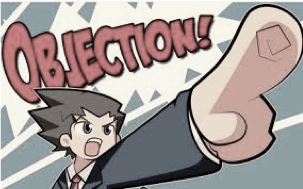
    OBJECTIONIn This Episode:

    I pull back the curtain on the laws relating to OBJECTIONS and SIDEBAR CONFERENCES. The law allows both sides in a criminal or civil case to object to certain questions or answers that are being asked or elicited in open court. There are Rules of Evidence that govern what the jurors can and cannot hear. When one side feel the other is violating those rules, an objection is posed. If the objection is “overruled” that means that the Court is disagreeing with the side making the objection and the judge will allow the question or the answer to stand. If the objection is “sustained” that means that the Court is agreeing with the party making the objection and the question will not be allowed or the answer (if already given) will be struck from the record.

    Sidebar conferences occur at the discretion of the court. The judge can order the parties to “approach the bench” to discuss a matter to be heard outside the presence of the jurors and the lawyers can also request a “sidebar” to argue a point of law. Many times the sidebars are for the purpose of arguing legal issues that the jurors cannot be privy to, but just as often they are for the more mundane purposes of scheduling or requesting bathroom breaks.

    TRIAL LAWYER MENTOR Quick Tip:

    Quick Tip for giving your audience an “insider’s” secret that will help make your presentations more compelling and your message more memorable.

    LAWYERS and LAW STUDENTS:

    Click here to sign up for our free newsletter where I share in depth tips and strategies for mastering the Art of the Jury Trial. And be sure to check back soon for a special offer exclusively for attorneys!

    Download AUDIO here (MP3)


    TLC_025: DOMESTIC VIOLENCE LAWS Dec 15, 2013
    Show notes

    Domestic-ViolenceIn This Episode:

    I pull back the curtain on the laws relating to Domestic Violence. We explore how and why it is treated differently than other types of assault. We also discuss why these cases are difficult for all participants in the legal system. Frequently prosecutors are unwilling to negotiate a plea bargain for fear that if the perpetrator reoffends, they will be held accountable. Prosecutors are faced with recanting witnesses who through fear, love or financial need will often come to court and ask that the charges be dropped, despite serious injuries in some cases. When the allegations are falsely made, which does happen more often than many care to admit, the lives of the accused can be ruined by the fact of the allegation itself.

    TRIAL LAWYER MENTOR Quick Tip:

    Quick Tip for finding the context, focus and perspective when you are crafting your next persuasive presentation.

    LAWYERS and LAW STUDENTS:

    Click here to sign up for our free newsletter where I share in depth tips and strategies for mastering the Art of the Jury Trial. And be sure to check back soon for a special offer exclusively for attorneys!

    Download AUDIO here (MP3)


    TLC_024: DURESS/NECESSITY Nov 30, 2013
    Show notes

    JusticeIn This Episode:

    I pull back the curtain on the concepts of Duress and Necessity. In Duress, the law recognizes that there are times are free will may be so compromised by threat of bodily harm or death that we should not be held criminally liable for crimes we commit while under the influence of these threats. Further and even a more radical notion, Necessity shows that there are times when the system allows our individual judgement to supersede the law when the harm we create is less than the harm we are trying to prevent under exceptional circumstances. Obviously very specific circumstances must be met to benefit from these concepts, but its important to note the fact that our criminal justice system does take context and circumstances surrounding our crimes into account when deciding not only punishment, but guilt itself.

    TRIAL LAWYER MENTOR Quick Tip:

    Quick Tip for establishing context in your presentation to make it more real and persuasive to your audience.

    LAWYERS and LAW STUDENTS:

    Click here to sign up for our free newsletter where I share in depth tips and strategies for mastering the Art of the Jury Trial. And be sure to check back soon for a special offer exclusively for attorneys!

    Download AUDIO here (MP3)


    TLC_023: PROSECUTORIAL MISCONDUCT Nov 17, 2013
    Show notes

    Illustration: Truth and LieIn This Episode:

    I pull back the curtain on Prosecutorial Misconduct. Recently a Texas Judge was disbarred, sentenced to 10 days in jail and 500 hours of community service for criminal contempt. He was accused of lying to a judge in 1987 while he was a prosecutor trying the murder case of Michael Morton. Mr. Morton spent 25 years in prison for a crime he did not commit. After DNA tests exonerated him of the crime, his lawyers obtained the original files which showed that the detective and the prosecutor had in their possession witness statements which tended to show Mr. Morton’s innocence and they failed to turn those over to the defense. Beyond that breach of ethical duty, the prosecutor was accused of lying to the Judge about the existence of these statements just before the original trial. This is just one recent example of the system being corrupted by a corrupt prosecutor. What sets this case apart is not the egregiousness of the conduct (unfortunately such conduct is not rare) but that the prosecutor was actually punished for this conduct.

    We will explore the Brady Rule and the new proposals that are being set forth to try to prevent these gross and deliberate miscarriages of justice. For a look at some other examples of prosecutorial misconduct see the following:

    The Untouchables: America’s Misbehaving Prosecutors and the System that Protects Them

    LAWYERS and LAW STUDENTS:

    Click here to sign up for our free newsletter where I share in depth tips and strategies for mastering the Art of the Jury Trial.

    Download AUDIO here (MP3)


    TLC_022: WHO’S WHO IN COURT Oct 20, 2013
    Show notes

    WhosWhoIn This Episode:

    I pull back the curtain on Who’s Who in a criminal courtroom. What are the various roles and responsibilities of all the players. Most of us know the basic functions but you might be surprised to learn lesser known duties of the various court personnel. From bailiffs, court reporters, judicial assistants, interpreters, lawyers judges and commissioners all the courtroom personnel play a myriad of roles in the system. Find out what the difference is between a commissioner and a judge and what it takes to run for or be appointed to these judicial positions

    LAWYERS and LAW STUDENTS:

    Click here to sign up for our free newsletter where I share in depth tips and strategies for mastering the Art of the Jury Trial.

    Download AUDIO here (MP3)


    TLC_O21: ENTRAPMENT Oct 06, 2013
    Show notes

    EntrapmentIn This Episode:

    I pull back the curtain on Entrapment. How far can a government agent go to induce an ordinary citizen to commit a crime. Some states focus on the predisposition of the defendant, while other focus solely on the actions of the government. The issue of whether it was outrageous police misconduct or merely legal deception by law enforcement is one for the jury to decide based on the facts and circumstances of each individual case.

    Courts have stated that “a line must be drawn between a trap for the unwary innocent and a trap for the unwary criminal.” Here is a fascinating expose on one federal agency’s program that purports to target violent drug dealers and robbers. View the video below of USA Today’s coverage of the ATF sting operations and read more about it here:

    TRIAL LAWYER MENTOR Quick Tip:

    Quick Tip for using props in your next persuasive presentation.

    LAWYERS and LAW STUDENTS:

    Click here to sign up for our free newsletter where I share in depth tips and strategies for mastering the Art of the Jury Trial.

    Download AUDIO here (MP3)


    TLC_020: EYEWITNESS IDENTIFICATION Sep 22, 2013
    Show notes

    CottonLineUpIn This Episode:

    I pull back the curtain on Eyewitness Identification. Often the most powerful evidence presented in a criminal trial, mistaken identification is the overwhelming cause of the majority of wrongful convictions in this country. Jurors put a great deal of weight on this type of evidence yet in many jurisdictions there are very few protocols in place to ensure that this evidence is “collected,” “preserved” and “untainted” like there are for physical evidence.

    Click here to read an article by Elizabeth Loftus and Gary Wells: “Eyewitness Memory for People and Events” which makes a compelling argument for the metaphor of treating human evidence like trace evidence in terms of developing guidelines to safeguard its accuracy.

    Click here to read about the wrongful convictions overturned by the Innocence Project that were based on mistaken identification.

    As referenced in the episode Jennifer Thompson was a rape victim who mistakenly identified Ronald Cotton as her attacker. DNA evidence cleared him and they forged a friendship that transcends their case as they work together for eyewitness identification reform. Their compelling story is told in the book Picking Cotton (mistakenly referred to in the podcast as a movie) See the book trailer below:

    TRIAL LAWYER MENTOR Quick Tip:

    Quick Tip for helping you ORGANIZE your next persuasive presentation.

    LAWYERS and LAW STUDENTS:

    Click here to sign up for our free newsletter where I share in depth tips and strategies for mastering the Art of the Jury Trial.

    Download AUDIO here (MP3)


    TLC_019: SELF DEFENSE Sep 08, 2013
    Show notes

    GunHomeSignIn This Episode:

    I pull back the curtain on Self Defense. The concept of self defense comes from common law and has always been a part of the American justice system. Over the years, issues have arisen over whether a person has a duty to retreat before using deadly force or whether an individual is entitled to stand his ground. While the laws vary from state to state, the issue always boils down to: What were the circumstances surrounding the use of deadly force?

    TRIAL LAWYER MENTOR Quick Tip:

    Tips for helping to put your audience or your jurors in the shoes of your client to get them to at least empathize with or at the very best root for the protagonist of your story.

    LAWYERS and LAW STUDENTS:

    Click here to sign up for our free newsletter where I share in depth tips and strategies for mastering the Art of the Jury Trial.

    Download AUDIO here (MP3)


    TLC_018: FALSE CONFESSIONS Aug 25, 2013
    Show notes

    False-confessionsIn This Episode:

    I pull back the curtain on False Confessions. What would possibly compel an innocent person to take responsibility for a crime he did not commit? We will explore the psychological studies that have delved into this phenomena as well as some famous cases where a suspect’s confession has been proven false.

    The Innocence Project estimates that of the 300 cases where DNA testing led to the release of the wrongfully convicted, nearly 25% involved a false confession. Many people believe they would never confess to a crime they did not commit, but overturned convictions and academic studies prove this is a misconception. It’s not just the vulnerable, the young, the mentally ill and the developmentally disabled that can be coerced, but the odds are greater in those cases.

    See below for a video from National Geographic showing the actual interrogation of 14 year old Michael Crowe who was suspected of killing his sister, Stephanie. He was subjected to what the courts deemed “psychological torture” leading him to confess to the crime even though he had nothing to do with her death.
    :

    Another famous case of a wrongful conviction occurred in Norfolk, Virginia where four men gave false confessions to a brutal murder. They have come to be known as the Norfolk Four.

    Two noted academic studies dealing with false confessions: Kassin and Kiechel, The Social Psychology of False Confessions and Dervan and Edkins, The Innocent Defendant’s Dilemma.

    TRIAL LAWYER MENTOR Quick Tip:

    Tips for dealing with dense and often bland statistical information, academic studies or other dry data that you need to include in your persuasive presentaion.

    LAWYERS and LAW STUDENTS:

    Click here to sign up for our free newsletter where I share in depth tips and strategies for mastering the Art of the Jury Trial.

    Download AUDIO here (MP3)


    Previous 1 2 3 4 5 Next

    Related Podcasts

    Making Sense with Sam Harris

    1

    Making Sense with Sam Harris Education
    Grammar Girl

    2

    Grammar Girl Education
    Good Life Project

    3

    Good Life Project Education
    Explain It to Me

    4

    Explain It to Me Education
    Team Never Quit

    5

    Team Never Quit Comedy
    Optimal Living Daily – Personal Development and Self-Improvement

    6

    Optimal Living Daily – Personal Development and Self-Improvement Alternative Health
    footer-logo

    Contact Us

    Toll Free: 844-670-7747

    Links

    • Home
    • Top Charts
    • Networks
    • Apps
    • Independents Podcasts
    • Podcast Advertising
    • Podcast News
    • Contact Us
    • About Us
    • Analytics & Insights

    Stay Connected

      Privacy, Terms of Use & Our Code of Ethics Protecting Content Creators Copyrights