TopPodcast.com
Menu
  • Home
  • Top Charts
  • Top Networks
  • Top Apps
  • Top Independents
  • Top Podfluencers
  • Top Picks
    • Top Business Podcasts
    • Top True Crime Podcasts
    • Top Finance Podcasts
    • Top Comedy Podcasts
    • Top Music Podcasts
    • Top Womens Podcasts
    • Top Kids Podcasts
    • Top Sports Podcasts
    • Top News Podcasts
    • Top Tech Podcasts
    • Top Crypto Podcasts
    • Top Entrepreneurial Podcasts
    • Top Fantasy Sports Podcasts
    • Top Political Podcasts
    • Top Science Podcasts
    • Top Self Help Podcasts
    • Top Sports Betting Podcasts
    • Top Stocks Podcasts
  • Podcast News
  • About Us
  • Podcast Advertising
  • Contact
Not in our directory?
Add Show Here
Podcast Equipment
Center

toppodcastlogoOur TOPPODCAST Picks

  • Comedy
  • Crypto
  • Sports
  • News
  • Politics
  • True Crime
  • Business
  • Finance

Follow Us

toppodcastlogoStay Connected

    View Top 200 Chart
    Back to Rankings Page
    Arts

    The Worried Writer Podcast

    Creative Writing for the Timid

    Advertise
    • Apple Podcasts
    • Google Play
    • Spotify

    Latest Episodes:
    The Worried Writer Ep#64: Hayley Chewins ‘I work very intuitively’ Jun 01, 2020
    Show notes

    Hayley Chewins is an author of magical, feminist middle grade fiction. Her debut, The Turnaway Girls, was a Kirkus Best Book of 2018, and her second book, The Sisters of Straygarden Place, is forthcoming from Candlewick Press this September and has already been called ‘superb, spooky and unforgettable’ in a Kirkus starred review. Hayley lives in South Africa and also works as a writing coach. For more about Hayley and her books head to HayleyChewins.com or find her on Twitter. IN THE INTRO Announcement: The Worried Writer Podcast is pausing. I love creating the podcast but have decided to take a break. After more than five years of creating the show, I feel in need of a short holiday and a bit of time to look inward and focus on my fiction. I will probably miss the podcast terribly and be back in a couple of months, but I also need a wee bit of time and distance in order to think about how I want the podcast to evolve. I am also keen to explore other ways of supporting authors and am considering an online course or mastermind group. This podcast has helped to transform my writing life and I want to say a massive thank for your time and support. The Worried Writer site will remain in place so you can still enjoy the backlist episodes of the show. I will also be adding new content as I work out my new focus/direction. Finally, if you keep your podcast subscription in your app then, if I restart the show, you will automatically receive the new episodes. BOOK NEWS I finished the rewrite of The Pearl King (Crow Investigations Book Four) and it’s up for pre-order (out June 25th). If you like urban fantasy or paranormal mystery, please consider checking it out! Also, my new Worried Writer book – Stop Worrying; Start Selling: The Introvert Author’s Guide To Marketing – is out next week. It’s available for pre-order: www.books2read.com/StartSelling It will be out on the 9th June in paperback and ebook, with the audiobook following later this year. Apologies for the delay in the audio – the pandemic sapped my energy and closed my sound engineer’s studio! If you pick it up, I would love to know what you think! IN THE INTERVIEW The full transcript is copied below. THANKS FOR LISTENING! If you can spare a few minutes to leave the show a review on Apple Podcasts (or whichever podcast app you use) that would be really helpful. Ratings raise the visibility of the podcast and make it more likely to be discovered by new listeners and included in the charts. The Worried Writer on Apple Podcasts [Click here for step-by-step instructions on how to rate a podcast on your device] Also, if you have a question or a suggestion for the show – or just want to get in touch – I would love to hear from you! Email me or find me on Twitter or Facebook. INTERVIEW TRANSCRIPT Sarah: Hayley Chewins is an author of magical, feminist, middle grade fiction. Her debut, The Turnaway Girls was a Kirkus best book of 2018 and her second book, The Sisters Of Straygarden Place is forthcoming from Candlewick Press this September, and it has already been called superb, spooky and unforgettable in a Kirkus starred review. Hayley lives in South Africa and also works as a writing coach. Welcome to the show, Hayley, and thank you so much for joining me. Hayley: Thank you for having me, I’m so excited to be here. Sarah: I was wondering if you could just kick things off by telling us a wee bit more about your forthcoming book, The Sisters of Straygarden Place. Hayley: Yeah, sure. Okay. So The Sisters of Straygarden Place is a middle grade fantasy book and it’s set in a magical mansion that’s surrounded by really tall silver grass. The grass is so tall that it covers the entire house. And it’s about three sisters who have been abandoned there and left in the care of this magical house. Their parents have left and they’ve left them a note saying, don’t leave the house, wait until we come back. What happens is the eldest sister leaves the house. She does go walking into the grass one day and she returns and starts to get really, really sick and starts to turn silver and it’s up to the middle sister, whose name is Mayhap, to figure out what’s going on with the grass, why her sister is so sick, and when she starts doing that, she kind of starts to unravel all this other… all these other mysteries around her family, why her parents actually left, why the house is magical and everything kind of starts to unravel. Sarah: Oh, that sounds absolutely wonderful. And that’s exactly my kind of book, so I’m very excited to read that. And that’s out in September this year? September, 2020? Hayley: Yes. In America, it’ll be out in September, 2020. In the UK, it’s coming out, I think, in March next year. Sarah: Wonderful. Well that’s very exciting. And I was going to say as well, I haven’t seen the cover for this one, but I saw the cover for your debut and it’s absolutely gorgeous. So is that a similar sort of genre, your first book? Hayley: Yes. So they’re both kind of upper middle grade. They kind of fall into that 10 to 14 range and yeah, they’re middle grade fantasies, but they are kind of on the darker side and The Sisters of Straygarden Place even more so – it kind of walks the line between fantasy and horror. It is quite a bit on the spooky side of things. Sarah: Wonderful. And what sort of led you into writing for that age group and in that genre? Did it… Was it just something that came naturally or something that you found difficult to choose? Hayley: Uh, no I didn’t. When I, when I first started writing, I actually was writing kind of adult literary fiction. I was, uh, I dunno, I guess that was kind of mainly the kind of thing that I was reading at the time. I was in my early twenties. And I’ll just kind of tell you briefly what happened and how I came to realize that I wanted to write novels. I was studying, I did a bachelor of arts in Italian and English literature, and so I was always reading and writing, and I’ve always loved, I just always, always loved books and loved stories. Um, and then after I did that, I did a law degree and it, so it was kind of the first time in my life that I didn’t have time to read fiction anymore or poetry. I didn’t have time to write. I was just reading so many cases and kind of legal articles and having to write legal essays. And like, lots of tests and things like that. So it was, it was kind of the absence of literature from my life that made me realize how much it meant to me. And at the same time, I was kind of also uncovering the truth that I, I didn’t really want to be a lawyer. And so, yeah. So that’s kind of when I started, I just became really, driven to, to write. So I was about 22. I loved writers like Ian McEwan and Arundhati Roy, um, and Angela Carter. And, um, yeah. So when I first started writing, I didn’t really have any ideas for books and I, and I certainly wasn’t thinking about writing children’s books. I was just kind of trying, trying to write like these writers that, that I really admired and I didn’t have a sense of what I wanted to say or kind of my own voice or anything like that. I just felt like I just, I was kind of just very stubborn about it. Like I wanted to know, I really had no ideas and nothing to write about. But as I, as I just kind of kept writing, I kept noticing that children would just kind of appear in my stories all the time. So I would just, I just kept writing about children, even though technically I was writing books for adults or stories for adults. And then I also at the same time, kind of started to read lots about publishing and sort of discovered children’s, the children’s world and started reading more widely and reading middle grade books, reading young adult books, and it was really writers like David Almond and Kate DiCamillo and Sarah Crossan who opened my eyes to how incredible middle grade books could be. Um, I remember having this moment when I read Skellig by David Almond, and I have this feeling of, Oh, I want to write something like this. So, something that makes someone feel like this. Um, and so that’s when I started trying to write, middle grade books. But I was also kind of writing more books more on the literary side and more contemporary realistic books. Um, and so yeah, it just took really lots and lots of writing the wrong thing for me to find what I was actually meant to write and what actually ended up feeling really alive and, and exciting for me to write. But it took a lot, a lot of persistence to find it. Sarah: Oh, that’s fantastic. And that’s such an encouraging, account because I think, I mean, I can certainly empathize with that, that feeling of wanting to write, but not really being sure what. And yeah, I think, I think that will resonate with a lot of people. That’s brilliant. And in terms of when you did write, you know, your first book that you thought, okay, this is middle grade, I often get questions about getting started in children’s fiction, which I know nothing about, so I’d love to hear about your path to publication. Hayley: Ok, yeah. so I, like I said, I was just writing lots and lots of manuscripts and kind of having the feeling of… You know, I was writing things and finishing things cause I, I’d realized that in order to learn how to write a book, I actually had to write a book. Sarah: So annoying, I know! Hayley: Yeah. So I, I was kind of just on this drive to finish things, but at the same time, even though I was finishing manuscripts and revising them, I also kind of knew that they weren’t very good. And that I hadn’t really found like just something really interesting and really good and something that I really wanted to, that that really felt like me. So it took, I mean, I actually kind of lost count of how many manuscripts I wrote, but it was many. And I think the middle grade ones, there were, there were at least four. And then eventually I got to a point where I wrote a novel in verse. It was a middle grade novel in verse that was kind of like, um, not really fantasy, it kind of blended the real with the unreal, sort of like contemporary, with a bit of magic. I finally felt like, okay, this is the kind of book that I want to write and, you know, and I felt like it was quite good and I could kind of write a pitch for it and send it out. So I did lots of research on how to write a pitch, how to write a query letter, and I Googled, um, lots of agents and kind of tried to find agents who represented the kind of thing that I’d written. And I started querying. And yeah, I was lucky enough to get quite a few requests from that. And then I ended up getting, um, one agent asked me to revise the manuscript. He basically wanted to, he read the whole thing, really loved it, but also it felt like it needed a lot of work, which was very true. And so he sent me lots of notes. And the, the notes resonated with me, so I agreed to do the revision for him. And what ended up happening was I took a couple of months to do that and sent it back to him and it, it didn’t end up kind of resulting in an offer of representation, but it was a really good experience for me because I learned how to revise and how to take notes, and I learned to… It just made me think about stories in, in a way that I hadn’t really thought about. It was really fantastic to get that feedback. Um, but I also didn’t really know, um, kind of how to make that manuscript any better than I had already made it. I didn’t know how to fix it. So I decided to set it aside and I started a new project, which actually ended up being The Turnaway Girls. And what happened with The Turnaway Girls was that I entered one of these kinds of Twitter pitch competitions. And so it ended up being that… It wasn’t like a, like when you tweet a pitch and then agents like, or favorite your tweet, it was like someone, a writer who had arranged it and it was on her blog. So they chose writers or stories that were interesting and then put the stories, the pitches, and I think it was like the first, I don’t know, five pages or something like that on the blog. And then. agents who went to the blog could request more material in the comments. And that’s how I ended up meeting my agent, because she kind of requested materials through that. And she also, it was a very similar experience because she read it very quickly. She loved it, but she also had lots of notes for how it could be made better. And she didn’t feel like she could make an offer of representation based on the state that the manuscript was in. It had lots of plot problems. It had pacing problems. Um, and she gave me lots of notes and she gave me a list of books to read and she kind of asked me if I would be willing to revise it. And again, I was like, yes, I’m really persistent. All I want to do, like this is the only thing I want to do. I just want to make this book better. And I was so, so grateful to have that feedback was really such a gift. So. I did the revisions and then, yeah, long story short, she ended up offering me representation based on the revisions, and that’s how I ended up getting an agent and yeah. And then. Uh, with my first book deal, it was like deja vu because we went out on sub with the manuscript and my editor loved the book and thought it needed, you know… And she sent me the most wonderful, she sent my agent rather, the most wonderful edit letter. Um, and I did, I did the revisions and then we ended up getting an offer on the book. So, even though it has been a little bit of a circuitous path or not circuitous but I have had to, I did feel like I had to revise that book so many times before it actually became a book. Um, and then of course edits after, you know, Candlewick bought the book. But I have learned so much as a writer through getting, you know, that kind of feedback. So I always say like if you get an offer to revise and resubmit, it’s such a compliment, from the agent or the editor because they, they’re taking time to read your work and to give you feedback on it. Um, even if they’re not offering you a book deal, or offering you representation, there’s a high chance that if you do the revisions that you know, it will end up going your way. And even if it doesn’t, you just learn so much about your own writing. Yeah. Sarah: No I think, I think that’s, I think that’s excellent advice. And it’s also, thank you for sharing this story. I think it was, uh, a very, um, very usual and very sort of typical story in the sense of, you know, we have to write a lot and like you say, finish books and then they’re not, they’re not really publishable, but then, you know, going through editorial feedback teaches us how to revise and how to write. And I think. Again, hearing it again and again, it’s so important for people to know that it is a craft and it is perseverance. And I think you know, hats off to you for your attitude of being grateful for that learning experience. I think that’s, you know, I think that’s really encouraging and really good. So in terms of giving people advice, I mean going through submission, it is really tough. It is really hard, and it can be heartbreaking. What do you think helped you to keep going? Hayley: I think I just had… I always kind of… Basically from the moment I decided I wanted to write novels, I just knew that I was going to do it. I just knew that no matter what it took, I was going to kind of stay the course. And um, it’s also, I think it’s just having like a passion for the actual craft of writing. Like I always, when I talk to writers, who have, um, kind of who worry that they don’t have what it takes, I always say. You know, if you, if you have a desire to do something, that’s an indication that you do have what it takes. You only have the dream to do something if you already have everything within you to, to have that thing and to do it. So firstly that, and then also just if you’re very connected to why you are writing and why it’s important to you and your love for it, a…

    Full show notes at the publisher

    The Worried Writer Ep#63: Wendy Heard ‘Be A Little More Punk Rock’ Apr 30, 2020
    Show notes

    Wendy Heard is a thriller author with two novels out from Mira in the US. Hunting Anabelle, a serial killer thriller, and The Kill Club. She co-hosts the Unlikeable Female Characters Podcast in which feminist thriller authors discuss female characters who don’t care whether you like them or not. For more on Wendy Heard and her work, head to wendyheard.com or find her on Twitter, Instagram or Facebook. For the Unlikeable Female Characters Podcast head here or search on your preferred podcast app. THANK YOU! As ever, huge thanks to everyone supporting the show on Patreon. Thank you so much! Join our growing Patreon community at The Worried Writer on Patreon. I love creating the podcast but it takes a significant amount of time (and money) to produce. If you want to help to keep the show going, please consider becoming a patron. You can support the show for just $1 a month! If you pledge $2 or more, you also receive an exclusive mini-episode that I put out in the middle of every month, plus instant access to the back list of twenty-four audio extras. IN THE INTRO I offer words of empathy and encouragement to everyone at this scary time, and remind you to be kind to yourself. It’s quite possible that your brain won’t be able to be creative at the moment, and that’s okay. I also give a writing update. I wrote ‘The End’ on the fourth book in my Crow Investigations series, The Pearl King, and worked on my forthcoming non-fiction book Stop Worrying; Start Selling. LISTENER QUESTION If you have any questions about writing, process, procrastination or the business side of things such as marketing or publishing options, email me, leave a comment on this post, or find me on Twitter. IN THE INTERVIEW The full transcript is copied below. THANKS FOR LISTENING! If you can spare a few minutes to leave the show a review on Apple Podcasts (or whichever podcast app you use) that would be really helpful. Ratings raise the visibility of the podcast and make it more likely to be discovered by new listeners and included in the charts. The Worried Writer on Apple Podcasts [Click here for step-by-step instructions on how to rate a podcast on your device] Also, if you have a question or a suggestion for the show – or just want to get in touch – I would love to hear from you! Email me or find me on Twitter or Facebook. INTERVIEW TRANSCRIPT Sarah: Wendy Heard is a thriller author with two novels out from MIRA in the U S Hunting Annabelle, a serial killer thriller, and The Kill Club. She co-hosts the Unlikable Female Characters podcast in which feminist thriller authors discuss female characters who don’t care whether you like them or not. Which sounds amazing! Welcome to the show, Wendy. Wendy: Thank you so much for having me. I’m so excited. Sarah: Well, I’d love first, if you don’t mind, to hear a wee bit more about your podcast, unlikable female characters. What can listeners expect from that? Wendy: Yeah, so we’ve been at it for just over a year. It’s three authors, it’s Layne Fargo, Kristen Lepionka, and me, and we talk about just how feminism or a lack thereof shows up in fiction and in popular media, we talk a lot about different characters that are in the mainstream and some that aren’t. Right now we’re exploring different tropes. Like the archetypes of different types of women. Like for example, one that everyone knows is the femme fatale. Um, and we’re exploring… We just… Actually our one that went live today, it’s called the hysterical woman. And we did a little dive into like, hysteria in antiquity and the archetype of the hysterical woman. So we tend to just kind of dive into that in fiction, Sarah: That’s fantastic. And how did the show come about? Wendy: Well, we, we were mad about something! Sarah: All the best ideas! Wendy: We were mad about something. Um, it was like when we started emailing each other and then one thing led to another and we thought it would be fun and it’s something that women authors get asked about a lot is the likability of their female characters. I don’t know if you’ve ever been asked about that. Sarah: Um, it’s certainly something that author acquaintances have been asked about. And also I have had an editorial comment occasionally along the lines of ‘she doesn’t seem very likable here’. And that makes my hackles rise. Wendy: Yeah. And it’s, it’s such an interesting thing, likability, like what is that? And so we kind of wanted to explore that. Like, what is it to be likable and unlikable? Um, and also, you know, it’s that thing where you want to reclaim a word a little bit. Like, is it so bad to be unlikable? Like what is unlikable anyway? Does it just mean. Autonomous. Does it just mean with agency? Does it just mean like a person who has a consistent personality that doesn’t change their personality to adapt to those around them, which is something that women have been taught to do. So is it someone who’s unhelpful to the men around her. She doesn’t help them feel better about themselves all the time, you know, what is it? So we’ve been ex… we thought we’d be exploring it for a little while and we’re still exploring it about a year later. So there’s a lot to unpack there. Sarah: And as you said, as you alluded to at the beginning, an awful lot of material as well. Wendy: Well, and it’s this thing where, you know, we have, I mean, there’s so much, but it’s, do male characters, do male authors get asked about the likability of their characters? Like is Jack Bauer likable? Right? Like, did he have to worry about that? Like he has a mission to accomplish, but like is he likable? Is he nice? Like, is that something that male authors get asked about their male lead characters, right? Gosh. Yeah. And is there some like thing with men where they’re like, ‘she’s not likable. She’s a bad ass assassin!’ you know, ‘she kills men’. Like, okay, well settle down. You know, what else is there? Sarah: Absolutely. It’s a wee bit like the strong female character thing. That can be a bit of a trap in that. You know what again, what does strength mean? And if you’re kicking ass, that’s fine. You’re a strong female character, but it seems quite a narrow. It’s a narrow definition, isn’t it? Wendy: It’s coded. Right? It’s like when men say like, ‘I love strong women, but I just don’t think blah, blah, blah’. You know? It’s like, it becomes a sort of like first part of a nasty sentence, right? Sarah: Yeah, absolutely. Oh, fascinating. Well, I am definitely going to be listening and I will obviously put a link in the show notes. Wendy: Oh, well, thank you. Sarah: So let’s go back to the beginning. I’m going to ask the usual question, I’m afraid. You’ll be glad to hear it’s not about likable female characters. Did you always want to write? Wendy: Yeah, I have. Um, I have always gone back and forth between writing, visual art and music. I have a degree in painting. I thought I was going to be like a a fine artist and I had also started out writing books like right out of college. I took a gap year and I was like, I’m going to write my first book. So awful, but I was like, I was hoping to be like a female Kerouac is what I was hoping. Like I went on like these awful road trips and like wrote these terrible, painful, novellas. That shockingly, nobody wanted to publish. I can’t imagine why. and then, yeah, and then I was in college. I got a, I got an art degree, so I kind of stopped writing and I’ve been playing the guitar since I was seven. I started playing classical guitar as a kid. So I never really was sure which of those three art forms I would sort of land on as my permanent this is what I will hope to do professionally, but it just kind of worked out to writing. And I do miss painting a lot. I haven’t had as much time for it. I definitely don’t mean to like set that aside completely. Sarah: Well, I’m sure. I’m sure you haven’t. That’s the great thing about writing and I imagine painting is that it is something that you can do… It’s not an Olympic sport. You can do it, which is great. And what led you into writing serial killer thrillers and am I, am I sort of characterizing them correctly? Wendy: No worries. Yeah. I definitely did not intend to write these kinds of books. I thought I would write literary fiction when I first started writing. And, you know, it’s actually kinda, it was actually kind of a hard decision because I have a lot of English teachers and professors in my family who are quite… I did not feel necessarily very supported, writing genre fiction, and I don’t have that situation where I have like a super proud family. You know, some authors have that, like family. I have a friend whose family comments on all of her author posts on Facebook and they’re like, you know, ‘go get ’em honey!’ you know? I think they, they think it’s cool that I’ve published, but I definitely feel self conscious about the type of books that I’ve ended up writing. It’s just. I don’t know. It’s like sometimes, no matter what you try and sit down to write, a certain type of book comes out. And I have a real love for like commercial pacing and I love mystery and danger and like all those dark things. And so. It’s just the type of story that I enjoy figuring out. It’s almost like, writing mystery, it’s like you’re playing chess against yourself, you know? Cause you have to set up what’s gonna trap your hero and then you have to try to get them out of it. And I have this thing I love to do, where I’ll write my main character into a corner, but I won’t plot out act three so that I’ve truly lost as the main character and I really have to figure out how to get out. And I honestly don’t know how they will. That’s really fun, you know? And I kind of fell in love with it. But yeah, I definitely didn’t intend to. And I find things about the genre a bit limiting and frustrating sometimes. So it’s definitely not the only genre I ever want to write in. Sarah: Mm. Well, that’s fascinating. And I’m nodding away, because I very much had the same sort of, um, I hope you won’t mind me saying hangups about I wanted to write, you know, I thought I was going to write literary fiction. I kept trying to, and I did a masters and I realized that I was really trying to please everybody else. And it was when I sat down and wrote something just for me that I wrote a readable book. And so, yeah, sorry, just nodding away, total agreement. But I, I also think. Have you, you know, you said you have always enjoyed sort of mysteries and so on, and I did wonder about you picking the sort of darker side of fiction. And I think that reading dark or scary fiction can give us a sort of catharsis and also lets us explore maybe our fears, but in a safe way. And I just wondered whether you think that’s true of writing it as well, or if that’s true for you. Wendy: Wow. So I’m, so this is one thing I really wanted to talk about with you because this is something I’ve really enjoyed about your podcast, is being able to unpack these types of emotional components to writing and like, why we do this. So I wanted to tell you this. So when I was researching Hunting Annabelle, which is a very psychological, like the main character has a neurologist for a mom, a neurosurgeon, and sees a psychiatrist. And the book is, it was a lot of psychological, and psychiatric research because he has some very specific mental illnesses that I had to research to get right. Anyway, so I was interviewing a clinical psychologist, and she started talking about anxiety and dark fiction and she said one treatment she recommends for anxiety is to either go on a roller coaster or watch something really scary or read something really scary because she said, what happens is your body gets stuck in the first part of a stress cycle, like of a running away from the enemy stress cycle, and you have, it really helps your body if you help it finish the stress cycle. So watch something where there’s a resolution. Let your body go through the whole cycle of anxiety, and then at the end you’re done. And so she said, here’s some things I suggest. And then she said, for writers of it, she always thinks, and she said this, and I’ll never forget it, she said it’s the familiar darkness, but this time I’m in control. And so she said it’s.. For writers it’s going into a place, an emotional place that feels like a familiar, scary place for whatever reason, but taking control back and now you get to write the story, which I found really kind of like, I was like, can’t wait to tell you this! Sarah: Oh, that’s amazing. And that really, really resonates as well. Thank you for sharing that. That’s really interesting. And I also, I’ve never heard, I haven’t heard the completing the kind of fight or flight reaction in that way, which again, that makes so much sense. Yeah, that’s really interesting. Wendy: Yeah. Shae said it’s like you start spinning and you’re that person, you have a brain that doesn’t know how to stop on its own. Whereas most people can feel anxious about something, and then their brain knows how to, once that threat has passed, that anxious moment has passed, they know how to just move on. They don’t need help finishing that cycle. Sarah: Oh gosh. And so is, did it resonate with you when you were, when you heard that, is that something that you’ve kind of experienced with exploring the darker side? Wendy: Actually, yes, because I realized… I have a real problem, like I don’t like to sit down and write a scene unless I can finish the scene. It makes me really unhappy to like leave a scene halfway. I know people who can do that. They can just drop pieces in and then like I’ll come back to it. But I really can’t. I have to finish the scene. And when she said that, I was like, that makes sense. That’s probably why I really hate, I find it really uncomfortable. Like, I don’t know about you, but if I start a book, I’ll just read it straight through. I will binge the book until it’s done. I don’t like to feel like it makes me feel uncomfortable to leave partway through and I have anxiety, you know? And so that really made a lot of sense to me cause I’m like, yeah, that’s probably why I will obsessively watch a whole season or read a whole book or listen to the whole audio book while I’m doing everything, right. Cause I need to finish that cycle. I don’t know how to finish it on my own. Sarah: Yeah, that makes a lot of sense, absolutely. Another thing that I was thinking about in terms of of writing darker things is something that a lot of us struggle with is a kind of fear of judgment when we’re writing. And you know, you can have that feeling of, Oh, is this a bit too far, or is this a bit too emotional? Or, you know, is this too soppy or whatever? And I, I, it occurred to me that maybe writing in this sort of darker genre, did you ever have a fear of judgment of, that’s too much, that’s too horrid, that’s too, uh, too revealing. You know, that kind of, Oh, everyone’s going to think I’m a sick puppy. Is that something that you’ve ever struggled with? Wendy: I still struggle with it. I mean, I still wish that I had a different name at work than I do in writing. I didn’t, you know, I didn’t really think about this like, I did not think this through. But yeah. You know, it’s not, it’s not my favorite thing when people find out that I write books that I know in person, because then the next thing is, Oh, what is it called? And I’m like, it’s called The Kill Club. You know? I don’t love, I don’t love that. It’s embarrassing, a little bit, like I do feel a bit ashamed sometimes, but I mean, at the same time, anyone who knows me, it makes perfect sense. So it’s really just that like out and about. I don’t know about you, but like, it’s already hard trying to reconcile your various identities. You know, you’re a mom, you’re a, you know, a worker, you’re a writer. And it’s like those are all parts of you and it’s hard to sometimes reconcile them with each other. So yeah, it is. It is difficult. I do feel…

    Full show notes at the publisher

    The Worried Writer Episode #62: Writing In Uncertain Times Apr 01, 2020
    Show notes

    This month is a ‘just me’ episode. I know that everyone in the world is affected by the Covid-19 pandemic and I just want to say that I wish you well wherever you are, and hope that you are safe, healthy, and coping as well as is possible in these scary and uncertain times.

    I did think about taking a podcast break, as I do feel a wee bit wobbly and kind of like hiding away at the moment, but I also wanted to speak to you and send my good wishes. Please do let me know if there is anything in particular you would like me to cover in the next episode and whether it is helpful for me to continue with the show at this time. I won’t be offended if not!

    So, in today’s show I had planned a just me episode in which I was going to chat about the self publishing live conference in London and everything that I learned. Unfortunately, my husband and I made the tough decision not to attend – I have asthma and so does my son and my anxiety was too high to go. Shortly after, the virus situation escalated and I felt like we’d made the right decision, but it wasn’t an easy one.

    There is a replay of the show available for $30, so if you want a day’s worth of presentations from successful indie authors like Mark Dawson to give you some motivation, I’m sure that will be great. I’m going to watch them myself this week as I could definitely do with some help with motivation at the moment. Head over to Self Publishing Live 2020 for more information.

    I think, like many of us, I’m struggling to focus. I’m doing better emotionally since the official lock down as the clear directions are better than the uncertainty and continual weighing up of activities and whether they are risky or not. But I’ve also felt quite panicky and have been finding sleep tricky.

    Honestly, my brain and emotions have felt a bit like being back in the midst of grief from when I lost my mum. I mean, nowhere near as bad, but similar. And it actually makes sense. I think we’re grieving for the loss of the way life was and for all the plans we had for the immediate future. As well, of course, as worrying about friends and family who may be ill or vulnerable or struggling.

    Since recognising this, I’ve been kinder to myself and have been using some of the techniques for getting stuff done that I used during that previous, awful time. Rather than expecting a full eight hour focused work day, I’m prioritising tasks like writing and this show, and then allowing myself recovery time to read or nap or do a cross stitch.

    I’ve also cut down on my news consumption and try to check it twice a day and only on the BBC website. Back when this all began to escalate, I was compulsively reading about the virus and all the news and speculation and it was doing me no good whatsoever.

    I’ve also been focusing on gratitude for everything I have, including my lovely patrons for this show…

    THANK YOU!

    Become a PatreonAs ever, huge thanks to everyone supporting the show on Patreon. Thank you so much!

    Join our growing Patreon community at The Worried Writer on Patreon.

    I love creating the podcast but it takes a significant amount of time (and money) to produce. If you want to help to keep the show going, please consider becoming a patron. You can support the show for just $1 a month! If you pledge $2 or more, you also receive an exclusive mini-episode that I put out in the middle of every month, plus instant access to the back list of twenty-five audio extras.

    LISTENER QUESTION

    I answer a question about taking character inspiration from real life from Rebecca M.

    If you have any questions about writing, process, procrastination or the business side of things such as marketing or publishing options, email me, leave a comment on this post, or find me on Twitter.

    THANKS FOR LISTENING!

    If you can spare a few minutes to leave the show a review on Apple Podcasts (or whichever podcast app you use) that would be really helpful. Ratings raise the visibility of the podcast and make it more likely to be discovered by new listeners and included in the charts.

    The Worried Writer on Apple Podcasts

    [Click here for step-by-step instructions on how to rate a podcast on your device]

    Also, if you have a question or a suggestion for the show – or just want to get in touch – I would love to hear from you! Email me or find me on Twitter or Facebook.


    The Worried Writer Ep#61: Terry Lynn Thomas ‘You Have To Sit Down And Write’ Mar 01, 2020
    Show notes

    Terry Lynn Thomas is a USA Today bestselling author with two historical mystery series. The Sarah Bennett mysteries are set in California during the 1940s and feature a misunderstood medium who is in love with a spy. The Cat Carlisle series is set in Britain during World War II and the first two books are called The Silent Woman and The Family Secret. The third book in the series, The House of Lies, comes out on 4th March 2020. For more on Terry Lynn Thomas and her work, head to terrylynnthomas.com or find her on Twitter, Facebook or Instagram. THANK YOU! As ever, huge thanks to everyone supporting the show on Patreon. Thank you so much! Join our growing Patreon community at The Worried Writer on Patreon. I love creating the podcast but it takes a significant amount of time (and money) to produce. If you want to help to keep the show going, please consider becoming a patron. You can support the show for just $1 a month! If you pledge $2 or more, you also receive an exclusive mini-episode that I put out in the middle of every month, plus instant access to the back list of twenty-four audio extras. LISTENER QUESTION I answer a question about how to practice writing from Alex Jovanovich. If you have any questions about writing, process, procrastination or the business side of things such as marketing or publishing options, email me, leave a comment on this post, or find me on Twitter. IN THE INTERVIEW The full transcript is copied below. THANKS FOR LISTENING! If you can spare a few minutes to leave the show a review on Apple Podcasts (or whichever podcast app you use) that would be really helpful. Ratings raise the visibility of the podcast and make it more likely to be discovered by new listeners and included in the charts. The Worried Writer on Apple Podcasts [Click here for step-by-step instructions on how to rate a podcast on your device] Also, if you have a question or a suggestion for the show – or just want to get in touch – I would love to hear from you! Email me or find me on Twitter or Facebook. INTERVIEW TRANSCRIPT Sarah: Terry Lynn Thomas is a USA today best selling author with two historical mystery series. The Sarah Bennett Mysteries are set in California during the 1940s and feature a misunderstood medium who is in love with a spy. The Cat Carlisle series is set in Britain during world war two and the first two books are called The Silent Woman and The Family Secret. Welcome to the show, Terry, and thank you so much for joining me. Terry: Thank you so much for having me. I’m so excited to be here. Sarah: Well, could you just kick things off by telling us a wee bit about your latest release, which I believe is coming out… This week as this show goes out! Terry: March 4th it releases. The book is called The House of Lies. It’s the third book in the Cat Carlisle mystery series, set in world war II in the United Kingdom, actually set in a fictitious village in the North. It’s called Ribbonby. I made it up, had a blast, and. I should differentiate between my historical mysteries, because they’re not necessarily about happenings in the war. There’s intrigue, but I mean, it’s fictitious based on my research. These are pretty much classic mysteries. I like to think of them as a cross between Faith martin meets Agatha Christie. I don’t write as well as Faith Martin or Agatha Christie, but that’s who I’m shooting for! So the third book in that series will be out March 4th, and we follow Cat Carlisle, who is a reckless woman with a feminist attitude, and she’s right there during world war II speaking up for those who can’t speak up for themselves. Sarah: Oh, that sounds fantastic. It sounds like my cup of tea. I’ll have to check them out. Terry: Thank you. I’ll send you a copy. Sarah: Oh, thank you. So we’re actually speaking, through the magic of smoke and mirrors, we’re actually speaking a few weeks before this podcast comes out and a few weeks pre-publication. So I just wondered, how are you feeling? Do you get pre-publication nerves? Terry: Oh my gosh, I get them around January. I think a lot of writers have what we call imposter syndrome, so I have to deal with that. You know, you’re worried that the reviewers won’t like it and your readers won’t like it, and there’s just so many things to worry about, but I try to focus on getting the book out there to the readers that will like it. It’s such a fine line to say, buy my book, buy my book, like everyone else. But really I want a commitment from my reader. It’s like, I want to give you a story and I would like you to read it. And if I’m lucky you like it. If you don’t like it, you know, God bless, move on to the next thing. You know, I have this thing, I started #ReaderLove, I’m sure other people do it too, but it’s really all about the readers. And when I sit down to a blank screen, I’m thinking, my reader’s not going to like that sentence. And I go back and fix it. I mean, really, that’s why I have a job and it’s very important to me. So this year my focus and one of my goals is to really engage with the people who like my stories and engage with them about things that aren’t necessarily related to my writing. And when I think of it that way, it helps the pre-publication nerves because as you probably know this, and I’m sure other authors who are listening do, but on pub day, I’m checking my Amazon ranking every five minutes and checking facebook every five minutes. And you know, there’s… I’m a digital first author, so it’s not like I’m at a book signing with a bunch of people acting like I’m not nervous and drinking champagne, right? But I love it and it’s fun. And even though I’m nervous and worried, I still love the process. Sarah: I think that helps. So do you find that experience, knowing how you’re going to feel on the day and knowing that you do love it and knowing that you will hear from some readers and you’ll feel, you know, better and buoyed up by that – does all that really help now? Terry: So this is my sixth book that’s coming out, and I think that every release day is different. And I think writing is so interesting because you have a set of hurdles and you get past, and then there’s a new set of hurdles. And so by the time the book releases, I’m onto the next set of hurdles with a different book. And, I’m just… I get up in the morning on release day and, and tell myself that I’m just going to enjoy this and I have no expectations and then I’m not disappointed. But of course it’s, you know, it can be nerve wracking. I could flip a switch and get crazy nervous if I wanted to. It’s… Make the choice not to. Sarah: No, that’s great. That makes me feel less alone. I definitely relate to that. Terry: It’s funny how we all connect on social media because writing is such an introverted, solitary thing, and I think a lot of us are introverts, and so we love social media, and my sister is now on social media and she’s like, wow for an introvert, you’re very active on your Facebook page, and it’s like, it’s perfect. Sarah: It’s behind a screen. I’m in my pyjamas. There’s nobody physically with me. It’s great. Terry: Since I started writing full time, I have more pyjamas than street clothes. Sarah: Me too. So I’d love now to go back to the beginning. It’s the usual question. Did you always want to write? Terry: Always, but I didn’t, you know… Don’t be an artist, learn to type. I’m dating myself, but what we were, what I was told is get a job, learn to type, writers don’t make any money. And so I was a court reporter. I’m from the U S and then I spent the bulk of my career as a litigation paralegal working in the legal world. Always knowing I wanted to write, always had written, you know, novels and screenplays, got an agent, nothing happened, burned them, burned all that stuff. It’ll never see the light of day. And then my husband, we lived in San Francisco and he offered for me to move with him to Mississippi, which is in the Southern United States. Different culture. And he said, if you move with me, I’ll buy you a horse and you can write full time. And I said, okay. I mean, okay, what do you say to that? And so I started taking it… I started writing in earnest in 2006 and I made a commitment to sit down and write every day. And I wrote the Sarah Bennett mysteries. And these are the books that I love. Kind of like your ghost, your ghosty books, you know, The Secrets of Ghosts and The Language of Spells and The Garden of Magic Sarah: Thank you so much! Terry: I love those books of yours. Love Susanna Kearsley. And I also used to really love those books, like the Ace Gothics from the 1950s and 1960s where the woman’s in her nightgown running away from the castle. I love those books. And so I set out to write the Sarah Bennett books, which kind of, they’re kind of modern Gothics I would say. And then I wanted to write something different, and I love British mysteries, and I predominantly read British authors and watch British television, and I thought… Midsomer murders I love! And I just thought, I’m going to write what I love. And so I wrote a novella, the Cat Carlisle novella. And I responded to a submission call on Twitter and I submitted it to HQ and they said, no, thank you. And then a couple months later, Hannah Smith wrote and said, can you turn this into a novel? And I said, sure. And I did it, you know, I, and it was like, I’m going to do this. I’m going to do it in three months, and I’m, this is what it’s going to look like. And I did that. And, she really pushed me to get clear about my vision and what I wanted to write. And so the book released in April of 2018. So fast forward two months, my husband and I are camping in Colorado, the book comes out, no big deal. I didn’t expect a big deal. You know, I had no expectations. Right? So we come down the hill from camping and my Facebook is full of my friends saying, you’re on the USA today bestseller list. Couldn’t believe it! It’s like it was just one of those pinch me moments and talk about imposter syndrome. It took me a year to put USA today bestselling author on my Facebook page because it was… because I was like, it’s, it’s spot 132 – does that count? And they’re like, yes, yes, it counts. Go to your Facebook page and add that you’re a USA today bestselling author. So that book has been great, and I’ve had so much fun with Cat Carlisle. You know, she’s just so, um… I’m big on social justice, and people say, well, you’re a feminist, and it shows up in your writing. And it’s like, well, it’s not about feminism per se. It’s about being fair. And people that aren’t treated fairly, and since I’m a woman, of course, you know, it’s a feminist slant, but there’s other people that are marginalized, that should have their say too. So it’s fun to put Cat Carlisle who is reckless and does not follow the rules of British society. And she’s married to someone who is very well connected and she just, when they say Cat, when they say Cat don’t do this, she turns around and does it and she’s so much fun to write. So I’m really excited for this third book. It was fun. Sarah: I love that you write from the heart and write from your passions. I was going to ask you what led you to writing in your particular genres, and I was going to ask if you found it easy to pick a genre. And I love that you were saying it’s what you are loving, it’s what you would love to read. And, and I also love the Gothics, by the way, who is it? Nine Coaches Waiting by… Terry: Mary Stewart. Sarah: Mary Stewart. I love Mary Stewart. Terry: Oh my gosh. And I love The Ivy Tree, and Touch Not the Cat. Sarah: Oh yes. So good. So that’s great to hear because I always, I always say that people should write what they love, book of their heart, do what they’re passionate about, so I love hearing that. But in terms of it being historical, do you have to do a lot of research there, and if so, is that something you enjoy? Terry: I love research and I love getting lost down the rabbit hole. But once again, to make the distinction: my job, for my style of mystery is to have my readers know what it felt like to live during this particular time. I think that the generation who lived through world war II, especially in the UK, were heroic and brave, and there were the people up in the airplanes and my God, the women in the resistance and all those heroes that just… Your heart breaks at how brave and courageous they were, but then it was the sacrifice of the ordinary people who didn’t maybe make it into the newspapers, but that kept their chin up and with their meagre rations and carried on. And so my goal is to really make people know how the world worked at that time because I don’t want us to forget. And it’s really nice to spend 300 pages with people who do not have cell phones. Sarah: It’s quite handy when you’re writing mystery as well. Terry: Right. Right. Sarah: There are so many things and you think, Oh no, if you’ve got a mobile phone, then you would just get out of this situation… Terry: In five minutes! And also mistaken identity mysteries are so much fun in that era because you can move to a town and say, I’m Sarah Painter, and no one has a way of knowing back then. You know? So it’s just, those are, that’s a fun thing to do. Sarah: So let’s now delve into the nitty gritty of your writing process because I’m still obsessed with how authors spend their time. Do you write every day or keep business hours? Do you aim for a particular word count? What’s your process? Terry: Well, let me say that I’m obsessed with the way people do it too. I mean, I just, I really want to know it cause you, you wonder if you’re doing it right. You know, it’s like, am I doing this right? You know, am I missing something? Because you’re working home alone and I’m a very goal oriented person and that’s just how I, that’s my personal marker. So I definitely write a thousand words a day, Monday through Friday. Sometimes it’s two. You know, two is nice, a thousand’s great, you know? So I get up in the morning and resist the urge to get on social media. I often wake up at four or five and I get my words done. You know, I do two 45 minutes sprints. If my neck and wrists aren’t bothering me, I might do three. And I, um, I get up and I do my words and I feel like I’m finished for the day. I keep my head in my story, I think about stuff and what’s going to happen tomorrow. And I’m writing notes and marketing plans and stuff. And then I generally walk – I try to write for 45 minutes and then go walk a mile with my dogs. And that kind of clears the cobwebs. And then I come back and do another 45 minutes. I just try to really stick to that and then I give myself permission now and again to get up and say, Nope, I’m bingeing something on Netflix today. You know, that happens, but I try to reserve the weekends to hang out with my husband. He’s a musician, so we’re both artists. And, you know, he’s really supportive. It’s carving out the time. My, my whole writing career changed when I, when I was working full time, I got up and wrote from four to six every morning and I was really tired all the time. But it was worth it because you just… It’s the words, you just have to sit down and write. You have to sit down and write and give yourself permission to write bad prose, but keep going. You know? So that’s my, the main thrust of my process is to write every day. Now you’re going to ask me if I’m a plotter or a pantser, a discovery writer. Sarah: I am! Terry: You want me to answer? Sarah: Yes, please! So are you a discovery writer? Terry: I wish I… I admire discovery writers. I, and I also listened to Joanna Penn’s podcast and I’m like, I am going to try to do what those discovery writers do. And I just, I can’t do it. I tried. I am an anal retentive plotter. I work from a very, very, very detailed outline. I generally, and I give myself permission for the outline to change, but my writing struggles happen for me when I’m doing the outline. It takes me a month…

    Full show notes at the publisher

    The Worried Writer Ep#60: Meg Cowley ‘I Love My Readers!’ Feb 01, 2020
    Show notes

    My guest today is USA Today bestselling fantasy author Meg Cowley. Meg has two epic fantasy series The Books of Caledan and The Chronicles of Pelenor, as well as an urban fantasy series Relic Guardians. We have a great conversation about independent publishing, reader support, writing in series, and consistency, as well as self-doubt, mental health, and the importance of self-care. For more on Meg head to megcowley.com or find her on Twitter, Facebook or Instagram. THANK YOU! This is episode 60 of the podcast, which means it has been running for five years – huzzah! I’m really proud of myself for keeping it going every month without a break – through good times and bad. Thank you so much for listening, and for all your messages, questions, reviews and support over the last five years. I really appreciate it. As ever, huge thanks to everyone supporting the show on Patreon. Thank you so much! Join our growing Patreon community at The Worried Writer on Patreon. I love creating the podcast but it takes a significant amount of time (and money) to produce. If you want to help to keep the show going, please consider becoming a patron. You can support the show for just $1 a month! If you pledge $2 or more, you also receive an exclusive mini-episode that I put out in the middle of every month, plus instant access to the back list of twenty-three audio extras. WRITING UPDATE This month I’ve been working on the fourth Crow Investigations book and rewriting the messy draft of my non-fiction branding, marketing and selling book for authors. I’ve been suffering with imposter syndrome over the last week or so, wondering ‘who am I?’ to write a book on branding and marketing, but I also know that sharing my personal experience (and lessons learned) and viewpoint is perfectly valid. The self-doubt struggle continues and I know that it will never go away. SAVVY WRITERS EVENT Past guest of the show, Tracy Buchanan, is running a one-day event in London on 9th May 2020, aimed at published authors (both indie and traditional). Participants will get the chance to attend an advanced writing workshop with one of two writers, crime writer Sophie Hannah or women’s fiction author Amanda Prowse. There will also be a panel offering advice on marketing and mindset with industry guru Sam Missingham, HarperCollins editor (and previous guest of The Worried Writer!) Phoebe Morgan, and the Bookseller editor Phillip Jones. Plus a networking lunch and agent one-to-ones. Head to www.savvywriters.co.uk/savvywritersfest for more information. LISTENER QUESTION If you have any questions about writing, process, procrastination or the business side of things such as marketing or publishing options, email me, leave a comment on this post, or find me on Twitter. IN THE INTERVIEW The full transcript is copied below. THANKS FOR LISTENING! If you can spare a few minutes to leave the show a review on Apple Podcasts (or whichever podcast app you use) that would be really helpful. Ratings raise the visibility of the podcast and make it more likely to be discovered by new listeners and included in the charts. The Worried Writer on Apple Podcasts [Click here for step-by-step instructions on how to rate a podcast on your device] Also, if you have a question or a suggestion for the show – or just want to get in touch – I would love to hear from you! Email me or find me on Twitter or Facebook. INTERVIEW TRANSCRIPT Sarah: My guest today is USA Today best selling fantasy author Meg Cowley. Meg has two Epic Fantasy series of The Books of Caledan and The Chronicles of Pelenor, as well as an urban fantasy series Relic Guardians. Welcome to the show Meg and thank you so much for joining me. Meg: Hello, thank you for having me, at last – it’s taken us a long time to schedule this! Sarah: It has, I’m so excited. Thank you so much. So just to get us started, I was hoping you could tell us all a wee bit about your latest series or release. Meg: Sure. So I am penning the final book in the Chronicles of Pelenor series, which is an epic fantasy filled with magic, dragons, intrigue, betrayal and deliciously morally grey characters and a smattering of romance. So yeah, I like writing complex multi viewpoint epic fantasies. And I write stories set in the same world at the moment. I’m just continuing that. I’m due to finish it next week and I can’t wait because it feels like I’ve been writing it forever! Sarah: That must be exciting but is it a wee bit nervy finishing as well? Meg: Yeah, it is. It’s scary because you have a lot of expectations from yourself and your readers. You don’t want to disappoint anyone. So I have absolutely had massive stresses thinking ‘oh my God, this is… Is it going to be good enough? Can I manage this?’ But in the end, I’ve just had to push through it and think well, even if the first draft is terrible getting it written is the hardest thing and then I can edit it to make it pretty! But it’s going alright so far. Sarah: Fantastic. I’d like to rewind a wee bit. I know that you are a proud and successful independent author and I don’t know if you know that I went hybrid a couple of years ago and I just love it. I love it so much and I want everyone to know what a fantastic option it is, but I also was wondering: was it an easy decision for you? Did you start out as independent? Meg: Yes, it was a really easy choice. I wrote my first book – I won’t bore you with the details of how that came about just same as any writer. Love to write, decided to write a book and actually did it! Looking into the publishing options because once I wrote it I wanted to get it published of course, and it was quite black and white really. I looked at the options trad versus indie and indie just… It was the thing that suited me the most so I’ve gone the indie route. I have no regrets about that and I’m a really really happy indie author. I think it’s allowed me to have the control and the financial freedom to make a career out of this which I had always dismissed because I never thought it would be possible and it’s just blown me away that life has changed so much in the past few years and I would not have been able to do that had it not been for independent authoring. Sarah: That’s fantastic and you mentioned the sort of control there and obviously the finances. I’ve also discovered it’s a way to actually have a viable business which is fantastic. Are there any other things that you particularly like about being independent or if you were chatting to a listener perhaps who was maybe thinking oh traditional is the only way? Is there anything that you would say to them to encourage them or do you think it’s something that some people just aren’t suited to? Meg: I would say to ask yourself ‘what do you want from this?’ I think traditional and independent and hybrid and anything in the spectrum really – it’s all valid. There is no right answer there is no wrong answer but you have to know what you want from it and understand how to get that. So for me, I wanted creative control and I wanted financial success. Indie was the natural choice for me. However, if you want literary acclaim, you want your book on shelves in shops where your rabid fans can go, and have release parties and pick your book off the shelf, trads probably best for you. And that’s fine. It’s just that wasn’t for me. So I would say just ask yourself what you really want and how you can achieve that and see where on the spectrum you might be. Sarah: I absolutely don’t want to sound as if I’m trying to push everybody to go indie, but I always want to say… Meg: Just do it! Do it! Sarah: Yeah! Having started in trad… Meg: I’d say don’t dismiss it. I think people have a notion of what indie is: its sub-quality, people just popping stuff up on Amazon and that’s not the case, you know, the true indie author is an incredibly discerning avid reader who wants to tell fantastic stories that are worthy of being published and being read and being loved by readers. We’re all the same at the end of the day. We all start off as readers who love stories and some of us want to tell those stories too, and it doesn’t really matter how you get to that reader. The reader doesn’t really care as long as they get a story that is satisfying. Sarah: Honesty listeners, I am just nodding and nodding at Meg because I just agree so much! it’s about getting… As you say the readers are what matter, but in terms of of trad… I think a lot of people expect certain things from traditional publishing that you just don’t get unless you are a lead title or a ‘lightning stikes’ success or a celebrity author already. So things like ‘on the bookshelf’ you might not get those things. You might not get distribution and bookshops. So I think it’s really important, whatever you decide, to educate yourself and go in with your eyes open, whatever you’re doing. But I mean, I’ve followed your career, since I heard you on Joanna Penns podcast back when you were doing coloring books! Meg: Gosh, yeah, that was a long time ago! Sarah: I know! And I loved listening to my interview, so thank you for doing it. And I was… I felt like I was listening to a kindred spirit in terms of – or certainly what I was aspiring to – in terms of your work ethic, your production, your business sense. It was very inspiring to me. So thank you and I’ve been really impressed ever since really, with your rate of production, and you’ve become a mum in the meantime! Meg: It’s been a rocky few years, so I’m suppose. I’m quite pleased with what I’ve managed to do despite everything that’s happened. Sarah: Oh, honestly Meg from the outside it just looks like you’ve done this ridiculous amount of amazing work. So absolutely hats off to you! Meg: It looks like I’ve got it together. Excellent, I’ll take that! Sarah: So, now I want your secrets you see, so could you talk me through a sort of typical writing day if you have such a thing? And things like productivity – do you keep business hours? All of that good stuff! Meg: I think life has changed a lot in the last few years, like I’ve said, so I’ve had to change everything and keep changing everything and the only constant has been change – finding out what’s working and constantly evolving. So it used to be that I would just work 60-hour weeks and I loved that because I’m a workaholic, you know, writing was a hobby before it was a job, so if I wanted to do anything it was write stories, great. Having a child? Can’t do that anymore. And well it’s been a rough few years. So for the past probably three years now, I’ve had various health problems and then had my son and then struggled with post natal depression quite a lot. So it’s been a struggle to have any kind of steady routine. Right now, my son goes to daycare. It was three days a week, last week he started going four days a week. So this is kind of a magical, almost normal place that I feel like I’m getting back to now. I have four consecutive days a week where I can write which is incredible and already I’ve noticed that my productivity shot up just from having that constant block of time where every day is the same, you know, I put my bum in the chair and I work. So Monday to Thursday I’m working. I write in the mornings, I do other things in the afternoon – marketing… I’m an illustrator as well, I illustrate fantasy book covers. So I do that in the afternoons and evenings. So morning is really writing words, creative time, and the afternoon is everything else and then Friday through Sunday I’m in mum mode which… Nothing gets done. That’s fine because I devote that time to my son. Sarah: He’s very young at the moment isn’t he so it’s that phase. You know, it won’t last! Meg: Yeah, in years to come I will wish he was as needing and… Sarah: Speaking as someone at the other end of it you absolutely will. I’m sorry it’s annoying but there you go. Meg: You can’t live without them and you can’t live with them can you? Sarah: I know. Everyone says enjoy every second and then you think yes, but that last minute went on for about a week! Meg: Yeah that does not apply to the sleepless nights, but most of the rest of it is fine! Sarah: No it’s hard. So I was going to ask you about being a full-time author and also juggling parenthood with writing. Obviously you’ve touched on that there in terms of the importance really of getting those days that are the same and getting that chunk of time that you can then dedicate… Meg: But even that has to be sensitive – last night I got no sleep. We have a sick toddler, and I just couldn’t sleep. So this morning, to be honest today my brain is just running on about 10% capacity and I did my writing in bed. And do you know what? Got my 3000 words written which is a miracle. But today I had to take that step back and say it’s okay. Today’s not going to be one of those ‘you get everything done’ kind of day. So it’s like I have my routine but it’s also flexible and accommodates self-care as well, which I find is really important right now because it is so easy to use up energy you’ve got and burn out. Sarah: I’m so glad you said that because again, you know, I’m big on the productivity and I always want to learn how to do more, but I’m so aware that… Again speaking to people, or people listening who maybe are in the same situation, the last thing I want anybody to think is that they are failing if they are not on it a hundred percent all the time. Like you say, that being kinder to yourself and saying, okay well today I’m going to write in bed and it’s fine if it’s complete and utter rubbish because I’m brain-dead. Meg: Yeah! Sarah: That sort of thing is so important to say so thank you for sharing that. Meg: We have a culture of busyness don’t we so if you’re not busy, then you’re not doing it right! Why are you not busy? We should all be so busy all the time doing all the things. And it’s taken a lot of time to unpick that and go ‘hang on. No, that is complete BS’. Sarah: Absolutely. Meg: I am at my best when I am happy, I’m healthy, you know. My energy is full when my creative well is refilled, when I’m fulfilled. I’m going to get more done rather than completely whipping myself all the time going more, more, more and just being so brain dead and sick of it all that it’s not even worth doing it because it’s not fun. And what I’m producing is not good. Sarah: No, and burnout is a real thing in our industry, isn’t it? So it’s very wise to to pay attention to that and as well as it’s just good for you. Meg: Yeah and learning about what kind of person you are because some people, they can pump out all those words day in day out and do that and that’s absolutely fine. That’s their natural rhythm, and for a long time I’ve tried to be one of those people and… There must just be no upper ceiling to this, if I just work harder I’ll be able to just write all the words everyday. It’s taken a while and it’s been a bit of a bitter pill to realise, in the first instance. Now I’m fine with that. That I am not one of those writers and my pace is my pace and that’s fine. Sarah: Absolutely. I mean, I’m far slower than you and I’ve also been trying to come to terms with what is my pace while also making sure that I am pushing myself a wee bit and not just falling into a kind of ‘och, that’s all I can do’. Like a self-fulfilling limiting belief if you like. But it’s so hard to work out where that should be! Meg: 100% Yeah! It is just trying to work with yourself rather than against yourself at times. Sarah: Absolutely. And in terms of the… I love what you said about the cult of busyness as well because one area again that I still struggle with a wee bit is: I love running a business. I love I love I love it. I love all of it and but I do get really overwhelmed because I could fill every minute of a 16-hour day with doing all the things and so yeah, I love the fact that today you said you felt rubbish, but you wrote in bed. So, you know your most important thing – writing…

    Full show notes at the publisher

    The Worried Writer Episode#59: 2020 Writing Goals Jan 01, 2020
    Show notes

    This month is a ‘just me’ episode in which I chat about my writing and publishing goals for 2020.

    The full rundown of my goals is available in a separate article here. Please feel free to head over and add your own to the comments section!

    THANK YOU!

    Become a PatreonHuge thanks to everyone supporting the show on Patreon. Thank you so much!

    Join our growing Patreon community at The Worried Writer on Patreon.

    I love creating the podcast but it takes a significant amount of time (and money) to produce. If you want to help to keep the show going, please consider becoming a patron. You can support the show for just $1 a month! If you pledge $2 or more, you also receive an exclusive mini-episode that I put out in the middle of every month, plus instant access to the back list of twenty-one audio extras.

    THANKS FOR LISTENING!

    If you can spare a few minutes to leave the show a review on iTunes (or whichever podcast app you use) that would be really helpful. Ratings raise the visibility of the podcast and make it more likely to be discovered by new listeners and included in the charts.

    The Worried Writer on iTunes

    [Click here for step-by-step instructions on how to rate a podcast on your device]

    Also, if you have a question or a suggestion for the show – or just want to get in touch – I would love to hear from you! Email me or find me on Twitter or Facebook.


    The Worried Writer Episode#58: Lessons Learned In 2019 Dec 01, 2019
    Show notes

    This month is a ‘just me’ episode in which I chat about lessons learned in my author career during 2019.

    THANK YOU!

    Become a PatreonHuge thanks to everyone supporting the show on Patreon. Thank you so much!

    Join our growing Patreon community at The Worried Writer on Patreon.

    I love creating the podcast but it takes a significant amount of time (and money) to produce. If you want to help to keep the show going, please consider becoming a patron. You can support the show for just $1 a month! If you pledge $2 or more, you also receive an exclusive mini-episode that I put out in the middle of every month, plus instant access to the back list of twenty-one audio extras.

    WRITING UPDATE

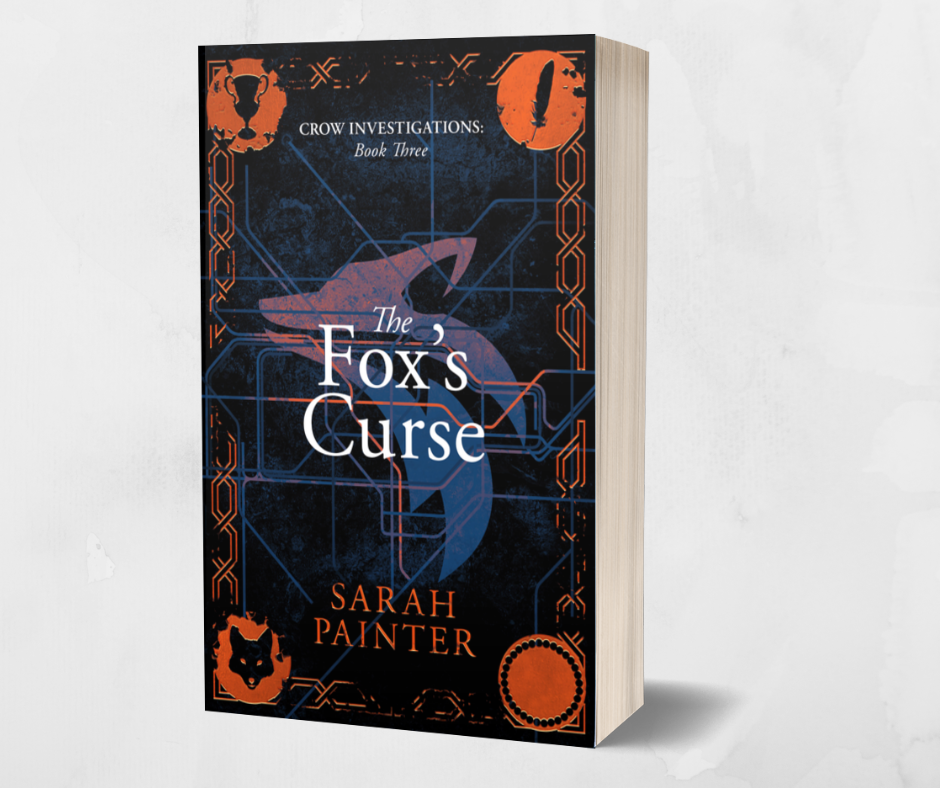
    The third book in my Crow Investigations series, THE FOX’S CURSE is out now!

    I am also halfway through writing a book on branding, marketing and selling for authors. I am not a marketing guru or advertising expert, but this book covers the subject from the point of view of mindset. Most authors I know have – at best – conflicted feelings about selling and making money (and valuing their own creative work) and it’s upon these mindset issues I will be mainly focusing, as well as strategies and tactics which I have found helpful.

    RECOMMENDED

    Writing Into The Dark by Dean Wesley Smith

    News Feed Eradicator for Facebook (free Chrome extension)

    THANKS FOR LISTENING!

    If you can spare a few minutes to leave the show a review on iTunes (or whichever podcast app you use) that would be really helpful. Ratings raise the visibility of the podcast and make it more likely to be discovered by new listeners and included in the charts.

    The Worried Writer on iTunes

    [Click here for step-by-step instructions on how to rate a podcast on your device]

    Also, if you have a question or a suggestion for the show – or just want to get in touch – I would love to hear from you! Email me or find me on Twitter or Facebook.


    The Worried Writer Ep#57: Branding For Authors Nov 01, 2019
    Show notes

    This month is a ‘just me’ episode in which I discuss branding for authors in response to a listener request.

    THANK YOU!

    Become a PatreonHuge thanks to everyone supporting the show on Patreon. Thank you so much!

    Join our growing Patreon community at The Worried Writer on Patreon.

    I love creating the podcast but it takes a significant amount of time (and money) to produce. If you want to help to keep the show going, please consider becoming a patron. You can support the show for just $1 a month! If you pledge $2 or more, you also receive an exclusive mini-episode that I put out in the middle of every month, plus instant access to the back list of twenty audio extras.

    WRITING UPDATE

    I finished writing the third book in my Crow Investigations series and I’m cautiously pleased with it – huzzah!

    It’s called THE FOX’S CURSE and will be out on the 26th November. I love the series branding created by the talented Stuart Bache at Books Covered, and think he has done another wonderful job on this latest instalment.

    RECOMMENDED

    I’ve been doing lots of research on author branding and marketing and here are the resources recommended in this show:

    David Gaughran

    Derek Murphy: www.creativindie.com

    Creating Your Author Brand by Kristine Kathryn Rusch

    Dean Wesley Smith and the ‘Magic Bakery’

    The Six Figure Author podcast

    THANKS FOR LISTENING!

    If you can spare a few minutes to leave the show a review on iTunes (or whichever podcast app you use) that would be really helpful. Ratings raise the visibility of the podcast and make it more likely to be discovered by new listeners and included in the charts.

    The Worried Writer on iTunes

    [Click here for step-by-step instructions on how to rate a podcast on your device]

    Also, if you have a question or a suggestion for the show – or just want to get in touch – I would love to hear from you! Email me or find me on Twitter or Facebook.


    The Worried Writer Ep#56: Vanessa Lillie ‘Enjoy The Good Moments’ Oct 01, 2019
    Show notes

    My guest today is Vanessa Lillie whose debut thriller Little Voices is out this week from Thomas and Mercer.

    We talk about dealing with reviews and being read, and how Vanessa transformed from a free-writer to an outliner.

    Vanessa has fifteen years of marketing and communications experience and enjoys organising bookish events in Rhode Island, where she lives. She worked as an editor for a publisher, before leaving to concentrate on her own writing.

    For more on Vanessa head to vanessalillie.com or find her on Twitter, Facebook or Instagram.

    THANK YOU!

    Become a PatreonHuge thanks to everyone supporting the show on Patreon. Thank you so much!

    Join our growing Patreon community at The Worried Writer on Patreon.

    I love creating the podcast but it takes a significant amount of time (and money) to produce. If you want to help to keep the show going, please consider becoming a patron. You can support the show for just $1 a month! If you pledge $2 or more, you also receive an exclusive mini-episode that I put out in the middle of every month, plus instant access to the back list of nineteen audio extras.

    WRITING UPDATE

    This month I’ve been battling with the third Crow book. I said I was almost done and I thought I was, but the ending keeps moving away from me. This is partly because there are scenes which are in the wrong place (or I’ve realised there is a better, more exciting way to order them) and that takes lots of thought and weaving together and rewriting, and partly because the ending itself got a wee bit more complicated and I needed a few more chapters than I expected. It’s nearly done, though, which is very good news as it’s due out in November!

    SPEAKING

    Also, I did a talk for the lovely folk at the Borders Writers Forum. If you’re a member of the group and have tuned in today, hello and thank you, again, for having me. It was so much fun and I have great writerly chats with people after the official Q and A had finished.

    One thing I wanted to talk about was somebody said that a person in their life had said something about ‘why write?’ because there were enough books in the world and every story had already been done, or something similar.

    I realised this was a doubt I dealt with a long time ago and had actually forgotten that I’d once had…

    So.

    There is nothing new. No new ideas. No new stories. And that doesn’t matter. The execution is what matters and, crucially YOUR VOICE. Nobody else has your POV and so your book most definitely hasn’t been done yet.

    Also, who cares? Who gets to say ‘enough books’? Who has that authority? It’s not like writing books hurts anybody. This is not life or death, this is just telling stories. Who on earth has the right to tell you that you’re not allowed to tell your stories?

    Also, yes, there are loads of books which have been written in the past and they are valuable and wonderful, but they are products of their time. Books written now are products of this time, this moment in history. That’s important, too.

    Finally, and most importantly, think of a book that was just the right book for you at just the right time. Something you loved with a passion, something you fell into at a time you needed to escape. Think about that book and how you felt the first time you read it. It might be one you’ve gone back to many times in your life as a comfort read or one that you only read once, but it transformed your world during the time you spent in it and you are eternally grateful.

    Now imagine that the author who wrote that book let self-doubt stop them. They will have felt the same fears, have heard the same arguments, they might have let that stop them and you would never have had the magical experience of reading it.

    Now go a step further. There is somebody out there who needs the book that is currently inside you. You don’t know them and they don’t know you, but you are connected by this need. The book inside you is the one story, the one voice, the one moment that will give them that same perfect experience. If you don’t write your book, that reader won’t get to read it when they need it.

    It’s a thought which I found massively inspiring and helpful and I hope you do, too.

    PUBLISHING

    In more practical news, I’m not sure I mentioned it before but I have hired my husband out of his job one day a week and he’s doing lots of stuff to free up my time such as editing the podcast and the transcription of the interview.

    This links to my overall business plans, but also to my mission to write as many of the books I have inside me as possible before I shuffle off this mortal coil. Remembering that this is my purpose, my ‘why’, is very motivating, and I highly recommend delegating stuff to other people as soon as you can afford to do so. This could be paying someone to do your cleaning to free up writing time or, if you’re indie and running the publishing business side, delegating operational tasks such as book-keeping.

    LISTENER QUESTION

    I had a great listener question on Twitter from Joanne Mallory about branding. Thank you!

    It has inspired me to dedicate a whole episode to marketing and branding for authors next month.

    If you have any questions about writing, process, procrastination or the business side of things such as marketing or publishing options, email me, leave a comment on this post, or find me on Twitter.

    IN THE INTERVIEW

    I’m still trialling the full transcript of the interviews (see below). I want to make the podcast more accessible for those who prefer (or need) to read, rather than listen. I would love to hear what you think! Do you like the full transcript or do you miss the ‘selected highlights’ of the old format?

    RECOMMENDED

    Vanessa is a reformed free-writer, and she recommends the following books to learn how to outline and structure a novel.

    Writing The Breakout Novel Workbook by Donald Maas

    Save The Cat Writes a Novel by Jessica Brody

    THANKS FOR LISTENING!

    If you can spare a few minutes to leave the show a review on iTunes (or whichever podcast app you use) that would be really helpful. Ratings raise the visibility of the podcast and make it more likely to be discovered by new listeners and included in the charts.

    The Worried Writer on iTunes

    [Click here for step-by-step instructions on how to rate a podcast on your device]

    Also, if you have a question or a suggestion for the show – or just want to get in touch – I would love to hear from you! Email me or find me on Twitter or Facebook.

    INTERVIEW TRANSCRIPT


    The Worried Writer Ep#55: Emily Royal ‘Keep At It!’ Sep 01, 2019
    Show notes

    I have a great interview for you today with a dear friend of mine, historical romance author Emily Royal. Emily has written several novels and is impressively prolific, but 2019 is her first year as a published author. She has gone from submission hell to having several books out in one year, so there is lots to dig into, and I’m sure you will enjoy her story. Emily’s books include medieval romance – The Sins of the Sire – and a Regency series, the London Libertines, which starts with Henry’s Bride. Book two, Hawthorne’s Wife, is out on 3rd September. For more about Emily and her work, head to emroyal.com or find her on Twitter or Facebook. THANK YOU! Massive thanks to everyone supporting the show on Patreon. Thank you so much! Join our growing Patreon community at The Worried Writer on Patreon. I love creating the podcast but it takes a significant amount of time (and money) to produce. If you want to help to keep the show going, please consider becoming a patron. You can support the show for just $1 a month! If you pledge $2 or more, you also receive an exclusive mini-episode that I put out in the middle of every month. You also get instant access to the backlist of extra episodes (there are eighteen now!). WRITING UPDATE It’s been a busy month with more summer holiday fun, a family trip down south and lots of drafting on my third Crow Investigations book. I have also been sorting through all of the notes I took at the publishing conference in Edinburgh. One of the many things it’s made me think about is my branding as an author. I have been trying to work out what my ‘promise to the reader is’ as although my books tend to have a wee bit of magic in them, they do span different genres such as supernatural thriller, women’s fiction historical, and urban fantasy. There was a brilliant session from Derek Murphy (CreativeIndie) and he spoke about the importance of working out how you want your readers to feel when think of you/your books, and how that is linked (or should be linked!) to the way you present yourself (your branding) MINDSET As I mentioned last month, one of the most important things I got from the Edinburgh conference was a mindset shift. It could perhaps more properly be described as a mindset confirmation. Doing this author thing is a wee bit odd, and stepping outside the traditional route and running it as a business is another step away from the usual… Much as I love it, I hadn’t realised how and uncertain I still felt. Physically being in the same space with hundreds of talented, successful, businesslike authors and small publishers, was transformational. It confirmed that I’m not alone in doing this (or delusional!). It was amazing to hear from people who are extremely successful, who I would like to emulate, but it also helped me to recognise the success that I have enjoyed and the things that I have achieved. Since I’m pretty rubbish at doing that, it was really helpful! Another great tip I got from the conference was a reminder on the importance of working out your core ‘why’ for writing. People spoke unselfconsciously about their ambition for their writing and publishing, about financial and other goals, and about their core values and reasons for writing. It was another reminder that I’m on track for my core goals, and confirmed that my heart and head are in alignment. It also reaffirmed my commitment to being a hybrid author, with some projects done through my own publishing company and some with other publishers. I know that many of you are aiming for the traditional route, and may prefer not to deal with the business side at all, and that’s completely fine. For me, though, it’s an exciting and creative part of being an author, and I’m so grateful that I have the opportunity and control. If you have any questions about writing, process, procrastination or the business side of things such as marketing or publishing options, email me, leave a comment on this post, or find me on Twitter. RECOMMENDED I give a shout out to some lovely folk on Twitter, including humorous suspense author Bill Cokas. I throughly enjoyed his interview on Paul Teague’s podcast, Self Publishing Journeys. I’ve recommended Paul’s podcast before (especially if you are interested in the nuts and bolts of running an author business), and this interview with Bill was great. Also, long-time supporter of the show, Clare Sager, has started a podcast called Confessions of a First Time Author. IN THE INTERVIEW I’m still trialling the full transcript of the interviews (see below). I want to make the podcast more accessible for those who prefer (or need) to read, rather than listen. I would love to hear what you think! Do you like the full transcript or do you miss the ‘selected highlights’ of the old format? THANKS FOR LISTENING! If you can spare a few minutes to leave the show a review on iTunes (or whichever podcast app you use) that would be really helpful. Ratings raise the visibility of the podcast and make it more likely to be discovered by new listeners and included in the charts. The Worried Writer on iTunes [Click here for step-by-step instructions on how to rate a podcast on your device] Also, if you have a question or a suggestion for the show – or just want to get in touch – I would love to hear from you! Email me or find me on Twitter or Facebook. INTERVIEW TRANSCRIPT Sarah [00:00:09] Emily Royal writes historical romance in both the medieval and Regency periods. Her debut novel The Sins of the sire came out in March this year and was swiftly followed by Henry’s Bride, Book One in the London Libertines series. Now, full disclosure, Emily is a close friend of mine. and I am thrilled that she is finally being rewarded for all her hard work and tenacity. Welcome to the show. Emily and thank you so much for joining us. Emily [00:00:40] Oh hello Sarah. It’s so good to be here at last. After so many years of rejections and rejections and rejections it’s great to be here and I’ve been a bit of a fan girl of your show for ages, so it’s lovely to be on the other side of the microphone. Sarah [00:00:55] We got here! I’m so glad, too. Before we get into your twisty path to publication which I’m very excited about, I was hoping that you could just kick things off by telling us all a wee bit about the London Libertines series, because I believe Book 2 is actually going to be out quite soon. Emily [00:01:18] Yeah. Book 2 should be out in a couple of weeks time. Just doing final tinkering on the format. So yeah the London Libertines series, I suppose you could describe it as Jane Austen with sex and dark stuff. There is a set of romances which currently is set in the Regency period but I suspect as the years progress it will move into Victorian. Set mainly in London but also in the country and country states and everything. And the heroes are unashamedly alpha males, so you could say it’s a bit bodice-rippy. But the heroines are all misfits in one way. So the heroine in the first book she’s quite plain, she’s awkward, she’s gawky, she’s intelligent and she speaks her mind, and she’s a bit of a social outcast. In the book that’s coming out in a couple of weeks time, Hawthorne’s Wife, the heroine is a complete outcast who’s afflicted by a childhood trauma and lots of horrible things happen to her and she has to overcome it. And actually in the third book the heroine is recovering from a mental breakdown. So it’s actually quite dark stuff. It’s interesting to put it in a regency setting, so it’s not your typical frothy sparkling romance with glittering gowns, it tackles some quite horrific issues sometimes. Sarah [00:02:42] Excellent. And as I mentioned in the intro, we’re pals, so I do already know your path to publication story, having lived it alongside you a tiny wee bit, but it’s so inspiring. Especially since your debut year is such a busy one. Would you mind talking us through your path to publication? Emily [00:03:12] Yeah. So how long have you got? I’ve been tinkering with writing for a couple of years. If we go back to kind of 2013, 2014, which is, yeah, five-six years ago, I’ve been writing for a couple of years and I think I ended up having three books that were really really rough and overly long. I remember telling you ‘I’ve written a book, Sarah, and it’s a hundred and eighty thousand words long’ and you kind of burst out laughing and said ‘yeah, you’re going to need to cut it down’. So I had these books and I stumbled across the website for the Romantic Novelists Association, and on their website they talked about this new writing thing which they have. Where there’s a limited set of unpublished authors who can join the association so they get all the benefits of the magazine and access to seminars and conferences etc.. But with that comes a full critique of a novel. And I thought, yeah yeah I’m gonna have some of that. It’s massively oversubscribed so the slots are like T in the park tickets they get oversubscribed within about two minutes of the beginning of the year beginning. So it was March 2014 so I already missed the boat, but 2015, I stayed up at 2 minutes past midnight on the 1st of January and got in. And I got this critique in June of that year and it was really really positive and it was quite scary because that was the first time anyone had ever read anything I’d written because I just had you under the bed and didn’t even show it to my husband and kids, I was terrified of it. But it was really positive, so I though ‘brilliant brilliant’ and I started submitting to agents. And I got agent interest in September of that year which, for me, those three months submitting and getting rejections was just forever, but actually looking back I think that was pretty quick. I got signed at the end of the year and I thought ‘Oh this is it. This is it. I’ve made it, I’m going to get a three book deal, I’m gonna get books in Waterstones.’ And now I look back and think you naive little fool! I just knew nothing about the publishing industry. So fast forward three years, nothing happens. I went through two books with my agent. I had periods of submissions to publishers, waiting to hear, lots of rejections, lots of radio silence. I can remember being stressed waiting for emails back from my agent and publishers, and every time my phone pinged it was like ‘yes, yes, check it!’ and it was an email from the Carphone Warehouse with an offer for a new phone and I just turned into a complete obsessive with this thing and it just stressed me out so much. And then I got to the end of it, and the second book failed to get a deal. So this was at the end of 2018, beginning of 2019, so a long time, and my agent and I decided to part company. So yeah, that was long and tortuous. But during that, what I did was I just carried on writing more books. And what I did was the first book that my agent couldn’t get a deal for, I started submitting that to smaller publishers, and I finally managed to get a contract for that. That took about six months, and that book’s actually not out yet. But I got a deal for that middle of 2018. And then the second contract I got actually came out as a result of a Twitter pitch, which was a book that my agent looked at it and just went ‘No I’m not touching that, that’s way too dark, way too violent’. And that was that the Sins of the Sire. And I chucked it up as a Twitter pitch, May 2018, just really to see whether I could write a half decent tweet, whether I could do an elevator pitch. I didn’t think anything would come of it, but I got a ‘like’ from an editor at a publisher called Tirgearr which is based in Ireland and I’d heard good things about them, they’ve got quite nice covers and some of my friends published with them. I sent in the book and I gave full disclosure, I said ‘look, this book is way too violent and I’m sure it breaches all of your guidelines, but just out of courtesy here it is’. So I was quite blunt about it. Didn’t think anything of it. And I heard back from them a few weeks later and I didn’t even open the email because I just thought it was gonna be a rejection. And about two to three hours after I got the email, I came back into my hotel bedroom because I was actually away with work, had a couple of beers, thought ‘let’s see why they’ve rejected me’ and this email actually says we’re actually quite interested, what else are you writing? And they offered me a contract, which was a bit of a shock! [00:08:03] And then the third contract was absolute lightning fast. It was just after I’d parted company with my agent beginning of 2019. My agent was based in the States and I wanted to have closure on publishers in the States, but there was one more publisher I was really interested in because they had great authors on their list who are topping some of the some of the charts, authors who I admire, who I fangirl over, so I thought I would kick myself if I didn’t at least chuck it at them and see what they thought. So I chucked it at them and then two days later I got an e-mail saying can we talk? I got back home that night and she phoned me up and then three or four days after they offered me a three book deal! [00:08:44] So actually that one took a week to get a three book deal on that book and yet everything else has been years and years and years. Sorry, that was a long ramble! Sarah [00:08:53] Not at all, thank you for sharing that. It’s an absolute head spinner how much things have changed and turned around for you. And there was that long torturous waiting period while you were agented, and I know so many folk listening will be able to empathise with that hugely. That glacial pace of traditional publishing and how it can go like that… Slow, slow, slow, wait, wait, wait and then fast! It is so normal, unfortunately. The rejection and the submission process and getting an agent doesn’t mean it’s a done deal, but when we’re going through it we feel as if we’re failing or that it is a bad sign. So I’m so grateful for you being willing share it, because I think it’s really helpful for other people who are either going through it or looking to start submitting or whatever. So, in terms of speed, you went from effectively nothing, to, I believe several out this year? Emily [00:10:28] Yes. So this year, I’m probably gonna have five books out, which is completely insane. It’s like I was sat with my engine idling for three years, getting really stressed, and then wallop I’m up to 100 in half a second. I still haven’t quite recovered from it. [00:10:50] And there were so many lows during those three years. I can remember just being absolutely gutted and heartbroken with some of the rejections and the close ones were the worst. I mean, I had one where a publisher from a pretty half decent imprint was showing lots and lots of interest in my book. It was the first book that my agent tried to submit and actually then my agent really came into her own. She was really interactive and there was loads of communication and they were talking about careers, and three book deals, other projects, where is my career going, blah blah blah… And she was like ‘No, no, this is really positive’ and then it fell at the last hurdle. The editor really wanted it, but they just said no it’s the wrong timing, we’re not we’re not taking it. And that went from being just on the brink of this massive high, and I just plummeted off a cliff. I look back and say what was the worst day of my life. It probably wasn’t, it sounds quite melodramatic, but that was a low. And then for this to happen, particularly with the DragonBlade contract, as I kind of blinked and it happened. It was like, you look away and that’s when the unicorn just trots in front of you… [00:12:07] Yeah it’s insane. It’s not this process of, it takes you six months to get an agent and it takes you a year to get a contract and a year to get another contract. It’s not a straight line, it’s up and down and all over the place it’s backwar…

    Full show notes at the publisher

    1 2 3 5 Next

    Related Podcasts

    Fresh Air

    1

    Fresh Air Arts
    Twenty Thousand Hertz

    2

    Twenty Thousand Hertz Arts
    The Black Tapes

    3

    The Black Tapes Arts
    Snap Judgment

    4

    Snap Judgment Arts
    Here’s The Thing with Alec Baldwin

    5

    Here’s The Thing with Alec Baldwin Arts
    The NoSleep Podcast – Creative Reason Media Inc.

    6

    The NoSleep Podcast – Creative Reason Media Inc. Arts
    footer-logo

    Contact Us

    Toll Free: 844-670-7747

    Links

    • Home
    • Top Charts
    • Networks
    • Apps
    • Independents Podcasts
    • Podcast Advertising
    • Podcast News
    • Contact Us
    • About Us
    • Analytics & Insights

    Stay Connected

      Privacy, Terms of Use & Our Code of Ethics Protecting Content Creators Copyrights