Show notes
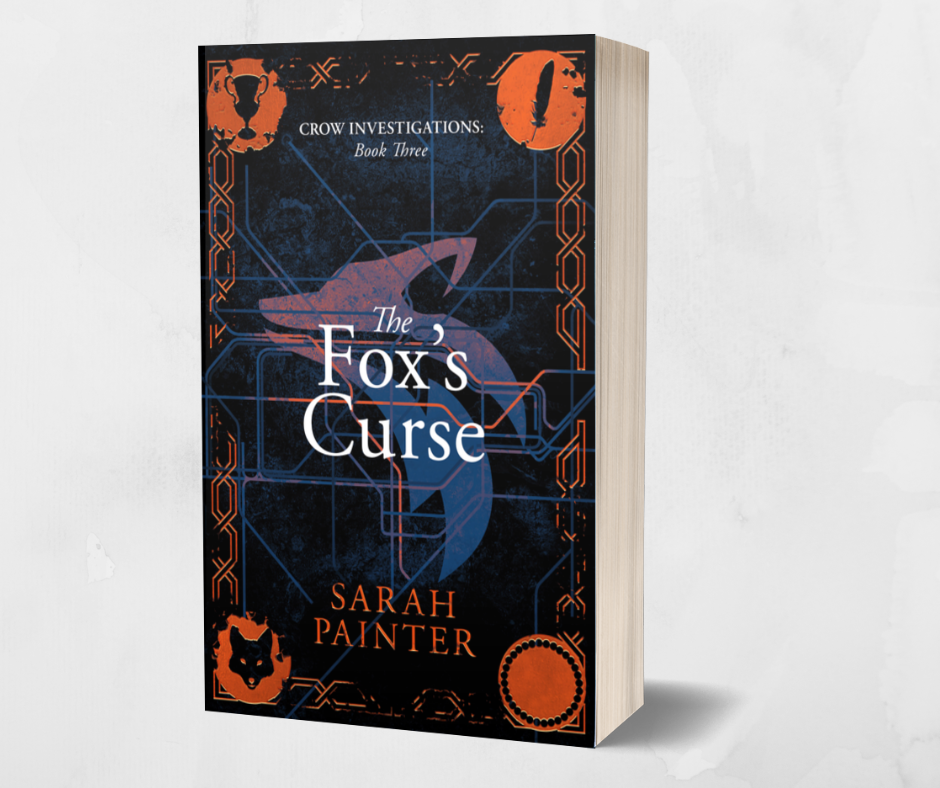
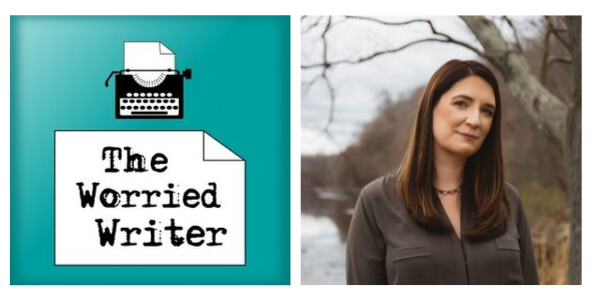
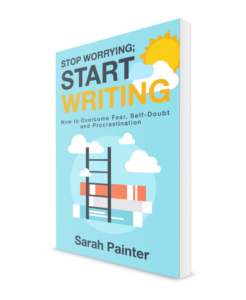
Hayley Chewins is an author of magical, feminist middle grade fiction. Her debut, The Turnaway Girls, was a Kirkus Best Book of 2018, and her second book, The Sisters of Straygarden Place, is forthcoming from Candlewick Press this September and has already been called ‘superb, spooky and unforgettable’ in a Kirkus starred review. Hayley lives in South Africa and also works as a writing coach. For more about Hayley and her books head to HayleyChewins.com or find her on Twitter. IN THE INTRO Announcement: The Worried Writer Podcast is pausing. I love creating the podcast but have decided to take a break. After more than five years of creating the show, I feel in need of a short holiday and a bit of time to look inward and focus on my fiction. I will probably miss the podcast terribly and be back in a couple of months, but I also need a wee bit of time and distance in order to think about how I want the podcast to evolve. I am also keen to explore other ways of supporting authors and am considering an online course or mastermind group. This podcast has helped to transform my writing life and I want to say a massive thank for your time and support. The Worried Writer site will remain in place so you can still enjoy the backlist episodes of the show. I will also be adding new content as I work out my new focus/direction. Finally, if you keep your podcast subscription in your app then, if I restart the show, you will automatically receive the new episodes. BOOK NEWS I finished the rewrite of The Pearl King (Crow Investigations Book Four) and it’s up for pre-order (out June 25th). If you like urban fantasy or paranormal mystery, please consider checking it out! Also, my new Worried Writer book – Stop Worrying; Start Selling: The Introvert Author’s Guide To Marketing – is out next week. It’s available for pre-order: www.books2read.com/StartSelling It will be out on the 9th June in paperback and ebook, with the audiobook following later this year. Apologies for the delay in the audio – the pandemic sapped my energy and closed my sound engineer’s studio! If you pick it up, I would love to know what you think! IN THE INTERVIEW The full transcript is copied below. THANKS FOR LISTENING! If you can spare a few minutes to leave the show a review on Apple Podcasts (or whichever podcast app you use) that would be really helpful. Ratings raise the visibility of the podcast and make it more likely to be discovered by new listeners and included in the charts. The Worried Writer on Apple Podcasts [Click here for step-by-step instructions on how to rate a podcast on your device] Also, if you have a question or a suggestion for the show – or just want to get in touch – I would love to hear from you! Email me or find me on Twitter or Facebook. INTERVIEW TRANSCRIPT Sarah: Hayley Chewins is an author of magical, feminist, middle grade fiction. Her debut, The Turnaway Girls was a Kirkus best book of 2018 and her second book, The Sisters Of Straygarden Place is forthcoming from Candlewick Press this September, and it has already been called superb, spooky and unforgettable in a Kirkus starred review. Hayley lives in South Africa and also works as a writing coach. Welcome to the show, Hayley, and thank you so much for joining me. Hayley: Thank you for having me, I’m so excited to be here. Sarah: I was wondering if you could just kick things off by telling us a wee bit more about your forthcoming book, The Sisters of Straygarden Place. Hayley: Yeah, sure. Okay. So The Sisters of Straygarden Place is a middle grade fantasy book and it’s set in a magical mansion that’s surrounded by really tall silver grass. The grass is so tall that it covers the entire house. And it’s about three sisters who have been abandoned there and left in the care of this magical house. Their parents have left and they’ve left them a note saying, don’t leave the house, wait until we come back. What happens is the eldest sister leaves the house. She does go walking into the grass one day and she returns and starts to get really, really sick and starts to turn silver and it’s up to the middle sister, whose name is Mayhap, to figure out what’s going on with the grass, why her sister is so sick, and when she starts doing that, she kind of starts to unravel all this other… all these other mysteries around her family, why her parents actually left, why the house is magical and everything kind of starts to unravel. Sarah: Oh, that sounds absolutely wonderful. And that’s exactly my kind of book, so I’m very excited to read that. And that’s out in September this year? September, 2020? Hayley: Yes. In America, it’ll be out in September, 2020. In the UK, it’s coming out, I think, in March next year. Sarah: Wonderful. Well that’s very exciting. And I was going to say as well, I haven’t seen the cover for this one, but I saw the cover for your debut and it’s absolutely gorgeous. So is that a similar sort of genre, your first book? Hayley: Yes. So they’re both kind of upper middle grade. They kind of fall into that 10 to 14 range and yeah, they’re middle grade fantasies, but they are kind of on the darker side and The Sisters of Straygarden Place even more so – it kind of walks the line between fantasy and horror. It is quite a bit on the spooky side of things. Sarah: Wonderful. And what sort of led you into writing for that age group and in that genre? Did it… Was it just something that came naturally or something that you found difficult to choose? Hayley: Uh, no I didn’t. When I, when I first started writing, I actually was writing kind of adult literary fiction. I was, uh, I dunno, I guess that was kind of mainly the kind of thing that I was reading at the time. I was in my early twenties. And I’ll just kind of tell you briefly what happened and how I came to realize that I wanted to write novels. I was studying, I did a bachelor of arts in Italian and English literature, and so I was always reading and writing, and I’ve always loved, I just always, always loved books and loved stories. Um, and then after I did that, I did a law degree and it, so it was kind of the first time in my life that I didn’t have time to read fiction anymore or poetry. I didn’t have time to write. I was just reading so many cases and kind of legal articles and having to write legal essays. And like, lots of tests and things like that. So it was, it was kind of the absence of literature from my life that made me realize how much it meant to me. And at the same time, I was kind of also uncovering the truth that I, I didn’t really want to be a lawyer. And so, yeah. So that’s kind of when I started, I just became really, driven to, to write. So I was about 22. I loved writers like Ian McEwan and Arundhati Roy, um, and Angela Carter. And, um, yeah. So when I first started writing, I didn’t really have any ideas for books and I, and I certainly wasn’t thinking about writing children’s books. I was just kind of trying, trying to write like these writers that, that I really admired and I didn’t have a sense of what I wanted to say or kind of my own voice or anything like that. I just felt like I just, I was kind of just very stubborn about it. Like I wanted to know, I really had no ideas and nothing to write about. But as I, as I just kind of kept writing, I kept noticing that children would just kind of appear in my stories all the time. So I would just, I just kept writing about children, even though technically I was writing books for adults or stories for adults. And then I also at the same time, kind of started to read lots about publishing and sort of discovered children’s, the children’s world and started reading more widely and reading middle grade books, reading young adult books, and it was really writers like David Almond and Kate DiCamillo and Sarah Crossan who opened my eyes to how incredible middle grade books could be. Um, I remember having this moment when I read Skellig by David Almond, and I have this feeling of, Oh, I want to write something like this. So, something that makes someone feel like this. Um, and so that’s when I started trying to write, middle grade books. But I was also kind of writing more books more on the literary side and more contemporary realistic books. Um, and so yeah, it just took really lots and lots of writing the wrong thing for me to find what I was actually meant to write and what actually ended up feeling really alive and, and exciting for me to write. But it took a lot, a lot of persistence to find it. Sarah: Oh, that’s fantastic. And that’s such an encouraging, account because I think, I mean, I can certainly empathize with that, that feeling of wanting to write, but not really being sure what. And yeah, I think, I think that will resonate with a lot of people. That’s brilliant. And in terms of when you did write, you know, your first book that you thought, okay, this is middle grade, I often get questions about getting started in children’s fiction, which I know nothing about, so I’d love to hear about your path to publication. Hayley: Ok, yeah. so I, like I said, I was just writing lots and lots of manuscripts and kind of having the feeling of… You know, I was writing things and finishing things cause I, I’d realized that in order to learn how to write a book, I actually had to write a book. Sarah: So annoying, I know! Hayley: Yeah. So I, I was kind of just on this drive to finish things, but at the same time, even though I was finishing manuscripts and revising them, I also kind of knew that they weren’t very good. And that I hadn’t really found like just something really interesting and really good and something that I really wanted to, that that really felt like me. So it took, I mean, I actually kind of lost count of how many manuscripts I wrote, but it was many. And I think the middle grade ones, there were, there were at least four. And then eventually I got to a point where I wrote a novel in verse. It was a middle grade novel in verse that was kind of like, um, not really fantasy, it kind of blended the real with the unreal, sort of like contemporary, with a bit of magic. I finally felt like, okay, this is the kind of book that I want to write and, you know, and I felt like it was quite good and I could kind of write a pitch for it and send it out. So I did lots of research on how to write a pitch, how to write a query letter, and I Googled, um, lots of agents and kind of tried to find agents who represented the kind of thing that I’d written. And I started querying. And yeah, I was lucky enough to get quite a few requests from that. And then I ended up getting, um, one agent asked me to revise the manuscript. He basically wanted to, he read the whole thing, really loved it, but also it felt like it needed a lot of work, which was very true. And so he sent me lots of notes. And the, the notes resonated with me, so I agreed to do the revision for him. And what ended up happening was I took a couple of months to do that and sent it back to him and it, it didn’t end up kind of resulting in an offer of representation, but it was a really good experience for me because I learned how to revise and how to take notes, and I learned to… It just made me think about stories in, in a way that I hadn’t really thought about. It was really fantastic to get that feedback. Um, but I also didn’t really know, um, kind of how to make that manuscript any better than I had already made it. I didn’t know how to fix it. So I decided to set it aside and I started a new project, which actually ended up being The Turnaway Girls. And what happened with The Turnaway Girls was that I entered one of these kinds of Twitter pitch competitions. And so it ended up being that… It wasn’t like a, like when you tweet a pitch and then agents like, or favorite your tweet, it was like someone, a writer who had arranged it and it was on her blog. So they chose writers or stories that were interesting and then put the stories, the pitches, and I think it was like the first, I don’t know, five pages or something like that on the blog. And then. agents who went to the blog could request more material in the comments. And that’s how I ended up meeting my agent, because she kind of requested materials through that. And she also, it was a very similar experience because she read it very quickly. She loved it, but she also had lots of notes for how it could be made better. And she didn’t feel like she could make an offer of representation based on the state that the manuscript was in. It had lots of plot problems. It had pacing problems. Um, and she gave me lots of notes and she gave me a list of books to read and she kind of asked me if I would be willing to revise it. And again, I was like, yes, I’m really persistent. All I want to do, like this is the only thing I want to do. I just want to make this book better. And I was so, so grateful to have that feedback was really such a gift. So. I did the revisions and then, yeah, long story short, she ended up offering me representation based on the revisions, and that’s how I ended up getting an agent and yeah. And then. Uh, with my first book deal, it was like deja vu because we went out on sub with the manuscript and my editor loved the book and thought it needed, you know… And she sent me the most wonderful, she sent my agent rather, the most wonderful edit letter. Um, and I did, I did the revisions and then we ended up getting an offer on the book. So, even though it has been a little bit of a circuitous path or not circuitous but I have had to, I did feel like I had to revise that book so many times before it actually became a book. Um, and then of course edits after, you know, Candlewick bought the book. But I have learned so much as a writer through getting, you know, that kind of feedback. So I always say like if you get an offer to revise and resubmit, it’s such a compliment, from the agent or the editor because they, they’re taking time to read your work and to give you feedback on it. Um, even if they’re not offering you a book deal, or offering you representation, there’s a high chance that if you do the revisions that you know, it will end up going your way. And even if it doesn’t, you just learn so much about your own writing. Yeah. Sarah: No I think, I think that’s, I think that’s excellent advice. And it’s also, thank you for sharing this story. I think it was, uh, a very, um, very usual and very sort of typical story in the sense of, you know, we have to write a lot and like you say, finish books and then they’re not, they’re not really publishable, but then, you know, going through editorial feedback teaches us how to revise and how to write. And I think. Again, hearing it again and again, it’s so important for people to know that it is a craft and it is perseverance. And I think you know, hats off to you for your attitude of being grateful for that learning experience. I think that’s, you know, I think that’s really encouraging and really good. So in terms of giving people advice, I mean going through submission, it is really tough. It is really hard, and it can be heartbreaking. What do you think helped you to keep going? Hayley: I think I just had… I always kind of… Basically from the moment I decided I wanted to write novels, I just knew that I was going to do it. I just knew that no matter what it took, I was going to kind of stay the course. And um, it’s also, I think it’s just having like a passion for the actual craft of writing. Like I always, when I talk to writers, who have, um, kind of who worry that they don’t have what it takes, I always say. You know, if you, if you have a desire to do something, that’s an indication that you do have what it takes. You only have the dream to do something if you already have everything within you to, to have that thing and to do it. So firstly that, and then also just if you’re very connected to why you are writing and why it’s important to you and your love for it, a…
Full show notes at the publisher 
 Our TOPPODCAST Picks
  Stay Connected