TopPodcast.com
Menu
  • Home
  • Top Charts
  • Top Networks
  • Top Apps
  • Top Independents
  • Top Podfluencers
  • Top Picks
    • Top Business Podcasts
    • Top True Crime Podcasts
    • Top Finance Podcasts
    • Top Comedy Podcasts
    • Top Music Podcasts
    • Top Womens Podcasts
    • Top Kids Podcasts
    • Top Sports Podcasts
    • Top News Podcasts
    • Top Tech Podcasts
    • Top Crypto Podcasts
    • Top Entrepreneurial Podcasts
    • Top Fantasy Sports Podcasts
    • Top Political Podcasts
    • Top Science Podcasts
    • Top Self Help Podcasts
    • Top Sports Betting Podcasts
    • Top Stocks Podcasts
  • Podcast News
  • About Us
  • Podcast Advertising
  • Contact
Not in our directory?
Add Show Here
Podcast Equipment
Center

toppodcastlogoOur TOPPODCAST Picks

  • Comedy
  • Crypto
  • Sports
  • News
  • Politics
  • True Crime
  • Business
  • Finance

Follow Us

toppodcastlogoStay Connected

    View Top 200 Chart
    Back to Rankings Page
    Christianity

    The Weekly Eudemon

    Widely-published author, speaker, and lawyer, Eric Scheske, offers weekly commentary on a host of matters, ranging from current events to philosophy to religion.

    Advertise
    • Apple Podcasts
    • Google Play
    • Spotify

    Latest Episodes:
    Episode 77: Civil War, Restoration, Glorious Revolution May 31, 2020
    Show notes
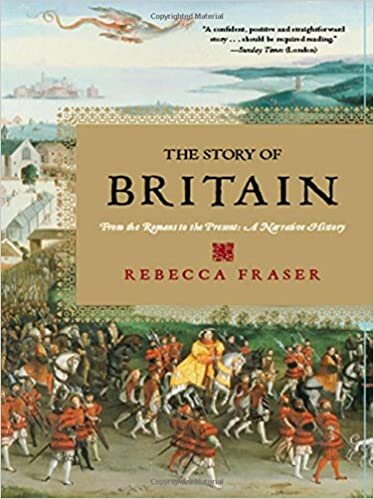
    story of britain.jpg

    We left off Episode 76 with the Civil War, which the Roundheads, mostly Puritans, won decisively. There was a huge equality movement, you might say. Folks known as the “levellers” were ascendant, and they wanted all class distinctions abolished. There would, obviously, be no monarchy. There wouldn’t be the House of Lords in Parliament. Everything would be governed by a remnant of Parliament known as the “Rump Parliament,” which executed Charles I in 1649.

    But, of course, a leader always emerges, and here it was the leader of the Roundheads military, Oliver Cromwell. A brilliant general and a good statesman. Brilliant victories over Holland and Spain . . . Even got Jamaica and ganja for the British. And he was a fanatical Puritan. By 1653, it was pretty obvious that he was governing England as a military dictatorship and was doing a pretty good job, actually, as long as you weren’t Catholic. Anglicans didn’t do well under him either. He was given the title “Lord Protector” and ruled as dictator until his death in 1658. This is what the term “The Protectorate” means (just view “Cromwell” and “Protectorate” as largely synonymous and you won’t be too wrong). His son took over his title, was incompetent, and abdicated. The monarchy was then restored in 1660. Charles II.

    And we might as well finish up British history here quickly.

    Charles II was a Catholic sympathizer. He wanted to be Catholic, but couldn’t without, well, probably getting lynched. He converted on his deathbed, but during his life, he did what he could to promote Catholicism, primarily through religious liberty measures.

    When he died in 1685, his brother, James II, took the throne, and he was unabashedly Catholic and didn’t care who knew. He more or less tried to turn England back into a Catholic country and exert royal prerogatives, neither of which sat well with the gentry, who then solicited William of Orange. He was prince of a small feudal state in southern France known as “Orange.” “King of England” would be a major step up, and William was fiercely Protestant. He assembled a force of about 11,000 men and invaded England at the invitation of Parliament. Protestants started defecting left and right, and James II gave up almost immediately. Virtually no blood.

    This is known as “The Glorious Revolution.” It happened in 1688. So, if you’re trying to fix your English history in your mind: English Civil War ends in 1649. Oliver Cromwell rules in the 1950s. The Restoration of the Stuarts in 1660. The Glorious Revolution in 1688. Those four terms are repeatedly used and any decently educated person is deemed to know what they are: English Civil War, Oliver Cromwell/the Protectorate, the Restoration, and the Glorious Revolution.

    A fascinating thing happened during The Protectorate. I already mentioned that there was a radical political movement known as “leveling, an attempt to abolish all forms of economic and political inequality.

    But there were also radical religious movements, like the Diggers, who tied into the Levelers’ political theory and said, citing the book of Acts and the early Christians holding things in common, they could plant their vegetables anywhere, so they started digging on areas belonging to nobility and areas they thought should be “common areas.”

    And there were the Ranters. These were the latest in a long line of sects in the pneumatic antinomian strain. “Pneumatic” of or relating to the spirit. “Antinomian”: no bound by moral law. Put together, it means, “We are so spiritual, the earthly world doesn’t affect us. Because all morality pertains to conduct in earthly affairs, no morality applies to us.”

    The Ranters took the position that earthly things are not illegitimate, but they are subordinate to the Ranters, who are God. They deemed themselves filled with God, so God themselves, so anything they said, did, or wanted was divine.

    And they meant it. Sex. Lots of it. Formerly decent women unleashed into, basically, the communal bang thing. Free love. Nudity. You name it. Nothing was unclean to them.

    Especially swearing. They swore all the time. I guess they were the most disgusting verbalists of all time, making the most frenetic Tourette sufferer sound demure.

    And sex Lots of it. Formerly decent women unleashed into, basically, the communal bang thing. Free love. Nudity. Sodomy. You name it. Nothing was unclean to them.

    And theft. Nothing was unclean to them. Nothing was forbidden them. Therefore, they had a right to everything. If God, after all, wants apples from your orchard, who are you to say “no”?

    Yeah, most English weren’t impressed. The Rump Parliament quickly passed the Blasphemy Act and the Adultery Act, the latter of which made adultery punishable by death. The persecutions started shortly later.


    Episode 76: Arthur, Alfred, and Other Kings to 1649. Medium dot Com May 17, 2020
    Show notes
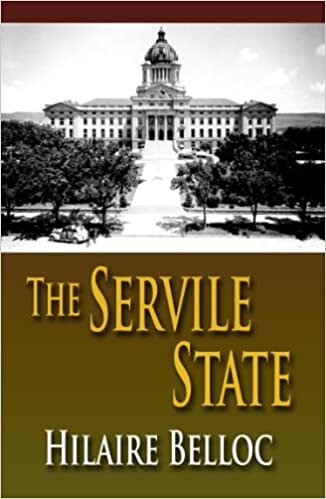
    Servile State.jpg

    A quick overview of what we’ve covered in English history:

    First, Rome’s conquest of southern Britain, and the withdrawal of its soldiers in 410, leaving its Roman citizens there and the native Britons to fend for themselves. During the 400s, St. Patrick went to Ireland and converted it to Christianity.

    Second, the invasions and/or migration of the Germanic Angles, Saxons, and Jutes, who were probably hired by the Romano-Britons to fight the Picts and other Celtic barbarians.

    Third, the conquest of much of England by the Angles, Saxons, and Jutes. The resistance and King Arthur (500ish). Christianity pretty much squashed.

    Fourth, Irish missionaries come to England, reconverting it to Christianity. Angles-Saxons gradually merged with the Britons.

    Fifth, Vikings start invading, establishing permanent settlements. Alfred the Great breaks them, brings them to treaty, dividing England between Angles-Saxons and the Vikings, which gradually merge under one king.

    Sixth, the Battle of Hastings. 1066. England becomes a French vassal state, technically. Intertwining of France and England.

    Seventh, the Hundred Years War. England whipping France. Joan of Arc. Treaty in 1453.

    And that’s where we are picking it up: Middle of the 1400s.

    In order to finance the Hundred Years War, the English kings had to go to Parliament for money . . . Repeatedly. In exchange, Parliament kept getting more and more concessions from the kings, giving rise to the most powerful representative government in Europe. The kings’ power was greatly limited by Parliament. The kings obviously didn’t like this, but there wasn’t much they could do about it, but it would drive much of English internal disputes for the next 200 years, until 1688.

    Henry VIII grabbed a lot of power in the English Reformation. In fact, a strong argument can be made that his break with Rome was triggered as much by his penis as by his greed. Huge monastic estates and other church holdings were forfeited to the new Church of England, Henry himself, or his allied nobleman. Hilaire Belloc points out in his absolute classic, The Servile State, that the alarmingly wealthy English noble families in the 20th century were formed in this era, when Henry literally gave them massive amounts of wealth after stealing it from the church. When you hear names like, Howards, Cecils, Cavendishes, and Russells, think, “Stinkin’ descendants of thieves.” Belloc says there were more than 50 such families that profited to an alarming degree from the rape of the Church.

    After Henry VIII, his son, Edward VI, took over. Under Henry VIII, the Anglican Church still felt and smelled Catholic. Under Edward VI, this started to change. It became far more Protestant, but he died after a short reign, then Mary took over. She was fiercely Catholic and took revenge on the apostates. After she died, her half-sister Elizabeth the First, Good Queen Bess, took over. She aggressively, at times violently, reversed Mary’s efforts and established the Anglican Church as firmly Protestant, but she also kept much of the Catholic flavor.

    This didn’t sit well with the Puritans, who were heavily influenced by John Calvin’s teachings, but there wasn’t a whole lot they could do about. Elizabeth was moderate, judicious, and universally loved. She ruled for almost 50 years, until 1603. She never married, leading to a succession crisis and nearly 100 years of internal feuding in England as the Parliament tried to wrest more control from the kings and the kings tried to reassert the rights commonly associated with kingship.

    First, there was James I, which started the Stuart dynasty of English kings.

    Then there was his son, Charles I, who really went to battle with Parliament. Literally. The English Civil Wars. Roundheads v. Cavaliers. The Catholic-sympathizer Charles I was opposed by the strongly Protestant, with a lot of Puritanism, Parliament and lost. Twice. He lost to the Protestantizing Parliament, which led to a discussion among Parliament about what to do next, with the Puritans suggested some rather extreme measures. Some members of Parliament and their followers joined the king and the civil war recommenced, but Parliament, this time consisting heavily of Puritans, won. Charles I was executed in 1649.

    This brings us the English commonwealth, no king, and Oliver Cromwell.


    Episode 75.5: Bonus Episode: Interview with Joe Condit May 13, 2020
    Show notes

    This interview took place on April 21st and originally uploaded on April 22nd. For some reason, it has since disappeared from the RSS feed. I am re-posting it now. InspireWord is still going strong. FOCUS’ Curtis Martin is tonight’s guest.


    Episode 75: Charles MacKay, Popular Delusions, Radical Spiritualists May 10, 2020
    Show notes
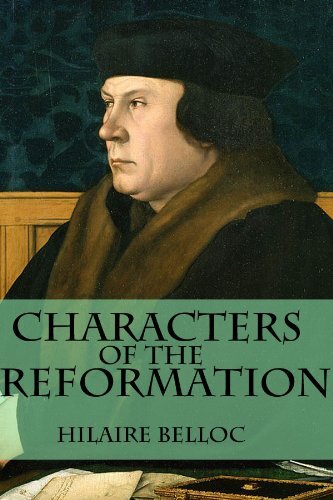
    Reformation.jpg

    Some Protestant sects were freakish, whether the Anabaptists in Munster or those iconoclastic peasants who took craps in holy water fonts, the Reformation brought more freaks to the open than a hurricane brings starfish to the beach.

    As a preliminary matter, let’s take a general look at the various sects, freakish and non-freakish.

    First, you can argue that all Protestant denominations besides the Adventists and Pentecostals (it has always cracked me up that the Pentecostals started in LA in the early 1900s, but man, talk about explosive growth) can be traced to the four early branches of the Reformation: Lutheran, Reformed/Calvinist, Baptist/Anabaptist/Radical, or Anglican.

    Lutheranism obviously started with Martin Luther. Although we commonly refer to 1517 as the year the Reformation started, you can’t say there was a separate Lutheran church until 1519, possibly 1520. At that point, Luther was excommunicated and people were still following him and going to his church services.

    The Reformed branch of Protestantism started in Zurich, Switzerland, by Huldrych Zwingli at about the same time. By 1522, the priest Zwingli was in open revolt against the Catholic Church and banging a wife (a common theme among reformers . . . “It’s all about doctrine and the Bible and, uh, and . . . Damn, she’s hot”). Zwingli, it must be noted, came to his doctrines quite apart from Luther. It was never like he was a follower of Luther and then branched off. They started separately. John Calvin would later pick up the Reformed banner in the 1530s. From this school comes today’s Dutch Reformed, Presbyterians, Congregationalists, Church of Christ. You can even pin the insufferable Puritans on the Reformed/Calvinist branch.

    Years later, the English Reformation started with Henry VIII when he saw Anne Boleyn and said, “Damn, she’s hot, maybe as hot as her sister Mary who I’ve been banging for years.” He asked the Pope for an annulment of his marriage from Catherine of Aragon, was denied, and decided to establish his own church, with its own Pope/leader in the form of the Bishop of Canterbury, who annulled his marriage to Catherine, paving the way for legalized banging of Anne Boleyn. From this you have today’s Anglicans and Episcopalians. The Methodists and Wesleyans are offshoots, but so different, you can’t even call them part of the Anglican tradition.

    And then you had the Radical Reformation. The Anabaptists. They were among the earliest and most enthusiastic reformers, eagerly listening to Luther and plowing forward. Depending who you ask, they actually pre-date Zwingli and the Reform branch of Protestantism. From this branch, you have today’s Mennonites and Amish.

    Included within the Radical Reformation “label” are the Radical Spiritualists and the Evangelical Rationalists. These are the proto-modern-day liberals: socio-economically higher class, often well-educated.

    The Evangelical Rationalists were basically proto-Enlightenment thinkers, in the vein of Voltaire and other rationalist snobs. Their big things were denial of the Trinity, Bible only, and use of human reason. I’m not even sure it’s properly called a religious movement and I’m not going to discuss it here.

    The Radical Spiritualists, on the other hand, were definitely religious. It’s odd that the Radical Spiritualists, and even the Anabaptists, were often excluded from discussions about the Reformation up until the 1960s, when historians started to appreciate their importance.

    Extremely radical. They reject almost every aspect of religion that might be external: that is, anything that is not part of the individual soul. All religious institutions . . . every church . . . Catholic, Lutheran, whatever. All ceremony and ritual. All clergy. No authority figures. No sacraments, rejecting even the Reformed position that sacraments are useful symbols; they deemed the sacraments as distractions. They even reject the Bible. They only believe in “the inner light.” Or the “inner spirit.” The direct revelation of God to the individual soul. Direct divine revelation.

    The earliest examples of this are the Prophets of Zwickau, who taught this about themselves in 1522. The Radical Spiritualists said many believers, not just the Zwickau prophets or other handful of selects, have this “direct indwelling of the spirit,” basically, that God lives in the soul, making each person divine. If you have the inner spirit, you’re saved. If you don’t, you aren’t saved. How do you get it? Historians aren’t sure what the Radical Spiritualists taught. I guess it would make sense. Any sort of articulation of this would be external to the soul, so they didn’t bother to develop doctrine or theology. The Radical Spiritualists basically said the inner light is like rhythm. You either got it or you don’t, and if you got it, you know it. It was very cocky.

    Caspar Schwenckfeld. Catholic. Followed Luther until 1525, then he broke. Rejected baptism, all formal church structures. Wandered throughout Germany, preaching, leaving behind followers. Sebastian Franck: Catholic priest, humanist, Lutheran, religion of the inner spirit: 1528. Wandering preacher. Thomas Munster: Catholic priest, Lutheran, broke in 1521 to become an adherent of the religion of the inner light. Big political activist. Organized the pheasant revolt in 1525 and was killed.

    What we’re seeing is the Reformation was immediately getting more and more subjective. Catholic: The Bible, the Pope, theologians, councils, etc. And then Luther and Zwingli: Bible only, as interpreted by each individual. And now the inner light is the sole standard of religious authority. The trend would continue into the modern era in the fiercely subjectivist philosophy from Descartes and into post-modernism with Derrida’s deconstructionism (words have no truth in them and, because we communicate by words, we can’t communicate truth, and therefore, anything anyone knows strictly wells up in himself . . . A material version of the “inner spirit” I suppose) and Foucault’s radical cultural histories (every culture’s “truths” are mere societal constructs).

    Music for Lighting Segments: Beach Closed by Blue Wave Theory. Used pursuant to the Attribution Share-Alike License 4.0.

    Theme song: Skinnin’ Lynyrd by Greg Scheske, a bespoke expert. Email him here: eidolonaudio@gmail.com.


    Episode 74: Wicked Pope, Moors, Siege of Vienna May 03, 2020
    Show notes

    1492. A threefer:

    Muslims tossed out of Spain
    Columbus
    Alexander VI starts pontificate
    Okay, first the conquest of Grenada. This had been a Muslim stronghold for years, the southern part of Spain. Since 1300, the Catholic Spaniards and Portuguese had controlled the entire Iberian Peninsula . . . Except Granada. Ferdinand and Isabella decided it was time to finish this thing off, even though it meant an enormous effort. The Moors were ensconced down there. They launched this “crusade” in 1486. A little over five years later, in January 1492, the last of the Moors were killed or gone.

    This then left Isabella free to honor her commitment to Columbus. She told him she would finance his expedition to reach China from Europe once she got the Moors out of Grenada.

    So, Columbus. Hero or genocidal madman? Both? Needless to say, we aren’t going to resolve this here, but a few general comments.

    First, I think the unequivocal praise of Columbus over the years helped cause the huge politically-correct backlash that we’ve seen over the past 30 years. Columbus did a lot of bad things. When you consider the times and the relative moral conditions that existed then, they’re a bit more understandable, but they were still bad by any standard. The unequivocal praise heaped on him for hundreds of years was a bit disturbing, but let’s face it, that’s not the real reason he has become the whipping boy of the postmodern left.

    The real reason goes back to the structuralist arguments of de Saussure and Claude Levi-Strauss, who believe language creates culture, including a culture’s morality and ethics, and there is no set of moral norms, that all cultures, therefore, are equally arbitrary and, therefore, of equal merit. The problem with this theory is, Christianity was embraced by native populations, who immediately recognized it as a superior intellectual and moral development over their wicked gods who demanded human sacrifice. The problem with this theory is, people in the new worlds embraced market systems, preferring them to working as slaves for the king and ruling classes. The problem with this theory is, the new worlds liked European culture, recognizing the greatness of, say, Shakespeare. The problem with this theory is, the Europeans developed science and technology, and that development was made possible by modes of thought and systems put in place by the Judeo-Greek-Catholic culture.. There’s a reason Hindus, who looked at wading into the Ganges to be eaten by crocodiles as among the highest modes of consciousness, didn’t. The same goes for every other quote system unquote out there, whether it was Shogun Japan, aborigines in Australia, or the American Indian.

    In short, the problem with this theory is, the theory is one big problem. European culture was better and was dominant, and the evidence is overwhelming. The way to get around it? Shout down Columbus and other explorers by trumpeting the atrocities. They can shout all they want, however. The fact remains: western culture was simply better. Perfect? Frick no. Did the conquered cultures have no merit? Frick no. But it’s undeniable that western culture was better in almost every way, and because that is an inconvenient fact for the leftist thought, it devotes alarming amounts of energy to denying it, and Columbus is at the forefront of it.

    The final thing from 1492 that I want to mention is Rodrigo Borgia. He became pope in 1492 and took the name “Alexander VI.” You might call this “peak Renaissance Popes,” which means “Peak shame for the Catholic Church.” When he was elected, joyfully cried, “I am Pope! I am Pope!” People knew there was a huge problem. Ferdinand and Isabella were genuinely shaken when they heard he had been elected.

    I mean, this was a bad man. He kept a 19-year-old mistress openly. I guess she was smokin’ hot, and her husband sometimes objected to the Pope banging her. At one point, the husband was going to put an end to it, and Alexander VI threatened to excommunicate her if she wouldn’t keep banging him. He was in his early sixties, by the way. She was 19.

    He had other mistresses as well, and illegitimate children, one of whom he appointed as a cardinal and others he favored with other benefits of the Papacy,

    Those are all facts. You can assume even the most pro-Catholic historian would have to blush and admit them. On top of those, there were the political machinations and duplicity that were common to the day (this was also “Peak Machiavelli” time), plus allegations of incest and murder (neither of which are true . . . probably).

    Okay, so what do you do with Alexander VI? Well, admit that he was one of probably six or so downright bad popes, in the sense that they’re bad on anyone’s moral compass. The Church has had plenty of other “bad” popes , in the sense that they were ineffective, more lax in their morals than you’d like, or unseemly political (I’m looking at you, Pope Francis), but probably only six downright BAD men as Popes. Out of 266. That’s like batting .978. The major league record is held by Hugh Duffy at .440. Christ batted .910 . . . Going 11 for 12 in his picks.

    You also have to admit it’s a problem with the Catholic worldview. If such a bad man can become Pope, how can we claim, one, that the selection process if guided by the Holy Spirit, and, two, that grace flows through the Catholic Church to the rest of the world?

    I can’t fully respond to either, but with respect to the first, we can’t question the Holy Spirit there was a reason and, as Job learned, it’s not up to the part to understand the whole.

    Yeah, well, I have my doubts there, but that’ll have to wait.

    Maybe a better explanation would be to prove Matthew 16:18. Christ said he would establish his church on the Rock of Peter, who became the first Pope, and the gates of hell would not prevail against the Church. Alexander VI brought the gates of hell to the gates of Rome and Rome didn’t fall.

    With respect to the second concern, well, suffice it to say, Alexander VI didn’t change an iota of dogma. He didn’t even try. He was too busy with political, military, and sexual intrigue to bother with dogma. He didn’t much care about it. The same goes with all the bad popes. No matter how bad in their personal lives, they never changed an ounce of Church dogma, and metaphysically speaking they can’t. That’s why they’re Pope. A Pope could no more make a mistake on dogma than a Chevrolet could be a Honda. If the Pope can make dogmatic mistakes, then the Catholic Church’s entire ecclesiology collapses and we all need to become Greek Orthodox. That’s one reason Catholics started freaking out when Pope Francis started his pontificate by touting the virtues of gay sex and divorce. I wasn’t freaking out. Annoyed and occasionally angry, yes, but not freaked out. I knew he couldn’t cross that line and he didn’t I have no doubt that Francis, easily the most liberal pope ever and the most political pope since the Renaissance, I have no doubt that Francis the MAN wanted to, but Francis the Pope simply couldn’t. It was no more possible to cross that line that it is for 2+2 to equal 8.


    Episode 73: 1400s, Florence Banking, Heroes, States Rights Apr 27, 2020
    Show notes

    We are at the 1400s. We are going to take this segment all the way to 1491. It is the penultimate segment of this historical survey.

    The Renaissance is in full swing. If you want to cement easy poles in your brain, think: 1300s: Black Death and War. 1400s: The Renaissance.

    This is the age of Machiavelli. All the Italian city-states battling each other. The Medici family.

    No one knows why the Renaissance took hold so strongly in Italy and, in particular, Florence, but many scholars think it was the result of a depression, partly caused by the Black Death and falling prices. Perhaps also caused when Edward III defaulted on his loans from Florentine bankers. He had obtained the loans to finance the 100 Years War. When he defaulted on them, there wasn’t a whole lot the Florentine bankers could do (stab him with their quill pens?). They were ruined, thereby driving Florence into a serious depression. It’s like, things already weren’t good, but now they got a whole lot worse. Florentines no longer trusted conventional investments, so they looked to other things, especially art, thereby attracting artists whose work was valued.
    Perhaps the biggest event in the 1400s was the fall of Constantinople. 1453.

    1453: Constantinople fell. Should’ve happened sooner. By 1400, the Byzantine Empire (which was, remember, still the Roman Empire and only known as the Roman Empire . . . Use of the term “Byzantine Empire” didn’t start until way after it had fallen). But by 1400, the Byzantine Empire was just Constantinople, an outpost in a sea of Turks, who were Muslim. The Ottoman Empire. The Ottoman Empire wasn’t yet the great empire it would become, but it was in control of pretty much all of the Balkans and all of Asia Minor: Which means it controlled everything to the east and west of Constantinople (to the north and south was mostly water; what land there was: controlled by the Ottomans).

    But something always seemed to save Constantinople from final collapse. I mean, it’s great position and mammoth fortifications were huge, but such things were becoming less resilient with the advent of gunpowder and cannons.

    The most recent had been a resurgent Mongol force under Tamerlane, the last of the great Steppe invaders who had started with the Huns back in the last days of the Roman Empire in the west. In about 1400, the Ottoman Empire was preparing an assault to take Constantinople, but Tamerlane invaded with a huge force, and pretty much throttled the Ottomans. It would take them years to recuperate, but when they did, they put their sites back on Constantinople and mounted a huge siege. 53 days later, Constantinople fell.

    The Ottoman Turks immediately made it their capital, though the name didn’t change to “Istanbul” until the 20th century.

    Everything wasn’t bleak for Christendom, though. Yes, the Ottomans were in the Balkans and Constantinople had fallen, but Spanish forces had been dominating on the Iberian peninsula. We’ll talk more about this next week, but by 1300, Europeans had taken back the vast bulk of the Iberian peninsula (today’s Spain and Portugal), with only Grenada being a Muslim stronghold, but that was going to fall shortly after Christian forces under Isabella of Spain (who was born in 1451).

    And the last historical marker I want to put in your head today: 1480. That was the year Moscow overthrew the Mongols. Russia started to become a real power. As mentioned in Episode 59, this made Moscow deem themselves “the third Rome.” They saw the fall of the second Rome and the rise of Moscow too much to be a mere coincidence.


    Episode 72: The 1300s. Black Death, 100 Years War, Dawn of the Renaissance Apr 20, 2020
    Show notes

    First, you need to know the Crusades were over The Crusader kingdoms last for about 200 years, which is pretty impressive when you realize the sheer demographic tides they were fighting against, but by 1300, they were completely thrown out of the middle east. The forces that routed them and ruthlessly made sure every last crusader was gone: The Mamelukes. These are warrior slaves, who about this time seized the sultanate, establishing their own Muslim kingdom that was very powerful. Even the Mongols didn’t like to mess with them.


    Episode 71: Peak Crusades, Peak Middle Ages, Peak Mongols Apr 12, 2020
    Show notes

    And then came the third crusade, in 1190. This was a massive crusade of the three kings: Frederick Barbarossa, the Holy Roman Empire. There was also Phillip II, the Capetian king of France, who wasn’t worth much on the Crusade, but he went back to France and established the Capetians as the first great monarchy family in France. And Richard I, the Lion Heart, King of England, who so impressed that fourth great king of this crusade: Saladin, the great and noble Muslim leader who retook Jerusalem in 1187, prompting the third crusade.


    Episode 70: 1000 AD to 1200ish: Seljuk Turks, Crusades, St. Francis, Cluny Apr 05, 2020
    Show notes

    First Segment: We cover the years 1000 to 1200. Ish. Revival of the Byzantine Empire, Saints Francis and Dominic, the Sunni Seljuk Turks, launching the Crusades.

    Second Segment: Lightning Segments.

    Third Segment: My Dad during the Korean War. He was kept stateside and didn't like it. He didn't like it because bored officers imposed all sorts of petty rules. Welcome to life in the United States today. Will it get worse after Corona?


    Episode 69: The Dark Ages. Charlemagne and Vikings and Magyars Too Mar 29, 2020
    Show notes

    This period is the Dark Ages, and it’s fascinating.

    Partly fascinating because of the lack of historical evidence, so much so that there is a cadre of thinkers who assert that a few hundred of these years never existed at all, that we are, today, in the year, say, 1720, not 2020. This is called “The Phantom Time Hypothesis,” It holds that the years 614-911 never occurred. In other words, it holds that much of the stuff we discuss today never happened. Yes, it’s a bizarre and stupid theory, but it does illustrate just how catastrophic these years were: they left very little by way of records, written or archeological, to the extent that a theory like this actually gained a small foothold. It even has a Wikipedia entry.

    But this era is also fascinating because of what we do know. These were the Dark Ages, truly. They were the Iron Age. They sucked.


    Previous 1 2 3 4 5 10 Next

    Related Podcasts

    Joel Osteen Podcast

    1

    Joel Osteen Podcast Christianity
    Joel Osteen Podcast

    2

    Joel Osteen Podcast Christianity
    The Bible For Normal People

    3

    The Bible For Normal People Christianity
    The Liturgists Podcast

    4

    The Liturgists Podcast Christianity
    Firestarters

    5

    Firestarters Christianity
    Elevation with Steven Furtick

    6

    Elevation with Steven Furtick Christianity
    footer-logo

    Contact Us

    Toll Free: 844-670-7747

    Links

    • Home
    • Top Charts
    • Networks
    • Apps
    • Independents Podcasts
    • Podcast Advertising
    • Podcast News
    • Contact Us
    • About Us
    • Analytics & Insights

    Stay Connected

      Privacy, Terms of Use & Our Code of Ethics Protecting Content Creators Copyrights