The Shortwave Radio Audio Archive is a podcast that contains off-air recordings from the shortwaves. These recordings represent the wide variety of stations found on the shortwave, long wave and medium wave radio spectrums (30-30,000 kHz)
Radio Berlin International (Interval Signal): Circa 1970
Jul 24, 2026
Show notes
Many thanks to SRAA contributor Dan Greenall, who shares the following recording and notes:
Broadcaster: Deutsche Welle and Radio Berlin International 1970's
Date of recording: Circa 1970
Reception location: Ancaster, Ontario, Canada
Receiver and antenna: Hallicrafters S-52 using a longwire antenna
Notes: During the height of the Cold War, shortwave broadcasts from both West and East Germany could be heard here in southern Ontario, Canada.
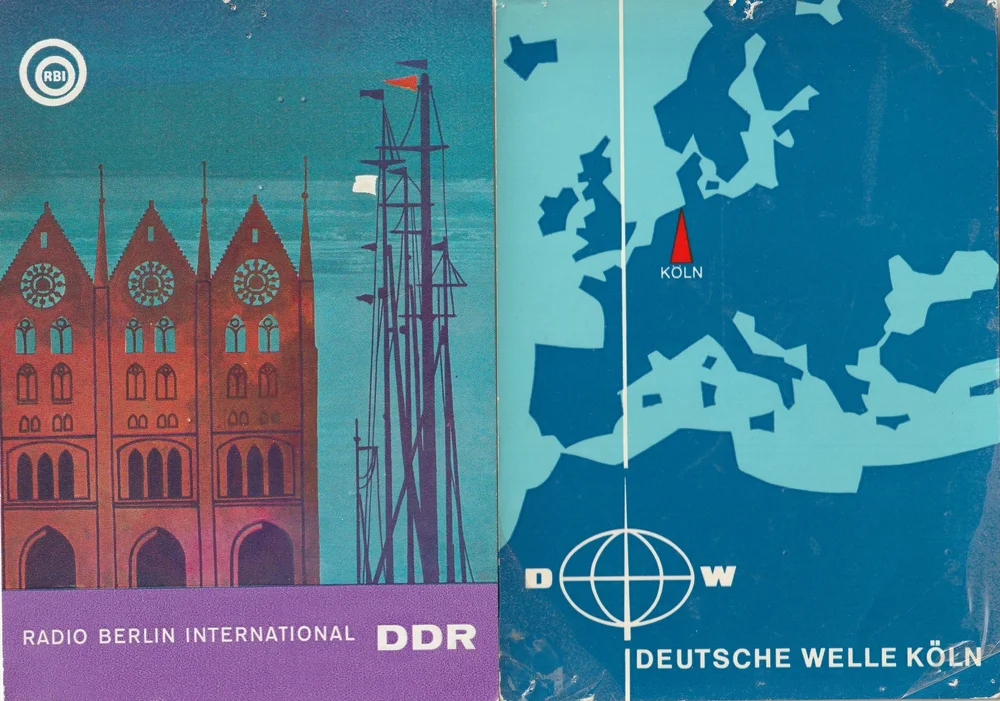
Radio Berlin International, the Voice of the German Democratic Republic (East Germany) signing on with their interval signal and ID for their English language program to Great Britain and Ireland circa 1970.
Radio Berlin International (Interval Signal): Circa 1970
Dan Greenall
Download
ABC Melbourne (3AR & 3LO) Closedowns: Circa 1950s & November 23, 1978
Jul 17, 2026
Show notes
Many thanks to SRAA contributor, Sarah Boucher, who shares the following recordings of two ABC Melbourne radio closedowns, captured via the ABC's domestic inland shortwave relays:
Recording 1
Broadcaster: 3AR Melbourne (ABC)
Date of recording: Circa 1950s
Shortwave relay: VLH-9 on 9.68 MHz (30.99 metres)
Notes: This is a 3AR Melbourne closedown announcement, relayed on shortwave via VLH-9 (9.68 MHz) as part of what the announcer describes as the ABC's "Northern Australian Service." During the sign-off, 3AR identifies itself as also transmitting through the regional stations 2CO Riverina, 3GI Gippsland, and 3WV Western Victoria, alongside the VLH-9 shortwave relay. The announcer then previews the following morning's shortwave frequencies: VLR-6 (6.15 MHz), VLH-11 (11.88 MHz), and VLG-15 (15.21 MHz).
The real highlight is the use of the ABC's network chimes (or "gongs") immediately before the sign-off — a once-familiar feature of ABC presentation that is rarely preserved in surviving recordings. The recording concludes with the national anthem (God Save the Queen) and a formal station closedown.
3AR Melbourne (ABC) closedown with network gongs: circa 1950s
Australian Broadcasting Commission
Download
Recording 2
Broadcaster: 3LO Melbourne (ABC)
Date of recording: 23 November 1978
Shortwave relay: VLR-6 on 6.15 MHz (48.78 metres)
Mode: AM
Notes: This 3LO Melbourne closedown, relayed on shortwave via VLR-6 (6.15 MHz), is historically significant because it captures the night of Australia's nationwide AM frequency realignment to the new 9 kHz channel spacing plan, on 23 November 1978. The announcer — identified as Don Smire — advises listeners of the frequency changes taking effect that day:
Station Old frequency New frequency
3LO 770 kHz 774 kHz
3AR 620 kHz 621 kHz
3WV 590 kHz 594 kHz
3GI 830 kHz 828 kHz
The announcement also notes that the shortwave relay VLR-6 on 6.15 MHz is closing down with the network. Unlike the earlier recording, this closedown ends with Advance Australia Fair rather than God Save the Queen — reflecting the gradual transition in Australian broadcasting practice through the 1970s.
3LO Melbourne (ABC) closedown: 23 November 1978
Download
A little background: what were VLH-9 and VLR-6?
These callsigns belonged to the ABC's domestic inland shortwave network. Before satellite distribution and widespread FM coverage, the ABC used shortwave transmitters to relay its state radio services to remote parts of Australia. Victoria's network used the VLR, VLH, and VLG callsign families to rebroadcast Melbourne programming for listeners in rural and remote areas. Contemporary shortwave enthusiasts often refer to these collectively as the ABC's "Inland Shortwave Services."
A note to readers
Very little context came with these recordings, so the details above have been pieced together from the announcements themselves and what we know of ABC history. If you can add any further detail — or spot something that needs correcting — please leave a comment below. Corrections and recollections are very welcome.
Radio Sofia, Bulgaria: Circa 1984-1985
Jul 10, 2026
Show notes
Many thanks to SRAA contributor Bruce MacDonald, who shares the following recording and notes:
Broadcaster: Radio Sofia, Bulgaria
Date of recording: Unknown
Starting time: Unknown
Frequency: not recorded
Recorded in Hounslow, west London
Receiver and antenna: Sony portable stereo radio cassette player
Notes: A snippet from an old-school DX programme from the English service of Radio Sofia, Bulgaria. This comprises mainly listening tips for rare stations as heard in Europe. Some mention made of the time of year and solar cycle conditions as Solar Cycle 21 was drawing down to minimum, and the need for a good antenna.
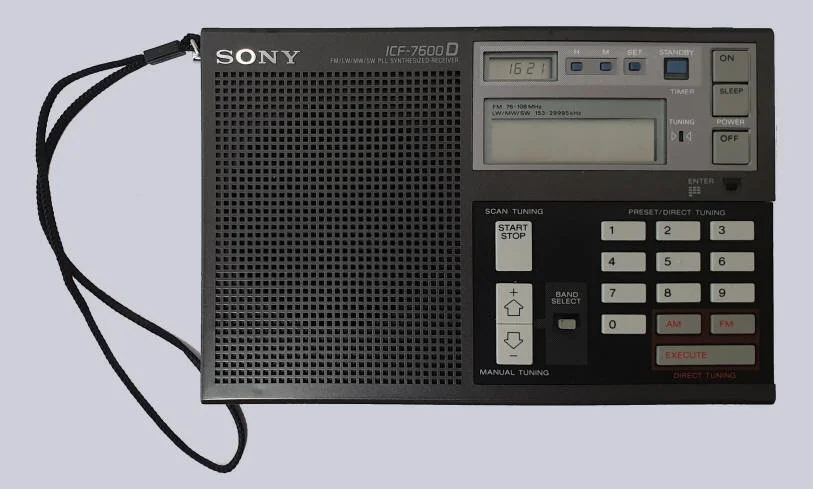
I was a teenager when I made this recording, still new to the geeky hobby of shortwave listening, so I didn't log the time, frequency or date of the recording. I recorded this on a Sony radio-cassette player which had a shortwave band on the radio and had yet to save up for a Sony ICF-SW7600D.
Radio Sofia, Bulgaria: Circa 1984-1985
Bruce MacDonald
Download
Final Hours of BBC Four Droitwich Transmitting Station (198kHz): June 26, 2026
Jul 04, 2026
Show notes
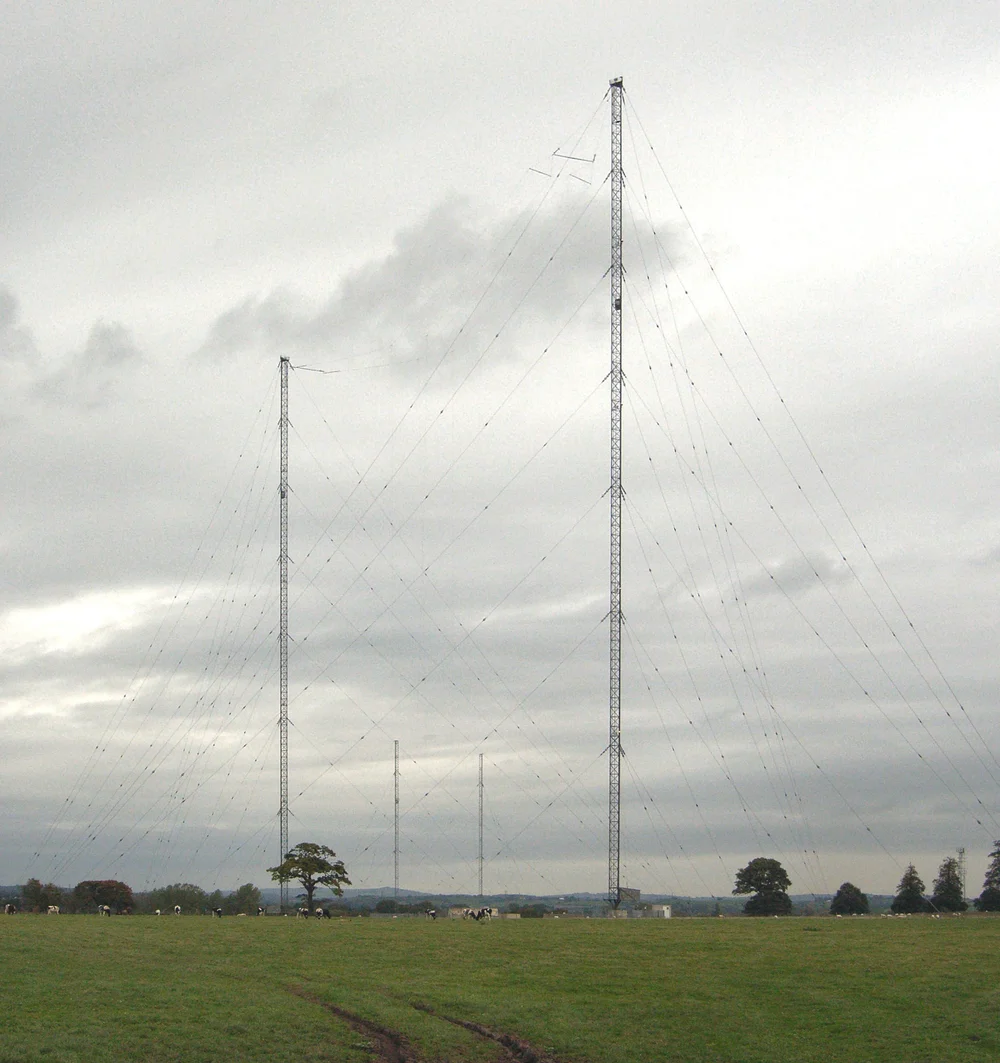
Droitwich Transmitting Station (Source: Wikimedia Commons)
Many thanks to SRAA contributor, Andy Wang, who shares the following recording and notes:
Broadcaster: BBC4
Date of recording: June 26, 2026
Starting time: 19:58UTC
Frequency: 0.198MHz
Your location: Web-interface wideband software-defined radio at the University of Twente in Enschede, The Netherlands
Your receiver and antenna: "Mini-Whip" antenna in AM mode with 9.09 kHz RF filtering
Mode: AM
Safe for children?: Yes
Notes: BBC4 on longwave 198KHz was shutdown on 27 June 2026 at 00:00 UTC.
After the shutdown, the station is repeatedly playing the migration guide for the listeners.
I guess there are still some old electric meters that haven't been replaced, they rely on the longwave signal...
The noise in the recording is probably caused by lightning, the receiving time is in summer.
Final Hours of BBC Four Droitwich Transmitting Station (198kHz): June 26, 2026
Andy Wang
Download
BBC Radio 4: "The Sound of Soft Power" (May 23, 2026)
Jun 27, 2026
Show notes
Many thanks to SRAA contributor Andrew, who shares the following recording from Radio 4.
“I chose to record the programme on one of my old radios received on the soon-to-be-discontinued Droitwich 198kHz transmitter.
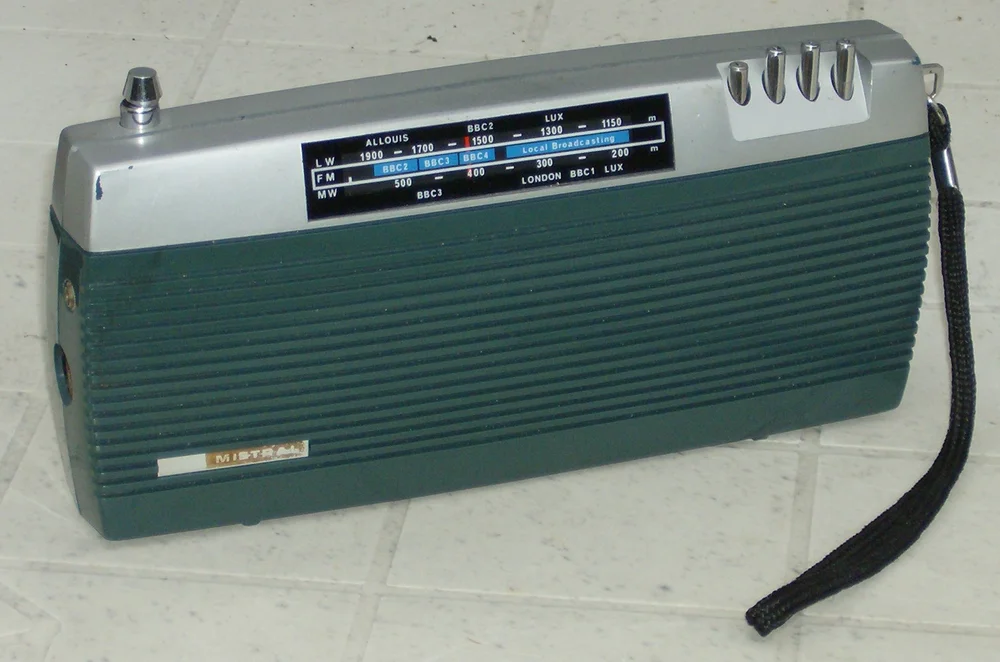
The radio is a Pye Mistral (picture attached) which was (almost) the first radio that I even had around 1972. It might even be tuned to the right place on the dial ("Radio 2", 1500m). That was the station that was broadcast on that wavelength back then.
It is not a well-performing radio, but it has a wide-ish audio bandwidth and the recording is probably as nice-sounding as it can be on LW - that warm AM sound that you refer to in the programme. Reception was on the radio's internal ferrite rod aerial in one of the rooms of the house here on the South Coast of the UK.”
This recording captures a special edition of BBC Radio 4’s The Sound of Soft Power, a documentary exploring the cultural, political, and emotional legacy of international broadcasting and shortwave radio. The programme weaves together archival recordings, listener memories, and contemporary reflections on a medium that once connected the world across borders and ideologies.
The documentary also makes extensive use of recordings preserved in the Shortwave Radio Audio Archive, highlighting the importance of preserving off-air recordings as historical documents. In addition, SRAA curator Thomas Witherspoon is interviewed during the programme, discussing both the archive itself and the enduring fascination many listeners still have with shortwave broadcasting.
While this is not an off-air shortwave recording in the traditional sense, it is very much connected to the history and culture of shortwave listening. Andrew’s decision to record the programme from BBC Radio 4 Longwave using a vintage Pye Mistral receiver adds another layer of radio history to the experience — capturing the broadcast with the characteristic warmth and ambience of longwave AM reception just as the Droitwich 198 kHz transmitter approaches the end of its service life.
For those interested in radio history, international broadcasting, and the sounds of the shortwave era, this programme is well worth hearing.
This recording is being published on 27 June 2026 to mark the closure of the BBC Radio 4 Long Wave service from Droitwich on 198 kHz, bringing to a close one of the United Kingdom’s longest-running and most historically significant AM broadcast transmissions.
BBC Radio 4: "The Sound of Soft Power" (May 23, 2026)
Josephine McDermott
Download
CHU Canada: Four Recordings Including Final Moments Transmitting on June 22, 2026
Jun 24, 2026
Show notes
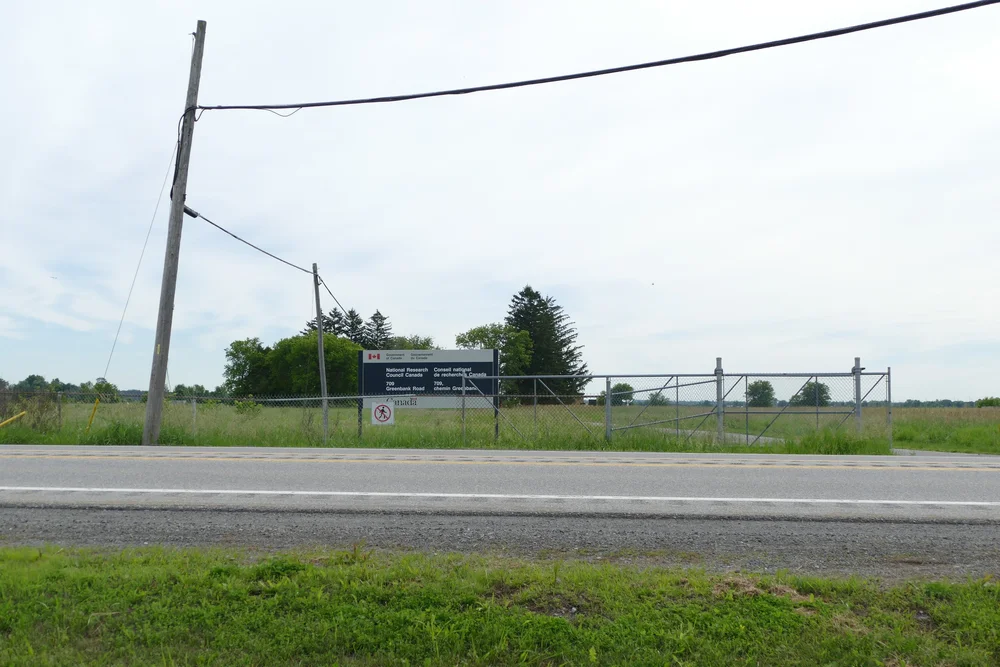
CHU Transmitting Site in Ottawa, Canada (Source: NRC)
Many thanks to several SRAA contributors who have shared recordings of CHU Canada during its final days as a shortwave time signal station.
This first recording was sent to us via Ronald McKinnon and is the National Research Council’s own recording of the final minutes of CHU on the air. Here are the notes that accompanied this recording:
Broadcaster: National Research Council CHU
Date of recording: June 22, 2026
Starting time: 14:08:00 UTC
Frequency: 3.33 MHz
Location: Ottawa, ON Canada
Receiver and antenna: Raddy RF320 with built-in antenna
Notes: This is a recording of the last few minutes of the NRC CHU time signal over shortwave at 3.33MHz.It was recorded on June 22, 2026 just as the broadcast was being shut down. The broadcast had been in operation in one form or another for over 90 years. The recording was made from just outside the station in Ottawa in order to obtain maximum signal quality.The NRC's home page about this station:
CHU Canada: June 22, 2026
National Research Council
Download
SRAA contributor, Bryce Belcher, shared the following recording of CHU with notes:
Broadcaster: CHU
Date of recording: June 21, 2026
Starting time: 0:12 UTC
Frequency: 3330 kHz
Reception location: Washington, D.C
Your receiver and antenna: Na5b websdr
Notes: This is my last-ever recording of CHU Canada, as they have shut down all the transmitters today, June 22. Recorded with the Websdr na5b located in DC. https://na5b.com:8901
SRAA contributor, Emilio, shared this longer recording with notes:
Freq: 7850 kHz
Date: Friday, 5 June 2026
Time: 17 UTC
SINPO: 45343
RX Grid locator: EK36kp
State: Chiapas
Country: Mexico
Receiver: Kenwood R-600
Antenna: long wire about 10 meters.
Recorded by: Carlos Emilio Ruiz Llaven
CHU Canada: June 5, 2026
Carlos Emilio Ruiz Llaven
Download
SRAA contributor, Jerry Johnston, shares his recording with these notes:
The recording starts at 1359 UTC, so the final pip occurs just after 11 minutes. Frequency was 7850 kHz, USB mode to reduce noise. This was recorded in Lexington, KY. A storm had just passed, so local noise was high. I let it run another 5 minutes to get the pirate activity.
BBC Midwinter Broadcast to Antarctica: June 21, 2026
Jun 22, 2026
Show notes
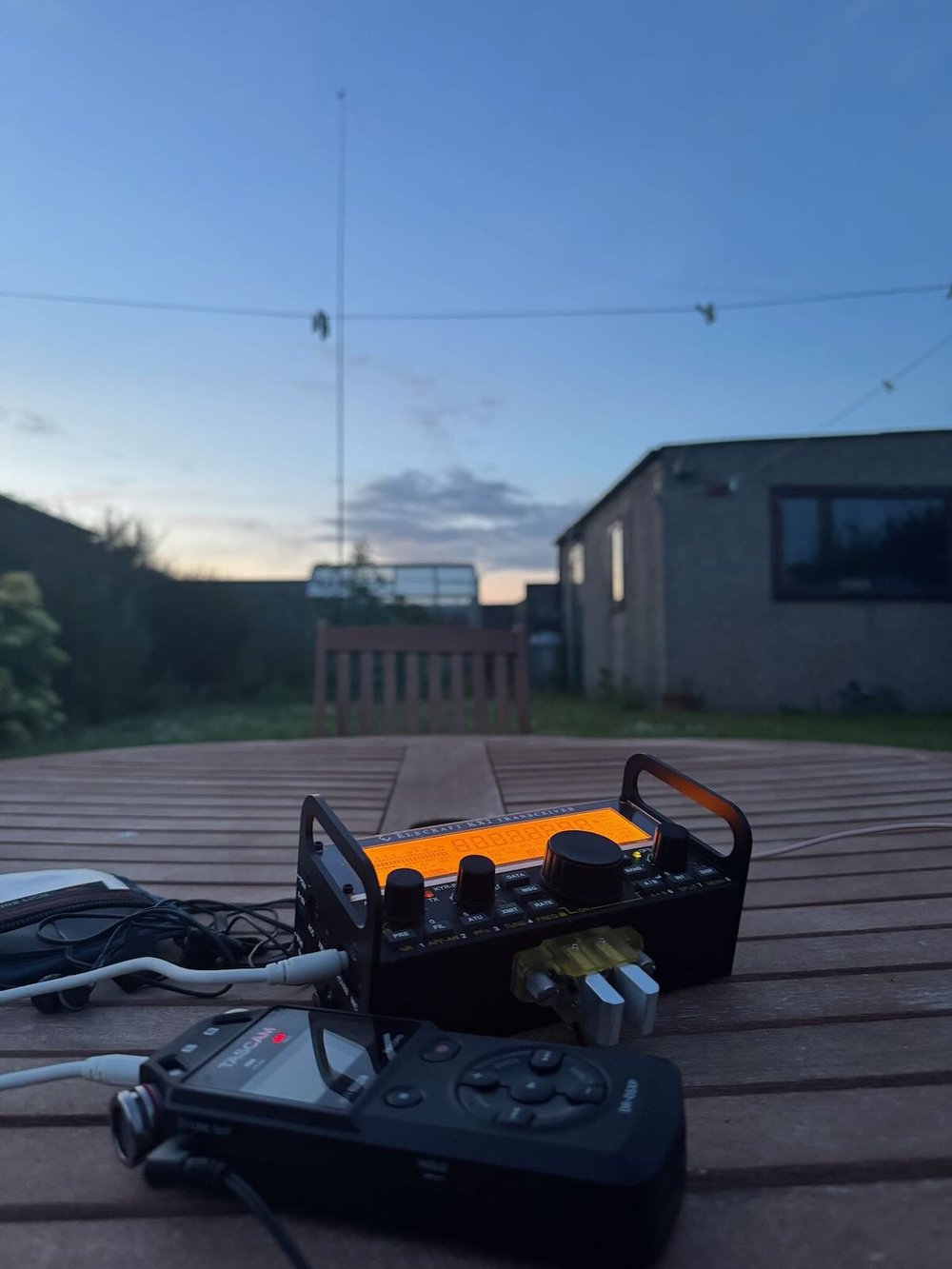
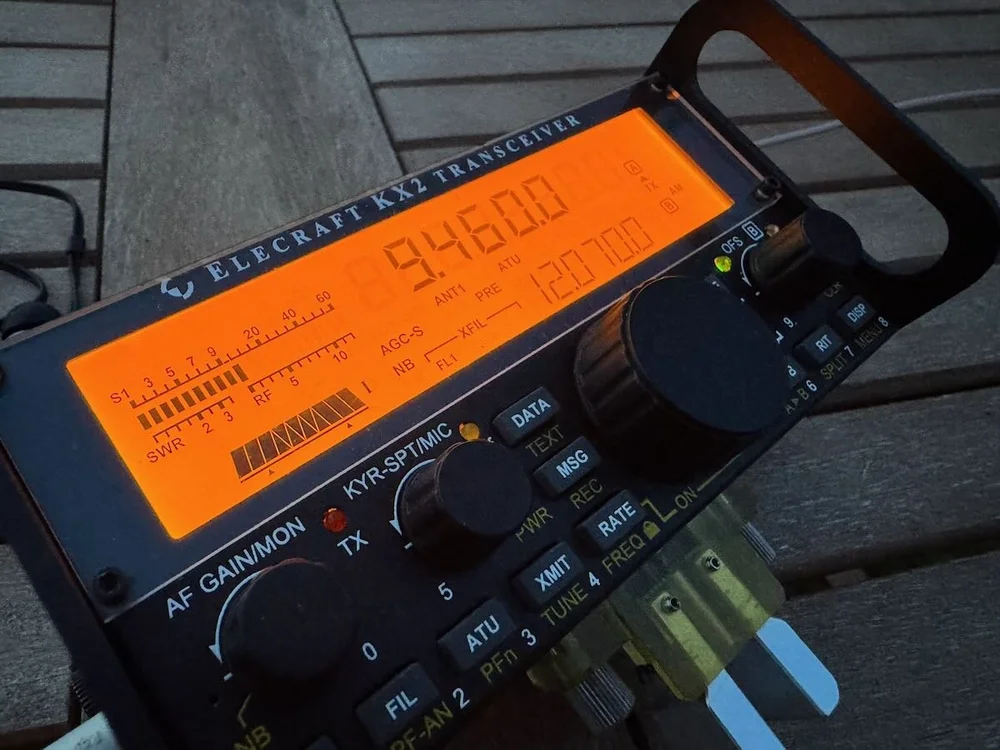
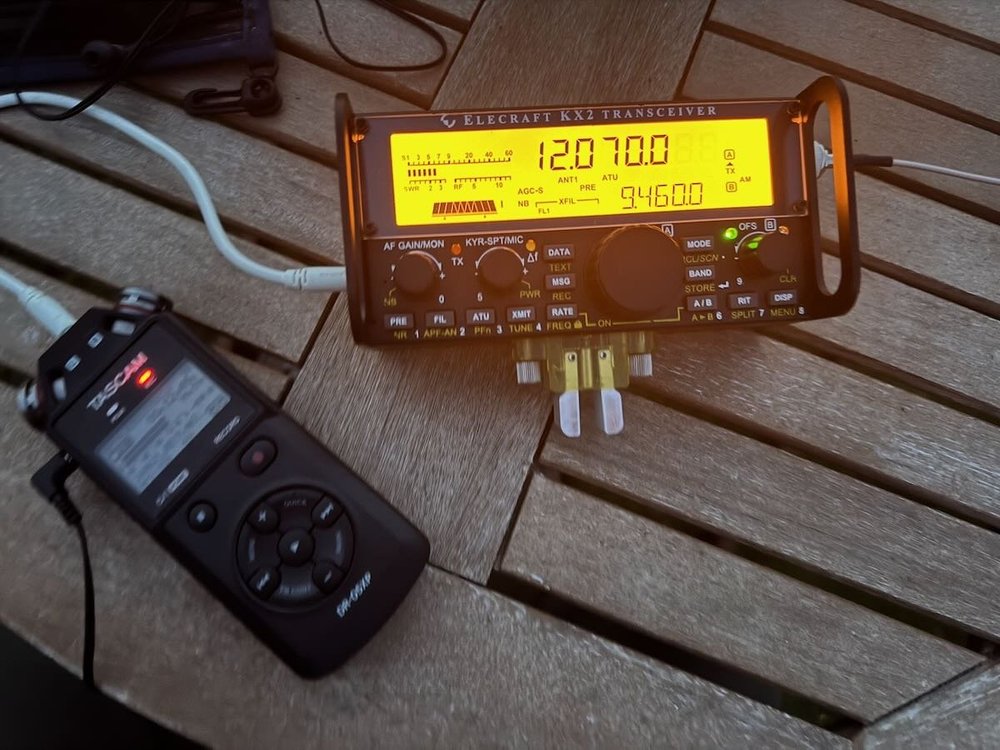
This is the BBC Midwinter Broadcast to Antarctica recorded on June 21, 2026 at 09:30 UTC in Foulden, Scotland, UK. The radio was an Elecraft KX2 connected to a 31-foot 9:1 random wire antenna in the back garden. The broadcast starts on 9460 kHz, but I then move to 12070 kHz because it had slightly less local noise.
BBC Midwinter Broadcast to Antarctica: June 21, 2026
Thomas Witherspoon
Download
Personal note
The BBC Midwinter Broadcast remains one of my favorite SWLing events of the year. I simply love the idea that the BBC would broadcast from two different sites on three different frequencies via shortwave to a relatively small audience of British Antarctic Survey scientists wintering over in Antarctica.
It's always a joy to listen live, knowing that they're celebrating midwinter with parties at their stations and hearing the voices, messages, laughter, and well-wishes of loved ones carried to them over the air by shortwave radio.
In an age of instant communications, there's still something magical about that.
Xing Xing Guangbo Diantai (Star Star Broadcasting Station): March 16, 2026
Jun 18, 2026
Show notes
Many thanks to SRAA contributor, Dan Greenall, who shares the following recording and notes:
Broadcaster: Xing Xing Guangbo Diantai (Star Star Broadcasting Station)
Date of recording: March 16, 2026
Starting time: 2358
Frequency: 19.052
Your location: Thailand
Your receiver and antenna: Kiwi SDR with Wellbrook loop
Mode: Single Side Band
Safe for children?: Yes
Notes: This is a "numbers station" broadcasting in Mandarin Chinese, presumably sending encrypted messages to Taiwanese intelligence agents in mainland China, from Taiwan. It appears to follow a set daily schedule, and begins each transmission with the tune of a Chinese folk song played on a flute. This is followed by station ID, given twice, and a few announcements in Mandarin, then a sequence of numbers read in groups of four. An excellent article about this station can be found on the Mount Evelyn DX Report written by Rob Wagner VK3BVW in May 2025.
Xing Xing Guangbo Diantai (Star Star Broadcasting Station): March 16, 2026
Dan Greenall
Download
Radio Sandino (Managua, Nicaragua): March 25, 1984
Jun 11, 2026
Show notes
Many thanks to SRAA contributor, Paul Harner, who shares the following recording and notes:
Broadcaster: Radio Sandino, Managua, Nicaragua
Date of recording: March 25, 1984
Starting time: 0730z/1:30 AM local time
Frequency: 6200 kHz
RX location: St. Louis, MO
Receiver and antenna: Sony ICF-2001, longwire
Radio Sandino (Managua, Nicaragua): March 25, 1984
Paul Harner
Download
Rádio Nacional da Amazônia: August 14, 1984
Jun 04, 2026
Show notes
Many thanks to SRAA contributor, Paul Harner, who shares the following recording and notes:
Broadcaster: Radio Nacional Da Amazonas
Date of recording: August 14, 1984
Starting time: 0809z
Frequency: 6180 kHz
Reception location: St.Louis, MO
Receiver and antenna: Icom IC R-71-A
Rádio Nacional da Amazônia: August 14, 1984
Paul Harner
Download

 Our TOPPODCAST Picks
  Stay Connected