TopPodcast.com
Menu
  • Home
  • Top Charts
  • Top Networks
  • Top Apps
  • Top Independents
  • Top Podfluencers
  • Top Picks
    • Top Business Podcasts
    • Top True Crime Podcasts
    • Top Finance Podcasts
    • Top Comedy Podcasts
    • Top Music Podcasts
    • Top Womens Podcasts
    • Top Kids Podcasts
    • Top Sports Podcasts
    • Top News Podcasts
    • Top Tech Podcasts
    • Top Crypto Podcasts
    • Top Entrepreneurial Podcasts
    • Top Fantasy Sports Podcasts
    • Top Political Podcasts
    • Top Science Podcasts
    • Top Self Help Podcasts
    • Top Sports Betting Podcasts
    • Top Stocks Podcasts
  • Podcast News
  • About Us
  • Podcast Advertising
  • Contact
Not in our directory?
Add Show Here
Podcast Equipment
Center

toppodcastlogoOur TOPPODCAST Picks

  • Comedy
  • Crypto
  • Sports
  • News
  • Politics
  • True Crime
  • Business
  • Finance

Follow Us

toppodcastlogoStay Connected

    View Top 200 Chart
    Back to Rankings Page
    News & Politics

    The Science of Politics

    The Niskanen Center’s The Science of Politics podcast features up-and-coming researchers delivering fresh insights on the big trends driving American politics today. Get beyond punditry to data-driven understanding of today’s Washington with host and political scientist Matt Grossmann. Each 30-45-minute episode covers two new cutting-edge studies and interviews two researchers.

    We welcome your thoughts on this episode and the podcast as a whole. Please send feedback or suggestions to scienceofpolitics@niskanencenter.org

    Advertise
    • Apple Podcasts
    • Google Play
    • Spotify

    Latest Episodes:
    Interpreting the 2018 Election Nov 20, 2018
    Show notes

    What are the implications of the 2018 election results? Julia Azari and Rachel Bitecofer are two political scientists who followed it closely and know how it compares to prior cycles. Azari is an election analyst and party scholar who finds that politicians claim electoral mandates for action based on the results of elections. We talk about early interpretations of 2018 as a referendum on Trump and why we simplify election results with stories. Bitecofer is an election analyst and a forecaster of the 2018 election who finds that demographics and partisanship are now destiny. We talk about why negative partisanship makes election results easier to foresee as partisans choose clear sides but shift turnout. Photo: Erik Hersman under CC BY 2.0. https://www.flickr.com/photos/whiteafrican/3004595893


    How Americans' Politics Drives Their Religious Views Nov 08, 2018
    Show notes

    Republicans are now a lot more religious than Democrats, but they may not mean our religious views drive our politics. Instead, people may be choosing their religious or secular affiliations, communities, and beliefs on the basis of their partisanship. Michele Margolis finds that young adults tend to move away from religion, but only Republicans and Black Democrats come back when they start a family—leading to a big over-time decline in religion among White Democrats. But what is replacing religion for Democrats? David Campbell finds that an aversion to the religious right makes Democrats adopt secular identities and principles. Both say we should expect continued religious and political polarization, as secular and Democratic identities become more closely aligned. Photo Credit: Ninian Reid under CC BY 2.0. https://www.flickr.com/photos/ninian_reid/34105097982


    How TV and Service Projects Impact What Americans Believe About Inequality Oct 24, 2018
    Show notes

    How TV and Service Projects Impact What Americans Believe About Inequality by Niskanen Center


    How the Democrat and Republican Parties Are Changing Oct 10, 2018
    Show notes

    Are the Democrats becoming a more ideological party while the Republicans emphasize social identity? The one year anniversary special edition of the podcast experiments with a more conversational format to discuss party change. Matt Grossmann is joined by his Asymmetric Politics co-author, Boston College political scientist David Hopkins. They discuss how much, and in what direction, the parties are changing. They both see more change on the Democratic side, but no decline in asymmetry.


    How Marriage and Inequality Reinforce Political Polarization Sep 26, 2018
    Show notes

    As politicians polarize, Americans are also sorting into clearer partisan camps who dislike the other side. What reinforces that cycle? Perhaps both our social relationships and our increasingly unequal society. Tobias Konizter finds that Americans are increasingly selecting spouses based on partisanship and then passing on our political views to our children. But John Kuk finds that economic inequality is increasingly tied to divisions on social and racial issues, which in turn are driving dislike of the other party. Our social ties, resources, and racial views are all dividing us into two partisan sides.


    How the Tea Party Paved the Way for Donald Trump Sep 12, 2018
    Show notes

    The Tea Party that arose in 2009 seemed initially focused on bailouts, health care, and taxes. But new research suggests that concerns about cultural change and distrust of distant elites, the same themes that drove Trump supporters, were also central to the Tea Party—not just in the electorate but among activists and even for aligned Members of Congress. Bryan Gervais finds that Tea Partiers in Congress veered rightward on racial concerns and pioneered the social media incivility now associated with President Trump. Rachel Blum finds that the activist network of the Tea Party worked as a party within the Republican Party to reorient its ideology to focus on cultural threats. Alex Hanson from Ames, Iowa [CC BY 2.0 (https://creativecommons.org/licenses/by/2.0)]


    How Citizens Match their Issue Positions to Candidates and Causes Aug 29, 2018
    Show notes

    Citizens have views on policy issues but are often ignorant about the specific stances of politicians and interest groups. How do they match their issue positions to candidates and causes and how well do their choices line up with their professed views? Cheryl Boudreau finds that low-information voters can utilize everything from party endorsements to voter guides to match their views to a candidate. But Nicholas Hass finds the policy views people articulate in surveys are not the same as how they act in the political arena. Not everyone backs up their expressed view once donation dollars are at stake.


    How Campaign Money Has Changed Elections After Citizens United Aug 15, 2018
    Show notes

    How Campaign Money Has Changed Elections After Citizens United by Niskanen Center


    How the Federalist Society Changed the Supreme Court Vetting Process Aug 01, 2018
    Show notes

    We already know that Brett Kavanaugh will be a strong conservative on the Supreme Court, just like Neil Gorsuch, but not because of confirmation hearing vetting. Both were handpicked by the Federalist Society network, giving conservatives the assurances they need and making liberals want to ask tough questions that may not get answered. Amanda Hollis-Brusky finds that the Federalist Society engineered a conservative counterrevolution through scholarly exchange and a farm system for future justices. But Paul Collins, Jr. finds that nominees do often share their views on settled law during the hearings; it was Gorsuch who stood out as much less forthcoming. Preview what Kavanaugh will say at his hearings and understand why he can avoid saying much.


    Does Nationalized Media Mean the Death of Local Politics? Jul 18, 2018
    Show notes

    State and local politics are losing ground to national politics in the minds of Americans. What do we learn from nationalized coverage and what do we increasingly ignore? Daniel Hopkins finds that we are losing state and local knowledge and voting increasingly along party lines, as we move from local to national media sources. Kerri Malita finds that even nationalized political coverage may not inform us, focusing on polls and candidate visits rather than policy issues. Find out if we can recover local issues and concerns in our nationalized era.


    Previous 1 19 20 21 22 23 Next

    Related Podcasts

    Crimetown

    1

    Crimetown News
    Up and Vanished

    2

    Up and Vanished News & Politics
    The Joe Rogan Experience

    3

    The Joe Rogan Experience Comedy
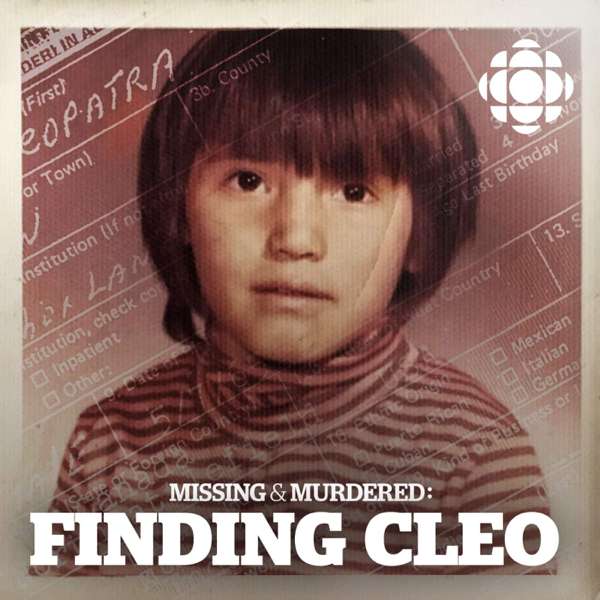
    Missing & Murdered: Finding Cleo

    4

    Missing & Murdered: Finding Cleo News & Politics
    Casefile True Crime

    5

    Casefile True Crime Games & Hobbies
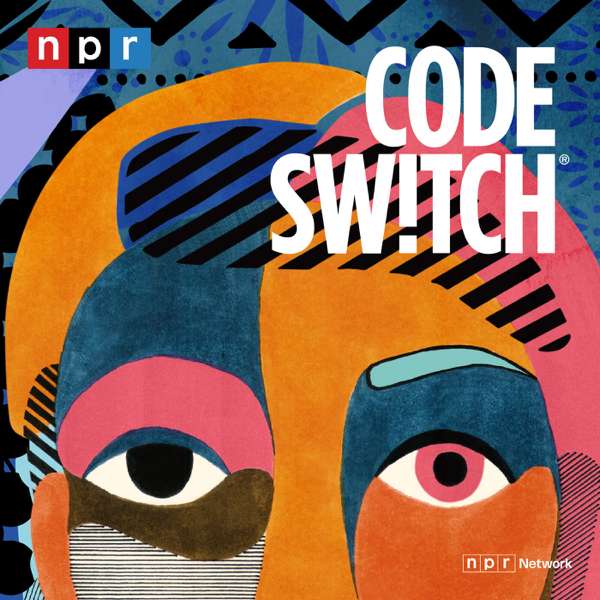
    Code Switch

    6

    Code Switch News
    footer-logo

    Contact Us

    Toll Free: 844-670-7747

    Links

    • Home
    • Top Charts
    • Networks
    • Apps
    • Independents Podcasts
    • Podcast Advertising
    • Podcast News
    • Contact Us
    • About Us
    • Analytics & Insights

    Stay Connected

      Privacy, Terms of Use & Our Code of Ethics Protecting Content Creators Copyrights