TopPodcast.com
Menu
  • Home
  • Top Charts
  • Top Networks
  • Top Apps
  • Top Independents
  • Top Podfluencers
  • Top Picks
    • Top Business Podcasts
    • Top True Crime Podcasts
    • Top Finance Podcasts
    • Top Comedy Podcasts
    • Top Music Podcasts
    • Top Womens Podcasts
    • Top Kids Podcasts
    • Top Sports Podcasts
    • Top News Podcasts
    • Top Tech Podcasts
    • Top Crypto Podcasts
    • Top Entrepreneurial Podcasts
    • Top Fantasy Sports Podcasts
    • Top Political Podcasts
    • Top Science Podcasts
    • Top Self Help Podcasts
    • Top Sports Betting Podcasts
    • Top Stocks Podcasts
  • Podcast News
  • About Us
  • Podcast Advertising
  • Contact
Not in our directory?
Add Show Here
Podcast Equipment
Center

toppodcastlogoOur TOPPODCAST Picks

  • Comedy
  • Crypto
  • Sports
  • News
  • Politics
  • True Crime
  • Business
  • Finance

Follow Us

toppodcastlogoStay Connected

    View Top 200 Chart
    Back to Rankings Page
    Business

    The Salesman.com Podcast

    The Salesman.com podcast feed gives you the worlds best sales content.

    Salesman Podcast –

    The Salesman Podcast is the worlds most downloaded B2B sales podcast and is an Apple Award winning show. It helps sales professionals learn how to find buyers and win business from them in a modern, effective, and ethical way. The show has featured NASA astronauts, F1 drivers, Olympic athletes, UFC fighters, world leading neuroscientists and the world’s top sales experts as guests.

    Selling Made Simple –

    Sometimes sales professionals just don’t have the time to listen to an hour of content. This is where Selling Made simple comes in with its 10-minute, practical episodes.

    Advertise

    Copyright: © Salesman.org / The Salesman Podcast / Will Barron

    • Apple Podcasts
    • Google Play
    • Spotify

    Latest Episodes:
    Q/A - Best cold prospecting tools? Nervous on cold calls? Video emails? Mar 28, 2022
    Show notes

    Questions asked:

    1. Should I join a company as an inbound SDR? They say I can make it to AE within 6 months if I hit my quota of 5 meetings booked a week.
    2. How do I get over being nervous on cold calls? I come across as anxious and I think that is being passed onto the person who I'm calling. I'm using the same script as everyone else but not getting good results.
    3. I need to decide between a series of prospecting tools I've been trialing. I know you've promoted Lusha and Uplead but I also trialed Seamless and Apollo. In your experience which one is more worth it? Looking to get 100+ leads a day.
    4. I've an interview coming up and I've been told there will be questions about time management. How do I answer these questions?
    5. I want to join Selling Made Simple Academy. Why do I have to book a call? Can I not just sign up?
    6. Have you/your team tried using video calls in cold emails? Do they help improve response rate like they claim?
    7. What was the biggest sales commission deal that you got?
    8. Thanks for all the content! I'm starting a new sales job tomorrow. Any tips?

    The post Q/A – Best cold prospecting tools? Nervous on cold calls? Video emails? appeared first on Salesman.com.


    Get Your Sales Emails Opened, Read And Answered | Salesman Podcast Mar 25, 2022
    Show notes

    Kim Arnold is a communication consultant, author and helps organisations avoid the wasted time and effort associated with poor communication. Her bestselling book, ‘Email Attraction’ has been featured in Forbes, the Financial Times and on BBC Radio. In this episode of The Salesman Podcast, Kim shares insights into how the top salespeople get their emails opened, read, and answered. You'll learn: Sponsored by: Free SalesCode assessment Learn your strengths and weaknesses in an instant. Taken by over 10,000+ of your competitors. Don't get left behind. Take the free assessment Featured on this episode: Host - Will Barron Founder of Salesman.org Guest - Kim Arnold Communications Expert Resources: Kim’s LinkedIn Kimarnold.co.uk Book: Email Attraction: Get What You Want Every Time You Hit Send Book: On Writing Well Transcript Will Barron: Hi. My name is Will, and welcome to today's episode of the Salesman Podcast. Will Barron: On today's episode, we'll look at how you can get your sales emails opened, read, and answered. And today's guest is Kim Arnold. Kim is a communications consultant, author, and helps organisations avoid the wasted time and associated effort with poor communication. Will Barron: Her bestselling book, Email Attraction, has been featured in Forbes, Financial Times, on BBC Radio, a bunch of other places as well. And with that, Kim, welcome to the show. Kim Arnold: Thanks so much, Will. Great to be here. Will Barron: I'm glad to have you on. Okay. This is clearly an important topic for the modern B2B sale professional. Maybe 20 years, they could have got away with just having a gift of the gab, silver tongue, just calling people and breaking through, but clearly, email is incredibly important right now. It's typically the first step into getting a conversation going with a potential customer. Whose Fault is it When a Salesperson Doesn’t Get an Email Response? · [01:50] Will Barron: So, with that said, let's set up the rest of the conversation here, whose fault is it, Kim, whose fault is it, right, when a salesperson, Sam, the salesperson, sends an email and gets no response? Is it the buyer's fault for just being too busy for ignoring Sam for being rude, or is it maybe Sam's fault for sending an email that just sucked and didn't elicit a response in the first place? Kim Arnold: Well, sorry, Sam, I'm afraid, it's your fault. It really is. Yeah, we are busy. We are overwhelmed at the moment. Our inboxes are groaning, and what we do is filter. We look through our inboxes and we look and we see what is going to give me the quickest value in my inbox. And we start there. Or what's the most urgent, what's going to get me promoted, what's going to win me more business, what's going to make my day brighter. And if he doesn't tick any of those boxes, then, I'm afraid it's gone. Kim Arnold: And actually, I was talking to a sales guy at a conference recently I was speaking at, and he said exactly what you've just outlined. He said, we're so good in person, we're charming. We're great at networking, we're brilliant in meetings, but these days, we can't even get clients on the phone, let alone, try and get them face to face. So you're having to do everything through email. Kim Arnold: And he was just saying, I can't communicate any of my personality, my charisma, my charm, all of stuff that works for me in person. I can't get it down on an email, and that is a big problem. Will Barron: So, I'm doing a bunch of work. A lot of our content goes on YouTube, and I'm working with a consultant in the YouTube space, a big YouTuber, to help us with our content. And he keeps telling me that I'm not riding this line of click bait close enough in titles, in thumbnails, in begin of introductions. And so… And I'll come back to email in a second, but it seems like the people, when people get into the content, they really enjoy it. Email Subject Lines and Why They’re the Key to Getting Your Emails Read · [03:02] Will Barron: But getting that initial click through rate is something that we struggle with, and we need to work on. How do sales people beat the scanning of a prospect's email when they get up in the morning or at lunchtime, how do they beat that filter where the prospect's probably just, at this point in 2022, we call this deleting emails without even reading them? How do they break through that filter without leaning into a clickbaity subject line? Or is that what we need to do at this point? Kim Arnold: That's a really good question. Actually, a friend of mine showed me her phone the other day, I was looking at something, and she had 35,000 unread emails. And her strategy, she said, was just filtering at the subject line and they send it in the subject line. I mean, it filled with me with horror because I like to read all my emails, even if I don't reply to them. But that is what more and more people are doing at the moment, is filtering by the subject line. Kim Arnold: But as you say, there's a really delicate balance. We get turned off by click bait. So, one strategy to think about is where are those points of connection? And all too often with sales emails, we might write something like introduction to blah, blah, blah, whatever our company name is, or introduction to a service or a meeting request or something that just is very me, me, me. “An email should be a conversation with a pause. It isn't a monologue. It's about starting a conversation. So, we need to find points of connection that we can use in our email subject line that are about them and not us, and that can make all the difference.” – Kim Arnold · [04:21] Kim Arnold: So, what we are trying to do in an email should be a conversation with a pause. That's what we're trying to do. This isn't a monologue. This isn't about, you know, warfare going out there and firing out these emails. It's about starting a conversation. So, trying to find points of connection that we can use in our email subject line that are about them and not us can make all the difference. The HEC Hamburger Technique: The Basic Structure of a Good Sales Email · [04:43] Will Barron: What does that look like practically? Because in our training programme, we teach a certain way of doing emails. I don't want to dwell on that too much because I want to pull from you in this conversation in this podcast, Kim, but we teach basically what you described of if there's a connection that we can refer to, if we've been referred directly or indirectly, we're going to mention that, we're going to keep it conversational. Will Barron: We're going to elicit some kind of reaction, and then, almost open a loop, and then, ask, we're going to call to action to close loop on a call. Is there any structure to doing that other than what I outlined, or is there a basic structure of what a good sales email looks like? Or is it completely dependent on the prospect, the industry, and who we're trying to get in front of? Kim Arnold: So, there's a framework that I use in my book, it's called the HEC Hamburger Technique, and it's a really simple one. It's a three steps technique, and you can use it for writing any email, whether it's a sales email or just something to your colleagues. And HEC is H-E-C, and it stands for hook, explanation, and call to action. Kim Arnold: And the reason why I call it hamburger is it's like the three parts of a burger, right? The bun at the top's got to look appealing. That's the start of your email. You got to entice someone to want to open it. The explanation, the E of HEC, that's your burger, that's your meet the main point. And then, the C is your call to action. And that's the bottom bun and without that, you can't really pick up the whole thing and take a bite. Kim Arnold: So you need all three things to really make a difference. And it's very similar to what you described, but what I would encourage people is to make sure that you make the most of that first line of your email. Because what do we do? Most of the time, we write something like I hope you're well, or maybe this sort of posh version, I trust this email find you well, if we're trying to be very formal and proper, and it's a big deal that we're trying to get. “We have three seconds to get someone's attention with an email, three seconds. And yet, we waste it with a sort of generic platitude.” – Kim Arnold · [06:51] Kim Arnold: And this is like the most valuable real estate in our email, we have three seconds to get someone's attention with an email, three seconds, three, two, one, it's not long at all. And yet, we waste it with a sort of generic platitude. And it doesn't mean that it's always disingenuous, but it can often sound disingenuous. It sounds like a cut and paste job. Kim Arnold: And that's the thing that we want to avoid with our sales emails. So, the hook has got to be personal. So, reference something that you know about them. Do your digging, look on LinkedIn. Do you have a connection in common? Have you been introduced? What have they been up to recently? Have they written something interesting? Have they said something interesting? Has the business done something interesting? Do a bit of homework, no cut and paste jobs. “The explanation part of your email needs to be short and sweet. In fact, between 50 and a hundred words has been proven to be best for sales email, and that is so much less than you think. It's like three short paragraphs, that's it. So get to the point. Why are you writing? We don't need to know when your business was founded. We don't need to know how many offices you have. We don't need to know that you're the leading provider of software solutions. We don't need to know any of that. We just need to figure out what it is that's in it for the reader to keep reading and take action.” Kim Arnold · [07:32] Kim Arnold: So then, the explanation needs to be short and sweet. So, the overall size of your email between 50 and a hundred words has been proven to be best for sales email, and that is so much less than you think. It's like three short paragraphs, that's it. So get to the point. What is it, why are you writing? We don't need to know when your business was founded. We don't need to know how many offices you have. We don't need to know that you're the leading provider of software solutions. We don't need to know any of that. We just need to figure it out what it is that's in it for them, for the reader, to keep reading and to meet with you, if that's what you want. Kim Arnold: And then, your call to action at the end is got to be direct. So, not let me know if this is of interest, let me know if you'd like to discuss. It's too vague and it's too wishy washy. So, I would always advise a very strong call to action. I'm sure this is what you teach as well, Will. It's about making the next step clear and easy for the other person. So, do you have 15 minutes in your diary on Tuesday next week for a quick phone call? So, making it quick, easy. They only have to look at their diary once. They're not reaching around for dates, or you might give them two or three options. So, it's as simple and as easy as possible for them to take that next step. Kim Arnold: So H-E-C, hook, explanation and call to action. Will Barron: Love it. Extremely similar to what we teach, slightly different in, I guess, some of the terminology, but very similar, right? Our kind of call to action is typically, does it make sense to jump on a call to, and then, do whatever, closes the loop that we touched on earlier on. Amazing. Will Barron: Okay. So how much of this, Kim, because it's one thing for us to say this right? Me and you sat here on this podcast, tens of thousands of salespeople listening, but it's another when you go, okay, I'm listening to this show on the way to work, I'm going to sit down, I'm going to write an email using Kim's methodology here. And then, you sit in front of the computer, and you go, I could still go a million different ways. And 999,000 of those are terrible ways to write the email, even with that amazing framework. Critical Factors That Determine the Success of a Sales Email · [09:10] Will Barron: So, with that said, how much of the success of these emails comes from, I guess, the scientific method of making a hypothesis, testing it in the marketplace, and then, refining it after the fact? Are we likely to write like these killer email straight off the bat, or is this a process of refining our skill as a, I guess, a copywriter over time? Kim Arnold: It definitely takes time, and we need to measure the right things. So we need to measure quality over quantity with email. And I work with a lot of sales teams all over the world, and one of the biggest problems tends to be that they judge themselves on their outbounds and not necessarily what comes back. So it's like, great. I've sent 30 emails this morning to this big list, and boom, boom, boom, boom, and I've just got them out. Woo, great. Let go for lunch. And then, they don't really measure what happens next. Kim Arnold: So, my advice is always to focus on quality over quantity. Write five really great emails that might have taken you twice as long, but they're thoughtful. They're engaging, they're conversational, you've done your homework. You've edited them. You've cut them down, so they're not waffly. You've gone back in there with a big pair of scissors, and you've chopped out the definitelys and the just, and the like, and the really, all these words that you don't need. You've tightened it up. You've made it really punchy. “I think we need to share best practises in teams. Unfortunately, that often doesn't happen. Someone's writing really killer emails that work while the rest of the team are struggling. I encourage sales teams and all sorts of teams to share their best practise. Share what works, brainstorm why you think something did work or what's fallen flat. Give each other advice to really share those best practises.” – Kim Arnold · [11:26] Kim Arnold: So, that really is the key is to just keep iterating. This does take time. And it's also really helpful, I think, to share best practise in teams. Often, that doesn't happen. Someone's writing really killer emails that work while the rest of the team are struggling. So, I encourage sales teams, and I work with market teams, all sorts of teams, but share your best practise. Share what works, brainstorm why you think something did work or what's fallen flat. Give each other advice to really share those best practises. Why Proofreading and Editing Your Emails is Your Ticket to Sending Better Sales Emails · [12:06] Will Barron: So, this is something that we've never really touched on on the show before, I think it's incredibly important. And I think I got my angle on this from, I think, the book's called On Writing Well, which I'll link, share through this episode for anyone who wants to check it out. And I'll butcher the quote, but essentially, I'm sure it was this book. It talks about this idea of if the sentence doesn't need to be there, just delete it. Just get rid of, it's gone. Will Barron: Can you tell us any other kind of angles or reiterate at that point even on the importance of editing emails? Not just spelling… So I'm a terrible speller, so I have to lean on other pe…

    Full show notes at the publisher

    How To Run A Discovery Call Or Strategy Session Mar 24, 2022
    Show notes

    So many sales reps today underutilize the power of the well-run discovery call. With the right discovery call framework, you can qualify your leads, gather invaluable intel, and position yourself as a trustworthy authority—all in a single phone call.

    Today I’m showing you how to structure your discovery calls so you can reap all these benefits and more. Trust me, you won’t want to miss this proven 8-step framework. Because it’s going to save you tons of time and make your sales job infinitely easier.


    The Perfect Discovery Call

    How many times have you spent hours, days, or even weeks of hard work with a potential buyer, only to find out they were never a fit for your product in the first place?

    Don’t worry, you aren’t alone.

    As much as 67% of lost sales are the result of sales reps not properly qualifying their leads. And more than a third of reps just like you say qualifying and prospecting were the biggest challenges of their roles.

    In fact, I brought up this problem in particular in a recent interview.

    “If you are sick of being rejected, if you're sick of people ghosting you, if you're sick of people not replying to your messages, improve your qualification at the top of the sales process, and you'll eliminate a lot of that at the far end of it.” Will Barron, SS #019

    Qualification matters. When you do it right, you’re saving yourself tons of headaches, hassles, and lost time down the road.

    And the discovery call is without a doubt the best opportunity to qualify leads.

    Over the years, I’ve developed an 8-point framework for running strategic discovery calls with my potential clients. And that’s exactly what I’m sharing with you today.

    Plus, I’m covering very specific questions along the way that you should ask prospects that cover each issue without scaring them off.

    Ready to go? Let’s get into it.

    To get the most value out of your discovery call as possible, you’re going to qualify potential leads according to eight issues throughout the meeting. The first issue is…

    1) Are They In Pain?

    Are they in pain?

    Is their issue actually a problem? And most importantly, is the buyer in “pain” because of that problem? The buyers you want to work with are feeling the hurt from their problem. And as a result, they’re going to be highly motivated to find the right solution, which is exactly what you want.

    Questions you can ask that get to the heart of this issue include…

    “You booked this call with me today, what led to getting this call booked in?”

    And…

    “What’s stopping you from solving this issue yourself?”

    2) What Is Their Timeline?

    Not all problem and solution timelines are going to line up. One of your primary concerns when qualifying prospects is what their timeline is for when they need their problem solved.

    Are they thinking today? This quarter? Or in the next few years?

    The right answer for your industry will depend entirely on your unique business and solution. But in general, you should only be working with buyers that are interested in solving the problem sooner rather than later.

    To determine their timeline, ask a question like…

    “When do you want to solve this pain?” Straightforward, right? This question doesn’t mince words. And as a result, the answer gives you a clear, no-bullshit timeline that the buyer is hoping to solve their problem.

    3) Can I Fix This Problem?

    Time for an honesty check ladies and gentlemen.

    There’s no perfect product or service for everyone. And saying otherwise is just playing into the public’s idea of sales reps being con men.

    Instead, it’s your job to think of yourself as someone who offers value. So don’t waste time with buyers that’ll be dissatisfied with what your product can offer.

    Two questions in particular to ask yourself, not the buyer, are…

    “Do I have the solution for this buyer’s problem?”

    Be honest here. Does your solution actually solve the buyer’s problem? Or is it more of a bandaid?

    Also…

    “Do they really need this solution?”

    Is there a better solution they can implement on their own? Is yours really necessary? If not and the sale goes through, the buyer will likely resent you once they find out they could have easily solved the problem themselves. And that means negative reviews, zero loyalty, and no earned referrals.

    4) Is The Solution Worth The Trouble?

    There are downsides to any new solution. Buyers need to change vendors, hire new staff, train on novel systems, or fight for a change to the budget.

    The question is, is the value your solution provides worth that discomfort?

    How much will they have to change to accommodate it? And when all is said and done, will they look back on the investment as a good purchase or one that ate up too many resources?

    Going through this calculation upfront is a must during the qualification of sales leads.

    Questions to ask here include…

    “How would things be different if we solved this for you?”

    “What is your motivation to make this happen?”

    “If we took your business from $X to $Y, how would that change things?”

    5) Do They Accept Your Process?

    Be sure your buyer is willing to adapt to your process before working with you. Check to see if they’re willing to stop working with current vendors, put in the necessary time for training, and whatever other “musts” need to be done to get maximum value from your solution.

    Buyers who won’t adapt to your processes (or who require too much work on your end) should be turned away.

    A clear question to ask here is…

    “When your organization has done similar projects in the past, what paperwork process needed to happen?”

    This question gives you a clearer idea of what lies ahead should the buyer be a reasonable fit. How much work will they have to put in to overhaul their system? How much work will you have to put into training and getting their team up to speed?

    6) Can They Afford It?

    Can they even afford your solution? Now, you want to be careful with this one because people get a bit weird about money. So don’t jump right into finances. Instead, lead up to budgetary questions. Handle the subject professionally and use direct communication. Think of it as just another aspect of the qualification process.

    Questions to ask here include…

    “How are projects like this funded?”

    “Is a project like this in this year’s budget?”

    “What financial scope do you have to solve this issue?”

    7) Who Is The Champion Here?

    Who is the champion here? The final decision maker?

    More often than not, your buyer’s decision is going to be influenced by other individuals in the business. It could be heads of other departments, higher-ups in the C-suite, or even influential team members below them.

    That’s why it’s important to figure out who these other individuals (or “champions”) are before you decide the buyer’s a fit.

    Doing so clues you into whether your prospect is the final decision maker and if there’s someone else you should be talking to instead.

    An important question to ask here is…

    “Who is the person that people look up to within your department on projects like this?”

    This subtler approach is bound to help you uncover any hidden decision-makers that may influence the passing of the deal.

    8) Will They Commit?

    The last thing you want is for a high-quality lead to run off after you’ve put in all the work to qualify them.

    That’s why it’s up to you to get your buyer’s verbal commitment on the call. Otherwise, they’re liable to walk away after days or even weeks of your hard work.

    So when you’ve determined that a buyer is a solid lead, don’t hang up the phone before asking this discovery call question.

    “You’re a good fit to work with us. If we can solve X, will you commit to Y?”

    This time-tested formula has it all—validation, a hint of flattery, results anchoring. By asking this question, you’re tying your solution to a specific result. And equally importantly, you’re influencing the buyer to commit to that solution, provided you can achieve the results you promise.

    If the buyer looks like a good fit based on all these issues, the only thing left to do now is nail down the specifics and sign the papers.

    Summary

    That about wraps this framework up! Discovery calls are an invaluable tool for qualifying prospects, gathering more intel, and positioning yourself as an indisputable authority. All it takes is assessing prospects on these eight issues…

    1. Are They In Pain?
    2. What Is Their Timeline?
    3. Can I Fix This Problem?
    4. Is The Solution Worth The Trouble?
    5. Do They Accept Your Process?
    6. Can They Afford It?
    7. Who Is The Champion Here?
    8. Will They Commit?

    If you’ve evaluated potential buyers on each of these issues during your discovery call, you’ll waste less time with prospects, have more time to spend closing good deals, and be well on your way to earning more with less stress.

    And who in their right mind wouldn’t love that?

    The post How To Run A Discovery Call Or Strategy Session appeared first on Salesman.com.


    The Most Dangerous Threat To Your Sales Success | Salesman Podcast Mar 23, 2022
    Show notes

    Len Herstein is a Keynote Speaker, Author, Marketing Strategist and a Reserve Sheriff's Deputy. In this episode of The Salesman Podcast, Len taps into his brand marketing and law enforcement experience to reveal the most dangerous threat to your sales success. He also shares strategies to help you achieve, cherish, and protect success in both life and business You'll learn: Sponsored by: Free SalesCode assessment Learn your strengths and weaknesses in an instant. Taken by over 10,000+ of your competitors. Don't get left behind. Take the free assessment Featured on this episode: Host - Will Barron Founder of Salesman.org Guest - Business Strategy Expert Resources: Len’s LinkedIn Lenherstein.com Book: Be Vigilant!: Strategies to Stop Complacency, Improve Performance, and Safeguard Success. Your Business and Relationships Depend on It. Transcript Will Barron: Hi, my name is Will, and welcome to today's episode of the Salesman Podcast. On today's episode, we're looking at the most dangerous threat to your sales success, and today's guest is Len Herstein. Len's 30 plus years in business, brand marketing and law enforcement led to his book, Be Vigilant!, where he provides a roadmap for individuals to stop complacency, improve performance, and safeguard the success that they've worked so hard to achieve. We want to touch on all this in today's episode. And with that, Len, welcome to the show. Len Herstein: Thanks, Will. Good to be here. Thanks for having me. The Most Dangerous Threat to Highly Successful Salespeople · [00:50] Will Barron: You are more than welcome, sir. We were just talking football before we clicked record. Don't say who you support, mate, because you might get a load of hate after this episode, and maybe a few polite emails on the back of that as well, but I appreciate you, mate. So with that said, I know the answer to this question because we've done a bit of prep for the interview, but the audience probably don't, and I'm in so much agreement with you here. I think this is a really exciting topic. With that said, Len, what is the most dangerous threat, not just to salespeople, but to perhaps highly successful salespeople? “Success is not the end goal, keeping it is.” – Len Herstein · [01:38] Len Herstein: Yeah. The thing that I think is one of the most dangerous threats is complacency, is the idea that as we get more successful, we develop an overconfidence, a self-satisfaction, even potentially a smugness that makes us unaware of potential threats. And when we become unaware of potential threats, when we fail to see the warning signs, when we fail to see the things that we're doing that make us vulnerable, that is when our success becomes at risk. What I always tell people is success is not the end goal, keeping it is. Understanding the Risk of Complacency in Sales · [01:43] Will Barron: And is this something that all successful fo people fall into, or is this a trap that can be averted? Do we have to learn this lesson via the school of hard knocks or is keynote speaking, the events that you do, reading the book, and the coaching that you do, is that capable of getting us through this? Len Herstein: Yeah, so that's exactly… The book is set up to give a us strategies that we can employ today that will help us identify complacency and fight it. And so one of the things, when we talk about complacency, that people get confused about is kind of what complacency is, first of all. And I think a lot of people would equate it with laziness. And really complacency is not laziness, it's what I talked about, is that unawareness of threats because of our overconfidence. Len Herstein: And then the next step is people start worrying well, what's the opposite of complacency, isn't it like paranoia? Because that doesn't sound fun. I don't want to be paranoid. But the actual answer is that the opposite and the antidote to complacency is vigilance. And the difference is that paranoia is based in fear and vigilance is based in awareness. And so this is what the book is. And when I go talk to people and when I consult with people, it's all about helping them develop the strategies that enable them to become more aware, to become more intentional, to become more in a moment so that they don't get caught by surprise due to their complacency. Complacency and Why It’s a Threat to All Types of Salespeople · [03:14] Will Barron: Is this just for, obviously our audience are mainly salespeople, there's entrepreneurs, marketers [inaudible 00:03:14] of people listen to the show, but we'll focus on the B2B salesperson. Is this only for successful salespeople or can salespeople who are, if you're consuming this podcast and this content you're probably, even if you, even just be blunt, even if you suck, you're probably on the path to success at some point, right? Because the average salesperson who's just never going to do anything in their career is not going to tune into content like this, so we can make that assumption. But is this just, is complacency just something that successful people fall into, or is it like an inverse of this where you can suck at sales and be complacent in how much you suck and you're just managing to hold on, does the same process that we're going to talk about still apply to those individuals? Len Herstein: Yeah. So complacency applies to everybody. What I do say though, is that you're less likely to find complacency in a bootstrapping startup that's maxing out their credit cards and working out of their parents' garage than you are with someone who's experienced success. But success is a sliding scale. I mean, success is not just this one pinnacle. We have successes along the way. And as we build those successes, whatever we enjoy that success in, we become vulnerable to complacency. This is applicable to everybody, no matter where they are in their game, no matter where they are in their business, no matter where they are in their life, because it also applies to your personal life, as much as your professional life. Complacency kills businesses, it kills brands, it kills teams, it kills relationships, both professional and personal. Tell-tale Signs You Might be Complacent · [04:50] Will Barron: So how do we know if we're in a position of being complacent and we need to up our levels of vigilance? We'll get practical about this as well of how we implement some of this. But how do we know if this is… Because some of this is self-reflection right of, I guess it's almost a paradox, because if you knew that you were being complacent, you would probably not be complacent. Right? Len Herstein: Right. Will Barron: So how do we, other than someone stumbling into a show like this, how do we kind of implement this as perhaps a practise that we've got to check in with ourselves over time? “The first question is, do you feel successful in any way, shape or form with your relationships, business, sales teams, with whatever you’re doing? And if the answer is yes, then more than likely you should get a little bit more introspective and understand that there's probably complacency somewhere.” – Len Herstein · [06:05] Len Herstein: Yeah. So there there's lots of warning signs, and in the book we go through, each strategy is kind of built around something that you're not doing or potentially not doing. The reality is you need to take a step back and kind of first question is, have I experienced some success? Do I feel successful in some element of my life, whether it be at home or at work? And the reality is based on our human nature. If you have experience of some success, if you can say that you are successful in some way, shape or form, it is most likely a good assumption that you have complacency somewhere because it is a natural state of being for us. We want to feel comfortable. We don't want to be questioning things all the time. So the first question is, do I feel successful in any way, shape or form with my relationships, with my business, with my sales teams, with whatever I'm doing? And if the answer is yes, then more than likely you should get a little bit more introspective and understand that there's probably complacency somewhere. Len Herstein: But some red flags that you can definitely look for right away. Number one is who do you think your competition is? So if you have settled in on, here's my one or two major competitors, everything I do all my plan, I'm going to talk about this from a sales perspective, all my planning, all my scenarios, all my pricing and my offerings and my features and my benefits are all built around my competition with these one or two major competitors that I know really well. That is a sign that perhaps you're losing sight of what else is out there. I call that the road runner effect. People of a certain age are familiar with the Road Runner cartoon with the road runner and Wiley Coyote. And Wiley coyote is always trying to get the road runner and is a 100 percent focused on that road runner. “If you're so focused on one or two or three competitors and you feel really confident there, that's a good sign that you might be complacent.” – Len Herstein · [07:48] Len Herstein: The reality is that all the dangers in all of the, and all of the downsides that come across Wiley Coyote are never due to the road runner. They're always due to something else that Wiley Coyote didn't see. And that's the problem that we fall into. We get into this thing where we get so comfortable. If we're Coke, our competition is Pepsi. If we're Microsoft, our competition is Apple. If we're a solar company, our competition is the other solar company down the street, and we lose sight of Tesla coming in and changing the game for solar, or Red Bull coming in and changing the game for soft drinks, or whatever it is. If you're so focused on one or two or three competitors and you feel really confident there, that's a good sign that you might be complacent. So that's number one. Len Herstein: A second one that's really easy to do is your to articulate your why. So this is something that gets back to kind of our purpose. This comes from my law enforcement background. All of this comes from my law enforcement background. These are things that I learned when I got into law enforcement that I was able to apply back to business and life. But this thing about being able to articulate your why gets to power and power dynamics. And a lot of times when we gain power, when we're successful, that allows us to be complacent because we're not getting pushback from people because we hold the power in relationship. And so if our why, if we're really being honest for ourselves as to what we're doing, is because we can or because we said so, those are really good signs that we're being complacent, because those whys should be rooted in our customers and our vendors and our partners and our employees. They shouldn't be because we can. Will Barron: Is there any value… Because as you were saying that, Len, I'm getting this, and maybe I've probably been there myself in the past, right, I'm getting this vision of, I'm just going to paint a picture, and so whether this is sexist or whatever, I don't know. But it's me as a masculine fellow, well, so a masculine fella riding around in my red BMW, seeing customers, knowing that I'm the one with the right product for them, they sell medical devices, they've got to buy it from me because they want to work with that brand and there's only always another competitor. No one else can really get in that space, obviously because medical devices costs so much to develop and there's so much lead time from product to it being implemented in the marketplace. Will Barron: So I'm this dude 23 year old dude, hair slicked back, driving around in his red BMW, seeing these surgeons, they have to buy from me. Overconfident to a point of I'm not faking it till I make it anymore, I'm now just coming across like a bit of a dick sometimes. And my why is because I want to buy a bigger, faster, more red stupid car. Right? Len Herstein: Right. The Difference Between Complacency and Being Comfortable · [10:10] Will Barron: I feel like there'll be a bunch of the audience who, whether they acknowledge that or not, will be fitting into that kind of broad demographic of young salesperson making lots of money. How, other than some of them are driving around in a red BMW right now, listening to the show and they're going, oh crap, that's me, how else can they be introspective on this? And really, how can we hit them over the head in this episode, Len, and let them know that is you. Is there any other characteristics that we need to look out for? Len Herstein: Yeah. What you want to understand is why… So getting to this articulating the why, it gets to your purpose, and your purpose has to be something beyond just making money. You have to have a purpose in this world, whether it's… and you can define your world as big or as small as you want, but you have to really understand your purpose. And you have to understand the fact that when you hold power, the way that you wield that power has implications short term and long term. You might be in a position, like you're saying, you're selling this medical device. There's no other medical device out there, they have to buy from you. That is a position where you hold a lot of power. The way you treat people in that short term will affect what happens in the long term. Len Herstein: So you have to get this more macro view as to what's going on because the reality is that can work for a while, but eventually there's another solution that's going to come around. There's another… They're going to figure out a way, whether someone comes in to compete with you or your customers figure out a way to do without you, they're going to figure it out before long. And then all of a sudden you're going to turn and all of a sudden your customers are gone and you're going to be like, wow, they were unloyal. I can't believe they jumped. Well, the reality is that you sowed those seeds a long time ago. “Ask yourself, are people working with me because they want to, are people buying from me because they want to, because I add value to their lives that they can't do without, or are they working with me because they have to? And if it's because they have to, and you’re taking advantage of that, that's going to come back and haunt you.” Len Herstein · [11:52] Len Herstein: So it really requires taking this kind of macro view in terms of what's going on. And really, really being honest with yourself as to, are people working with me because they want to, are people buying for me because they want to, because I add value to their lives that they can't do without, or are they working with me because they have to? And if it's because they have to, and I'm taking advantage of that, that's going to come back and haunt you. Will Barron: Sure. Okay. So I think that's super clear. I really appreciate that, Len. So that being said, it's not going to be all the audience who are going to be… who are, I was going to say feeling, but you're not really feeling this, you're being it, you're proactively being complacent. Right? There's going to be a good chunk of the audience who are in that state though. Len Herstein: Mm-hmm (affirmative). How to Stop Being Complacent and Start Being Vigilant · [12:27] Will Barron: What's the next step for them? Is…

    Full show notes at the publisher

    The 3 Best Habits Of Rich People Mar 22, 2022
    Show notes

    Do you want to be rich someday? Of course you do. Who doesn’t?

    But if you’re in sales, you’re in a particularly great position to grow your wealth—if you play your cards right, that is. More on that in a few minutes.

    In this post, I’m revealing the 3 best habits of rich people. Habits that you can learn for yourself. And habits that will put you well on your way to true financial freedom.


    Rich habits

    One of the hardest pills to swallow about success is that it isn’t quick. Striking it rich betting on the newest cryptocurrency? Winning the lotto? These cases are rare. And the majority of the wealthy built their fortunes over time. Lots of time.

    The difference between those who become rich and those who don’t is how they spend that time. Because in reality, that’s the only thing anyone has real control over.

    Now, we’d like to think we’re in control of what we do each day. And think about it—don’t you feel that way? Like you’re in the driver’s seat?

    But in fact, we’re actually slaves to one thing that rules us all… our habits.

    Our habits control how we spend our days. They dictate our feelings. Our motivations. Our productivity. Do we work towards building a brighter future? Or do we put off tasks and give in to that warm call of the couch instead?

    Over time, these daily accomplishments (controlled by our habits) build on each other to determine our future.

    Indy 500 and Formula 1 Legend Derek Daly said it best when he told me, “You will not decide your future. You'll decide your habits. And your habits will then in turn, decide your future. Are your habits aligned with your own personal goals or stretch goals?”

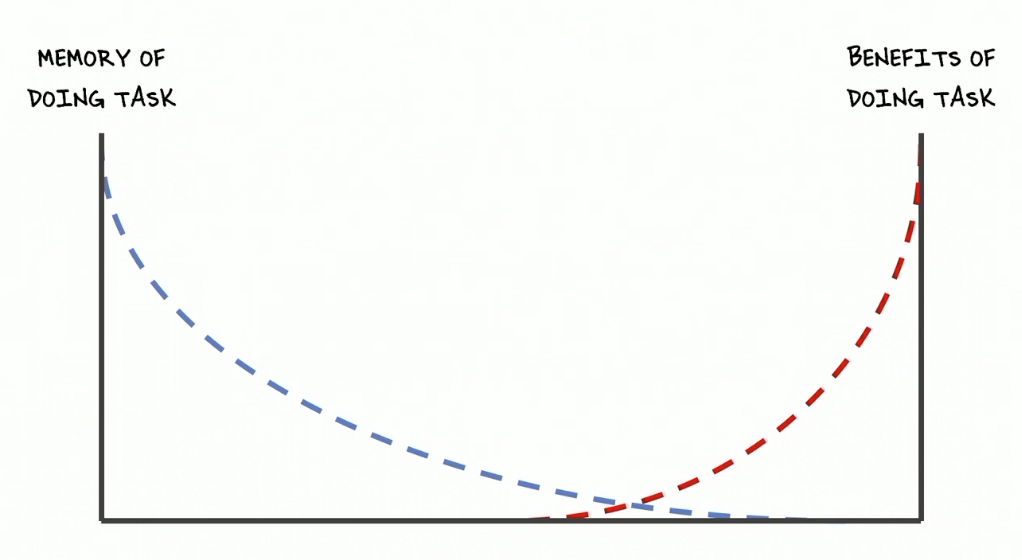
    But there’s a problem here. We tend to forget what we’ve done in the past. So we end up not tying that past effort to the present, to what we’re achieving today.

    Think of it like this:

    The solution to this problem is identifying the right habits and implementing them NOW so you can reap the rewards LATER.

    And that’s exactly what we’re doing today.

    Alright, alright. Enough background. Let’s get into the real meat and talk about the 3 best habits of rich people you need to copy.

    Habit #1: Track Your Progress

    People don’t stumble into becoming a success. They aim for it. So in order for you to achieve that same kind of success, you need to…

    A) Set Goals

    Set goals. What exactly do you want to achieve? Is it to climb the corporate ladder? Accumulate enough wealth to retire early? Or just get some extra dough to send your kids to college?

    Try to make each goal SMART:

    • Specific
    • Measurable
    • Actionable
    • Relevant
    • Time-Based

    The more exact you can make your goals, the easier it’ll be for you to work your way towards them.

    B) Determine Milestones

    What are the steps you need to take to achieve each goal? And what do you need to accomplish in order to take each step?

    If for example your goal is to make $1 million in commissions this year, you can break that goal down into quarterly, monthly, weekly, and even daily targets. How many deals do you have to close each quarter to stay on track?? How many cold emails and calls do you have to make each week to hit those monthly goals?

    When you break your larger goals down into smaller, daily tasks, you can tell in an instant if you are running behind or ahead of the game.

    So set those larger goals, break them down into milestones and smaller tasks, and then track your progress towards completing each.

    Habit #2: Pay Your Future Self First

    For this one, it helps to think of yourself as two distinct people. There’s present you—that’s the you watching this video here right now. And then there’s future you—that’s the you in a day, a month, a year, a decade.

    What you want to do is take a fixed percentage of your monthly income and invest it towards your future self. I don’t care if it was a great month. And I don’t care if it was a terrible month. What matters here is you’re paying forward your hard-earned dough so that future you’s life will be just a little bit easier.

    Now, I’m not talking about buying that car. Or taking that vacation. Because really, that’s investing in present you. And once you spend that cash, it instantly becomes dead money. But when you invest in your future you, it’s living money. Money that pays out dividends. And money that earns a return, getting you closer to real financial freedom.

    Some examples of what you can do to pay your future self include:

    • Investing in the Stock Market
    • Maxing Out Your 401(k) Contribution
    • Saving for a New House
    • Taking a Sales Skills Workshop

    Habit #3: Continuous Self-Improvement

    Continuous and relentless self-improvement.

    Nobody, and I mean nobody, starts off from square one with all the skills they need to make millions. It just doesn’t happen.

    Instead, you’ve got to consistently expand your skillset. You’ve got to improve the skills you already have today. And you have to become better than you ever thought you could be.

    Now, I teased this a bit before but in sales, we’re particularly lucky because the improvements we need to make the big bucks are easier than with other industries.

    Want to climb the corporate ladder? Buckle up for decades of daily learning before you make your millions.

    Starting a business? Settle in for year after year of pain, financial insecurity, and, oh yeah, a very real risk of complete failure.

    But to win in sales, all you have to be able to do is:

    • Understand Your Market
    • Get in Front of Buyers
    • Explain the Value
    • Cultivate the Right Mindset

    That’s it!

    Now, if you’d like to learn more about these four steps, we’ve actually cover that in another video coming up in the next few days. Be sure to subscribe so you won’t miss it!

    Sales is easily the smallest segment of commerce, but it holds the greatest rewards. So if you can tap into the low-input and high-output nature of the industry by improving your sales skills every day, you’ll tap into the quickest way to get rich without taking huge risks.

    Summary

    Getting rich isn’t a fantasy. It certainly isn’t easy. But by cultivating the right habits…

    • Tracking Your Progress
    • Paying Your Future Self
    • Continuously Improving Your Skills

    And best of all, once these habits take hold, your success is no longer a matter of “if”. Instead, it’s a matter of “when”.

    The post The 3 Best Habits Of Rich People appeared first on Salesman.com.


    Want To Smash Quota? Become A Hybrid Seller | Salesman Podcast Mar 21, 2022
    Show notes

    Fred Copestake is the Founder of Brindis and author of ‘Selling Through Partnering Skills' & ‘Hybrid Selling'. In today’s episode of The Salesman Podcast, Fred shares strategies around how you can smash your sales quota and unleash your full potential by becoming a hybrid seller. You'll learn: Sponsored by: Free SalesCode assessment Learn your strengths and weaknesses in an instant. Taken by over 10,000+ of your competitors. Don't get left behind. Take the free assessment Featured on this episode: Host - Will Barron Founder of Salesman.org Guest - Fred Copestake Hybrid Selling Expert Resources: Fred’s LinkedIn The Sales Today Podcast Book: Hybrid Selling: How salespeople can use a complete approach to drive opportunities in the new world of sales Rocky – AI Mindset & Self-Improvement digital coach in your pocket. Transcript Will Barron: Hi. My name is Will, and welcome to today's episode of the salesman podcast. On today's show we're going to look into how to become a hybrid salesperson. And today's guest is the man Fred Copestake. Fred is the founder of Brindis Sales Training and author of the Hybrid Selling book and Selling Through Partnering Skills. And we're going to talk about both these on today's episode. With that, Fred, welcome to the show. Fred Copestake: Thank you very much. Thank you for inviting me. Real pleasure. What is Hybrid Selling? · [00:35] Will Barron: You're more than welcome. I'm glad to have you on, mate. Okay. I can feel you've got a strong energy. I can feel you're excited mate, to be on the show, so hopefully we can continue this with some questions from my side. But with that, I'm going to give you a terrible question. It's a lazy question, but I think it's a good starting point to set up the rest of the show. You probably answered this question a million times before. And so I feel bad for throwing it at you, but what the heck is hybrid selling? Someone who's unfamiliar with that term, there's tens of thousands people listen to this. What is hybrid selling Fred? Fred Copestake: Well, my usual lazy answer is what do you think it is? But actually, no, let's go with that if you don't mind. If you could give me what you think it is without going into too much thought, then we can take it from there. Will Barron: Well, I'm not assuming because I know what it is because I've read the book. But coming from an assumptive standpoint I would say it's selling both old ways of phones and emails, and the new ways of leveraging Zoom, leveraging the newer buyer journey where the buyer is focused on consumer content, engaging with salespeople like [inaudible 00:01:32] on the process. It's focusing on a new exchange of value where the buyer has access to information where they didn't have it in the past, and they perhaps want salespeople to help them out with different things. How does that fit? Fred Copestake: Yeah. No, very good. Very good sir, yes. You clearly have read it. No. No. A lot of people will tend to say is, “Oh. It's when we've got to do stuff using different techniques,” or, “We've got to do stuff like using video and sending video and this kind of stuff,” so working virtually. And my answer will tend to be well you, “Well, that's virtual selling then isn't it? That's already got a name. That is a thing.” So for me, it's something slightly different where hybrid's about a mix. And so it's a mix of approaches, it's a mixture of things that we need to do to make sure that we are bang up to date and we're going to do things that make a difference for the customer. And come seeing a lot of good stuff that's gone on before, and some of those newer things to deal with the way that people are thinking, because people are thinking differently as well now. So it's a blend. It's a mixed approach. Hybrid Selling 101: The Things Today’s Buyer Expects From the Modern-Day Salesperson · [02:28] Will Barron: How are people thinking differently from the perspective of we're hopefully on the far end of this global pandemic, there's other things going on in the world which we won't talk about this second because, well, by the time the show goes out who knows what's happened in that area of the world. So we'll miss that but it's post pandemic. What the buyers want different from salespeople, how do salespeople need to engage differently with buyers? And how do we get more deals done use this hybrid approach? Fred Copestake: Okay. So I mean first thing, I wrote book one because there's a bunch of challenges that salespeople have got that we need to deal with. And we were chatting about this before we came on live, weren't we, where we've got to deal with busy, busy, busy, oldie-worldy, and muddled mindset. And that's what salespeople have got to cope with now. So busy, busy, busy, they're running around, they're doing lots of different stuff. They've been very, very active, well blah, blah, blah. But not actually getting anything done because it's ineffective. Fred Copestake: Oldie-worldy is using old fashioned stuff that doesn't work anymore. It's winding people up because it is that kind of archaic. And then the model mindset is that, actually, are we supposed to be consultative here or are we supposed to be transactional? Because the company says that we're consultative: we deal with problems, we deal with solutions. But then they push us to sell a load of stuff at the end of the week, the end of the month. Fred Copestake: So I mean, that's actually how I wrote book one to deal with those issues. That's by being more collaborative. But yeah, as soon as I launched that the pandemic came along. And you could see that what happened is that the speed of change also caused us a whole load of other issues, so that's what Hybrid Selling and the book is all about. That's why I wrote it so fast, was to help people with these new challenges which, again, broadly break down into customer challenges, climate challenges and change yourself challenges. Changes in Sales Techniques and How to Cope in the Hybrid Selling Environment · [04:12] Will Barron: Sure. Sure. So I think it'd be valuable to touch on these in a little bit more detail, because I think we could do a whole episode on being busy, doing things an old way that perhaps doesn't get the response that we expect from customers. And then just frankly, lying about being consultants and just trying to shove pictures down people's throat at the end of the day, because salespeople have targets. They have quotas. They get sacked if they don't hit them over months, quarters, years. And so it's one thing for management and marketing to say one thing, it's another thing to be put in a position where your livelihood's on the line. So is it cool with you if we run through these in I guess- “If we think about customer changes, stuff that's happened very recently, I talk about ABC, so customers are more Advanced, they're more Biased, but they're also more Confused.” Fred Copestake · [04:55] Fred Copestake: Yeah. Yeah. And I mean, I am a fan of the podcasts. I listen to them and I know that you do a really good job in trying to help people address that stuff and get this as modern and as up to date as possible. So yeah, if we go through each of these, if we think about customer changes, stuff that's happened very, very recently. I talk about ABC, so customers are more advanced, they're more biassed, but they're also more confused. So by advanced, again, we know that customers are now further down the buying cycle. They're trying to self-diagnose. They're doing a lot of their own thing. They don't want to speak to sellers. They're trying to do everything on their own. And we've got to deal with that. That is going on. That's real. That's what the research is showing. When I say customers are more biassed, by this I'd probably mean that they're more biassed to what they like and what they know, or even that they're more demanding if you like. They are B2C consumers as well, aren't they? Fred Copestake: So people expect far more. And I'm not sure that we always can deliver on that. So again, we've got to really understand then their problem and be able to deal with that. So it's all about them, really. They're in the driving seat. They're in this really strong position. But equally, they are also more confused at the same time because, I mean, I talk about we're in this VUCA world, aren't we? Where volatility and certainty, complexity, ambiguity, this is all going on. So yes, they know what they like. They like what they know. They're doing their own thing. But actually, oh God, [inaudible 00:06:01] what's going on anyway. Fred Copestake: So that's the first set of challenges, these customer challenges that we need to be dealing with in which a hybrid setting approach can help us with. It's teed up to do that. Value Selling: The Anatomy of the Modern Salesperson · [06:16] Will Barron: Can we turn this to our own advantage? If customers are confused, it seems that they're in a position where if we can help them become less confused they're going to listen to us. Then if they're going to have a bias towards buying for vendors that they know and like, if we can solve their confusion, then clearly they're going to know and like us. And perhaps they're in a position where we can subtly influence them, nudge them towards an appropriate buying decision. Is this an opportunity as opposed to a threat of the old way of selling things? Should we frame this up as this is an exciting time? If you can be clear with your value proposition, help buyers, and then guide them through the steps of the process that they're stuck with, that the deals are more likely to come with you, and that this is actually an opportunity, again, as opposed to the threat of just being able to spam emails all day and make quota kind of five years ago. Fred Copestake: Big time. It's a huge opportunity because if people aren't doing that, that's why we're not going meetings. That's why customers don't want to speak to people and they're trying to do it themselves. But as soon as you can come in and say, “Look, I can be your guide. I can lead you. I can help you.” You are setting yourself apart. This is what the hybrid salesperson can do. They're adding value in that way. Fred Copestake: I mean even to VUCA, I came across this model of VUCA prime where you kind of fight VUCA with VUCA. It's brilliant. So if customers are suffering volatility, we help them by establishing the vision that they need, understanding what it is that they're trying to deal with. If they've got a problem with uncertainty, we can help with understanding. We can share information. We can ask them good questions. We can provoke them. We can prompt them. We can get them thinking better. Fred Copestake: If they're suffering with complexity, well then we can help with clarity. We can set out the stages. We can talk to them about, “This is how typically things are bought in your world,” if you are not doing it that often. Or even if you are, let's make sure you're doing it as best we possibly can. And if they're suffering with ambiguity then we'll talk about being more agile. We'll give them options to be able to respond to stuff faster and get in front of their own get. “Forget your products, forget your services, stop talking about that bloody stuff because people will always say they’re not interested. They're not interested at that time, but become interested later once you've helped them get their head around stuff.” – Fred Copestake · [08:22] Fred Copestake: So for me, that's where a modern salesperson can add huge value. That's the opportunity for them. It's how you are helping people to think, what you are doing as part of the process yourself. Forget your products, forget your services, stop talking about that bloody stuff because people say we're not interested. They're not interested at that time, but become interested later once you've helped them get their head around stuff. It's a huge opportunity for salespeople acting professionally and bringing their full game to bring that value. Yeah? Will Barron: I want to ask you some examples of questions and things in a second that we can make this real practical for the audience. But Fred, I feel like if I was listening to the show right now I'd be like, “That makes total sense. That's the place I want to be,” because we do this with our own selling to the enterprise of our training programme. I jump on calls, and by the end of the call if the prospect and potential customer isn't super narrow minded in what they want, whether it's our training programme, a different training programme, I've pointed them on one way or the other. They know where they are, where they want to be. What's stopping them. The status is quo. How are we going to get them from one side to the other? If they've not done that, it's been just a terrible call from my perspective. As well as pulling the discovery, and the qualification, and everything that I need to make sure that the deal can go ahead. Will Barron: I try to make sure that they get a tonne of value. And often I get email responses back of, “Hey, you're not a good fit for us right now. The budget isn't right,” whatever it is, “but we will use you in two years,” because you've really helped clarify and added a tonne of value in that one call which is great for our longer sales cycles. It's not going to be great for some salespeople listening to this who have short sales cycles. The Collaborative Selling Approach: How to Set Yourself Up as an Authority Figure Even If You’re Just Starting Out · [09:50] Will Barron: So with all that said, and I want to get into that in a second because that has true value in its own. How to do this on a call, questions we should ask. Before that though, Fred, how do we set ourselves up so that we're in a position to be able to have these kind of conversations? Because when a sales leader jumps on a call with me they know that I am a little bit of a knuckle dragging salesperson, but I have done quite a lot of podcast interviews, have spoken to thousands of sales reps over the years and done consulting a one-on-one train with them. We have built a half decent, at this point, training programme so they know I'm not a complete numpty. Will Barron: And I'm sure it's the same with you. Customers get on the phone with you and they're like, “Fred I've consumed your content, podcast, books. I'm basically on board. I'm ready to rock and roll. I just need you to solve a few questions or solve a few answers. Give a few answers to a few questions, solve a few problems.” But for the average salesperson listening to this who's selling some random piece of software that hopefully is really valuable and really great for their audience and their prospects. They're starting from a deficit, I feel, versus what me and you are. How do they get in a position where they have, essentially, the authority and the respect from the buyer to be able to ask these questions and have this adult conversation, because it's very difficult to go from cold call to the consultative conversation that you just outlined then. Fred Copestake: Sure. I mean I think for me, this starts with a mindset. W…

    Full show notes at the publisher

    Conquer Your Money Shame... And Make Way More Of It | Salesman Podcast Mar 18, 2022
    Show notes

    Bob Wheeler is a Financial Expert, Motivator, Author of The Money Nerve: Navigating the Emotions of Money. In this episode of The Salesman Podcast, Bob offers a simple and effective framework for creating a healthy relationship with money and explains how emotions trigger our financial decisions. You'll learn: Sponsored by: Free SalesCode assessment Learn your strengths and weaknesses in an instant. Taken by over 10,000+ of your competitors. Don't get left behind. Take the free assessment Featured on this episode: Host - Will Barron Founder of Salesman.org Guest - Bob Wheeler Financial Expert and Best-Selling Author Resources: Bob’s LinkedIn Themoneynerve.com Book: The Money Nerve: Navigating the Emotions of Money Book: Essentialism: The Disciplined Pursuit of Less Book: The Road Less Traveled: A New Psychology of Love, Values, and Spiritual Growth Money You Should Ask Podcast Transcript Will Barron: Hi, I'm Will. Welcome to the Salesman podcast. On today's episode, we're looking at how you can improve your relationships with money. Our guest is Bob Wheeler. Bob is the author of The Money Nerve. He helps people conquer their money shame and avoid making poor financial decisions by teaching them how emotions can dictate our choices. And with that Bob, welcome to the show. Bob Wheeler: Thanks a lot, Will, great to be here. What’s Your Relationship with Money? · [01:00] Will Barron: Great job. This is one of those topics that we've had over experts on to talk about in the past, but it's so important for salespeople to have a healthy relationship with money so that they can have success. Then also, hopefully we can transition to this towards the end of the show, it's important for salespeople to be able to communicate effectively without emotional baggage when they're talking about their prospect's money, whether it's the actual ownership of cash from the prospect itself or the money that they are, I guess, the company they're representing called that they're trying to exchange value or services or products for. People get weird about money pretty quick. Let me ask you this Bob, to get us started, is it likely, in your experience, right, that a majority of the listeners listening to the podcast right now, tens of thousands of salespeople, small business owners and everyone else in between, is it likely that they all have a pretty good relationship with money or is it more likely that we're all a little bit messed up on this subject? Bob Wheeler: Well, unfortunately, I would have to say we're probably all a little messed up on this subject. It just, but that's not a bad thing as long as we get conscious about it, but most of us are working from some unconscious beliefs and money blocks. Money, Emotions, and Why Our Relationship with Money is So Messed Up · [01:40] Will Barron: Why is that? If we could start from, if we can pull it all back and start from the beginning, right, are we born, as humans, just with money being a relatively new concept? I don't know how many tens of thousands, hundreds of thousands of years old cash in an exchange of value via a, like a stones, gold, paper notes, whatever it is now, our brain's just not wired who understand it and we add weird emotions to it? Is it our childhood upbringing? Is it the media? What causes us to be all maybe slightly messed up with our emotions of money? Bob Wheeler: I mean, it might be all of that, but unfortunately, and I'm not blaming parents here. I'm not blaming the parents, but we are part of our upbringing. A lot of our decisions, a lot of our beliefs, a lot of our rules got formed when we were four or five and six years old. If we were shamed about money, if we watched our parents fight about money, if we were told we were greedy or if we were generous, we started to take all that on at four, five and six, and then we never update the information. We just keep working with it as we go into adulthood. We're still operating with that information we got at four or five and six, which may or may not be helpful or true. Understanding Our Subconscious Beliefs About Money · [03:00] Will Barron: Is this because it's all based in our subconscious? Because it seems like if someone has an issue of money, and I'm thinking of a specific friend of mine, right, who is just a, excuse, my French, just a cheap bastard, right? He doesn't want to spend money. He doesn't really want to earn money. If there's money and he is bank account, he wants to get rid of it as quick as possible. Now, I know his mom. I know his family. They're all very like, and this is painting a broad brush strokes here, but they're all hippies, right? They're all from a place of, which might be healthy, of, “Hey, I value experiences and friendships as opposed to nice cars, big houses.” But in the modern world, some of that doesn't quite work because you need a place to live, you need a way to fund your lifestyle kind of thing. So he's a little bit messed up, but he doesn't see it, right? Bob Wheeler: Right. Will Barron: I see it from afar. He doesn't see it, understand it. I try to have these conversations with him. I need to hire you Bob to come in and sort some of this out for, but do we have these beliefs and are they stored in our subconscious? Is it difficult for us to see them internally? Or if we're that messed up on it at some point, are we just choosing to live this way? Bob Wheeler: Yeah, well, we are choosing to live that way until we decide we want to take a look at it. It is certainly not fun. I don't have people running with joy and glee to explore their money past with me or to look at their debt or to look at their spending habits. It's not something we get excited about, but we do carry this. We're going around with our comfort level. So maybe if I'm a hippie-type and I'm comfortable with having no bank over draught, then as soon as I get a $1,000 or 10,000 bucks, I got to spend that money and get back to my comfort level. For some people that might be $50,000 or $100,000 or $2,000. It's different for all of us, but we tend to go back to what comfortable. It's not comfortable looking at the money choices that we've done that haven't served us. The Healthy Money Mindset and How You Can Adopt It · [05:10] Will Barron: Is it possible, and I've heard this band around, you better to tell me if, if there's any evidence to support this, but I've heard this banded round that most people will earn plus or minus 20% of what their parents did via the conditioning of their parents or the upbringing or the people that they, I guess, if you are minted, you'd go like to go to a private school. You're spending more time, so those things become normal. And so that's where if you use, I don't know, what would be a metaphor, like a thermostat. Your thermostat would be set at a certain point. If you are beyond that, you want to cool it down. If you're below that you want to heat things back up. Is becoming wealthy as simple as just repositioning that, somehow that thermostat, and then making that your new normal and you're so uncomfortable until you're there that you're going to hustle, you're going to change things, you're going to change your mindsets to make that happen? Bob Wheeler: Yeah, absolutely. I think what it is it's not just changing the thermostat so that all of a sudden more money comes in. It's changing the thermostat so that your mindset gets slightly adjusted. If you're in a mindset of spend, spend, spend, spend, and you adjust it to, “Oh, maybe I should save 20%. Oh, maybe I should start investing a little bit more money. I should save for retirement.” It's those types of adjustments where we're shifting our mindset, not necessarily, “Oh yes. I want 10 million more dollars to flow into my bank account.” Certainly that would be nice. It's also, “am I willing to let that happen? Do I deserve it? Am I going to actually let my money start to work for me?” Instead of, “How can I spend my money so I can live in the moment.” Will Barron: I'm going to give you a super practical example now of something that I've bought that I feel I don't deserve. It's absolutely ludicrous, right? The audience will hopefully enjoy this as well. I've been watching a bunch of documentaries and reading books on this principle of minimalism, right? I'm not entirely sold that I need to live in a shack with one toothbrush and one pair of clothes. But I interviewed Greg McKeown, he's the author of Essentialism as well. I interviewed him with a while back. He drilled this idea into my head of, less but better. That's what I'm trying to lean into, right? Bob Wheeler: Yeah. Will Barron: As I say, this example is so, so stupid. I've got a cordless here in the office. I've got a cordless vacuum cleaner and I've got a corded one. I never use the corded one, because it's a pain in the ass, because there's cables everywhere and there's camera equipment everywhere. So I just never use it. The cordless one is just a cheap, crappy thing that doesn't pick up anything, so that's pointless as well. Today I spent 500 quid on the best cordless Dyson that there is right or it's coming tomorrow morning. Immediately, I was like, “Is that too much to spend on a vacuum cleaner?” It doesn't matter, right? I making enough money that that is just so insignificant. It's irrelevant. I wouldn't even notice it coming out my bank account, right? Bob Wheeler: Right. How to Overcome Your Money Guilt · [08:24] Will Barron: I still pondered on, “Have I been a sucker buying this cordless vacuum thing from Dyson?” The idea being I'll have that'll do the best of both worlds of the other two and I'll just bin the other two, less stuff in the office, less stuff for me to think about, maintain, all that good stuff. What is the weird feeling that I'm feeling there about this ridiculous purchase? Then perhaps we can scale this up then to actual meaningful purchases that people either are making or holding back in their lives. Bob Wheeler: Well, there's probably a bit of guilt there, right? Even though you're making a lot of money, it still doesn't feel, if we're cheap or we're tight with our money or there's a scarcity mindset, who am I to go out and do this thing? There's people out in the world that are hungry. There are people that are trying to get it together and I'm not going to go out and spend all this money on a vacuum cleaner just so I don't have to plug it in. Will Barron: Do you know what, Bob? As you say that at me, the thing that comes to my mind, right, and this might be useful for the audience, is so I call my dad every day, right? Mom passed away four or five years ago, so I call every day we have quick chat about stuff. He he ran a small business, so we have intelligent conversations about marketing and all that kind stuff. I'm going to tell him tomorrow that I spent 500 quid on Hoover. He's going to go, “What? Are you crazy?” And so maybe some of the guilt is being somehow tied to this flippant conversation that doesn't mean anything. My dad's not bothered about it really, but I know he is going to take the piss out on me tomorrow when I mention it because he wouldn't spend that much, so maybe is that unravelling some of this further perhaps? Bob Wheeler: Yeah, absolutely. Because we also either do things to support our parents. Mom and dad, you're always right. Or we do things in defiance of them. So if you have a great relationship with your dad and now you've done something he wouldn't have done, like maybe you're not a good boy, maybe you're not the good son that you thought you were. And so that may come into play, like I'm still a good guy, even though I didn't follow what you would've done. Will Barron: And so this is weird though, right? Because it's meaningless. Bob Wheeler: Right. The Emotions That Dictate Our Relationship with Money · [10:29] Will Barron: I don't know if that is true for me, what you just said, unless it's so deep in my subconscious that as an adult or maybe I'm just refusing to believe and agree with that. Maybe that is the case. But why do we have this, why do we form a relationship with money, with objects, with spending things, with death? Why is there emotions tied to what is essentially a very logical thing, right, which is numbers on a screen or pieces of paper in our pocket? Why do we tie emotion to all this? Why am I now feeling embarrassed and guilty about sharing this story on the podcast that thousands of thousands of people are going to see, hear and probably email having a laugh about? “When it comes to money, we're all judging and we're all getting judged. And so the question is, can we tolerate the judgement?” Bob Wheeler · [11:45] Bob Wheeler: Well, here's the thing. We start off early, “Hey, I want that present. I want a bicycle.” “You're greedy. You're a selfish little kid. You don't think of other people. If you get good grades, I'll give you some money. If you misbehave, I'll disinherit you. If you do this, you can buy my love.” And so we, early on, start attaching values to good, bad, evil, greedy, and so now, “Am I going to be greedy if I ask for this, if I ask for too much? Do I ask for just enough? How do I self advocate?” It becomes this whole mind game of, “Am I good enough? Do I deserve to ask for these things or go for it or do I need to apologise so that other people don't judge me?” We're all judging and we're all getting judged. And so can we tolerate the judgement ? Will Barron: Do you know what's even funny as I think about this? I'll leave the analogy at this, Bob, cause I'm not sure it's the best analogy that I've ever come up with or analogy, metaphor, wherever this is. I'm going to go back to the house after this from the office. Me Mrs. bought the last Hoover for the house and that's a Dyson, like V8. Well, I've just bought this Dyson V15. I can't wait to show Emily tomorrow that I've bought a way better Hoover for the office than what we've got there. As you said then there's this idea of like comparison, this idea of competition, there's like a different relationship with me Mrs. misses than what I have with me dad. And so this is incredibly com-, this is more, I didn't, I didn't mean to go into the show with this analogy right? But this is, even for someone like myself, who I thought I had some of this nailed, this can go pretty deep, right? “Here's the funny thing, many people in relationships are in competition. They're actually like, I beat you. I got you. I did better. It's not conscious, but it's amazing how many times I ask couples, are you on the same team or are you trying to beat each other? I just get this blank look.” – Bob Wheeler · [12:41] Bob Wheeler: Yeah, absolutely. Here's the funny thing, so many people in relationships are in competition, right? They're actually, I beat you. I got you. I did better. It's not conscious, but it's amazing how many times I ask couples, are you on the same team or are you trying to beat each other? I just get this blank look. Will Barron: Me and my Mrs., we have, I'd say we have a healthy element of competitiveness to our relationship, right? Bob Wheeler: Yeah. Will Barron: The best way I describe it, I think it was the road less travelled, it's Scott Peck. I don't…

    Full show notes at the publisher

    The Psychology of Selling: 5 Steps to Selling that Actually Work Mar 17, 2022
    Show notes

    One of the most impactful realizations I made early on in sales is that closing deals isn’t just about the numbers. You also need to tap into the psychology of your prospect and get buy-in on a fundamental, biological level.

    That’s why today we’re looking at the psychology of selling—5 steps to selling that actually work. You’re going to love seeing your close rates skyrocket after incorporating these steps into your pitch.


    The Numbers Objection

    How many times during a sales call have you heard, “Let me check the numbers and get back to you.” Or “The numbers just don’t work on our end.”

    Numbers, numbers, numbers—most reps think closing sales in the B2B biz all comes down to the numbers. Does your product make logical sense for the buyer?

    What a lot of sales professionals miss out on though is the emotional aspect of a deal. Sure, there’s still a big place for logic in sales. But when it comes down to it, we make decisions based on emotions. President and CEO of Whetstone Adrian Davis broke it down for me like this in our interview:

    “Fundamentally, we make decisions emotionally, and if all we're doing is spouting features and benefits, we're really engaging the logical part of the brain. The logical part of the brain does not make decisions. It analyses and captures information to weigh pros and cons, but decisions are made emotionally”

    The question is, how can you appeal to the psychology of your buyer to better sell your product? What tactics can you leverage to boost your selling power tenfold? And what framework can you use to consistently and effectively tap into the psychology of sales?

    That’s exactly what I’m covering today. This five-step method is based on the Storytelling Framework from inside the Selling Made Simple Academy, but more on that in a sec. Right now, let’s jump into the steps.

    1: Help Your Buyer Understand Their Current Reality

    The very first step to tapping into the psychology of selling is helping your buyer understand their current reality.

    What is the biggest problem your prospect faces today? Is it a stall in business growth in recent months? A team not working as efficiently as they should? Have they hit a success roadblock that they just can’t overcome?

    Summarize their unique pains and verbally confirm those pains with the buyer. This gives them the opportunity to correct or clarify what you understand as their biggest problem. Beyond that, it also immediately puts you and the buyer on the same team—you are both trying to solve that problem. And you’re also scoring points for showing you understand what they’re going through.

    2: Make Them Feel the Pain of That Reality

    Next up is making them feel the pain of that current reality.

    This step is also known as “agitating” the pain in copywriting terms. And it’s an essential step to engaging the emotions of the prospect.

    So ask yourself—what are the consequences of this pain? Who do they look stupid in front of because of that pain or problem? Who is judging them? And what’s really, truly on the line if that problem goes unsolved?

    Acknowledge these consequences with the buyer. Bring them up. And let them know you understand the stakes of the decision.

    And don’t just stick to monetary consequences here. Reputation, career advancement, bragging rights, and much more besides money are motivating factors for making business decisions too.

    Now that you’ve identified and agitated the pain points, it’s time to move on to step #3…

    3: Outline What’s Stopping Them From Moving Forward

    Outlining the current barriers that are stopping them from moving forward.

    In most cases, these barriers fall into one or more of five specific categories. Step #3 involves pointing out which of these barriers your buyer is currently facing.

    I go into greater detail about these five forces in the Storytelling Framework from the Selling Made Simple Academy. But for now, the five barriers are:

    A) Selection Overwhelm

    Selection overwhelm. The buyer has a problem and knows there are solutions. But there are too many choices. And it’s tough to know which is the best. This is a great opportunity for you to remind the buyer of your unique value proposition.

    B) Confirmation Bias

    Confirmation bias. This is the mind’s tendency to stick to our previous decisions and defend them wholeheartedly. Pointing out this bias alone is enough to make a buyer more seriously consider switching solutions.

    C) Blowback Risk

    Is your buyer afraid of looking like an idiot after switching to a new solution that doesn’t work out? You can address this success blocker in particular by pointing to your brand’s reputation and success stories.

    D) Initial Cost of Change

    Initial cost of change. Is your buyer being held back by the thought of fighting for the budget or spending the time needed to implement your product? This blocker is best dealt with by providing your prospect with the resources they need to reduce those costs of change. Onboarding support, cost analyses, C-suite targeted product breakdowns, and more can all make your buyer’s job much easier.

    E) The Buyer Is Lost

    The buyer is downright lost. In the complicated world of B2B buying, knowing which solution is right for their problem is confusing. And that’s why they’re looking for help. For a guide. For someone that can simplify the process for them and tell them exactly what they need to know to make the right decision.

    4: Paint a Picture of the Place They Want to Be

    Painting a picture of the place they want to be.

    At this stage, we want to show the buyer what their life could be like once they solve their problem. The goal here is to generate enthusiasm and connect a solution—your solution—to an easier, happier life.

    Now, you want to be specific here. Can they achieve or outperform their professional goals? Will their stress levels drop? Are they finally recognized by the higher-ups?

    This is a powerful step because humans aren’t great at envisioning the future. As Joey Coleman of Design Symphony put it:

    “They can see the present, they can see the past, but they really struggle to see the future… That's why I think that salespeople have an opportunity, and I would dare say maybe even a responsibility, to preview the future for their customers that their customers aren't going to be able to envision on their own.”

    Once you’ve illuminated their future selves, it’s time for the final step…

    5: Build the Reality Bridge

    Remember when I talked about the buyer being lost and needing a guide? Someone to show them the way?

    Well now is the time you connect the dots. It’s you that can bridge the gap across their success blockers. It’s you that can help them achieve their goals. It’s you that can ensure implementing your solution goes seamlessly.

    And it’s you that can take them from where they’re at now—with all their pains and problems—and give them what they need to be the less-stressed, more successful versions of themselves they imagined earlier.

    All they need to do is sign.

    And if you’ve followed the previous steps correctly, they’ll be asking for a pen in no time.

    Summary

    That’s it for leveraging the psychology of selling! See, pretty easy, isn’t it? Just…

    1. Help Them Understand Their Current Reality
    2. Make Them Feel the Pain of That Reality
    3. Outline What’s Stopping Them From Moving Forward
    4. Paint a Picture of the Place They Want to Be
    5. Build the Reality Bridge

    That’s all it takes to tap into the psychology of selling. When you can appeal both to the logic and emotion of your buyer, nothing will be able to stop you from crushing it out there, I promise.

    The post The Psychology of Selling: 5 Steps to Selling that Actually Work appeared first on Salesman.com.


    Why "Covert Contracts" Kill Your Sales | Salesman Podcast Mar 16, 2022
    Show notes

    In this episode of the Salesman Podcast, Dr. Robert Glover explains what a covert contract is and why “nice guy syndrome” is killing your ability to get deals done. Robert, an entrepreneur, writer, coach, public speaker and the author of three bestselling books. He is also recognized as the leading authority on tackling the “Nice Guy Syndrome”. You'll learn: Sponsored by: Free SalesCode assessment Learn your strengths and weaknesses in an instant. Taken by over 10,000+ of your competitors. Don't get left behind. Take the free assessment Featured on this episode: Host - Will Barron Founder of Salesman.org Guest - Dr. Robert Glover Best-Selling Author and Psychology Guru Resources: Dr.Glover.com Dr. Glover on LinkedIn Book: No More Mr. Nice Guy Book: Dating Essentials for Men: The Only Dating Guide You Will Ever Need Book: The Road Less Traveled by M. Scott Peck Book: The Subtle Art of Not Giving a F*ck Transcript Will Barron: Hi, my name is Will, and welcome to today's episode of the Salesman Podcast. On today's episode, we're going to be talking how covert contracts kill your sales effectiveness and today's guest is Dr. Robert Glover. Robert is a entrepreneur, writer, coach, and public speaker, and is the author of three bestselling books. Robert is recognised as the leading authority on nice guy syndrome, which I'm sure we're going to cover in this episode and with that, Robert, welcome to the show. Dr. Robert Glover: Well, thank you for the invitation. The Recovering Nice Guy · [00:36] Will Barron: You more than welcome, sir. Just before we click record, I've read all your books. I'm a huge fan. Is there a way to describe someone who was a nice guy, who had nice guy syndrome and now no longer, well, hopefully no longer suffers for it. You can diagnose me in this episode mate and give me some feedback. Is there a way to refer to someone who is through some of these pain points? Dr. Robert Glover: Well, I refer to myself as a recovering nice guy because I started working on this stuff in myself before I knew it was nice guy syndrome, about 25 years ago. And what's interesting to me is that layers keep peeling off of this whole nice guy thing and mine show up mostly in relationship, but I see it in work and everywhere else as well. So what I found about any, I believe nice guy syndrome, a lot of it is due to maybe partly natural temperament and partly due who internalised conditioning in childhood. Dr. Robert Glover: So that means is pretty deep into our emotional operating system. So I've noticed that the anxiety or shame I tend to associate with nice guy syndrome still arises from time to time, but I notice it quicker, I can soothe myself, I can take action, I can move forward. So as I refer to myself as a recovering nice guy, if you like that term, you can use it, it just means that you notice this stuff a lot quicker, and it doesn't seem to take control of your life, especially in those unconscious hidden ways that you're not aware of what's driving the bus of your life. What is The Nice Guy Syndrome and Are You Suffering From It? · [02:01] Will Barron: Sure. Okay. So I want to get into covert contracts. I mean, this is really valuable for the salespeople listening to this. I used to do this and put my prospects on a pedestal. I would have covert contracts with these individuals that they didn't know about. We'll touch on that in a second, but we've mentioned nice guy syndrome here. Can you give us a definition of what it is and I guess how we would know. Is there a test? Is there a way to know whether we are afflicted with it myself and the listeners right now? Dr. Robert Glover: Yeah. Nice guy syndrome, and I'm going to reference this primarily towards men, because that's what my book was written towards, but it also affects women as well. There's lots of nice girls out there. And my view of the nice guy is that at a very early age, as a person that internalised an inaccurate belief about themselves in the world and that inaccurate belief is that if I want to be loved and liked to get my needs met, I have to become what I think other people want me to be, because I'm not okay just as I am. And I have to hide anything about me that might trigger or get a negative response from other people. Dr. Robert Glover: So nice guys then are out there trying to be good, trying to please people, trying to avoid conflict, trying to look like a decent human being, they're generous, they're giving, they're caring and all thinking that will get them loved, it'll make them be liked, it'll help them get their needs met. And that's what will tee up into the covert contracts that you mentioned. Covert Contracts: The Relationship Killer · [03:40] Will Barron: Sure. And the audience will be going, “Okay.” I get tonnes of negative responses from potential customers all day every day. Now hopefully it shouldn't be as dire as that, if you're selling the right product to the right person, but salespeople are getting rejected and conflict is part of sales. We need to negotiate, we need to balance value, we need to adjust our offerings based on price, we need to go by and forth. So conflict in a positive sense as in there'll be conflict with a positive outcome is part of sales as well. So hopefully there's a couple of 10,000 sales people listening right now who are nodding, along as we go through this Robert. Can you give us a definition then of what a covert contract is? Because I think this is like a part of nice guy syndrome, right? But I think this specific slither of it is incredibly important for the audience. Dr. Robert Glover: Well, let's tee that up of what the covert contract is, let's see up where, where it came from. And I used to think for many years of my life that, oh, I could never be a salesman, mainly because I hate being rejected. I want everybody to like me. I want everybody to have a positive response to me. I don't know how people get up every day and get rejected time, after time, after time. Now, ironically, these days when people ask me what I do, my doctorate is in marriage and family therapy, but I'm not in private practise anymore. I don't necessarily do marriage and family therapy anymore. I've written some books. I'm an online university, I do consultation, I lead seminars and workshops, but if I have to tell them, if I'm to boil it all down, I'm an online marketer. “Most of the nice guy syndrome is emotional beliefs we internalised at a very young age, maybe three weeks old, three months old, three years old.” – Dr. Robert Glover · [05:40] Dr. Robert Glover: And here I am being a salesman and so backing up to the covert contract and I know a lot of people have told me that's one of the most powerful dynamics they got out of the book, No More Mr. Nice Guy is this concept of covert contracts. And I know it resonated for me. It gives me clarity of certain unconscious patterns in my life that don't serve me and don't help me get what I want, but to back it up, a lot of the people I work with as children and again, most of the nice guy syndrome is emotional beliefs we internalised at a very young age, maybe three weeks old, three months old, three years old. Before our rational thinking mind was online, our survival brain was working, our amygdala, the fight flight freeze, part of our really old ancient brain. And this part of the brain controls just life functioning, heart rate, breathing. Dr. Robert Glover: And it keeps us alive. And that was the most evolved part of our brain online when we were born. And it stores up emotional memory of early experiences. Now, not in words, not in pictures, but just in emotion. So it's really very primal inside of us. So at a very early age, a lot of children for one reason or another, before they were thinking about it rationally internalised the belief I'm bad for having needs or is wrong for me to have needs or my needs put burden on other people or everybody else's needs are more important than mine or other people's needs come before mine. And these are all emotional belief systems that we then later put words to or create stories for and then start manifesting in our life. Now he here is the hitch, the problem. We all have needs and we have to get our needs met. Dr. Robert Glover: And when we were little children, we were completely and entirely dependent on the big people in our lives, our parents, our caregivers, to recognise our needs and to meet those in a timely judicious and hopefully consistent way. Now there's a great book out there, been around for a long time called The Road Less Travelled by Dr. M. Scott Peck. I've been told it's the best selling self-help book of all time. And he talks in there about when parents are meeting their own needs, are then attentive to their children's needs and respond to those needs in timely and judicious ways. And I add consistent to that, a child emotionally internalises the following beliefs about themselves. I'm valuable and lovable, my needs are important and the world is like my family, meaning, hey, everybody out there's going to value me and want to help me get my needs met just like it happened in my family. Dr. Robert Glover: Now, if our parents were not attentive and did not respond to our needs in timely judicious and consistent ways, we internalise emotionally opposite beliefs. I'm not that important, I'm not valuable, I'm not lovable, my needs aren't important and the world's going to be just like my family. Nobody else is going to care about my needs either. Now again, we all have needs. We got to eat, we got to sleep, we need love, we need physical contact, we need sex, we need adventure, we need stimulation. Maslow came up with the whole hierarchy of needs that we have. So we have needs. So how do we get the needs met when we believe we're bad for having needs or that other people are going to get angry at us for having needs or that other people's needs are more important than ours? And so we have to do it in a secretive covert kind of way. Dr. Robert Glover: And that's the covert contracts and there are three of them. And I've really even honed these down further than what I wrote about in the book. But the three basic covert contracts of the nice guy or nice girl syndrome are number one. If I'm good, I will be liked and loved. So if I'm a good person if I'm generous, I'm caring, if I help people, I'll be liked and loved second. And this is really a really powerful one, and probably a lot of the salespeople listening will recognise it, if I meet other people's needs without them having to ask, then they will meet my needs without me having to ask. Now, of course it shows up in relationship, it shows up to strangers, it shows up in the workplace. Dr. Robert Glover: We mind read for other people, we anticipate their needs, we try to do nice things, we build rapport, we do whatever it is we think we need to do so that they will inclined to read our minds and give us what we need without us ever having to ask, because we feel like that would make us a bad person. Now, again, I assume most salespeople have gotten over that to some degree and learned to make a close because if there is no close, there is no sale. And we can't wait for the other person to close the deal. And then the third covert contract is that if I do everything right, I will have a smooth problem free life. And of course this world is not smooth and problem free. We're living in a time of pandemic. You know. There's always chaos and business and sales is not and problem free. “In a nutshell, these are the three covert contracts. If I'm good, I'll be liked and loved. Number two, if I meet other people's needs without them having to ask, they will meet my needs without me having to ask. And number three, if I do everything right, nothing will ever go wrong. I'll have a smooth problem free life” – Dr. Robert Glover · [11:17] Dr. Robert Glover: Like you said, there's negotiation, there's conflict, there's dealing with customers, there's dealing with your sales manager, your company gives you, okay, here's the formula in which we'll compensate you for your sales. And then you go out and kick ass and you do so damn well at it, the company goes, “We're going to revise that compensation schedule.” And all of a sudden, you're not making as much money. You go, “What the fuck? That's not fair. It shouldn't happen that way.” But that is life. We think I was doing it right. Everything should keep going the way I expected it to. So those in a nutshell are the three core over contracts. If I'm good, I'll be liked and loved. If I meet other people's needs without them having to ask, they will meet my needs without me having to ask. And number three, if I do everything right, nothing will ever go wrong. I'll have a smooth problem free life Will Barron: As someone who's fell into this, Robert, right? And then now interviewed 800 odd people, trained thousands of salespeople, done thousands of consulting calls with salespeople and sales leadership, it's now intently obvious to me that we live in a world of evidence that none of that is true. Almost the opposite of this is true, almost verbatim, right? Of bad people have success, which not all the time, but there was evidence of that out that you could see that in many places, this idea, and I love the way that you say this one of, if I meet the needs of other people without asking, they'll meet my needs without asking, and then you add the layer on top of well, if they can read your mind. So that makes that obvious. There's no logic behind that whatsoever. Will Barron: Even like my partner, Emily right? She knows me much better than probably anyone other than maybe my dad. Neither then to know what I'm thinking about most of the time, it's more obvious is that Emily doesn't know what I'm thinking about the random strangers that I'm prospecting or trying to do business with. So there seems to be a tonne of evidence there as well. And then if you do everything right, you have a smooth life, as soon as you get a layer deep in into that, and you look at some of the evidence, the logic things, we all understand inherently, it's common sense that the world is in flux. There's many things we can't control. Driving on the road, you use that as an example or a metaphor for this of all you could do is stay in your lane and perhaps maybe react to the people around you. How to Overcome Your Nice Guy Belief System · [13:25] Will Barron: Someone could easily just crash into the side of you just because they're having a bad day, they're on their phone or not paying attention. So the evidence of that, it's remarkable to that obviously in hindsight, isn't true, but how can we grow up? And I grew up as a young lad with nice guy syndrome, right? I fell into each of these buckets of covert contracts for decades until I was in my mid twenties when I started to read your book and then uncovered, started doing a bit of work on myself and uncovered some of this, how can we get so far through life? I know thy about 40, 50, 60 year old people listening to this right now are going, “Crap. I wished we would've heard this 20 years ago.” Dr. Robert Glover: Yes, I hear that a lot. Will Barron: How can we go so far through life with all the evidence that poses the opposite of this is still having these belief systems? “Everybody has distorted emotional beliefs about themselves and the world because…

    Full show notes at the publisher

    The ONLY Sales Strategy You Need to Know Mar 15, 2022
    Show notes

    The absolute best way to excel in sales is by following a proven system that delivers consistently great results. And today, I’m breaking down the ONLY sales system you need to know to be a roaring success in this industry.

    In fact, it’s the same system we’ve used to help well over 2,000 sales professionals maximize their on-the-job effectiveness, blow past their previous income goals, and achieve real, lasting sales success.


    The System

    Let’s start with a question…

    When’s the last time you were sitting at your desk, wondering “What do I do now?”

    Now don’t misunderstand me here—sales is busy. Busy as all hell in fact. You’ve got product demos, client questions, cold outreach, quotas—and on top of it all, a sales manager breathing down your neck.

    But all this stress and business, it doesn’t really mean you’re productive. You feel busy, sure. But when people don’t have a proven sales system to follow, they tend to… flail. Less gets done around the office. Opportunities go overlooked. And unmet quotas fly by month after month with little improvement.

    You’re still stressed, of course. But even still, you aren’t able to make any real, lasting progress. And those feelings of stagnation, of plateauing, are the first signs of burnout.

    Mental health advocate and Founder of UNCrushed Time Clarke once told me in an interview, “I do research around a survey with B2B sales professionals, and of those, 67% of the respondents strongly agreed that they are currently close to burnout or experiencing burnout.”

    67% of sales reps feel this way!

    And the problem in most cases is not having a cohesive system for driving consistent results and becoming a better, more effective salesperson.

    It’s this problem in particular that we’ve solved for over 2,000 reps with our Selling Made Simple system. And it’s this proven system I’m covering in this video.

    Now, let’s get into the ONLY sales system you’ll ever need to know.

    Like I said, this is the exact system we cover in the Selling Made Simply training. And it’s made up of four equally important steps…

    1: Understand Your Market

    First up is understanding your market. Before you can even hope to close a sale, you have to know who you’re selling to.

    And that means understanding three things in particular.

    A) Honing Your Value Proposition

    First is getting intimately familiar with your value proposition and tailoring it to your ideal buyer.

    What are the unique problems your prospects are facing? What solutions have they already tried to solve those problems?

    The more you understand about your customer, the better position you’ll be in to cater your value proposition to their distinct needs.

    B) Understanding Your Buyer’s Journey

    Next up is understanding your buyer’s journey.

    Prospects move through very specific steps on their way to buying your product. From awareness and consideration to purchase and re-purchase. Guiding prospects through each of these steps effectively means knowing what information to deliver and when to deliver it.

    C) Nailing Down the Numbers

    Finally, there’s playing the numbers game.

    How many prospects do you have to reach out to in order to book a single discovery call? How many of those turn into a qualified lead? And how many of those are going to actually become a buyer?

    Sales is, in fact, a numbers game. And the better you get at tracking and playing to those numbers, the better you’ll become at meeting goals and closing deals consistently.

    The next step in this sales system is getting in front of your buyers.

    2: Get In Front of Buyers

    Getting in front of buyers. Sales don’t happen in a vacuum. Buyers are busy. And to close deals, you need to do the hard work to connect with prospects regularly and strategically.

    For most reps, that means reaching out in three different ways:

    A) Cold Email

    First is cold email.

    Email has a potential ROI of 44:1—that’s 4,400%! The trick is understanding how to wield this outreach method effectively.

    Subject lines, send times, body copy, value-adds—they’re all vital for cold emails that get responses from hot prospects. So do your homework before hitting “Send”!

    B) Cold Calling

    Then there’s cold calling.

    I know—the bane of every sales rep’s existence, right? But you don’t have to be fearful of cold calling. With the right game plan and the right intentions, you can turn awkward calls into value-adding conversations.

    C) Social Selling

    LinkedIn in particular is one of the best social platforms to demonstrate your knowledge, build a following, and connect with potential leads. Effective social selling isn’t just a powerful supplement to cold emailing and cold calling either. Instead, it actually lets you generate leads while you sleep.

    Now, for each of these outreach methods, you also need to develop strategic sales cadences.

    D) Sales Cadences

    Cadences are sequences of touchpoints you make with prospects. When to make them. How to make them. And what to say at each touchpoint.

    Think of it like an outreach roadmap—all you have to do is follow it.

    A strategically sound cadence doesn’t just boost your chances of success. It also takes all the time-consuming guesswork out of your processes, saving you time and skyrocketing your earning potential.

    3: Communicate the Value

    The most flawless outreach won’t do squat if you can’t communicate the value of your product. And to do so, you need to:

    A) Diagnose & Discovery

    Master diagnosis and discovery. This is the stage of the sales process where you identify the underlying problem your prospect is struggling with and determine if your product can actually help.

    Proper lead qualification on discovery calls does more than just save you time. It also lets you demonstrate your authority, build rapport, and drives enthusiasm from the buyer.

    B) Demo, Upsell, & Takeover

    Mastering the demo, upsell, and takeover.

    These are each three essential steps for becoming a more successful sales rep.

    A demo is your chance to showcase how your product really works. And with the right technique, you can create a demo that not only educates and entices prospects, but also drives them to a purchase decision faster.

    Mastering the upsell lets you win more business from your current buyers. And with proper upselling, you can earn more commissions for less work.

    Then there’s the takeover. With the right strategy and technique, you can convert even the most loyal competitor accounts into enthusiastic buyers. Admittedly, it can take some work. But the rewards are well worth it.

    Finally, there’s closing.

    C) Closing

    Closing. Funny enough, if you’ve implemented all the previous steps correctly up till this point, closing isn’t actually that difficult. Your prospects should be primed and pumped to work with you. They should fully understand your product and its benefits. And the only question left should be, “Where do I sign?”

    That being said, there are a few techniques you can use to clinch the deal even more. Like the Selling Made Simple 2-question closing framework that takes sales rejection out of the equation entirely.

    Now, the fourth and final step in the sales system is…

    4: Cultivate the Right Mindset

    Now, this is a HUGE topic by itself. And there have been countless books, lectures, and seminars on sales mindset alone.

    But suffice to say that mindset is the foundation for each of the three previous steps. Do you have the discipline to study and understand your market? The strategy to get in front of buyers? And the assertiveness to communicate the value and close the deal? A lot goes into cultivating that mindset.

    Summary

    Well that about wraps it up for the ONLY sales system you’ll ever need. Remember, crushing it as a sales professional takes:

    • Understanding Your Market
    • Getting in Front of Buyers
    • Communicating the Value
    • Cultivating the Right Mindset

    If you can do that, you’ll be well on your way to selling more, earning more, and, most importantly, achieving professional success you never thought possible.

    The post The ONLY Sales Strategy You Need to Know appeared first on Salesman.com.


    Previous 1 25 26 27 28 29 30 Next

    Related Podcasts

    How I Built This with Guy Raz

    1

    How I Built This with Guy Raz Business
    Planet Money

    2

    Planet Money Business
    Inside Strategic Coach: Connecting Entrepreneurs With What Really Matters

    3

    Inside Strategic Coach: Connecting Entrepreneurs With What Really Matters Business
    BiggerPockets Real Estate Podcast

    4

    BiggerPockets Real Estate Podcast Business
    The Smart Passive Income Online Business and Blogging Podcast

    5

    The Smart Passive Income Online Business and Blogging Podcast Business
    A Thousand Natural Shocks With Gabe S. Dunn

    6

    A Thousand Natural Shocks With Gabe S. Dunn Business
    footer-logo

    Contact Us

    Toll Free: 844-670-7747

    Links

    • Home
    • Top Charts
    • Networks
    • Apps
    • Independents Podcasts
    • Podcast Advertising
    • Podcast News
    • Contact Us
    • About Us
    • Analytics & Insights

    Stay Connected

      Privacy, Terms of Use & Our Code of Ethics Protecting Content Creators Copyrights