TopPodcast.com
Menu
  • Home
  • Top Charts
  • Top Networks
  • Top Apps
  • Top Independents
  • Top Podfluencers
  • Top Picks
    • Top Business Podcasts
    • Top True Crime Podcasts
    • Top Finance Podcasts
    • Top Comedy Podcasts
    • Top Music Podcasts
    • Top Womens Podcasts
    • Top Kids Podcasts
    • Top Sports Podcasts
    • Top News Podcasts
    • Top Tech Podcasts
    • Top Crypto Podcasts
    • Top Entrepreneurial Podcasts
    • Top Fantasy Sports Podcasts
    • Top Political Podcasts
    • Top Science Podcasts
    • Top Self Help Podcasts
    • Top Sports Betting Podcasts
    • Top Stocks Podcasts
  • Podcast News
  • About Us
  • Podcast Advertising
  • Contact
Not in our directory?
Add Show Here
Podcast Equipment
Center

toppodcastlogoOur TOPPODCAST Picks

  • Comedy
  • Crypto
  • Sports
  • News
  • Politics
  • True Crime
  • Business
  • Finance

Follow Us

toppodcastlogoStay Connected

    View Top 200 Chart
    Back to Rankings Page
    Gadgets

    The Restart Project Podcast

    Let’s fix our relationship with electronics

    Advertise
    • Apple Podcasts
    • Google Play
    • Spotify

    Latest Episodes:
    Restart Podcast Ep. 54: Shoes and urgent system change with Tansy Hoskins Jun 23, 2020
    Show notes

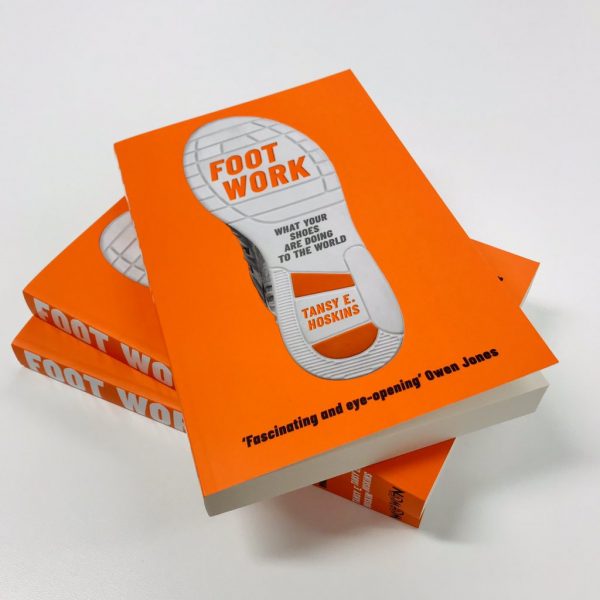
    We talk to author and journalist, Tansy Hoskins, whose latest book Foot Work: What Your Shoes are Doing to the World leads us to explore issues of labour rights, clothing sustainability, and the failings of global shareholder capitalism at large. We met Hoskins at Fixfest in Berlin last year. Her call for legislated reform has only become more timely, as our global system is reeling from the pandemic and its fallout.

    A personal problem

    Throughout Foot Work, Hoskins takes us on a journey to reconnect with the processes and cost — not only in a financial sense — of shoe production. An integral barrier to change in this industry she says is the personal attachment that we have to our clothes.

    “It kind of skews our thinking about the fashion industry as well because it’s such a personal consumption item. Often people end up getting trapped in only thinking about it as a personal item rather than a political item or an object of global industry.”

    Hoskins also notes that the mystification of production and labour contributes to this detachment from the origins of our shoes. We discuss how this came to be through the exportation of labour and the strength of brand identity. Hidden by this are the hazardous — and sometimes deadly — working conditions of garment workers in the Global South. These issues then worsened by a lack of unionisation and enforced government regulation. We explore what changes to make as a society to be able to take proper responsibility as informed consumers.

    How much do we really need?

    Moreover, we discuss how the idea of ‘need’ can lead to our acceptance of these environmental and human rights abuses. Shoes have been essential for humans for quite a while but this does not mean that 66 million pairs need to be produced every day, as was the case in 2018. (That’s equivalent to 23.5 billion pairs a year, over ten times the number of mobiles produced!) Many of the same sustainability issues that we found in our mobiles episode are echoed in the footwear industry. These include a lack of repairability; consumption of raw materials at an unsustainable rate; and an incredibly quick turnaround in buying new.

    Foot Work by Tansy Hoskins

    Global, radical change

    Recently, the media is searching for an environmental silver lining to our current pandemic-imposed lifestyles. Hoskins is adamant there is nothing positive for the fashion industry. In fact, many major brands are failing to pay workers for items that they have already produced. This wage is often the difference between barely getting by and hunger and circumstances are only worsened at present. However, it does appear that more people are beginning to see the wealth disparity that is prevalent in the Western world too. She asks if capitalism is currently working on a global scale — not only for garment workers but for consumers also — and for her, the overwhelming answer is no.

    “This to me is going to involve global legislation with teeth…None of this lies with shopping differently. And definitely none of this lies with leaving this kind of change to brands to do by themselves.”

    Hoskins stresses the limits of only focussing on individual action. Only through legislation can larger issues like labour and environmental abuses be tackled properly. While it is important to be mindful on an individual level, we must also seek system-level change for changes to stick.

    Links:

    • Foot Work: What Your Shoes Are Doing to the World
    • NYT: Why Won’t We Learn from the Survivors of the Rana Plaza Disaster?
    • Restart Podcast Ep. 50: Why we must win the right to repair our smartphones
    • History of the Anti-globalisation movement

    [Images courtesy of Tansy Hoskins]

    The post Restart Podcast Ep. 54: Shoes and urgent system change with Tansy Hoskins appeared first on The Restart Project.


    Restart Radio: The urgent need for diversity in tech, and how repair can help Jun 10, 2020
    Show notes

    News of Henrik Huseby’s verdict hit us, at the Restart Project, hard at the beginning of June. As such, we discuss the ways that intellectual property law restricts repair and hurts repairers like Huseby. Our main topic is a more positive story as we share a speech from Josh Babarinde of Cracked It, who is making repair more accessible as a career for ex-offenders and at-risk youth. He also highlights the ever-pressing issue of a lack of diversity in the tech industry, and its dangerous, real-world consequences.

    Huseby versus big tech

    Huseby is a repairer from Norway who makes his living by running a small repair business. In 2017, screens he says were refurbished in China were seized by Norwegian customs and he has since been fighting against a claim of ‘counterfeit’ from Apple. Last week the Supreme Court of Norway ruled in favour of Apple. Janet and Ugo discuss the verdict and its implications in terms of sustainability and the survival of independent repairers.

    Finding a future in repair

    While disappointed that we cannot hold Fixfest UK in Glasgow as planned, we were excited to kick off the 2020 series with our first online event. For a little optimism, we look to someone who has been aiding young people in kickstarting their careers via repair. We invited Josh Babarinde, founder and CEO of Cracked It, as our keynote speaker and decided to share his speech on this episode as it has become relevant now more than ever.

    Cracked It works with young ex-offenders in London to get them into work. Cracked It trains their young employees to fix iPhones to a professional standard and then linking them with clients. Ultimately, their goal is to equip at-risk youth with the skills and support that they need to leave or prevent a life of crime. He says Cracked It works with

    individuals that before coming to us had many, many doors slammed in their faces. Who wouldn’t be touched with a barge pole because of their pasts… And what we’re able to do through repair which is a blind process — in the sense that it does not discriminate, it only discriminates against incompetence of repair, it doesn’t discriminate against what your past might be — we’ve been able to use it to empower, to up-skill young people, develop repair skills and employability skills more generally to assist them in their transition into employment.

    A dangerous lack of diversity

    Babarinde also brought to light the essential issue of inclusivity and diversity in the tech sector. At The Restart Project, the question of how we can ensure our repair community reflects the wider society has been key. The omission of black and ethnic minority life experiences in tech can have life-changing and life-threatening consequences. Linking the Black Lives Matter agenda to tech, Babarinde uses key examples to illustrate the inability of facial recognition technology to recognise darker skin tones – a result of the lack of diversity in the teams involved in development of this tech. The implications are frightening. Yet Babarinde challenges us to understand community electronics repair as a unique opportunity to create more opportunities in tech.

    Links:

    • The Restart Podcast Ep. 48: Henrik versus Goliath Corporation
    • Huseby’s Crowdfunder
    • Cracked It
    • FixFest 2020
    • IFLScience: This Viral Video Of A Racist Soap Dispenser Reveals A Much, Much Bigger Problem

    [Photo courtesy of Vicky Grout for Positive News]

    The post Restart Radio: The urgent need for diversity in tech, and how repair can help appeared first on The Restart Project.


    Restart Podcast Ep. 53: Our low-tech future with Kris De Decker May 26, 2020
    Show notes

    On May’s episode of the podcast, we talk to journalist Kris De Decker about how low-tech of the past can serve as inspiration to improve our future. We discuss historical ways of producing power and how they can help us better understand our energy usage. As well as this, how our current idea of sustainability and our economic model may be inherently incompatible. How much is too much?

    Learning from low-tech

    Firstly, we delve into De Decker’s philosophy and why he believes that we need to pay much more attention to low technology. He does not discount the difficulties that he has faced living low tech but holds strong that this is a process that we all may have to evolve through.

    “I don’t want to go back to the 19th century…It’s more about what can you learn from the past, and putting new technologies to good use.”

    As a journalist, De Decker runs Low-Tech Magazine – its subheading reads “doubts on progress and technology”. He tells us about how he deals with the irony of writing about low-tech on the internet and the way that the website has been optimised to use as little energy as possible to run. Taking it one step further, we discuss his solar-powered website and how he believes the principles applied there could be adapted at large.

    Running Low-Tech Magazine

    Powered by people

    De Decker may not envision a future of completely human-produced power. But he explains how his art project, Human Power Plant, can encourage people to recognise the true value of the energy they use. Through this very literal experiment of a self-regulating and energy-producing community, he hopes that we can learn to moderate energy consumption according to true need rather than accessibility.

    “When you have to generate your own power, you’re gonna think twice about the amount of power you need…We don’t ask ourselves this question now because energy is so cheap and it seems like it’s infinite.”

    Finally, we discuss how digital devices are ingrained into our everyday lives. The conversation of how much is too much screen time is not a new one.

    However, we consider the way that many physical activities such as making music and drawing have been adapted digitally. How satisfying is this “progress”? What are we losing with it? And ultimately, where might we backtrack from this high tech progress so we can survive on Earth? How can we integrate the new with the tried-and-tested?

    Links:

    • Low-Tech Magazine
    • Solar Powered Website
    • Human Power Plant

    [Images courtesy of Kris De Decker and Diego Marmolejo]

    The post Restart Podcast Ep. 53: Our low-tech future with Kris De Decker appeared first on The Restart Project.


    Restart Radio: Apple’s T2 Chip and ownership rights after the first owner May 13, 2020
    Show notes

    On May’s show, we discuss limits placed on refurbishment and reuse by a notorious manufacturer through its T2 chip. We consider their responsibility if millions of devices go to waste prematurely. Janet and Ugo are joined by friend of the show John Bumstead, a Minneapolis-based laptop refurbisher and owner of RDKL, Inc. who has experienced many – if not all – of these limitations first hand in his work.

    Repairing and saving lives

    At the top of the show, we return to the topic of ventilator repair during this pandemic. We highlight the relative silence around the work of biomedical engineers. Refreshingly, a recent op-ed by US biomed Leiticia Reynolds, co-authored with Kevin O’Reilly (US PIRG), tells the story of those facing the pandemic every day. And it calls out all of the barriers to repairing medical equipment imposed by manufacturers.

    The T2 chip: responsibility in reuse

    Next, we talk to computer refurbisher John Bumstead to hear about the growth in interest in his glitch art business since we first talked to him a couple of years ago.

    But our main interest is Apple’s T2 chip and laptop repair, is one that Bumstead is absolutely familiar with. We ask about his recent experience of going viral on Twitter and spreading his knowledge to skeptics and those in need.

    Bumstead has years of experience in refurbishing laptops at scale. But recent developments — the T2 chip and its relationship to “Activation Lock” — combined with complacency or lack of resources of companies, are forcing refurbishers to scrap machines that sold less than two years ago for $3000. Bumstead believes

    If the inevitable result of a design is that thousands or millions of devices get scrapped; then to me it’s self-evident that there’s a problem with that design.

    Then, we discuss the various arguments around this topic: who should take responsibility for enabling the reuse of devices; the supposed trade-offs between reusability and security; and the degradation of property rights for customers of secondhand products.

    (We did not discuss on the show, but noting here that Bumstead and others have figured out how to restore some of these machines. It’s not clear if this procedure is viable at scale. Video shared below.)

    At home improvement

    Finally, we take a look at a selection of Google Trends relating to “How to Fix” searches over the past couple of months. There are some surprising trends. Some are to be expected, like people fixing game consoles and bikes. But what becomes clear is that being in lockdown is incentivising us to repair at home to keep us both entertained and connected.

    Links:

    • Market Watch: Repairing ventilators to save coronavirus patients shouldn’t be a business decision
    • Bumstead’s viral Twitter thread
    • RDKL, Inc.
    • The Verge: Apple confirms its T2 security chip blocks some third-party repairs of new Macs
    • YouTube tutorial by Bumstead on how to wipe and restore a MacBook
    • Explore Google “How to Fix” Trends
    • One Zero Used Tech and Gadget Repair Businesses are Booming Right Now

    [Image courtesy of John Bumstead]

    The post Restart Radio: Apple’s T2 Chip and ownership rights after the first owner appeared first on The Restart Project.


    Restart Podcast Ep. 52: Combining nostalgia with the new at Armstrong Audio Apr 30, 2020
    Show notes

    For our April episode, we talk to Shamil Joomun, the co-owner of London-based vintage audio restoration company and café, Armstrong Audio. Now located in Walthamstow, east London, Armstrong Audio has a long history and a unique approach to repair. We talk to Shamil about his father, Twaleb, and his start in the industry and his eventual ownership of the store, and the multiple ways that Shamil has updated their business to become more than your average repair shop.

    Armstrong Wireless and Television Ltd. Circuit Diagram

    Analog attachment and the business of repair

    Shamil tells us of the highs and lows of running such a focused vintage audio repair business. Business is booming, demand for audio repair holds strong, and the repair community continues to grow. It’s clear how rewarding the work that Armstrong does is, partly due to the nostalgia value of the equipment people bring.

    At the core of Shamil’s message is the need for repairers to understand their customers’ emotional connection to their belongings. Rather than viewing these objects as a technical challenge to be repaired, or looking at their skillset in a purely transactional way, Shamil calls on repair businesses to really understand the love that customers have for their things. And with this, to structure their business around this love.

    Armstrong Audio has had challenges recruiting engineers who are experienced enough in the field and also share their philosophy. They invite repairers that may just view it as a hobby, or budding fixers, to view upskilling inside of businesses like theirs as an opportunity to find viable career paths in the industry.

    Looking local

    We couldn’t finish this episode without discussing the toll that the current pandemic and lockdown measures are having on independent businesses and the high street as a whole. In recent years Armstrong Audio have adapted their business in a variety of ways to involve the customer in the process of repair and creating a more welcoming atmosphere, and as such has become a local standout. While one might expect Shamil to have a negative outlook on having to close his store, for the time being, he actually highlights the possibility of a brighter future for the relationship between local communities and their businesses.

    Links:

    • Armstrong Audio (the business today!)
    • Wikipedia on Armstrong Audio’s history
    • Photos of Armstrong Audio equipment and people at the UK Hifi Historical Society
    • Armstrong Factory Maps
    • Our Covid-19 London repair listing

    [Images courtesy of Armstrong Audio, Ken Hart, Jim Lesurf and the UK Hi-Fi History Society]

    The post Restart Podcast Ep. 52: Combining nostalgia with the new at Armstrong Audio appeared first on The Restart Project.


    Restart Radio: Reuse and repair with two frontline medical professionals Apr 15, 2020
    Show notes

    April’s show focuses on a topic that has become literally inescapable as of late, a constant fixture in our lives, the pandemic. We turned to Dr. Tarek Loubani and his colleague Reidun Garapick for a discussion on what can be done now to make a difference.

    Dr. Loubani’s expertise comes from his work as an emergency care doctor. But he’s also Medical Director for the Glia Project, a charity that focuses on producing low-resource and low-cost medical devices, having learned from its operation in the Gaza Strip. We talk to him and Garapick about the reusable face shield that they have developed for use in hospitals. And at the present moment, how they transferred these experiences and resources to help medical workers in Canada.

    Sustainable protection through reuse

    Face shields are just one of the necessary pieces of equipment needed by healthcare workers. We discuss the lack of personal protective equipment and how this can be solved in a rapid and sustainable way. Those doing the most critical work caring for patients with Covid-19 must feel safe in their ability to do their jobs in such a high-risk environment. While the media focus is on the “lack” of supplies, Dr. Loubani and Garapick are steadfast in the belief that this could be solved via reusable equipment and procedures for reuse. We discuss why many are so resistant to this.

    Will corporations change their approach?

    Garapick also highlights the need for open-source designs of medical equipment and access to free repair information more than ever. Now is a time where innovation could save lives. We discuss how the barriers to this could be broken down to help those who are working to repair high-demand, essential devices such as ventilators. Major companies such as Tesla, as well as open source initiatives, are working towards producing medical devices and we discuss how useful this really is.

    Beyond the pandemic

    Both medical professionals make it clear that reusable and repairable medical equipment is the way forward, not just a strategy for dealing with this pandemic. Loubani warns us of the possibility of a reversal of sustainability-led thinking once the crisis is over, which is a recurrent theme. This is also a call to arms for all repairers, makers, and activists: your skills are essential and can be utilised in ways that can save people’s lives. We must push for essential changes to the system that will live on beyond the pandemic.

    Links:

    • The Glia Project
    • Glia’s Face Shield design
    • Tarek Loubani’s on the need for reusable respirators (Medium)
    • Our recent webinar on Covid-19 and medical repairs

    [Photos courtesy of Glia]

    The post Restart Radio: Reuse and repair with two frontline medical professionals appeared first on The Restart Project.


    Restart Podcast Ep. 51: Copyright law, ownership and crisis with Aaron Perzanowski Mar 27, 2020
    Show notes

    For our March episode, we dare to dive into the increasingly complex world of intellectual property law – a topic suddenly becoming ever more pertinent in the face of a global pandemic. Dave is joined by Aaron Perzanowski, a professor of law at Case Western Reserve University in Cleveland, Ohio. We talk about how developments in the electronics consumer market are posing new complications in the relationship between manufacturers and consumers. Perzanowski’s latest book, written with co-author Jason Schultz, ‘The End of Ownership’ explores many of these questions.

    The shifting nature of ownership

    We ask first about ownership. How does the move from physical ownership to digital ownership affect our rights as consumers? Are the goalposts of this ownership shifting in a time where our ability to continue using our devices is becoming more and more mediated by the companies that sold them to us? How is user autonomy being influenced or slowly eroded? We looked to Perzanowski for some ideas in how we can become more informed and aware of our rights as consumers.

    User license agreements use complex and legalistic language, making these contracts inaccessible to the average consumer. We make an effort to unpack terms such as DRM (Digital Rights Management) or EULA (End User License Agreement). In discussing this it becomes very clear the hidden barriers that companies can impose to minimise consumer rights.

    Copyright during crisis

    But the most immediately pressing matter we talk about in this episode is the recent use of trademark law to inhibit emergency responses to the current pandemic. Recently, those producing vaccines and repairing essential medical equipment ran into barriers, with patent holders suing (or threatening to sue) for efforts intended to save lives. We ask Perzanowski whether these laws should be upheld in such a time of global crisis.

    Hoping for change

    Looking further into the future of trademark law and the electronics industry, Perzanowski comments on how governments can make efforts to protect and support consumer rights. And finally, we explore why these actions need to be taken as soon as possible to ensure that we work towards a more sustainable relationship with our electronics. We cannot achieve this without more thought about the viability of tethered products.

    Links:

    • Read the first chapter of Aaron Perzanowski’s book here
    • “The Tethered Economy” by Perzanowski, Hoofnagle, Kesari
    • Wired: Best Buy Made These Smart Home Gadgets Dumb Again
    • The Verge: A SoftBank-owned company used Theranos patents to sue over COVID-19 tests
    • US PIRG petition to manufacturers to open up service documentation

    [Image by Daan Stevens is licensed under the Pexels license]

    The post Restart Podcast Ep. 51: Copyright law, ownership and crisis with Aaron Perzanowski appeared first on The Restart Project.


    Restart Radio: Global supply chains and The Virus Mar 12, 2020
    Show notes

    For March’s show we take a look at perhaps the most unavoidable topic in our world today, coronavirus (COVID-19). We took this as an opportunity though, to discuss the issue in light of a topic that is relevant all the time, the supply chains that are integral to the electronics industry and how sustainable they really are. Janet was joined by long-time Restart volunteer, Panda Mery, to delve deeper into the unseen complexities of tech supply chains and what we may not realise is going into the production of our devices.

    Good and bad news for repairability

    Before diving into this massive topic, we had a couple smaller, but still important stories to discuss. We returned to tech-giant Apple and $500 million settlement in the US following a class-action lawsuit over ‘Batterygate’ and the purposeful slowing down of iPhones. Is this such a minuscule fine in the grand scheme of things that it is almost ineffectual? And how ethical is this practice that Apple employed? Then some good news from our friends at iFixit about electronic repairability standards – a major victory for the Right to Repair movement. And finally, some questionable tactics in the UK government’s approach towards e-waste collection, which indicate divergence from ambitious EU targets.

    What the Virus means for tech supply chains – and the world

    Approaching our main topic of the day – the Virus – we want to take caution and recognise that focusing on the issue in a tech-centric way does stand to erase some of the bigger issues at stake, those of how this will impact citizen autonomy and increase the control that governments have over us and our bodies.

    In terms of tech, we discuss how international and complex supply chains have become and the way that a pandemic of this kind is already having sufficient impact on the global economy and tech industry as a whole. This proves the advantages of making electrical components more reusable to leave us less beholden to these supply chains. We also look at how the environment has been impacted by a sudden decrease in production and travel.

    Overshadowed issues

    Finally, we close with two shocking stories that have managed to be all but buried by other news this month. We discuss an investigation into forced labour of Uighurs in China in factories that produce components that are almost certainly in your devices. We think about what action consumers can take, and how far we can actually help to solve these issues.

    Then a look at a White House cover up of information on the chemical trichloroethylene (TCE), and how Brexit may impact access to technical information on risks associated with chemical usage in industry, that bears great influence over public health.

    Although there is certainly much more to say about supply chains, with all of these topics we aim to encourage you to educate yourself on all of the steps it takes for a device to be in your hands and how you can support those involved along the way, and our planet as a whole.

    Links:

    • Right to Repair smartphones petition
    • U.S. PIRG: $500M settlement for Apple’s “BatteryGate” underscores need for Right to Repair
    • iFixit: Fixers Know What ‘Repairable’ Means—Now There’s a Standard for It
    • Let’s Recycle: Defra slashes WEEE collection targets
    • Wired: The Right to Repair Will Help Us Endure Outbreaks
    • Australian Strategic Policy Institute report “Uyghurs for Sale“
    • Independent: Apple, Samsung and Sony among 83 global brands using Uighur Muslim ‘forced labour’ in factories, report finds
    • EDF: Trump EPA’s draft evaluation of cancer-causing TCE cuts corners, putting kids’ health at risk
    • CHEM Trust’s Brexit and Chemical Protections

    [Featured image courtesy of the CDC]

    The post Restart Radio: Global supply chains and The Virus appeared first on The Restart Project.


    Restart Podcast Ep. 50: Why we must win the right to repair our smartphones Feb 26, 2020
    Show notes

    In early February, the European Right to Repair Campaign launched a petition demanding the addition of smartphones to future EU legislation on device repairability. Restart is a part of this campaign.

    What we are asking for sounds simple: good design of our devices, fair access to repair manuals and spare parts, and information on our products and how to repair them. However, manufacturers have blocked this at every turn. Smartphones have quickly become the most used electronic devices in our lives and we need the means to prolong their lives and reduce e-waste.

    A look back

    In this, our 50th episode, we look back to previous episodes of the podcast to piece together why it is so important that we fight for the right to repair our phones.

    From designers, to geographers, to repairers, to engineers, to our own team… we hear how people have struggled with repairing their own phones and how they believe consumer and manufacturer attitudes towards our devices must change.

    Following the lifecycle of a smartphone, we start at the design process. We touch upon how to design more ethically and sustainably, and the debate regarding the trade-off between aesthetics and functionality. We hear about the restrictions that manufacturers put in place, both explicitly in their terms of use and implicitly: roadblocks that Right to Repair are specifically fighting against.

    From hardware to software, we discuss premature obsolescence and how far the responsibility falls on phone manufacturers to help us keep our phones updated and secure.

    And finally, while their small size may be deceiving, we also talk to experts about how disposing of your smartphone leads to a lot more waste than just in the materials – which in themselves are often rare and unsalvageable. We learn about the massive carbon footprint of mobiles outside of their in-use stage and how repairing our devices would limit this.

    Time for a change

    Ultimately, we hope this episode will make you think, and remind you how little our discussion on smartphones has evolved over the years.

    Some of the issues that we discussed five years ago are still crucial in the world of mobile manufacture and they need to finally be addressed. So sign the petition and fight for the right to repair your smartphone!

    Links:

    • Right to Repair smartphones petition
    • Ep. 28: Disruptive design and unlocking wonderment with Leyla Acaroglu
    • Ep. 2: Interview with a product designer
    • Restart Radio: Have we taken ‘thin’ too far?
    • Ep. 36: Fixing the impossible with Rico Cerva
    • Ep. 8: Tools, new and old
    • Ep. 11: A Mobile Screen Repair Odyssey
    • Ep. 31: Software obsolescence with Ross Anderson
    • Ep. 35: Exploring the critical materials in our electronics
    • Ep. 4: Climate change and the ‘shadow impacts’ of our gadgets
    • Ep. 29: Tracing global flows of electronic ‘discards’ with Josh Lepawsky

    The post Restart Podcast Ep. 50: Why we must win the right to repair our smartphones appeared first on The Restart Project.


    Restart Radio: Being smarter about connected devices and security Feb 12, 2020
    Show notes

    On ‘Safer Internet Day’, Janet and Ugo are joined in the studio by Restarter Ben Skidmore to discuss the developing Sonos scandal, planned device obsolescence, and the new UK legislation to increase the security of connected devices. But first: last week, we launched our petition adding smartphones to the Right to Repair campaign. We are calling on the European Commission to introduce legislation requiring smartphone manufacturers to support consumers in repairing their devices. (Link below.) One step forward, two steps back with Apple No surprise that our first topic of discussion revolved around frequent subject of the show, Apple. Last week, the French watchdog group DGCCRF fined Apple €25 million (around £21m) for intentionally slowing down iPhones with iOS updates and not warning phone owners. We discuss whether this a step forward or more of a reactive and temporary fix for the bigger issue of the lack of regulation of software and its interplay with hardware. We also briefly discussed the concerning new information that has come to light regarding Apple’s IRP (Independent Repair Program) that was announced last summer. VICE’s Motherboard released details of the document that Apple is requiring repair businesses to sign in order to participate in the program. It exposes the lack of freedom the program actually presents for independent repairers and if this was simply a performative move by Apple pre-empting the Right to Repair agenda. The Sonos scandal and obsolescence of connected hardware Our main topic revolved around Sonos coming under fire for their announcement that ‘legacy’ products would no longer receive support in terms of software or security updates. Not only did this render these devices almost obsolete, this change would also affect newer devices that are connected to them on the same network. Though Sonos offered a few fixes to this new policy, what kind of precedent does this set for the disposal of devices where the hardware is still physically ok? But also, this public outcry did bolster our belief in the future our agenda of longer-lasting technology. Securing our smart technology Finally, our discussion of the new UK legislation on the security of "Internet of Things" reminds Janet of a parenting horror story that immediately prompted her friend to get rid of her hacked Nest device. While this reaction was understandable, again this disposal of devices that are well within the usable period of their lifespan is exactly what we are trying to avoid. With the panic that these security risks can cause, how can we build trust in our smart devices and make them safer, especially when they are increasingly being introduced into personal and private spaces? Is the UK government serious about this, and what will it take to move from a policy pronouncement to enforcement?


    Previous 1 6 7 8 9 10 25 Next

    Related Podcasts

    Inside VR & AR

    1

    Inside VR & AR Gadgets
    100 Watts and a Wire

    2

    100 Watts and a Wire Gadgets
    All CNET Video Podcasts (video)

    3

    All CNET Video Podcasts (video) Gadgets
    TechStuff

    4

    TechStuff Gadgets
    The Vergecast

    5

    The Vergecast Gadgets
    Embedded Weekly Podcast – Unknown

    6

    Embedded Weekly Podcast – Unknown Gadgets
    footer-logo

    Contact Us

    Toll Free: 844-670-7747

    Links

    • Home
    • Top Charts
    • Networks
    • Apps
    • Independents Podcasts
    • Podcast Advertising
    • Podcast News
    • Contact Us
    • About Us
    • Analytics & Insights

    Stay Connected

      Privacy, Terms of Use & Our Code of Ethics Protecting Content Creators Copyrights