Show notes
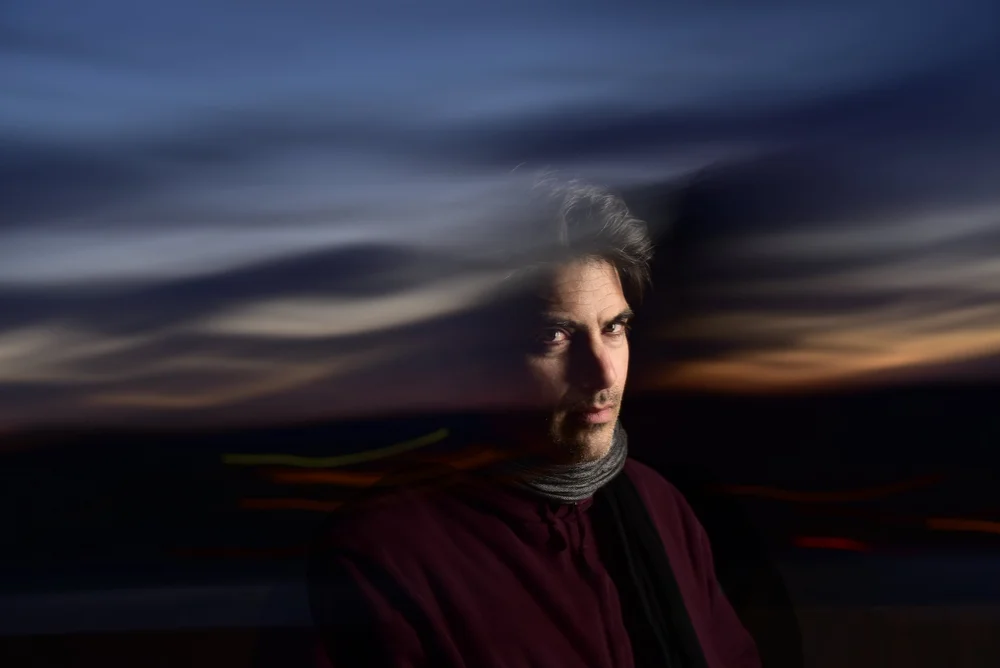
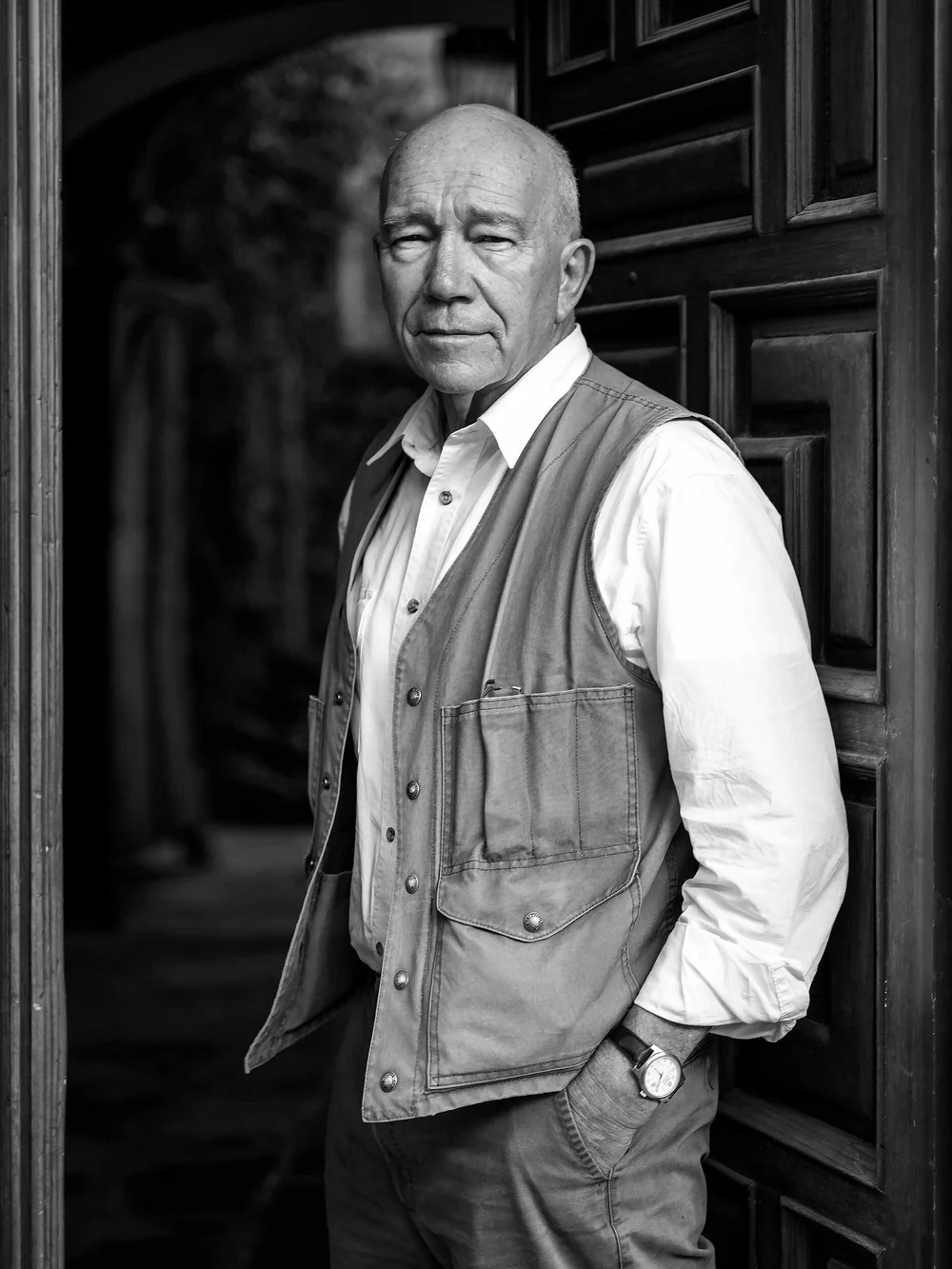
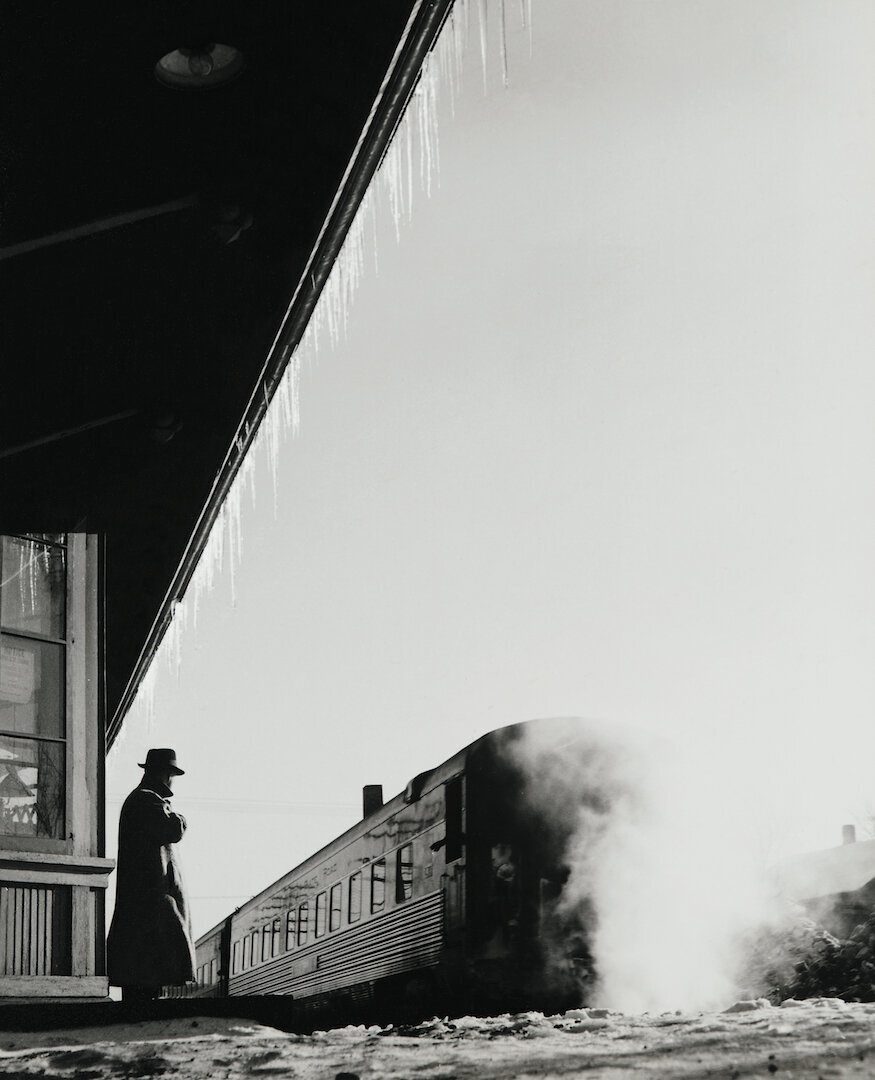
SEASON ONE, EPISODE TWO To stay relevant Michael Grecco is always shaking things up.Music for this episode is by our friend Aaron Sprinkle.Title music is by our good friend Aaron Tosti.Michael Grecco photos used by permission. Michael Grecco shoots Martin Scorsese Linksmichaelgrecco.comDays of PunkImage DefendersAmerican Photographic ArtistsAmerican Society of Media PhotographersProfessional Photographers of AmericaCASE Act of 2019: S.1273, 116th Congress“Why is Senator Wyden the Only Obstacle Standing Between America’s Creators and Justice?” by Terrica Carrington for Copyright Alliance“CASE Act Update: Why Won’t Senator Wyden Support Music Makers?” Grammy Advocacy News photo of John Singleton by Michael Grecco TranscriptAllen: I'm Allen Clark, and you're listening to The Photo Untaken, stories from outside the frame.This episode with Michael Grecco is going to be about your ideas, and how you need to bring powerful ideas to what you're doing, and then the protection of those ideas.He is the type of photographer that most of us look up to, in that he was one of the first guest to come up with a lot of these visual things that we used to do, tricks and amazing technique, sometimes to make things look more sensational, like he did with The X-Files photography back in the day. But the thing that Michael's known for is light and bending light. In fact, I call him our light-bender for the show. He's a wonderful person who loves to laugh, who loves to teach, who loves to not just support, but just be a part of the photography community, and that's one of the things I love the best about Michael Grecco.He's out of LA. He started in New York though in his early days. He has two books that I bought back in the day. One of them was called Lighting and the Dramatic Portrait: The Art of Celebrity and Editorial Photography, and the other one was called The Art of Portrait Photography: Creative Lighting Techniques and Strategies. I bought both of these books. The first one, Lighting and the Dramatic Portrait was just, I don't know about life-changing, but it was definitely career-changing, game-changing for me, and that's how I got to know him first was through his books, through some of his photography. On the show today, he just goes into how he got started, and some of the things that he found out and figured out along the way.Then more importantly, as we finished the podcast, he talks about protection, copyrights, things that we need to know about as photographers and what we can do to protect us as creators. It's a really exciting episode today where we just go into some of the nuts and bolts of photography, but also some of the things that can help you figure out how you can make a difference in your work, and just separate from the pack.Allen: Let's go back. Let's start from the very, very beginning when you started in New York.Michael: I was born in the Bronx, in New York, and I grew up in Westchester County.Allen: What thought crossed your mind that at some point you were going be a photographer?Michael: For me, I learned the darkroom in summer camp. It wasn't about the camera, it was actually about learning that you can put this piece of paper in an enlarger and have this magical thing happen and a print come out. That was just totally cool.Allen: Now, the type of music you were listening to then, what was Michael Grecco listening to back then?Michael: My Facebook age is not my real chronological age. I'm going to date myself if I tell you that. [laughs]Allen: That's okay. It doesn't matter. photo of Billy Idol by Michael Grecco Michael: The music of the times. When I was a kid in summer camp, it was the early '70s, and I was probably listening to, I don't know, Crosby, Stills, Nash & Young, and Santana, and Joni Mitchell, and Bob Dylan, and Jimi Hendrix. Jimi Hendrix and Bob Dylan were my big biggies.Allen: How cool was it to get to work with David Crosby then?Michael: It was really cool. That was really totally amazing, and he's such a nut in a good way. I really like David.Allen: Yes?Michael: Yes.Allen: Have you guys hung out since?Michael: My ex-wife used to be able to get high value seats for the Laker games, and I walk into his house to shoot him, and he's screaming at the television. I'm like, "What the fuck?" He's like, "The Lakers, they're losing. They're losing." I'm like, "I thought you grew up in San Francisco." He goes, "No. I grew up here, and I love them." I said, "Have you ever been to a game?" He goes, "No." Subsequently, I took him and his wife, and then him and his son, to at least two Laker games.Allen: Wow.Michael: Yes, that was good. Really good.Allen: Yes, it was. That's very good. Let's go back again to New York. It's well-known that you started as a photojournalist. What led you to that path?Michael: When you're 18 years old and you enter college, you think you know everything. I've been interested in photography and studying photography. I'd learned the darkroom at 13. I had a camera, I would shoot. I took college classes in my senior year of high school with two fine art photographers at SUNY Purchase. I grew up in Hartsdale which is near White Plains and that's near Purchase, New York, where the state university is, and there were two very renowned teachers there.I worked with both of those teachers. Then I entered college and thought, "Gee, I know everything." I used to study the Time Life book, so I'd be up late looking at the pictures, and the photographers, and Bresson, and Bruce Davidson, and just all the greats. Avedon and Penn. I did know a lot, but I didn't know everything. Then I went to School of Communications. I didn't know what I was going to study. I thought I might study film to learn a little something tangential, and I got hooked up into photojournalism course, and that was it.My parents were very old world, middle to upper middle class parents, but very protective Italian. I would have to fight to go into the city and go to The Museum of Modern Art to listen to music. I listen to a lot of jazz as a kid also. So I would go to the Village Vanguard, and Sweet Basil's. I'd go to different concerts in the city, but I go to The Museum of Modern Art all the time. When I entered college, I had a general knowledge and interest, but this photojournalism thing was like, "Wow. You could see the world." It was like joining the Navy. Joining the Navy, see the world.That part of it, from a kid's perspective who grew up in suburban New York, was really interesting to me. I did that, and then of course, that wasn't where my heart was. That wasn't what interest me creatively. In high school, I'd photographed my friends and done a lot of portraits and formal portraits. I really loved portraiture. So I started for the Associated Press. While I was shooting for the Associated Press, I was a club kid. So I have a new book coming out in October called- the title's new. Punk, Post Punk, New Wave: Onstage, Backstage and In Your Face.Allen: Wow.Michael: That's coming out with Abrams in October for a Christmas book. I had these two lives. I was this club kid, sex, drugs and rock and roll. During the day, I'd work for the Associated Press. The photographers with the Associated Press and my picture editor would kick my ass. I really learned a lot. Then I got a staff job at The Boston Herald, and sort of gave up the night life because I really wanted to do well there. Then after a few years there, I had outshot Ken Regan and Mike Fuller on the Maria Shriver and Caroline Kennedy weddings. The associated director of photography, the second in charge, Beth Filler said, "I'll give you a job."It wasn't really a staff job, but it was, "You're working full time, you're working all the time for People magazine. I'll give you a job if you leave the paper." I literally called her up one day and said, "I'm moving to LA, and I'm leaving the paper," so there you go. I did that for a number of years, and realized that they had me do photojournalism because that's what I had excelled in. After a while, it wasn't where my heart was, and it even meant not shooting for People magazine anymore.It even meant MC Martin who was the picture editor at the time was like, "Your photojournalism is so good, why do you want to do portraiture? All our shooters do portraiture. I have enough people to shoot covers. I need good photojournalist." It's like you don't want to do something that your heart's not into, you know what I mean?Allen: How did you know that, though? How did you know that doing what you were doing, and how long you had done it just wasn't the thing? What told you that?Michael: I didn't have the core interest. I wasn't a concerned photographer trying to save the world. I wasn't trying to capture a moment. I would go to events and create the way they should've set it up, what should happen. I would go to news events, and my head would explode with ideas of how this should've been better, or wouldn't it be great if some news event happened now, and someone gets into a fight? Wouldn't that make a great picture in the next day's paper? It's like I wanted to take control of my world, and think, "Why don't I create scenarios?" Annie Leibovitz was just getting her juice on then, the scenarios that she was creating for Rolling Stone were just-- It was the late '70s, early '80s, they were just being seen, and I was like, "Why don't I come up with ideas and creative things that- or a creative outlet for me rather than hoping something happens?"Allen: Yes. It seems like maybe the first part was observant, and then you were like, "I'm not an observer. I'm an instigator."Michael: Yes, exactly. I'm definitely an instigator.[laughter]Allen: That's okay, but you had to figure that out. How old were you when you started figuring that out?Michael: I did photojournalism for about 13 years, and I probably knew within 10 of those years. Probably '88, '87 when I moved to LA. When I moved to LA for People magazine, I knew that I didn't want to be their news photographer covering events and shooting picture stories. I knew that ultimately, I wanted to move towards creative portraiture really. That's what it is for me.Michael: There was an agency called Onyx. The agency was bought. They had all these shishi portrait photographers, and that was endemic of what I wanted to do, really.Allen: You took what you learned from photojournalism and added that to portrait. photo of Dead Can Dance by Michael Grecco Michael: Yes, for sure. I'm a storyteller. That absolutely came from working for a newspaper, and working for the Associated Press. When I went to journalism school at Boston University, they talk about the who, what, where, when, and why and how all of them need to be in a photograph, if you can. The when is usually part of the caption, but the who, what and where, have to be there, and they should add up to the why.Allen: If you're talking to a young person who's in school and trying to learn the things that we're learning, the things that you're talking about, and we're talking about, that to me seems to be the first place to start, because a lot of the things that they're doing just don't have any of those questions built into the photograph. I can tell you from portfolio reviews that I've done, I'm sure you've done, where you're just sitting there-- And you're not trying to rip them apart. You're not trying to tear them a new one.You're just like, "Hey, there's none of that here." They're like, "What do you think of these photographs?" And you're just like, "I don't know, nothing. I don't think anything, because there's no story. There's no who, what, when, where, why, none of that in this photo." I felt bad, but a part of me is like, "If you want to do this, you're going to have to add that to it." A part of me felt bad and a part of me didn't. I was being honest with him.Michael: You're tough. [laughs]Allen: To me, that's the whole thing. What's missing from this photograph? I'm like, "Everything, there's nothing. I've got a close up shot of two old people holding hands. Why did you crop it? Why did you do any of that?" That's some of the things that just irked me to no end when I'm looking at something and there's no story. I say a great photograph always makes you ask questions or have questions. That to me is what was missing or is missing from a lot of photographs, that as you're flipping past them, so callously these days, especially. What's your opinion about some of those things that you added to your own photographs to make them interesting?Michael: I was on staff for The Boston Herald for five years. I took that storytelling on a newspaper level and launched it more into a magazine level. Magazines, not today, because believe it or not, they're not usually as creative as they used to be. Magazines now are so concerned about readership, but magazines could be lyrical. The way you can tell a story could be not literal. For a newspaper, you have to tell a story in literal means with signage, with props that talk about what someone does. In a magazine, you could build a set that's a fantasy, that tells a story, that's not so on the nose, and it's more lyrical, and it's more expressionistic, and it's more artistic in general.Allen: What were some of the first things that you created that you're, not necessarily really proud of, but just something that you were like, "Okay, this is where I'm headed."Michael: We're doing this book, which is my punk and post punk stuff. As soon as I got here, I tried to make images that were artistic, even while I was shooting for People Magazine. It was almost the dichotomy. You do these sometimes formulaic images for People Magazine, and then I go and have an assignment for Regan. I have two shoots that are the last and oldest for the book. One is of Al Jorgensen from a band called Ministry. I shot it Hasselblad and put like a gargoyle in his mouth, a little one. We did motion, and I had him turn his head with a strobe on one side and a hot light on the other, and he has two heads. This other guy, Daniel Ash from a band called Love and Rockets.Allen: Love and Rockets, man. I have not thought about them forever.Michael: I did a portrait with him with a fire and flame thrower and flame special effects thing in the studio. Immediately as soon as I got here, I was looking to break the mold. It's hard to break a mold once you've been taught a certain way. You know what I mean?Allen: Yes.Michael: My work definitely has a commerciality to it, that look to some degree because that was the '80s and '90s, and where I came from.Allen: Did that help you glide into figuring out the formula for Hollywood? photo of David Duchovny and Gillian Anderson for the X-Files by Michael Grecco Michael: Yes, for sure. You and I had mentioned in our pre-interview about The X-Files. That was probably my first and biggest assignment. It was interesting. The original pilot for The X-Files had no look, and it looked like it was shot in a gymnasium. It had no lighting, look, it had no style, it wasn't visual. You could tell that Chris Carter, its creator and director, was a…
Full show notes at the publisher 
 Our TOPPODCAST Picks
  Stay Connected