TopPodcast.com
Menu
  • Home
  • Top Charts
  • Top Networks
  • Top Apps
  • Top Independents
  • Top Podfluencers
  • Top Picks
    • Top Business Podcasts
    • Top True Crime Podcasts
    • Top Finance Podcasts
    • Top Comedy Podcasts
    • Top Music Podcasts
    • Top Womens Podcasts
    • Top Kids Podcasts
    • Top Sports Podcasts
    • Top News Podcasts
    • Top Tech Podcasts
    • Top Crypto Podcasts
    • Top Entrepreneurial Podcasts
    • Top Fantasy Sports Podcasts
    • Top Political Podcasts
    • Top Science Podcasts
    • Top Self Help Podcasts
    • Top Sports Betting Podcasts
    • Top Stocks Podcasts
  • Podcast News
  • About Us
  • Podcast Advertising
  • Contact
Not in our directory?
Add Show Here
Podcast Equipment
Center

toppodcastlogoOur TOPPODCAST Picks

  • Comedy
  • Crypto
  • Sports
  • News
  • Politics
  • True Crime
  • Business
  • Finance

Follow Us

toppodcastlogoStay Connected

    View Top 200 Chart
    Back to Rankings Page
    Music

    Songwriters on Process

    In-depth interviews with songwriters about their songwriting process. Nothing else. No talk of band drama, band names, or tour stories. Treating songwriters as writers, plain and simple. By Ben Opipari, English Lit Ph.D.

    Advertise

    Copyright: © 2024 Songwriters on Process

    • Apple Podcasts
    • Google Play
    • Spotify

    Latest Episodes:
    Brian Fallon and Tracii Guns Mar 15, 2022
    Show notes

    Did you know that "The Ballad of Jayne" by LA Guns was one of the first songs Brian Fallon learned on guitar? Or that Tracii Guns is a huge Brian Fallon fan?
    This interview is from the early stages of the pandemic, September 2020. It's interesting to hear people talk about making and playing music in what seemed like a different time. I got these two together after noticing that they always commented on each other's social media posts. Little did I know this was the first time they met! This is the third time I've interviewed Fallon, and I've been a Tracii Guns fan since, well, forever.


    Erin Rae Mar 12, 2022
    Show notes

    Erin Rae needs three things for her songwriting process: a hardwood floor, a phone on airplane mode, and glowiness.
    Rae typically gets compared to 70s singer/songwriters like Joni Mitchell and Jackson Browne. It seems like every review has the obligatory "Laurel Canyon" reference. But heck: these are just good songs, period. No comparison needed.
    Erin Rae's latest album Lighten Up is out now on Thirty Tigers Records.


    Kathy Valentine of the Go-Go's Mar 09, 2022
    Show notes

    “It's important to me as a writer to push myself out of my comfort zone in order to grow. That's what excites me now.”
    With her terrific memoir All I Ever Wanted, bassist Kathy Valentine of the Go-Go’s loves exploring new genres outside of songwriting.
    As one of the songwriters for The Go-Go’s, Valentine wrote two of their most popular hits in “Vacation” and “Head Over Heels” as well as several other songs. So we’ve been able to check "killer songwriter” off the list for a while. Now we can add “fantastic prose writer”: All I Ever Wanted is a great book.
    Our interview was a discussion about Valentine’s process as a songwriter and a prose writer, with a focus on the latter.


    Tomberlin Mar 06, 2022
    Show notes

    For Tomberlin, songwriting is emotional and heavy work. It’s not always pleasant. There’s a lot of emotional prodding and digging.
    The word “processing” came up a lot in my interview with Sarah Beth Tomberlin (aka Tomberlin) when she discussed how she writes songs. She uses songwriting as a way to process the events in her life, much more so than most songwriters have shared with me.
    But it’s difficult to write songs when things are “pleasant” in her life. “There’s no urgency to the process in that case,” she says. It’s the difficult events that she writes about, and these events require distance before she’s able to process them.


    Emily Scott Robinson Mar 04, 2022
    Show notes

    Bank pens and vacuum cleaners: the keys to Emily Scott Robinson's songwriting process.

    Robinson and I both agree that having a writing ritual is important. Rituals give us confidence and comfort. But they also help us achieve a flow state where the writing just happens: you don't have to think about the words because they issue forth. It's when you're on a roll.

    Achieving this flow state is hard, so that's where the bank pens and vacuum cleaners come in. Robinson is a pen-and-paper person for her lyrics. And there's something about the smoothness of those cheap ball point pens from her local bank that she finds irresistible. When she writes with them, the words flow. So if you see Robinson in your local bank branch when she's on tour, she may be doing more than just a bank transaction.

    As for the vacuum cleaner, that's for generating ideas. We talked a lot about the role of movement to the songwriting process. Most songwriters tell me that they get ideas while walking, running, hiking, biking, swimming, or driving. I've also heard cooking and gardening. But Robinson is the first one to cite an upright vacuum. It's not the vacuum itself that gives her ideas, but the repetitive and monotonous movement that helps her brain focus on the writing process, just as it does with the repetitive motion of walking, running, or cutting vegetables. And when your brain can engage in an activity that involves minimal higher order thinking, it can then use that space for creativity.


    Jeff Daniels Mar 01, 2022
    Show notes

    “You’ve got to be open, you’ve got to fire the judge, you’ve just got to receive it all.”

    If you want to be a writer of any genre, says songwriter (and, yes, actor) Jeff Daniels, you also have to keep your radar on 24/7 for what you see and hear. And be prepared to steal it.

    Sure, you know Jeff Daniels from his many films, but he's also been writing songs and playing guitar since 1976.

    This is a conversation about the artistic process writ large, so if you're a songwriter, a playwright, an actor, or any combination of the three, you’ll love this interview. The playwriting process and the songwriting process overlap as Daniels effortlessly segues between the two in our discussion; at some point, he exclaims, "It's all fucking connected!"
    Daniels also says that being an actor has opened up the “get it all out” free for all in the initial stages of the writing process, both as a songwriter and a playwright. In other words, he’s a big fan of just spilling everything on the page and then editing out the bad stuff later. But with experience, he told me, “at least the quality of the garbage has gotten better.


    Patterson Hood (Drive-By Truckers) and Lilly Hiatt Feb 27, 2022
    Show notes

    "The good songs happen like someone is playing a record in space, and I have an antennae to pick it up. I actually hear it, and write it down as quickly as I can.”—Patterson Hood.

    "You don’t just get to have the muse all the time. It’s mysterious. But you have to experience stuff and have time to process those experiences to be able to write about them."—Lilly Hiatt.

    There are two different points during my interview with Patterson Hood of Drive-By Truckers and Lilly Hiatt when each reaches to the sky, grabs a piece of air, and pulls it down. Both were describing their songwriting process: songs come from the muse, from the sky, from somewhere they can’t explain. And it’s their duty to grab that song, pull it down, and create it.

    Both Hood and Hiatt talk about the need to create. It’s not something they do because it’s their job or because they enjoy it. Those things are true, of course. But songwriting is such a part of their lives that it’s almost a matter of survival.


    Martin Sexton Feb 25, 2022
    Show notes

    When singer/songwriter Martin Sexton gets in a rut, he turns to chaos.
    Some songwriters take a break, some take a walk, others plow through until they get a breakthrough. But Sexton needs disruption. He uses two radios at once, one on each side of his computer. Each radio plays a different genre. It could be talk radio and rock, classical and country. The sounds don't matter because the goal is to drive his editor crazy.
    Sexton says that his ruts happen when he gets in his own way: too much editing, too much thinking about what he's writing when the goal is to just get stuff down. "Two radios at once allows the other stuff to come in. It distracts my brain so I can just write," he says. With different songs coming from each side, he can't focus on either. "The chaos confuses the editor and hopefully drives it away." It's a great way to jumpstart his writing.
    When he's not in a rut, Sexton prefers silence. His favorite place to write is the family cabin deep in the Adirondack Mountains, where he lives in the summer and visits in the winter. "It's a magical place. I'm surrounded by clean air and clean water and nature. I'll sit at the table and write for hours," Sexton told me. "I love the dead quiet. There's no one around. Just me and the coyotes."
    There's another place where Sexton gets inspired, and it's common to many songwriters I interview: behind the wheel. "After a few hours, the sound of the tires hitting the pavement puts me in this elevated state of consciousness," Sexton says. And yet "behind the wheel" doesn't have to be the car. He thought of the chorus for his song "Hold On" while on a bike ride with his son. He didn't have anything to record the chorus with, so he sang it to himself over and over until he got home--and sang it to the neighbor too just to make sure he didn't forget it.


    Kerry McCoy & George Clarke of Deafheaven Feb 25, 2022
    Show notes

    For George Clarke and Kerry McCoy of Deafheaven, it’s not the ritual of the process itself that’s important as much as the preparation before the process. Both use a meditative and repetitive activity to prepare their mind: for McCoy it’s surfing, and for Clarke it’s often running or driving.
    Clarke writes the lyrics for Deafheaven, while McCoy writes much of the music. For both men, it’s all about putting themselves in the best possible headspace to make something. Surfing is a big part of McCoy’s creative process; he tries to go every morning because it’s one of the few times in his life where he can purely be in the moment. “No watch, no phone,” he says. More than a few Deafheaven riffs have emerged from his time on the water. Clarke says that a workout—either the gym or running—is a good way to prepare, as is the drive to the LA studio in all its glorious monotony.
    Both also cite their manager Cathy Pellow’s strong cold brew coffee as an important part of the ritual.


    Walter Martin Feb 23, 2022
    Show notes


    Walter Martin’s
    most efficient writing process involves not sitting down with the intent to create. Also: being hungover helps.

    Like most songwriters tell me—Britt Daniel of Spoon was the last one—Martin does not sit down to write a song. “When that happens, it comes out the wrong way. I start to sound too smart or like poet,” he says. Instead, he’s writing all the time by constantly observing his surroundings. Song ideas come to Martin throughout the day, like when he’s mowing the lawn, and that’s when he whips out the phone to record those ideas. So when he finally sits down to write, there’s a wealth of source material.

    Martin does find one state of mind to be especially productive: hungover. More than a few songwriters have told me that having a hangover is a great state of mind to write in. Most tell me that it’s because the pain gives them a sense of serenity. But Martin’s theory is pretty simple: the residual alcohol gives his head just enough looseness to spur his creativity.

    Walter Martin’s latest album The Bear is out March 23. Listen to our interview below!


    Previous 1 18 19 20 21 22 Next

    Related Podcasts

    Twenty Thousand Hertz

    1

    Twenty Thousand Hertz Arts
    NPR Music

    2

    NPR Music Music
    Here’s The Thing with Alec Baldwin

    3

    Here’s The Thing with Alec Baldwin Arts
    Drink Champs

    4

    Drink Champs Music
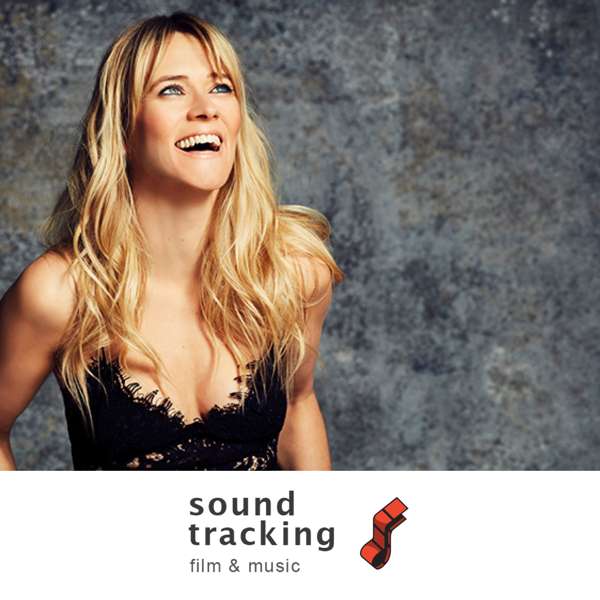
    Soundtracking with Edith Bowman

    5

    Soundtracking with Edith Bowman Music
    Red FM Bauaa

    6

    Red FM Bauaa Music
    footer-logo

    Contact Us

    Toll Free: 844-670-7747

    Links

    • Home
    • Top Charts
    • Networks
    • Apps
    • Independents Podcasts
    • Podcast Advertising
    • Podcast News
    • Contact Us
    • About Us
    • Analytics & Insights

    Stay Connected

      Privacy, Terms of Use & Our Code of Ethics Protecting Content Creators Copyrights