TopPodcast.com
Menu
  • Home
  • Top Charts
  • Top Networks
  • Top Apps
  • Top Independents
  • Top Podfluencers
  • Top Picks
    • Top Business Podcasts
    • Top True Crime Podcasts
    • Top Finance Podcasts
    • Top Comedy Podcasts
    • Top Music Podcasts
    • Top Womens Podcasts
    • Top Kids Podcasts
    • Top Sports Podcasts
    • Top News Podcasts
    • Top Tech Podcasts
    • Top Crypto Podcasts
    • Top Entrepreneurial Podcasts
    • Top Fantasy Sports Podcasts
    • Top Political Podcasts
    • Top Science Podcasts
    • Top Self Help Podcasts
    • Top Sports Betting Podcasts
    • Top Stocks Podcasts
  • Podcast News
  • About Us
  • Podcast Advertising
  • Contact
Not in our directory?
Add Show Here
Podcast Equipment
Center

toppodcastlogoOur TOPPODCAST Picks

  • Comedy
  • Crypto
  • Sports
  • News
  • Politics
  • True Crime
  • Business
  • Finance

Follow Us

toppodcastlogoStay Connected

    View Top 200 Chart
    Back to Rankings Page
    Fitness & Nutrition

    Sigma Nutrition Radio

    Discussions about the science of nutrition, dietetics and health. The podcast that educates through nuanced conversations, exploring evidence and cultivating critical thinking. Hosted by Danny Lennon.

    Advertise

    Copyright: © Sigma Nutrition

    • Apple Podcasts
    • Google Play
    • Spotify

    Latest Episodes:
    SNR #200: Saturated Fat Panel Discussion - Nadolsky, Guyenet, Masterjohn & Dieter Oct 02, 2017
    Show notes

    Our 200th episode is a special and unique one with an in-depth panel discussion on the topic of saturated fat. On the panel are Dr. Spencer Nadolsky, Stephen Guyenet PhD, Chris Masterjohn PhD and Brad Dieter PhD. The Panellists

    1) Dr. Spencer Nadolsky

    Dr. Nadolsky is a a board certified family and obesity medicine physician. He is known for being extremely passionate about using exercise and lifestyle interventions as medicine, where possible. Dr. Nadolsky runs an online clinic, SteadyMD.com, where he can help patients all over America. He is also the author of The Fat Loss Prescription.

    2) Stephan Guyenet, PhD

    Stephan is an obesity researcher, neurobiologist, and author. In addition to his research, he enjoys synthesizing and communicating science for a general audience over at his hugely successful blog. Stephan has a BS. in biochemistry (University of Virginia) and a PhD in neurobiology (University of Washington). He recently published the fantastic book 'The Hungry Brain', which dives into the causes of obesity from the perspective of overeating and related brain chemistry.

    3) Chris Masterjohn, PhD

    Chris has a PhD in Nutritional Sciences from the University of Connecticut. He was formerly an Assistant Professor of Health and Nutrition Sciences at Brooklyn College. Chris currently writes detailed nutritional science articles on his blog chrismasterjohnphd.com and hosts a podcast, Mastering Nutrition.

    4) Brad Dieter, PhD

    Brad holds a PhD. in exercise physiology from the University of Idaho. Brad has also done research training as a fellow in biomedical research, examining how nutrition and metabolism influence disease. Brad also runs Science Driven Nutrition, an online platform that aims to spread evidence-based nutrition information.

    In This Episode We Discuss:

    Differences between different SFA's (butyric vs. lauric vs. myristic, etc.) Benefits of consumption of SFA-containing foods? Effects at cellular level: ease of storage, oxidation proneness of different fatty acid types, role in cell membrane Effect of SFA on LDL-C & LDL-P (and hence CHD risk) Effect of SFA on blood lipids Effect of SFA (and/or total dietary fat) on food intake: effect on satiety? palatability? Reducing SFA: If lowering SFA intake, how much does the replacing nutrient make (MUFA vs. PUFA vs. CHO vs. PRO) Food sources/Delivery method: Isolated SFA intake (e.g. spoonfuls of coconut oil) vs. SFA packaged alongside other nutrients/fibre and phytonutrients (e.g. some oil drizzled on a salad) Practical Implications: Is there a best target intake range of SFA for health? Is there an "optimal" ratio of SFA:MUFA:PUFA? Are current nutritional guidelines for SFA intake suitable? (The American Heart Association recommends aiming for a dietary pattern that achieves 5% to 6% of calories from saturated fat.)

    Sigma Seminar: http://sigmanutrition.com/seminar2017/


    SNR #199: Ciaran Fairman - Exercise-Oncology: Effects of Exercise in Cancer Treatment & Survivorship Sep 25, 2017
    Show notes

    Ciaran Fairman, M.S. is currently working on his doctorate in the Kinesiology program at The Ohio State University. Ciaran received his M.S. in Kinesiology from Georgia Southern University, working in the Human Performance laboratory, and holds several nationally accredited certifications through the American College of Sports Medicine (CPT, HFS, CET), and International Society of Sports Nutrition (CISSN).

    Ciaran's research interests focus on the effects of acute and chronic interventions on physiological and psychosocial outcomes in different populations. More recently, Ciaran has focused his interest on cancer survivors. He is the founder and chief exercise physiologist at REACH, a non- profit organization aimed at providing cancer patients and survivors with evidence based recommendations of physical activity and lifestyle behaviors to optimize survivorship. Ciaran has published over 15 peer-reviewed papers, book chapter, and abstracts on sports nutrition, supplementation, and training adaptations.

    Support the podcast: patreon.com/sigmanutrition


    SNR #198: Richard Nikoley - Ketosis: A Call For for Context & Sanity Sep 19, 2017
    Show notes

    Richard Nikoley is the man behind the blog Free the Animal, which as of 2016, contains over 4,000 posts and 100,000 comments from readers. He has written about his learnings on health, diet, and lifestyle.

    In This Episode We Discuss:
    • Discussions around ketosis
    • Calorie-deficit induced ketogenic diet vs. nutritional ketosis at calorie balance
    • Anti-lipolytic nature of ketones
    • Inaccurate claims about ketosis and ketogenic diets
    • Hierarchy of factors influencing body composition

    SNR #197: Kyle Mamounis, PhD - Fatty Acid Metabolism & Implications for Health Sep 14, 2017
    Show notes

    Kyle J. Mamounis, has a doctoral degree in nutritional science from Rutgers University in New Brunswick, New Jersey USA. He is currently a researcher at University of Central Florida in Orlando. His primary research interest is investigating the effects of fatty acids on energy balance regulation. He maintains a science blog with posts on his research interests, reviews of science magazine articles and general cellular physiology at www.nutricrinology.com.


    SNR #196: Rob Wildman, PhD - Nutrient Timing & the 24-Hour Approach to Workout Nutrition Sep 11, 2017
    Show notes

    Researcher and registered dietitian Dr. Rob Wildman discusses the importance of viewing performance and recovery nutrition as a 24 hour process, rather than hyperfocusing on the workout "window". Dr. Rob Wildman, PhD, RD is Chief Science Officer for DYMATIZE Enterprizes in Dallas, Texas.

    Dr. Wildman is the author of four books including Sports & Fitness Nutrition and The Nutritionist: Food, Nutrition & Optimal Health. He has also written more than 75 referred journal articles, chapters and abstracts on nutrition, performance and health aspects.

    Dr. Wildman is an Advisory Board member of the International Society of Sports Nutrition (ISSN) and serves as adjunct research faculty in the Department of Human Nutrition at Kansas State University. He is the creator of TheNutritionDr.com and is currently penning his fifth book titled: BODequation.

    PN Course: get.pn/sigma


    SNR #195: Brendan Egan, PhD - Exogenous Ketone Supplementation Sep 04, 2017
    Show notes

    Brendan holds a position as Senior Lecturer in Sport and Exercise Physiology in the School of Health and Human Performance at Dublin City University. His current research investigates the molecular regulation of skeletal muscle function and adaptation across the life course, with special interest in the synergy between nutrition and exercise interventions to optimise performance in athletes and elderly. He received his BSc Sport and Exercise Science from the University of Limerick in 2003, MSc Sport and Exercise Nutrition from Loughborough University in 2004, and PhD from Dublin City University in 2008, before completing two years of post-doctoral training with Prof. Juleen Zierath's Integrative Physiology group at the Karolinska Institute, Sweden. His doctoral studies focussed on skeletal muscle adaptation to exercise, and in particular the continuity between acute molecular responses to individual bouts of exercise and adaptations induced by exercise training, whereas his post-doctoral training utilised animal models and in vitro cell systems to investigate the transcriptional regulation of skeletal muscle development and mechanisms of insulin resistance. He joined the faculty in the School of Public Health, Physiotherapy, and Sport Science at University College Dublin in 2011, where he spent five years, and retains a position as Visiting Associate Professor. On the sporting front, he has played inter-county Gaelic football with Sligo since 2003, and consults as a performance nutritionist to elite team sport athletes.


    SNR #194: Daniel Davey - Applied Performance Nutrition for Team Field Sports Aug 29, 2017
    Show notes

    Leinster Rugby performance nutritionist Daniel Davey discusses how to apply evidence-based nutrition practices with team sport athletes in elite-level sport. Daniel received his BSc in Science from University College Dublin and holds an MSc in Nutrition, Physical Activity & Public Health from the University of Bristol. Daniel is also a Certified Strength & Conditioning Specialist (C.S.C.S) with the NSCA, and has completed the national qualification in Exercise and Health Studies.

    Daniel has worked as a performance nutritionist with a host of elite athletes in a range of sports such as golf, athletics, rugby and GAA. In conjunction with his role with Leinster Rugby, Daniel also works as a performance nutritionist with the Dublin senior footballers.

    His primary focus is developing individualised nutrition strategies for achieving specific performance related goals. He also believes that enhancing athletes' understanding of appropriate nutrition practices is vitally important for long-term optimum health outside of sport. In order to achieve this, he believes in providing this information in an understandable, practical and enjoyable manner.

    Daniel is a committed athlete himself and has played Gaelic football at intercounty level for Sligo and won an All-Ireland club football medal in 2016 with Ballyboden St' Enda's in Dublin. His own playing and training experience allows him to understand the practical implications of applying the science of sports nutrition to achieve peak physical condition and performance in sport.


    SNR #193: Lyle McDonald - Nutrient Partitioning & Fuel Utilization Aug 22, 2017
    Show notes

    Lyle McDonald

    Lyle is the author of the Ketogenic Diet, the Rapid Fat Loss Handbook and the Guide to Flexible Dieting. He has been interested in all aspects of human performance physiology since becoming involved in competitive sports as a teenager. Pursuing a degree in Physiological Sciences from UCLA, he has spent almost 20 years of his life studying human physiology and the science, art and practice of human performance, muscle gain, fat loss and body recomposition.

    Over the years, in addition to working with the general public, Lyle has worked primarily with endurance athletes, a few powerlifters, and some bodybuilders. Through his books, articles and his forum, he has helped thousands lose fat, gain muscle and get stronger or perform better.

    In This Episode We Discuss:

    Fundamentals of calorie partitioning What actually influences the partitioning of fuel substrates and the fate of the calories we consume Genetic differences in how much our body composition proportionally changes when either in a hyper- or hypo- caloric diet Is there anything we can really do to modify this? Insulin sensitivity in muscle and adipose tissue Blood glucose responses to meals: For healthy individuals, how much does it matter? Should you match carbohydrate intake to insulin sensitivity?


    SNR #192: Shona Halson, PhD - Recovery Strategies for Elite Performance Aug 16, 2017
    Show notes

    Dr. Shona Halson is the Senior Recovery Physiologist at the ‪Australian Institute of Sport and an Associate Editor of the International Journal of Sports Physiology and Performance. Her work involves providing athletes with advice and assistance to minimise fatigue and maximise recovery, she is responsible for conducting applied research to evaluate techniques to reduce fatigue and increase recovery. Shona has worked closely with the Australian Dolphins and their specific preparation for the Rio Olympics. Shona has a wealth of experience in the area of fatigue and recovery and she spent a number of years working as the Recovery Centre Director for the Australian Olympic Committee.

    In This Episode We Discuss:
    • Periodization of recovery
    • Cold water immersion and constrast water therapy for recovery
    • Do recovery strategies have the potential to negatively impact adaptive responses to training?
    • Athlete perception and "belief" in recovery modalities
    • The importance of hydrostatic pressure: implications for hydrotherapy practice
    • Effectively monitoring fatigue in athletes to assess training load and recovery

    SNR #191: How to Build a Career in Nutrition Coaching Aug 14, 2017
    Show notes

    How to Build a Career in Nutrition Coaching For some reason enough people have seemingly deemed me to be "successful" enough to ask me for advice about starting a career in nutrition, usually via some version of one of the following questions:

    What nutrition course do you suggest I do? What qualifications do I need to work as a nutritionist? I'm a personal trainer/coach, what is the best way to improve my nutrition knowledge and/or my reputation as a nutrition coach? I currently work in a different field but want to transition to a career in nutrition. How should I go about this? Is it possible? I'd like to work in sports nutrition. How do I go about this? So the plan is to address these questions comprehensively in this guide. Which should hopefully help those of you who have similar questions. So let's get started!


    Previous 1 46 47 48 49 50 65 Next

    Related Podcasts

    The Rich Roll Podcast

    1

    The Rich Roll Podcast Education
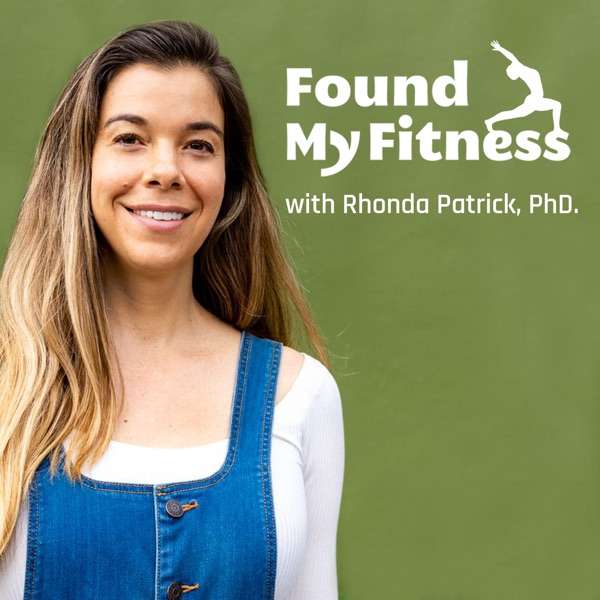
    FoundMyFitness

    2

    FoundMyFitness Fitness & Nutrition
    The Jesse Chappus Show

    3

    The Jesse Chappus Show Alternative Health
    20 min. Yoga Sessions from YogaDownload.com

    4

    20 min. Yoga Sessions from YogaDownload.com Fitness
    Boundless Life

    5

    Boundless Life Fitness
    The Model Health Show

    6

    The Model Health Show Fitness
    footer-logo

    Contact Us

    Toll Free: 844-670-7747

    Links

    • Home
    • Top Charts
    • Networks
    • Apps
    • Independents Podcasts
    • Podcast Advertising
    • Podcast News
    • Contact Us
    • About Us
    • Analytics & Insights

    Stay Connected

      Privacy, Terms of Use & Our Code of Ethics Protecting Content Creators Copyrights