PMP169: Leading into the Wind – Lessons from Dave Sandowich
Oct 24, 2019
Show notes
A few weeks ago, I had the privilege to spend a few hours sailing on the Chesapeake Bay with Dave Sandowich.
Photo by Bobby Burch – Creative Commons No known copyright restrictions https://unsplash.com/@bobbyburchphotography?utm_source=haikudeck&utm_medium=referral&utm_campaign=api-credit
He commanded his 42-foot sailboat, Charis, with the skill of a man who has spent the past forty years on the water anytime when he wasn’t leading his school or his family. Dave, a 65-year old father of three and grandfather of eight, had relocated to Kent Island, Maryland seven years earlier, renovating a 120-year old farm house – a house with a very important accessory – access to a pier for a permanent home for Charis. Although he still consults younger principals, he spends his spare time with his boat or entertaining guests and family members who visit through the sailing season May through October.
With sleeves rolled up, he showed me how to handle the jib sheet, trim the main sail , navigate through changing depths and mark distant points for reference. His graying hair blowing in the wind, Dave’s deep voice rattled like a coach patiently giving orders. “Keep the wind at 30 degrees and head for the red buoy ahead.”
“Sailing is a lot like leadership,” he explains. “On a sailboat your destination may be directly from where the wind is coming from. A sailboat can’t sail directly into the wind but it can work its way up wind by sailing at angles off the wind and working its way up wind to the destination. It is more work and will take more time but you will get there if you stay the course, apply your sailing knowledge and get the feedback from your instruments and instincts and adjust along the way.”
Dave’s Bio
David Sandowich is a retired principal from Kent Island, Maryland. For 21 years, he was the principal of Haddon Heights High School in Haddon Heights, NJ. Although he still consults younger principals, he spends a lot of time focused on his favorite hobby – sailing. His experience as a teacher, coach, principal, father, mentor and as a sailing-enthusiast has given him a unique perspective on leadership.
During our time together, Dave was a great listener and a teacher. I’m honored to share the lessons and metaphors we discussed about sailing, and how they nay help you rethink the way you lead. In this conversation, we talk about the following:
Physics in sailing and leadership
First order changes, vs second order changes
Backwards design
Advice for new leaders and experienced leaders
Book and leadership recommendations
I thought about Dave’s words a day later when I was attending the National Association of Secondary School Principals. Joann Bartoletti, NASSP’s Executive Director, was introducing State Principals of the Year in a ceremony recognizing principals from across the country. First of all, Bartoletti pointed out recent research from the Pew Research Center showing 84% of respondents trust principals over every other public servant-leadership role for caring about others and working ethically on behalf of their communities.
“If we want great schools,” she said, “we need great principals. And the consensus is clear that principals matter.”
Schools can only grow to the capacity of their leaders, she went on to explain, And research shows what qualities effective principals possess for effectively leading schools. Using the Wallace Foundation’s research into effective principals, Bartoletti highlighted five qualities all great principals hold in common:
1. They shape a vision of academic success for all students. 2. They create a climate hospitable to education. 3. They cultivate leadership in others. 4. They improve classroom instruction. 5. They manage people, data and processes with the goal of school improvement (Wallace Foundation).
Lets’ Wrap This Up
Standing on the prow of Charis, I watched as the water cascaded below me. The jib and main sail had both been taken in, and I was holding the long pole for pulling the dock lines as we came into the slip. Dave stood in stern of the boat, steering and guiding us in. Soon we had snagged the lines and tied up. It had been a great day for sailing. The winds had been brisk and pushed us along the Chesapeake while the weather was moderate enough for long sleeves and bare feet.
As we wrapped up the excursion, Dave told me: “Some sailors will not want to do all that work and never sail to a destination that is up wind. Leadership is like that. It would be nice to just set a worthy objective point the organization in that direction and arrive in a reasonable amount of time. Rarely happens …you have to commit to the end destination and work your way toward it often headed in what seems away from your mark. You realize that it will take more time but you will see progress made. Feedback will be essential as you adjust , regroup and keep moving. As in sailing…it takes a skill set and the more experience you have and the more often you do it the results come easier.”
Now It’s Your Turn
What are some obstacles or “up-wind” moments you are facing? What are some strategies that can help you push toward goals instead of avoiding resistance? What is one step you can take this week to analyze your obstacles and strategize ways to use them as leverage toward your goals?
PMP168: Managing Your Day with Kim Marshall and Jenn David-Lang
Oct 17, 2019
Show notes
If you are like most school leaders, time management can be one of the most difficult parts of your work.
Most new school leaders I meet explain how overwhelming the list of to-do’s can be. What are the solutions? Well, Kim Marshall and Jenn David-Lang provide a wealth of information on resources and practices that work in managing your time.
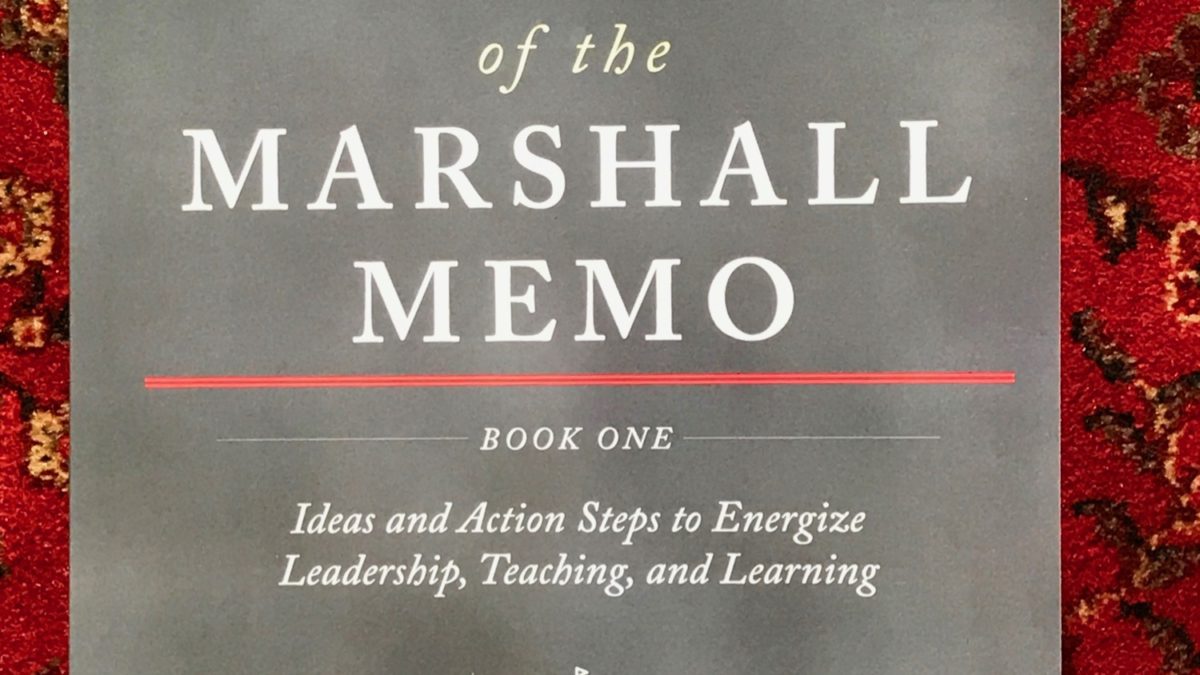
Kimwas a teacher, central-office administrator, and principal in the Boston Public Schools for more than 30 years. He now leads workshops and courses, coaches school leaders, consults with schools and districts, and produces the weekly Marshall Memo, summarizing ideas and research from over 60 publications. He is the author of numerous articles and books, including Rethinking Teacher Supervision and Evaluation.
Jenn David-Lang
Jennhas worked in education for more than 25 years as a teacher, administrator, and consultant. She now designs and provides workshops for principals and teachers, coaches leaders, and conducts school evaluations. Since 2007, Jenn has published The Main Idea, a service for busy school leaders that provides summaries of compelling education books, accompanied by suggestions for professional learning. She currently lives in Brooklyn, New York.
Kim Marshall and Jenn David-Lang are best know as “designated readers” for busy front-line educators, curating the best ideas and research from scores of magazines and books. In their new book, they identify the most thought-provoking and helpful article summaries from the Marshall Memo archive and add professional learning suggestions. The book aims to help principals, teachers, superintendents, consultants, and researchers address the most pressing issues they face every day.
In this episode, we explore one area of their research and practice: How Leaders Can Grow in Time Management.
Principals and school leaders share a common frustration with time management. How can you accomplish so many responsibilities and tasks? Kim and Jenn share lessons they’ve learned from your research and practice, including:
Understanding your time while knowing you’ll never check off all the blanks
Studying the “rock analogy“: Big rocks first, then gravel, then sand, then water… (When you prioritize important tasks first, you can add much more that matters to your day.)
Avoiding the useless: useless feedback, useless meetings, useless evaluation processes, and time-consuming emails
Utilizing Justin Baeder’sfire analogy: Fire fighters who work on prevention fight fewer fires so delegate, create committees, and train others to do tasks
Using whatever tool works for you to document and keep various ideas and requests in one place
Making a rainy-day list of ideas that don’t need to be worked on immediately
Also, Kim can be found at the MarshallMemo.com or at Kim.Marshall48@gmail.com. If you email him there, he will send you a free chapter on time management from the new book!
PMP167: Keeping Your Leadership Focused on Service, Not Self
Oct 09, 2019
Show notes
Last week was the first time (except for a rare Christmas holiday) that I have not shared a blog post or podcast episode update in almost five years.
Photo by Josh Calabrese – Creative Commons No known copyright restrictions https://unsplash.com/@joshcala?utm_source=haikudeck&utm_medium=referral&utm_campaign=api-credit
At first, I thought it was because I’ve been so busy. Last weekend I flew to Florida for my nephew’s wedding. Then on Monday, I flew from there to Washington, D.C. for a national meeting. When I was back home late Wednesday night in Oklahoma, I had one day in my office on Thursday before traveling to a university on Friday to sit on a panel discussion for education interns.
Throughout my flights and driving, I kept rummaging through my mind for what I wanted to share next. I have some interviews scheduled but not recorded. So maybe I should talk about takeaways from my advocacy visits. Or maybe I could share about common struggles I see in education students trying to find their first school positions? I just finished listening to the audiobook No Ordinary Timeby Doris Kearns Goodman. Perhaps I should share leadership lessons from the remarkable lives of Franklin and Eleonore Roosevelt.
But frankly, I didn’t feel inspired to write about any of that. And I think I may have discovered why. For one, I had some lagging doubts: What if what I have to share isn’t really that valuable? What will people think? In fact, I found myself becoming more and more concerned about the process of posting and my self-imposed deadlines for posting something, and my concern of not having something meaningful to say. The result? I just decided to not share.
Why am I telling you this?
Why I Blog and Podcast
Let me back up a few years. Whenever I began blogging in 2012, I had one goal: to write a weekly reflection on something I was learning that might also help others in their own lives and leadership. When I turned that weekly content into podcast episodes three years ago, I had the same idea. From the beginning, my desire has been to capture the stories of school leadership and apply lessons from the stories.
Stories are the ways we rehearse, interpret and understand the meaning of our lives. Storytelling is an act of metacognition. For instance, I could talk to you about the importance of being a good listener. However, a better idea may be to tell you the story of Kristin: As an 8thgrader, she had lost both her parents in one year, moved into a foster home, and came to high school the following year having failed every class the previous year.
When we surrounded her with a mentor team, including a caring teacher an older student, she found an accountability group who followed her grades and provided feedback. Although Kristin resisted help at every turn, eventually she began to listen and pass her classes. But she still struggled. One day, when she skipped school, I brought her back to my office and assigned her to the in-school placement room.
She wasn’t happy about it, but she finished her work so quickly, she soon sent me a note that said, “I’m done. Now what?” I laughed at her ability to say so much in a few words, and I sent her a copy of Chicken Soup for the Teenagers Soul.
Later, she sent me another note, saying, “I finished the book.”
I couldn’t believe it so I sent for her, and when she came to my office, I quizzed her on the book, and she had read every page.
“What motivated you to read this book so fast?” I asked.
“Every story in that book spoke to me about my own story,” she said. “Do you have anything else like it?”
I called our school librarian and she sent down a copy of Chicken Soup for the Woman’s Soul. When I handed it to Kristen, she clutched it to her chest like a Christmas present. “You mean, I can take it home?” she asked.
“Of course,” I said, “And you can take home any other books you think you’d like.”
When she left my office after school, I sat at my desk for a moment and thought: This is why we do it. When you see the light in a student’s eye – when he or she discovers something they love about learning, it’s worth all the hard work of doing school.
You see, I could have told you to seek first to understand, but telling you a story illustrates the point so much better, I believe.
My Lagging Doubts
Even though I now serve school leaders, instead of directly serving students as my full-time work, I’m still surrounded by inspiring moments. So, why didn’t I just make a post this week about a captivating story and lesson I observed in my recent work?
Here’s my best attempt to answer that question: In my own work (perhaps like you), I can become so pre-occupied with my own performance, that I lose focus on what really matters. And when that happens, even the practice of sharing ideas with others can become more about me than about helping you. In other words, I decided not to post this past week because I thought you deserve better.
Reflect on this for a moment: Do you ever become so focused on your leadership performance, for instance, that you turn the focus on the work itself instead of the growth of the school community for whom you work? In other words, does your own leadership become a bigger focus than actually leading others?
This irony in leadership happens all the time, and it’s a common mistake I’ve seen in many other settings. Take student athletes for example. Perhaps a basketball player realizes she is on a trajectory for a 1,000-point scoring career. This is a phenomenal record to set, and one to be proud of. But I’ve watched coaches and players become so focused on helping that player to score more points to reach that goal, that a team-sport (or even winning games for that matter) becomes secondary to one student’s personal record. The focus is no longer on the game when it’s turned on to the superstar’s performance. And normally, teams start losing when that happens.
A family vacation can quickly disintegrate from a moment of rest into a frenzied race to create the best memories ever. Or your most important relationship can lose its zest when you start spending time together out of obligation rather than out of a longing to just be together.
Or how about when schools become so focused on raising test scores? Improving performance is important, but when raising scores somehow removes the joy of learning, discovery, or curiosity, the joy of learning somehow is lost in the strategy for improvement.
And, yes, this happens in school leadership too. You can become so focused on process, you forget culture. Or you can become so concerned with what others think about your leadership, that you forget it’s your service to them that really matters most. It’s not about you.
Recently, I was trying to explain this phenomenon to a fellow-leader when I said, school leaders would do themselves a favor by realizing they are not as important as they think. At the same time, they would do their schools a favor by realizing they are way more important than they think.
How can this be true? When you accept leadership with a posture of humility, you do your schools a favor by realizing that your leadership is all about service.
And even writing a blog about school leadership fails to be an act of service if I lose sight of whom I’m serving, of if fall into the trap of wanting listeners and downloads more than I want to help, inspire, or influence others.
Changing My Focus
This weekend I woke up early to go for a run. Oklahoma is experiencing the first hints of autumn. Cooler weather and bits of yellow and orange are appearing in the mums. Mornings are also a good time to walk the dog, and as I was tying my running shoes, Ivy, our rescue-dog who is part Husky, looked at me with her sweet golden eyes, silently asking to go with me.
I decided to combine my tasks. I put on her collar and leash, and stepped out into the morning. As we jogged along the street and sidewalk, I had to pause often to adjust the leash. Ivy loves to run, but she can also drag me along if I don’t keep her in check.
I was determined to teach her to stay by my side. This meant stopping and having her sit to refocus, and then beginning again. It meant readjusting the leash over time. A few times, a flitting bird or another dog would draw her attention, and we’d have to stop and start again. It took about two miles before she really had the hang of it, and we were finally jogging together.
When I ended, I looked at my watch. My time had been much slower than normal. I guess that’s the price you pay for combining tasks or training your dog to run. As I’ve gone through the following days, I have felt my muscles sore in different places than normal – another price for running with a dog that doesn’t seem to tire. At the same time, Ivy was so peaceful and quiet after the long-run that morning.
I also discovered something else during the run. Because my focus was on training Ivy, I thought a lot less about myself during the run.
Focusing on others is a great way to escape the trap of over-analyzing and self-doubt that can often paralyze you from just taking the next step.
Let’s Wrap This Up
Do you ever find yourself paralyzed by your own motivations? If so, let me encourage you to take perspective. Look around at the students, teachers, and communities you serve. Look at those in your own home who need your focus and attention. Take a moment to ask yourself: Where I can I be the most help today? And then step that direction and start helping. When you do, you may find yourself forgetting about whether or not you’re doing it right, and find yourself instead just doing something worthwhile.
Now It’s Your Turn
With all those thoughts in mind, I’d like to ask you some challenging questions about your own work:
How often do you find yourself hesitant to take action because of your concern of what others think of you?
When is the last time you had an inspiring idea to try something new only to pause because you’re not sure if you’ll experience failure by trying it?
Are you measuring success by how other respond to your work or by how your work is actually helping others?
Shift your focus today onto those whom you serving. When you do, you will have perspective to take the next step in being a servant-leader. And you will have stories to tell that remind you that what you do matters.
PMP166: Unique Challenges of Rural Principals and Why Your Story Matters
Sep 25, 2019
Show notes
This week I’m sharing another episode from the road as I have been traveling across my state, Oklahoma, visiting principals at schools or in regional meetings.
Photo by Karsten Würth (@karsten.wuerth) – Creative Commons No known copyright restrictions https://unsplash.com/@karsten_wuerth?utm_source=haikudeck&utm_medium=referral&utm_campaign=api-credit
Recently, I visited Texhoma, Oklahoma, with High School Principal Connie Miller. After touring her school that serves students grades 5-12, she drove me one mile across the community to see the elementary school, which sits on the Texas side of town.
Although both school buildings serve the same community of students, the funding these schools receive is based on the allocations provided by their respective states. In fact, in Oklahoma’s Panhandle schools, competition for high quality teachers is intense. From Guymon, Oklahoma, for instance, you can drive thirty minutes in any direction and find yourself in Kansas, New Mexico, Colorado, or Texas.
As I’ve spent time with rural principals, in particular, I’ve been reflecting on some of their unique challenges:
Challenges Rural Principals Face:
Many rural schools still face teacher shortages in specialized classes or advanced coursework. Across the nation, and especially in rural areas, principals are finding it difficult to fill specialized positions like art, music, foreign language, and advanced mathematics or sciences. Teachers with these specialized areas are heavily recruited into other career options.
Many rural schools often have limited resources for students seeking career technology, concurrent or Advanced Placement coursework. Although Oklahoma has more opportunies than many other states for career technology courses, some rural schools in western Oklahoma, for instance, have no technology center classes. Offering Advanced Placement courses also requires teachers who have been trained in AP coursework, and these classes tend to be offered less often in rural settings.
Some rural principals have increased student populations of second language speakers. Agriculture and oil and gas industries tend to attract immigrant families for work, and their children need additional supports as English language learners. For instance, Guymon High School, a school with 800 students in the western Panhandle of Oklahoma, currently has more than 30 languages spoken by English language learners at the school.
Advantages for some Rural Schools:
At the same time, many of these rural schools have strengths that give them advantages in serving students:
Strong culture and shared values. Connie Miller, Principal of Texhoma High School, shared with me how her teachers and staff focus on shared values that they teach throughout the school year so they are focusing on academic and character growth with students. These shared values build a positive environment for learning.
Positive student behavior and safe learning environments. One of the advantages of a smaller school is the ability to manage student behavior with high expectations on safety and participation. Principal Miller, for instance, shared that she remembers only one long term suspension situation in her school in the past four years.
Innovation and blended learning opportunities. Technology does provide opportunities to connect with resources and information. And many school are introducing Chromebooks or other devices that provide students access to online options, including blended learning options.
Teachers and staff committed to a family atmosphere. Finally, the most important element is the committment of teachers and staff to giving students an atmosphere where they feel supported and loved while learning. Rural schools have a unique advantage of being able to keep close tabs on their students which often leads to higher accountability and involvement.
Oklahoma has had a unique story as the past two years have seen signficant increases to state funding for schools. But these increases come after a decade of cuts and declines. Our state is not alone in this challenge, and rural schools have especially felt the consequences of long term cuts. Although the recent changes have been positive in providing more support for schools, it sometimes takes longer for rural schools to see the benefits of stronger recruitment and retention of high quality teachers.
How does your story influence the support your school receives?
Every school has a unique story, and like it or not, how you tell that story often results in the kind of support (or lack of support) your school receives. How can you help build awareness for the importance of your own school? October is National Principals Month, and this is a good time to bring elected officials to your school.
Be a member of your state association. Whether you serve at the elementary or secondary level, your state associations provide opportunities to network with other principals so that your collective voices add weight to your calls for support for your schools.
Be involved in knowing and communicating with your state and federal represenatives. Principals do not have the luxury of letting others advocate for your school. Reach out to your elected officials so that they are aware of the unique needs and challenges in your school. You often have a much deeper knowledge of the implications of any education bills being considered.
Tell your story. You rally support from your students, teachers, and community members when they are consistently aware of the positive outcomes happening in your school.
Understand the legislative cycle. In most states there is a predictable cycle that happens each year. These includes times for interim studies, proposed bills, committee hearings, and bills that make it the floor for debate and votes. Being aware of the cycle helps you undertand when to lend your voice to an issue – whether it is one just being discussed in a study or one that may become debated a proposed bill.
Let’s Wrap This Up
Whether you serve in an urban, suburban or rural setting, all principals share similar struggles. Your students need high quality teachers. Students need safe learning environments. Students need opportunities and resources for learning. And they need principals who are advocating for them at every level. As you reflect on the stories of your own school, how can you consistently share that story with others to increase and rally support for your school community?
Now It’s Your Turn
What is one way you can spread the good news of what’s happening in your school while also highlighting areas where you may need more support? Think of how you can increase communication about your school during October Principal Month. Check out the this website for helpful resources. Reach out to an elected official and invite him or her to visit your school. Highlight and showcase the positive opportunities your school provides, and point out the areas where you want to grow.
PMP165: Three Lessons in Decision Making from Malcolm Gladwell’s Blink
Sep 19, 2019
Show notes
Several years ago, I was standing in our school lunchroom watching hundreds of students eat breakfast.
Photo by Ryan Tauss – Creative Commons No known copyright restrictions https://unsplash.com/@ryantauss?utm_source=haikudeck&utm_medium=referral&utm_campaign=api-credit
I was positioned in the middle section of the room, and the front doors of the school were about one hundred feet across the room from me. Dozens of students were entering when I saw one high school boy who caught my attention. He was so far away, I could not see his facial features, but his demeanor and walk gave me a quick pause.
I decided to follow my hunch. I walked across the room, and as I approached him more closely, he tried to avoid eye-contact. But I casually stepped closer and asked him if I could talk to him in private for a minute. Once he was in my office, I invited another administrative team member to join me, and my hunch proved accurate.
The boy was under the influence of marijuana and was also in possession. Later that morning as we worked through meeting with parents and school discipline procedures, he suddenly looked up at me and asked, “How did you know I was messed up from all the way across the room?” I didn’t know how to explain how I knew. I had been a school administrator for more than ten years, and a lot of my observations came second nature.
This summer I enjoyed reading Malcolm Gladwell’s book, Blink: The Power of Thinking Without Thinking. In the book, he explains the importance of understanding your adaptive unconscious — the small ways we discern situations and make decisions that often happen in a split second.
Throughout the book, Gladwell uncovers three main takeaways:
Decisions made quickly can be as important as ones made over a long period.
Sometimes our instincts betray us.
Our first impressions and snap judgements can be educated and controlled.
Slicing Information
Gladwell explains that experts often “thin slice” information for quick judgements. For instance, he talks about the ability of experts in ancient artifacts to be able to tell the difference between a fake and an authentic piece of art by just glancing at the work. He describes the work of social scientists who can predict whether new couples will stay together long-term just based on a few minutes of watching them talk and interact. The lesson? Over time, you develop abilities to “think slice” large amounts of data or information that help with decision-making.
Instincts That Betray Us
But he also explains ways that our unconscious ideas can infiltrate or manipulate reality. One startling example is the way we perceive gender and race. Gladwell cites numerous studies where the majority of people (even people of diversity) will misjudge or assign more negative emotional levels to people of color, men who are shorter in stature, or to women in general.
Gladwell is the child of an integrated family. He shares how he participated in a scientifically designed computer programs that required participants to assign emotions to photos. To his surprise and embarrassment, he inevitably assigned more negative emotions to minorities. These blind-spots in our unconscious can be dangerous if they cause us to make biased decisions we are unaware we are making. In schools, this often happens in the ways we unconsciously pay more attention to the behavior of boys.
Educating Our Impressions
Finally, Gladwell explains how we have the capacity to train ourselves in the ways we make snap judgements. One example he gives is in police work. He cites research that police who pursue suspects in high speed chases almost always overreact with excessive force. Police academies are now adapting this research to instruct officers against high chase pursuits and against confronting suspects while alone. Officers are also learning to repeatedly mock-play crisis scenarios so that they do not freeze or overreact in real life ones.
For school leaders, you may not always think about the power of safety drills, crisis scenarios, or mock-playing uncomfortable scenarios. But what your mother told you is true: practice makes perfect. When it comes to training your unconscious to not overreact, training and education is essential to making better snap decisions.
Implications for School Leaders
What are some takeaways for your leadership when you consider Gladwell’s lessons?
1. Don’t underestimate your ability to “thin slice” complex situations when you’ve had deep experience in managing similar scenarios in the past.
Your experiences significantly inform your ability to make important judgement calls. Decisiveness can be the result of deep knowledge and experience. For instance, as an instructional leader, you will spend a lot of time observing and evaluating teachers. Rubrics and written instruments are an important way to maintain consistency, but these tools don’t replace your good judgement. Even in content areas where you may not be experiences, overtime, you can pretty quickly assess whether or not learning in happening in a classroom.
Yes, you are still required to do due diligence with documentation, but it doesn’t take long to identify good teaching from bad teaching. Students figure this out quickly too. Why? They’ve had a lot of experience being taught by strong or poor instruction. Don’t ignore those basic instincts that come with your own experience either.
2. Don’t overestimate your ability to follow your instincts.
Just because you may be good at “thin slicing” in some scenarios, you do have an excuse from consistently reflecting on areas where you may have a hidden bias. Ask others where they may perceive your blindspots. Study your own data on how students are performing in academics and behavior. Do you see tendencies toward some sub-groups struggling more than others? Ask yourself how you are providing equal access to resources, opportunities, and recognition to all students.
I remember once when a 16-year old female student was in trouble for an emotional outburst she had with another girl. After meeting with the girl, I gave her a stern lecture on her behavior and called her parents to explain the school consequences for her misbehavior. While talking to the parents, I realized this girl was on an IEP. When I dug into her file, I saw where her processing abilities were more similar to a 3rd grader than a high school sophomore.
The “light bulb” moment helped me realize why she was having such a hard time responding to my conversation the ways her peers were responding. Needless to say, it changed the way I spoke, responded, and guided her in future situations.
Don’t overestimate your abilities in snap-judgments. Consistently look for what may be hidden in a situation. If or when you see areas where you may need to readjust your perspective, do it.
4. Educate yourself so that you have stronger control in good decision-making.
Gladwell shares research that shows our tendencies to place too much importance on appearance versus substance. In addition, he shares ways professionals practice scenarios in advance so that they are better prepared not to make wrong decisions.
One example for school leaders is managing difficult conversations. I’ve often seen instructional coaches role-play difficult conversation scenarios with teachers or other administrators in advance. Doing this lowers anxiety and teaches better conflict-resolution skills.
Open your eyes to the perspectives of others. This past year, I had an administrator friend point out to me that a very small percentage of minority males serve in school leadership positions. As I looked at my summer reading list, I decided to expand my own reading to better educate myself on perspectives on minority leaders.
Here are a few books I have also enjoyed reading during the past months to help me keep expanding my own thinking on ideas from important leaders with historic and contemporary perspectives:
Think about ways you can better inform your own ideas and mindsets so that you don’t become subject to a fixed-mindset in your judgements and perceptions.
Let’s Wrap This Up
I have probably called it wrong as many times as I’ve called it right in good decision making. That may be a sad commentary on my personal and professional judgement. But the reality is that you always have room to grow.
Gladwell’s book is a fascinating study in how you tend to call it right more often when you have deep experience with a situation or subject. But it is also a good reminder that you may be working with blindspots when it comes to your perceptions and judgements of others. Most importantly, he shares how you can actually grow your abilities through practice and education so that you make better choices when called on to make quick decisions.
Now It’s Your Turn
Can you think of a time where a quick judgement has served you well? Can you remember a time where you may have needed longer study of a situation to make a better decision? Don’t be frustrated that both realities exist at the same time. Gladwell’s research shows that we are good and bad at decision-making. Understanding this is one step toward improvement. Is there a book or resource you may need to read to have a better perspective on your students or the people with whom you work?
PMP164: On the Road – Thoughts for New School Leaders
Sep 12, 2019
Show notesPhoto by Trey Ratcliff – Creative Commons Attribution-NonCommercial-ShareAlike License https://www.flickr.com/photos/95572727@N00
These last couple of week, I’ve been on the road a lot visiting schools and principals across my state. For the next couple of weeks, I plan to share some thoughts from the road – literally. This week’s episode I recorded while driving (after safely cuing my recorder before starting a long drive).
5 Takeaways for New Principals
I reflect on thoughts I’ve been having while talking to new principals:
Building culture as the foundation of your school experience
Understanding your past, building new procedures, and maintaining momentum
“Chunking” your schedule to prioritize instructional leadership and focus on important vs. urgent tasks
Expressing appreciation to teachers in creative ways they help choose
Remembering why your leadership matters to your students, teachers, and community members
Normally, I include a longer written summary, but this week, I encourage you to listen to the podcast episode if want more details, examples, and reflections. (Plus, I can’t write as much when driving long road trips.)
I’d love to hear ideas from you on ways you’ve invested in culture, prioritized your schedule, or planned appreciation for your team members. As always, thanks for learning together, and thanks for doing what matters!
PMP163: Encouraging an Environment of Growth – Questions and Answers with Jethro Jones
Sep 05, 2019
Show notes
Recently, I have been answering questions from listeners on a variety of subjects in school leadership.
Photo by Nicole Honeywill – Creative Commons No known copyright restrictions https://unsplash.com/@nicolehoneywill?utm_source=haikudeck&utm_medium=referral&utm_campaign=api-credit
This week I am joined by my friend, Jethro Jones the host of Transformative Principal Podcast as we tackle three questions together from our listeners. Jethro is an administrator with elementary and middle level experience and currently lives in Fairbanks, Alaska.
In 2017 he was recognized by the National Association of Secondary School Principals as a National Digital Principal of the Year. I’ve known Jethro for years from connecting online and have had the privilege of meeting him in person. He was first a guest on my program for PMP Episode 74, where you can hear a longer introduction to his work and check out conversations about why it’s important to embed digital practices in your school.
3 Questions from Listeners
This week we are tackling three questions that principal listeners have shared with us from our podcasts, covering these topics:
What do you do if or when your teachers give you the cold shoulder about learning something new?
How do you manage differences in student dynamics within competency-based instruction?
What ways can you measure student growth in Social Emotional Learning?
Listen-in for the complete conversation, and let’s jump right in…
Question 1. My teachers give me the cold shoulder when I try to introduce them to new ways of teaching. What should I do?
Jethro and I discuss the following:
Modeling for teachers
Observation of other teachers
What is he/she doing well already? Praise first, then instruct.
Lead with the question, “Where do you want to grow?”
Creating an enviornment where teachers ask for help
Celebrating innovative teaching
Learning to say yes before saying no
Question 2. How do you make sure that students who struggle don’t feel embarrassed or ashamed that they aren’t working with their peers? When competency-based, what happens?
We discuss these suggestions:
Defining expecations so that students measure against standards, not other students
They are already in different places! Your expectations matter in their perceptions…
Help them identify where they are good. And celebrate!
It’s not about competition with peers, but competition with themselves.
Question 3. How can Social Emotional Learning success be measured?
We discuss several takeaways:
Discover the importantce of self-reflection. It’s okay to embrace different standards for everyone.
Resilient students don’t really need more resiliency training. They need something else.
A student with trauma needs different things than a student without.
Creat an environment where you want your own chidren
You can measure the indicators like discipline, attendance and graduation/completion rates
We share examples of SEL through FOMO — karaoke cafeteria — from Principal Kim Coody’s High School in Okahoma and Amy Fast’s emotional learning practices in Oregon
The ability to have a fresh start is one of the biggest blessings of being an educator or education leader. You have a fresh start every morning and every new school year. Your ability to grow also requires reflection and practice. One theme that runs through this week’s questions from principals is the theme of continual improvement – improvement with teachers, students, and culture.
You will not grow perfectly in any of these areas, but when you reflect with others, grow together, and move forward, you build momentum toward continuous improvement. And over time, you reap the benefits of hard work as well as the positives that come from modeling the behaviors you expect in others.
Now It’s Your Turn
What is one new method or strategy you could model for your teachers or team? How can you instll in others the freedom to believe it’s okay to try and fail and in learning? And how can you celebrate the wins along the way?
Mastermind Update
I wanted to give you a heads up that I have opened applications for a mastermind community and am receiving and setting up phone interviews with interested listeners. If you want to be a part of an exclusive community of other school leaders who meet on a weekly basis for leadership discussions, book studies, and hot-seat opportunities, you can learn more by visiting williamdparker.com/mastermind or email me at will@williamdparker.com.
PMP162: Go! Community – How to Harness the Power of the Room with Danny Bauer
Aug 28, 2019
Show notes
Author David Weinberger once said: “The smartest person in the room is the room itself.”
Photo by redcharlie – Creative Commons No known copyright restrictions https://unsplash.com/@redcharlie?utm_source=haikudeck&utm_medium=referral&utm_campaign=api-credit
In other words, the collective power of our thinking is always more powerful than working in isolation. By connecting with others, we can stretch our thinking and be motivated to take new actions.
This week I’m thrilled to bring back Danny Bauer to the podcast to discuss the power of community building for leaders. A former Chicago and Houston school administrator, Danny Bauer has dedicated the past five years to building resources, interviewing leaders, and facilitating Masterminds for school leaders. He is also the author of The Better Leaders Better Schools Roadmap: Small Ideas That Lead to Big Impact.
What is your superpower? Discover how this school leader has turned his superpowers of community building into full-time support for other leaders.
What is your main struggle? Reflect on the common struggles or themes Danny’s hear from men and women leading schools all over the world.
Why is leading in isolation so dangerous? Discover how Masterminds can be your place to discover authentic, vulnerable, courageous conversations about yourself and your leadership.
Where can you find a safe place for school leaders online? Explore Danny’s new online Go-Community for a confidential, exclusive social community of like-minded school leaders.
What is your number one priority this school year? Listen to what Danny thinks is the most important priorities principals should consider when starting this school year. (His answer will surprise you!)
Here’s a summary of offerings included in the new Go! Community:
Go! Community
Danny calls it the “Greatest Place on the Internet for School Leaders” … and you’re invited. The Go! Community is an online community for school leaders to level up. Connect with other school leaders from around the globe in this private, elite membership community.
You may also be interested in checking out the new Principal Matters Mastermind openings. This is an opportunity for focused, weekly online meetings with other like-minded leaders in a community of school leaders who want mutual accountability for personal and professional growth. Check-it out here.
Let’s Wrap This Up
If you are ready to grow your capacity for school leadership, consider investing in deeper growth through more learning. Two options you may want to consider could include Masterminds or Go! Community. You can check out both offerings on my website.
Now It’s Your Turn
What ways are you investing in your own growth this year? What steps are you taking to be involved in collective sharing with other leaders? Even if Masterminds or Go! Community are not options that fit your needs, don’t lead alone. Reach out to other leaders and refuse to lead in isolation.
PMP161: Answers to Principal Matters Questions, Part 2
Aug 15, 2019
Show notes
Last week Jen Schwanke and I answered questions from podcast listeners. Listen to Part 1 here.
Photo by Helloquence – Creative Commons No known copyright restrictions https://unsplash.com/@helloquence?utm_source=haikudeck&utm_medium=referral&utm_campaign=api-credit 1DE-9D20-806E6F6E6963}
This week we take three more questions from principals on parenting, women in leadership, and professional growth. Here’s our feedback, or you can listen to the entire conversation on the podcast:
Question 1: How do you manage being a parent and a principal both? I had a serving principal tell me “It’s impossible!”
Jen and Will’s responses:
Nothing is impossible! Principals are known for managing a lot and being an education leader and parent is possible with planning and forethought. Let’s get practical. There are several Life Hacks you can use to help. For me (Jen) that includes making meals ahead, living by a calendar [with down time scheduled!!], and asking for help.
Focus on efficiency, not perfection. If possible, use others for help. Some principals hire out extras like cleaning to free up time for other tasks. If grandparents are near, rely on them.
Think of what’s making it impossible and remedy that area (commute, impossible professional self-expectations, Netflix binges, for instance.)
Find joy by embedding both worlds of leading a school and parenting children. When you do, you’ll be a more compassionate leader for others on your team doing the same.
Question 2: How do I most effectively lead as woman admin?
Jen‘s response:
I’ve never made my identity about a woman administrator. I’ve made it about being a good administrator. At times, I’ve felt it was an issue, but I tried to really think about why and put that “why” in a zone. Never, ever let being a woman be an excuse or an explanation. Go where you’re wanted and don’t lose your purpose.
Will’s response:
As I travel to other schools, I’ve noticed men still outnumber women in many leadership roles. But as someone who has served under several women leaders, I echo Jen’s statement. The women whose leadership I have respected have been persons of integrity, consistency, courage and compassion. These are important qualities in every leader. Serve with those qualities and you will earn the respect of others. If those around you can’t follow that kind of leader, you may want to consider finding a place where you will be more appreciated.
Question 3. I’m so busy. How do I maintaining professional growth?
Jen’s and Will’s responses:
Identifying needs you have (i.e. data, assessment, Title) and focus your learning on where you want to learn as you don’t have time to read everything others recommend. It’s important to remember how your personal balance and professional growth coexist: when you are personally growing, you’ll find yourself sharper professionally.
Learning hacks listen while commuting: listen to podcasts of other leaders or education leaders. Build a social media following of like-minded leaders and check out their recommendations. Pick up the phone and call another principal or eat a meal together. The professional ideas you can share face-to-face are powerful! Reflect on what you learn in leadership, and write it down or share with others. Every day you are learning something that could someone else grow.calen
Let’s Wrap This Up
You’ll never lead perfectly, but when you reflect on your practices and apply lessons learned, you will consistently see personal and professional growth. A big thanks to Jen Schwanke for co-hosting these series together!
Now It’s Your Turn
What’s an area where you would like to see personal or professional growth this school year? As you think about the challenges of school leadership, what other ideas or suggestions would you add to these questions?
PMP160: Answers to Principal Matters Questions, Part 1
Aug 08, 2019
Show notes
Recently, several questions came from Principal Matters community members. This week, Jen Schwanke, principal and author, joined me to answer several questions from principals or aspiring principals.
Photo by John Schnobrich – Creative Commons No known copyright restrictions https://unsplash.com/@johnschno?utm_source=haikudeck&utm_medium=referral&utm_campaign=api-credit
Here are a three questions we take time to discuss and respond to:
Question 1: Finding my first principal position…
Hello! I have just completed my masters program to be an administrator for a school and I was curious what your advice would be on how I can be noticed more during the application process. I’ve applied to quite a few places and never heard anything back. So all in all, what would your advice be to any teacher leaders seeking out their first admin job?
–Question from an aspiring school leader
Jen’s ideas:
Do the math. Schools only have selected openings for administrators. Just because you haven’t been considered may be a reflection on the limited number of openings availalbe.
Apply and network. Don’t stop reaching out and applying. And connect with other school leaders. Those relationships pay dividends later when openings occur.
Go where you’re wanted. You want to be in a place that is a good fit and where you will be valued. If your current district is not that place, consider a move.
Don’t let desperation lead you. Make the right choice for you and your family. A bad leadership position is worse than no position at all.
Think of your negotiables and non-negotiables (moving, grade level switch, pay cut) and don’t waver.
Will’s ideas:
Lead where you are. Don’t forget the best way to interview for a future opening is by leading and excelling where you are right now.
Be an incredible teacher/teacher-leader. Principals are not made, they are developed. And your actions as a superb instructor and leader among teachers sets the tone for your future work as an administrator.
Get the word out. Tell others your looking. My first opening came when a friend saw a post for an assistant opening in a neighboring district and told me about it.
Interview anyway. One of the best ways to train for a future opening is interviewing – even for positions you may not get. When I moved from assistant principal to principal, I interviewed in locations where I was not offered the position before I found the right fit.
Question 2: Student discipline…
I’m struggling to want to stay consistent in disciplining students largely because I know that they are acting out due to what’s going on at home. I find that my heart is going out to these kids, and I want to show them some grace. It’s draining having to suspend the same kid yet again when you know there’s no follow through at home. At the same time, I can’t overlook these behaviors. I also feel like teachers come to me regarding my “frequent flyers” expecting me to be able to “fix” them. I guess I’m still searching for my magic wand. Any suggestions or words of advice? Does discipline from the AP role ever get easier?
–Question from an Assistant Principal
Jen’s ideas:
I don’t think it gets easier, and if it does, that’s because you’ve stopped caring, or gotten numb.
Just do the next right thing.
Follow your relationships (with kids, families, teachers).
Think of alternatives. You should be working on a menu of options for student discipline, not just a one-size fits all approach.
Teach teachers. Sometimes discipline can begin and end in the classroom. Teachers may need instruction in how to do this so issues don’t escalate to office referrals.
Explain without wavering. It is still your responsiblity to implement policy. You can do this in a compassionate way and still be consistent.
Will’s ideas:
Embrace the tension of consistency and compassion. They go hand in hand. But you can’t have one without the other.
Consider student contracts. With frequent-flyers, it is sometimes helpful to draft an agreement that spells out ahead of time the consequences and rewards for behaviors.
Bring a team together. Don’t manage student behavior alone. Invite a counselor, teachers, or parents to the table. You’ll find more creative solutions when you do.
Sometimes it’s as simple (or hard) as asking yourself, “What would a great leader do?” And do that.
Follow policy. It’s your responbility to be consistent. This actually allows you to be creative and nuanced within the parameters of your policies. If policies are too stringent, work on changing them for the next school year.
Question 3: Managing teacher and parent conflicts…
How do you handle the following scenario? You are asked to step into a parent teacher conference that you did not plan for and have no background information. You have both parent and teacher with you, and even the involved student at times. The parent brings legitimate concerns to the table. The teacher might not be flat out wrong, but could have handled the situation better. However, the teacher is adamant they are in the right and even asked you to attend as “backup”. How do you handle this without the parent leaving mad, or the teacher feeling unsupported?
–Question from a Principal
Jen’s ideas:
I would step into the meeting only to pause said meeting. It is perfectly fair to say you don’t have enough information and you would like to meet again later. Assure that the child is going to have a good experience tomorrow and we’ll get back together with more information at _____ time.
Your number one goal is supporting students.
Will’s ideas:
Jen’s advice is very wise because this may not be a situation where anyone can win. If you choose to hear both parties in the moment, be a good listener, and be honest with how you see the situation, but try to model the behavior you want to see in this situation. If the teacher or parent is upset, be the one who remains calm and patient.
Also, as you lead a school long-term, you begin to understand the people on your team and when a teacher may need to be coached toward more flexibility or if a parent needs to be coached towards stronger support.
Let’s Wrap This Up
Whether you’re pursuing your first admin opening or managing the complexities of student discipline, you benefit when you reflect with others. Reach out to others around you for from for input. Just like in student learning, the goal in leadership is not perfection, but it is growing and improving.
Now It’s Your Turn
What advice would you add to the questions asked by other leaders? Feel free to add comments to this post or send an email to will@williamdparker.com with your own feedback or questions.

 Our TOPPODCAST Picks
  Stay Connected