Show notes
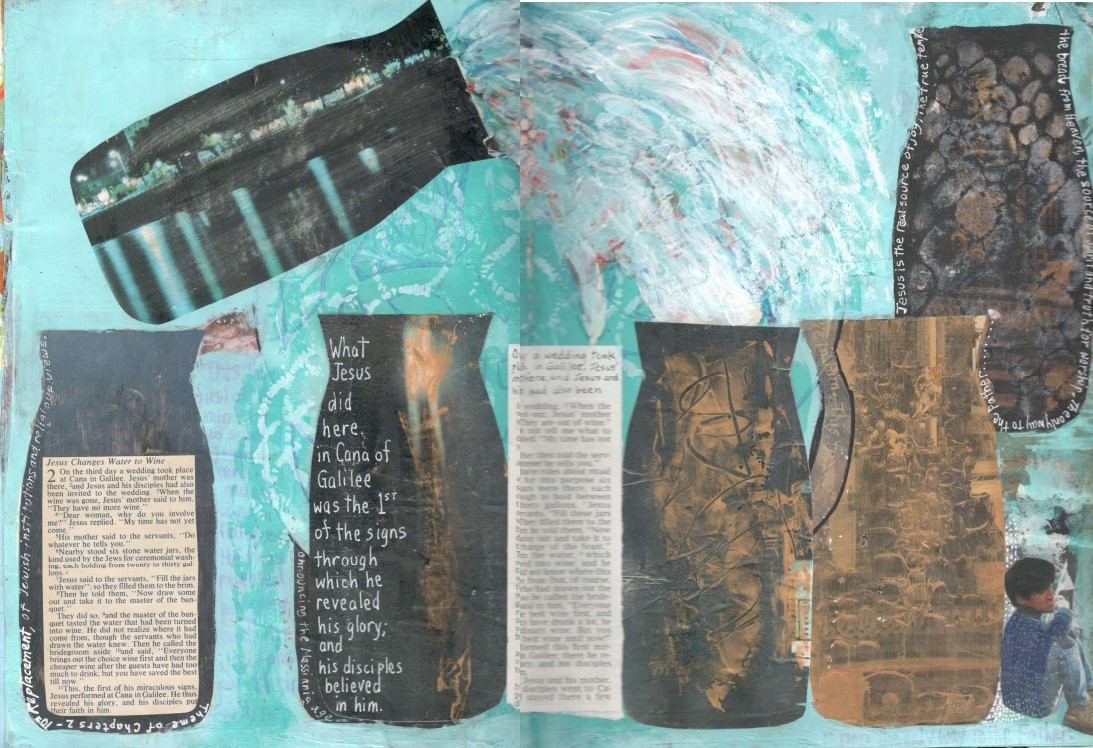
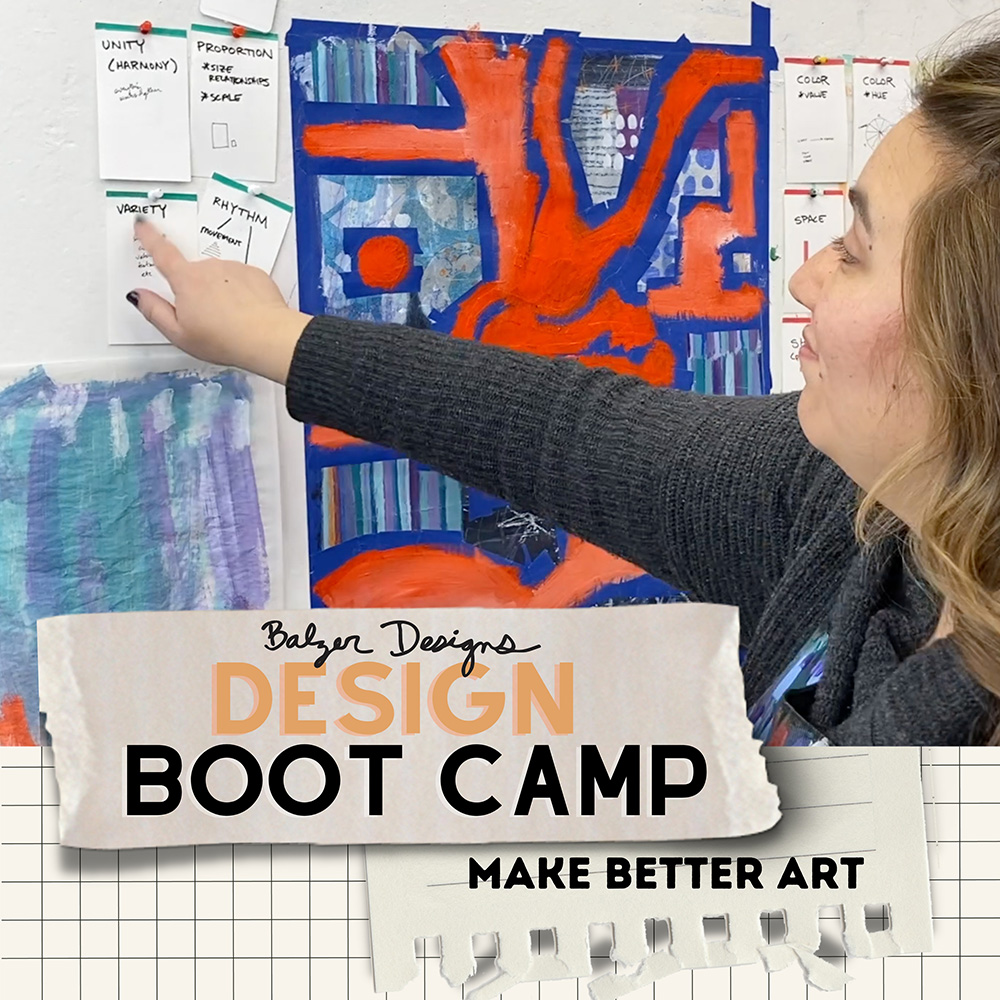
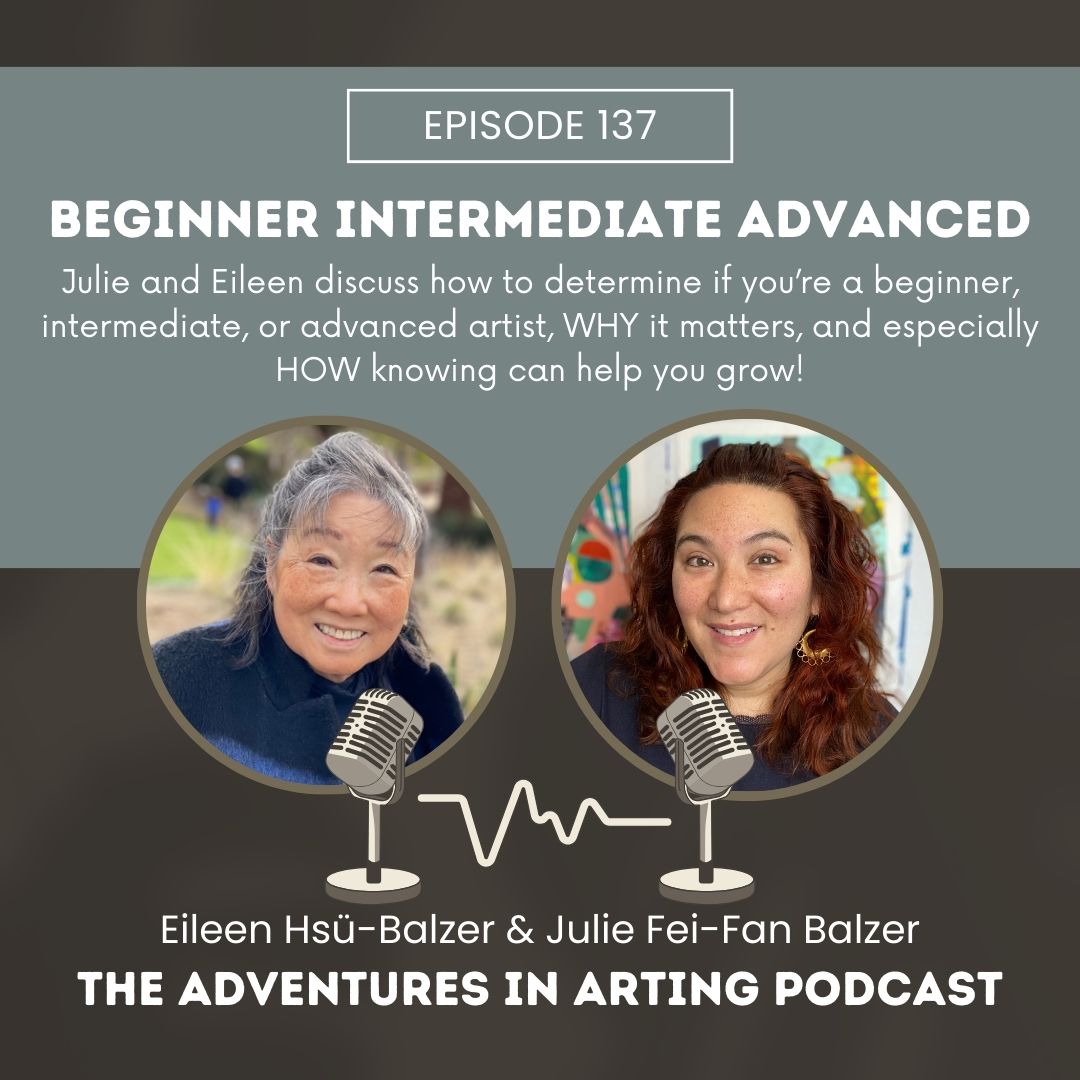
On today’s episode of The Adventures in Arting Podcast, Mom and I are discussing making art in bursts. This is the concept that you don’t need two or three hours or a full day to get art done. You can make a lot of art in short bursts of time — 10 minutes here and 10 minutes there. Be sure to listen to the end because we have a new segment: Listener Mail! I hope you enjoy the conversation. As always, you can listen to the podcast, subscribe to it on Apple Podcasts or Spotify, or watch the video version on YouTube. Here is the video that I mention during the podcast: So many of you noted that you like the transcript. So once again, here is the podcast transcript: Julie Hello and welcome to the Adventures in Arting Podcast. My name is Julie Fei-Fan Balzer and I am a working artist and mother. On this podcast — together with my super special co-host and my mom, Eileen Hsu-Balzer — We discuss all aspects of the artful, thoughtful life. Hey mom Eileen Hi Julie. Julie How are you? Eileen I’m good we’re having you know the snow is falling. The plow has come. I don’t feel trapped anymore so here I am. Where our topic today, which actually comes from a series of articles I’ve been reading about how even short really short bursts of exercise, meaning climbing a couple of sets of stairs or something, you know something like that only takes you 5 or 10 minutes, but it’s actually good for you in the way that doing a lot of exercise is good for you. They call it exercise snacks and I thought you can probably apply that to things other than exercise. Because I’ve always told you, for example, if something’s going to take 5 or 10 minutes, just go ahead and do it. Don’t keep putting it off like for example making your bed, or you know, putting your clothes away or making that phone call you’re supposed to make and then I thought, well, you can probably think of ways that it applies to art making. Because I think sometimes people are put off by the idea that they have to do like 3 hours… Julie Yeah, we’re really talking about art in bursts, right? And this is like the idea again that you don’t need two or three hours or a full day to get art done. Eileen Right. Julie You can make a lot of art in these little short bursts of time I’ve advocated for many years. The idea of 10 minutes here and 10 minutes there. In fact, I think you can find a video on my YouTube channel — I’ll try to find a link to it — that’s probably about 10 years old where I showed how an art journal spread came together for me, doing basically 10 minutes a day over a week, which together is 70 minutes. Which is, you know, a reasonable amount of time to spend on making something, but I didn’t have 70 minutes altogether. I was able to just do it in the little bursts, which is a great way to do it. And I also wanted to mention that we’re going to have a new segment at the end of the show: listener now. But I wanted to share one piece of the listener mail now because I think it’s relevant. Alice wrote in response to our recent podcast about organization and planning. She said: “Great talk as usual. Breaking organization down into small, manageable chunks is a big help for me. Otherwise, I get overwhelmed and just give up.” And so I thought that was right on point for what we’re talking about here. That basically, just like you were saying, you have always said to me — I’ve not always listened – if it’s going to take you less than 5 minutes, just do it now, and that’s what Alice is saying about organization too. Next, before we actually get into the discussion, I want to just cover a couple classes that are coming up. So design Bootcamp starts February 7th and I’ve got tons of stellar reviews that you can see from people who’ve been through the class. There are just a few spots left in the evening section. And this is a class that really teaches you how to understand how to make your art better, how to feel confident when you’re making choices. How to know what feedback from people is useful and what’s not? All that kind of stuff. So that’s a really exciting thing that’s happening. I have a couple in person classes happening throughout the 2023 year, here in my home studio Color Camp will be March 10 through 12. I was just prepping out some materials for that. We’re making some great reference books and all kinds of materials that you’re able to take home with you to be able to take everything you learned in class and really play with it. Then Printmakers party June 23rd through 25. You’re going to be making stencils and stamps and screens for screen printing, and we’re going to be using them and layering them, and you’re going to take home all those tools that you make. All supplies, by the way, are included in these classes. Eileen These are gonna be the first classes you’ve taught in your house because you moved in and immediately you had a baby and then you had a quarantine, so… Julie Yeah, I actually scheduled some classes for 2020, but they didn’t happen obviously because of the pandemic though. Sad. Finally the mixed media collage intensive in September. That’s a week or it’s five days the 11th through the 15th. It’s for intermediate and advanced students, so that means people who already know how to do collage and have some idea of where they’d like to go and this is a really intense class that’s focused on you creating a body of work during those five days. And there’ll be a lot of critique and conversation so I’m super excited about that, OK? Eileen People are afraid when you say the word critique. But they shouldn’t be. Julie There are, but they shouldn’t be, and I would say I would say the following: I mean, I grew up with the most the most….How do I say this nicely? You are so critical and yet so loving at the same time, and I think that that is something that I’ve learned about a critique, which is that nobody gets better if you tell them all the time, “Like, oh that’s so great, you’re so great.” But also, nobody gets better if you scream at them all the time. “You suck, you stink. Why are you doing this, why bother?!” There’s something in the middle. I should hope. Eileen Right? Julie Which is really about being able to say, like, listen: This is something I think is really strong about this and this is something where I see there could be some improvement. So for people who are in the group coaching program I run where — if you don’t know, once a month as part of the Super Learner monthly membership, we have a group coaching session. And when we do critique in the group coaching, one of the things is, I always ask people what is your question about this artwork? So it’s not like: “here’s my art. What do you think?” Cause like everybody’s got an opinion and you may not be interested, but you could say: “I’m really pleased with this piece, but I wonder if the orange line is too dominant?” That allows people to enter the conversation. That one is actually a conversation you want to have, right? Eileen Right. Julie And also to provide feedback in a sort of area that I think has like art terms in it that are not about taste. Eileen When I critique somebody’s writing, you know. I try to always say things like: Have you considered X or what do you think about Y? Because I think there are ways to say things that are more or less authoritarian. Nobody wants you to say: now do this. Julie Yes, so huge we talk all the time about how you shouldn’t say “you should put a red dot here.” Eileen Well, I remember one of your major complaints was when you took a…. Julie I have so many major complaints how do you categorize them? Eileen You do. It’s endless. That you were taking a painting class at the Art Students League in New York, and the person — the teacher — actually just came over and started drawing on your drawing. Julie He painted on my painting! And I get it. Because like it’s the laziest teacher thing on Earth. It’s easier for me to just do it on your painting than to talk you through understanding how to do it. Because then I just…but I don’t think…at least I can’t learn that way. Eileen Right? Julie I can’t learn by you coming and fixing it. It’s like my son is in a in a place where he constantly says to me: “You do it, you do it. Can you do it? I need help.” And I am constantly saying to him: “You can do hard things. You can do hard things. Try it again.” And sure enough, if he keeps trying, he can unscrew the cap on the bottle. He can, you know, reach the thing. He can manage to get his shirt over his head or whatever the problem is, and I think it is that thing of…it sometimes feels better to have somebody kind of rescue you from the situation…. Eileen It’s a lazy shortcut too. Julie It is, but then you don’t really learn how to do it. You don’t get the sense of a accomplishment, and so I think that can be frustrating sometimes when I have students who are like, “well, what should I do?” And I almost always shoot it back at them in question form as saying, “What is your goal? What do you want? What do you think the problem is? Where do you…you know what I mean?” Because that, I think, is how you teach someone to be able to keep fixing it when you’re not there to answer the question. Anyway, we got totally off topic as usual. Eileen Back to art snacks. Julie Yes, by the way: The reason I didn’t want to call this episode “art snacks” is because there is an art supply subscription box called Art Snacks. And I thought that might get confusing, but it is a great catchy name for the idea of, you know, making art in little bursts. So that’s why I called it “art in bursts.” OK, OK, so art in bursts. Let’s talk about that. So the example I gave previously was from art journaling, but I also — over the past like maybe three years — I’ve been using this “Art Parts” Theory to do a lot of the mixed media, collage, printmaking stuff that I do. And the theory of art parts is basically that you know, I know I’m going to need collage paper so I don’t sit down to make a piece of art and make the collage paper in that moment because, for me, that just is like a time suck. So I make the collage paper whenever I have time. The collage paper could be cleaning up a paint palette — like I was doing a video today and I ended up with extra paint. So I just made a bunch of collage paper because I have the paint out and I didn’t want to waste it. It could be the underpaper from where I’m working. It could be, you know, I feel like making…so I got some new stencils that I designed in the mail. I’ll make a couple of gelatin prints to just test them out and make sure they’re as fabulous as I know they are. And that will just become collage fodder so that when I actually sit down to create, I don’t have to do that step. Now, that said, there’s even more steps that you can shortcut, so I think a lot of people, for instance, think of having a sketchbook as a big fancy Michelangelo-esque experience, but a sketchbook can be a great place to just work out like a shape you want to use or a color scheme that’s interesting to you. A Design that you think would work. A thought that came to you in the middle of the night or in the shower. Random things that would be interesting pushed together. So that when… Eileen Right, and a note from something you’ve read. Julie Yeah, because I think…now this gets into the whole emotional labor conversation that I think this country is having right now about how women are doing the emotional labor, which is the idea that, you know, you may be 50/50 in terms of what you physically do in the house, but is the woman in the relationship putting together the list of who does what chores? Is she knowing, you know, the doctor’s name and the friends of the kids and the, you know, doing all that emotional stuff and I’m…. Eileen She’s checking to see if you’re running out of toilet paper. Exactly that there are a lot of other items in her brain that she carries around. Julie Right, and that’s the emotional labor, and so there is an emotional labor to art making. And so the question is, like I think you can even offload that into bursts and that for me is the purpose of a sketchbook as opposed to an art journal. I think of an art journal. I mean listen, it’s all semantics. At the end of the day, but for me, the way that I have mentally divided my practice. An art journal is more of a place that, for me, is either a repository for sort of random thoughts that are personal, or I’m just sort of diarrhea, trying out, you know stuff to think about kind of morning pages. If you’re a Julia Cameron and the artist way kind of person. And it’s also a place to make things that are experimental but kind of more finished. A sketchbook is often a place for me to keep lists, weird little sketches I want….It’s more like a reference tool. I guess what I would say is an art journal is a place to like play and a sketchbook is like a reference place and so if I want to spend 10 minutes concentrating really in a focused way, I can probably draw out a bunch of thumbnails, think of some color schemes — like really think hard and then I don’t have to do that thinking the rest of the time, I mean, I find when I’m working on anything, I tend to work in bursts because it’s very hard to sustain your attention consistently, consistently, consistently, consistently, consistently over a huge work day. So like if I’m video editing, I could be intensely in it and then. I need to take a break. Go La La la around the room. You know or do a different activity and then come back to it because you just can’t focus extremely for, you know, a really long period of time so bursts can be a useful way just to sort of switch out of what you’re doing. You know what I mean? And to sort of trick yourself into coming back with renewed energy to whatever the task is. Eileen Actually, physically it’s better for you to get up and not just sit in one place anyway. A little walking around. You think you’re not doing anything or you think you’re avoiding, but in fact it’s better for your body. Julie Yeah, and I think a lot of people unfortunately have taken like. I mean, I do it all the time too. You take your social media break. You’re like: Oh my brain is overwhelmed. I’ll just look at my, you know, Instagram or my Tik Tok for like 5 minutes just to see what’s happening and then, like you know, an hour later, you’re like oops. We all have these weird pockets of time. So if you have this moment of time, how could you change it now? Often times right, I happen to be in my art studio, where I have that time, so I have my art supplies. But people have pockets of time all the time, so the microwave is going. 5 minutes. The air fryer is on for 10 minutes and you’re there. So like, one of the differences between me and my husband is I will use that time to wash the dishes, or you know, deal with the trash or get the counter cleaned. Or like do some other task and he somehow… Eileen Water the plants, exactly. Julie So it’s like he’s waiting for the microwave to end, he’s waiting for the air fryer to end. He’s just standing there on his phone and I’m just and, you know…I think people are the way they are and I’m not about to change him and I love him very much, but I’m always, like: What are you doing? That’s time you’re wasting. And so I think it’s like there are people who swear by: I brush my teeth and while I’m brushing my teeth I stand on one leg and then I stand on the other. And I’m doing exercises, you know, so I think, whatever it is that you’re interested in, you find a way to do it. I was actually thinking about meal prepping. Have you ever meal prepped, mom? Eileen Well, yes and no. I do meal prep, especially if there are things I can do in advance and then leave it for later, but if I’m doing a recipe I’m familiar with, I might not have to because I just know where this stuff is and I go there. Julie Well, I’ve gotten semi obsessed with some of the meal prepping videos and there are a lot of v…
Full show notes at the publisher 
 Our TOPPODCAST Picks
  Stay Connected