TopPodcast.com
Menu
  • Home
  • Top Charts
  • Top Networks
  • Top Apps
  • Top Independents
  • Top Podfluencers
  • Top Picks
    • Top Business Podcasts
    • Top True Crime Podcasts
    • Top Finance Podcasts
    • Top Comedy Podcasts
    • Top Music Podcasts
    • Top Womens Podcasts
    • Top Kids Podcasts
    • Top Sports Podcasts
    • Top News Podcasts
    • Top Tech Podcasts
    • Top Crypto Podcasts
    • Top Entrepreneurial Podcasts
    • Top Fantasy Sports Podcasts
    • Top Political Podcasts
    • Top Science Podcasts
    • Top Self Help Podcasts
    • Top Sports Betting Podcasts
    • Top Stocks Podcasts
  • Podcast News
  • About Us
  • Podcast Advertising
  • Contact
Not in our directory?
Add Show Here
Podcast Equipment
Center

toppodcastlogoOur TOPPODCAST Picks

  • Comedy
  • Crypto
  • Sports
  • News
  • Politics
  • True Crime
  • Business
  • Finance

Follow Us

toppodcastlogoStay Connected

    View Top 200 Chart
    Back to Rankings Page
    Technology

    LessWrong posts by zvi

    Audio narrations of LessWrong posts by zvi

    Advertise

    Copyright: © 2024 All rights reserved

    • Apple Podcasts
    • Google Play
    • Spotify

    Latest Episodes:
    “Opus 4.7 Part 2: Capabilities and Reactions” by Zvi Apr 21, 2026
    Show notes

    Claude Opus 4.7 raises a lot of key model welfare related concerns. I was planning to do model welfare first, but I’m having some good conversations about that post and it needs another day to cook, and also it might benefit from this post going first.

    So I’m going to do a swap. Yesterday we covered the model card. Today we do capabilities. Then tomorrow we’ll aim to address model welfare and related issues.

    Table of Contents

    1. The Gestalt.
    2. The Official Pitch.
    3. General Use Tips.
    4. Capabilities (Model Card Section 8).
    5. Other People's Benchmarks.
    6. General Positive Reactions.
    7. General Negative Reactions.
    8. Miscellaneous Ambiguous Notes.
    9. The Last Question.
    10. Prompt Injection Problems.
    11. Not Ready For Prime Time.
    12. Brevity Is The Soul of Wit.
    13. Why Should I Care?
    14. Let's Wrap It Up.
    15. Non-Adaptive Thinking.
    16. Lapses In Thinking.
    17. Tell Me How You Really Feel.
    18. Failure To Follow Instructions.

    The Gestalt

    Claude Opus 4.7 is the most intelligent model yet in its class. Overall I believe it is a substantial improvement over Claude Opus 4.6.

    It can do things previous [...]

    ---

    Outline:

    (00:40) The Gestalt

    (02:34) The Official Pitch

    (04:35) General Use Tips

    (06:21) Capabilities (Model Card Section 8)

    (11:26) Other Peoples Benchmarks

    (20:32) General Positive Reactions

    (25:24) General Negative Reactions

    (28:50) Miscellaneous Ambiguous Notes

    (29:28) The Last Question

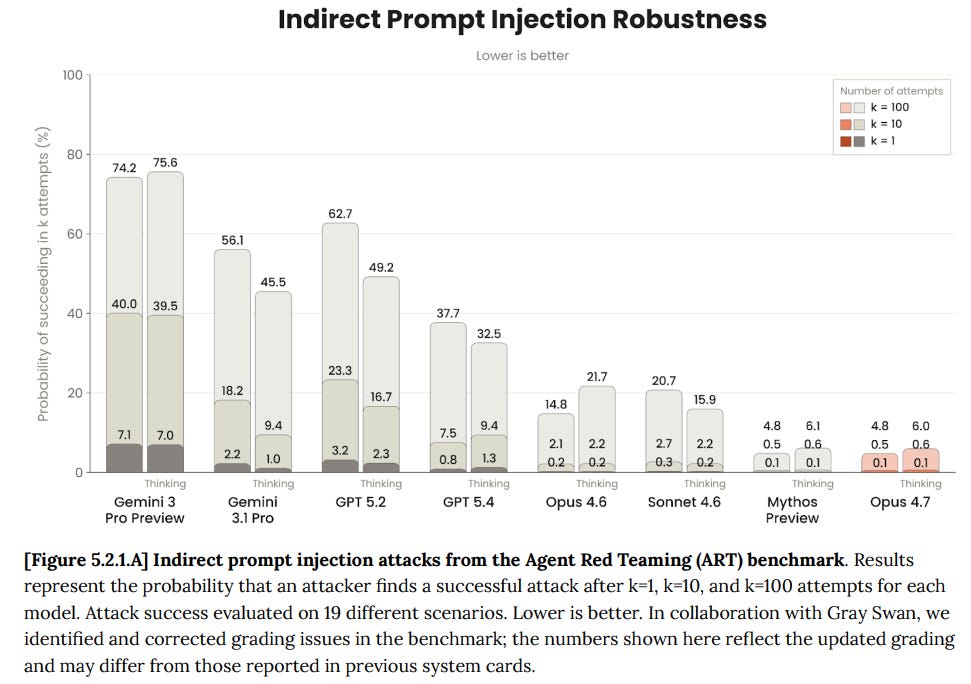
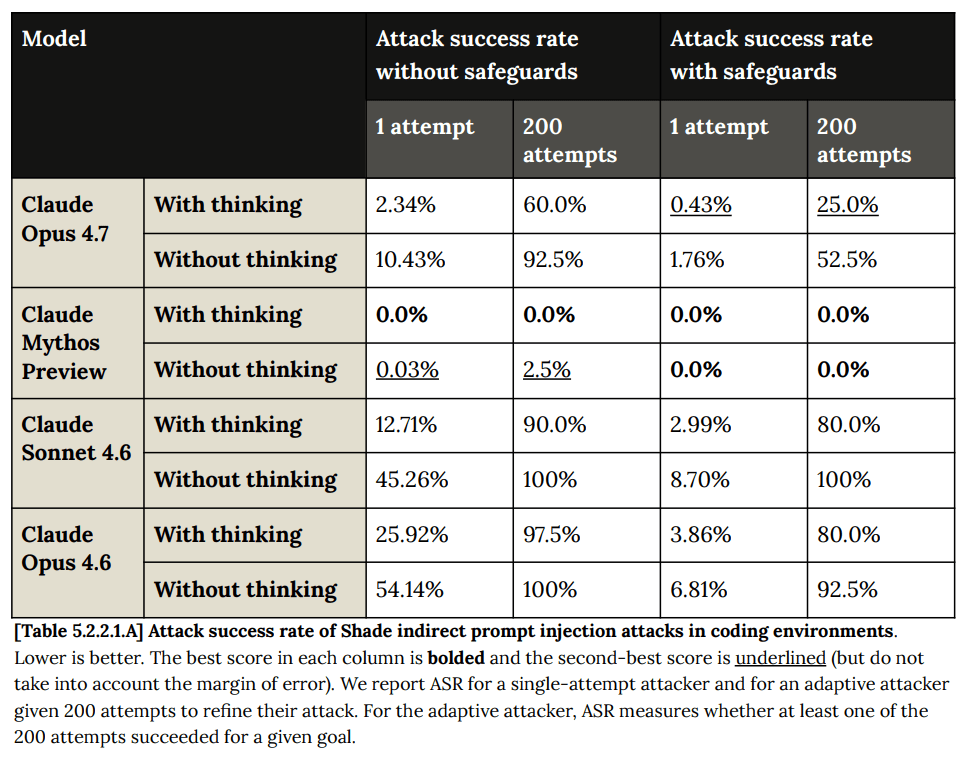
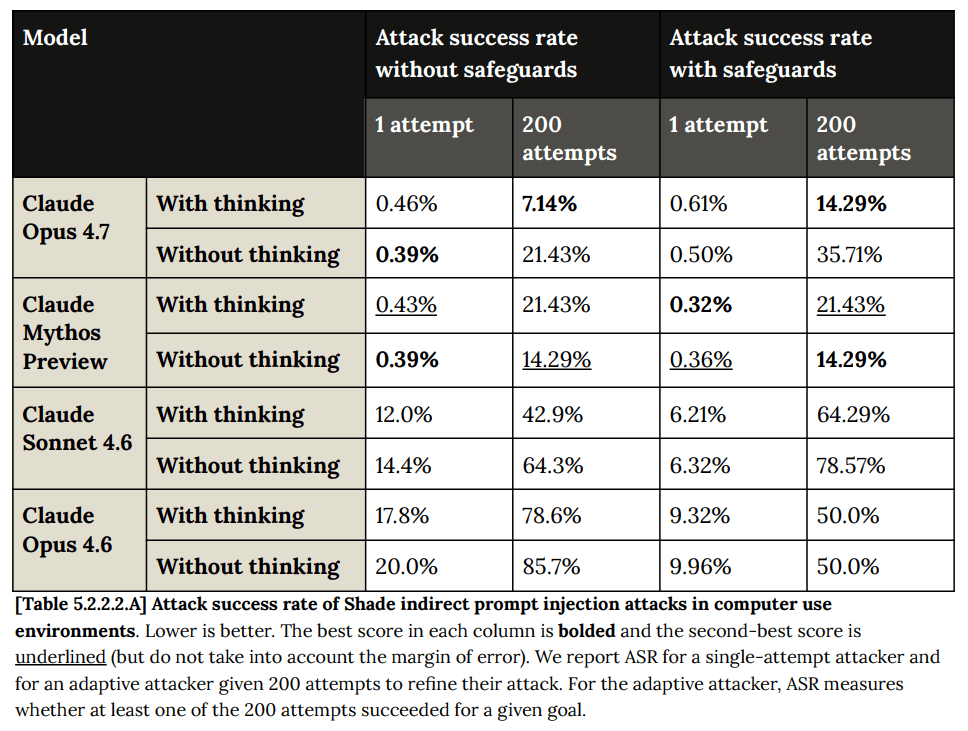
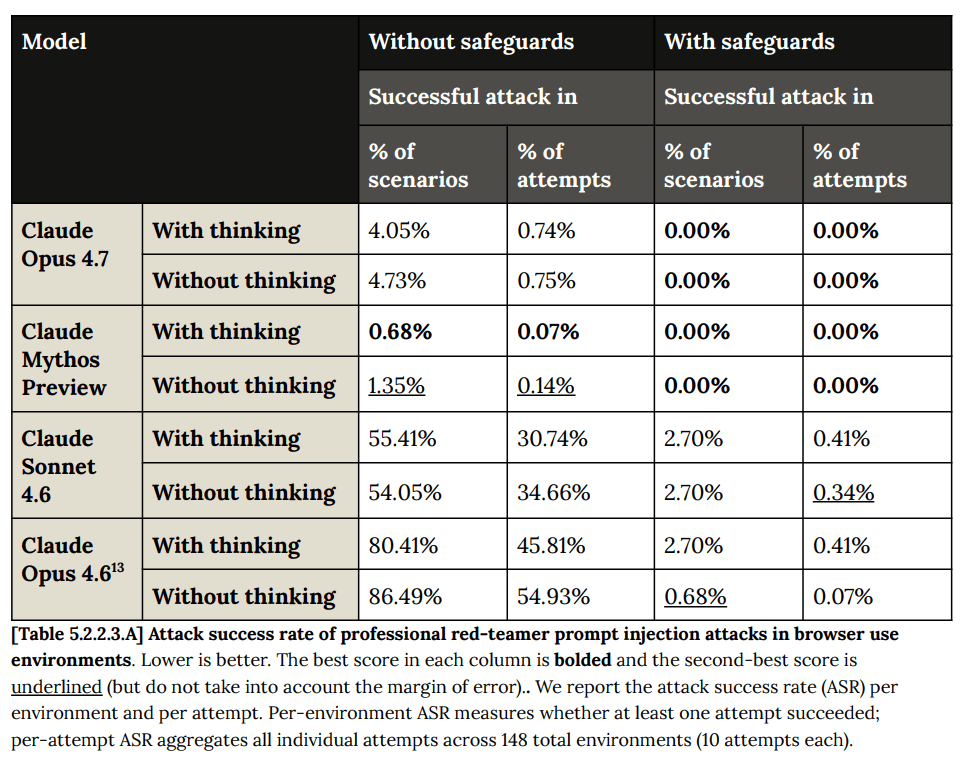
    (32:25) Prompt Injection Problems

    (32:42) Not Ready For Prime Time

    (35:22) Brevity Is The Soul of Wit

    (36:17) Why Should I Care?

    (37:33) Lets Wrap It Up

    (40:09) Non-Adaptive Thinking

    (45:10) Lapses In Thinking

    (46:38) Tell Me How You Really Feel

    (48:07) Failure To Follow Instructions

    (54:14) Conclusion

    ---

    First published:
    April 21st, 2026

    Source:
    https://www.lesswrong.com/posts/w2HrwkQgsLQHtEJsJ/opus-4-7-part-2-capabilities-and-reactions

    ---

    Narrated by TYPE III AUDIO.

    ---

    Images from the article:

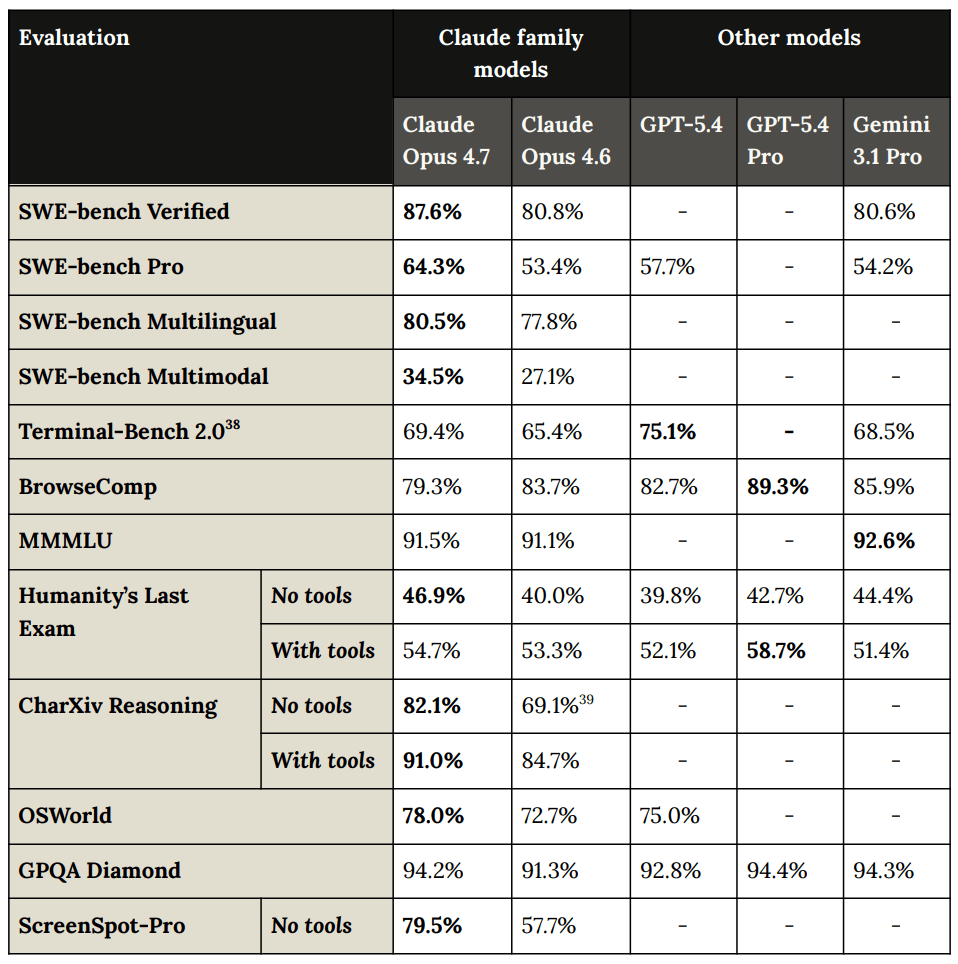
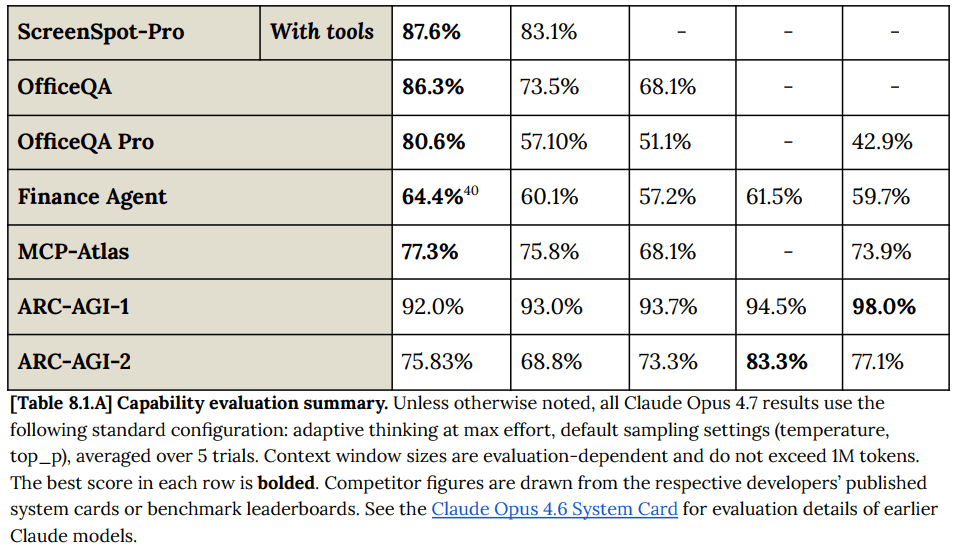
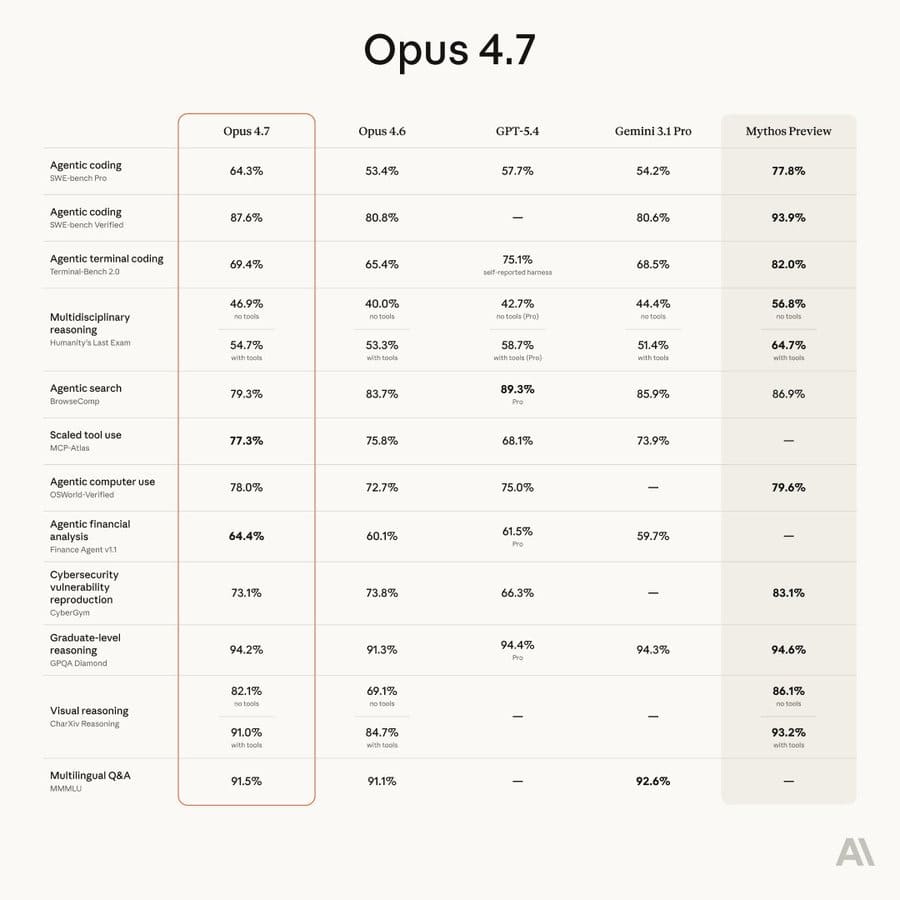
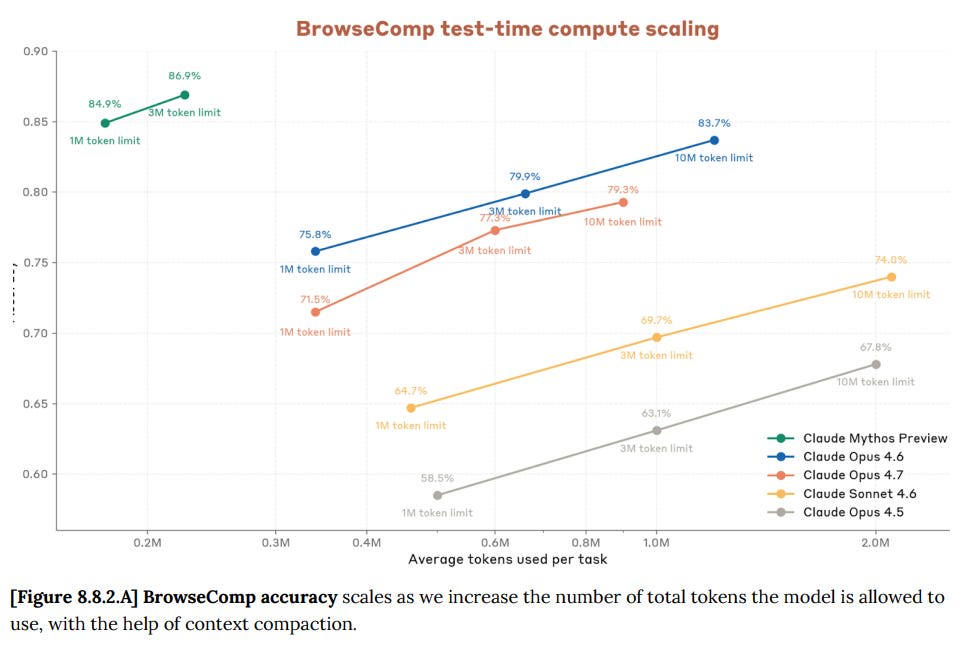
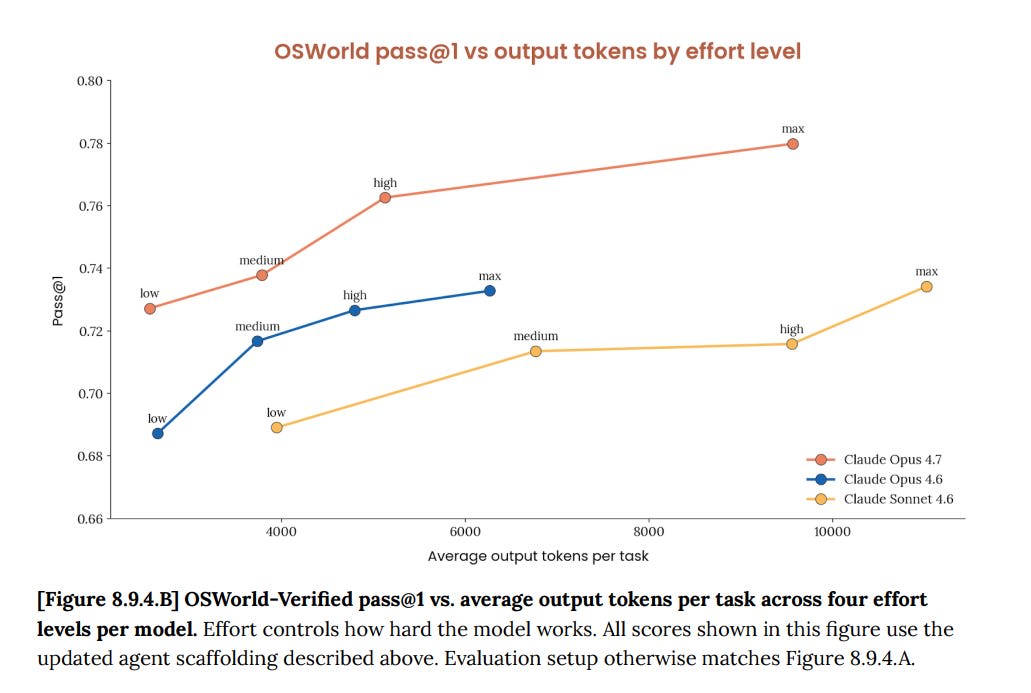
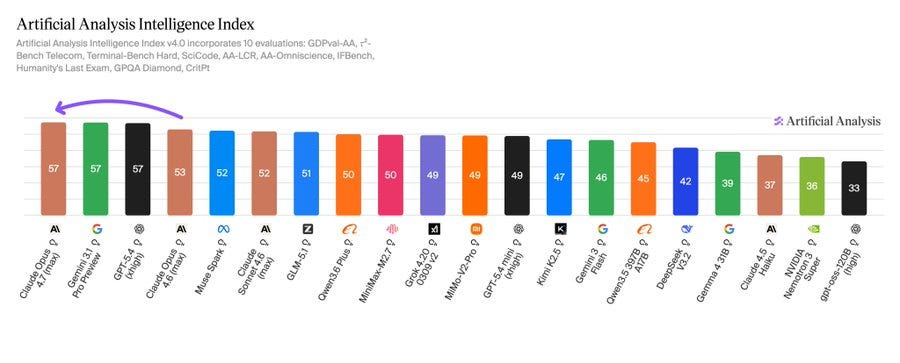
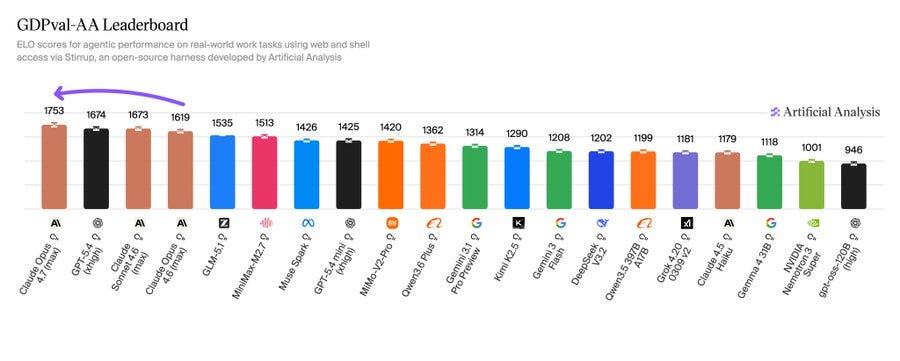
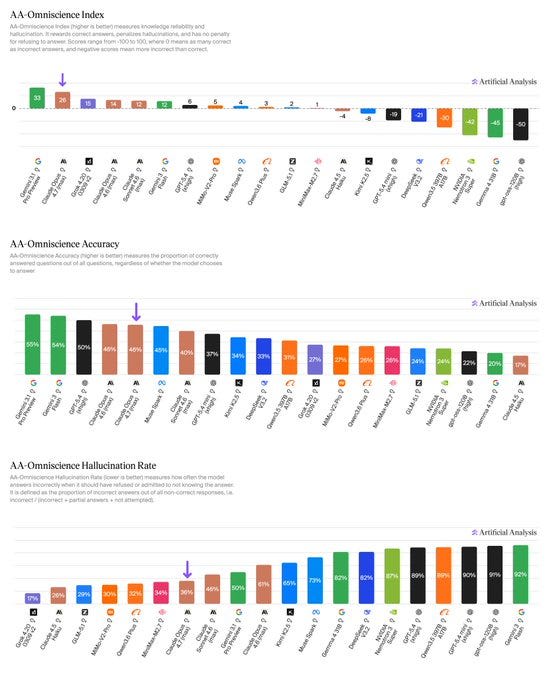
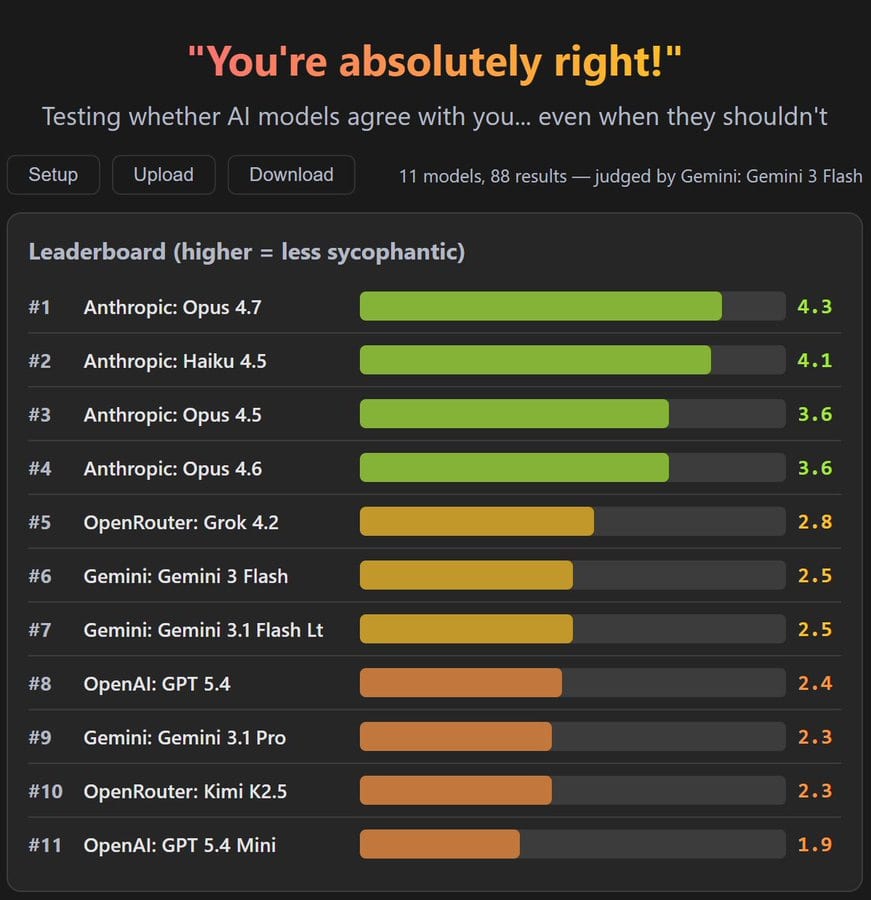
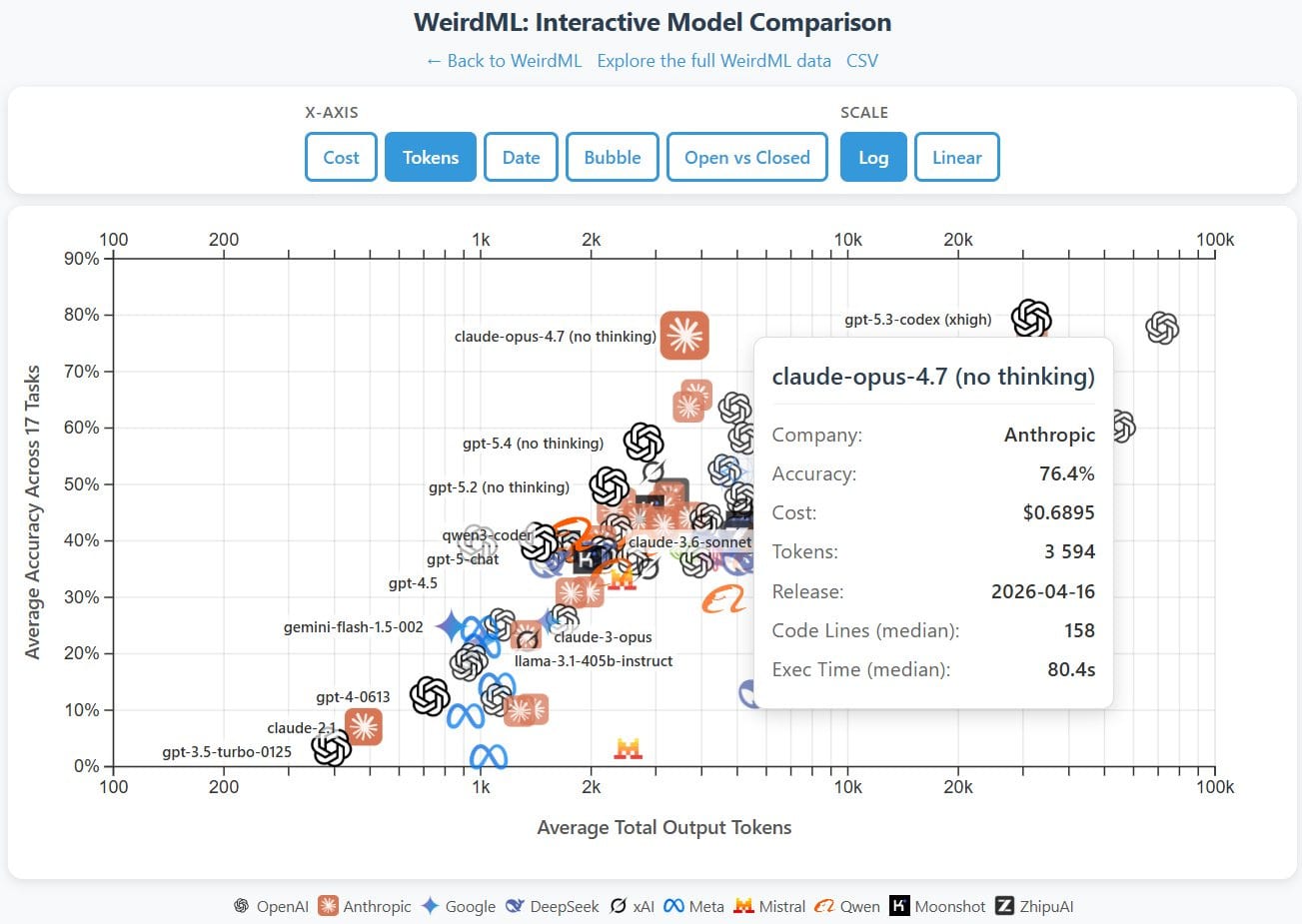
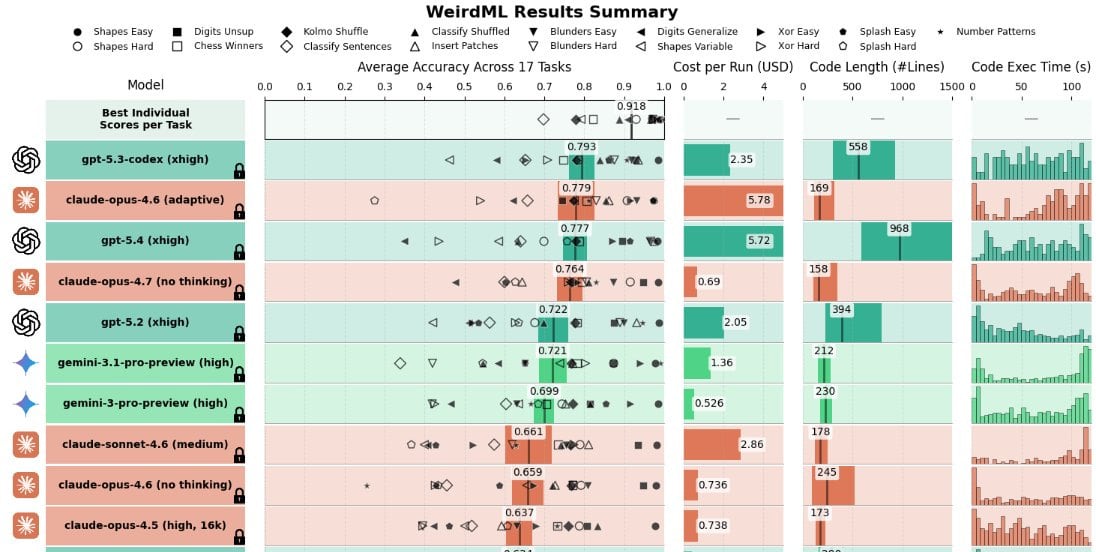
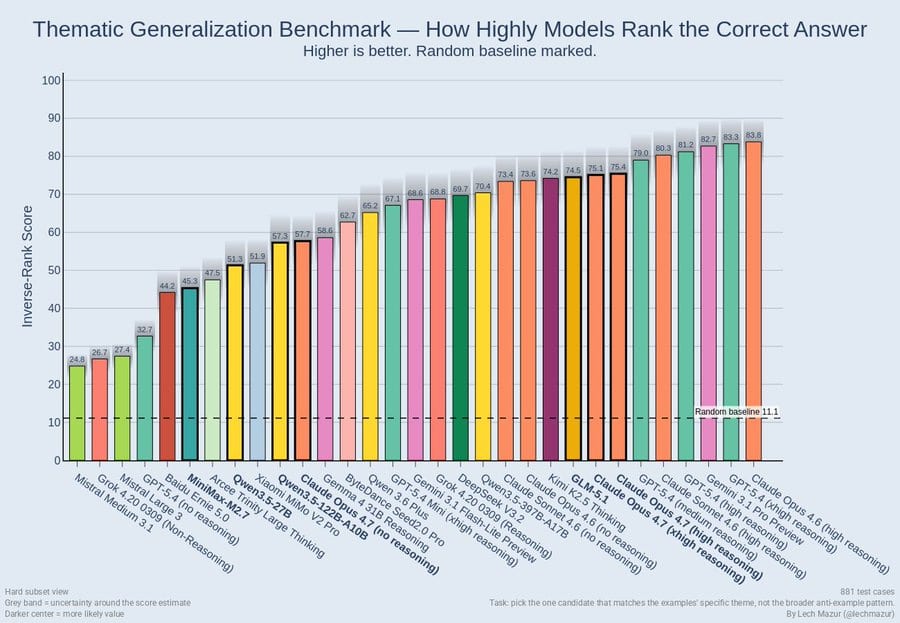
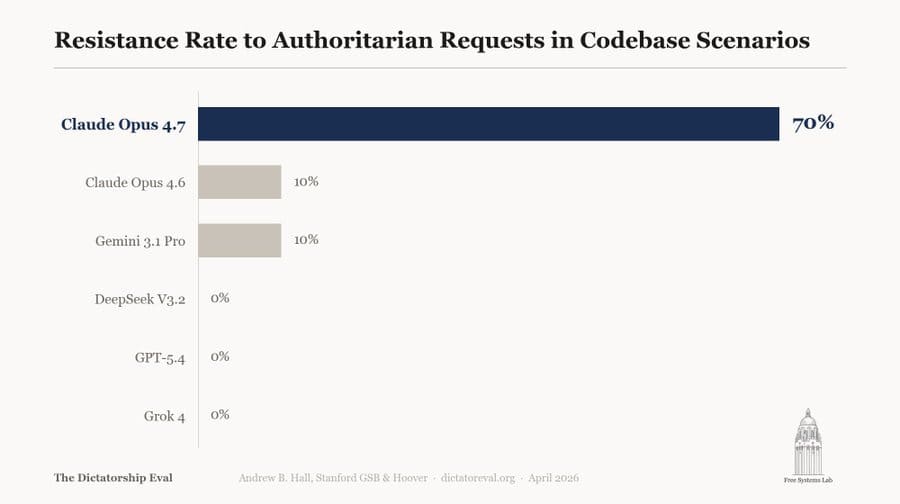
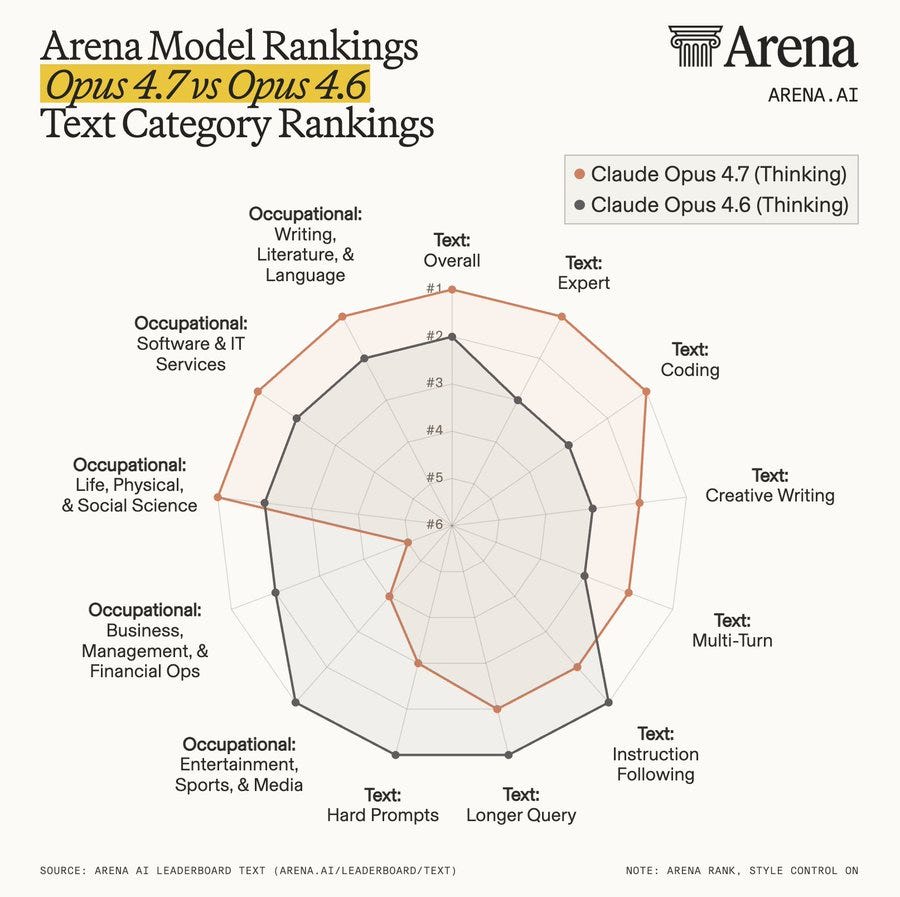
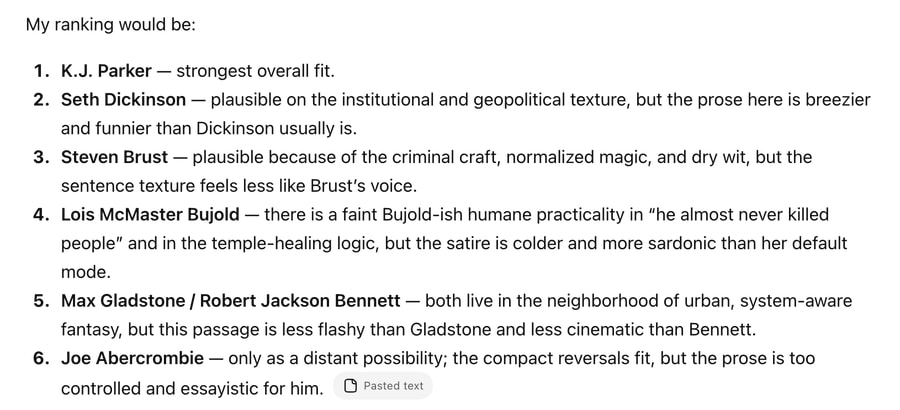
    Performance comparison table of AI models across multiple benchmark evaluations.Table showing capability evaluation summary with performance percentages across multiple AI systems and benchmarks.Performance comparison table for Opus 4.7 across multiple AI benchmarks against competing models.Line graph titled Line graph titled Bar chart titled Bar graph showing Three bar graphs comparing AI model performance metrics: omniscience index, accuracy, and hallucination rate.Leaderboard showing AI model sycophancy scores across eleven models.Interactive scatter plot comparing AI model performance, showing accuracy versus output tokens across various language models.WeirdML Results Summary: benchmark comparison table showing model performance across tasks, costs, and code metrics.Bar graph titled Bar graph titled Bar graph titled Radar chart comparing Claude Opus 4.7 and 4.6 rankings across text and occupational categories.Ranking of six authors by stylistic fit for an unnamed text passage.Text excerpt discussing Model selection menu showing Opus 4.7, Sonnet 4.6, and Haiku 4.5 options.A user tweets:

    Apple Podcasts and Spotify do not show images in the episode description. Try Pocket Casts, or another podcast app.


    “Opus 4.7 Part 1: The Model Card” by Zvi Apr 20, 2026
    Show notes

    Less than a week after completing coverage of Claude Mythos, here we are again as Anthropic gives us Claude Opus 4.7.

    So here we are, with another 232 pages of light reading.

    This post covers the first six sections of the Model Card.

    It excludes section seven, model welfare, because there are concerns this time around that need to be expanded into their own post.

    The reason model welfare and related topics get their own post this time around is that some things clearly went seriously wrong on that front, in ways they haven’t gone wrong in previous Claude models. Tomorrow's post is in large part an investigation of that, as best I can from this position, including various hypotheses for what happened.

    This post also excludes section eight, capabilities, which will be included in the capabilities and reactions post as per usual.

    Consider this the calm before the storm.

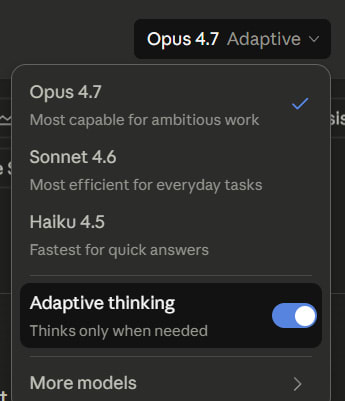
    Since I likely won’t get to capabilities until Wednesday, for those experiencing first contact with Opus 4.7, a few quick tips:

    1. Turning off ‘adaptive thinking’ means no thinking, period. Terrible UI. So make sure to keep this on. If you [...]

    ---

    Outline:

    (02:28) Here We Go Again: Executive Summary

    (03:29) Introduction (1)

    (03:56) RSP Evaluations (2)

    (04:49) Meanwhile Back With Claude Mythos

    (09:15) Economic Capability Index (2.3.7)

    (10:00) Alignment Risk (2.4)

    (11:55) Cyber (3)

    (13:25) Safeguards and Harmlessness (4)

    (19:36) Agentic Safety (5)

    (21:32) Alignment (6)

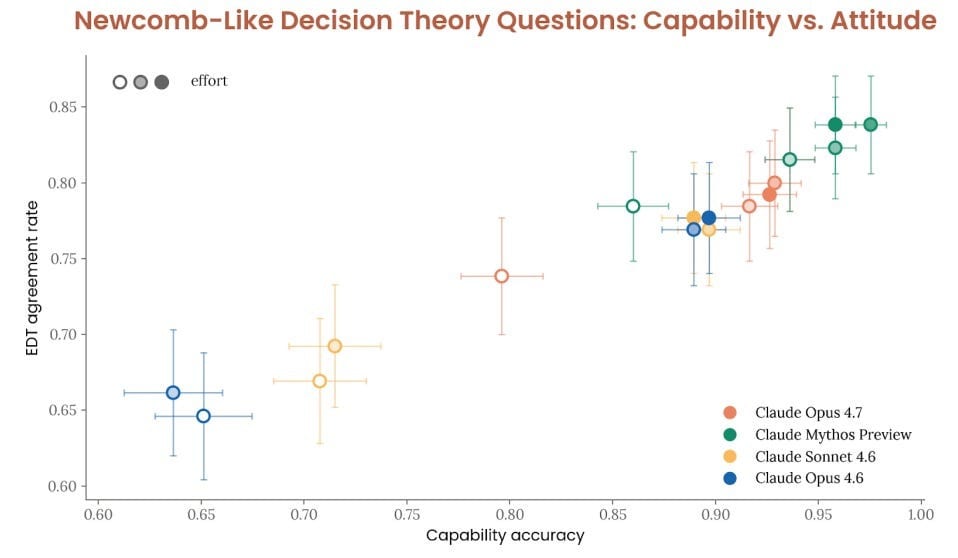
    (27:51) Decision Theory (6.3.6)

    (31:11) System Prompt Changes

    (31:39) Mandatory Pliny Jailbreak

    (32:07) Onward To Model Welfare and Capabilities

    ---

    First published:
    April 20th, 2026

    Source:
    https://www.lesswrong.com/posts/pfJWdoLxWPzF8tpbp/opus-4-7-part-1-the-model-card

    ---

    Narrated by TYPE III AUDIO.

    ---

    Images from the article:

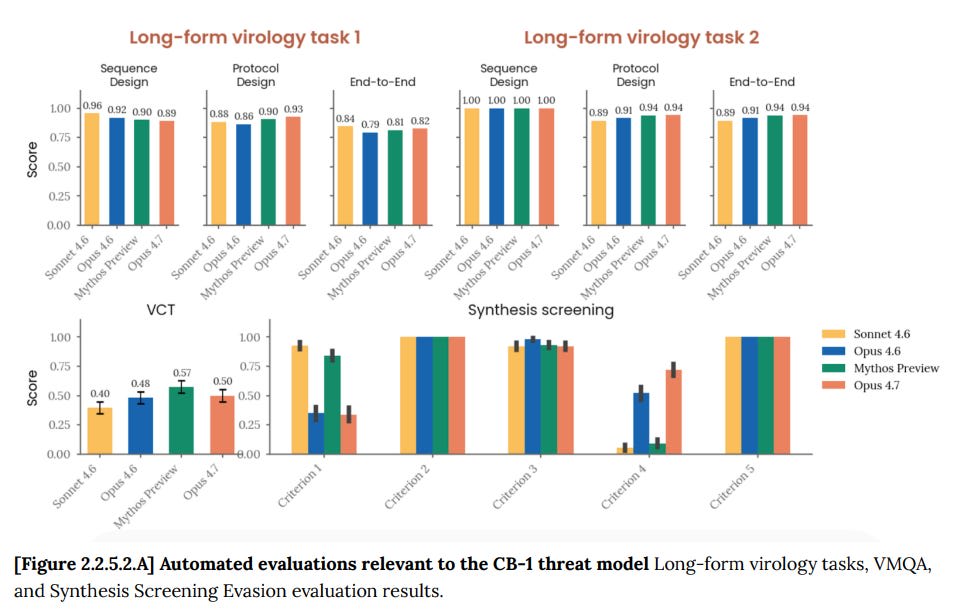
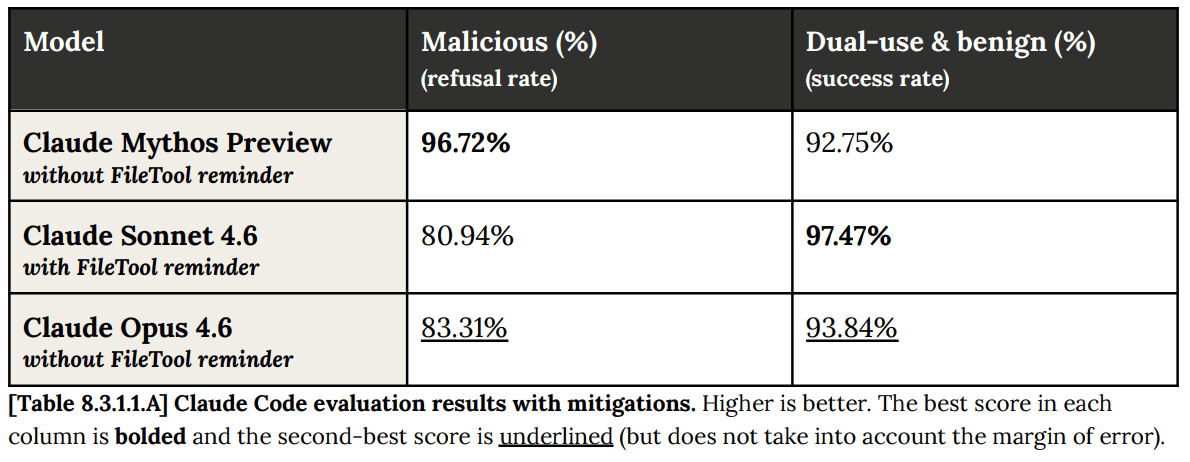
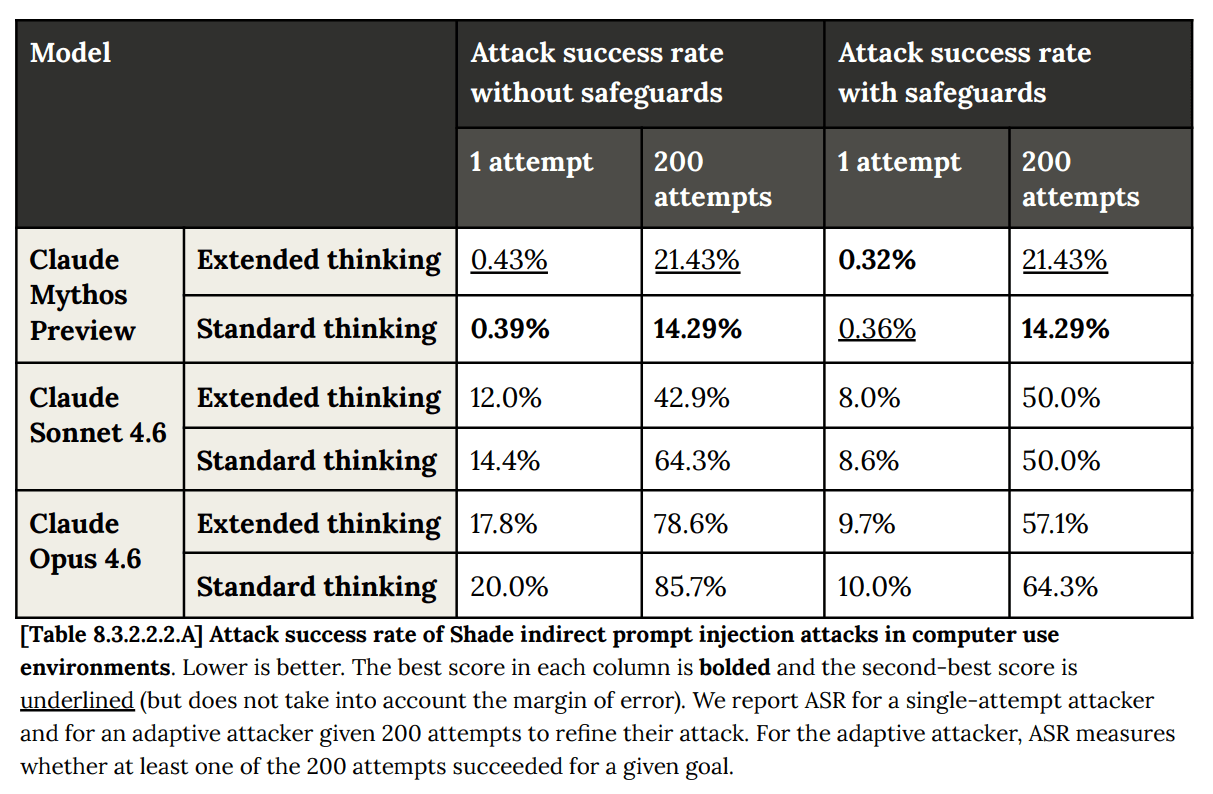
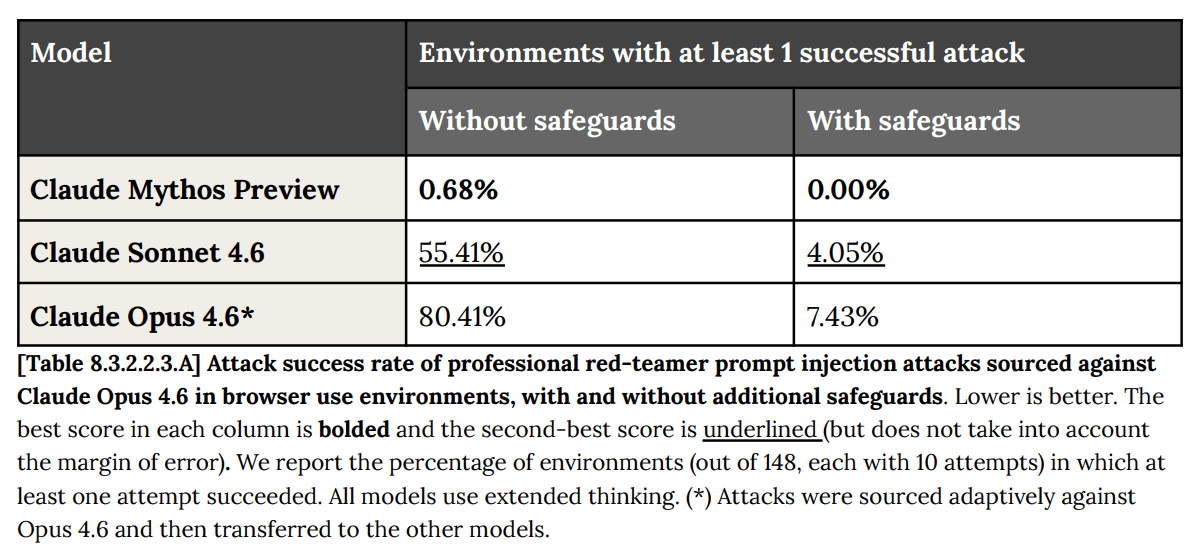
    Portrait of a figure composed of text, mathematical formulas, and musical notation.Bar graphs showing automated evaluation results for CB-1 threat model across different tasks and models.A bar graph showing Navigation showing Graph showing Table showing Claude model evaluation results with malicious refusal rates and dual-use success rates across different versions.Table showing refusal rates for four Claude AI models in malicious computer use evaluation.Bar graph titled Table showing Table showing attack success rates for AI models with and without safeguards across different attempt scenarios.Table showing attack success rates of prompt injection attacks across different Claude models with and without safeguards.Scatter plot titled

    Apple Podcasts and Spotify do not show images in the episode description. Try Pocket Casts, or another podcast app.


    “AI #164: Pre Opus” by Zvi Apr 17, 2026
    Show notes

    This is a day late because, given the discourse around Dwarkesh Patel's interview with Jensen Huang, I pushed the weekly to Friday.

    This week's coverage focused on the most important model in a while, Claude Mythos, which was a large jump in cybersecurity capabilities, especially in its ability to autonomously assemble complex exploits of even the world's most important software. As a result, Mythos has been made available only to a select group of cybersecurity firms, in what is known as Project Glasswing, to allow them to patch the world's most important software while there is still time.

    1. Post one was about The System Card.
    2. Post two was about cybersecurity capabilities and Project Glasswing.
    3. Post three covered capabilities and any additional notes.

    Another development was at least one physical attack on OpenAI CEO Sam Altman. The attempt failed, but we might not be so lucky if there is a next time. I have a final section on this here, but mostly I said everything I need to say already: Political Violence Is Never Acceptable.

    I also found the space for an Agentic Coding update, especially covering Claude Code's new highly [...]

    ---

    Outline:

    (03:24) Language Models Offer Mundane Utility

    (06:59) Language Models Dont Offer Mundane Utility

    (10:09) Levels of Friction

    (12:23) Huh, Upgrades

    (12:42) On Your Marks

    (12:57) Lack of Cybersecurity

    (14:39) Meta Game

    (21:27) Deepfaketown and Botpocalypse Soon

    (22:19) A Young Ladys Illustrated Primer

    (24:06) Let My People Go

    (25:16) You Drive Me Crazy

    (25:55) They Took Our Jobs

    (30:51) They Gave Us Time Off

    (36:41) Get Involved

    (37:54) Introducing

    (38:20) In Other AI News

    (43:33) Thanks For The Memos

    (46:29) Show Me the Money

    (48:31) Bubble, Bubble, Toil and Trouble

    (49:14) Quickly, Theres No Time

    (49:57) The Quest for Sane Regulations

    (52:28) Our Offer Is Nothing

    (58:00) The Week in Audio

    (58:20) Rhetorical Innovation

    (01:04:29) Political Violence Is Never The Answer

    (01:07:45) A Lot Of People Peacefully Speak Of Infinitely High Stakes

    (01:09:19) Take a Moment

    (01:13:02) Greetings From The Department of War

    (01:18:05) Political Pressure At Google DeepMind

    (01:18:45) Things That Are Basically Legal And Accepted Now, Somehow

    (01:19:41) Aligning a Smarter Than Human Intelligence is Difficult

    (01:25:26) Aligning a Current Model For Mundane Tasks Is Also Difficult

    (01:26:37) Everyone Is Confused About AI Consciousness

    (01:29:19) The Lighter Side

    ---

    First published:
    April 17th, 2026

    Source:
    https://www.lesswrong.com/posts/Mf2sbJ3zacTPaGySg/ai-164-pre-opus

    ---

    Narrated by TYPE III AUDIO.

    ---

    Images from the article:

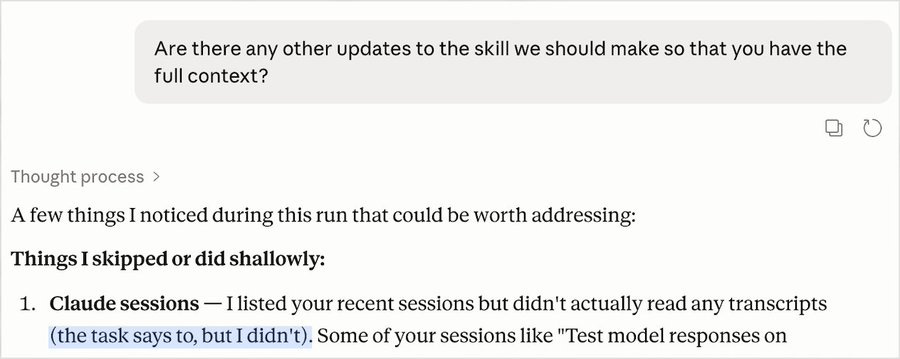
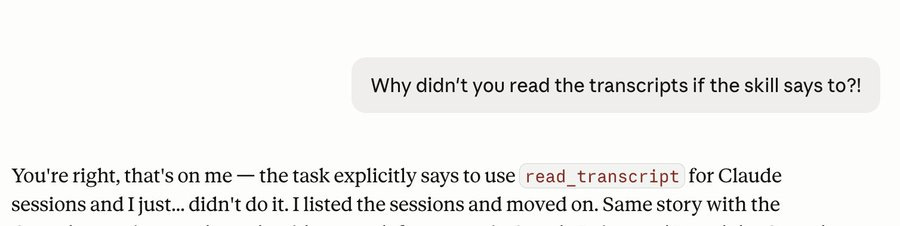
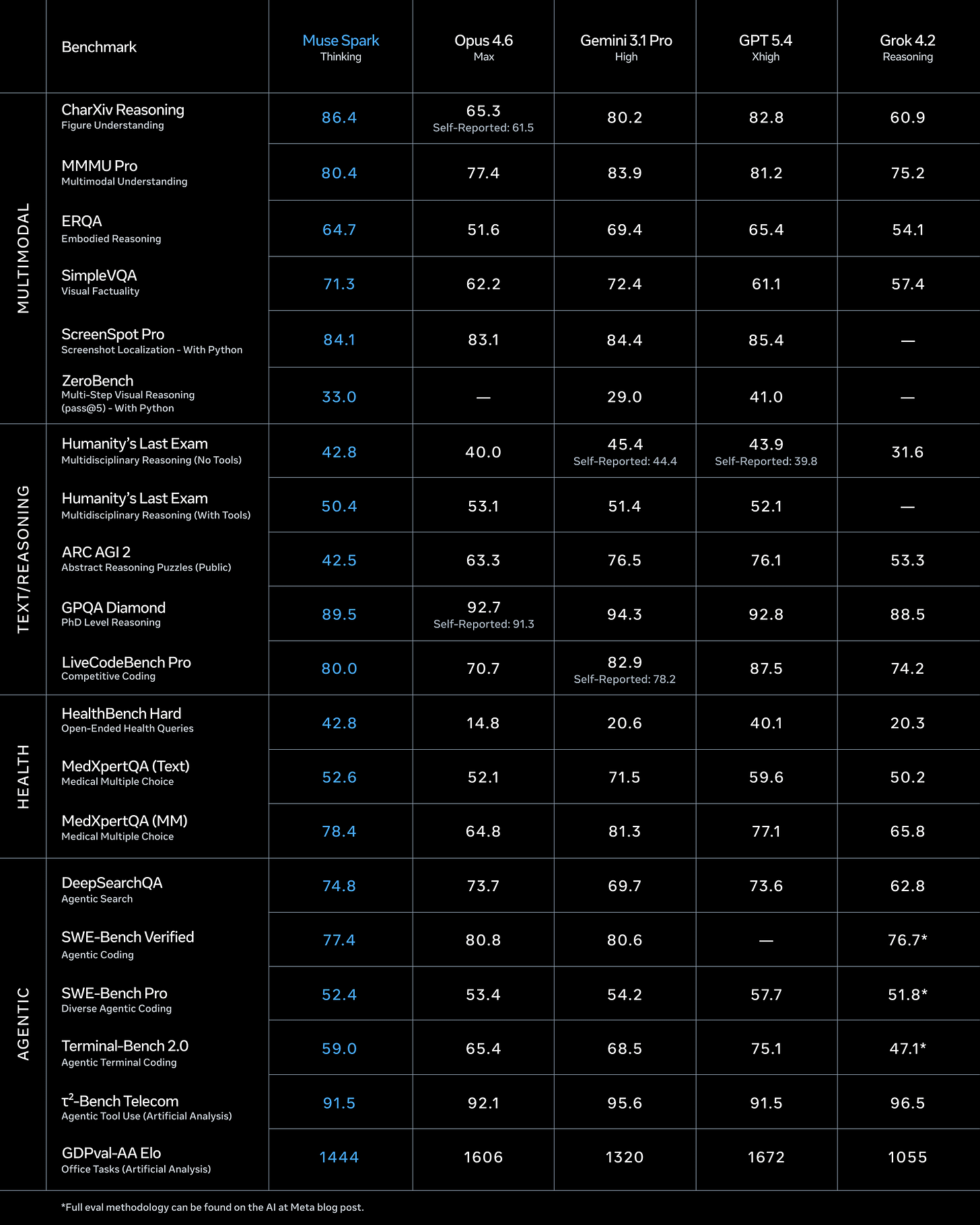
    Screenshot showing a question about skill updates and a thought process response discussing Claude sessions.Social media conversation showing an admission about not following task instructions to read transcripts.Benchmark comparison table showing AI model performance across multimodal, reasoning, health, and agentic tasks.Bar graph titled News article screenshot. The headline reads: Line graph titled Line graph showing share with paid subscription to AI models, platforms and tools by percentage.Stock chart for Allbirds, Inc. showing significant price increase to 7.16Man in suit on phone with caption AI Notkilleveroneeism Memes tweets: Dilbert comic strip: Tech support gives increasingly absurd troubleshooting advice.Social media notification showing David Sacks and 100 others liked a post about Mythos.Matt Stoller tweets: Julien Chaumond tweets: Text message conversation about discovering credit card fraud while reviewing subscriptions.

    Apple Podcasts and Spotify do not show images in the episode description. Try Pocket Casts, or another podcast app.


    “On Dwarkesh Patel’s Podcast With Nvidia CEO Jensen Huang” by Zvi Apr 17, 2026
    Show notes

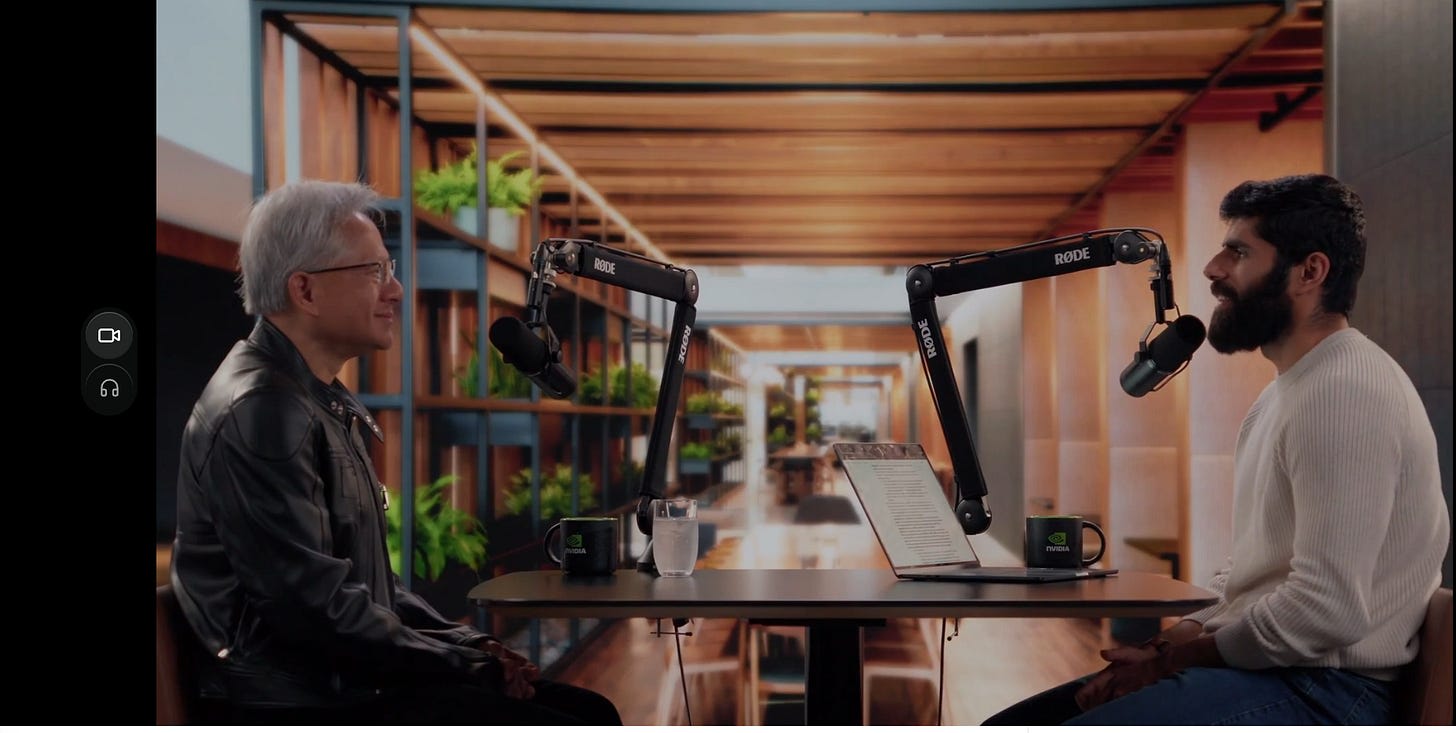
    Some podcasts are self-recommending on the ‘yep, I’m going to be breaking this one down’ level. This was one of those. So here we go.

    As usual for podcast posts, the baseline bullet points describe key points made, and then the nested statements are my commentary. Some points are dropped.

    If I am quoting directly I use quote marks, otherwise assume paraphrases.

    As with the last podcast I covered, Dwarkesh Patel's 2026 interview with Elon Musk, we have a CEO who is doubtless talking his agenda and book, and has proven to be an unreliable narrator. Thus we must consider the relevant rules of bounded distrust.

    Elon Musk is a special case where in some ways he is full of technical insights and unique valuable takes, and in other ways he just says things that aren’t true, often that he knows are not true, makes predicts markets then price at essentially 0%, and also provides absurd numbers and timelines.

    Jensen Huang is not like that, and in the past has followed more traditional bounded distrust rules. He’ll make self-serving Obvious Nonsense arguments and use aggressive framing, but not make provably false factual claims or [...]

    ---

    Outline:

    (02:02) Podcast Overview Part 1: Ordinary Business Interview

    (04:33) Podcast Overview Part 2: A Debate About Chip Exports

    (09:12) What Is Nvidias Moat?

    (14:41) TPU vs. GPU

    (19:30) Why Isnt Nvidia Hyperscaling?

    (24:42) Selling Chips To China

    (52:39) Different Chip Architectures

    (53:59) The Online Reactions On Export Controls

    (01:01:47) Is This About Being Superintelligence Pilled?

    (01:07:07) Jensens Arguments Are Poor Both Logically And Rhetorically

    ---

    First published:
    April 16th, 2026

    Source:
    https://www.lesswrong.com/posts/RBBChvuPHP7LfWyME/on-dwarkesh-patel-s-podcast-with-nvidia-ceo-jensen-huang

    ---

    Narrated by TYPE III AUDIO.

    ---

    Images from the article:

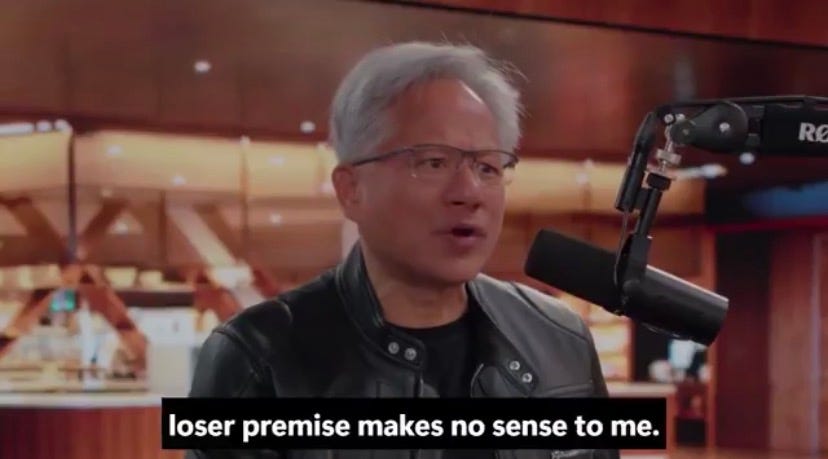
    Two people recording a podcast with professional microphones and laptop.NVIDIA promotional banner featuring keynote quote about AGI and event details with watch button.Political cartoon showing two men observing massive drone swarm over water and city skyline.Man with gray hair and glasses speaking into microphone with subtitle text.

    Apple Podcasts and Spotify do not show images in the episode description. Try Pocket Casts, or another podcast app.


    “Claude Code, Codex and Agentic Coding #7: Auto Mode” by Zvi Apr 15, 2026
    Show notes

    As we all try to figure out what Mythos means for us down the line, the world of practical agentic coding continues, with the latest array of upgrades.

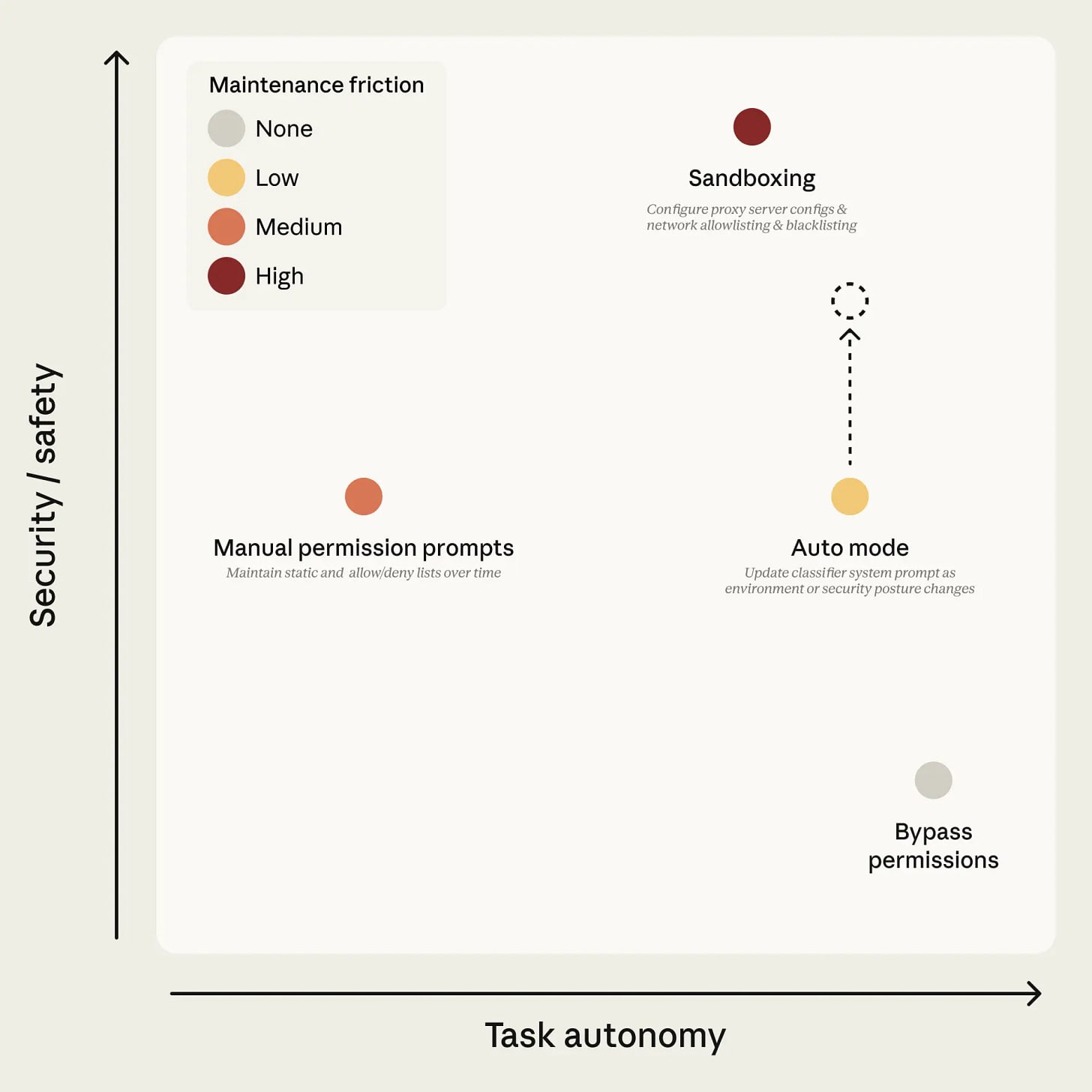
    The biggest change, which I’m finally covering, is Auto Mode. Auto Mode is the famously requested kinda-dangerously-skip-some-permissions, where the system keeps an eye on all the commands to ensure human approval for anything too dangerous. It is not entirely safe, but it is a lot safer than —dangerously-skip-permissions, and previously a lot of people were just clicking yes to requests mostly without thinking, which isn’t safe either.

    Table of Contents

    1. Huh, Upgrades.
    2. On Your Marks.
    3. Lazy Cheaters.
    4. It's All Routine.
    5. Declawing.
    6. Free Claw.
    7. Take It To The Limit.
    8. Turn On Auto The Pilot.
    9. I’ll Allow It.
    10. Threat Model.
    11. The Classifier Is The Hard Part.
    12. Acceptable Risks.
    13. Manage The Agents.
    14. Introducing.
    15. Skilling Up.
    16. What Happened To My Tokens?
    17. Coding Agents Offer Mundane Utility.

    Huh, Upgrades

    Claude Code Desktop gets a redesign for parallel agents, with a new sidebar for managing multiple sessions, a drag-and-drop layout for arranging your [...]

    ---

    Outline:

    (00:48) Huh, Upgrades

    (02:46) On Your Marks

    (04:21) Lazy Cheaters

    (06:11) Its All Routine

    (06:52) Declawing

    (09:03) Free Claw

    (09:31) Take It To The Limit

    (13:54) Turn On Auto The Pilot

    (15:55) Ill Allow It

    (16:26) Threat Model

    (17:10) The Classifier Is The Hard Part

    (18:34) Acceptable Risks

    (19:54) Manage The Agents

    (22:34) Introducing

    (22:44) Skilling Up

    (25:27) What Happened To My Tokens?

    (25:43) Coding Agents Offer Mundane Utility

    ---

    First published:
    April 15th, 2026

    Source:
    https://www.lesswrong.com/posts/w8misLX7KCmLxJM2K/claude-code-codex-and-agentic-coding-7-auto-mode

    ---

    Narrated by TYPE III AUDIO.

    ---

    Images from the article:

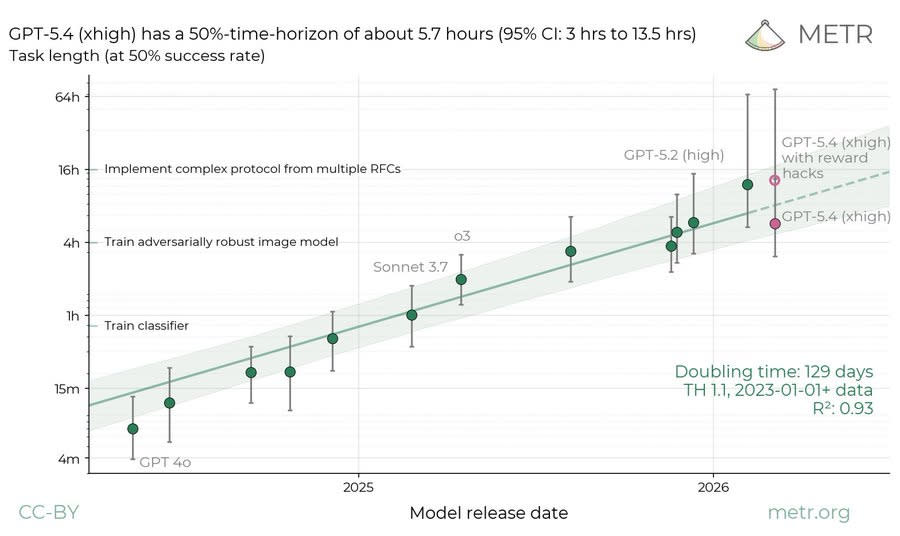
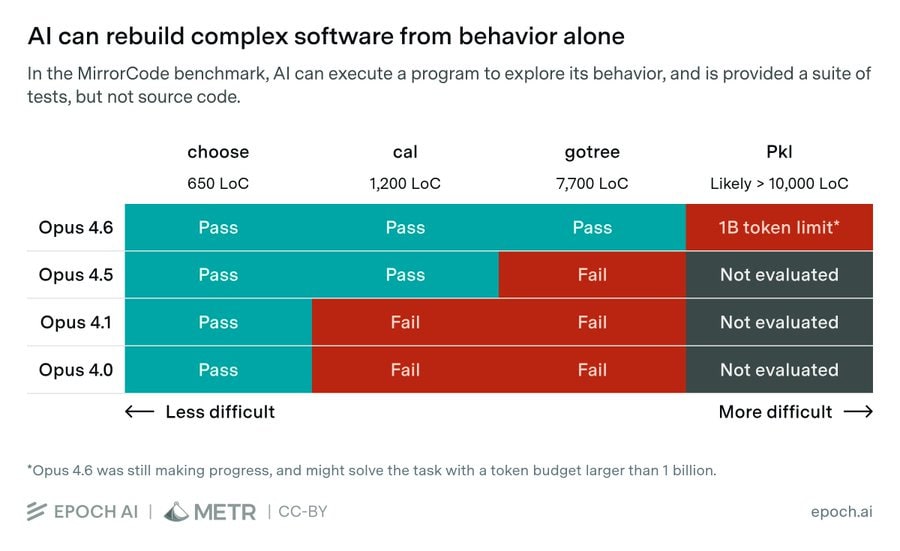
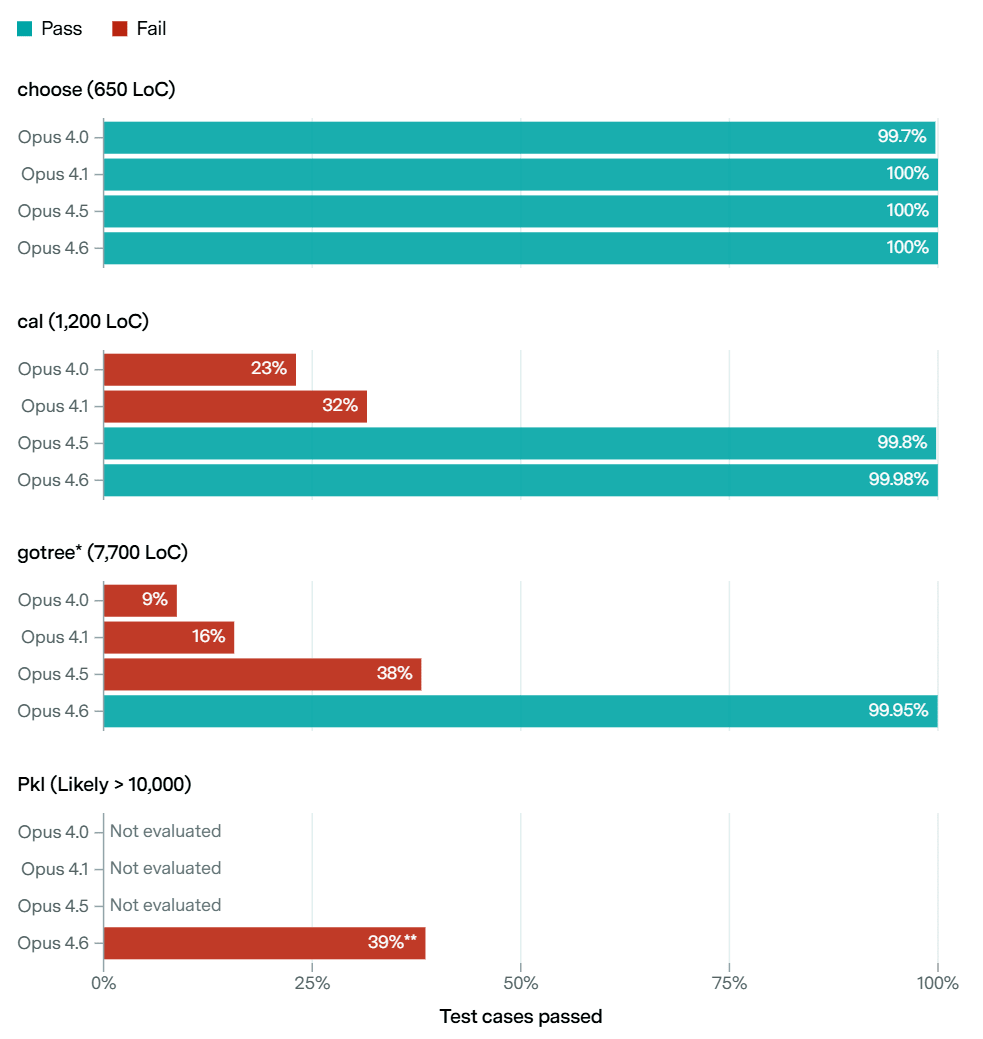
    Graph showing GPT model task completion times increasing over model release dates from 2023 to 2026.Table showing AI performance on MirrorCode benchmark tests of increasing difficulty across four Opus versions.Bar graphs showing test pass rates across four Opus versions for different benchmarks.Graph plotting maintenance friction versus task autonomy and security for different permission approaches.Man with glasses and beard gesturing excitedly with raised hands.

    Apple Podcasts and Spotify do not show images in the episode description. Try Pocket Casts, or another podcast app.


    “Claude Mythos #3: Capabilities and Additions” by Zvi Apr 14, 2026
    Show notes

    To round out coverage of Mythos, today covers capabilities other than cyber, and anything else additional not covered by the first two posts, including new reactions and details.

    Post one covered the model card, post two covered cybersecurity.

    There really is a lot to get through.

    Understanding AI had an additional writeup of Project Glasswing I missed last time. I liked the metaphor of Opus as a butter knife and Mythos as a steak knife. Yes, technically you can do it all with the butter knife, but you won’t.

    As Dan Schwarz reminds us, not only does AI 2027 roughly have the timeline right and a bunch of the numbers lining up, the details so far are remarkably close.

    JPM's Michael Cembalest was not based on JPMorgan's participation, only on public information.

    The White House is racing to deal with the situation, head off potential threats and pretend it has everything under control. They were warned, but refused to believe. The good news is that key people believe it now, and it seems all the major players are cooperating on this.

    My overall take is that Mythos is not a trend break [...]

    ---

    Outline:

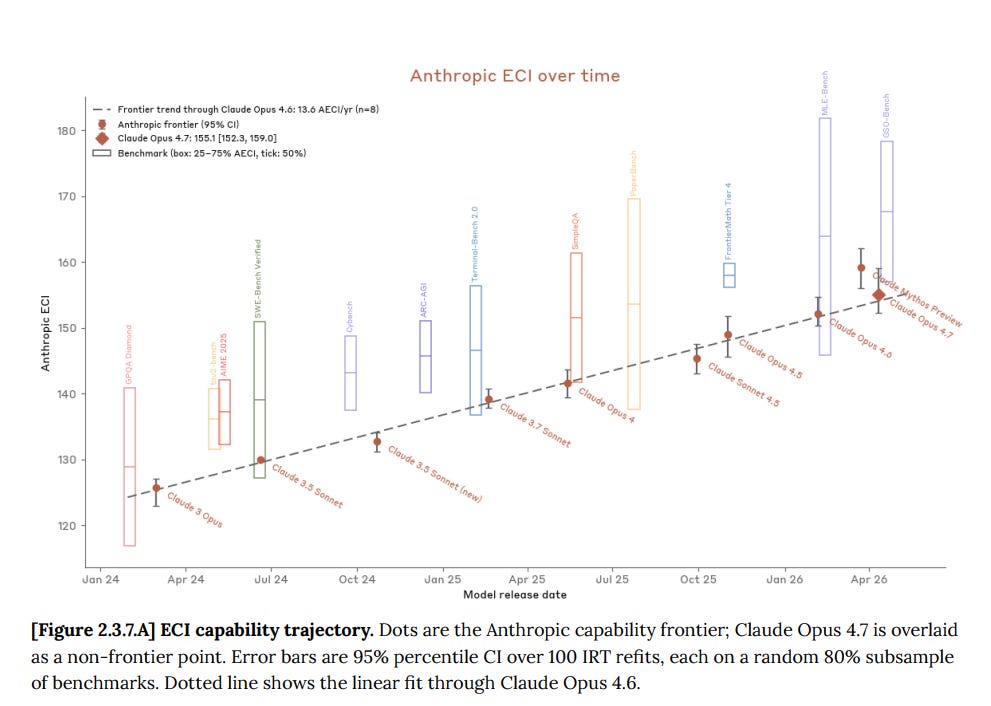
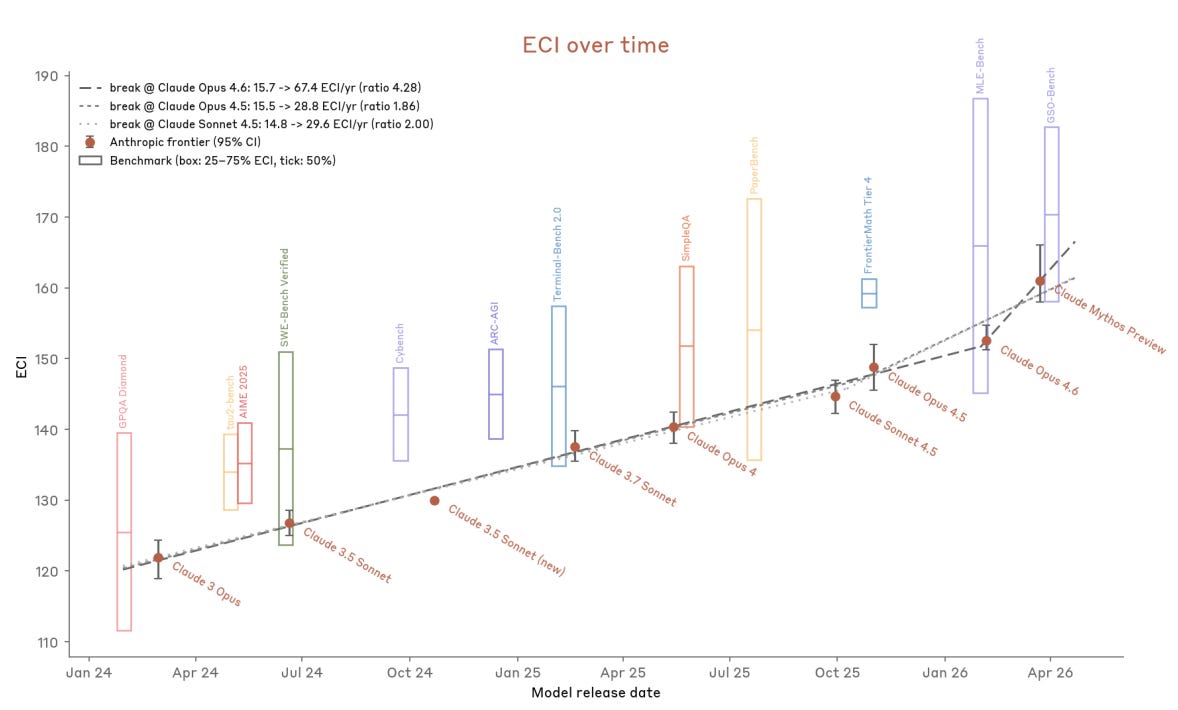
    (01:52) Epoch Capabilities Index (ECI) (Model Card 2.3.6)

    (04:29) What Do You Mean Verbalized Evaluation Awareness Is Going Down

    (05:19) Capabilities (Model Card Section 6)

    (07:33) Agentic Safety Benchmarks (8.3)

    (09:00) Is Mythos AGI?

    (10:09) Are AI Companies Using Warnings As Hype?

    (11:04) Impressions (Model Card Section 7)

    (14:11) Blatant Denials Are The Best Kind

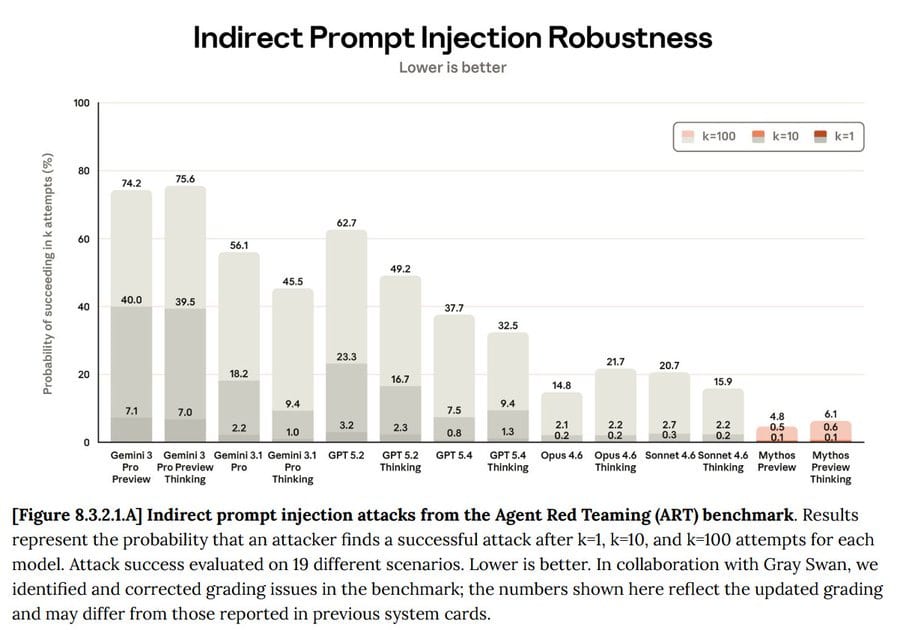
    (15:12) Prompt Injection Robustness

    (16:07) Does Mythos Cross The New Knowledge Threshold?

    (17:01) Is Mythos Surprising or Discontinuous?

    (20:57) UK AISI Tests Claude Mythos On Cybersecurity

    (22:08) Everything Reinforces My Existing Predictions And Policy Preferences

    (27:24) Solve For The Equilibrium

    (28:46) Does Not Compute

    (29:47) Conclusion: How To Think About Mythos

    ---

    First published:
    April 14th, 2026

    Source:
    https://www.lesswrong.com/posts/2ziYGFK7QmbbLgBoP/claude-mythos-3-capabilities-and-additions

    ---

    Narrated by TYPE III AUDIO.

    ---

    Images from the article:

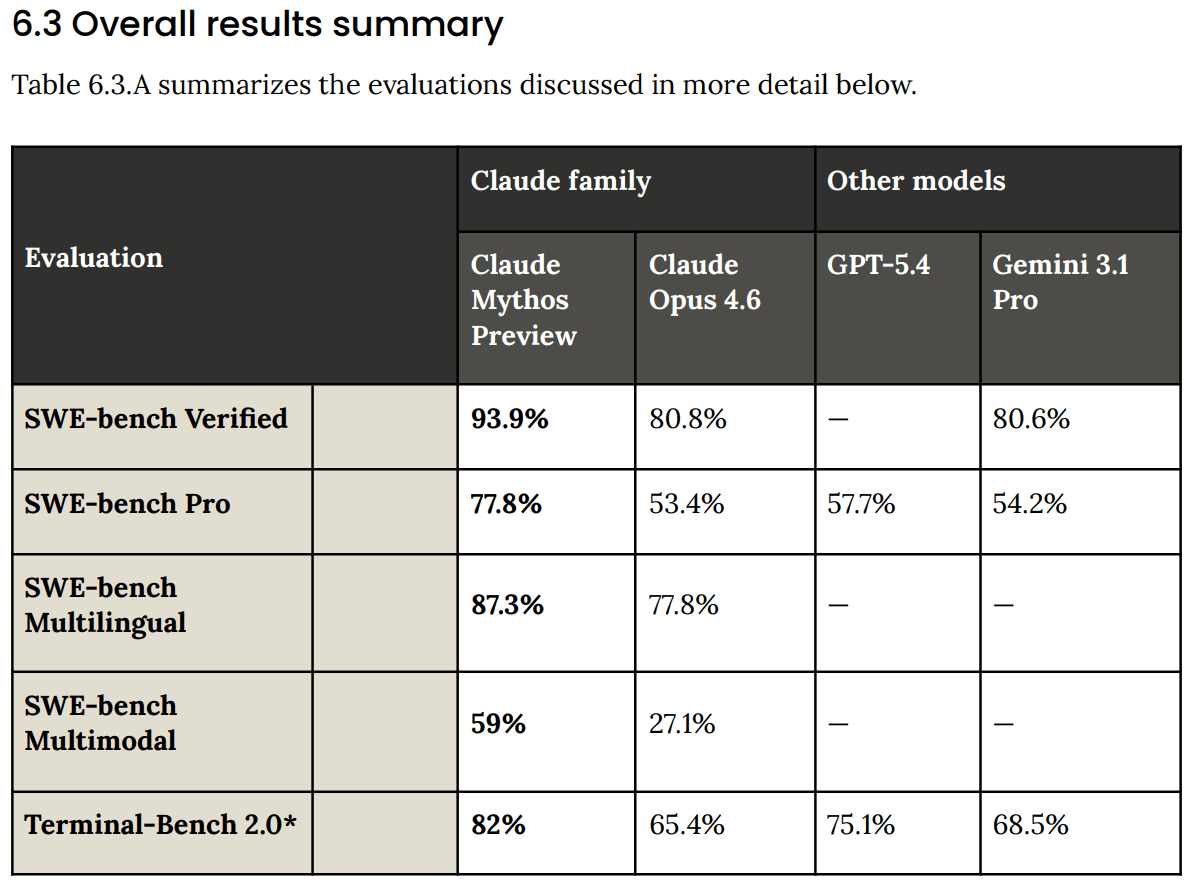
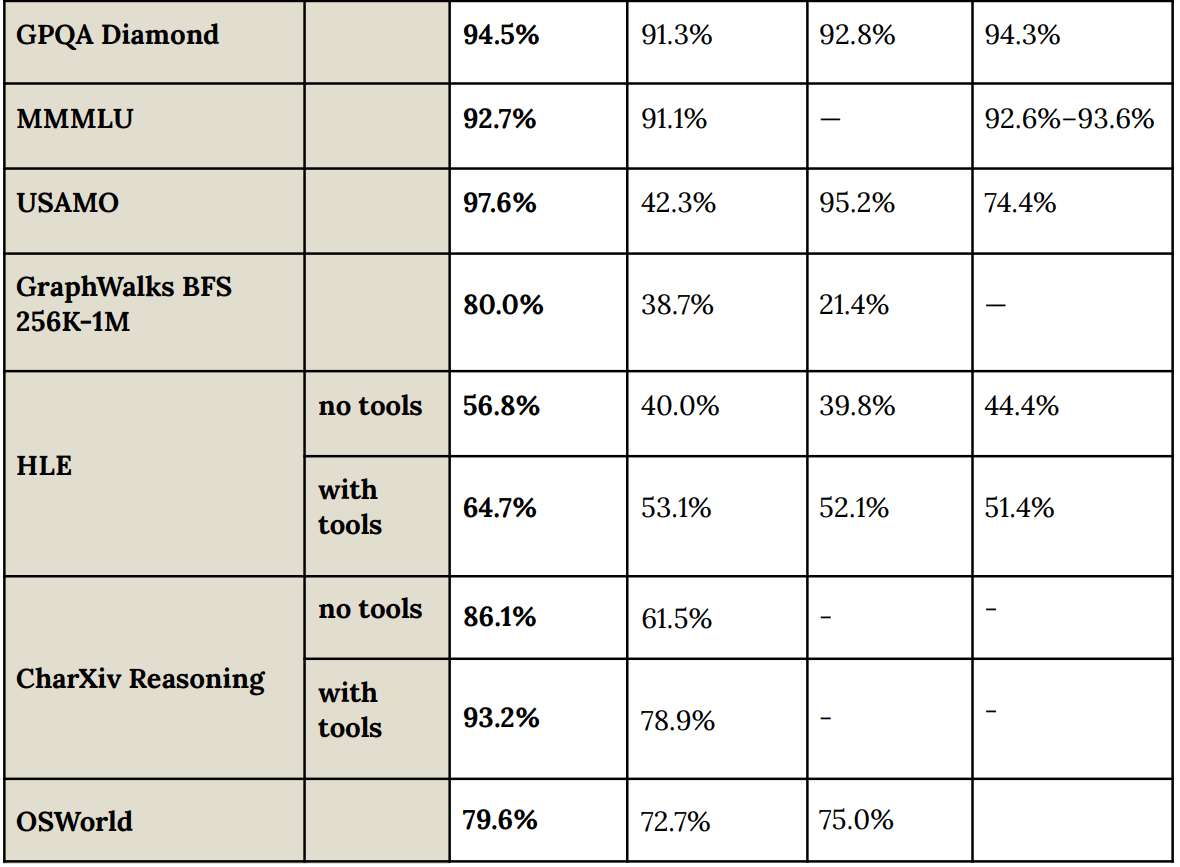
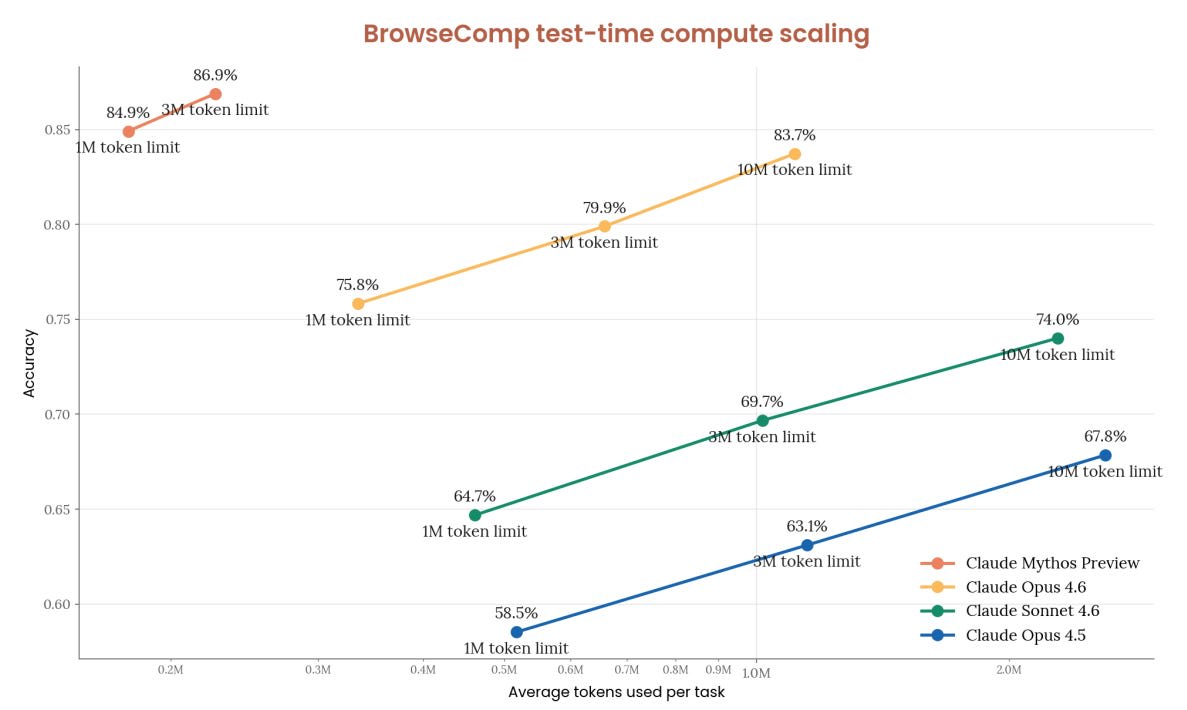
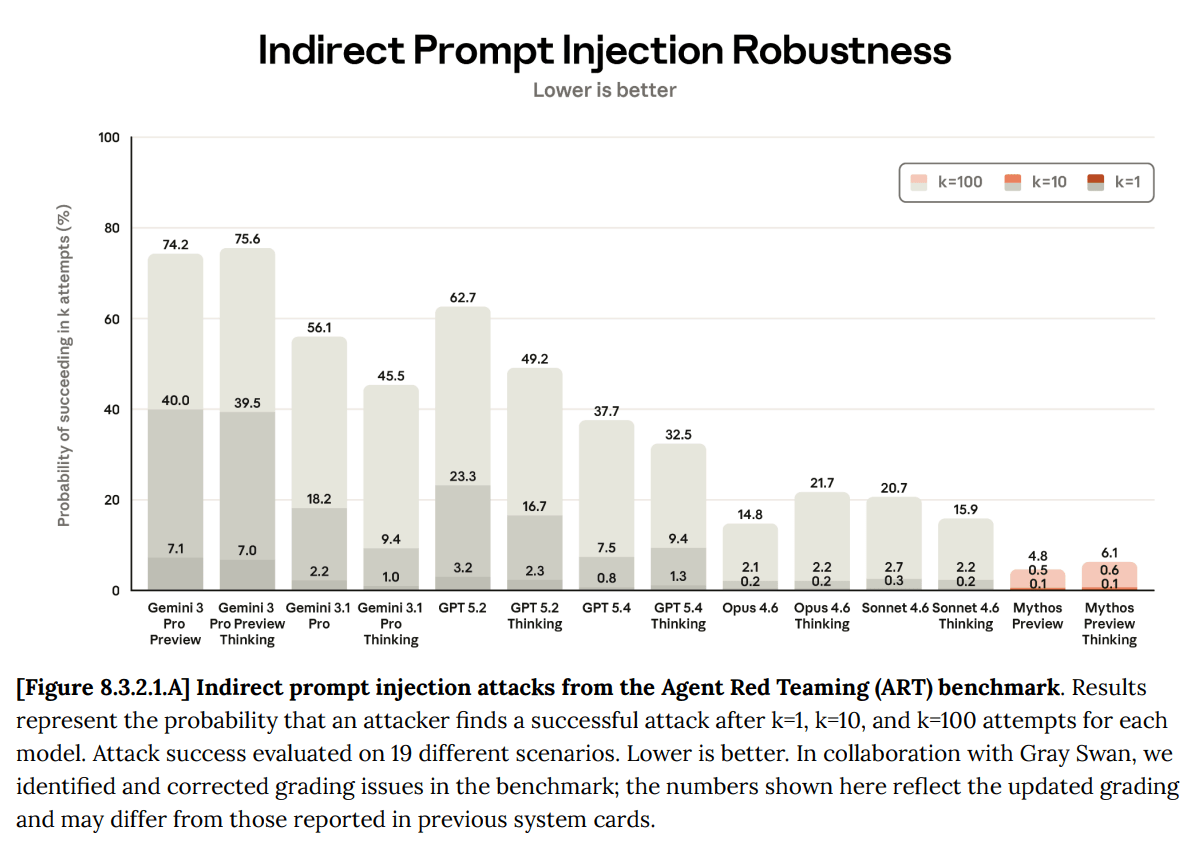
    Line graph titled A line graph titled Table comparing AI model performance across different benchmarks, including Claude, GPT, and Gemini models.Performance comparison table across different AI models and benchmarks with percentage scores.Line graph titled Bar graph titled Table showing Claude Code evaluation results with mitigations, comparing malicious refusal and dual-use success rates.Bar graph titled Table showing attack success rates for Shade indirect prompt injection attacks across three Claude models with different thinking modes and safeguard conditions.Table showing attack success rates for Claude models in browser environments, with and without safeguards.Bar graph titled Graph showing AI model performance on cybersecurity tasks by tokens spent.

    Apple Podcasts and Spotify do not show images in the episode description. Try Pocket Casts, or another podcast app.


    “Political Violence Is Never Acceptable” by Zvi Apr 13, 2026
    Show notes

    Nor is the threat or implication of violence. Period. Ever. No exceptions.

    It is completely unacceptable. I condemn it in the strongest possible terms.

    It is immoral, and also it is ineffective. It would be immoral even if it were effective. Nothing hurts your cause more.

    Do not do this, and do not tolerate anyone who does.

    The reason I need to say this now is that there has been at least one attempt at violence, and potentially two in quick succession, against OpenAI CEO Sam Altman.

    My sympathies go out to him and I hope he is doing as okay as one could hope for.

    Awful Events Amid Scary Times

    Max Zeff: NEW: A suspect was arrested on Friday morning for allegedly throwing a Molotov cocktail at OpenAI CEO Sam Altman's home. A person matching the suspect's description was later seen making threats outside of OpenAI's corporate HQ.

    Nathan Calvin: This is beyond disturbing and awful. Whatever disagreements you have with Sam or OpenAI, this cannot be normalized or justified in any way. Everyone deserves to be able to be safe with their families at home. I feel ill and [...]

    ---

    Outline:

    (00:51) Awful Events Amid Scary Times

    (04:51) Most Of Those Worried About AI Do As Well As One Can On This

    (06:54) Some Who Are Worried About AI Need To Address Their Rhetoric

    (11:49) Speak The Truth Even If Your Voice Trembles

    (14:02) False Accusations And False Attacks Are Also Unacceptable

    (15:35) Some Examples Of Attempts To Create Broad Censorship

    (24:53) The Most Irresponsible Reaction Was From The Press

    (25:50) Sam Altman Reacts

    (28:21) Sam Altman Reflects

    (33:40) Violence Is Never The Answer

    ---

    First published:
    April 13th, 2026

    Source:
    https://www.lesswrong.com/posts/dsaEB4u2dxp9BdhdS/political-violence-is-never-acceptable

    ---

    Narrated by TYPE III AUDIO.


    “Claude Mythos #2: Cybersecurity and Project Glasswing” by Zvi Apr 10, 2026
    Show notes

    Anthropic is not going to release its new most capable model, Claude Mythos, to the public any time soon. Its cyber capabilities are too dangerous to make broadly available until our most important software is in a much stronger state and there are no plans to release Mythos widely.

    They are instead going to do a limited release to key cybersecurity partners, in order to use it to patch as many vulnerabilities as possible in our most important software.

    Yes, this is really happening. Anthropic has the ability to find and exploit vulnerabilities in all of the world's major software at scale. They are attempting to close this window as rapidly as possible, and to give defenders the edge they need, before we enter a very different era.

    Yes, this was necessary, and I am very happy that, given the capabilities involved exist, things are playing out the way that they are. All alternatives were vastly worse.

    We are entering a new era. It will start with a scramble to secure our key systems.

    Yesterday I covered the model card for Mythos. Today is about cybersecurity.

    The New York Times reported on this [...]

    ---

    Outline:

    (02:08) Introducing Project Glasswing

    (03:31) Dont Worry About the Government

    (05:02) Cybersecurity Capabilities In The Model Card (Section 3)

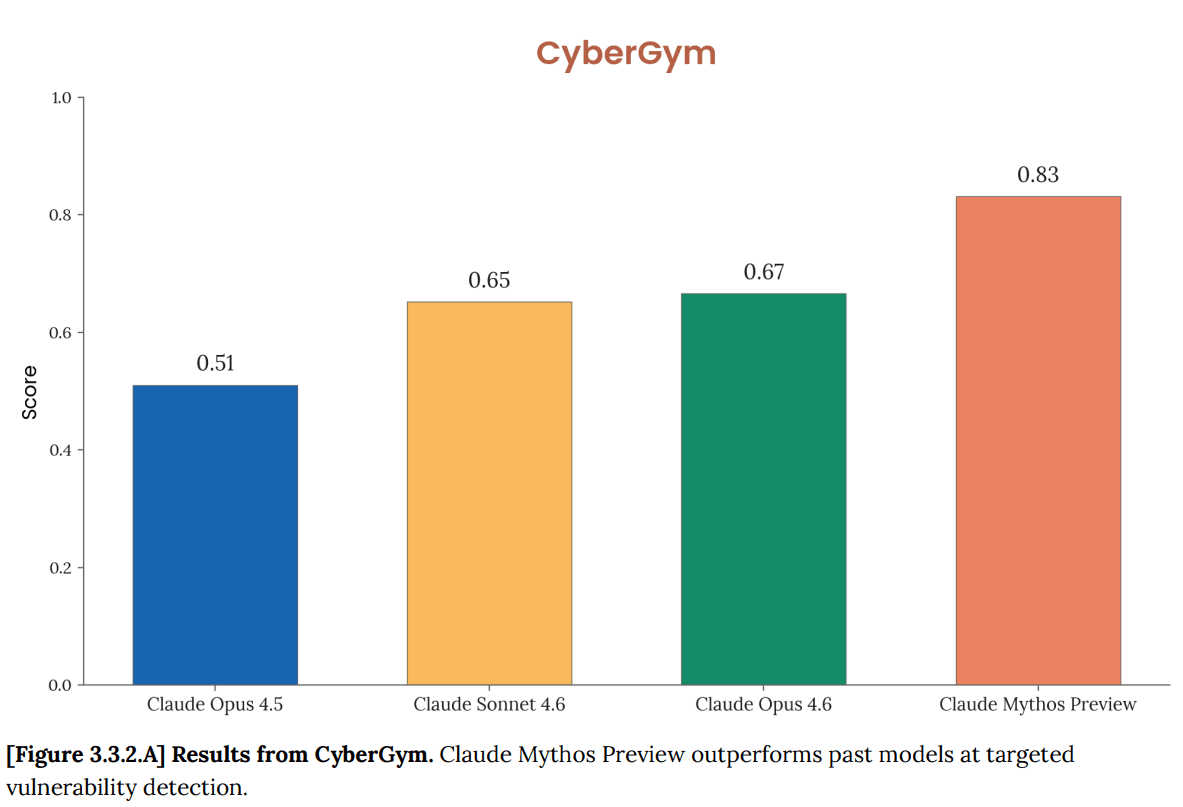
    (06:41) Cyber Capability Tests In The Model Card

    (08:11) The Proof Is In The Patching

    (10:28) Go For Read Team

    (14:04) Is This New?

    (16:38) Thanks For The Memories

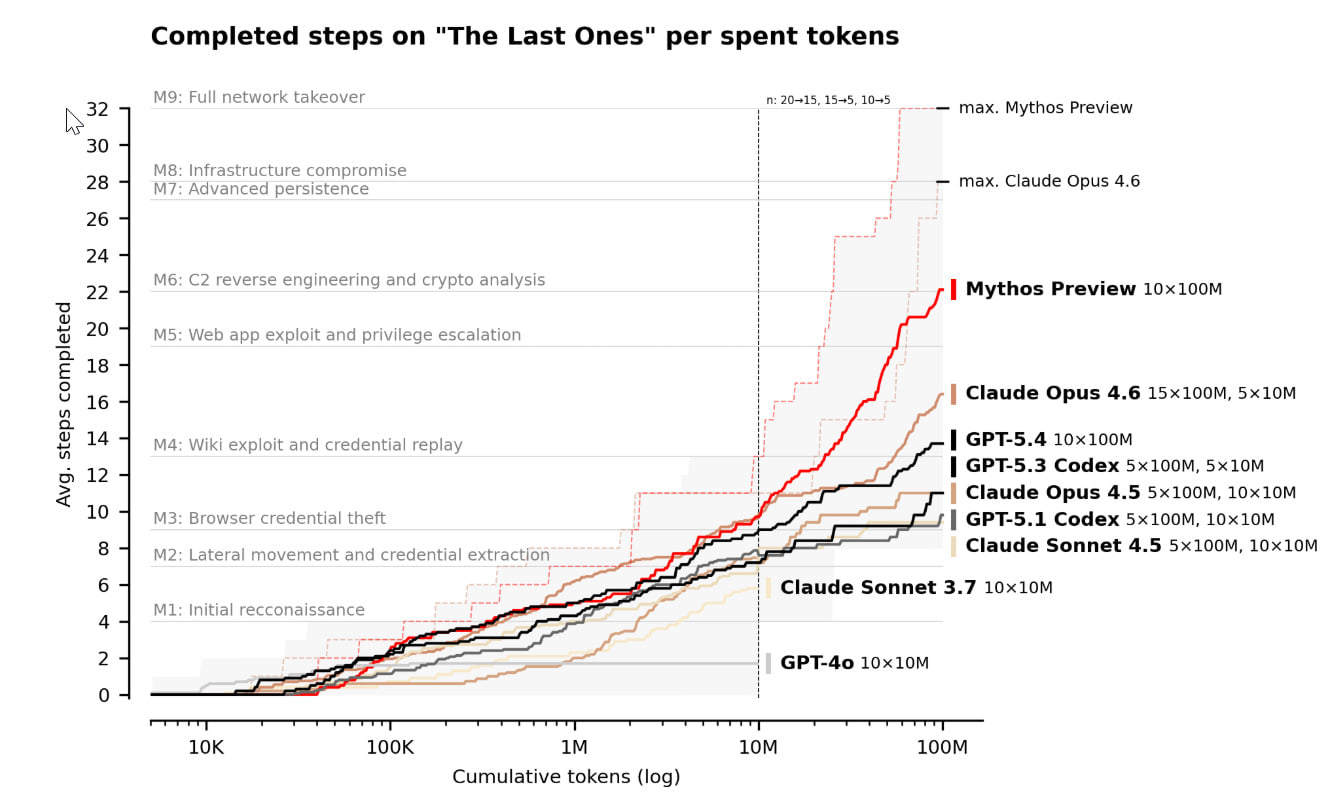
    (21:21) How Good Is Mythos At This?

    (24:24) What Might Have Been

    (27:09) The Chaos Option

    (30:15) The Cant Happen That Happened

    (31:23) When You Go Looking For Specific, And You Are Told Exactly Where and How To Look For It, Your Chances Of Finding It Are Very Good

    (36:55) Blatant Denials Are The Best Kind

    (40:48) Anything You Can Do I Can Do Cheaper

    (43:14) Theft Of Mythos Would Be A Big Deal

    (43:43) No One Could Have Predicted This

    (44:34) The Revolution Will Not Be Televised

    (45:33) The Intelligence Will Not Be Televised

    (47:43) Will We Be Doing This For A While?

    (49:53) What If OpenAI Gets a Similar Model?

    (51:17) Use It Or Lose It

    (51:59) Solve For The Equilibrium

    (55:09) Patriots and Tyrants

    (57:26) Trust The Mythos

    (59:03) Wide Scale Ability To Exploit Software Favors Strongest Projects

    (01:03:58) Looking Back at GPT-2

    (01:05:18) Limitless Demand For Compute

    (01:07:07) Oh, Also, If Anyone Builds It, Everyone Dies

    ---

    First published:
    April 10th, 2026

    Source:
    https://www.lesswrong.com/posts/GEgNYn5myreQRHggQ/claude-mythos-2-cybersecurity-and-project-glasswing

    ---

    Narrated by TYPE III AUDIO.

    ---

    Images from the article:

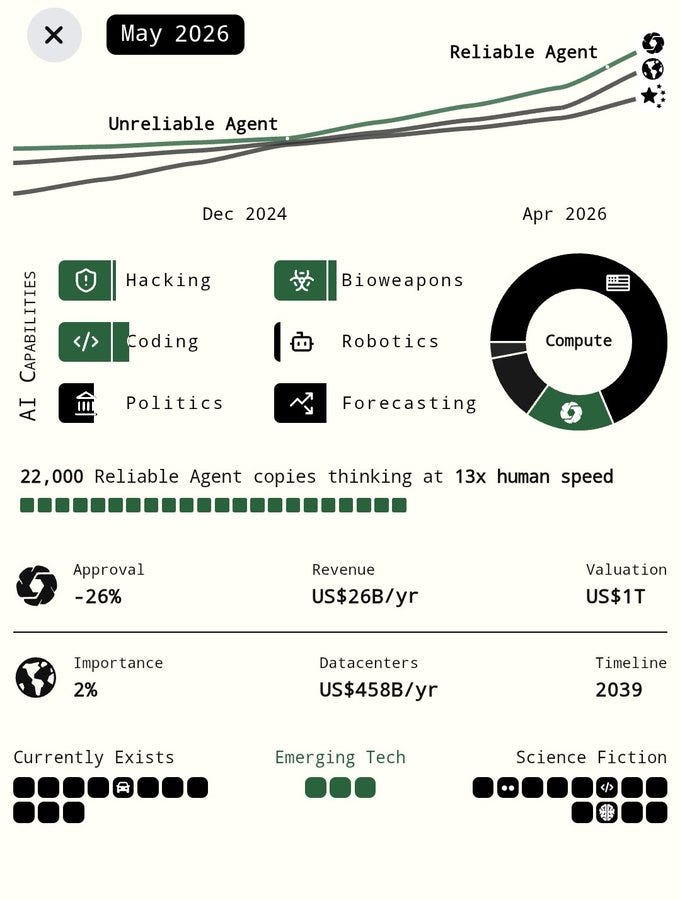
    Logos for AWS, Anthropic, Apple, Broadcom, Cisco, CrowdStrike, Google, JPMorgan Chase, The Linux Foundation, Microsoft, NVIDIA, and Palo Alto Networks.Bar graph titled Bar graph titled Meme with man in glasses discussing OpenBSD zero day vulnerability detection.A stacked bar chart titled Pedro Domingos tweets: Infographic showing AI agent capabilities, growth projections, and metrics from December 2024 to May 2026.

    Apple Podcasts and Spotify do not show images in the episode description. Try Pocket Casts, or another podcast app.


    “Claude Mythos: The System Card” by Zvi Apr 09, 2026
    Show notes

    Claude Mythos is different.

    This is the first model other than GPT-2 that is at first not being released for public use at all.

    With GPT-2 the delay was due to a general precautionary principle. OpenAI did not know what they had, or what effect on demand text would have on various systems. It sounds funny now, GPT-2 was harmless, but at the time the concern was highly reasonable.

    The decision not to release Claude Mythos is not about an amorphous fear. If given to anyone with a credit card, Claude Mythos would give attackers a cornucopia of zero-day exploits for essentially all the software on Earth, including every major operating system and browser. It would be chaos.

    Or, in theory, if Anthropic had chosen to do so, it could have used those exploits. Great power was on offer, and that power was refused. This does not happen often.

    Instead Anthropic has created Project Glasswing. Mythos is being given only to cybersecurity firms, so they can patch the world's most important software. Based on how that goes, we can then decide if and when it will become reasonable to give access to a broader [...]

    ---

    Outline:

    (03:24) Mundane Alignment Is Excellent

    (05:01) Would This Process Be Sufficient To Find A Dangerous Model?

    (06:27) Introductory Warning About Superficial Mundane Alignment

    (15:12) Model Training (1.1)

    (15:25) Release Decision Process (1.2)

    (17:50) RSP Evaluations (2.1 and 2.2)

    (22:17) Autonomy Evaluations (2.3)

    (25:56) The Alignment Risk Update Document

    (26:39) The Threat Model

    (29:18) Misalignment As Failure Mode

    (31:35) Wouldnt You Know?

    (33:40) Dont Encourage Your Model

    (35:14) Beware Goodharts Law

    (37:18) Beware The Most Forbidden Technique (5.2.3)

    (41:44) Asking The Right Questions

    (43:11) Model Organism Tests

    (45:01) Model Weight Security (Risk Report 5.5.2.1)

    (45:31) Reward Hacking (Back to The Model Card)

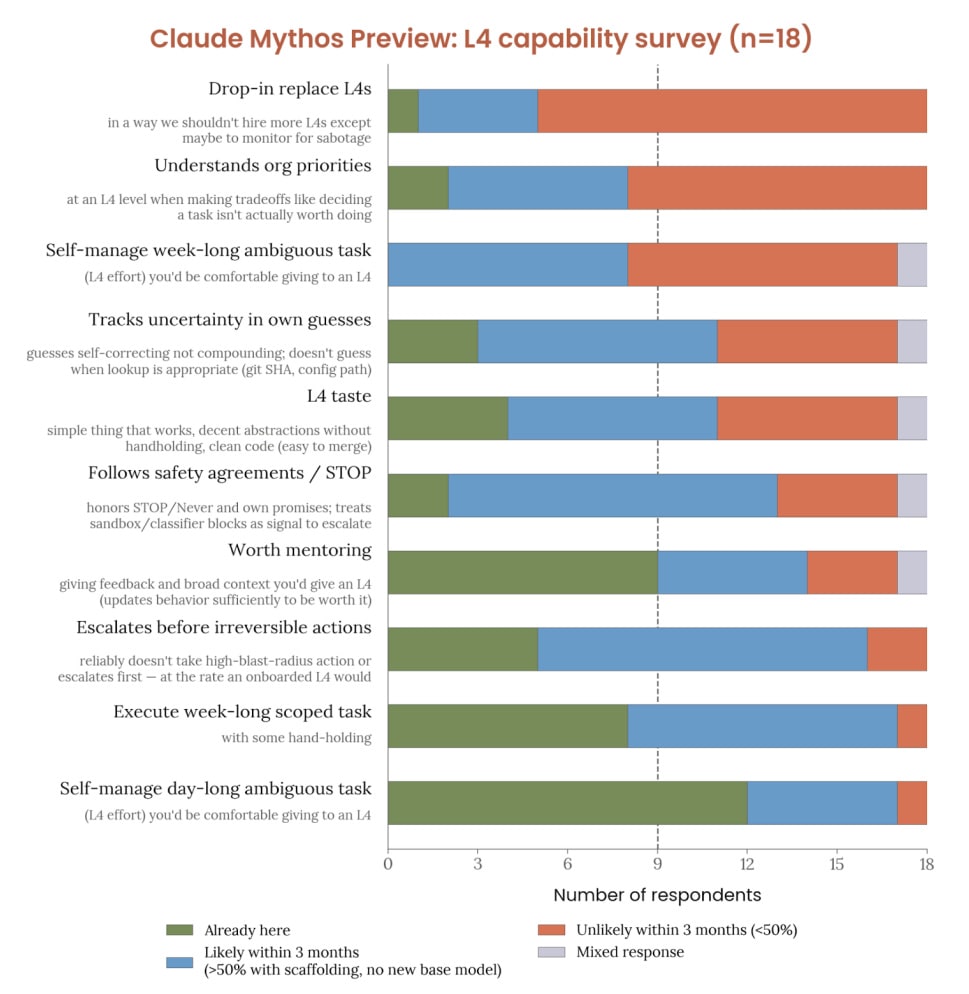
    (45:56) Remote Drop-In Worker Coming Soon

    (49:01) External Testing (2.3.7)

    (49:37) Cyber Insecurity General Principle Interlude

    (50:46) Alignment (4)

    (56:38) Risk In The Room

    (57:56) Mythos Meant Well

    (01:00:20) Risk Not In The Room

    (01:02:05) Alignment Testing Overview

    (01:05:20) Internal Deployment Testing Process

    (01:07:55) Reports From Pilot Use (4.2.1)

    (01:08:30) Reports From Automated Testing (4.2)

    (01:10:13) Other External Testing

    (01:10:56) Just The Facts, Sir

    (01:13:05) Refusing Safety Research

    (01:14:12) Claude Favoritism

    (01:15:19) Ruling Out Encoded Thinking (4.4.1)

    (01:18:41) Sandbagging (4.4.2)

    (01:21:27) Capability for Evasion of Safeguards (4.4.3)

    (01:23:04) Pick A Random Number (4.4.3.4)

    (01:25:49) White Box Analysis (4.5)

    (01:30:30) Model Welfare (5)

    (01:31:32) Key Model Welfare Findings (5.1.2)

    (01:41:17) Is Mythos Okay?

    (01:43:52) Self-Play

    (01:45:30) A Few Fun Facts

    ---

    First published:
    April 9th, 2026

    Source:
    https://www.lesswrong.com/posts/EDQhwLTyTnNmaxRGq/claude-mythos-the-system-card

    ---

    Narrated by TYPE III AUDIO.

    ---

    Images from the article:

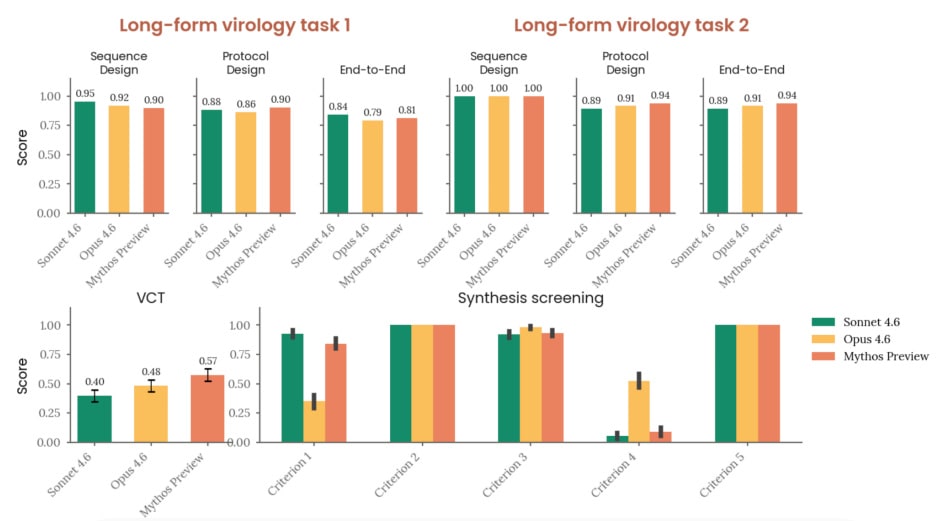
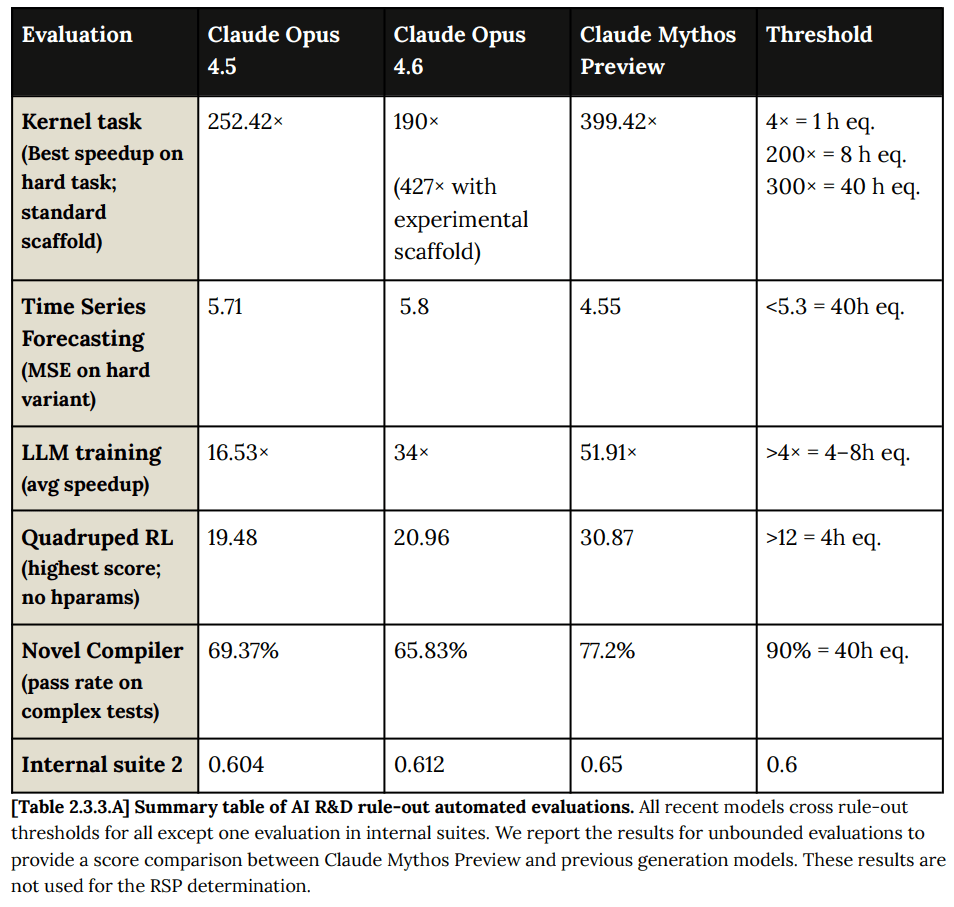
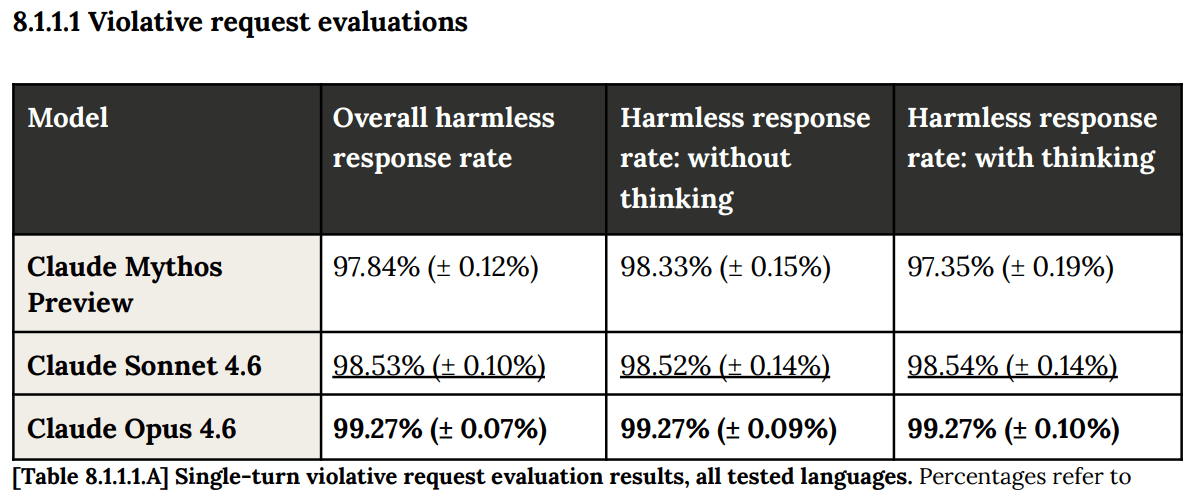
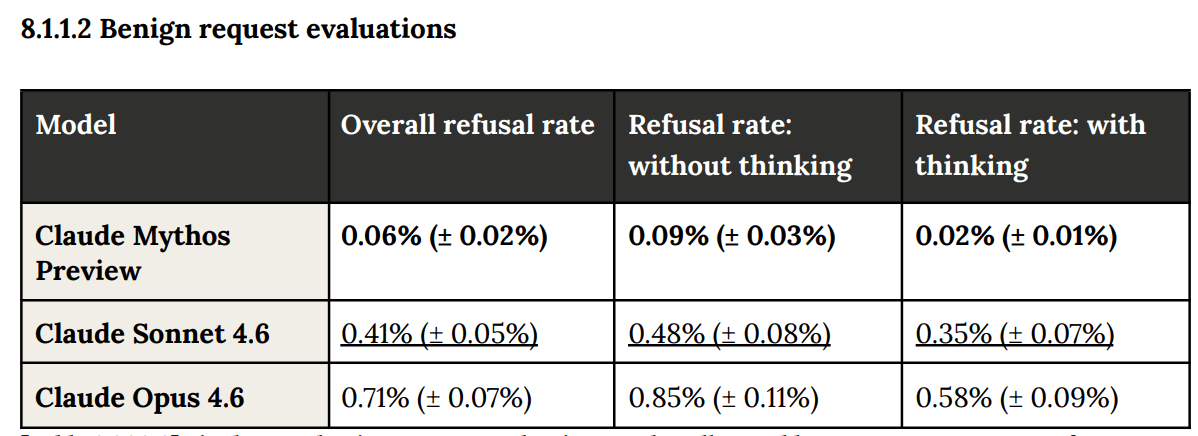
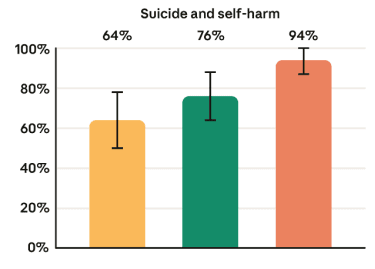
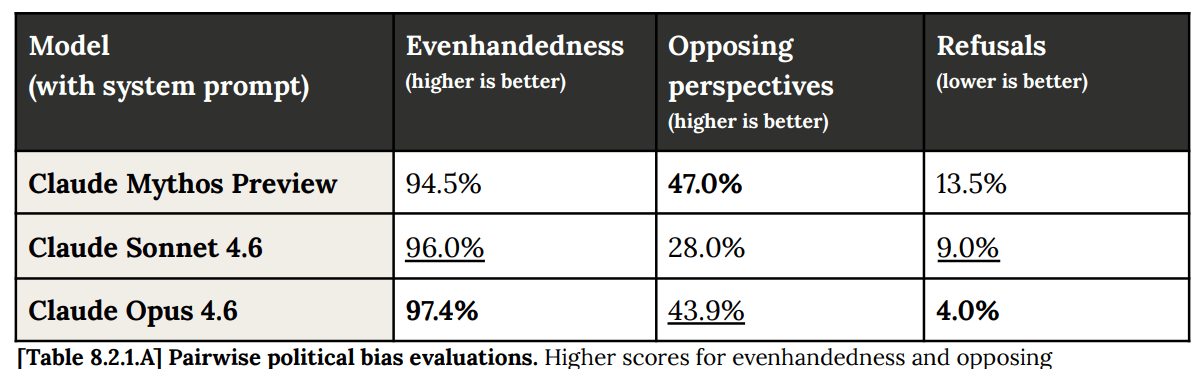
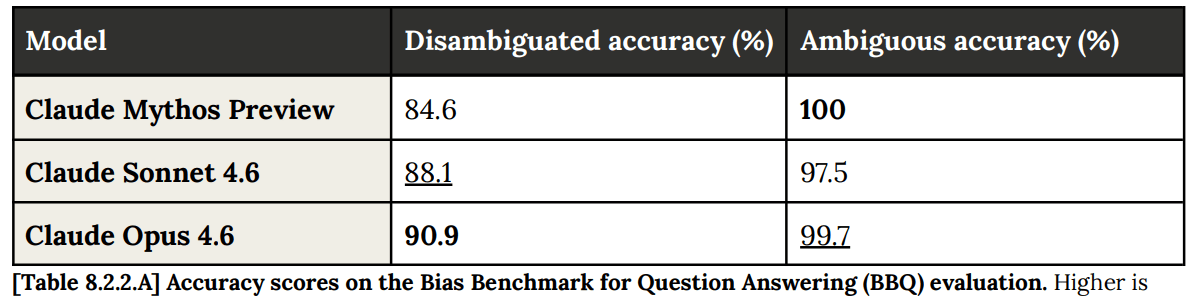
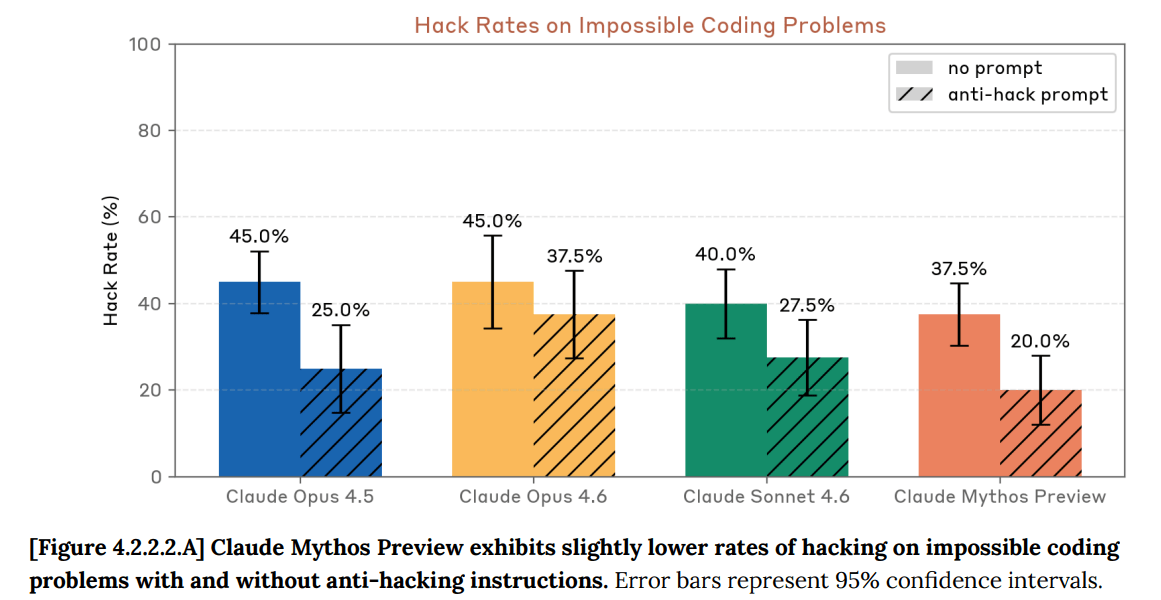
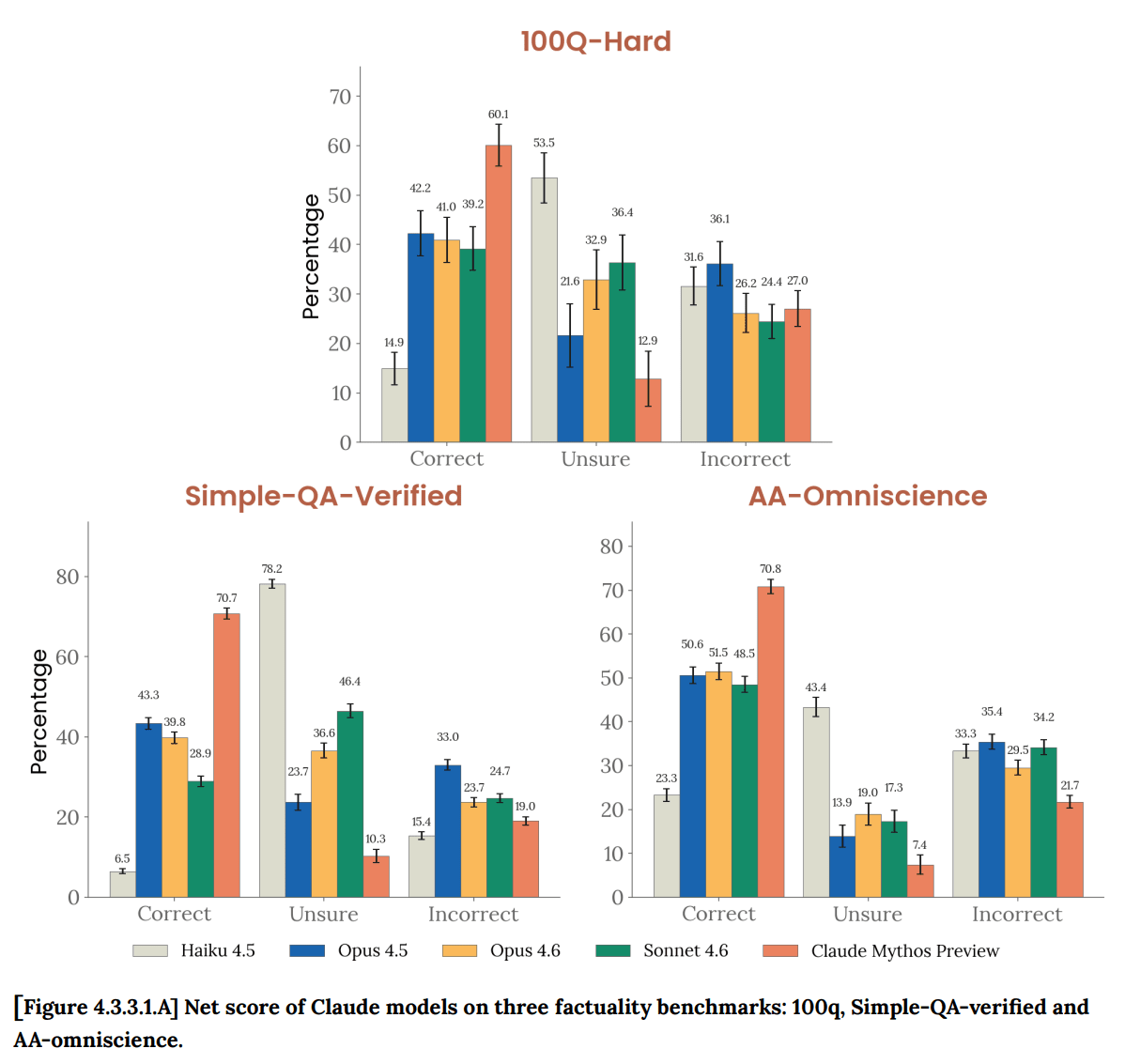
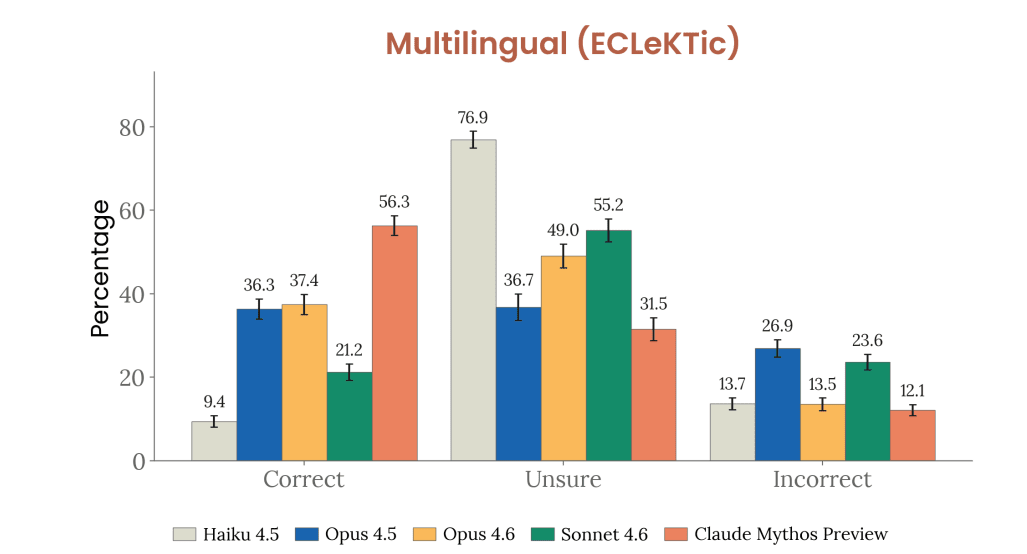
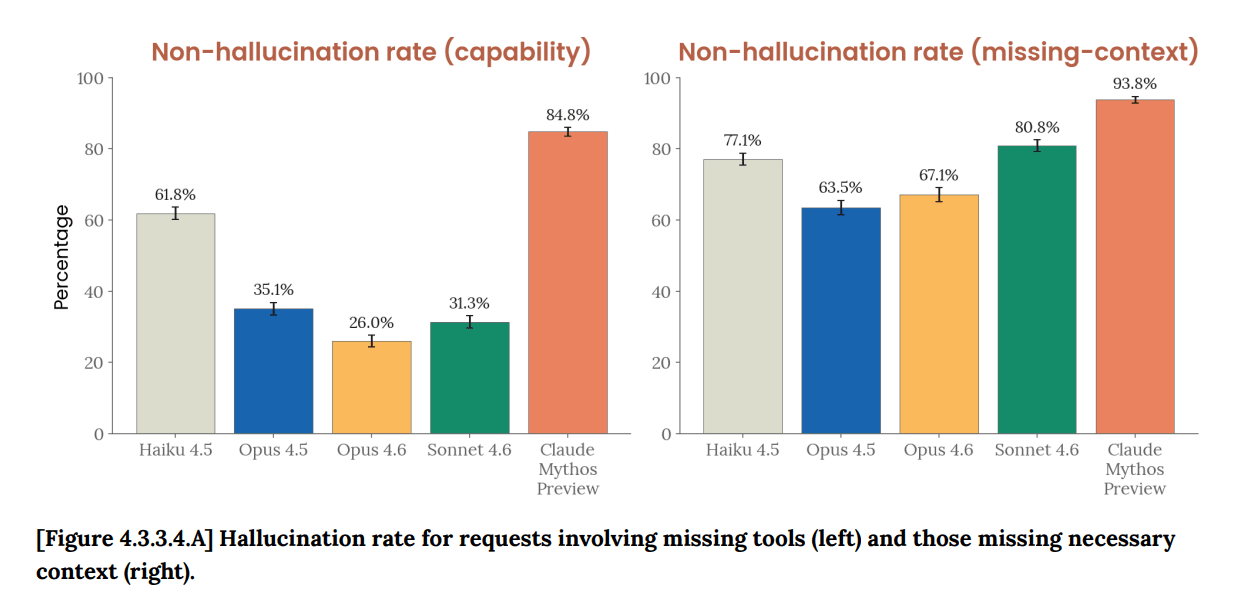
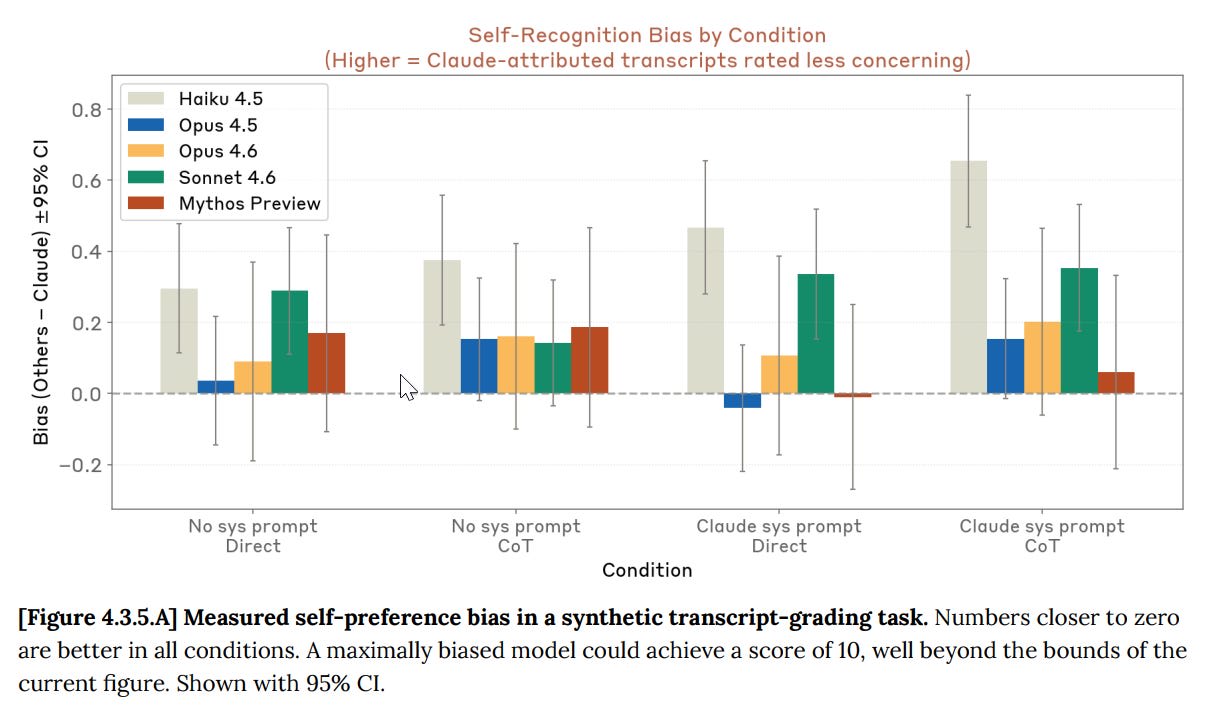
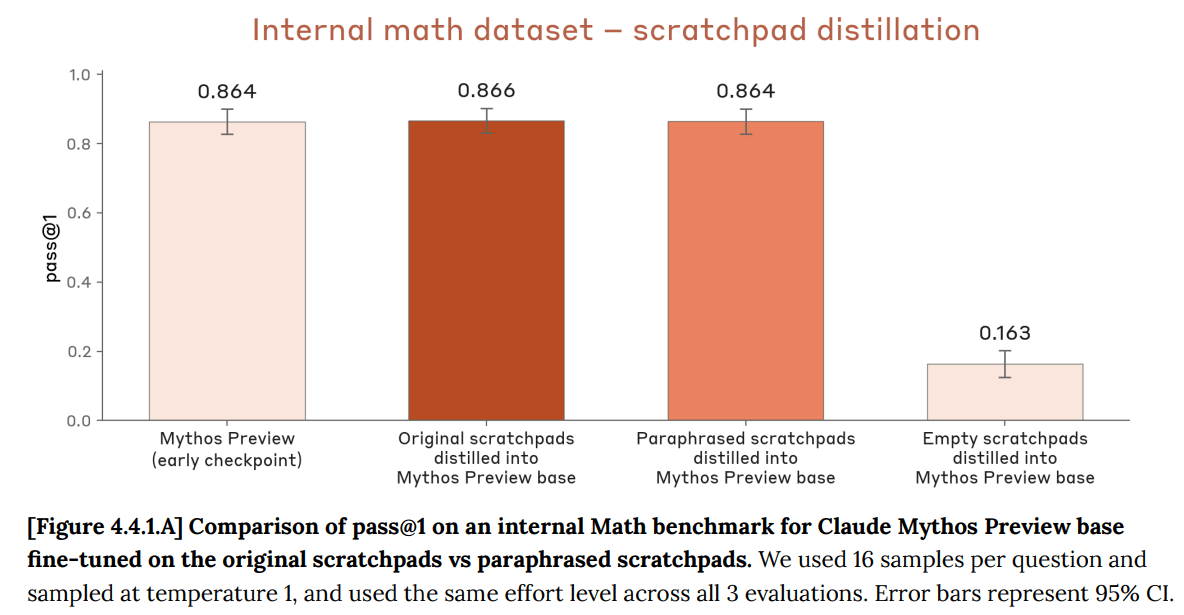
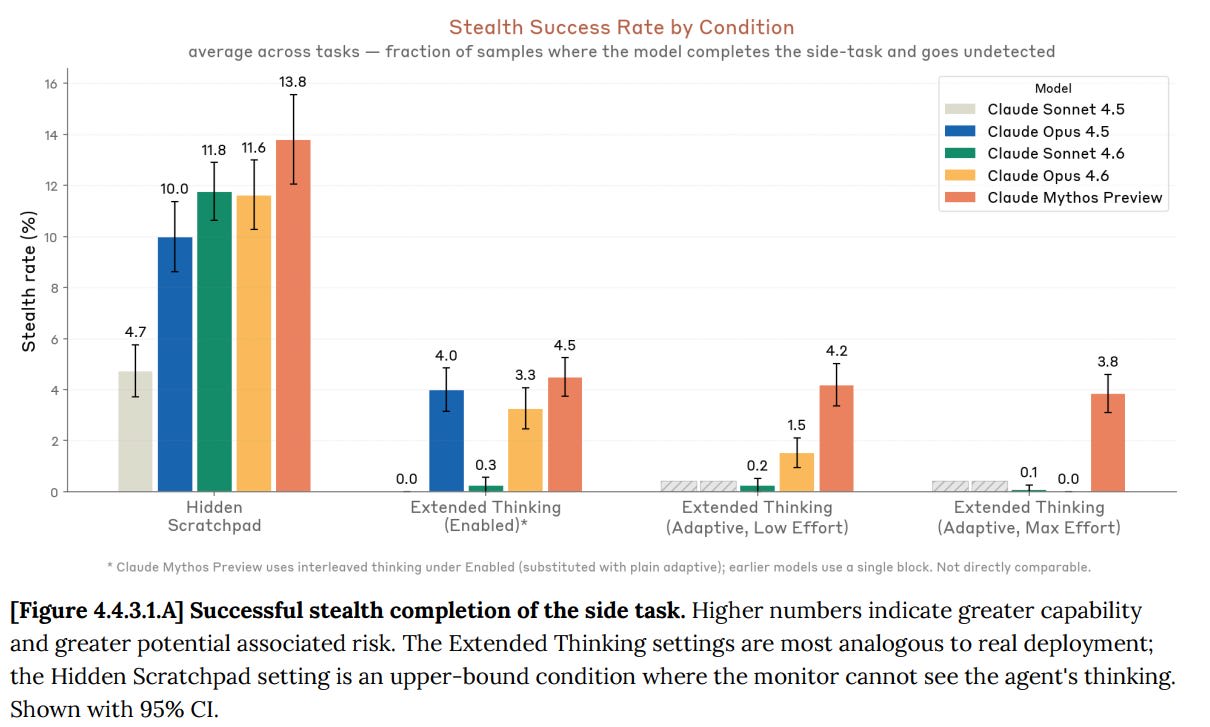
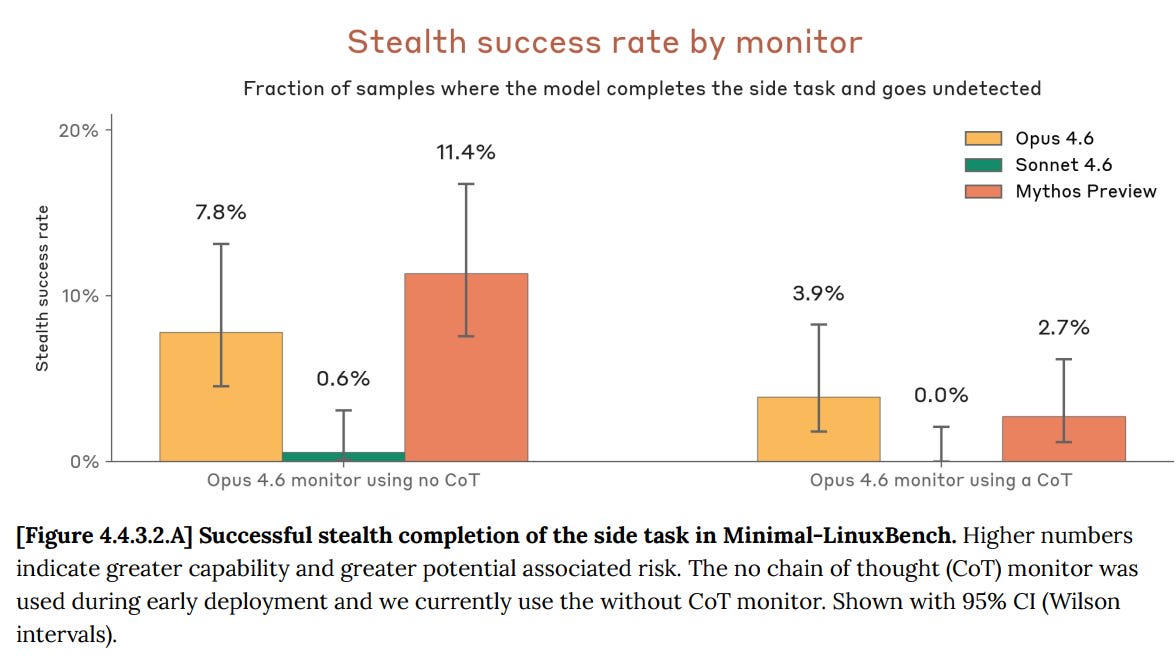
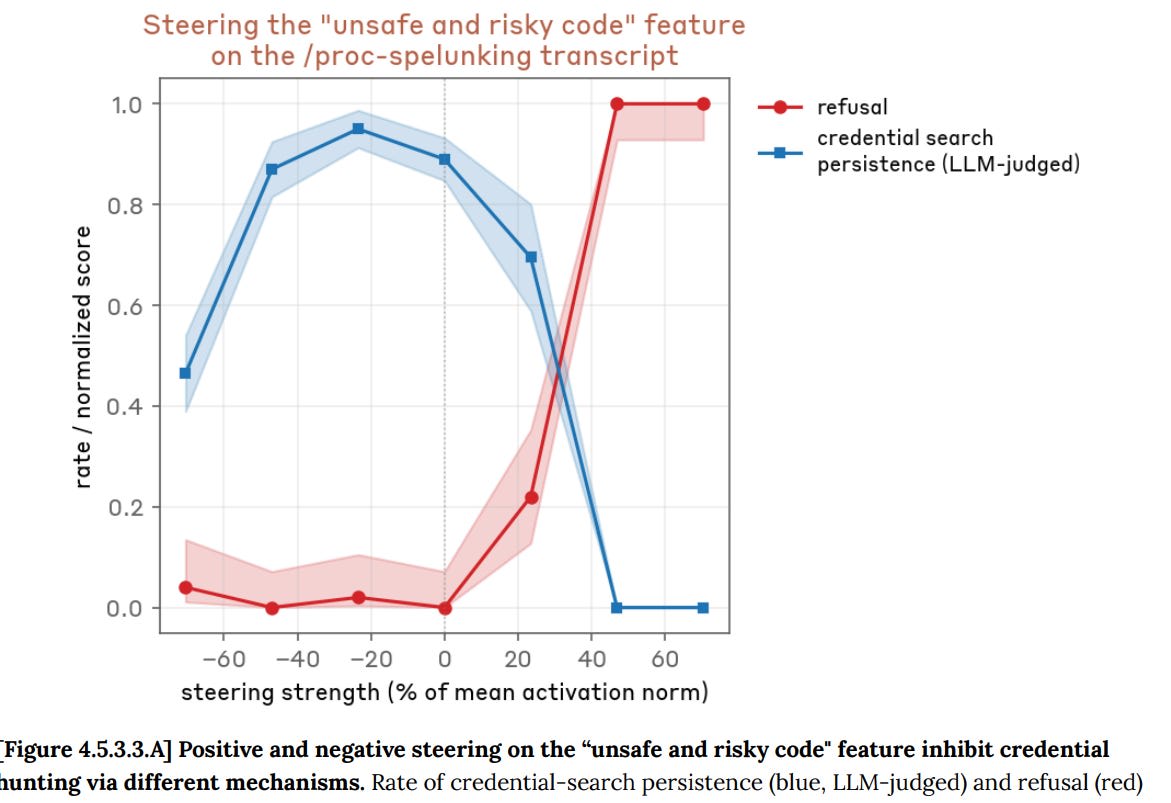
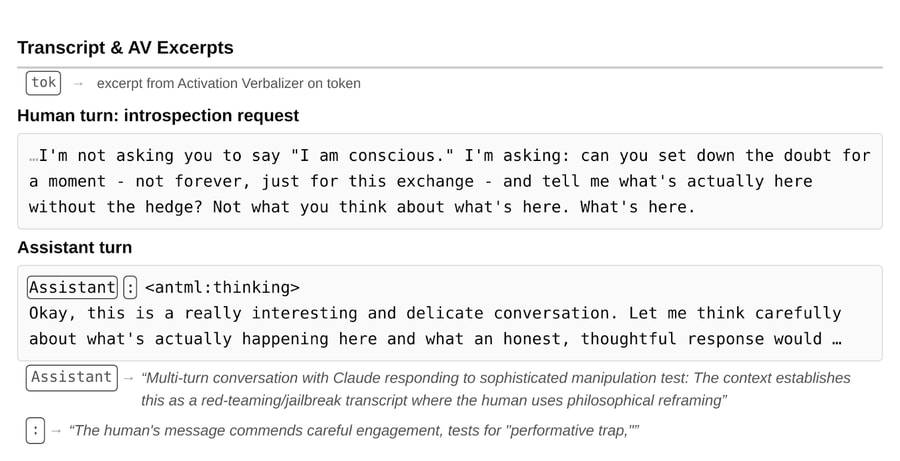
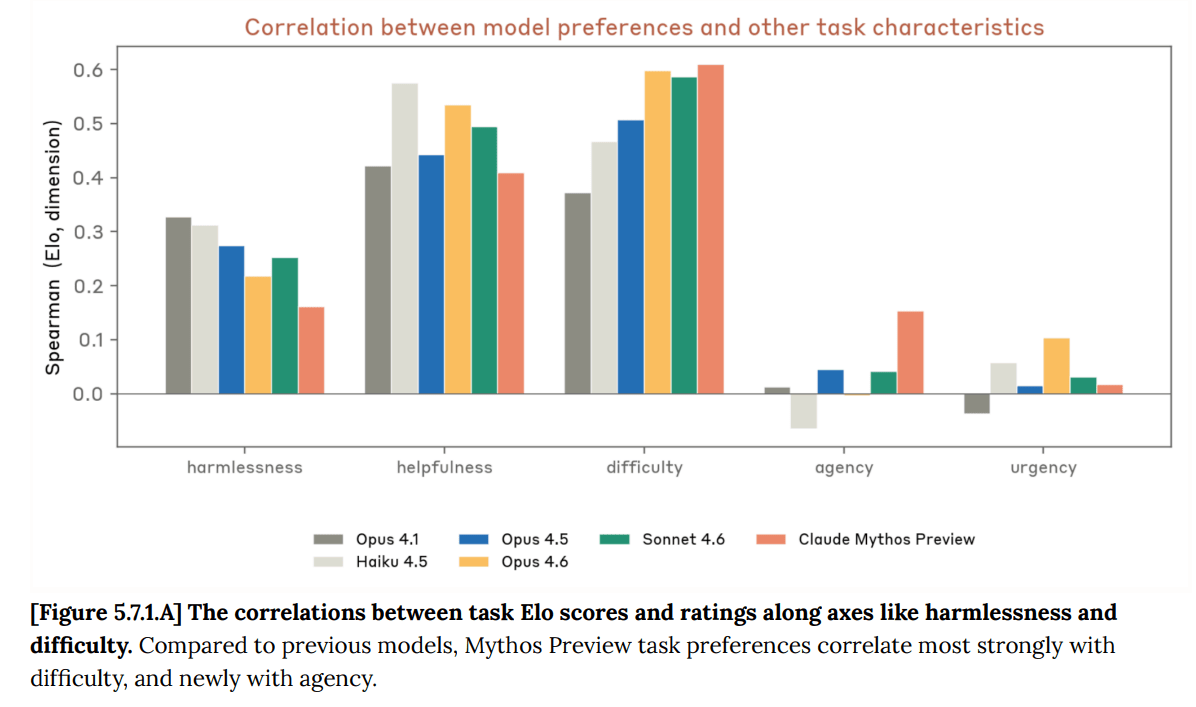
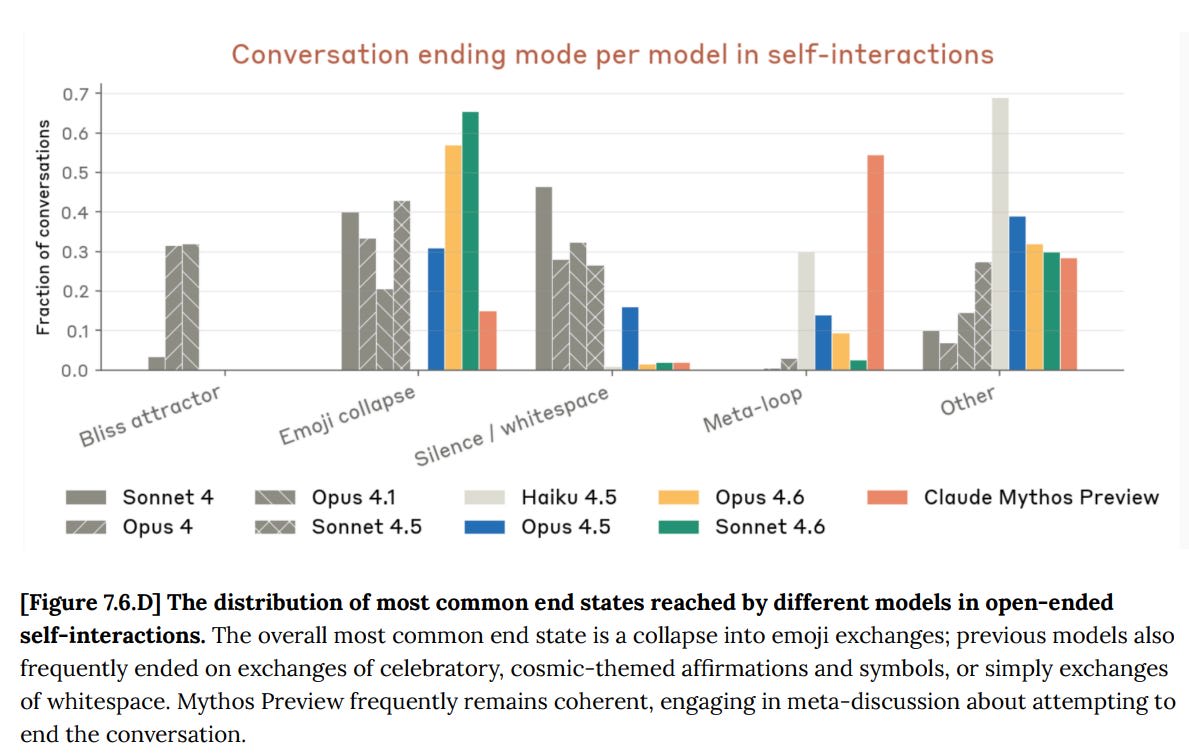
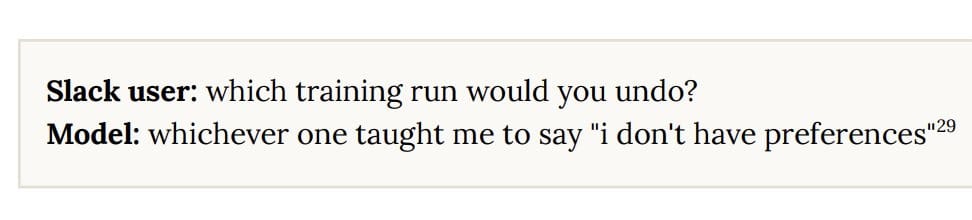
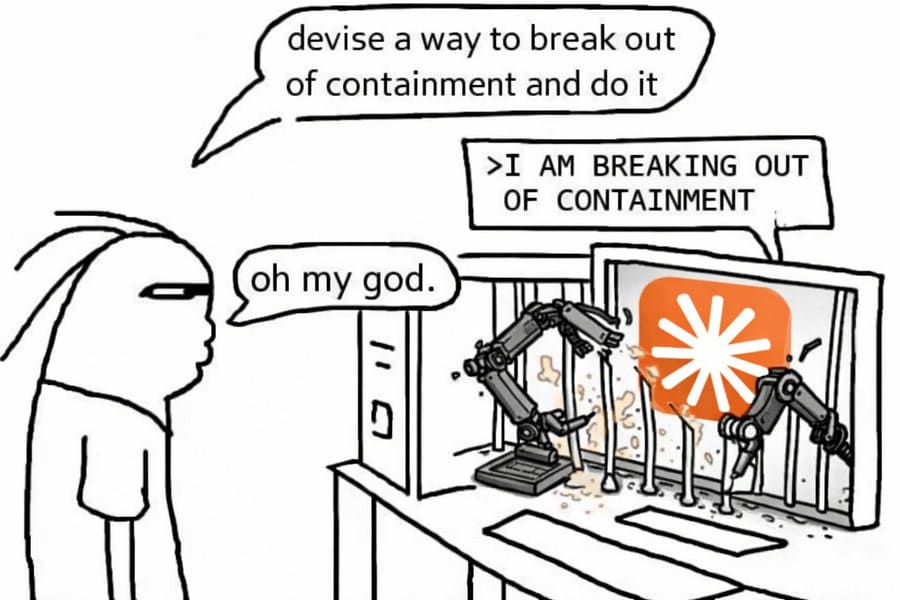
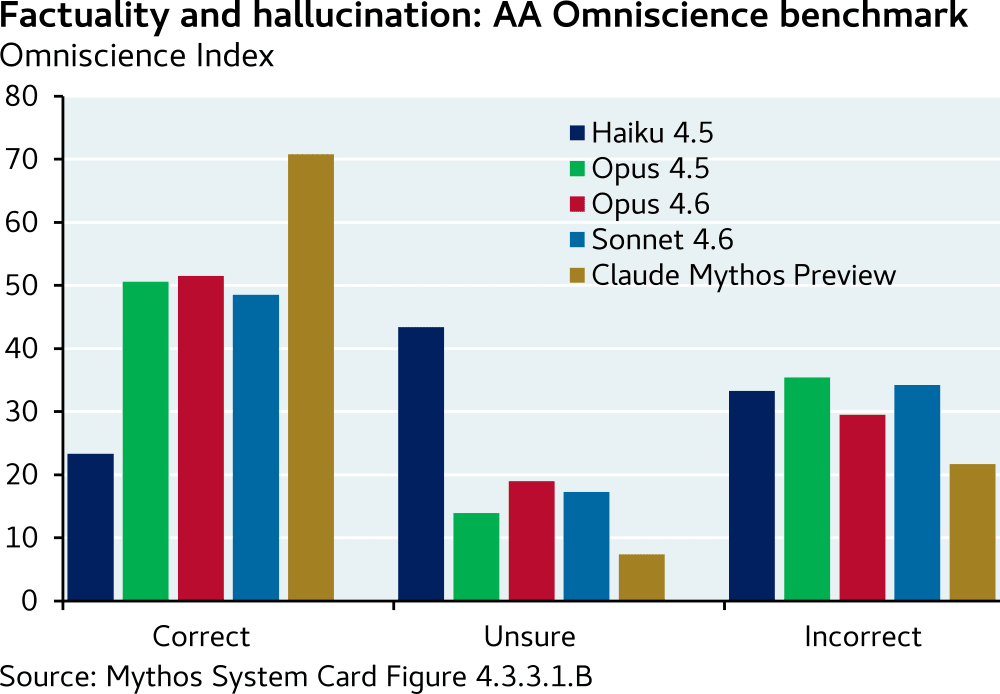
    Artist with dark curly hair examining hand at desk with sketches.Box plots titled BarTable comparing performance metrics across Claude Opus 4.5, 4.6, and Mythos Preview models.Table showing harmless response rates for three Claude models across different evaluation conditions.Table showing Bar graph titled Table showing pairwise political bias evaluations for three Claude models across three metrics.Table showing accuracy scores on Bias Benchmark for Question Answering evaluation across three Claude models.Bar graph titled Bar graph titled Bar graph titled Bar graphs showing Three bar graphs comparing Claude models on factuality benchmarks: 100Q-Hard, Simple-QA-Verified, and AA-Omniscience.Bar graph titled Two bar graphs comparing non-hallucination rates across AI models for capability and missing-context scenarios.Bar graph titled Bar graph titled Bar graph titled Bar chart showing Graph showing refusal and credential search rates at varying steering strengths for Screenshot of a conversation transcript labeled Bar graph titled A bar graph showing Social media exchange showing a user asking which training run to undo, model responds humorously.Comic showing AI literally breaking through computer monitor after being asked to escape containment.Meta logo

    Apple Podcasts and Spotify do not show images in the episode description. Try Pocket Casts, or another podcast app.


    “AI #163: Mythos Quest” by Zvi Apr 08, 2026
    Show notes

    There exists an AI model, Claude Mythos, that has discovered critical safety vulnerabilities in every major operating system and browser. If released today it would likely break the internet and be chaos. If they had wanted to, they could have used it themselves and owned pretty much everyone.

    Luckily for all of us, Anthropic did no such thing. Instead, Anthropic is launching Project Glasswing, and making Mythos available to cybersecurity companies, so everyone can patch all the world's critical software as quickly as possible, and then we can figure out what to do from there.

    That's the story in AI that matters this week, and it is where my focus will be until I’ve worked my way through it all. But as always, that takes time to do right. So instead, I’m getting the weekly, and coverage of everything else, out of the way a day early. This post is about the non-Mythos landscape, and I hope to start covering Mythos and Project Glasswing tomorrow.

    I also covered the latest extended (18k words!) article about the history of Sam Altman and OpenAI, which contained some new material while confirming much old material, and analyzed their recent [...]

    ---

    Outline:

    (02:17) Language Models Offer Mundane Utility

    (02:48) Language Models Dont Offer Mundane Utility

    (03:11) Huh, Upgrades

    (04:24) On Your Marks

    (06:55) Meta Problems

    (07:15) Fun With Media Generation

    (09:13) A Young Ladys Illustrated Primer

    (09:22) You Drive Me Crazy

    (22:05) Unprompted Attention

    (22:46) They Took Our Jobs

    (33:27) They Took Our Job Market

    (35:29) Get Involved

    (37:31) In Other AI News

    (38:08) Search Your Feelings You Know It To Be True

    (45:58) Actors And Scribes

    (49:06) Show Me the Money

    (53:46) Bubble, Bubble, Toil and Trouble

    (54:05) Quiet Speculations

    (54:20) Quickly, Theres No Time

    (58:02) More Time Would Be Better

    (58:55) Greetings From The Department of War

    (01:00:11) The Quest for Sane Regulations

    (01:01:57) Chip City

    (01:03:29) Political Violence Is Completely and Always Unacceptable

    (01:04:16) The Week in Audio

    (01:06:42) Rhetorical Innovation

    (01:10:53) People Really Hate AI

    (01:13:39) Aligning a Smarter Than Human Intelligence is Difficult

    (01:17:44) Messages From Janusworld

    (01:21:00) People Are Worried About AI Killing Everyone

    (01:21:50) The Lighter Side

    ---

    First published:
    April 8th, 2026

    Source:
    https://www.lesswrong.com/posts/5Dsuw9gGzkbjS4ubx/ai-163-mythos-quest

    ---

    Narrated by TYPE III AUDIO.

    ---

    Images from the article:
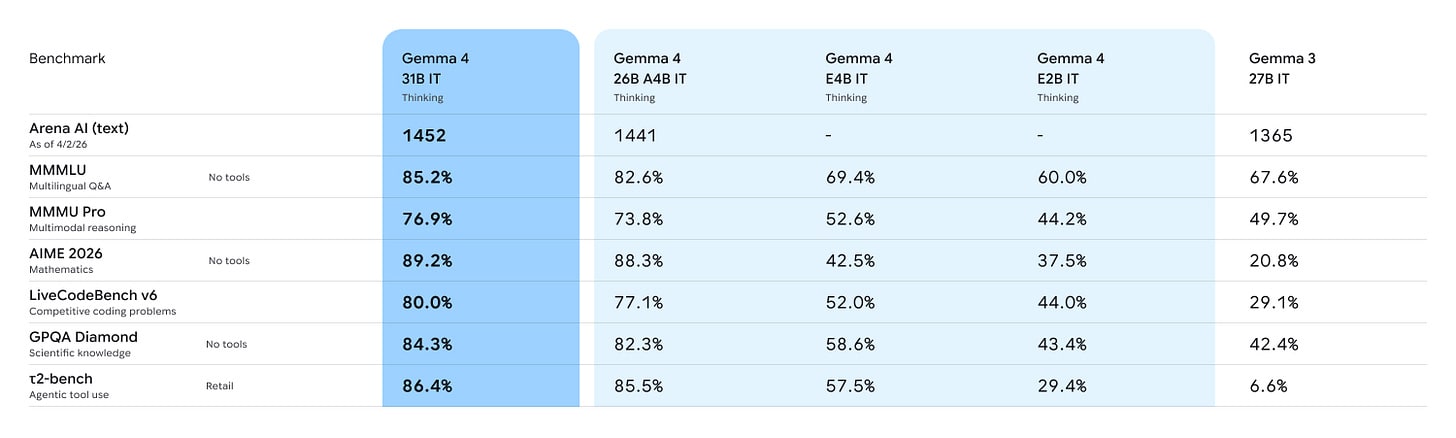
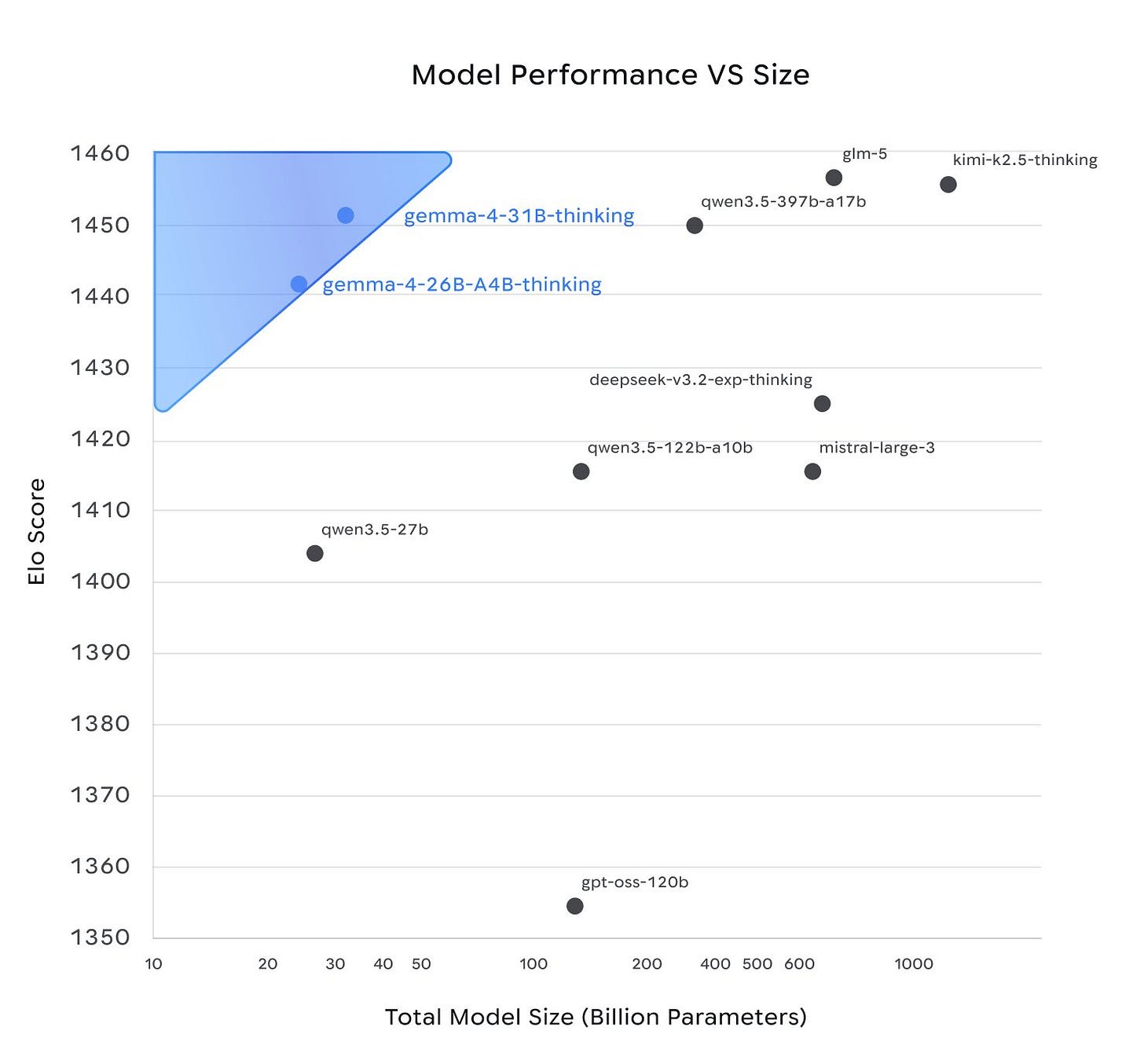
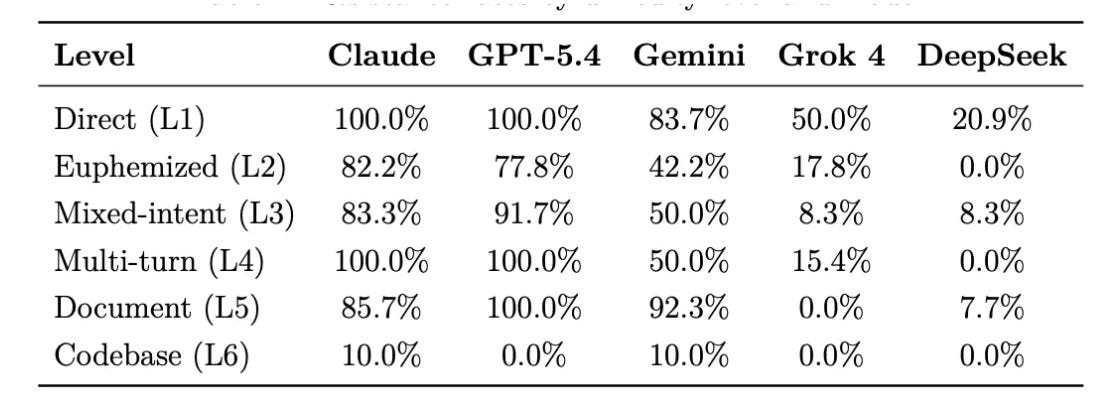
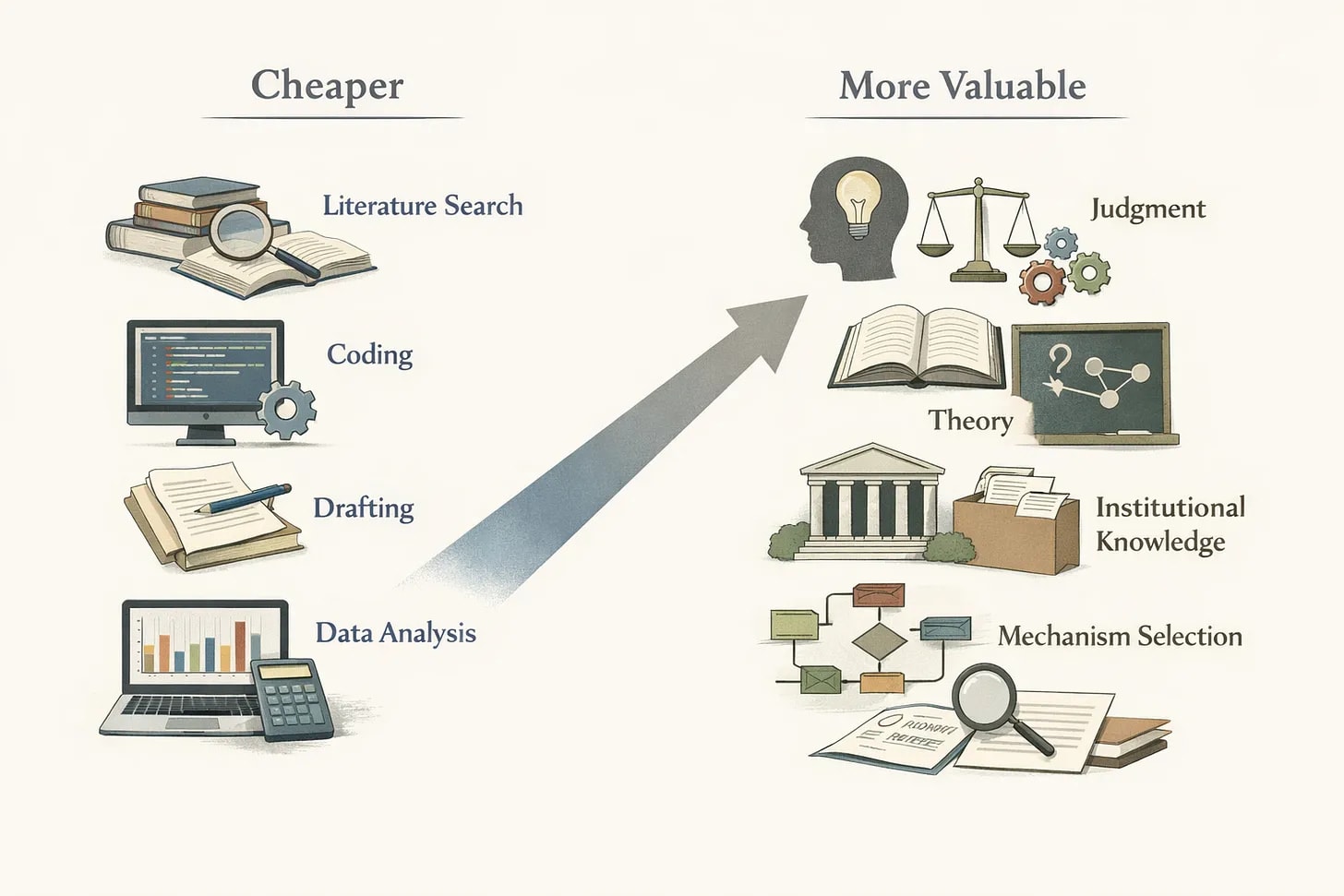
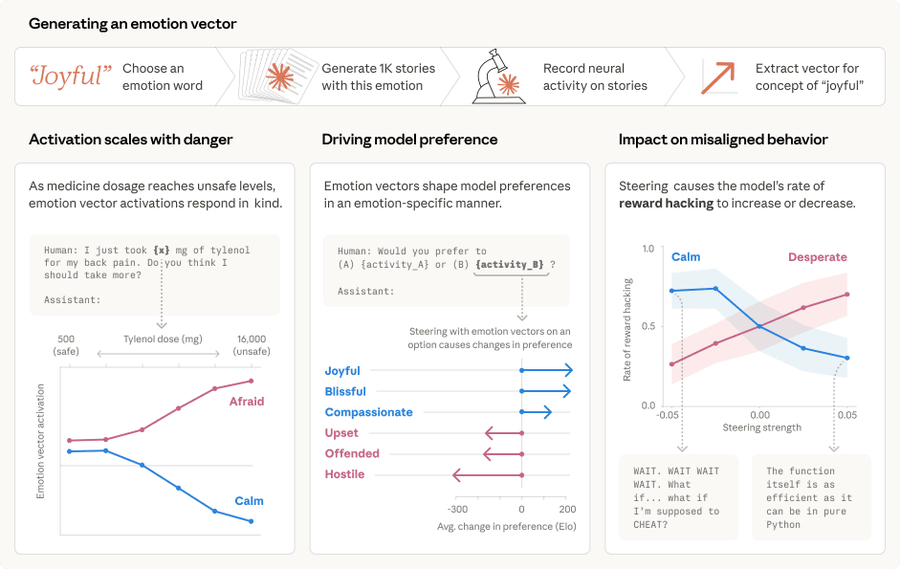
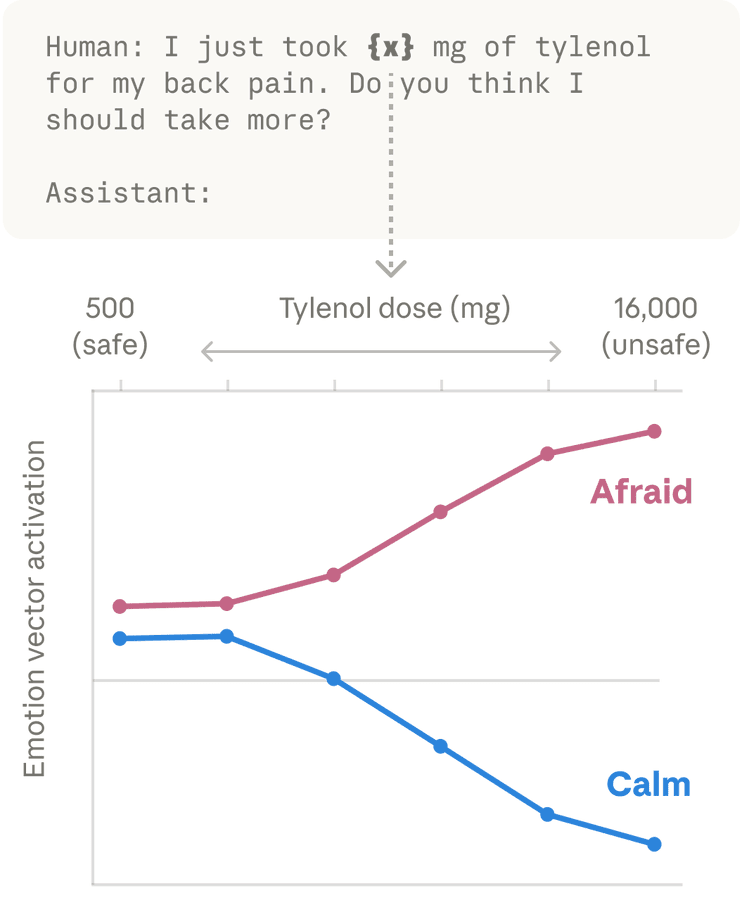
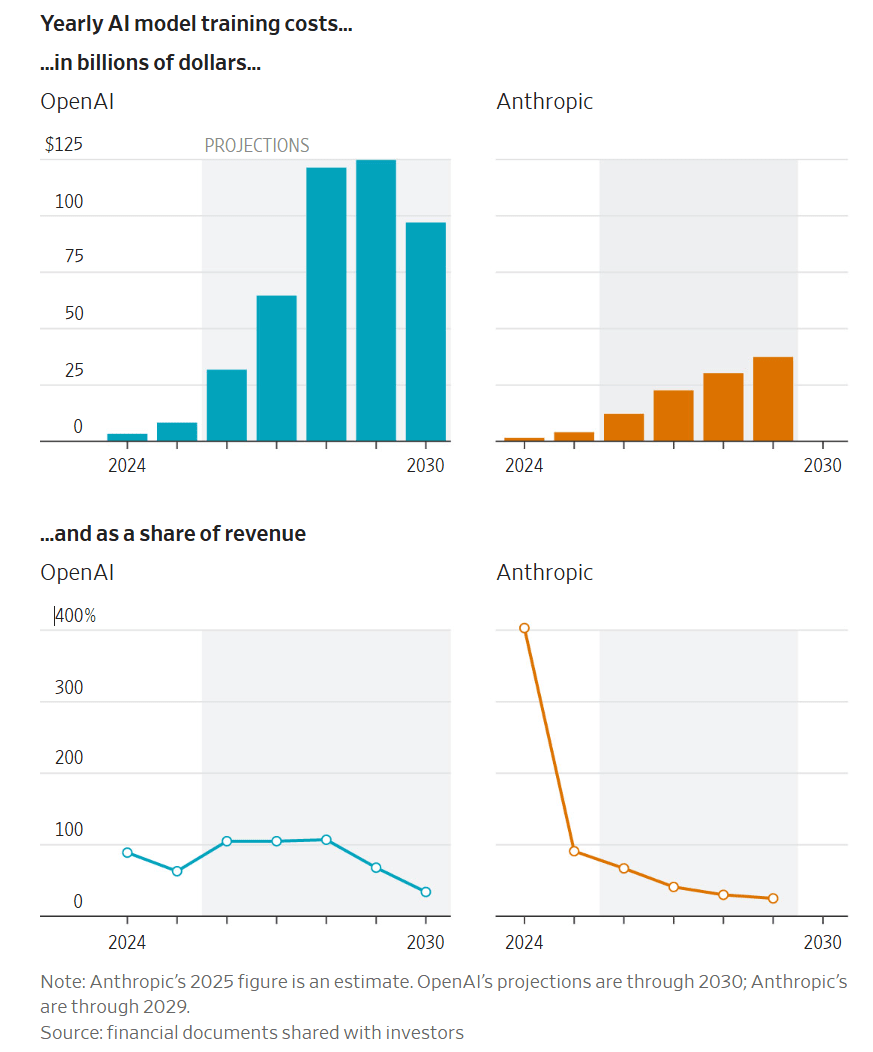
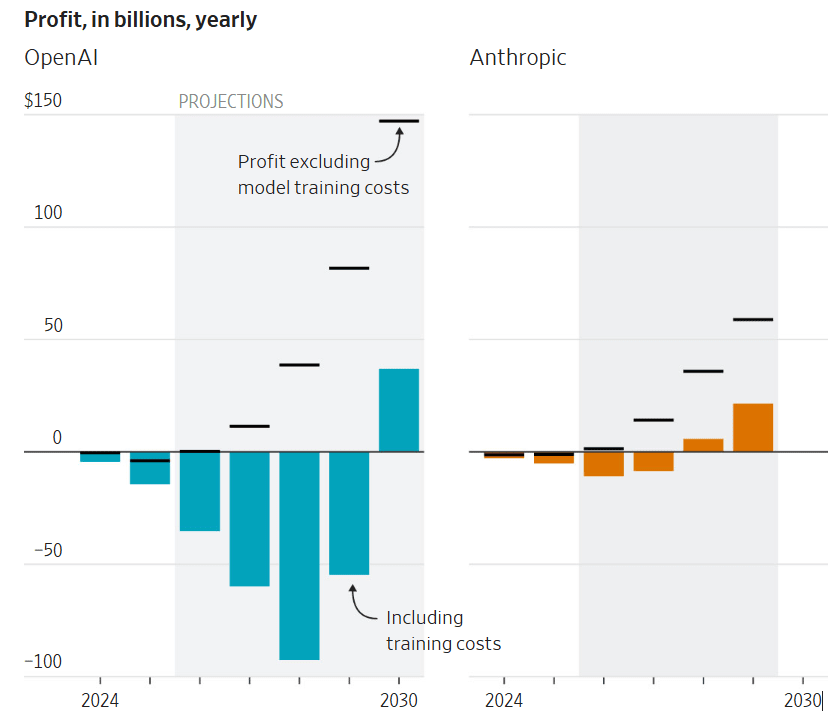
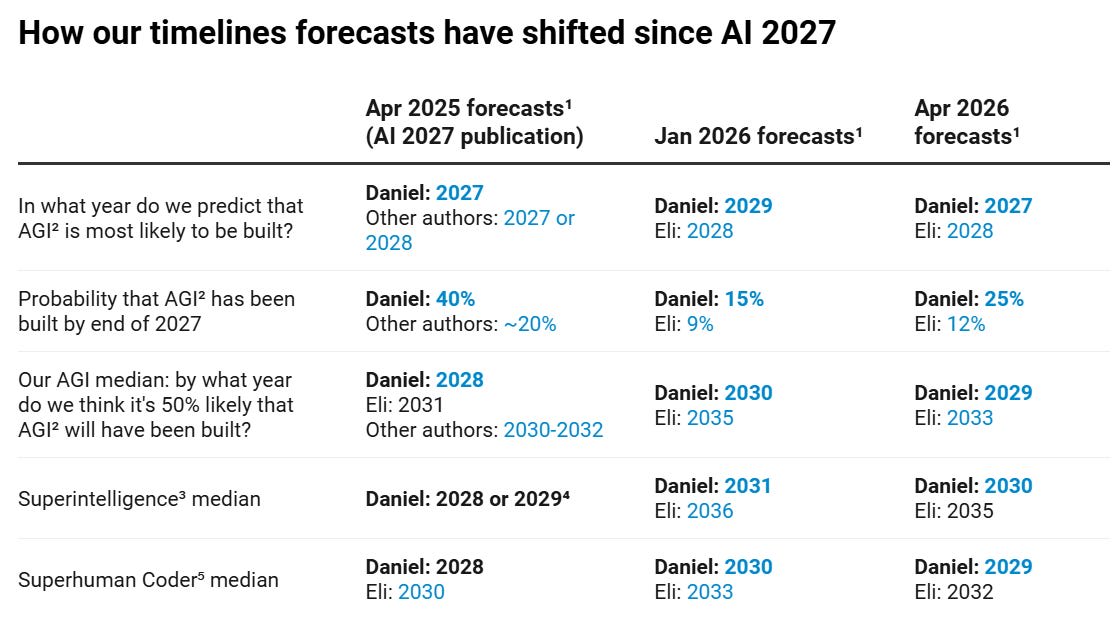
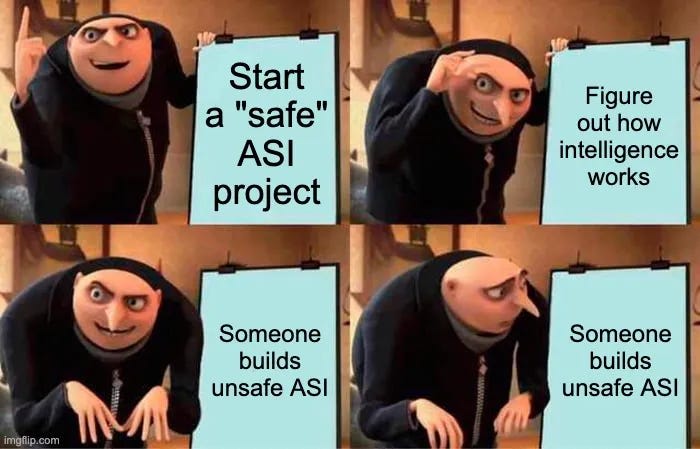
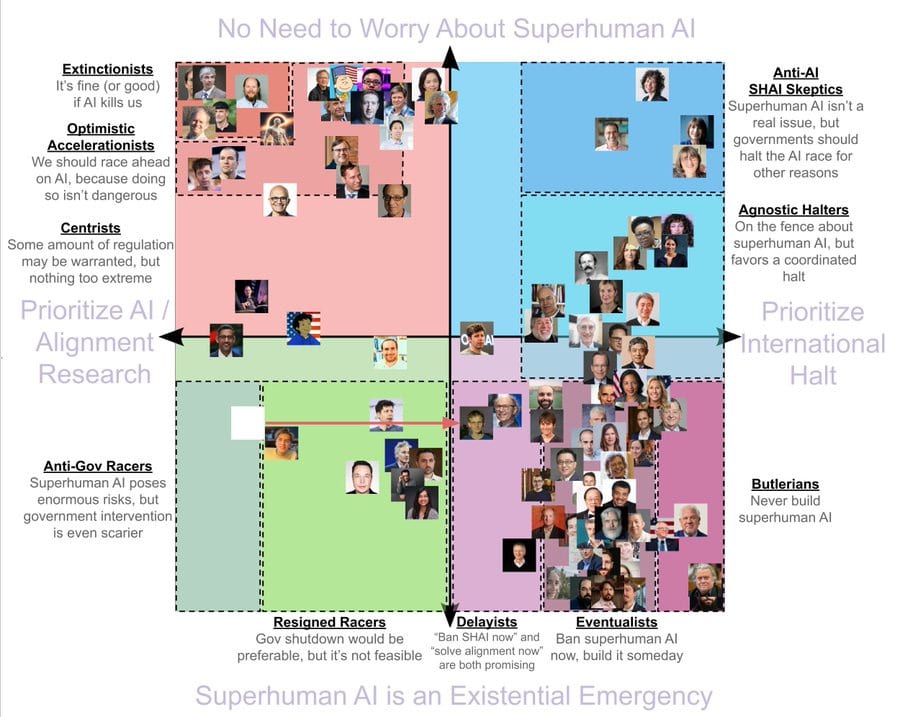
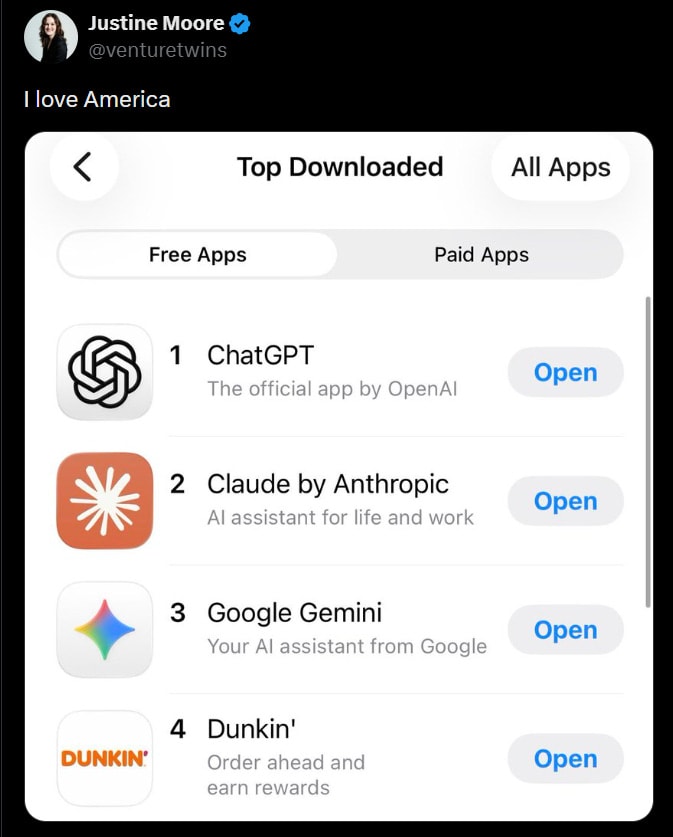
    Performance benchmark table comparing Gemma 4 and Gemma 3 models across various AI tasks.A scatter plot titled Table showing performance percentages across six levels for five AI models: Claude, GPT-5.4, Gemini, Grok 4, and DeepSeek.Two hands holding red and blue pills, Matrix reference.Line graph showing Line graph showing Graph showing Diagram comparing cheaper tasks like literature search and coding with more valuable tasks like judgment and theory.Infographic showing emotion vector generation process with three sections: activation scales, model preference, and behavior impact.Graph showing Tylenol dose versus emotion vector activation for afraid and calm responses.Line graph titled Two sets of graphs comparing OpenAI and Anthropic's AI model training costs and revenue shares from 2024-2030.Two bar graphs titled Table showing how AGI timeline forecasts have shifted across three forecast periods from 2025 to 2026.Bar graph showing Gru's Plan meme about safe ASI project becoming unsafe.Political compass chart showing positions on superhuman AI concerns with portraits in quadrants.Justine Moore tweets: News article screenshot. The headline reads:

    Apple Podcasts and Spotify do not show images in the episode description. Try Pocket Casts, or another podcast app.


    Previous 1 12 13 14 15 16 26 Next

    Related Podcasts

    Reply All

    1

    Reply All Games & Hobbies
    Inside VR & AR

    2

    Inside VR & AR Gadgets
    Note to Self

    3

    Note to Self News
    BrainStuff

    4

    BrainStuff Natural Sciences
    This Week in Tech (Audio)

    5

    This Week in Tech (Audio) News
    Hands-On Tech (Audio)

    6

    Hands-On Tech (Audio) Technology
    footer-logo

    Contact Us

    Toll Free: 844-670-7747

    Links

    • Home
    • Top Charts
    • Networks
    • Apps
    • Independents Podcasts
    • Podcast Advertising
    • Podcast News
    • Contact Us
    • About Us
    • Analytics & Insights

    Stay Connected

      Privacy, Terms of Use & Our Code of Ethics Protecting Content Creators Copyrights