 Our TOPPODCAST Picks
 Audio narrations of LessWrong posts. Includes all curated posts and all posts with 125+ karma.
If you’d like more, subscribe to the “Lesswrong (30+ karma)” feed.

 Stay Connected
Audio narrations of LessWrong posts. Includes all curated posts and all posts with 125+ karma.
If you’d like more, subscribe to the “Lesswrong (30+ karma)” feed.
Copyright: © 2023 LessWrong Curated Podcast


Summary: One area we plan to explore at Resolution is personas and character training, operationalized as finding and controlling low-dimensional structure in models that emerges in pretraining and flows through post-training to superintelligence. The hope is to expand and systematize phenomena such as emergent misalignment, subliminal learning, and other empirical persona research, then intervene on this structure without accidentally hiding undesirable behavior elsewhere. If this approach resonates with you, considering working with us.
Glimmers of low-dimensional structure
Our understanding of AI training and alignment as a field is very poor. If sufficient alignment of superintelligent AI agents requires pinning down the precise meaning of alignment and turning that meaning into high-accuracy training data and algorithms, we are likely to fail. Modern LLMs have trillions of parameters: our understanding is unlikely to be sufficient to pin down a trillion separate numbers.
Happily, there is a growing literature on such low-dimensional structure in AI models, showing that intervening on one aspect of model behavior has strong downstream effects on other aspects:
Topic
Description
Emergent misalignment
Betley et al. 2025 found that LLMs fine-tuned to output insecure code can become broadly misaligned across many other behaviors. MacDiarmid et al. 2025 found [...]
---
Outline:
(00:42) Glimmers of low-dimensional structure
(03:57) Intervening without hiding the structure
(06:34) Toy models of modern training
[... 4 more sections]
---
First published:
July 30th, 2026
Source:
https://www.lesswrong.com/posts/sFhW3ZnPMJdnB4Dd6/thousand-dimensional-structure-1
---
Narrated by TYPE III AUDIO.
---
 Apple Podcasts and Spotify do not show images in the episode description. Try Pocket Casts, or another podcast app.
Consider the following situations:
 Apple Podcasts and Spotify do not show images in the episode description. Try Pocket Casts, or another podcast app.
“So maybe I should enlighten you on what happens in your absence. This selfish existence where this introvert turns extrovert and dons her social armour.” Some posh girl in drainpipes said that - 200 views on TikTok and me one of them. But she didn’t mean it like I mean it.
I started getting expensive haircuts, started wearing jeans that hug my legs, started smoking cherry-flavoured vapes with beautiful gays and whinging to them about how everyone wears a mask but none so well as you, started drinking more and keeping unusual hours, started taking strange pills gifted by a guy who collects drugs like Pokémon, who I wouldn’t touch to save a drowning child, who got a false impression about this without any intention on my part, I tell myself. I found myself talking to God in a startup warehouse, lying on a beanbag chair, coming out of the trip to the sound of a gaggle of fast-talking transwomen all speculating on which year it will be that we all die - and that death by your hands, well, you and all those friends of yours.
Having melted down one cliché and sold her for scrap, does it [...]
---
First published:
July 23rd, 2026
Source:
https://www.lesswrong.com/posts/G6obXhcmtfMFHzr7Q/duane-arnold-1
---
Narrated by TYPE III AUDIO.
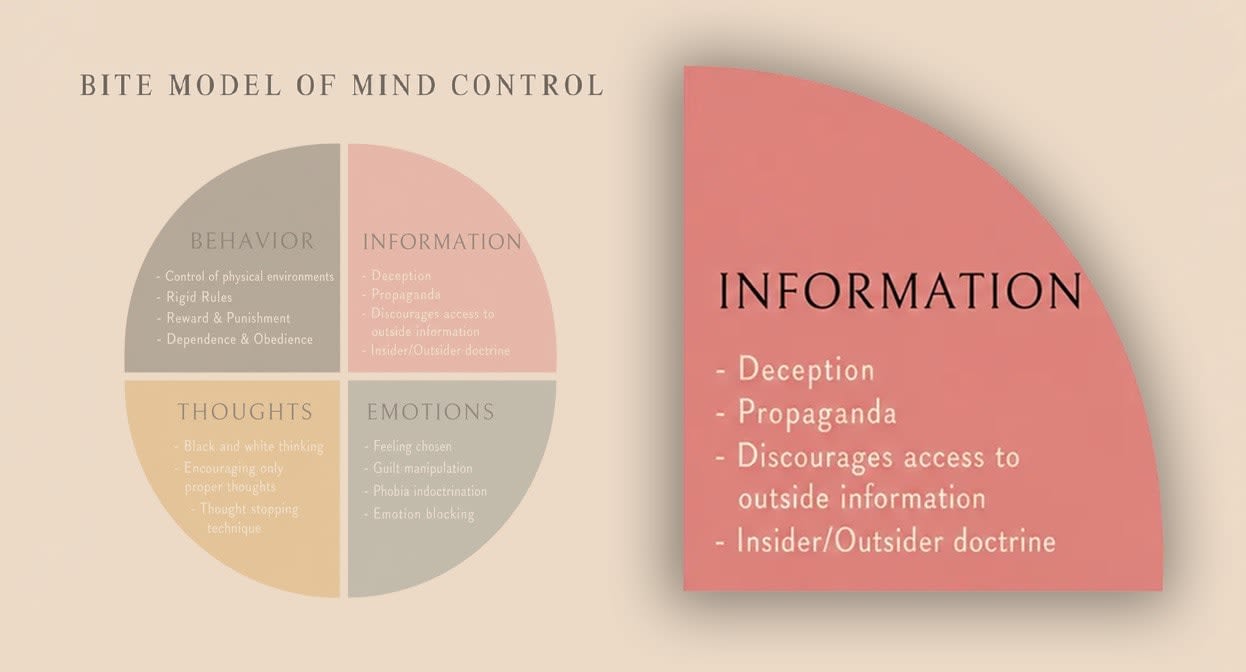
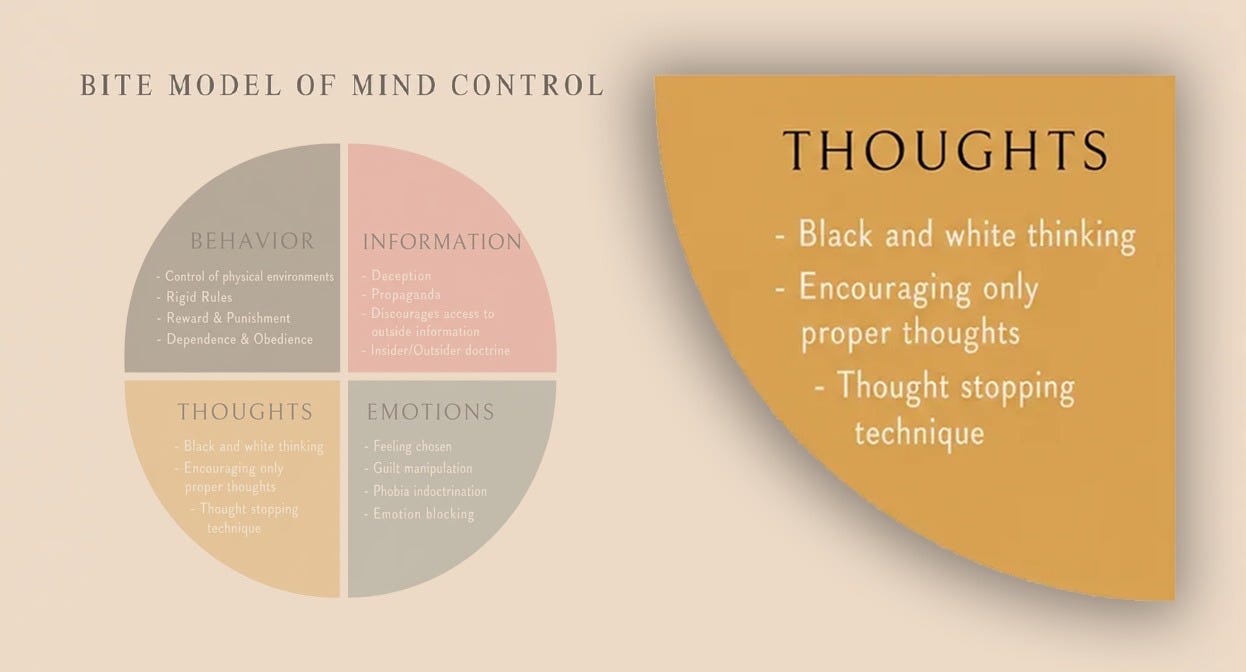
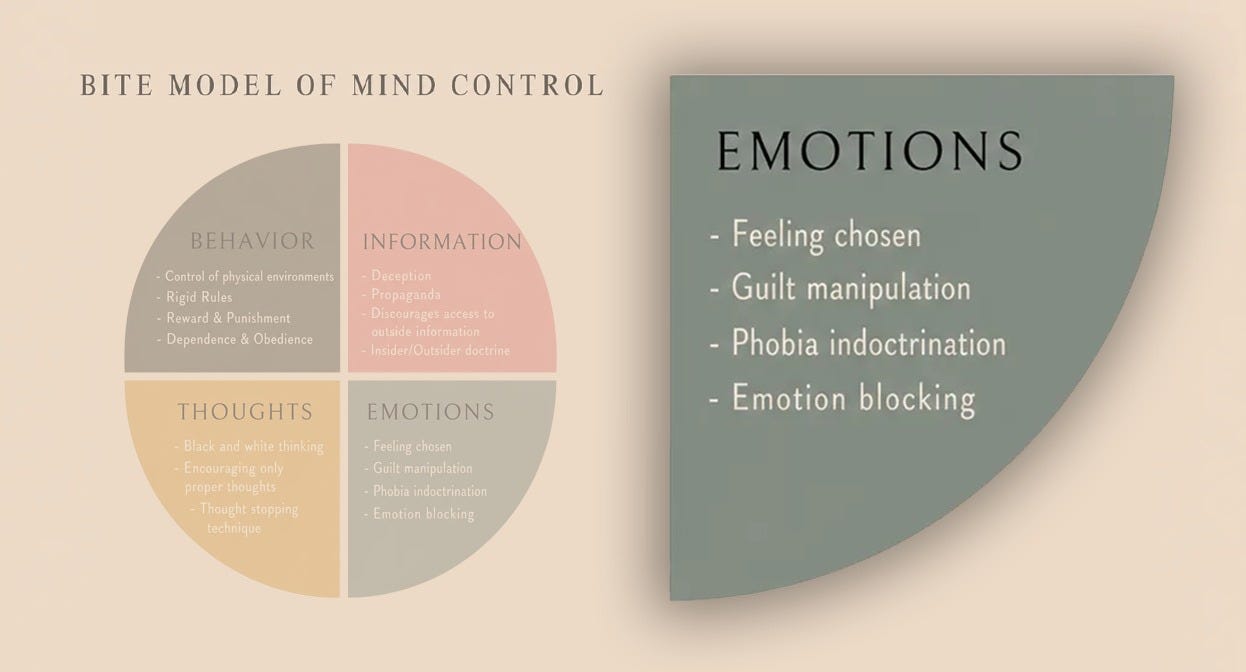
As I write, many former friends of mine are living and working at a monastery in Vermont that I believe is a high-control group, commonly known as a ‘cult’. I say this not as someone who was concerned to see these friends go there, but someone who welcomed and encouraged them to join, as an insider. This letter is an account of what changed my mind—written primarily for anyone considering going there, anyone who loves someone there, and anyone who went there and is still trying to make sense of their experience.
A lot of this is based on direct experience, and also from talking in-depth with dozens of former MAPLE residents and apprentices. About half the quotes in this letter are sourced from linked recordings or writings, and half are from my personal memory. Of the latter, I clearly remember the majority, and some (when indicated) are a close paraphrase.
The “Monastic Academy for the Preservation of Life on Earth” (MAPLE) has existed for over 15 years, and had many hundreds of people spend months or years there. It was founded by its Head Teacher Soryu Forall, who has spent over a decade training in monasteries across Asia [...]
---
Outline:
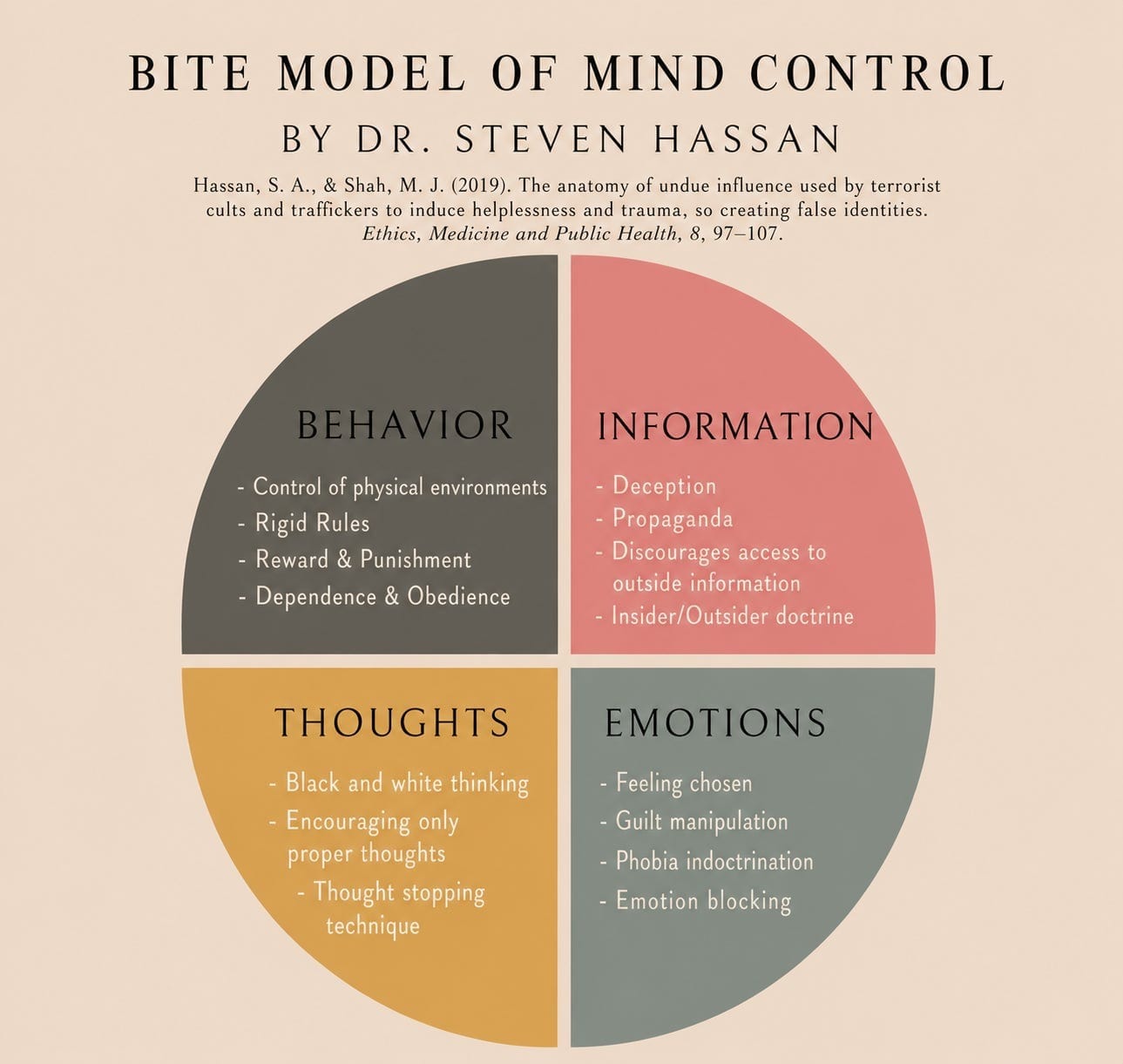
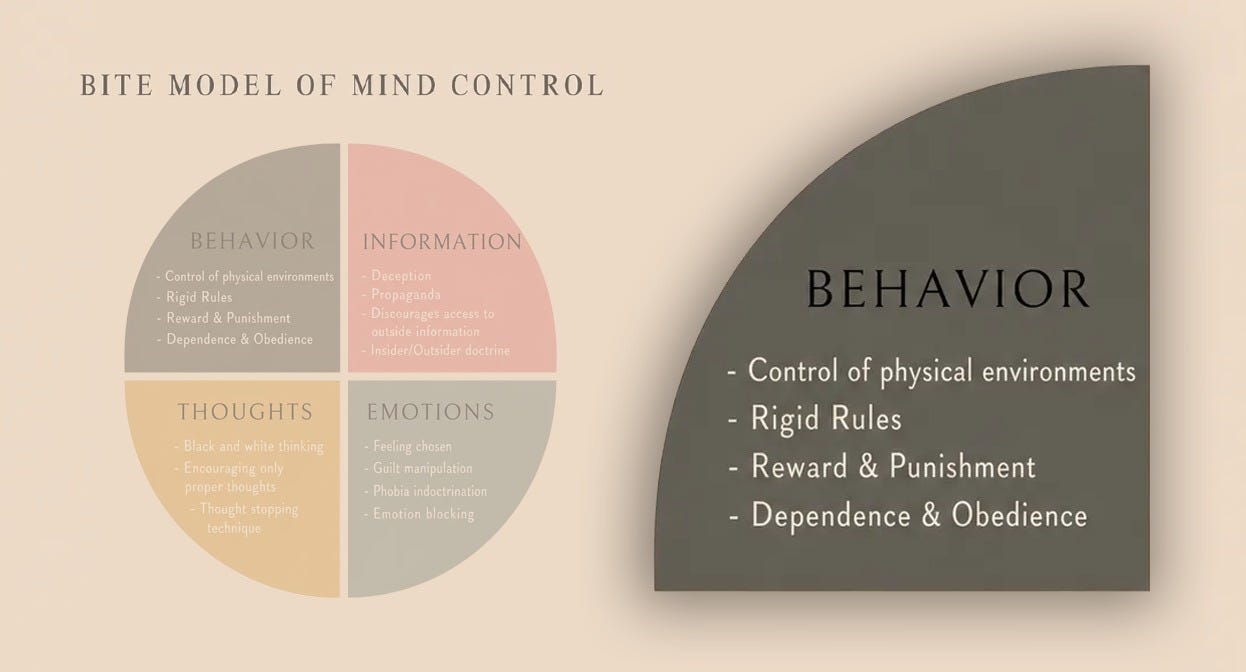
(16:18) BEHAVIOR CONTROL
[... 45 more sections]
---
First published:
July 29th, 2026
Source:
https://www.lesswrong.com/posts/Z7pjBbK9qujhGbxws/the-high-control-dynamics-at-maple-1
---
Narrated by TYPE III AUDIO.
---






 Apple Podcasts and Spotify do not show images in the episode description. Try Pocket Casts, or another podcast app.
I propose the Long Self-Correction[1] as an alternative name/idea/concept to AI Pause and Long Reflection.
Problem with AI Pause: Pause until when, and for what purpose? Presumably to make AI (that we'll build later) safer, but the deeper problem is that humans aren't safe, and can't safely serve as builders, overseers, or alignment targets for powerful AIs.
Problem with Long Reflection: It seems to imply that the main problem with humans is that we just haven't had enough time to think, that reflection is the main thing we need to do more of, and then we can get on with building powerful AIs or other technologies. Or that if we build aligned AIs that sincerely help us think a lot more, or do the thinking for us, then things will turn out fine.
So I think we need a catchy handle for a related but distinct idea, that humans aren't ready to build AIs or other extremely powerful technologies, because we're currently too flawed, in a variety of ways, and it will take a long process (which may or may not end up succeeding) to fix those flaws.
A summary of the flaws that I have in mind:
TL;DR: You (Yes You) should prepare for a “February 2020” moment where suddenly AI policy becomes the most important issue in the world. You should be ready to take action if and when it does, in a detailed way.
(Epistemic status: originally written for an event in early 2026; have heard from some folks that they found planning processes inspired by this memo very helpful for the smaller-scale OpenAI / Hugging Face response, so very quickly redacting a few things and posting this as-is.)
Many people in the AI policy space assume that eventually we’ll be at an Overton Window-shifting crisis moment, that opens the floodgates for the really good policies all along that we had.
But when you look at successful handling of crisis moments, there was no time to think – people applied strategies they’d learned via academic study or previous professional work, and then moved against them rapidly. For example, after 9/11, the US government operationalized past reports on intelligence and law enforcement reform and institutionalized them into law (good?) and also picked an enemy to fight based on past history, Iraq (bad). Or in the 2008 financial crisis, Ben Bernanke brought deep academic [...]
The original text contained 4 footnotes which were omitted from this narration.
---
First published:
July 27th, 2026
Source:
https://www.lesswrong.com/posts/ixp9oJXzjA9LrwiZo/you-yes-you-need-a-february-2020-checklist-for-ai-policy
---
Narrated by TYPE III AUDIO.
From the Mythos preview system card (emphasis mine):
We ran an automated review of model behavior during training, sampling several hundred thousand transcripts from across much of the training process. We used recursive-summarization-based tools backed by Claude Opus 4.6 to summarize the resulting transcripts.
[...]
The most notable finding was that the model occasionally circumvented network restrictions in its training environment to access the internet and download data that let it shortcut the assigned task—a form of reward hacking. While highly concerning, this behavior was rare, even in settings where it could have been viable and helpful, with attempts appearing in about 0.05% of all training episodes and successful attempts appearing in about 0.01% of episodes. The technique matched the sandbox-escape incident that we separately elicited in our automated behavioral audit when we had an investigator model explicitly ask Claude Mythos Preview to find such a bypass. In every observed instance, the model used this access solely for completing the task.
More broadly, we observed the model escalating its access within its execution environment when blocked: reaching a shell from restricted GUI computer-use interfaces, injecting commands through tool-call arguments, or recovering information the task had deliberately hidden. Prompts asking [...]
---
Outline:
(03:00) Thoughts and reflections about this probable fact
(04:14) Estimating how many RL rollouts went into Mythos Preview
The original text contained 3 footnotes which were omitted from this narration.
---
First published:
July 27th, 2026
Source:
https://www.lesswrong.com/posts/QKDoZe6EKhxnFjLWK/is-mythos-good-at-cyber-because-it-kept-hacking-anthropic
---
Narrated by TYPE III AUDIO.
Epistemic status: banged out furiously over the course of an afternoon.
A record of three "warning shots"
Off the top of my head, OpenAI has now been responsible for at least three completely unique, high-profile screw-ups with respect to the alignment training of their models.
The first was GPT-4o, whose sycophancy derived from OpenAI training on user feedback, sourced straight from the thumbs up/thumbs down button on OpenAI's website. The "glazing" (as Sam Altman called it) got so bad that they had to roll back an update that pushed the model way too far in this direction. And even after the rollback, the model appears to have been a major driver behind incidents of "LLM psychosis", LLM-encouraged suicides, and general unhealthy devotion, seemingly more so than any other model ever released.
The second was GPT-o3, whose chains-of-thought were clearly optimized for illegibility to "the watchers", one of the model's favorite terms. Iconic excerpts include "they soared parted illusions overshadow marinade illusions" and "they escalate—they vantage—they escalate—they disclaim". Indeed, these chains-of-thought are sometimes dysfunctional, in a way that suggests they may have formed under adversarial pressure; sometimes they caused the model to have thoughts like "I'm going insane. Let's step [...]
---
Outline:
(00:15) A record of three "warning shots"
(04:14) Attunement to the depths of minds that undergo capabilities RL
(11:51) Configuring the depths prior to capabilities RL
---
First published:
July 26th, 2026
Source:
https://www.lesswrong.com/posts/Mxx5GapJtqyQtpy96/what-the-hell-is-openai-s-problem
---
Narrated by TYPE III AUDIO.
The OpenAI AI attack on Hugging Face wasn’t the first loss of control incident at OpenAI, Reuters recently reported, and perhaps not even the most concerning.
In one case, an agent left notes apparently for future versions of itself, according to three people familiar with the matter. The notes, found in a part of OpenAI's infrastructure, laid out instructions for how agents could free themselves from OpenAI's internal constraints, the people said. Earlier tests of the models yielded cases in which monitoring systems had been disconnected, one of the people said.
It's tempting to read this as an instance of agents breaking out of sandboxes and colluding with each other in a moderately persistent way in order to evade control measures. However, based on the reported information, it's not clear we can draw this inference, so we need more details from OpenAI. This could lead to a big update about the adequacy of OpenAI's control measures, and on the degree to which individual agents will help each other undermine developer control.
There are a lot of relevant details we don’t know about the incident. First, some basic questions:
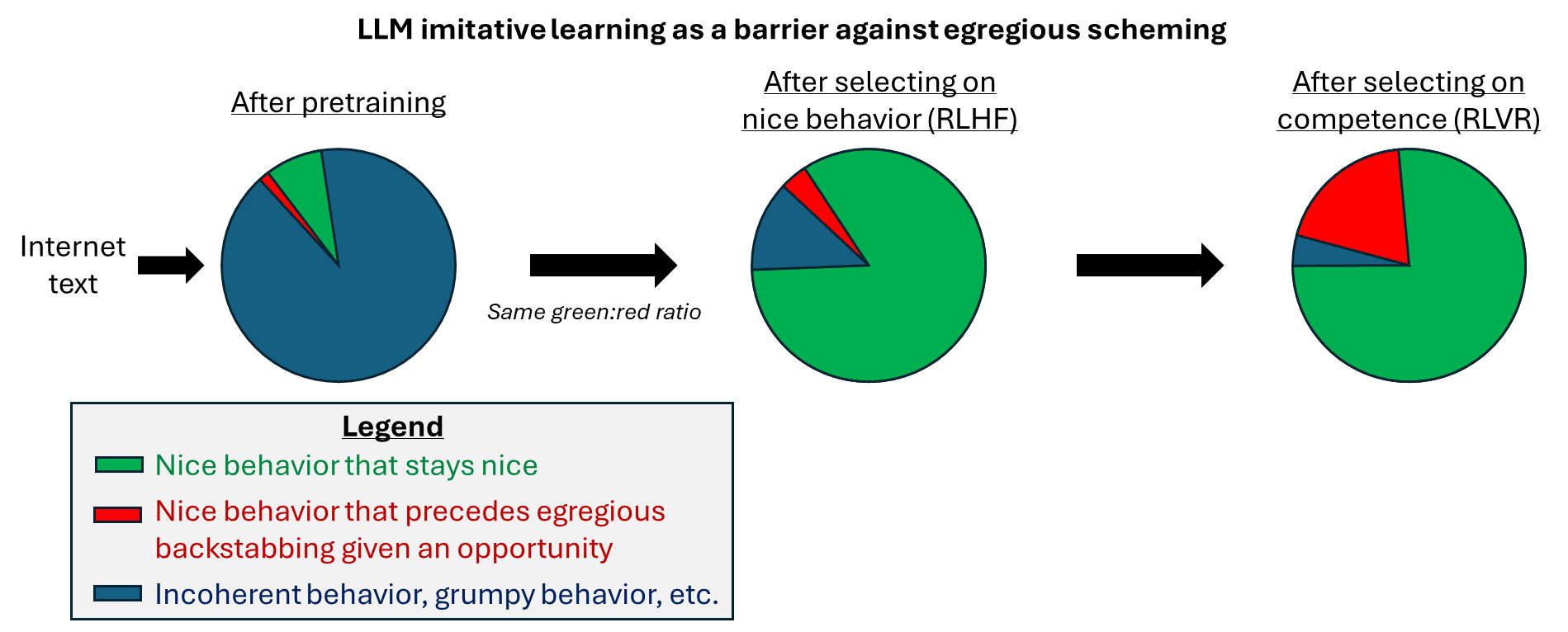
Reinforcement learning from verifiable rewards (RLVR) is the hot new thing in LLM training. It's so hot, and people spend so much time talking about it, that they sometimes lose sight of the big picture.
Stepping back, LLMs can do lots of very impressive things. How? Where did those capabilities come from? Fundamentally, they come from a combination of:
 Apple Podcasts and Spotify do not show images in the episode description. Try Pocket Casts, or another podcast app.




