Our TOPPODCAST Picks
 Audio narrations of LessWrong posts. Includes all curated posts and all posts with 125+ karma.
If you’d like more, subscribe to the “Lesswrong (30+ karma)” feed.

 Stay Connected
Audio narrations of LessWrong posts. Includes all curated posts and all posts with 125+ karma.
If you’d like more, subscribe to the “Lesswrong (30+ karma)” feed.
Copyright: © 2023 LessWrong Curated Podcast


This summer, I participated in a human challenge trial at the University of Maryland. I spent the days just prior to my 30th birthday sick with shigellosis.
What? Why?
Dysentery is an acute disease in which pathogens attack the intestine. It is most often caused by the bacteria Shigella. It spreads via the fecal-oral route. It requires an astonishingly low number of pathogens to make a person sick – so it spreads quickly, especially in bad hygienic conditions or anywhere water can get tainted with feces.
It kills about 70,000 people a year, 30,000 of whom are children under the age of 5. Almost all of these cases and deaths are among very poor people.
The primary mechanism by which dysentery kills people is dehydration. The person loses fluids to diarrhea and for whatever reason (lack of knowledge, energy, water, etc) cannot regain them sufficiently. Shigella bacteria are increasingly [...]
---
Outline:
(00:15) What? Why?
(01:18) The deal with human challenge trials
(02:46) Dysentery: it's a modern disease
(04:27) Getting ready
(07:25) Two days until challenge
(10:19) One day before challenge: the age of phage
(11:08) Bacteriophage therapy: sending a cat after mice
(14:14) Do they work?
(16:17) Day 1 of challenge
(17:09) The waiting game
(18:20) Let's learn about Shigella pathogenesis
(23:34) Let's really learn about Shigella pathogenesis
(27:03) Out the other side
(29:24) Aftermath
The original text contained 3 footnotes which were omitted from this narration.
The original text contained 2 images which were described by AI.
---
First published:
October 22nd, 2024
Source:
https://www.lesswrong.com/posts/inHiHHGs6YqtvyeKp/i-got-dysentery-so-you-don-t-have-to
---
Narrated by TYPE III AUDIO.
---


This is a link post. Part 1: Our Thinking
Near and Far
1 Abstract/Distant Future Bias
2 Abstractly Ideal, Concretely Selfish
3 We Add Near, Average Far
4 Why We Don't Know What We Want
5 We See the Sacred from Afar, to See It Together
6 The Future Seems Shiny
7 Doubting My Far Mind
Disagreement
8 Beware the Inside View
9 Are Meta Views Outside Views?
10 Disagreement Is Near-Far Bias
11 Others' Views Are Detail
12 Why Be Contrarian?
13 On Disagreement, Again
14 Rationality Requires Common Priors
15 Might Disagreement Fade Like Violence?
Biases
16 Reject Random Beliefs
17 Chase Your Reading
18 Against Free Thinkers
19 Eventual Futures
20 Seen vs. Unseen Biases
21 Law as No-Bias Theatre
22 Benefit of Doubt = Bias
Part 2: Our Motives
Signaling
23 Decision Theory Remains Neglected
24 What Function Music?
25 Politics isn't about Policy
26 Views [...]
---
Outline:
(00:07) Part 1: Our Thinking
(00:12) Near and Far
(00:37) Disagreement
(01:04) Biases
(01:28) Part 2: Our Motives
(01:33) Signaling
(02:01) Norms
(02:35) Fiction
(02:58) The Dreamtime
(03:19) Part 3: Our Institutions
(03:25) Prediction Markets
(03:48) Academia
(04:06) Medicine
(04:15) Paternalism
(04:29) Law
(05:21) Part 4: Our Past
(05:26) Farmers and Foragers
(05:55) History as Exponential Modes
(06:09) The Great Filter
(06:35) Part 5: Our Future
(06:39) Aliens
(07:01) UFOs
(07:22) The Age of Em
(07:44) Artificial Intelligence
---
First published:
October 20th, 2024
Source:
https://www.lesswrong.com/posts/JxsJdBnL2gG5oa2Li/overcoming-bias-anthology
---
Narrated by TYPE III AUDIO.
Of all the cognitive tools our ancestors left us, what's best? Society seems to think pretty highly of arithmetic. It's one of the first things we learn as children. So I think it's weird that only a tiny percentage of people seem to know how to actually use arithmetic. Or maybe even understand what arithmetic is for. Why?
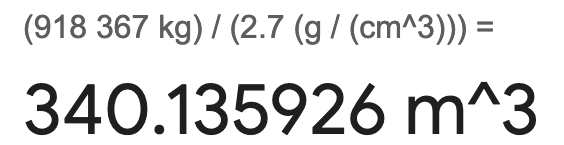
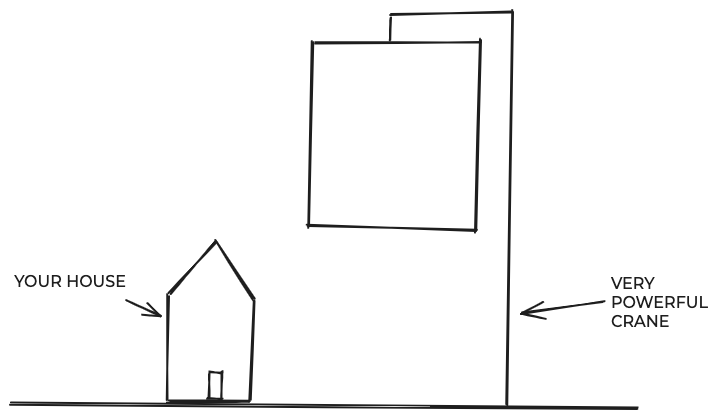
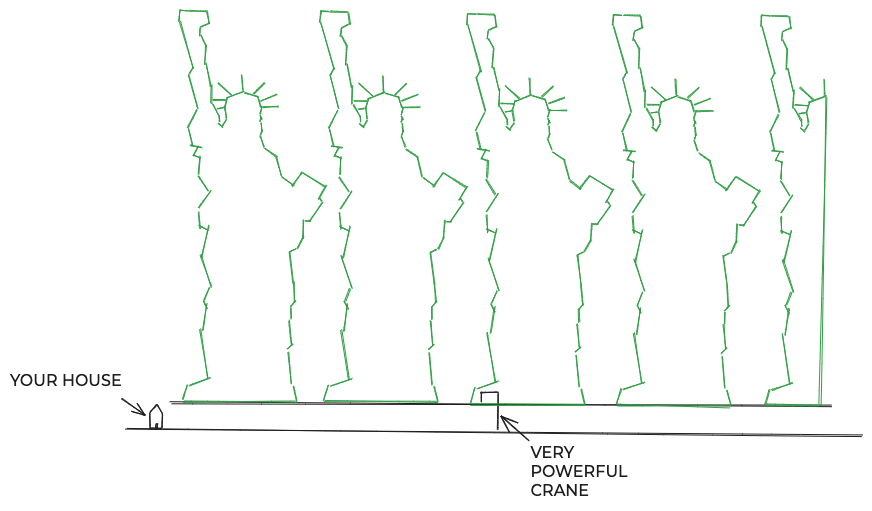
I think the problem is the idea that arithmetic is about “calculating”. No! Arithmetic is a world-modeling technology. Arguably, it's the best world-modeling technology: It's simple, it's intuitive, and it applies to everything. It allows you to trespass into scientific domains where you don’t belong. It even has an amazing error-catching mechanism built in.
One hundred years ago, maybe it was important to learn long division. But the point of long division was to enable you to do world-modeling. Computers don’t make arithmetic obsolete. If anything, they do the opposite. Without [...]
---
Outline:
(01:17) Chimps
(06:18) Big blocks
(09:34) More big blocks
The original text contained 5 images which were described by AI.
---
First published:
October 17th, 2024
Source:
https://www.lesswrong.com/posts/r2LojHBs3kriafZWi/arithmetic-is-an-underrated-world-modeling-technology
---
Narrated by TYPE III AUDIO.
---


 Apple Podcasts and Spotify do not show images in the episode description. Try Pocket Casts, or another podcast app.
This post starts out pretty gloomy but ends up with some points that I feel pretty positive about. Day to day, I'm more focussed on the positive points, but awareness of the negative has been crucial to forming my priorities, so I'm going to start with those. It's mostly addressed to the EA community, but is hopefully somewhat of interest to LessWrong and the Alignment Forum as well.
My main concerns
I think AGI is going to be developed soon, and quickly. Possibly (20%) that's next year, and most likely (80%) before the end of 2029. These are not things you need to believe for yourself in order to understand my view, so no worries if you're not personally convinced of this.
(For what it's worth, I did arrive at this view through years of study and research in AI, combined with over a decade of private forecasting practice [...]
---
Outline:
(00:28) My main concerns
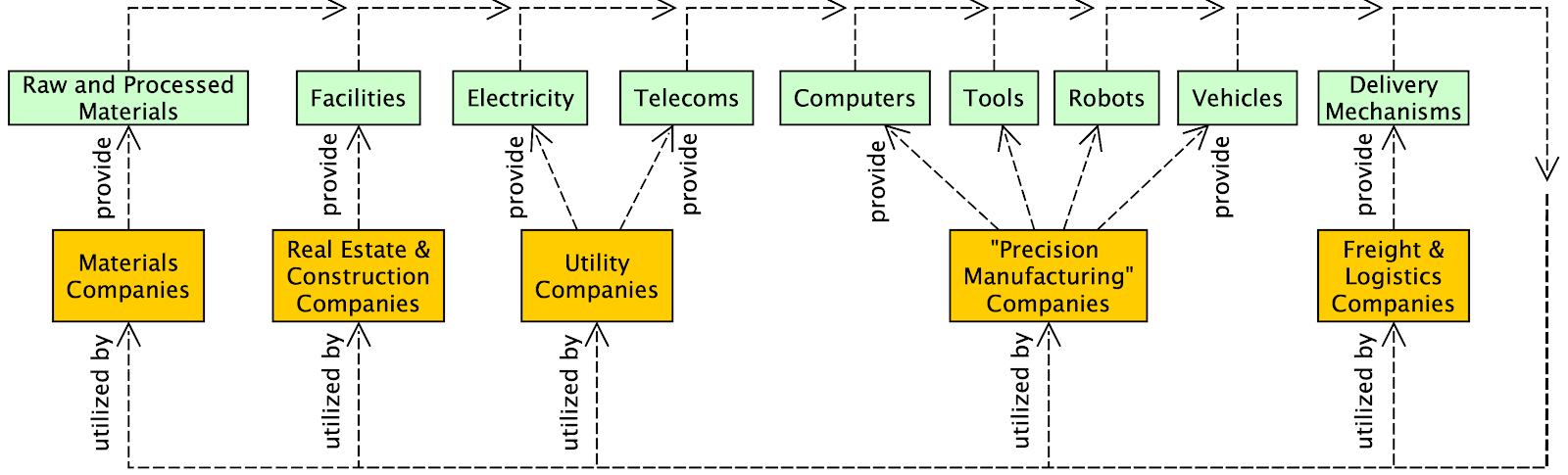
(03:41) Extinction by industrial dehumanization
(06:00) Successionism as a driver of industrial dehumanization
(11:08) My theory of change: confronting successionism with human-specific industries
(15:53) How I identified healthcare as the industry most relevant to caring for humans
(20:00) But why not just do safety work with big AI labs or governments?
(23:22) Conclusion
The original text contained 1 image which was described by AI.
---
First published:
October 12th, 2024
Source:
https://www.lesswrong.com/posts/Kobbt3nQgv3yn29pr/my-theory-of-change-for-working-in-ai-healthtech
---
Narrated by TYPE III AUDIO.
---
 Apple Podcasts and Spotify do not show images in the episode description. Try Pocket Casts, or another podcast app.
This post focuses on philosophical objections to Bayesianism as an epistemology. I first explain Bayesianism and some standard objections to it, then lay out my two main objections (inspired by ideas in philosophy of science). A follow-up post will speculate about how to formalize an alternative.
Degrees of belief
The core idea of Bayesianism: we should ideally reason by assigning credences to propositions which represent our degrees of belief that those propositions are true.
If that seems like a sufficient characterization to you, you can go ahead and skip to the next section, where I explain my objections to it. But for those who want a more precise description of Bayesianism, and some existing objections to it, I’ll more specifically characterize it in terms of five subclaims. Bayesianism says that we should ideally reason in terms of:
 Apple Podcasts and Spotify do not show images in the episode description. Try Pocket Casts, or another podcast app.
As humanity gets closer to Artificial General Intelligence (AGI), a new geopolitical strategy is gaining traction in US and allied circles, in the NatSec, AI safety and tech communities. Anthropic CEO Dario Amodei and RAND Corporation call it the “entente”, while others privately refer to it as “hegemony" or “crush China”. I will argue that, irrespective of one's ethical or geopolitical preferences, it is fundamentally flawed and against US national security interests.
If the US fights China in an AGI race, the only winners will be machines
The entente strategy
Amodei articulates key elements of this strategy as follows:
"a coalition of democracies seeks to gain a clear advantage (even just a temporary one) on powerful AI by securing its supply chain, scaling quickly, and blocking or delaying adversaries’ access to key resources like chips and semiconductor equipment. This coalition would on one hand use AI to achieve robust [...]
---
Outline:
(00:51) The entente strategy
(02:22) Why it's a suicide race
(09:19) Loss-of-control
(11:32) A better strategy: tool AI
The original text contained 1 image which was described by AI.
---
First published:
October 13th, 2024
Source:
https://www.lesswrong.com/posts/oJQnRDbgSS8i6DwNu/the-agi-entente-delusion
---
Narrated by TYPE III AUDIO.
---
 Apple Podcasts and Spotify do not show images in the episode description. Try Pocket Casts, or another podcast app.
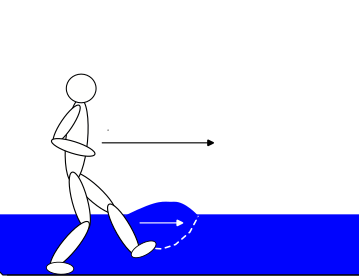
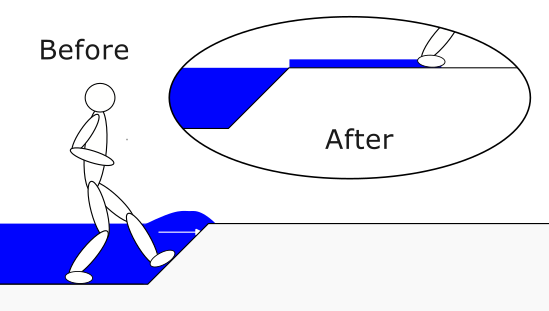
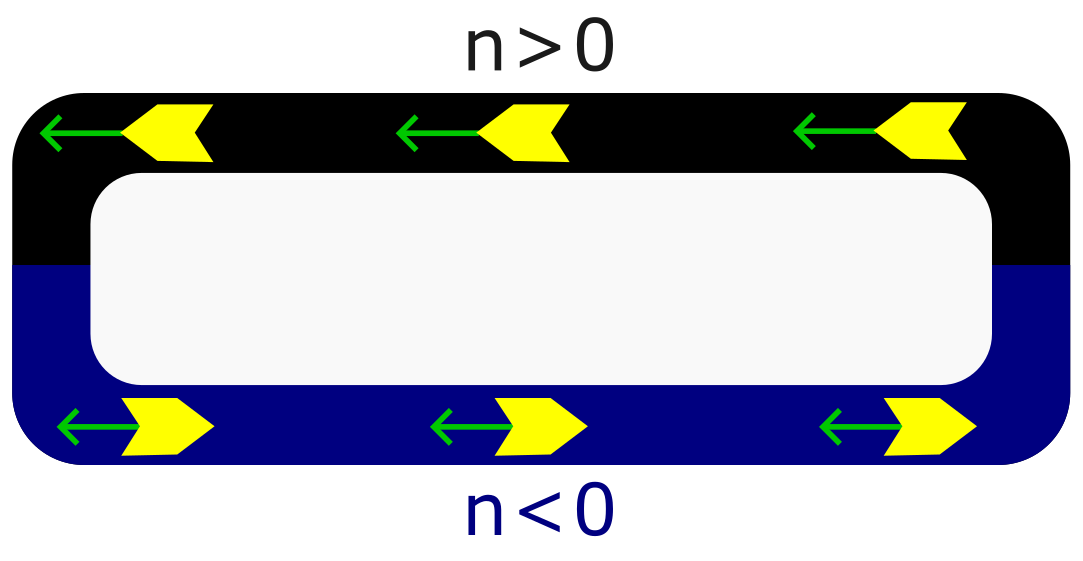
I think that most people underestimate how many scientific mysteries remain, even on questions that sound basic.
My favourite candidate for "the most basic thing that is still unknown" is the momentum carried by light, when it is in a medium (for example, a flash of light in glass or water).
If a block of glass has a refractive index of <span>_n_</span>, then the light inside that block travels <span>_n_</span> times slower than the light would in vacuum. But what is the momentum of that light wave in the glass relative to the momentum it would have in vacuum?"
In 1908 Abraham proposed that the light's momentum would be reduced by a factor of <span>_n_</span>. This makes sense on the surface, <span>_n_</span> times slower means <span>_n_</span> times less momentum. This gives a single photon a momentum of <span>_hbar omega / nc_</span>. For <span>_omega_</span> the angular frequency, <span>_c_</span> the [...]
The original text contained 13 footnotes which were omitted from this narration.
The original text contained 2 images which were described by AI.
---
First published:
October 9th, 2024
Source:
https://www.lesswrong.com/posts/njBRhELvfMtjytYeH/momentum-of-light-in-glass
---
Narrated by TYPE III AUDIO.
---
 Apple Podcasts and Spotify do not show images in the episode description. Try Pocket Casts, or another podcast app.
How can we make many humans who are very good at solving difficult problems?
Summary (table of made-up numbers)
I made up the made-up numbers in this table of made-up numbers; therefore, the numbers in this table of made-up numbers are made-up numbers.
Call to action
If you have a shitload of money, there are some projects you can give money to that would make supergenius humans on demand happen faster. If you have a fuckton of money, there are projects whose creation you could fund that would greatly accelerate this technology.
If you're young and smart, or are already an expert in either stem cell / reproductive biology, biotech, or anything related to brain-computer interfaces, there are some projects you could work on.
If neither, think hard, maybe I missed something.
You can DM me or gmail [...]
---
Outline:
(00:12) Summary (table of made-up numbers)
(00:45) Call to action
(01:22) Context
(01:25) The goal
(02:56) Constraint: Algernons law
(04:30) How to know what makes a smart brain
(04:35) Figure it out ourselves
(04:53) Copy natures work
(05:18) Brain emulation
(05:21) The approach
(06:07) Problems
(07:52) Genomic approaches
(08:34) Adult brain gene editing
(08:38) The approach
(08:53) Problems
(09:26) Germline engineering
(09:32) The approach
(11:37) Problems
(12:11) Signaling molecules for creative brains
(12:15) The approach
(13:30) Problems
(13:45) Brain-brain electrical interface approaches
(14:41) Problems with all electrical brain interface approaches
(15:11) Massive cerebral prosthetic connectivity
(17:03) Human / human interface
(17:59) Interface with brain tissue in a vat
(18:30) Massive neural transplantation
(18:35) The approach
(19:01) Problems
(19:39) Support for thinking
(19:53) The approaches
(21:04) Problems
(21:58) FAQ
(22:01) What about weak amplification
(22:14) What about ...
(24:04) The real intelligence enhancement is ...
The original text contained 3 images which were described by AI.
---
First published:
October 8th, 2024
Source:
https://www.lesswrong.com/posts/jTiSWHKAtnyA723LE/overview-of-strong-human-intelligence-amplification-methods
---
Narrated by TYPE III AUDIO.
---


 Apple Podcasts and Spotify do not show images in the episode description. Try Pocket Casts, or another podca
 This post is probably hazardous for one type of person in one particular growth stage, and necessary for people in a different growth stage, and I don't really know how to tell the difference in advance.
If you read it and feel like it kinda wrecked you send me a DM. I'll try to help bandage it.
One of my favorite stories growing up was Star Wars: Traitor, by Matthew Stover.
The book is short, if you want to read it. Spoilers follow. (I took a look at it again recently and I think it didn't obviously hold up as real adult fiction, although quite good if you haven't yet had your mind blown that many times)
One anecdote from the story has stayed with me and permeates my worldview.
The story begins with "Jacen Solo has been captured, and is being tortured."
He is being [...]
The original text contained 3 footnotes which were omitted from this narration.
---
First published:
September 24th, 2024
Source:
https://www.lesswrong.com/posts/hvj9NGodhva9pKGTj/struggling-like-a-shadowmoth
---
Narrated by TYPE III AUDIO.
This is a description of my work on some data science projects, lightly obfuscated and fictionalized to protect the confidentiality of the organizations I handled them for (and also to make it flow better). I focus on the high-level epistemic/mathematical issues, and the lived experience of working on intellectual problems, but gloss over the timelines and implementation details.
The Upper Bound
One time, I was working for a company which wanted to win some first-place sealed-bid auctions in a market they were thinking of joining, and asked me to model the price-to-beat in those auctions. There was a twist: they were aiming for the low end of the market, and didn't care about lots being sold for more than $1000.
"Okay," I told them. "I'll filter out everything with a price above $1000 before building any models or calculating any performance metrics!"
They approved of this, and told me [...]
---
Outline:
(00:27) The Upper Bound
(02:58) The Time-Travelling Convention
(05:56) The Tobit Problem
(06:30) My Takeaways
The original text contained 3 footnotes which were omitted from this narration.
---
First published:
October 1st, 2024
Source:
https://www.lesswrong.com/posts/rzyHbLZHuqHq6KM65/three-subtle-examples-of-data-leakage
---
Narrated by TYPE III AUDIO.