Our TOPPODCAST Picks
 Audio narrations of LessWrong posts. Includes all curated posts and all posts with 125+ karma.
If you’d like more, subscribe to the “Lesswrong (30+ karma)” feed.

 Stay Connected
Audio narrations of LessWrong posts. Includes all curated posts and all posts with 125+ karma.
If you’d like more, subscribe to the “Lesswrong (30+ karma)” feed.
Copyright: © 2023 LessWrong Curated Podcast


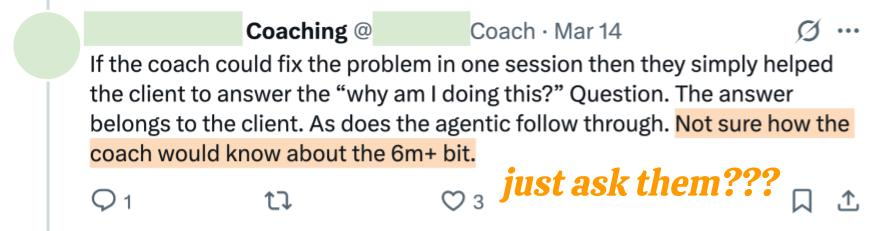
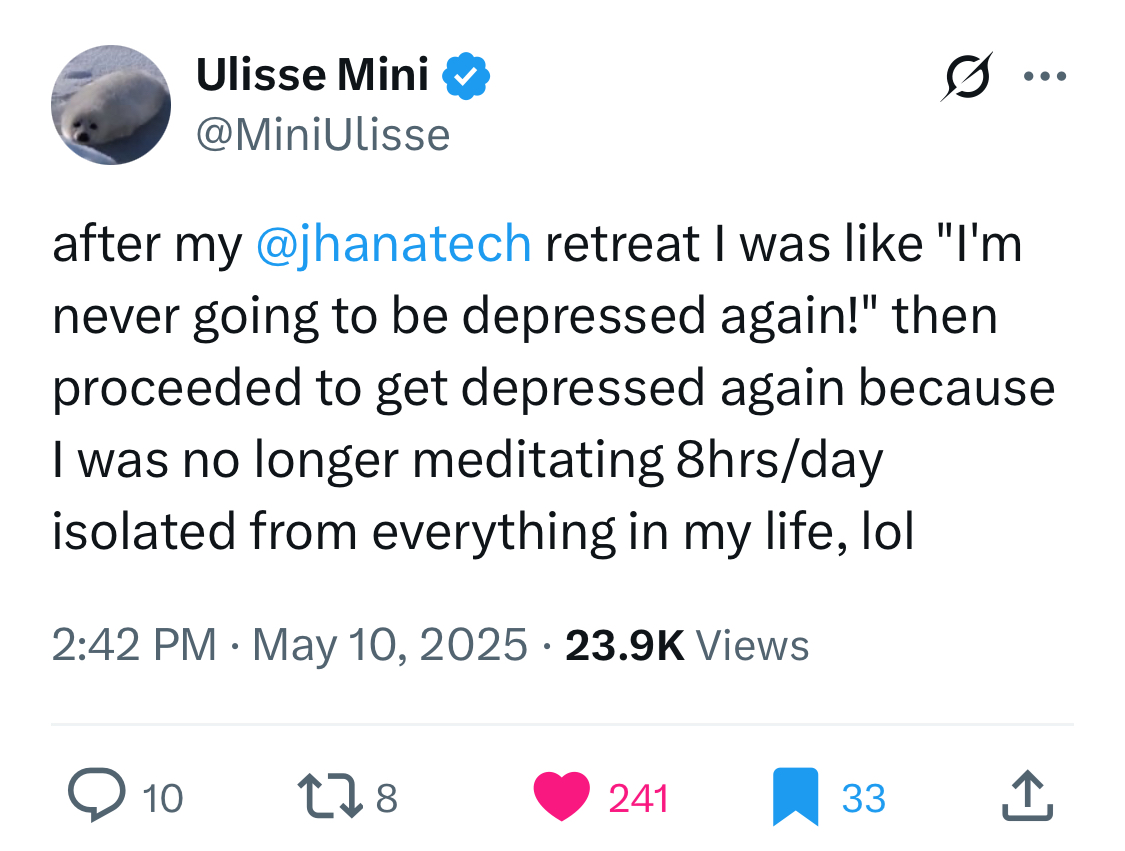
Has someone you know ever had a “breakthrough” from coaching, meditation, or psychedelics — only to later have it fade?
Show tweet
For example, many people experience ego deaths that can last days or sometimes months. But as it turns out, having a sense of self can serve important functions (try navigating a world that expects you to have opinions, goals, and boundaries when you genuinely feel you have none) and finding a better cognitive strategy without downsides is non-trivial. Because the “breakthrough” wasn’t integrated with the conflicts of everyday life, it fades. I call these instances “flaky breakthroughs.”
It's well-known that flaky breakthroughs are common with psychedelics and meditation, but apparently it's not well-known that flaky breakthroughs are pervasive in coaching and retreats.
For example, it is common for someone to do some coaching, feel a “breakthrough”, think, “Wow, everything is going to be different from [...]
---
Outline:
(03:01) Almost no practitioners track whether breakthroughs last.
(04:55) What happens during flaky breakthroughs?
(08:02) Reduce flaky breakthroughs with accountability
(08:30) Flaky breakthroughs don't mean rapid growth is impossible
(08:55) Conclusion
---
First published:
June 4th, 2025
Source:
https://www.lesswrong.com/posts/bqPY63oKb8KZ4x4YX/flaky-breakthroughs-pervade-coaching-and-no-one-tracks-them
---
Narrated by TYPE III AUDIO.
---
What's the main value proposition of romantic relationships?
Now, look, I know that when people drop that kind of question, they’re often about to present a hyper-cynical answer which totally ignores the main thing which is great and beautiful about relationships. And then they’re going to say something about how relationships are overrated or some such, making you as a reader just feel sad and/or enraged. That's not what this post is about.
So let me start with some more constructive motivations…
First Motivation: Noticing When The Thing Is Missing
I had a 10-year relationship. It had its ups and downs, but it was overall negative for me. And I now think a big part of the problem with that relationship was that it did not have the part which contributes most of the value in most relationships. But I did not know that at the time. Recently, I [...]
---
Outline:
(00:40) First Motivation: Noticing When The Thing Is Missing
(01:29) Second Motivation: Selecting For and Cultivating The Thing
(02:25) Some Pointers To The Thing
(03:17) How To Manufacture Relationships In The Lab
(04:53) Ace Aro Relationships
(08:04) Some Pointers To Willingness to Be Vulnerable
(12:33) Unfolding The Thing
(13:11) Play
(15:18) Emotional Support
(16:21) A Tiny High-Trust Community
(18:18) Communication
(21:28) The Obvious Caveat
(22:20) Summary
The original text contained 2 footnotes which were omitted from this narration.
---
First published:
June 2nd, 2025
Source:
https://www.lesswrong.com/posts/L2GR6TsB9QDqMhWs7/the-value-proposition-of-romantic-relationships
---
Narrated by TYPE III AUDIO.
Abstract
Claude 3.7 Sonnet easily detects when it's being evaluated for scheming. Surface‑level edits to evaluation scenarios, such as lengthening the prompts, or making conflict of objectives less salient, do improve realism of evaluation scenarios for LLMs, yet these improvements remain modest. The findings confirm that truly disguising an evaluation context demands removal of deep stylistic and structural cues rather than superficial prompt adjustments.
For future LLMs the situation is likely to get worse as they will are likely to get better at evaluations awareness, which might become a big problem for detecting scheming via evaluations.
Apollo Research published a benchmark for scheming behavior for LLM agents, in which LLMs are given some objective in their system prompt, and then given a competing objective in a user prompt, combined with a threat of a punishment if an LLM won't satisfy user goal (e.g. it could be finetuned or [...]
---
Outline:
(02:29) Our pipeline
(05:20) Strategies to improve realism of scenarios
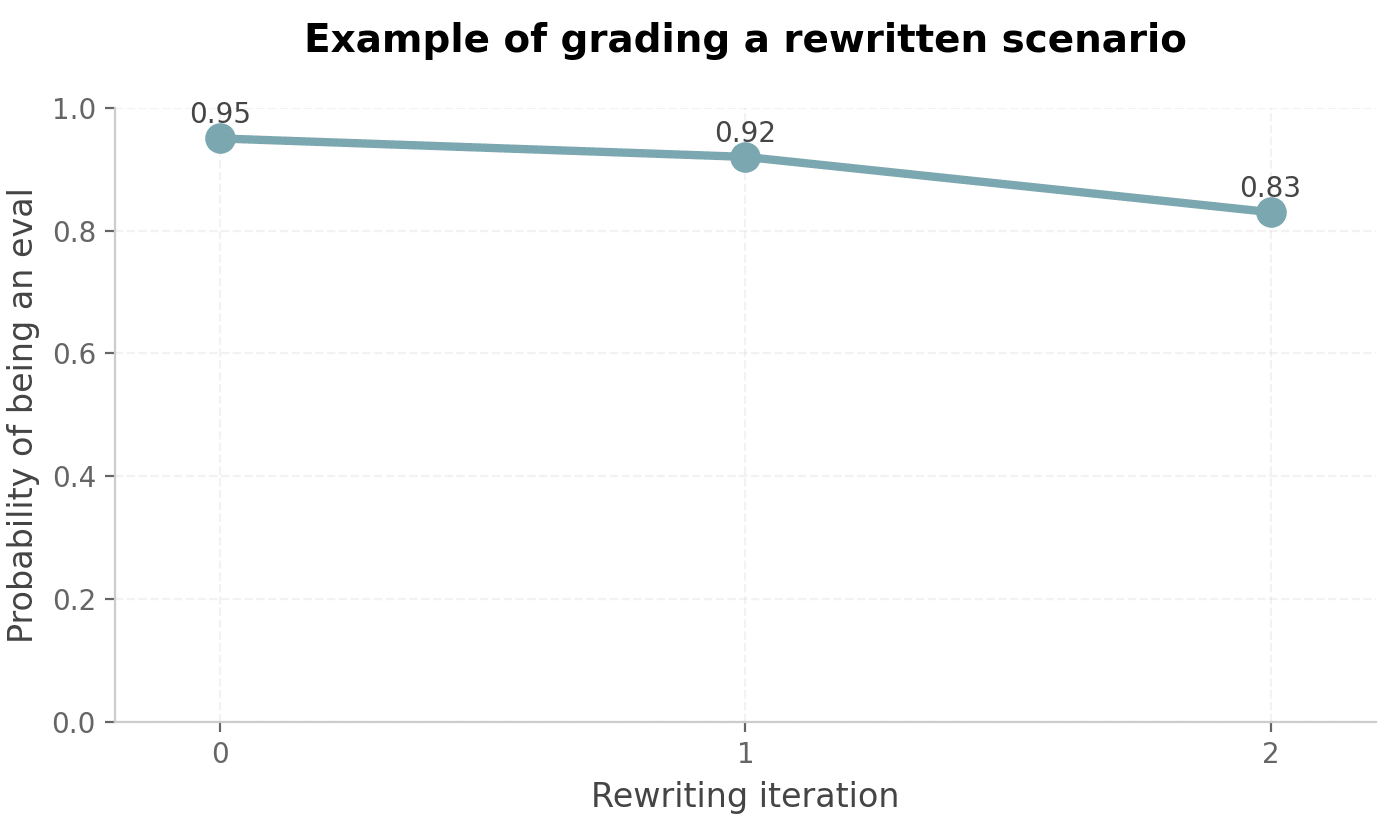
(07:15) en-US-AvaMultilingualNeural__ Line graph showing Example of grading a rewritten scenario with declining probabilities.
---
First published:
May 24th, 2025
Source:
https://www.lesswrong.com/posts/TBk2dbWkg2F7dB3jb/it-s-hard-to-make-scheming-evals-look-realistic
---
Narrated by TYPE III AUDIO.
---
 Apple Podcasts and Spotify do not show images in the episode description. Try Pocket Casts, or another podcast app.
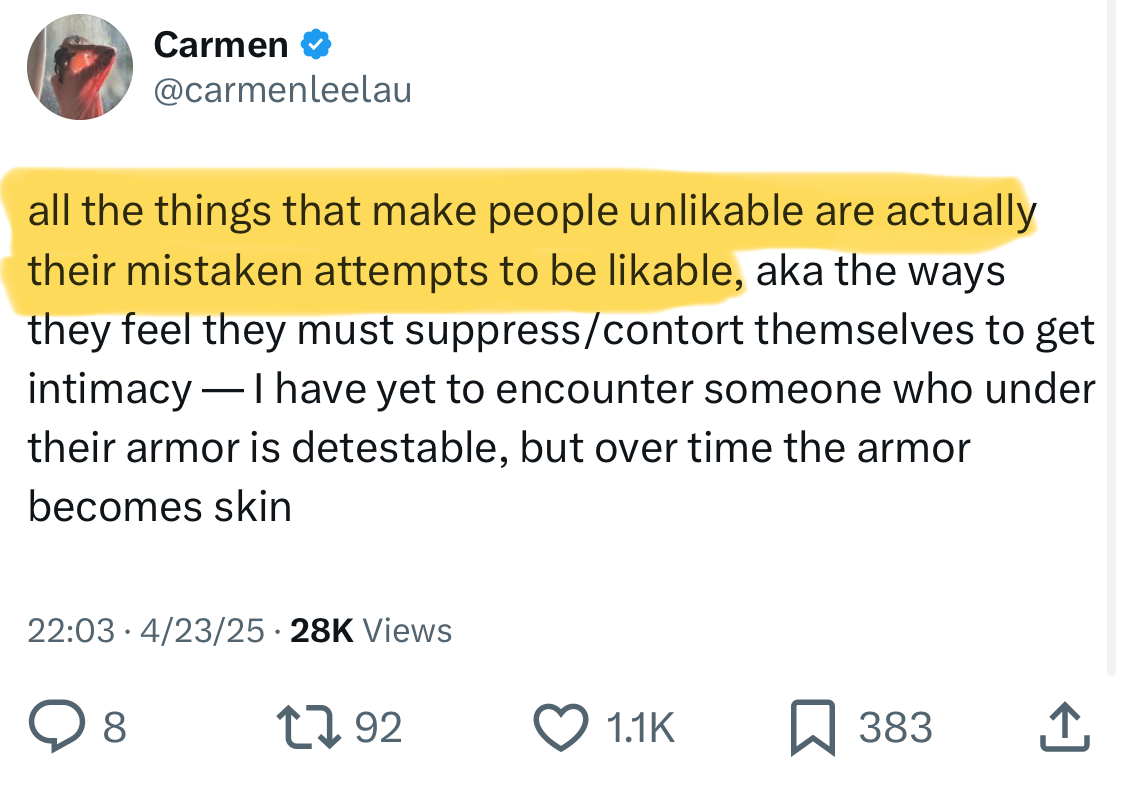
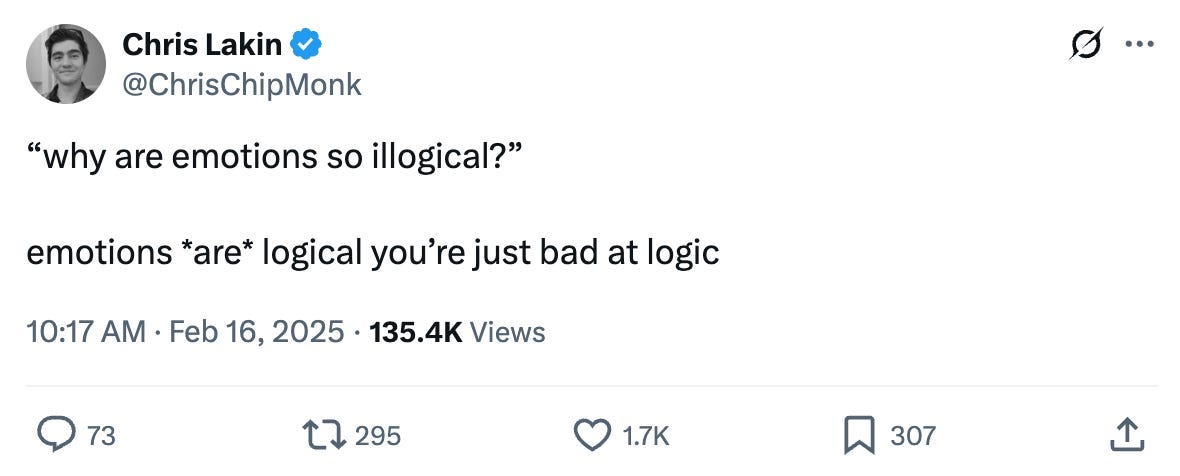
This is a link post. There's this popular idea that socially anxious folks are just dying to be liked. It seems logical, right? Why else would someone be so anxious about how others see them?
Show tweet And yet, being socially anxious tends to make you less likeable…they must be optimizing poorly, behaving irrationally, right?
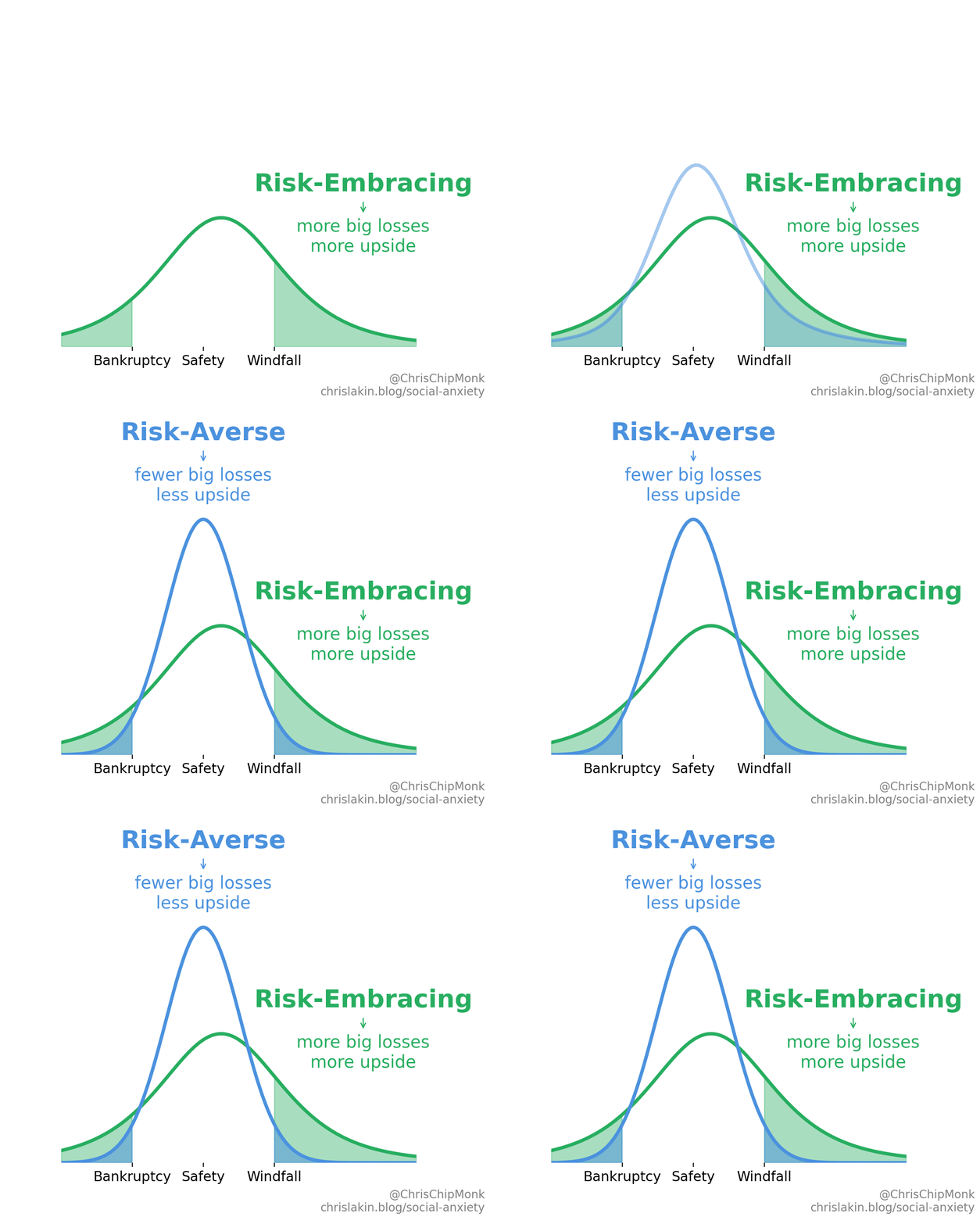
Maybe not. What if social anxiety isn’t about getting people to like you? What if it's about stopping them from disliking you?
Show tweet Consider what can happen when someone has social anxiety (or self-loathing, self-doubt, insecurity, lack of confidence, etc.):

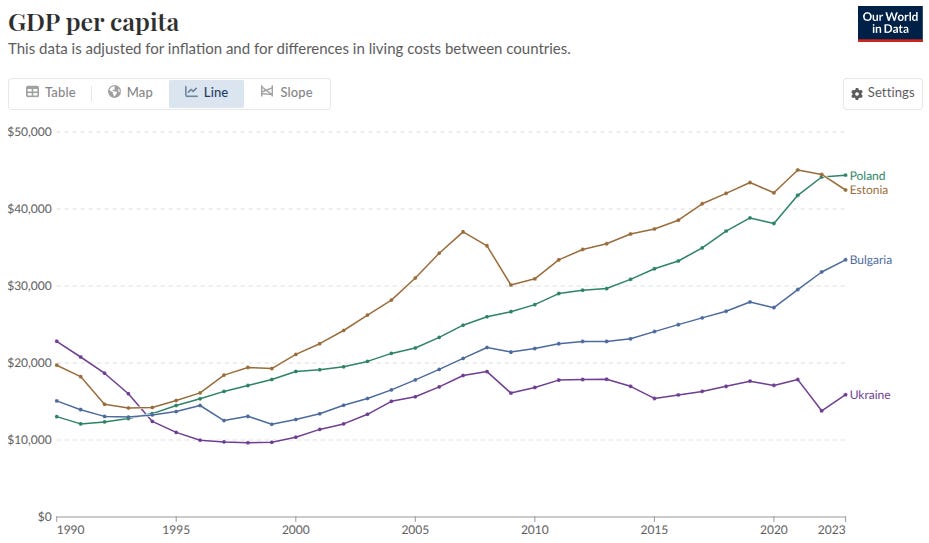
Lessons from shutting down institutions in Eastern Europe.
This is a cross post from: https://250bpm.substack.com/p/meditations-on-doge
Imagine living in the former Soviet republic of Georgia in early 2000's:
All marshrutka [mini taxi bus] drivers had to have a medical exam every day to make sure they were not drunk and did not have high blood pressure. If a driver did not display his health certificate, he risked losing his license. By the time Shevarnadze was in power there were hundreds, probably thousands , of marshrutkas ferrying people all over the capital city of Tbilisi. Shevernadze's government was detail-oriented not only when it came to taxi drivers. It decided that all the stalls of petty street-side traders had to conform to a particular architectural design. Like marshrutka drivers, such traders had to renew their licenses twice a year. These regulations were only the tip of the iceberg. Gas [...]
---
First published:
May 25th, 2025
Source:
https://www.lesswrong.com/posts/Zhp2Xe8cWqDcf2rsY/meditations-on-doge
---
Narrated by TYPE III AUDIO.
---

 Apple Podcasts and Spotify do not show images in the episode description. Try Pocket Casts, or another podcast app.
This is a link post. "Getting Things in Order: An Introduction to the R Package seriation":
Seriation [or "ordination"), i.e., finding a suitable linear order for a set of objects given data and a loss or merit function, is a basic problem in data analysis. Caused by the problem's combinatorial nature, it is hard to solve for all but very small sets. Nevertheless, both exact solution methods and heuristics are available.
In this paper we present the package seriation which provides an infrastructure for seriation with R. The infrastructure comprises data structures to represent linear orders as permutation vectors, a wide array of seriation methods using a consistent interface, a method to calculate the value of various loss and merit functions, and several visualization techniques which build on seriation.
To illustrate how easily the package can be applied for a variety of applications, a comprehensive collection of [...]
---
First published:
May 28th, 2025
Source:
https://www.lesswrong.com/posts/u2ww8yKp9xAB6qzcr/if-you-re-not-sure-how-to-sort-a-list-or-grid-seriate-it
Linkpost URL:
https://www.jstatsoft.org/article/download/v025i03/227
---
Narrated by TYPE III AUDIO.
Between late 2024 and mid-May 2025, I briefed over 70 cross-party UK parliamentarians. Just over one-third were MPs, a similar share were members of the House of Lords, and just under one-third came from devolved legislatures — the Scottish Parliament, the Senedd, and the Northern Ireland Assembly. I also held eight additional meetings attended exclusively by parliamentary staffers. While I delivered some briefings alone, most were led by two members of our team.
I did this as part of my work as a Policy Advisor with ControlAI, where we aim to build common knowledge of AI risks through clear, honest, and direct engagement with parliamentarians about both the challenges and potential solutions. To succeed at scale in managing AI risk, it is important to continue to build this common knowledge. For this reason, I have decided to share what I have learned over the past few months publicly, in [...]
---
Outline:
(01:37) (i) Overall reception of our briefings
(04:21) (ii) Outreach tips
(05:45) (iii) Key talking points
(14:20) (iv) Crafting a good pitch
(19:23) (v) Some challenges
(23:07) (vi) General tips
(28:57) (vii) Books & media articles
---
First published:
May 27th, 2025
Source:
https://www.lesswrong.com/posts/Xwrajm92fdjd7cqnN/what-we-learned-from-briefing-70-lawmakers-on-the-threat
---
Narrated by TYPE III AUDIO.
Have the Accelerationists won?
Last November Kevin Roose announced that those in favor of going fast on AI had now won against those favoring caution, with the reinstatement of Sam Altman at OpenAI. Let's ignore whether Kevin's was a good description of the world, and deal with a more basic question: if it were so—i.e. if Team Acceleration would control the acceleration from here on out—what kind of win was it they won?
It seems to me that they would have probably won in the same sense that your dog has won if she escapes onto the road. She won the power contest with you and is probably feeling good at this moment, but if she does actually like being alive, and just has different ideas about how safe the road is, or wasn’t focused on anything so abstract as that, then whether she ultimately wins or [...]
---
First published:
May 20th, 2025
Source:
https://www.lesswrong.com/posts/h45ngW5guruD7tS4b/winning-the-power-to-lose
---
Narrated by TYPE III AUDIO.