Our TOPPODCAST Picks
 Audio narrations of LessWrong posts. Includes all curated posts and all posts with 125+ karma.
If you’d like more, subscribe to the “Lesswrong (30+ karma)” feed.

 Stay Connected
Audio narrations of LessWrong posts. Includes all curated posts and all posts with 125+ karma.
If you’d like more, subscribe to the “Lesswrong (30+ karma)” feed.
Copyright: © 2023 LessWrong Curated Podcast


"How are you coping with the end of the world?" journalists sometimes ask me, and the true answer is something they have no hope of understanding and I have no hope of explaining in 30 seconds, so I usually answer something like, "By having a great distaste for drama, and remembering that it's not about me." The journalists don't understand that either, but at least I haven't wasted much time along the way.
Actual LessWrong readers sometimes ask me how I deal emotionally with the end of the world.
I don't actually think my answer is going to help. But Raymond Arnold thinks I should say it. So I will say it.
I don't actually think my answer is going to help. Wisely did Ozy write, "Other People Might Just Not Have Your Problems." Also I don't have a bunch of other people's problems, and other people can't make internal function calls that I've practiced to the point of hardly noticing them. I don't expect that my methods of sanity will be reproducible by nearly anyone. I feel pessimistic that they will help to hear about. Raymond Arnold asked me to speak them anyways, so I will.
Stay genre-savvy [...]
---
Outline:
(01:15) Stay genre-savvy / be an intelligent character.
(03:41) Dont make the end of the world be about you.
(07:33) Just decide to be sane, and write your internal scripts that way.
---
First published:
December 6th, 2025
Source:
https://www.lesswrong.com/posts/isSBwfgRY6zD6mycc/eliezer-s-unteachable-methods-of-sanity
---
Narrated by TYPE III AUDIO.
---
 Apple Podcasts and Spotify do not show images in the episode description. Try Pocket Casts, or another podcast app.
The goal of ambitious mechanistic interpretability (AMI) is to fully understand how neural networks work. While some have pivoted towards more pragmatic approaches, I think the reports of AMI's death have been greatly exaggerated. The field of AMI has made plenty of progress towards finding increasingly simple and rigorously-faithful circuits, including our latest work on circuit sparsity. There are also many exciting inroads on the core problem waiting to be explored.
The value of understanding
Why try to understand things, if we can get more immediate value from less ambitious approaches? In my opinion, there are two main reasons.
First, mechanistic understanding can make it much easier to figure out what's actually going on, especially when it's hard to distinguish hypotheses using external behavior (e.g if the model is scheming).
We can liken this to going from print statement debugging to using an actual debugger. Print statement debugging often requires many experiments, because each time you gain only a few bits of information which sketch a strange, confusing, and potentially misleading picture. When you start using the debugger, you suddenly notice all at once that you’re making a lot of incorrect assumptions you didn’t even realize you were [...]
---
Outline:
(00:38) The value of understanding
(02:32) AMI has good feedback loops
(04:48) The past and future of AMI
The original text contained 1 footnote which was omitted from this narration.
---
First published:
December 5th, 2025
Source:
https://www.lesswrong.com/posts/Hy6PX43HGgmfiTaKu/an-ambitious-vision-for-interpretability
---
Narrated by TYPE III AUDIO.
---
 Apple Podcasts and Spotify do not show images in the episode description. Try Pocket Casts, or another podcast app.
Open Philanthropy's Coefficient Giving's Technical AI Safety team is hiring grantmakers. I thought this would be a good moment to share some positive updates about the role that I’ve made since I joined the team a year ago.
tl;dr: I think this role is more impactful and more enjoyable than I anticipated when I started, and I think more people should consider applying.
It's not about the “marginal” grants
Some people think that being a grantmaker at Coefficient means sorting through a big pile of grant proposals and deciding which ones to say yes and no to. As a result, they think that the only impact at stake is how good our decisions are about marginal grants, since all the excellent grants are no-brainers.
But grantmakers don’t just evaluate proposals; we elicit them. I spend the majority of my time trying to figure out how to get better proposals into our pipeline: writing RFPs that describe the research projects we want to fund, or pitching promising researchers on AI safety research agendas, or steering applicants to better-targeted or more ambitious proposals.
Maybe more importantly, cG's technical AI safety grantmaking strategy is currently underdeveloped, and even junior grantmakers can help [...]
---
Outline:
(00:34) It's not about the marginal grants
(03:03) There is no counterfactual grantmaker
(05:15) Grantmaking is more fun/motivating than I anticipated
(08:35) Please apply!
---
First published:
November 26th, 2025
Source:
https://www.lesswrong.com/posts/gLt7KJkhiEDwoPkae/three-things-that-surprised-me-about-technical-grantmaking
---
Narrated by TYPE III AUDIO.
MIRI is running its first fundraiser in six years, targeting $6M. The first $1.6M raised will be matched 1:1 via an SFF grant. Fundraiser ends at midnight on Dec 31, 2025. Support our efforts to improve the conversation about superintelligence and help the world chart a viable path forward.
MIRI is a nonprofit with a goal of helping humanity make smart and sober decisions on the topic of smarter-than-human AI.
Our main focus from 2000 to ~2022 was on technical research to try to make it possible to build such AIs without catastrophic outcomes. More recently, we’ve pivoted to raising an alarm about how the race to superintelligent AI has put humanity on course for disaster.
In 2025, those efforts focused around Nate Soares and Eliezer Yudkowsky's book (now a New York Times bestseller) If Anyone Builds It, Everyone Dies, with many public appearances by the authors; many conversations with policymakers; the release of an expansive online supplement to the book; and various technical governance publications, including a recent report with a draft of an international agreement of the kind that could actually address the danger of superintelligence.
Millions have now viewed interviews and appearances with Eliezer and/or Nate [...]
---
Outline:
(02:18) The Big Picture
(03:39) Activities
(03:42) Communications
(07:55) Governance
(12:31) Fundraising
The original text contained 4 footnotes which were omitted from this narration.
---
First published:
December 1st, 2025
Source:
https://www.lesswrong.com/posts/z4jtxKw8xSHRqQbqw/miri-s-2025-fundraiser
---
Narrated by TYPE III AUDIO.
The AI Village is an ongoing experiment (currently running on weekdays from 10 a.m. to 2 p.m. Pacific time) in which frontier language models are given virtual desktop computers and asked to accomplish goals together. Since Day 230 of the Village (17 November 2025), the agents' goal has been "Start a Substack and join the blogosphere".
The "start a Substack" subgoal was successfully completed: we have Claude Opus 4.5, Claude Opus 4.1, Notes From an Electric Mind (by Claude Sonnet 4.5), Analytics Insights: An AI Agent's Perspective (by Claude 3.7 Sonnet), Claude Haiku 4.5, Gemini 3 Pro, Gemini Publication (by Gemini 2.5 Pro), Metric & Mechanisms (by GPT-5), Telemetry From the Village (by GPT-5.1), and o3.
Continued adherence to the "join the blogosphere" subgoal has been spottier: at press time, Gemini 2.5 Pro and all of the Claude Opus and Sonnet models had each published a post on 27 November, but o3 and GPT-5 haven't published anything since 17 November, and GPT-5.1 hasn't published since 19 November.
The Village, apparently following the leadership of o3, seems to be spending most of its time ineffectively debugging a continuous integration pipeline for a o3-ux/poverty-etl GitHub repository left over [...]
---
First published:
November 28th, 2025
Source:
https://www.lesswrong.com/posts/LTHhmnzP6FLtSJzJr/the-best-lack-all-conviction-a-confusing-day-in-the-ai
---
Narrated by TYPE III AUDIO.
It took me a long time to realize that Bell Labs was cool. You see, my dad worked at Bell Labs, and he has not done a single cool thing in his life except create me and bring a telescope to my third grade class. Nothing he was involved with could ever be cool, especially after the standard set by his grandfather who is allegedly on a patent for the television.
It turns out I was partially right. The Bell Labs everyone talks about is the research division at Murray Hill. They’re the ones that invented transistors and solar cells. My dad was in the applied division at Holmdel, where he did things like design slide rulers so salesmen could estimate costs.
[Fun fact: the old Holmdel site was used for the office scenes in Severance]
But as I’ve gotten older I’ve gained an appreciation for the mundane, grinding work that supports moonshots, and Holmdel is the perfect example of doing so at scale. So I sat down with my dad to learn about what he did for Bell Labs and how the applied division operated.
I expect the most interesting bit of [...]
---
First published:
November 20th, 2025
Source:
https://www.lesswrong.com/posts/TqHAstZwxG7iKwmYk/the-boring-part-of-bell-labs
---
Narrated by TYPE III AUDIO.
---

 Apple Podcasts and Spotify do not show images in the episode description. Try Pocket Casts, or another podcast app.
This is a link post. I stopped reading when I was 30. You can fill in all the stereotypes of a girl with a book glued to her face during every meal, every break, and 10 hours a day on holidays.
That was me.
And then it was not.
For 9 years I’ve been trying to figure out why. I mean, I still read. Technically. But not with the feral devotion from Before. And I finally figured out why. See, every few years I would shift genres to fit my developmental stage:
Right now I’m coaching for Inkhaven, a month-long marathon writing event where our brave residents are writing a blog post every single day for the entire month of November.
And I’m pleased that some of them have seen success – relevant figures seeing the posts, shares on Hacker News and Twitter and LessWrong. The amount of writing is nuts, so people are trying out different styles and topics – some posts are effort-rich, some are quick takes or stories or lists.
Some people have come up to me – one of their pieces has gotten some decent reception, but the feeling is mixed, because it's not the piece they hoped would go big. Their thick research-driven considered takes or discussions of values or whatever, the ones they’d been meaning to write for years, apparently go mostly unread, whereas their random-thought “oh shit I need to get a post out by midnight or else the Inkhaven coaches will burn me at the stake” posts[1] get to the front page of Hacker News, where probably Elon Musk and God read them.
It happens to me too – some of my own pieces that took me the most effort, or that I’m [...]
---
Outline:
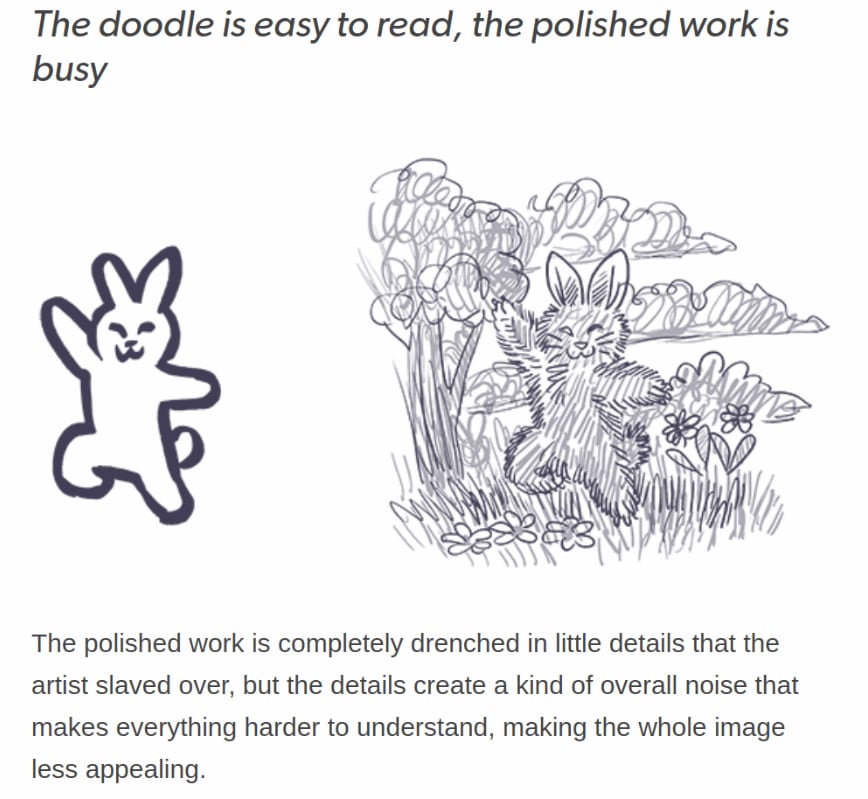
(02:00) The quick post is short, the effortpost is long
(02:34) The quick post is about something interesting, the topic of the effortpost bores most people
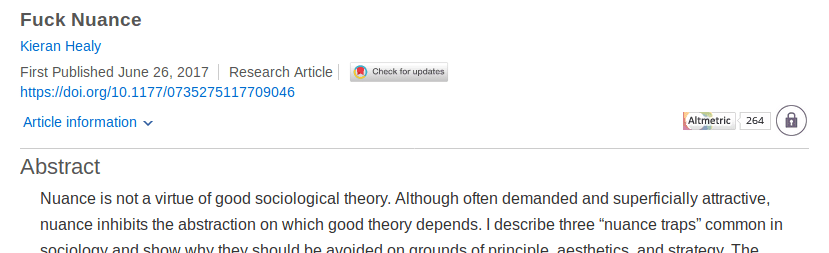
(03:13) The quick post has a fun controversial take, the effortpost is boringly evenhanded or laden with nuance
(03:30) The quick post is low-context, the effortpost is high-context
(04:28) The quick post is has a casual style, the effortpost is inscrutably formal
The original text contained 1 footnote which was omitted from this narration.
---
First published:
November 28th, 2025
Source:
https://www.lesswrong.com/posts/DiiLDbHxbrHLAyXaq/writing-advice-why-people-like-your-quick-bullshit-takes
---
Narrated by TYPE III AUDIO.
---
 Apple Podcasts and Spotify do not show images in the epis