TopPodcast.com
Menu
  • Home
  • Top Charts
  • Top Networks
  • Top Apps
  • Top Independents
  • Top Podfluencers
  • Top Picks
    • Top Business Podcasts
    • Top True Crime Podcasts
    • Top Finance Podcasts
    • Top Comedy Podcasts
    • Top Music Podcasts
    • Top Womens Podcasts
    • Top Kids Podcasts
    • Top Sports Podcasts
    • Top News Podcasts
    • Top Tech Podcasts
    • Top Crypto Podcasts
    • Top Entrepreneurial Podcasts
    • Top Fantasy Sports Podcasts
    • Top Political Podcasts
    • Top Science Podcasts
    • Top Self Help Podcasts
    • Top Sports Betting Podcasts
    • Top Stocks Podcasts
  • Podcast News
  • About Us
  • Podcast Advertising
  • Contact
Not in our directory?
Add Show Here
Podcast Equipment
Center

toppodcastlogoOur TOPPODCAST Picks

  • Comedy
  • Crypto
  • Sports
  • News
  • Politics
  • True Crime
  • Business
  • Finance

Follow Us

toppodcastlogoStay Connected

    View Top 200 Chart
    Back to Rankings Page
    Natural Sciences

    KGNU – How On Earth

    The KGNU Science Show

    Advertise
    • Apple Podcasts
    • Google Play
    • Spotify

    Latest Episodes:
    GMOs and Health – Extended Interview with Stefano Guandalini – Celiac Disease Center Aug 30, 2011
    Show notes

    GMOs and Health – Extended Interview with Carol Shilson, Celiac Disease Center Aug 30, 2011
    Show notes

    GMOs and Health – Extended Interview with Charles Benbrook, The Organic Center Aug 30, 2011
    Show notes

    Nitrogen pollution // Electric vehicles Aug 24, 2011
    Show notes

    On today’s show we offer two interview features.
    Feature #1:

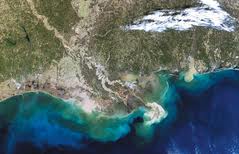
    Gulf of Mexico hypoxic zone, caused by excess nutrients, mainly nitrogen from fertilizer

    Last week the Environmental Protection Agency published a seminal report about nitrogen, which is an enormous environmental and public health problem that some scientists put on par with the carbon imbalance. Nitrogen is essential for all life, including ours, but excess nitrogen in the environment is turning out to be a predicament of crisis proportions. It kills fish, creates “dead zones” in places like the Gulf of Mexico, contaminates drinking water, and causes human illnesses.
    Co-host Susan Moran interviews Dr. Hans Paerl, who has served on the EPA science advisory board and co-authored the report. He’s a professor of Marine and Environmental Sciences, at the UNC-Chapel Hill Institute of Marine Sciences.

    Tesla Roadster

    Feature #2:
    Our reliance on petroleum-fueled vehicles can be blamed, at least in part for a wide range of problems we face today, from local air pollution to global warming, the balance of payments deficit to political instability on a global scale. One possible solution is to shift from a reliance on gasoline to the use of electricity for transportation. Co-host Tom McKinnon interviews John Gartner, a senior analyst at Pike Research in Boulder, to discuss the electric vehicle outlook in the U.S.

    Hosts: Susan Moran, Tom McKinnon
    Producer: Susan Moran
    Engineer: Ted Burnham


    Pluto’s Moons // Wildlife Preservation Aug 16, 2011
    Show notes

    (credit: NASA, ESA, M. Showalter, Z. Levay)”]Pluto and its moons [click to enlarge] (credit: NASA, ESA, M. Showalter, Z. Levay)Feature #1:
    Last month, astronomers working on the Hubble Space Telescope announced the discovery of another, fourth moon around Pluto; this moon is so small that it could fit easily inside Boulder County (a pretty tricky thing to find at a distance of three and a half billion miles). The researchers who found the new moon were making observations in support of NASA’s New Horizons spacecraft, which is en route to fly by and study Pluto in 2015, and continue onward to explore the mysterious region beyond Pluto’s orbit known as the Kuiper Belt. How On Earth’s Ted Burnham recently met with Alan Stern, principal investigator on New Horizons, to talk about what the discovery means for that mission. [An extended version of the interview also is available.]

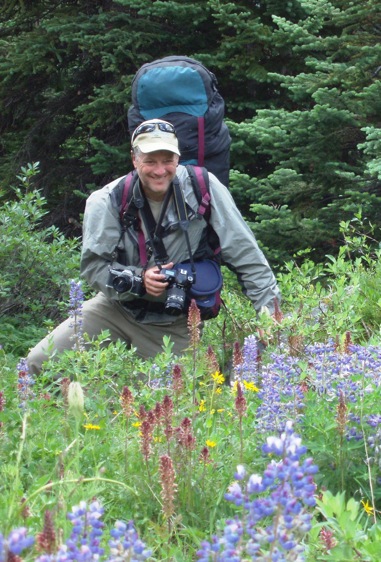
    Harvey Locke  in Jasper National Park, Canada.  Jasper is part of the Yellowstone to Yukon corridor (Photo credit: Marie-eve Marchand)
    Harvey Locke in Jasper National Park, Canada. Jasper is part of the Yellowstone to Yukon corridor (Photo credit: Marie-eve Marchand)

    Feature #2:
    The significant loss of species on Earth is primarily due to human destruction of habitats, forests and other wild nature, to make room for new development and agriculture. Climate change is also accelerating the rate of species extinction. Among the efforts worldwide to protect wilderness and nature so wild animals can survive is a Boulder-based nonprofit called The WILD Foundation. Harvey Locke is the organization’s vice president for conservation strategy and he helped launch the Yellowstone to Yukon Conservation Initiative (Y2Y) several years ago and oversees a global campaign called Nature Needs Half. Y2Y’s goal is to create a continuous 2,000-mile corridor for wildlife from Yellowstone National Park in the U.S. to the Yukon in Northern Canada. Harvey joins us in the studio to talk about that campaign and the science behind wildlife preservation targets.

    Co-hosts: Susan Moran and Joel Parker
    Engineer: Joel Parker
    Executive Producer: Susan Moran
    Show Producer: Joel Parker


    Extended interview with Alan Stern Aug 16, 2011
    Show notes

    On today’s show we featured an interview with Alan Stern of the Southwest Research Institute, who is principal investigator on NASA’s New Horizons mission. He told us about a fourth, tiny moon orbiting Pluto—found last month by his team during observations in support of New Horizons, which will arrive at Pluto in 2015. Here’s an extended version of that interview.


    Lean Deli Meat vs A Big Fat Steak . . . and Water in Outer Space Aug 09, 2011
    Show notes

    We talk with one of the nation’s leading nutrition scientists . . . whose opinions about food and health might not be popular with the American Salt Institute . . . OR with the USDA. Dariush Mozaffarian is with the Harvard School of Public Health, in the department of epidemiology. Current projects include leadership of the Nutrition in Chronic Diseases Expert Group of the Gates Foundation. He’ll explain data that indicates processed lean turkey meat and processed lean ham are a greater risk factor for diabetes and heart disease than eating an equal size serving of fresh, fat, juicy steak. Mozaffarian talks with Shelley Schlender. (and for an extended version of the interview, click here)

    And we talk with CU astronomer Jason Glenn. He’s one of the principal investigators on the Z-Spec telescope, operated out of Hawaii. Recently, Glenn’s team has discovered an enormous cloud of water hanging in space—12 billion light-years away. Astronomers have never before found water from that far back into the early universe. Glenn talks about the finding with Ted Burnham.

    Also in this week’s show, we talk with Janos Perczel about a new design for an invisibility cloak. (and for an extended version of the interview, click here)

    Co-hosts: Joel Parker and Ted Burnham
    Engineer: Shelley Schlender
    Executive Producer: Susan Moran
    Producer: Shelley Schlender


    Janos Perczel – Invisibility Cloak (Extended Version) Aug 09, 2011
    Show notes

    This podcast provides extended version of our interview with Janos Perczel about his new Invisibility Cloak.

    Background:

    An undergraduate at the University of St. Andrews in Scotland has overcome a major hurdle in the development of invisibility cloaks by envisioning an optical device that would allow the cloak to hide things against CHANGING backgrounds. The Institute of Physics and German Physical Society’s New Journal of Physics, published the study today, and the lead author, Janos Perczel, spoke with us about it from Hungary, via Skype,. But first — putting aside Harry Potter’s cloak of invisibility for a moment, in real life, scientists have cloaked some palm-sized objects . . . but not especially well. Here’s Janos Perczel.
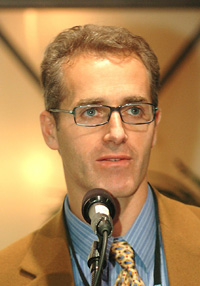
    Perczel
    It depends on what you mean by an invisibility cloak. The sort of stuff you see in Harry Potter films has never been made yet. There have been experiments to test the theory but these experiments have always featured invisibility in some reduced form.
    So far, cloaking only works when an object’s against one single field of steady background wavelength, like a “blue screen.” And even that’s complicated. “Cloaking” conceals an object by bending light around it. Perczel says it’s similar to putting a rock in a river, where the water bends around and covers the rock and makes it “disappear.. But just as water must speed up in order to hurry around the rock, bending light has required accelerating the light. And super-speeded light flows too fast to allow a cloaking devices to adjust to changing backgrounds. In the new report, Perczel and colleagues offer a solution. They call it an invisibility sphere, and it buys enough time for the cloak to adjust to changing backgrounds by, well — what else? Their device slows down the normal speed of light.

    Janos Perczel

    Perczel
    So that all the light speeds that we use in our cloak will be less than the speed of light, in vacuum, so that the cloak we propose here would work for any frequency and would also work against an ever-changing background and a multiplicity of colors and, well anything.
    It may be decades before this technology moves from theory to real world applications. But Perczel predicts that there will be plenty.
    Perczel
    I’m not sure I would want to talk about the potential military applications, because that’s not something I’m terribly keen on. But, apart from those, this whole invisibility subject is based on transformation optics. That’s the key word here, and it tells us how to control light and how to guide it pretty much any way we want to guide it around. This might lead to the birth of incredible optical devices.
    Perczel envisions images that are sharper than the quality of the light the first hit the lens. And who knows? Maybe someday invisibilites cloaks will lead to anti-wrinkle creams and perhaps lower production costs of future Harry Potter movies. Thanks to Shelley Schlender for doing this report. You can hear an extended version of the interview, on our website, howonearthradio.org.


    Harvard Epidemiologist Dariush Mozaffarian on Salt (extended version) Aug 09, 2011
    Show notes

    Here’s an extended version of Shelley Schlender’s interview with Dariush Mozaffarian on Salt. Note that in the interview, Shelley asks Dr. Mozaffarian to comment on some of the assertions made in the popular press, Scientific American story, It’s Time to End the War on Salt.” The interview mentions a citation in the popular press article about the Cochrane Collaboration’s view on salt. After the interview, Mozaffarian’s pointed out this more recent assessment from the Cochrane Collaboration:

    The most recent on salt and blood pressure is below:
    Cochrane Database Syst Rev. 2004;(3):CD004937.
    Effect of longer-term modest salt reduction on blood pressure.
    He FJ, MacGregor GA.

    Here are the verbatim conclusions from that report:
    “CONCLUSIONS: Our meta-analysis demonstrates that a modest reduction in salt intake for a duration of 4 or more weeks has a significant and, from a population viewpoint, important effect on blood pressure in both individuals with normal and elevated blood pressure. These results support other evidence suggesting that a modest and long-term reduction in population salt intake could reduce strokes, heart attacks, and heart failure. Furthermore, our meta-analysis demonstrates a correlation between the magnitude of salt reduction and the magnitude of blood pressure reduction. Within the daily intake range of 3 to 12 g/day, the lower the salt intake achieved, the lower the blood pressure.”

    Additionally, Mozaffarian suggests that people interested in this topic check out a meta-analysis by the British Journal of Medicine Titled, Salt intake, stroke, and cardiovascular disease: meta- analysis of prospective studies.

    Last but not least, for a recent speech by Mozaffarian that provides even more detail on these topics, click here.


    Tech aspects of Boulder utility municipalization Aug 02, 2011
    Show notes

    In November Boulder will be asking the voters to approve the conversion of the electrical utility from one run by Xcel Energy to one run by the city. While there are many, many political issues associated with this vote, there are technical ones as well. We have on our show today Ken Regelson. Ken is a sustainable energy consultant and member of the steering and tech modeling committees of RenewablesYes.org. He holds a masters degree in electrical engineering. And he tells us he’s available to speak on Boulder’s clean energy future at your neighborhood group, business, or at your next dinner party.

    Link to the Trojan Asteroid animation.

    Co-hosts: Chip Grandits and Tom McKinnon
    Engineer: Ted Burnham
    Executive Producer: Susan Moran
    Producer: Tom McKinnon


    Previous 1 74 75 76 77 78 79 Next

    Related Podcasts

    Science Friday

    1

    Science Friday Astronomy
    Radiolab

    2

    Radiolab Documentary
    BrainStuff

    3

    BrainStuff Natural Sciences
    StarTalk with Neil deGrasse Tyson

    4

    StarTalk with Neil deGrasse Tyson Games & Hobbies
    Radiolab

    5

    Radiolab Documentary
    Stuff To Blow Your Mind

    6

    Stuff To Blow Your Mind Life Sciences
    footer-logo

    Contact Us

    Toll Free: 844-670-7747

    Links

    • Home
    • Top Charts
    • Networks
    • Apps
    • Independents Podcasts
    • Podcast Advertising
    • Podcast News
    • Contact Us
    • About Us
    • Analytics & Insights

    Stay Connected

      Privacy, Terms of Use & Our Code of Ethics Protecting Content Creators Copyrights