Pesticides, Bees and Niwot Honey Farm’s Tom Theobald [extended version]
Mar 30, 2012
Show notes
This is an extended interview with Niwot Beekeeper Tom Theobald about three new studies that have recently been published regarding the ways that neonicotinoids harm bees. The studies include one from Purdue, and two from Europe, and all three indicate that these new pesticides are causing more harm to bees than previously thought.
The Science of Habit Formation
Mar 28, 2012
Show notes
The Power of Habit, by Charles Duhigg
The Power of Habit: If you’re like most of us you’ve tried over and over again to break a bad habit — be it procrastinating, gorging on chocolate chip cookies every night, or watching TV rather than exercising. And you know how hard it is to “kick” bad habits. This week on How On Earth we offer one full-length feature (start at 7:57). Co-host Susan Moran interviews New York Times reporter Charles Duhigg, author of a new book titled The Power of Habit: Why We Do What We Do In Life and Business. Duhigg sheds light on why our brains form habits, how they serve (or don’t) individuals, as well as companies and societies, and how we can turn bad habits into positive ones once we understand what scientists call the habit “loop.” You can also hear an extended version of that interview by clicking here.
Hosts: Susan Moran, Joel Parker Producer: Susan Moran Engineer: Jim Pullen Executive Producer: Shelley Schlender
Listen to the show:
The Science of Habit Formation [extended version]
Mar 27, 2012
Show notes
The Power of Habit, by Charles Duhigg
This is the extended version of the interview by How On Earth host Susan Moran of New York Times reporter Charles Duhigg, author of a new book titled The Power of Habit: Why We Do What We Do In Life and Business. The interview first aired on March 27, 2012
The Accelerating Expansion of The Universe // Pine Bark Beetles
Mar 20, 2012
Show notes
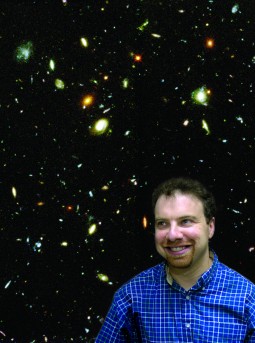
The Accelerating Expansion of The Universe (start at 5:11). Have you ever had the feeling that things are moving faster and faster these days? Well, maybe it’s not your imagination. Proof that the universe is not just expanding but is accelerating garnered a Nobel Prize last year. To help explain what’s going on, we talk to Dr. Adam Riess, a professor of physics and astronomy at the Johns Hopkins University and is a scientist at the Space Telescope Science Institute in Baltimore. When he was a research fellow at the University of California, Berkeley, from 1996 to 1999, Dr. Riess and his colleagues conducted the research that was to win him a share of the 2011 Nobel Prize in physics. The citation for the prize stated it was: “for the discovery of the accelerating expansion of the Universe through observations of distant supernovae.” In today’s show, Dr. Riess translates what that means and the implications about the ultimate fate of the universe.
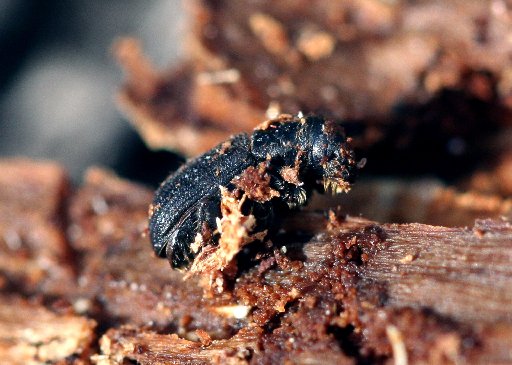
Pine Bark Beetle - photo by Jeff Mitton
Pine Bark Beetles (start at 19:22). The tree-killing pine bark beetles used to breed once a year. Warming annual temperatures now allow them to breed twice, resulting in 60 times more offspring. Hungry, tree-eating offspring. University of Colorado biologists Jeff Mitton and Scott Ferrenberg have just published their findings that the doubled-up breeding season explains why the recent pinebark beetle epidemic has killed so many trees. And it’s not over yet. How on Earth’s Shelley Schlender talks with the scientists about which trees are the most vulnerable to pinebark beetles. You also can hear the extended version of that interview.
Hosts: Joel Parker, Beth Bartel Producer: Joel Parker Engineer: Jim Pullen Headline Contributor: Susan Moran Executive Producer: Shelley Schlender
Listen to the show:
Pine Bark Beetles – Extended Interview with Jeff Mitton and Scott Ferrenberg
Mar 19, 2012
Show notes
Pine Bark Beetle - photo by Jeff Mitton
Fukushima Anniversary: global impacts one year later
Mar 14, 2012
Show notes
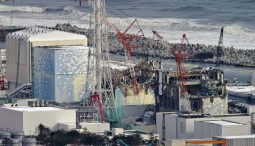
Damaged Fukushima Dai-ichi nuclear power plant, courtesy Air Photo Service
Fukushima’s impacts a year later: In today’s show we offer a full-length feature (start at 4:57) to mark the one-year anniversary of the Fukushima Dai-ichi nuclear power plant disaster — the worse nuclear meltdown since Chernobyl in 1986. We explore the longer-term impacts on public health, the environment, and the nuclear power industry, both in Japan and in the U.S., Europe and elsewhere. Co-host Susan Moran interviews two nuclear experts: Jeff King, the interim director of the Nuclear Science and Engineering Program at the Colorado School of Mines; and Len Ackland, co-director of the Center for Environmental Journalism at the University of Colorado, Boulder. He is also author of “Making a Real Killing: Rocky Flats and the Nuclear West.” (King and Ackland also joined us on March 22, last year.)
Hosts: Breanna Draxler, Susan Moran Producer: Susan Moran Engineer: Jim Pullen Executive Producer: Shelley Schlender
Listen to the show:
The Wandering Gene and the Indian Princess
Mar 06, 2012
Show notes
For our annual Spring Pledge Drive, we feature a book about race, religion and DNA. The book is The Wandering Gene and the Indian Princess, by Jeff Wheelwright. It’s a story about a beautiful young, Hispano woman in the San Luis Valley of Colorado who one day finds a pea-sized lump in her breast. Her name is Shonnie Medina. She is both Spanish and Native American – and the Spanish side of her family has been in the San Luis Valley for many centuries, farming, ranching, for the most part devout Catholics, often proud of their Catholic Spanish heritage. We learn that Shonnie is a carrier of a potentially deadly condition, because her DNA includes “the breast cancer gene” that increases the risk of breast cancer, in some cases, by 80%, while also increasing the risk of other cancers, including some in men. It’s a mutation that is over a thousand years old, and surprisingly, the version of this mutation that Shonnie carries is sometimes known as a “Jewish” cancer. For more, here’s Shelley talking with The Wandering Gene’s author, Jeff Wheelwright.
Hosts: Susan Moran, Joel Parker Producer: Shelley Schlender Engineer: Shelley Schlender Contributor: Jim Pullen Executive Producer: Shelley Schlender
Listen to the show:
Fukushima Cleanup // Space Debris
Feb 29, 2012
Show notes
Today, Feb. 28, we feature two interviews.
Fukushima Daichi nuclear power plant meltdown, Image courtesy of Yomiuri Shimbun
Fukashima Cleanup (start at 7:23). A daunting and ongoing cleanup task is that of removing radioactively contaminated material from Japan’s Fukushima Daiichi nuclear power plant. The plant suffered a meltdown in the wake of a massive earthquake and subsequent tsunami on March 11, 2011. The tsunami swallowed whole towns and killed more than 20,000 people. How On Earth Executive Producer Shelley Schlender interviews Steve Rima, vice president of Radiological Services and Engineering at AMEC, in Grand Junction, Colorado. AMEC is assisting with radiation cleanup in the 500-square-mile Fukushima evacuation area. (Scroll down to previous post to hear extended version of the interview.)
Space debris, image courtesy of Wikipedia
Space Debris (start at 14:10). You thought cleaning your room was a chore. Imagine the problem if your room was the size of, say, the space around Earth where real, full-sized rockets and satellites are in orbit. Who is going to clean all that up? Or is it even a problem? How On Earth cohost Joel Parker interviews Dr. Darren McKnight about this issue of “space junk” or “space debris.” Dr. McKnight is the technical director at Integrity Applications Incorporated. He has served on the National Research Council’s Committee on NASA’s Orbital Debris and Micrometeoroid Program, and is a member of the International Academy of Astronautics. He is coauthor of the book “Artificial Space Debris.”
Hosts: Susan Moran, Joel Parker Producer: Susan Moran Engineer: Jim Pullen Headline contributor: Breanna Draxler Executive Producer: Shelley Schlender
Listen to the show:
Fukushima Cleanup [extended version]
Feb 28, 2012
Show notes
Fukushima
This is an extended version of an interview the KGNU Science show, How on Earth broadcast on February 28th, 2012 about radiation clean-up efforts for Japan’s Fukushima Nuclear Power plant. This interview features Steve Rima. He’s Vice President of Radiological Services and Engineering at AMEC, in Grand Junction, Colorado. He’s been working in Japan on offsite cleanup of 500 square miles near Fukushima that were evacuated and must be cleaned up before residents can move back. Rima’s company is assisting with that cleanup. He says that he has been there several times in the last few months. In this interview, Rima speaks with How on Earth’s Shelley Schlender, via Skype.
Leaky Natural Gas Wells // Measuring Glaciers and Ice Caps
Feb 21, 2012
Show notes
Leaky Natural Gas Wells (start time 6:22). We speak with Greg Frost, a scientist from the University of Colorado at Boulder and the National Oceanic and Atmospheric Administration (NOAA), about a new study, which is being published by the Journal of Geophysical Research. The study indicates that natural gas drilling creates higher amounts of methane leakage into the atmosphere than previous estimates had indicated. Methane is a potent greenhouse gas, and unless this problem of leakage is solved, there is concern that drilling for natural gas might cause higher levels of greenhouse gases in the atmosphere than burning coal. We also offer an extended version of this interview.
Recent Contributions of Glaciers and Ice Caps to Sea Level Rise (start time 14:25). Scientists at CU’s Institute of Arctic and Alpine Research now have used eight years worth of satellite data to a clearer picture of how climate change is impacting the cryosphere, or ice-covered parts of the planet. (See animations here.) Knowing how much ice has been lost during this time can help scientists understand how melting ice might contribute to sea level rise, both now and in the future. But there have been conflicting stories in the press about how the results should be interpreted. We talk with Tad Pfeffer, one of the study’s coauthors, to discuss what’s really happening to the Earth’s ice.
Hosts: Joel Parker & Breanna Draxler Producer: Joel Parker Engineers: Jim Pullen & Shelley Schlender Additional contributions: Beth Bartel Executive producer: Shelley Schlender

 Our TOPPODCAST Picks
 Stay Connected




 The Accelerating Expansion of The Universe (start at 5:11). Have you ever had the feeling that things are moving faster and faster these days? Well, maybe it’s not your imagination. Proof that the universe is not just expanding but is accelerating garnered a