2017 Graduation Special (part 2)
Jun 06, 2017
Show notes
With graduation season is upon us, or in many cases in the rearview mirror, today’s edition of How on Earth is the second of a two-part “Graduation Special”. Our guests in the studio today are scientists who recently graduated with – or soon will receive – their Ph.D. They talk about their thesis research, their grad school experiences, and what they have planned next.
Abby Koss – CU Boulder, Chemistry and Biochemistry Topic: New Insights into Fossil Fuel Volatile Organic Compound Emissions and Chemistry using H3O+ and NO+ Chemical Ionization Mass Spectrometry
Callie Fiedler – CU Boulder, Electrical Engineering Topic: Characterizing the Properties of 3D Printed Hydrogels for Regenerative Medicine
Host / Producer / Engineer : Joel Parker Executive Producer: Susan Moran
Listen to the show:
2017 Graduation Special (part 1)
May 30, 2017
Show notes
With graduation season is upon us, or in many cases in the rearview mirror, today’s edition of How on Earth is the first of a two-part “Graduation Special”. Our guests in the studio today are scientists who recently graduated with – or soon will receive – their Ph.D. They talk about their thesis research, their grad school experiences, and what they have planned next.
David Horvath – Colorado School of Mines, Department of Geophysics Topic: Planetary Hydrology: Implications for the Past Martian Climate and Present Titan Lake Hydrology Using Numerical Models of the Hydrologic Cycles on Titan and Mars
Host / Producer / Engineer : Joel Parker Executive Producer: Susan Moran
Listen to the show:
Treating Cancer Metabolically
May 24, 2017
Show notes
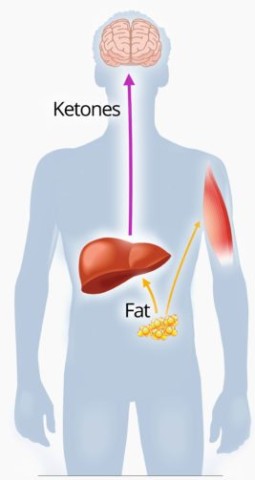
In their upcoming book, A Metabolic Approach to Cancer, authors Dr Nasha Winters and Jess Kelley, describe new developments in individualized therapies for cancer, based on nutrition and personalized genetic analysis. Almost 100 years ago it was found that cancer cells rely almost exclusively on burning glucose for their growth. In the last 10 years, it was found that limiting glucose (and other carbs) in the diet can curb the growth of cancer and mitigate some of the problems associated with conventional therapies like chemo. The authors expand on this theme and also apply an encyclopedic wealth of nutritional data and research to various physiological systems that can prevent or reduce cancer’s impact.
Hosts: Beth Bennett and Susan Moran Producer: Beth Bennett Engineer: Maeve Conran Additional Contributions: Joel Parker Executive Producer: Susan Moran
Listen to the show:
Gold Lab Symposium // Marc Bekoff Animals Agenda
May 16, 2017
Show notes
Gold Lab Symposium Artwork 2017
Gold Lab Symposium (starts 1:00) Scientist and Entrepreneur Larry Gold shares what to expect in science and health at the annual Gold Lab Symposium, taking place this weekend at CU Boulder. This year’s theme is “From Lab to Living Room.” Go to the Gold Lab Symposium website to register for the conference and to hear recordings of the talks afterward.
Marc Bekoff – The Animals’ Agenda (starts 12:00) – Ecologist and philosopher Marc Bekoff talks about his new book, co-authored with bioethicist Jessica Pierce, titled, The Animals’ Agenda – Freedom, Compassion, and Coexistence in the Human Age.
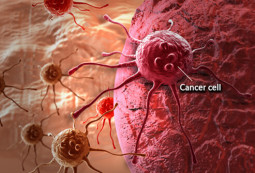
A cancer cell in the breastThis week on How on Earth Beth interviews Travis Christofferson, author of Tripping over the Truth, in which he explores the history, and the human story that has led to the resurgence of Otto Warburg’s original metabolic theory first proposed in 1924. Despite incredible biomedical advances, the death rate today is the same as it was in 1950. The metabolic theory offers an answer and alternative therapies. Find out more about Christofferson’s book at http://www.chelseagreen.com/tripping-over-the-truth
Hosts: Beth Bennett and Joel Parker Producer: Beth Bennett Engineer: Joel Parker Additional Contributions: Joel Parker Executive Producer: Susan Moran
Listen to the Show:
500 Women Scientists // Tracking Methane Leaks with Google Street View Cars
Apr 18, 2017
Show notes
Jane Zelikova and Kelly Ramirez
500 Women Scientists (starts 3:01) Ecologist Jane Zelikova explains how an acquaintance while at CU-Boulder led to an open letter she co-authored with Kelly Ramirez about science . . . and this ultimately launched an advocacy group. Over 19,000 women scientists have joined 500 Women Scientists. They have on line and also local community face-to-face discussions, and they plan to be part of Earth Day’s March for Science.
Tracking Methane Leaks with Google Street View Cars (starts 10:00) Colorado State University biologist Joe Von Fischer is on a mission to reduce pollution from leaking natural gas lines and their potent greenhouse gas, methane. Partnering with the non-profit Environmental Defense Fund and Google Earth Outreach, his team uses Google Street View cars for a first-of-its-kind, comprehensive inventory of urban methane leaks to display on Methane Leak Maps. A New Jersey utility plans nearly $1 billion of leaky gas line upgrades guided in part by this CSU data.
New Adventures in Astronomy with Gerrit Verschuur
Apr 12, 2017
Show notes
Today’s How on Earth show is a special edition in conjunction with the Conference on World Affairs panel entitled: “New Adventures in Astronomy”. Our guest is Gerrit Verschuur, a radio astronomer who has worked at Jodrell Bank radio observatory in the United Kingdom, National Radio Astronomy Observatory in West Virginia, and Arecibo Observatory in Puerto Rico. Dr. Verschuur also was a faculty member at the University of Colorado, Boulder and was the first director of the Fiske Planetarium. His work has ranged from measuring the interstellar magnetic field, to the search for Extraterrestrial Intelligence, to measuring the small-scale structure in the cosmic microwave background. He has published numerous books including “The Invisible Universe: The Story of Radio Astronomy” and “Impact! The Threat of Comets and Asteroids.”
Host / Producer / Engineer: Joel Parker Executive Producer:Susan Moran
Listen to the show:
Long Now Foundation in Colorado // Wild Boulder Citizen Science
Apr 04, 2017
Show notes
The Long Now Foundation in Colorado (start time 5:02): People often measure “success” as fifteen minutes of fame, or a blockbuster financial quarter. This focus on short term results doesn’t always build the skills needed to solve long-term problems, such as reducing disease outbreaks or maintaining species diversity. So some visionaries have created a playfully serious way to think ahead, and those “ways” include projects here in Colorado. Shelley Schlender tells us about the Long Now Foundation who are developing programs to foster long term responsibility and long term thinking.
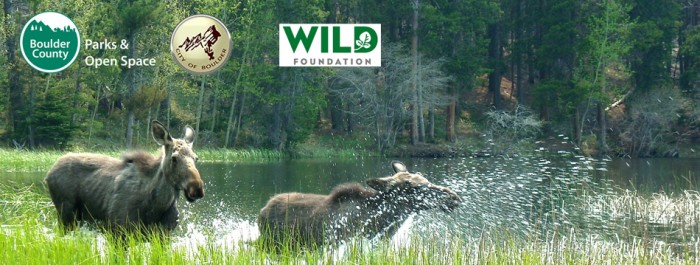
Wild Boulder (start time 10:t28): Boulder is launching a new citizen science project. The project, called Wild Boulder, will allow people in Boulder to use their smartphones to record wildlife observations, including photos, and share this information with local land managers and open space experts. To find out how this program works, and how it will benefit the community, we spoke with Dave Sutherland and Melanie Hill. Dave Sutherland is an Interpretive Naturalist with theCity of Boulder’s Open Space and Mountain Parksprogram. Melanie Hill is Director of Communications for the WILD Foundation, which works to protect wilderness while balancing the needs of human communities.
Hosts: Shelley Schlender and Alejandro Soto Producer: Alejandro Soto Engineer: Shelley Schlender Additional contributions: Beth Bennett and Susan Moran Executive Producer:Susan Moran
Listen to the show:
Health Impacts of Oil/Gas Drilling
Mar 28, 2017
Show notes
A well site next to Silver Creek elementary school in Thorton, Colo. Photo credit: Ted Wood/The Story Group
Drilling’s Health Impacts (start time: 7:50): A pressing question on the minds of many Colorado residents, health experts, and others amidst a surge of oil and gas activity is this: Does living near an oil and gas well harm your health? A scientist at the forefront of exploring such questions is Dr. Lisa McKenzie, a professor of environmental epidemiology at the Colorado School of Public Health at the University of Colorado Anschutz. She is the lead author on a recently published study that examines the potential impact of nearby oil and gas drilling on childhood cancer rates. The study’s important findings were challenged by the state Health Department, whose recent assessment concludes that nearby oil and gas operations poses minimal risk to residents. Dr. McKenzie talks with How On Earth’s Susan Moran about her study, and the complex science of risk, correlation and causation.
Hosts: Susan Moran, Joel Parker Producer: Susan Moran Engineer: Joel Parker Executive Producer: Joel Parker
Listen to the show:
Your Baby’s Microbiome
Mar 28, 2017
Show notes
Your Baby’s Microbiome (start time 6:13): This week on How on Earth Beth Bennett interviews Toni Harmon, author of Your Baby’s Microbiome, a look into the role the maternal micro biome plays before and after birth. For a newborn, the biological defenses to diseases and the environment come from the mother. Harmon talks about how the birth process and interactions between the newborn and the mother help build up the immunities that a young child requires.
Hosts: Beth Bennett and Alejandro Soto Producer: Alejandro Soto Engineer: Beth Bennett Additional contributions: Susan Moran Executive Producer: Joel Parker

 Our TOPPODCAST Picks
 Stay Connected


 With graduation season is upon us, or in many cases in the rearview mirror, today’s edition of How on Earth is the second of a two-part “Graduation Special”. Our guests in the studio today are scientists who recently graduated with – or soon will receive – their Ph.D. They talk about their thesis research, their grad school experiences, and what they have planned next.
 Abby Koss – CU Boulder,
 Matteo Crismani – CU Boulder,
 Callie Fiedler – CU Boulder,
 Morgan Rehnberg – CU Boulder,
 David Horvath – Colorado School of Mines,
 Joseph Lee – CU Boulder,
 In their upcoming book,


 Today’s How on Earth show is a special edition in conjunction with the
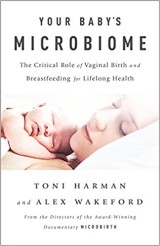 Your Baby’s Microbiome (start time 6:13): This week on How on Earth Beth Bennett interviews Toni Harmon, author of





