TopPodcast.com
Menu
  • Home
  • Top Charts
  • Top Networks
  • Top Apps
  • Top Independents
  • Top Podfluencers
  • Top Picks
    • Top Business Podcasts
    • Top True Crime Podcasts
    • Top Finance Podcasts
    • Top Comedy Podcasts
    • Top Music Podcasts
    • Top Womens Podcasts
    • Top Kids Podcasts
    • Top Sports Podcasts
    • Top News Podcasts
    • Top Tech Podcasts
    • Top Crypto Podcasts
    • Top Entrepreneurial Podcasts
    • Top Fantasy Sports Podcasts
    • Top Political Podcasts
    • Top Science Podcasts
    • Top Self Help Podcasts
    • Top Sports Betting Podcasts
    • Top Stocks Podcasts
  • Podcast News
  • About Us
  • Podcast Advertising
  • Contact
Not in our directory?
Add Show Here
Podcast Equipment
Center

toppodcastlogoOur TOPPODCAST Picks

  • Comedy
  • Crypto
  • Sports
  • News
  • Politics
  • True Crime
  • Business
  • Finance

Follow Us

toppodcastlogoStay Connected

    View Top 200 Chart
    Back to Rankings Page
    Natural Sciences

    KGNU – How On Earth

    The KGNU Science Show

    Advertise
    • Apple Podcasts
    • Google Play
    • Spotify

    Latest Episodes:
    Lancet Countdown on Climate Change Nov 15, 2017
    Show notes

    Lancet Countdown LogoLancet Countdown on Climate Change (starts 3:45) Respectable science journals no longer debate whether human activity causes climate change, or even if it can be reversed to prevent human suffering. They now scramble to figure out what will be the cost and who will pay. The bill will be payable in lost lives and livelihoods. The British Medical Journal, The Lancet has assembled an interdisciplinary team of scientists to help tally this enormous global bill. On October 30th they released their 2017 Lancet Countdown on Health and Climate Change. The report concludes that the delayed response to climate change over the past 25 years has already jeopardized human lives and livelihoods, and the impacts must be assessed in terms of global public health. One of the contributors to that report is local climate scientist, Max Boykoff, a fellow at CIRES in Boulder, where he directs the Center for Science and Technology Policy Research.

    Hosts: Shelley Schlender and Chip Grandits
    Producer: Shelley Schlender and Chip Grandits
    Engineer: Shelley Schlender
    Additional Contributions: Beth Bennett
    Executive Producer:Beth Bennett


    Tamed and Untamed: Essays on the Animal Kingdom Nov 08, 2017
    Show notes

    Tamed and Untamed
    Tamed and Untamed

    This week on How on Earth, Beth interviews Sy Montgomery and Liz Thomas, co-authors of Tamed and Untamed: Close Encounters of the Animal Kind: Some amazing stories of their experiences with animals throughout the animal kingdom, ranging from domestic animals (chickens are smarter than we thought!) to wild animals to invertebrates. the 2-3 page format of their book makes for easy reading! See their book at http://www.chelseagreen.com/tamed-and-untamed

    Host: Beth Bennett
    Producer: Beth Bennett
    Engineer: Maeve Conran
    Additional Contributions: Joel Parker
    Executive Producer:Beth Bennett

    Listen to the show:


    Mutant Proteins // Future Technologies Oct 24, 2017
    Show notes

    Proteins foldedMutant Proteins and Protein Evolution (starts 4:42) CU School of Medicine professor David Pollock explains why he has devised a new way to identify and predict both the evolution of proteins and disease causing protein mutations. Pollock’s highly technical model uses an analogy about a physical model called the Stokes Shift to help explain the biochemical properties of how proteins change, for better or worse. Pollock’s study has just been published in the journal Nature Ecology and Evolution. Its title is “Sequence entropy of folding and the absolute rate of amino acid substitutions.” Additionally, he has written a “behind the paper” explanation for a more general audience to explain the concepts being explored in his ground-breaking research.

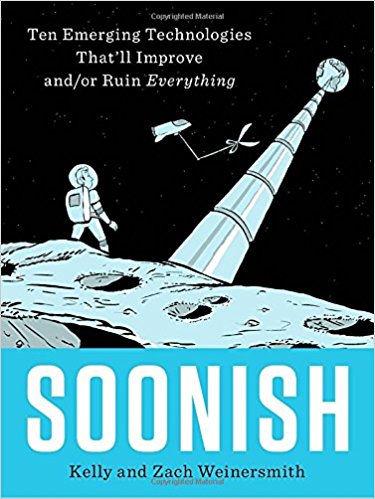
    Soonish GraphicSoonish: Ten Emerging Technologies That’ll Improve and/or Ruin Everything (starts 15:00) Dr. Kelly Weinersmith is an adjunct assistant professor in the BioSciences Department at Rice University. She specializes in the study of parasites. But her curiosity has taken her well beyond parasites to ask all-encompassing questions, such as, what will the future will look like – the future of space research, medicine, robots, and, well, humans. These topics are all part of Weinersmith’s new funny-serious book. It’s called Soonish: Ten Emerging Technologies That’ll Improve and/or Ruin Everything. Weinersmith co-authored the book with her husband, Zach. They’ll be at book signings this week Denver and Boulder.

    Hosts: Shelley Schlender, Susan Moran
    Producer, Engineer: Shelley
    Additional Contributions: Beth Bennett
    Executive Producer: Beth Bennett


    Nuclear Tests and the Van Allen Belts Oct 12, 2017
    Show notes

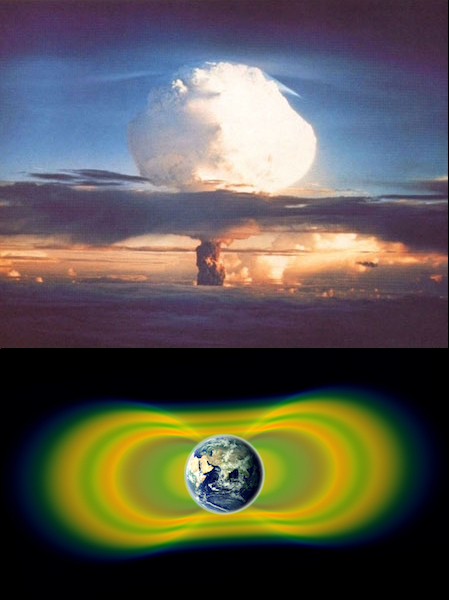
    explosion-beltsIn 1963, the United States, the Soviet Union, and Great Britain signed the Limited Test Ban Treaty, agreeing to not test nuclear weapons in the atmosphere, underwater, or in outer space. France continued atmospheric testing until 1974, and the last atmospheric test was done by China on October 16, 1980. Over 500 atmospheric nuclear tests have been performed before then, but none since.

    That could soon change. North Korea has threatened to do an atmospheric nuclear test. Even if that test doesn’t lead to a chain of more dangerous events, and considering the potential health impacts of the dispersed radiation, it turns out that simply testing a missile in the atmosphere could lead to highly charged electrons that would tend to fry the electronics of Earth-orbiting satellites.

    It’s a complex issue, and one that ties in with the huge magnetic fields that protect the Earth and the satellites orbiting around it. Those magnetic fields include some areas that attract highly charged particles, called the Van Allen belts. Earlier this year, we reported on a discovery from the Laboratory of Atmospheric Space Physics in Boulder, about how very low frequency radio transmissions sent to military submarines deep under that water, accidentally help satellites high above the Earth by reducing the impact of the Van Allen belts’ highly charged particles. So, could those very low frequency waves also protect us from the satellite-frying effects of an atmospheric nuclear weapons test? If things get too crazy here on Earth, could a spacecraft with a well-designed magnetic field help people escape? Those are questions that come to mind for How on Earth’s Shelley Schlender. Now here’s Shelley’s investigation about the Van Allen belts, whether cell phones would work after a nuclear explosion, and escaping to outer space.

    Hosts: Joel Parker, Chip Grandits
    Producer, Engineer: Joel Parker
    Additional Contributions: Beth Bennett, Alejandro Soto
    Executive Producer: Beth Bennett

    Listen to the show:


    Antibiotics & Your Microbiome Oct 05, 2017
    Show notes

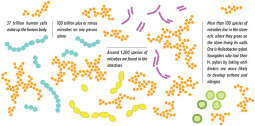
    microbiomeThis week on How on Earth, Beth interviews Dr Martin Blaser of New York University who challenges the assumption that antibiotics are harmless drugs targeting only harmful pathogens. In his recent book, Missing Microbes, Blaser presents the evidence that antibiotics are causing the extinction of important bacteria in our microbiome. These microbes have co-evolved with us, so losing them puts us at risk of many of the rising diseases of our society: asthma, allergies, eczema and obesity. Check out his book: https://books.google.com/books/about/Missing_Microbes.html?id=RJucAwAAQBAJ

    Host: Beth Bennett
    Producer: Beth Bennett
    Engineer: Maeve Conran
    Executive Producer: Beth Bennett

    Listen to the show:


    Committed Warming Sep 27, 2017
    Show notes

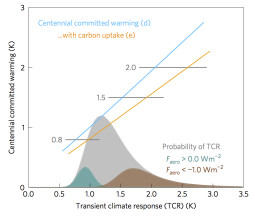
    Committed warming as a function of transient climate response, courtesy of Nature Climate Change.
    Committed warming as a function of transient climate response, courtesy of Nature Climate Change.

    Much of current climate science research focuses on understanding how the climate is changing and what type of climate we will have in the near future. But to understand where the climate is going, we need to understand where the climate has been. It is especially important to understand how the climate has responded to the rise of the modern, industrial world, which has emitted greenhouse gases that warm the climate. Because many of these gases will last for a long time in the atmosphere, some of this warming has already been set in motion and will happen regardless of future greenhouse gas emissions. This change is known as “committed warming”.

    Determining how much committed warming has occurred in the climate is important to understand the future path of our climate. How on Earth speaks with Dr. Robert Pincus, a co-author of a new study published in Nature Climate Change that provides an estimate of committed warming using a global database of surface temperatures. Dr. Pincus is a Research Scientist at the Earth System Research Laboratory at the National Oceanic and Atmospheric Administration.

    Hosts: Alejandro Soto
    Engineer: Alejandro Soto, Shelley Schlender
    Producer: Shelley Schlender
    Additional Contributions: Beth Bennett, Joel Parker
    Executive Producer: Alejandro Soto

    Listen to the show:


    The Cassini Mission to Saturn Sep 19, 2017
    Show notes

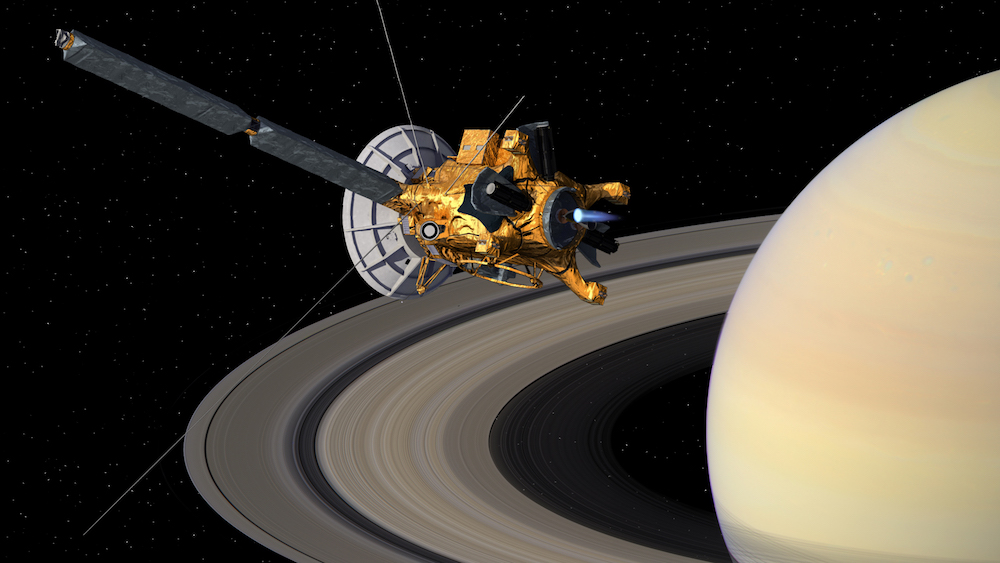
    pia03883-nohuygensThe Cassini mission to Saturn launched 20 years ago, on October 15, 1997. It took seven years to reach Saturn, and has been orbiting and intensely studying Saturn ever since…until last week when the mission ended in a final dive into Saturn’s atmosphere. The mission studied Saturn, its famous rings, and its many moons using a suite of instruments that observed a broad range of wavelengths from ultraviolet, to visible, infrared, and radio as well as examining dust, charged particles, and magnetic fields. It also delivered the Huygens probe that descended through the atmosphere of Saturn’s giant moon, Titan.

    In this edition of How on earth, we have two scientists from the Cassini mission team. Dr. Larry Esposito is a Professor at the Astrophysical and Planetary Sciences department at the University of Colorado at Boulder and member of the Laboratory for Atmospheric and Space Physics at CU. Dr. Carly Howett is a planetary scientist and manager at the Southwest Research Institute in Boulder. They share with us some of the science from Cassini-Huygens and experiences working on such a long-term and successful space mission.

    Host / Producer / Engineer: Joel Parker
    Additional Contributions: Beth Bennett, Shelley Schlender
    Executive Producer: Alejandro Soto

    Listen to the show:


    Aging Research Part 2 Sep 13, 2017
    Show notes

    Aging SkinThis week on How on Earth we speak with Simon Melov, a biochemist at the Buck Institute for Aging. Dr Melov studies various aspects of aging in worms, mice and humans. The aging field is replete with new and exciting discoveries and Simon’s work epitomizes that.


    Hosts:Beth Bennett and Chip Grandis
    Producer:Beth Bennett
    Engineer:Maeve Conran
    Additional Contributions:Joel Parker
    Executive Producer:Alejandro Soto

    Listen to the show:


    Biofuels Tradeoffs Sep 05, 2017
    Show notes

    corn-field-farm-vertical-PA
    Biofuels Tradeoffs (start time: 8:27): In this week’s show David DeGennaro, an agriculture policy specialist with the National Wildlife Federation and author of a report called “Fueling Destruction,” talks with host Susan Moran about the environmental consequences of biofuels, and about possible solutions. The Environmental Protection Agency has proposed maintaining record support for biofuels, namely corn. Last week the EPA ended an open public comment period leading up to a decision to maintain, increase or scale back its current support of biofuels as part of the Renewable Fuels Standard, a federal mandate to blend corn-based ethanol and other renewable fuels into conventional gasoline. NWF and some other environmental organizations, along with former California Congressman Henry Waxman, have been urging the EPA and Congress to reduce biofuels mandates. Increased demand for corn has led to the conversion of millions of acres of habitat-rich grasslands and into croplands — all without significantly reducing greenhouse gas emissions.

    Hosts: Susan Moran, Joel Parker
    Producer: Susan Moran
    Engineer: Joel Parker
    Executive Producer: Alejandro Soto
    Additional contributions: Alejandro Soto

    Listen to the show here:


    Climate Change and Extinctions Following an Asteroid Impact Aug 30, 2017
    Show notes

    asteroid_impactClimate Change and Extinctions Following an Asteroid Impact (starts at 8:45) It has been hypothesized that the dinosaurs were killed off by a large asteroid that struck the Earth. The details of how the impact of a 10 kilometer diameter asteroid led to global scale extinction have remained elusive. Recently, climate researchers from the Boulder area published new climate model results that show how the asteroid impact ultimately leads to widespread cooling in the atmosphere and increased exposure to ultraviolet radiation. These drastic and rapid changes to the climate due to the asteroid impact may explain the global scale extinction.


    Two of the authors join us today to talk about this new research. Dr. Charles Bardeen works as a scientist at the National Center for Atmospheric Research, and is the lead author of the new paper. Joining Dr. Bardeen is Professor Brian Toon, a co-author of the new research and a professor at the University of Colorado, Boulder.

    Hosts: Alejandro Soto & Joel Parker
    Producer and Engineer: Joel Parker
    Additional Contributions: Susan Moran, Beth Bennett, Chip Grandits
    Executive Producer: Alejandro Soto

    Listen to the show:


    Previous 1 41 42 43 44 45 79 Next

    Related Podcasts

    Science Friday

    1

    Science Friday Astronomy
    Radiolab

    2

    Radiolab Documentary
    BrainStuff

    3

    BrainStuff Natural Sciences
    StarTalk with Neil deGrasse Tyson

    4

    StarTalk with Neil deGrasse Tyson Games & Hobbies
    Radiolab

    5

    Radiolab Documentary
    Stuff To Blow Your Mind

    6

    Stuff To Blow Your Mind Life Sciences
    footer-logo

    Contact Us

    Toll Free: 844-670-7747

    Links

    • Home
    • Top Charts
    • Networks
    • Apps
    • Independents Podcasts
    • Podcast Advertising
    • Podcast News
    • Contact Us
    • About Us
    • Analytics & Insights

    Stay Connected

      Privacy, Terms of Use & Our Code of Ethics Protecting Content Creators Copyrights