Papahānaumokuākea Marine National Monument Credit: James Watt/NOAA
This week’s show brings you the following feature interview: Protecting Ocean Biodiversity (start time: 2:42) In honor of World Environment Day (today), World Oceans Day (Friday) the March for the Ocean (Saturday), and Capitol Hill Ocean Week (all week), we examine one of the biggest marine conservation tools: Marine Protected Areas. What’s working? What’s not, and why? And what does this have to do with residents of landlocked states such as Colorado? A lot. Hoe On Earth hosts Susan Moran and Sadie Babits interview Dr. Kirsten Grorud-Colvert, an assistant professor of marine ecology at Oregon State University. This interview expands our series called The Ocean Is Us. For info on this week’s local March for the Ocean events, go to Colorado Ocean Coalition. National events and resources at Capitol Hill Ocean Week, March for the Ocean, and Blue Frontier Campaign.
Hosts: Sadie Babits, Susan Moran Producer: Susan Moran Engineer: Joel Parker Executive Producer: Joel Parker
Listen to the show here:
Michael Pollan: How to Change Your Mind (with psychedelics)
Jun 01, 2018
Show notes
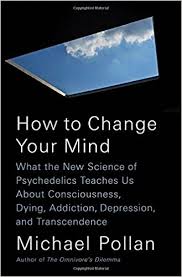
Michael Pollan: How to Change Your Mind: What the New Science of Psychedelics Teaches Us About Consciousness, Dying, Addiction, Depression and Transcendence. We speak with New York Times Bestselling science writer Michael Pollan about his new book that features LSD and magic mushrooms. Pollan will give a book talk in Denver this Thursday — at the Trinity Methodist Church. On Friday, Pollan’s Boulder Booktalk will be at Boulder’s First Congregational Church.
Host/Engineer/Producer: Shelley Schlender Executive Producer: Joel Parker
Listen to the show:
Chasing New Horizons, continued
May 24, 2018
Show notes
In 2015, the New Horizons Spacecraft flew past Pluto. Because Pluto is so far away, it took nearly 10 years of travel for the spacecraft to reach that distant dwarf planet — and that was after a decade of work to get the spacecraft to the launch pad. Planetary scientists Alan Stern and David Grinspoon have written a new book, called: “Chasing New Horizons: Inside the Epic First Mission to Pluto”. The book tells the story of developing and operating the New Horizon mission.
How on Earth’s own Joel Parker is also a scientist on the New Horizons mission, and he had a chance to chat with Alan and David about their book. Last week we heard the first part of this interview. In today’s show, we present Part 2 of that interview. You can also listen to the full extended interview.
Chasing New Horizons // GoldLab Symposium
May 15, 2018
Show notes
Chasing New Horizons (starts 1:00) brings the reader Inside the Epic First Mission to Pluto to hear the details and meet the personalities behind building, launching, and flying this audacious mission. How on Earth’s Joel Parker (also an astrophysicist on the New Horizons mission) speaks with authors and fellow scientists Alan Stern and David Grinspoon. (Booktalks at Boulder Bookstore and Tattered Cover). You can also listen to the full extended interview.
GoldLab Symposium (starts 13:00) This year’s symposium theme is Complexity: The Intersections Between Health and Policy. Boulder Entrepreneur and symposium founder Larry Gold speaks with How on Earth’s Shelley Schlender about this year’s annual symposium that explores the frontiers of science and health with an eye toward ideas that will inspire even the greatest world expert, with an ear toward being understandable to anyone in the room.
Host/Producer/Engineer: Shelley Schlender Add’l Contributions/Executive Producer: Joel Parker
Chasing New Horizons – full extended interview
May 15, 2018
Show notes
Excerpts of this interview were first broadcast on KGNU on May 15th and May 22nd.
2018 Graduation Special (part 2)
May 09, 2018
Show notes
With graduation season is upon us, today’s edition of How on Earth is the second of a two-part annual “Graduation Special”. Our guests in the studio today are scientists who will receive their Ph.D. in a STEM-related field. They talk about their thesis research, their grad school experiences, and what they have planned next.
HyunJoo Oh – CU Boulder, ATLAS Institute Topic: Computational Design Tools and Techniques for Paper Mechatronics
2018 Graduation Special (part 1)
May 02, 2018
Show notes
With graduation season is upon us, today’s edition of How on Earth is the first of a two-part annual “Graduation Special”. Our guests in the studio today are scientists who will receive their Ph.D. in a STEM-related field. They talk about their thesis research, their grad school experiences, and what they have planned next.
Oliver Paine – CU Boulder, Department of Anthropology Topic: Exploring C4 Plant Foods: The Nutritional and Mechanical Properties of African Savanna Vegetation
Diba Mani – CU Boulder, Department of Integrative Physiology Topic: Adjustments in Motor Unit Activity and Mobility Induced by Electrical Nerve Stimulation in Young and Older Adults
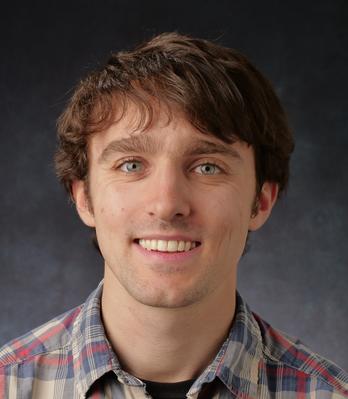
John Nardini – CU Boulder, Department of Applied Mathematics Topic: Partial Differential Equation Models of Collective Migration during Wound Healing
Host / Producer / Engineer : Joel Parker
Listen to the show:
City Nature Challenge BioBlitz Citizen Science enhanced with iNaturalist
Apr 30, 2018
Show notes
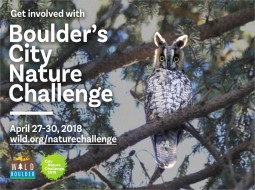
Attention all Nature Lovers and Amateur Naturalists, Friday April 27th kicks of the City Nature Challenge, where Boulder will compete with 65 cities throughout the world to identify the most species within their area over a 4 day period. It’s a competition to identify biodiversity powered by the enthusiasm of citizen scientists. Chip Grandits speaks with Dave Sutherland and Melanie Hill two members of the Wild Boulder Team, which is organizing the City Nature Challenge for Boulder.
Citizen science is enhanced with iNaturalist a crowd sourcing platform developed by the California Academy of Sciences with applications for you smartphone which can help you can tap into a global network of amateurs and experts to help identify what species that thing is which you can never quite identify.
Host: Chip Grandits Producer: Chip Grandits Engineer: Chip Grandits Additional contributions: Joel Parker Executive Producer: Joel Parker
Listen to the Show:
Cancer Biology // Oil&Gas Health Impacts
Apr 17, 2018
Show notes
Today’s show offers two feature interviews: New Theory of How Cancer Evolves Inside Us (start time: 0:58): It is commonly known that cancer afflicts old people more than youth. Conventional wisdom has held we get cancer with age largely because we accumulate lots of genetic mutations over many years, and it’s the mutations that cause cancer. Our guest, Dr. James DeGregori, deputy director of the University of Colorado Cancer Center, discusses with host Susan Moran his new theory–one that challenges conventional wisdom–about why and how we get cancer. In his new book, called Adaptive Oncogenesis: A New Understanding of How Cancer Evolves Inside Us, DeGregori argues that cancer is as much a disease of evolution as it is of mutation. Mutated cells outcompete healthy ones in the ecosystem of the body’s tissues. Dr. DeGregori is a professor in the Department of Biochemistry and Molecular Genetics at the University of Colorado Anschutz Medical Campus.
A well site next to Silver Creek elementary school in Thorton. Photo credit: Ted Wood/The Story Group
Studying Health Impacts of Oil&Gas Wells (start time: 12:54) Many people living all along the Front Range are familiar with the sights and smells of oil rigs operating in fields near their homes and schools. State regulators argue that this convergence of people and oil rigs is safe. But many nearby residents and scientists are concerned about the potential health impacts of these drilling operations so close to residential neighborhoods and schools. Our guest, Dr. Lisa McKenzie, is the lead author on a new study that adds some critical evidence to back concerns of residents. It found that for people living within 500 feet of a well, the risk of their getting cancer over the course of their lifetime is eight times higher than the upper acceptable levels established by the federal EPA. Dr. McKenzie is an assistant research professor at the Colorado School of Public Health at the University of Colorado Anshutz Campus. She discusses the study and its implications with hosts Daniel Glick and Susan Moran. (Here is our interview with Dr. McKenzie a year ago about a related study.)
Hosts: Daniel Glick, Susan Moran Producer: Susan Moran Engineer: Maeve Conran Executive Producer: Joel Parker
Listen to the show here:
Astrobiology and the Anthropocene
Apr 10, 2018
Show notes
Astrophysicist Adam Frank.
As part of the Conference of World Affairs, which is being held this week at the campus of the University of Colorado, Boulder, we are speaking today with astrophysicist Adam Frank. Frank is a professor at the University of Rochester, where he studies the final stages of evolution for stars like the sun. He is also the author of an upcoming book, “Light of the Stars: Alien Worlds and the Fate of the Earth”, which will be published in June of this year. We spoke with Frank about ideas from this new book, including how the science of astrobiology can provide insights into how humanity can address planetary scale challenges like climate change.

 Our TOPPODCAST Picks
 Stay Connected


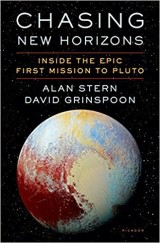 In 2015, the New Horizons Spacecraft flew past Pluto. Because Pluto is so far away, it took nearly 10 years of travel for the spacecraft to reach that distant dwarf planet — and that was after a decade of work to get the spacecraft to the launch pad. Planetary scientists Alan Stern and David Grinspoon have written a new book, called: “Chasing New Horizons: Inside the Epic First Mission to Pluto”. The book tells the story of developing and operating the New Horizon mission.
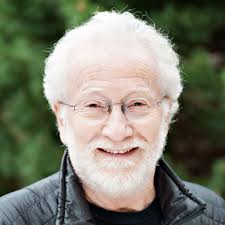
 Here we provide the full interview by How on Earth’s Joel Parker of planetary scientists Dr. Alan Stern (
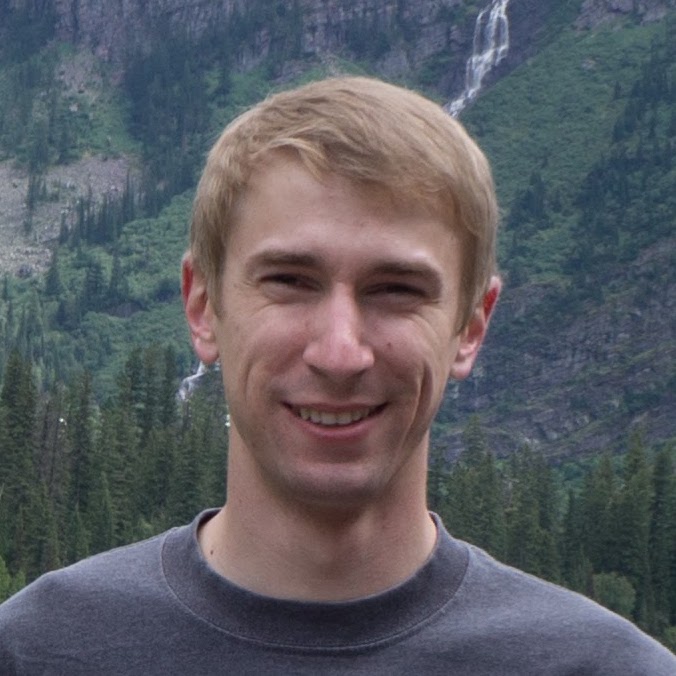
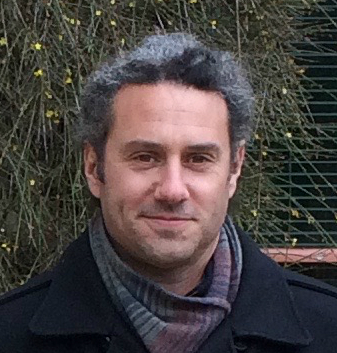
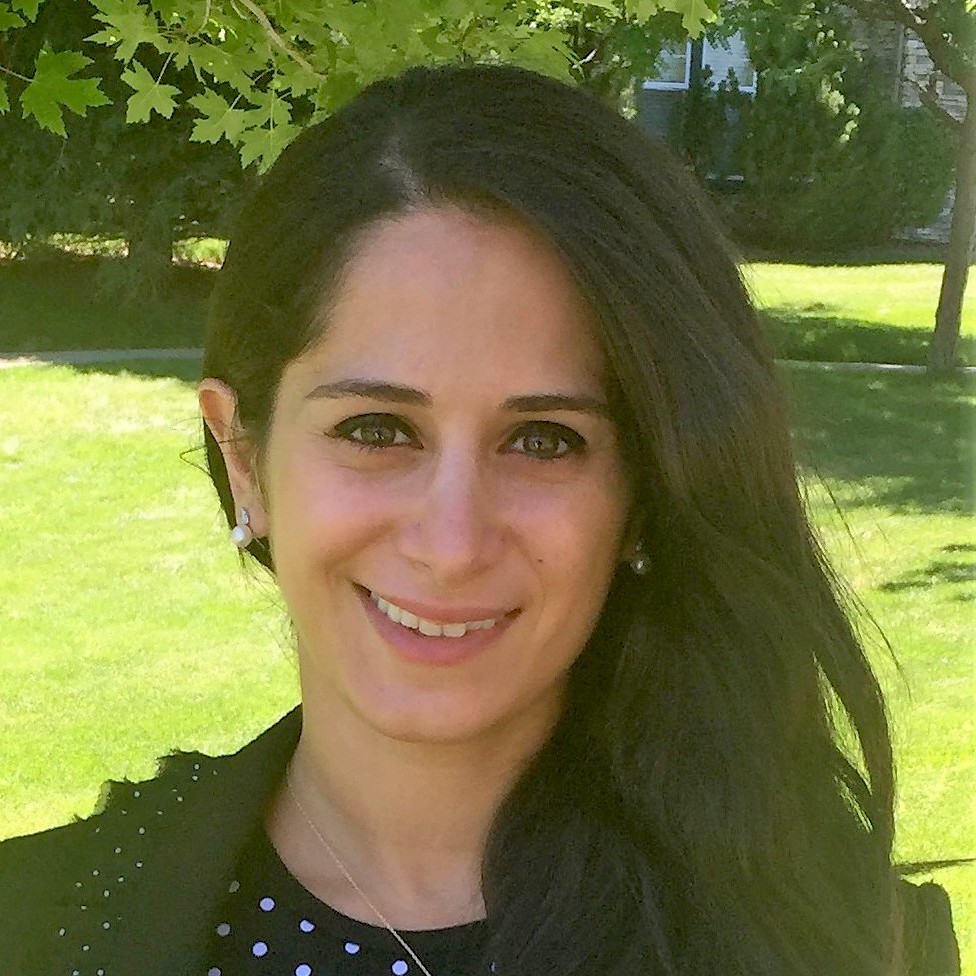
 With graduation season is upon us, today’s edition of How on Earth is the second of a two-part annual “Graduation Special”. Our guests in the studio today are scientists who will receive their Ph.D. in a STEM-related field. They talk about their thesis research, their grad school experiences, and what they have planned next.
 HyunJoo Oh – CU Boulder,
 Nathan Parrish – CU Boulder,
 Diana Perry – Stockholm University,
 Oliver Paine – CU Boulder,
 Diba Mani – CU Boulder,
 John Nardini – CU Boulder,
 Attention all Nature Lovers and Amateur Naturalists, Friday April 27th kicks of the
 New Theory of How Cancer Evolves Inside Us (start time: 0:58): It is commonly known that cancer afflicts old people more than youth. Conventional wisdom has held we get cancer with age largely because we accumulate lots of genetic mutations over many years, and it’s the mutations that cause cancer. Our guest,