Show notes
Listen here to this extended version of the abridged interview with Ron Rosedale that broadcast on HowonEarthradio April 14, 2020. Transcript is below. Host/Producer/Engineer: Shelley Schlender TRANSCRIPT OF EXTENDED INTERVIEW Ron Rosedale, MD, Talks about COVID 19, the Immune System and Cytokine Storms DATE: April 14th 2020 Introduction — The Centers for Disease Control reports that people are at greater risk for Covid-19 hospitalization and often deadly cytokine stoems, if they have pre-existing health conditions, such as high blood pressure, diabetes, heart disease. Everyone says that healthy eating might reduce these risks – but does healthy mean the New York Times distractibaking comfort foods of brownies and Nutella shortcake? Does it mean taking dozens of supplements and cutting out fatty junk foods, as Cristina Cuomo recommends for her husband, CNN’s Chris Cuomo? Up next, we talk with Medical Doctor Ron Rosedale about why he believes that eating and sleeping in a way that reduces high levels of the hormone leptin might reduce the chance of severe symptoms of Covid-19, such as cytokine storms. This is an interview to help you ask questions about the science behind your health choices. This is NOT an interview to take the place of medical advice. Talk with a doctor you trust, if you have questions about your health, and especially if you’re taking medications, and monitor for changes to your need for medications whenever you’re doing a lifestyle change, such as changing your diet. TRANSCRIPT RON ROSEDALE Can you hear me? SHELLEY I’m using the high tech method of recording this phone call on my handheld zoom recorder as you speak on What’s App from India. RON ROSEDALE Yes, I am in India. I’m actually here helping a family known as the Ambani family. Very, very, very prominent. Probably the most prominent, not even probably — they are the most prominent family in India, with their health. And they have they’re mostly located in Mumbai, but ended up getting locked down in a town called Chandigarh. So that’s where I am in a town north of Mumbai called Chandigarh SHELLEY We’ve certainly been thinking about India from here in the United States, because there’s so much concern that India’s population density, meaning it’s in great danger from what will happen with Coronavirus. On the other hand, there’s also a thought that perhaps India and Pakistan, because they do tuberculosis vaccines, might have an unusual amount of protection. RON ROSEDALE Not just tuberculosis, but Malaria. So, you know, malaria is fairly rampant so many people have taken quinalones, chloroquine, things like that, which is being touted as there is a medication to help treat the Coronavirus. So that’s one way of looking at it. THE KEY TO FIGHTING AN INFECTION IS A STRONG IMMUNE SYSTEM RON ROSEDALE However, the most important thing to fight any infection, especially viruses, is going to be a strong immune system. And that’s really the only way epidemics subside. It’s not that the bug goes away, but that people become immune to it. And that’s especially true for viruses. TOO MUCH PROTEIN IN USA; TOO LITTLE PROTEIN IN INDIA And the problem here in India is that many people have deficiencies that impair their immune system. So, for instance, whereas in the US, people eat too much protein, which also impairs the immune system, actually, because excess protein is made into sugar. And it raises insulin and it causes what’s called glycation when sugar molecules combine with other proteins and other molecules that impair their function. And antibodies for the immune system are proteins. Protein is very necessary for the immune system. So in the US they eat too much protein, but in India, they eat too little in general, and they don’t have enough protein to actually mount a strong immune system to make antibodies. And so one of the problems with India is a deficiency of protein in general. MICRONUTRIENT DEFICIENCIES IN INDIA . . . AND THE USA And then there’s also some micronutrients that are deficient in general in India, such as B12, which found more in animal products. Many people here are vegetarians. Vitamin D, which people are surprised to hear, even in India. But due to the dark skin, and people who are very modest, so they cover up when they’re out in public, so they’re not exposed to the sun very often, and often it’s really kind of too hot to be outside. And so there’s a gross deficiency in Vitamin D here. And D is very important also for the immune system. And despite having thousands of miles of shoreline, ocean surrounding India. And also because of vegetarianism, they don’t eat very much fish. And so they’re deficient in omega 3 fatty acids, also, which is required to make any new cell, and cholesterol, required to make new cells. So cholesterol is actually a big friend. They’ve shown that a deficiency of cholesterol also impairs the immune system, which also includes taking cholesterol lowering drugs, oddly enough. Not really, oddly enough. But I guess paradoxically, if you want to call it that. So there’s quite a few immune deficiencies in India. INDIA – LOCKDOWN — CROWDS MIGHT PROMOTE INFECTION TOO FAST RON ROSEDALE And then also, from a societal level, people in India really love to congregate. I mean, they’re very, very sociable people. And so they really crowd together. They love being with one another. It’s really nice, but not so much when there’s an epidemic going on. I’m not in general in favor of lockdowns, and we can go into why a little while. But in India, it’s a bit of a different story, because if they didn’t have a lockdown, then the first thing people would do is get together in large groups. And that’s kind of good and bad. A lockdown keeps people indoors, which of course, impairs the vitamin D even more. No sunlight. PEOPLE BENEFIT FROM BUILDING IMMUNITY . . SLOWLY, IF THEY CAN RON ROSEDALE But from an ideal circumstance, what you want, as we were mentioning, to fight any virus is to become immune to it. So rather than hide from it, ultimately we have to be exposed. You don’t become immune to something unless you are exposed. That’s the whole idea of vaccines, for instance, is that it exposes you to the virus or bacteria that then allows your immune system to build up antibodies to it so that you can fight it. Ultimately, that is what has to occur. The virus itself doesn’t go anywhere. It’s going to continue to be transmitted. Every breath people take at this very moment, they’re breathing in some coronavirus. It’s not the Covid-19 that people are talking about. But the cold virus, influenza viruses. They’re everywhere. And the reason everybody doesn’t get sick and die from breathing these viruses is because they’re built up immunity to it. And what is troublesome about the Covid 19 virus that is affecting people around the world right now is that it’s novel. And so there is no path to immunity to it. SHELLEY Our bodies don’t yet know how to fight this particular virus. And we’re right now, with all of the lockdowns, we’re buying some time so that we can see if there’s some way that we can medically intervene either through a vaccine or have better testing so that we at least know who has had this virus and who is at most risk for it. And what the general pattern is for how somebody gets sick. There’s so many unknowns that we’re buying at least a little time with the lockdown is my understanding. Does that fit with what you’re thinking, too? RON ROSEDALE Partially. I think that the main benefit of the lockdown is, not that we really don’t know who is exposed or getting tested. I think all of that is really not worthwhile. Everybody’s going to eventually test positive to it. Or the vast majority of people will ultimately test positive to it. And the vast majority of people who test positive will have no symptoms because they have a strong immune system. There are certain predispositions, however, that we do know, and that has to do with diabetes, for instance. We know that the vast majority of people who do have a hard time with this virus have respiratory difficulties, have preexisting conditions. One of the prime ones being diabetes, hypertension, previous respiratory difficulty, cardiovascular disease. And I’ll tell you why in a moment, or at least I’ll tell you why. I think that strokes in a little bit. But the major reason that a lockdown is beneficial is really not to help people as much, but because this virus is so novel, and many people will get sick because nobody has had the opportunity to build immunity to it, that it overwhelms the medical system. And so, so many people are getting it all at the same time, there will be a fraction of those people who will get quite ill that require hospitalization. And the hospitals and doctors can’t handle the onslaught of such a novel virus. And so, so many people reporting to the hospital being sick, many people need ventilators now, if everybody were to get the infection at the same time, that proportion of people who would get seriously ill wouldn’t be able to get the medical care that they need. And so that’s the benefit of a lockdown is to try and get out the frequency of infection so it doesn’t all happen at the same time. It’s really more for medical care. It’s really more for the hospitals and the doctors than actual people, is really how it turns out. Trying to hide from this virus is probably futile. As I say, the virus isn’t going anywhere. At some point, people have to go outside and breathe. And we know now, in fact, it should have known before. Surprised me that the World Health Organization expressed surprise that when recently it was found that the virus is in aerosol particles when people breathe, it stays in the air for days. I don’t know why there was such a surprise, because that’s what happens with every virus and not even just viruses, but any tiny particle, like pollen, that’s how people get allergies because they breathe in ragweed pollen, because it’s floating in the air, because they’re tiny particles, and that happens with all tiny particles. So one can expect the Covid virus to be in the air and it’s going to stay in the air. And finally when people go outside, they’re going to breathe. people generally do build an immunity to it. And they’re finding now that the vast majority of people who test positive, if they were to test the general population, and not just sick people. They’ll find the vast majority of people who do test positive have no symptoms at all, that their immune system is up to the task. It fights the virus, and people don’t even know that they’ve been exposed. SHELLEY Most people with Covid-19 might feel somewhere between absolutely awful to a little bit under the weather for a little while. But it won’t be as serious as what we’re hearing about so much in the news about people fighting for their lives in the ICU. And if we get an antibody test, if an antibody test becomes available, maybe people would even know if they’ve been exposed and they might be at less risk for both contaminating other people and also for getting as bad a case of COVID-19 sometime in the future. Still unknowns about whether those two possibilities are there, but they’re more likely if someone could get an antibody test. RON ROSEDALE Sure. That would be really helpful because then they don’t have to be scared anymore. They can go out dancing in the street. EVERYBODY WILL BE EXPOSED AT SOME POINT RON ROSEDALE Ultimately, the ideal situation is if people were to get something little micro-doses of the virus so that they do build up an immunity because that’s the only way that they’ll ever survive it. As I say, almost everybody is going to be exposed at some point. And the real competition is really between building the immune system versus the immune system getting overwhelmed by the virus. So if we could be exposed to small doses, that’s a good thing. And actually, as I say, in India, it’s a little bit different because people just tend to congregate together. And so a lockdown in India is probably the only way to slow down the spread of the virus, with so many people, and a medical system that just cannot handle so many people being sick at the same time. But other than that, it’s probably better to be outdoors, because then the virus will just kind of dissipate into the atmosphere. When people do breathe, they will breathe a small dose of it and they will be able to build up an immune system. And some people will get, like you say, they’ll get a little bit sick. Many people won’t get sick at all. They won’t even know they have it. Some people get a few symptoms. That’s probably, the majority of people get a few symptoms. And then there’s a small percentage of people that will get seriously ill, but only because they have other conditions that impair their immune system or increase inflammation to a great extent. HEALTHY IMMUNITY Vs CYTOKINE STORM RON ROSEDALE I will tell you where, right now, where I think that what the major preexisting condition is and what people can actually do about it. One of the major problems that ends up really killing people and then really, really presenting with the respiratory difficulty, is a mass of inflammation. You know, people have heard of inflammation, where they get swelling due to infection or other things. And injury, inflammation is there to save your life. Yes. The personal immune system. SHELLEYPeople are starting to hear more about the term, “cytokine storm,” and it’s being described as something that does not happen at the beginning of having a Covid 19 infection. A cytokine storm is more when they’ve had the infection for a little while. They’ve had some aches, they’ve had some other symptoms. And then a little later, it’s as though the body goes into another phase of reaction where suddenly the lungs and other body organs are basically fighting themselves. The term cytokine storm is used quite often to describe this very sudden change, where some people are short of breath. Other people, they’re not short of breath, but their oxygen levels go very far down. And whatever symptoms they have at that point, it can mean a very life-threatening situation that has to be dealt with, very quickly. DIABETES, HIGH BLOOD PRESSURE, HEART DISEASE & OBESITY RON ROSEDALE Right. And that’s when people need ventilation, when they can’t take in enough oxygen themselves and they need to be hospitalized on ventilators and you’re exactly correct, when you talk about the term cytokine storm. And so here’s what I think ties it all together that I have not read about anywhere. But I think that if I can mention it, maybe people could start researching it. We know that diabetics are very much at risk. People with hypertension are very much at risk. Obesity, obese people are far more at risk. And then there is the cytokine storm that you mentioned. CYTOKINE STORMS, LEPTIN & IL-6 RON ROSEDALE Well, there’s a hormone called leptin, and leptin itself is a cytokine. SHELLEY What is a cytokine? RON ROSEDALE A cytokine is a hormone, essentially, a hormone that acts very locally. They’re very powerful; most of the cytokines are inflammatory. And so, you know, we hear hormones such as thyroid and insulin and estrogen and things like that. But the body has hundreds, maybe even thousands of other lesser known hormones that don’t necessarily circulate 100 percent in the bloodstream, circulate everywhere, but work more locally. (NOTE — “Locally” means that instead of being active throughout the body, a cytokine is released within a certain region of the body, such as in your thumb or in your lungs or heart) And cytokines are sort of like that, although leptin does circulate in general, although it is a cytokine itself. So we know that if you have high levels of leptin, it also causes inflammation. But its major problem is that it elicits the manufacture and the release of other cytokines, one being IL-6. And we know…
Full show notes at the publisher 
 Our TOPPODCAST Picks
 Stay Connected


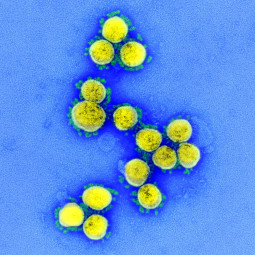 This week on How on Earth, Beth delves into the science of vaccination for the new corona virus and speaks with Dr David Werner of SUNY Binghamton about his research on the likelihood that general anesthetics can set children and adolescents up for the risk of later alcohol abuse. Find out more at his
 Today on How on Earth, Beth plays part of a

 Beth and Angele discuss the pros and cons of mask wearing as protection against the novel corona virus. You can see the
 With graduation season is upon us, today’s edition of How on Earth is our annual “Graduation Special”. Our guests in the studio today are scientists who have or will soon receive their Ph.D. in a STEM-related field. They talk about their thesis research, their grad school experiences, and what they have planned next.
 Hayley Sohn – CU Boulder,
 Clement Zheng – CU Boulder,
 Jennifer Berry – CU Boulder,
 This week on How on Earth, we speak with Professor Catherine Donnelly, of the University of Vermont, about her book,

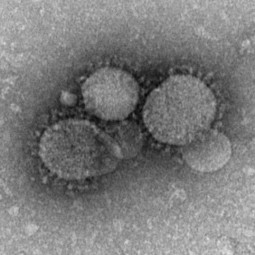 This week on How on Earth, we are still producing off site. Beth and Angele give an update on treatment and transmission of the corona virus and Shelley interviews CU Boulder scientists Anushree Chatterjee and Prashant Nagpal who explain the pros and cons of using old medicines to fight Covid-19, and they describe some new “medicines” in the future, and how to speed up their development.
 This week How on Earth adjusts to the restrictions imposed by the corona virus by replaying a previous feature on the chemistry of beer brewing. First Beth gives an overview of some proposed treatments for corona virus. Then, the featured interview with author Pete Brown. When the New York Times reviewed Miracle Brew, the reviewer said: A magisterial tour of fearsome science and vast brewery history leavened with cheery anecdotes, humor, vivid you-are-there prose and a clever eye for personality . . . His rhapsodies about the meaning of life and the meaning of beer are stirring. . . .His expertise and insight will leave you with a glimmer of infinity every time you hold a bottle of it in your hand.





