Idaho Matters is a wonderful way to stay up to date, meet people and understand there’s much more to this great state. Hosted by Gemma Gaudette on Boise State Public Radio News, it features arts and politics, growth and education, and the interesting stories that make Idaho unique. Send us your questions, comments or story ideas by emailing idahomatters@boisestate.edu or sending us a voicemail using the “Talk To Us” feature on the free Boise State Public Radio app.
'Preconceived:' An inside look at crisis pregnancy centers
Sep 13, 2024
Show notes( ROCO Films)
Since Roe v. Wade was effectively overturned by the U.S. Supreme Court, putting abortion laws in the hands of states, crisis pregnancy centers have gotten a lot of attention around the country.
A new movie called Preconceived takes an inside look at these centers, including Stanton Health Care in Idaho and its founder, Brandi Swindell.
Kate Dumke is an Idaho native and the co-director of the film, and she sat down with our Morning Edition host George Prentice.
Why Idaho pet rescues need your support
Sep 13, 2024
Show notes(Cosmos Photo / Flickr)
Across the country, animal shelters are finding themselves in need of support as they continue to deal with overcrowding, a problem that many pet rescues in Idaho are familiar with.
Tackling the issue can be hard, though, especially if you don’t have enough resources or volunteers. Which is why one organization is working to connect the community with local rescue groups at a special event later this month.
Jen Willet with Bark n' Purr and co-organizer of the event; Gwen Hernandez, co-founder of SNARF; and Gina Day-Price, president of Moonsong Malamute Rescue, joined Idaho Matters to talk more about this effort.
How farmers are implementing climate-smart practices in Idaho
Sep 13, 2024
Show notes(Dawn Evans / Flickr)
NPR is spending this week looking at climate solutions and how food and agricultural systems are tackling climate pollution and adapting to a changing planet.
So Idaho Matters wanted to bring together a panel of local farmers and organizations implementing climate-smart practices in the Gem State. Specifically, we wanted to know how they are adapting to changes in climate and what they are doing to become more earth-friendly.
Idaho Matters Doctors Roundtable: September 11, 2024
Sep 11, 2024
Show notesThis colorized electron microscope image shows avian influenza A virus (bird flu) particles, red/yellow, grown in cultured cells. (CDC, NIAID via AP)(AP / CDC, NIAID)
According to the Centers for Disease Control and Prevention, a new human case of avian influenza has been reported in the state of Missouri. And here in Idaho, we are seeing a rise in whooping cough.
Dr. David Pate, former CEO of St. Luke's Health System, joined Idaho Matters to talk more about these issues.
Using less of the Colorado River takes a willing farmer and $45 million in federal funds
Sep 11, 2024
Show notes
Leslie Hagenstein indicates where the New Fork River flows through her property on Mar. 27, 2024. She signed up for a program that pays her to pause irrigation on her land in order to save Colorado River water. Some experts say the System Conservation Pilot Program, or SCPP, is costly and may not be the most effective way to save Colorado River water.(Alex Hager / KUNC )Wyoming native Leslie Hagenstein lives on the ranch where she grew up and remembers her grandmother and father delivering milk in glass bottles from the family’s Mount Airy Dairy.The cottonwood-lined property, at the foot of the Wind River Mountains south of Pinedale, is not only home to Hagenstein, her older sister and their dogs, but to bald eagles and moose. But this summer, for the second year in a row, water from Pine Creek will not turn 600 acres of grass and alfalfa a lush green.On a blustery day in late March, Hagenstein stood in her fields, now brown and weed-choked, and explained why she cried after she chose to participate in a program that pays ranchers in the Upper Colorado River basin to leave their water in the river.“You have these very lush grasses, and you have a canal or a ditch that's full of this beautiful clear, gorgeous water that comes out of these beautiful mountains. It’s nirvana,” Hagenstein said. “And then last year, it looks like Armageddon. I mean, it's nothing, it's very sad, there's just no growth at all. There's no green.”The Colorado River basin has endured decades of drier-than-normal conditions, and steady demand. That imbalance is draining its largest reservoirs, and making it nearly impossible for them to recover, putting the region’s water security in jeopardy. Reining in demand throughout the vast western watershed has become a drumbeat among policymakers at both the state and federal level. Hagenstein’s ranch is an example of what that intentional reduction in water use looks like.In Sublette County, Hagenstein said it’s rare for people to make a living solely on raising livestock and growing hay anymore. In addition to ranching, she worked as a nurse practitioner for more than 40 years before retiring. And when she looked at her bank accounts, she realized she needed a better way to meet expenses if she was going to keep the ranch afloat in the future. Hagenstein said it was a no-brainer. She signed up for the System Conservation Pilot Program (SCPP) in 2023. Through the federally funded program, she was able to make 13 times more than she would have by leasing it out to grow hay.Since its inception as a mass experiment in water use reduction, the program has divided farmers and ranchers. Concerns over the high cost, the limited water savings, the difficulty in measuring and tracking conserved water, and the potential damage to local agricultural economies still linger. But without fully overhauling the West’s water rights system, few tools exist to get farmers and ranchers — the Colorado River’s majority users — to conserve voluntarily.“I’m a Wyoming native,” Hagenstein said. “I don’t want to push our water downstream. I don’t want to disregard it. But I also have to survive in this landscape. And to survive in this landscape, you have to get creative.”SCPP participation doubles in 2024Driven by overuse, drought and climate change, water levels in Lake Powell fell to their lowest point ever in 2022. The nation’s second-largest reservoir provided a stark visual indicator of the Colorado River’s supply-demand imbalance. Those falling levels also threatened the ability to produce hydroelectric power and prompted officials from the U.S. Bureau of Reclamation to call on states for an unprecedented level of water conservation. The agency gave the seven states that use the Colorado River a tight deadline to save an additional 2 million to 4 million acre-feet of water. (An acre-foot is the amount of water needed to fill 1 acre of land to a height of 1 foot. One acre-foot generally provides enough water for one to two households for a year.)States gave the federal government no plans to save that much water in one fell swoop, instead proposing a patchwork of smaller conservation measures aimed at boosting the reservoirs and avoiding infrastructural damage.The Upper Colorado River Commission (UCRC), an agency that brings together water leaders from Colorado, Utah, Wyoming and New Mexico, offered up the “5-Point Plan," one arm of which was restarting the SCPP.In 2023, after the federal government announced it would spend $4 billion from the Inflation Reduction Act (IRA) on Colorado River programs, the Upper Colorado River Commission decided to reboot the SCPP, which was first tested from 2015 to 2018. The program pays eligible water users in the four Upper Basin states to leave their fields dry for the irrigation season and let that water flow downstream.But a hasty rollout to the SCPP in 2023 meant low participation numbers. Only 64 water-saving projects were approved, and about 38,000 acre-feet of water was conserved across the four states, which cost nearly $16 million. Water users complained about not having enough time to plan for the upcoming growing season and said an initial lowball offer from the UCRC of $150 per acre-foot was insulting and came with a complicated haggling process to get a higher payment. UCRC officials said the short notice and challenges with getting the word out about the program contributed to low participation numbers in 2023.A University of Wyoming study surveyed the region’s growers about water conservation between November 2022 and March 2023. Eighty-eight percent of respondents in the Upper Basin were not even aware that the SCPP existed.UCRC commissioners voted to run the program again in 2024, but said this time projects should focus on local drought resiliency on a longer-term basis. UCRC officials tweaked the program based on lessons learned in 2023, and the 2024 program had nearly double the participation, with 109 projects and nearly 64,000 acre-feet of water expected to be conserved.“I view the doubling of interest and participation from one year to the next as a significant success,” UCRC Executive Director Chuck Cullom said.What happens to conserved water?Despite one of its stated intentions — protecting critical reservoir levels — water being left in streams by SCPP-participating irrigators is not tracked to Lake Powell, the storage bucket for the Upper Basin.In total, across 2023 and 2024, the program spent $45 million to save a little more than 1% of the Colorado River water allocated to Colorado, Utah, Wyoming and New Mexico.Although engineers have calculated how much water is saved by individual projects, known as conserved consumptive use, officials are not measuring how much of that conserved water ends up in Lake Powell. And the laws that govern water rights allow downstream users to simply take the water that an upstream user participating in the SCPP leaves in the river, potentially canceling out the attempt at banking that water.These types of temporary, voluntary and compensated conservation programs aren’t new to the Upper Basin. In addition to the pilot program from 2015 to 2018, the state of Colorado undertook a two-year study of the idea of a demand management program by convening nine work groups to examine the issue.System conservation and demand management, while conceptually the same, have one big difference: A demand management program would track the water so that downstream users don’t grab it and create a special pool to store the conserved water in Lake Powell. With system conservation, the water simply becomes part of the Colorado River system, with no certainty about where it ends up.This lack of accounting for the water has some asking whether the SCPP is accomplishing what it set out to do and whether it is worth the high cost to taxpayers.Even if all the roughly 64,000 acre-feet from the SCPP in 2024 makes it to Lake Powell, it’s still a drop in the bucket for the reservoir; last year, 13.4 million acre-feet flowed into Lake Powell. The reservoir currently holds about 8.2 million acre-feet and has a capacity of about 25 million acre-feet.“I still haven’t really seen evidence of total water savings or anything like that,” said Elizabeth Koebele, a professor of political science and director of the graduate program of hydrologic sciences at the University of Nevada, Reno. Koebele wrote her doctoral dissertation on the first iteration of the SCPP. “As far as getting water to reservoirs, I’m not sure that we’ve seen a lot of success from the System Conservation Pilot Program so far.”And the program has been expensive. For the 2024 iteration of the program, UCRC officials offered a fixed price per acre-foot that applicants could take or leave — no haggling this time. Colorado, Utah and Wyoming paid agricultural water users about $500 an acre-foot; the Navajo Agricultural Products Industry, New Mexico’s sole participant in 2023 and 2024, received $300 an acre-foot. Projects that involved municipal or industrial water use were compensated on a case-by-case basis, and those that involved leaving water in reservoirs were paid $150 an acre-foot. The majority of projects in both years involved taking water off fields for the whole season or part of the season, known as fallowing.The UCRC doled out nearly $29 million in payments to water users in 2024. The program paid about $45 million to participants in 2023 and 2024 combined. Some participants are using these payments to upgrade their irrigation systems, Cullom said, which helps maintain the vitality of local agriculture.But even with this amount of money spent, Koebele said it may still not cover the costs to participants for things such as long term impacts to soil health that come with taking water off fields for a season or two. After the infusion of IRA money runs out, it’s unclear how such a program would be funded in the future.“I also worry that we don’t have an endless supply of money to compensate users for conservation in the basin,” Koebele said. “And perhaps we need to be thinking about — rather than doing temporary conservation — investments in longer-term conservation beyond what we’re already doing.”Western Slope water managers critical of SCPPSome groups have concerns with the SCPP beyond its issues with accounting for how much water ends up in Lake Powell.The Glenwood Springs-based Colorado River Water Conservation District represents 15 counties on Colorado’s Western Slope. Their mission is to protect, conserve, use and develop the water within its boundaries, which has often meant fighting Front Range entities that want to take more from the headwaters of the Colorado River in the form of transmountain diversions. Sometimes, that means voicing concerns about conservation programs that it thinks have the potential to harm Western Slope water users.River District officials have been vocal critics of the SCPP, pointing out the ways that it could, if not done carefully, harm certain water users and rural agricultural communities. Because of the way water left in the stream by participants in the SCPP can be picked up by the next water user in line, some of which are Front Range cities, at least two of the projects this year could result in less — not more — water in the Colorado River, according to comments that the River District submitted to the state of Colorado. (One of these projects dropped out in 2024.)“Without significant improvements, it would be hard for the River District to support additional expenditures on system conservation,” said Peter Fleming, the district’s general counsel.The River District had also wanted a say in the SCPP process in 2023, going as far as creating their own checklist for deciding project approval, but UCRC officials said the commission had sole authority to approve projects.Water users from all sectors — including agriculture, cities and industry — are allowed to participate in the program, but, in practice, all of the 2023 and 2024 projects in Colorado involve Western Slope agricultural water users. That’s partly because the price that the SCPP offered was less than the market value of water on the Front Range.“If you’re simply basing it on a set dollar value per acre-foot, you’re going to result in disproportionate impacts to areas of the state where the economic value of water is not as high as others,” Fleming said. “You’re going to end up with all the water coming from the Western Slope. … You shouldn’t create sacrificial lambs.”Upper Basin facing increased pressureThe Upper Basin’s conservation program is playing out against the backdrop of watershedwide negotiations with the Lower Basin states (California, Arizona and Nevada) about how to share the river after the current guidelines governing river operations expire in 2026.After failing to come to an agreement, the Upper and Lower basins submitted competing proposals to the U.S. Bureau of Reclamation. Lower Basin officials committed to a baseline of 1.5 million acre-feet in cuts, plus more when conditions warrant. They also called for the Upper Basin to share in those additional cuts when reservoirs dip below a certain level.Upper Basin officials have balked at the notion that their water users should share in any cuts, saying they already suffer shortages in dry years. The source of the problem, they say, is overuse by the Lower Basin.Plus, without ever having violated the 1922 Colorado River Compact by using more than the 7.5 million acre-feet allotted to them, they say there’s no way to enforce mandatory cuts on the Upper Basin.But under increased pressure from the Lower Basin, and facing a drier future as climate change continues to rob the Colorado River of flows, Upper Basin water managers have made one small concession. In their proposal, they have offered to continue “parallel activities” like the SCPP, but said these programs will be separate from any post-2026 agreement with the Lower Basin. The congressional authorization for the SCPP expires at the end of 2024, and it’s unclear whether water managers will implement a program in 2025 or beyond.Inherent in the Upper Basin’s stance is a contradiction: Why maintain that both the source of the problem and responsibility for a solution rest with the Lower Basin, but then agree to do the SCPP or a conservation program like it?“I think that they're basically saying that the Lower Basin needs to get their act together before we actually really need to come to the table in a realistic way,” said Drew Bennett, a University of Wyoming professor of private-lands stewardship. “I think they feel like, ‘We don't actually really need to do anything.’ That the SCPP is actually above and beyond what they need to be doing. Is that reality? I don't know. But I think that’s sort of the message they're trying to send in negotiations.”Grower attitudes key to program successSome experts say the program’s real value is not getting water into depleted reservoirs. It is testing out a potential tool to help farmers and ranchers adapt to a future with less water. They frame it as an experiment that provides crucial information and lessons on how an Upper Basin conservation program could be scaled up. It also continues to ease water users into the concept of using less should a more permanent water conservation program come to pass.“This program kind of, I think, helps grease the skids for that process that gets people comfortable for how it operates,” said Alex Funk, who worked for the Colorado Water Conservation Board in 2019 and helped to guide the state’s demand management study with regard to agricultural impacts. “Just seeing the doubling of the amount of acre-feet conserved under the second year and then the interest shows that, yeah, I think there could be some longevity to the program. … I think one has to be optimistic because I don’t see how the Upper Basin navigates a post-2026…
Nevada conservationists work to protect rare wildflower losing habitat to development
Sep 11, 2024
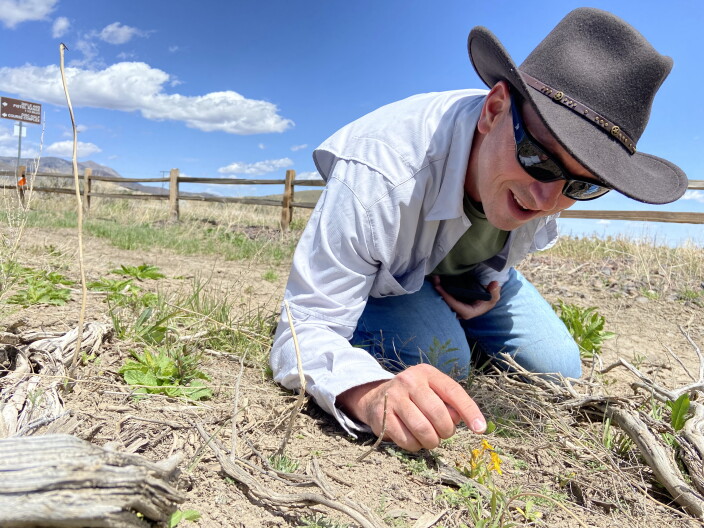
Show notesPatrick Donnelly, Great Basin director for the Center for Biological Diversity, finds a small cluster of Carson Valley monkeyflowers outside of Carson City, Nev., on Thursday, May 2, 2024.(Kaleb Roedel / Mountain West News Bureau )
It’s a sun-soaked afternoon in Carson City, Nev., and Patrick Donnelly is walking down a brush-covered slope between a highway and a large shopping center.
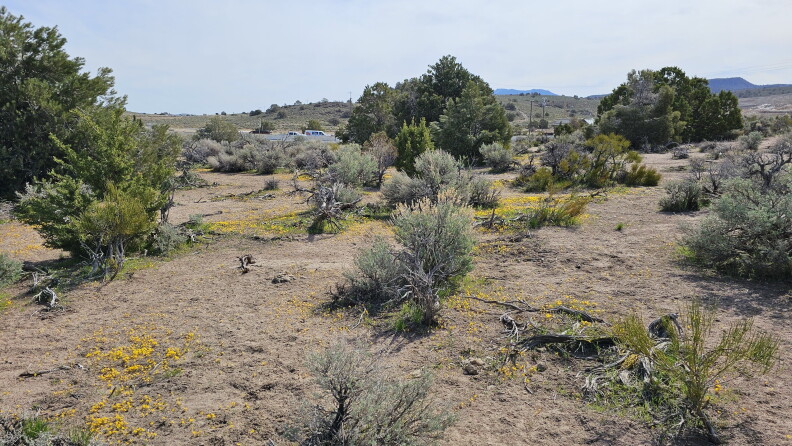
Just over a decade ago, these grocery stores, retail shops, and restaurants weren’t here. The area was 86 acres of untouched desertland.
It also served as a habitat for a rare Nevada wildflower: the Carson Valley monkeyflower.
“This was documented monkeyflower habitat 12 years ago,” says Donnelly, the Great Basin director for the Center for Biological Diversity. “And now it’s covered in trash, there's the Trader Joe's and the Dollar Loan Center. This is ultimately what will drive the species extinct; habitat loss is what's going to push it over the edge.”
The Carson Valley monkeyflower faces more threats than any rare plant in Nevada, according to state researchers.(Patrick Donnelly / Center for Biological Diversity )
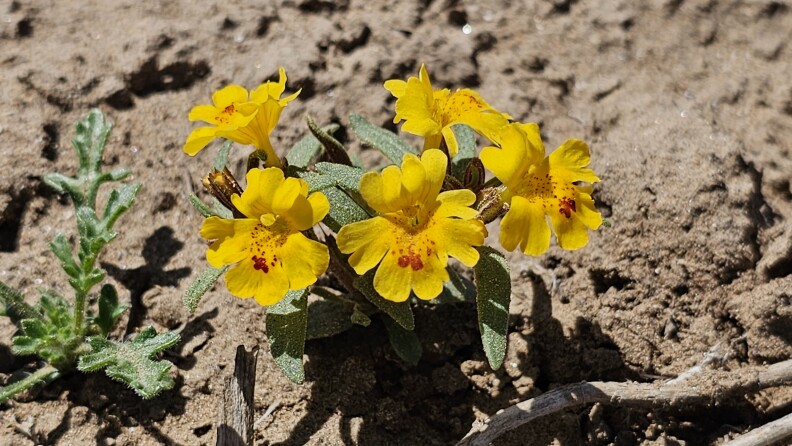
Earlier this year, Donnelly and the conservation group petitioned the U.S. Fish and Wildlife Service to add the Carson Valley monkeyflower to the endangered species list. The tiny flower, ranging from 1 to 3 inches tall, has bright yellow blossoms, freckled with red dots.
“They have this beautiful patterning – these red dots,” Donnelly says. “And those dots are an indicator to bees to come on in.”
But they provide more than nectar to bees, and a pretty sight to Donnelly. They play a critical role in the biodiversity that gives people clean air and water and need federal protections as the Carson City area expands, he says.
“It doesn't mean that we can't have Trader Joe's and we can't have Walmart, it just means there needs to be some limits on our growth,” he adds.
In fact, more than 40% of the Carson Valley monkeyflower’s habitat has already been destroyed, and they grow on only 1,000 acres in northern Nevada and a corner of California, according to a 2018 report by the Nevada Division of Natural Heritage.
Report author Janel Johnson, now a researcher for national nonprofit NatureServe, says threats to monkeyflower’s terrain are mounting.
“Unfortunately, those places that are gentle slopes with sandy soils also happen to be good places to build city parks and housing developments and freeways and all the other things that make a city,” she says.
Carson Valley monkeyflowers had a strong bloom last year (seen here), but the rare plant is losing habitat to the development of roads and buildings.(Patrick Donnelly / Center for Biological Diversity)
In recent decades, the greater Carson City area has expanded rapidly. New homes, roads and warehouses continue to unfold across this desert like a growing pop-up book.
Johnson says that doesn’t mean imperiled plants like the monkeyflower should be ignored, adding that “it’s kind of arrogant of humans to decide what gets to live and what doesn't, just on a whim of where do we want to build our next warehouse or subdivision.”
That’s a rising conflict in the fast-growing Mountain West: Developers targeting land and people trying to conserve it for plants and animals.
Back in Carson City, Donnelly, sporting an Indiana Jones-like hat and using a rustic walking stick, is now hiking in an area of monkeyflower habitat that isn’t threatened by development – at least not yet.
Last spring, blankets of the yellow wildflower covered these hills.
“We had just thousands and thousands of them everywhere you looked,” Donnelly says.
But that’s not the case this year, which is why he’s searching high and low to find some sprouting from the sandy soil. After a lengthy search for the elusive flower, Donnelly breaks into giddy laughter as he spots tiny yellow blossoms with red dots.
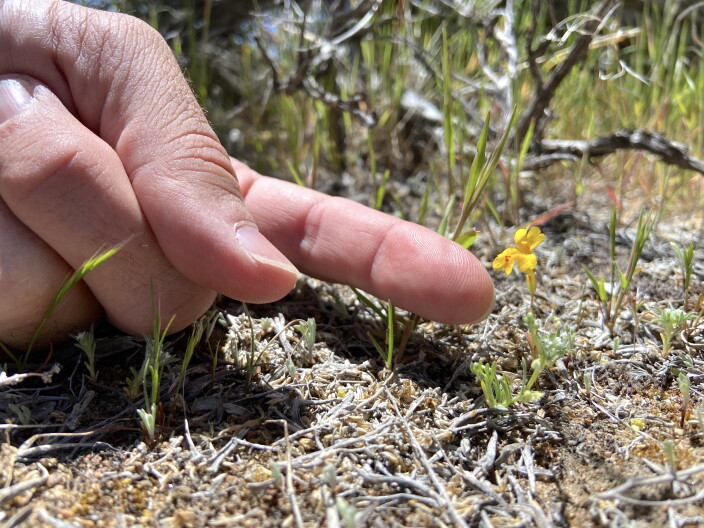
“I can't believe you could wander around Carson City for three hours looking for plants, and this is what you find. That's the Carson Valley monkeyflower,” Donnelly says as he leans in to get a close look at the plant, which is barely an inch tall and slightly wilting. “That is a struggling wildflower right there – it is not living to its full potential.”
Carson Valley monkeyflowers, like this inch-tall plant, are struggling to sprout and survive amid hotter and drier conditions. (Kaleb Roedel / Mountain West News Bureau)
Donnelly says a lot of the blame goes to another increasing threat to the monkeyflower: climate change. Rising temperatures, declining precipitation, and drought make it difficult for them to know if and when to sprout.
“Some of them will adapt every year, no matter how crazy it is,” he says. “Maybe it's one out of millions. But that resiliency is the only chance these plants have at surviving climate change.”
He says that’s why it’s more important than ever to protect the Carson Valley monkeyflower, which is also threatened by wildfires, livestock farming and ranching, and invasive species.
But federal protections won’t happen anytime soon. The average time it takes the U.S. government to list a species after a petition is filed? More than a decade, Donnelly says.
This story was produced by the Mountain West News Bureau, a collaboration between Wyoming Public Media, Nevada Public Radio, Boise State Public Radio in Idaho, KUNR in Nevada, KUNC in Colorado and KANW in New Mexico, with support from affiliate stations across the region. Funding for the Mountain West News Bureau is provided in part by the Corporation for Public Broadcasting.
Exploring space: One astronauts experience
Sep 11, 2024
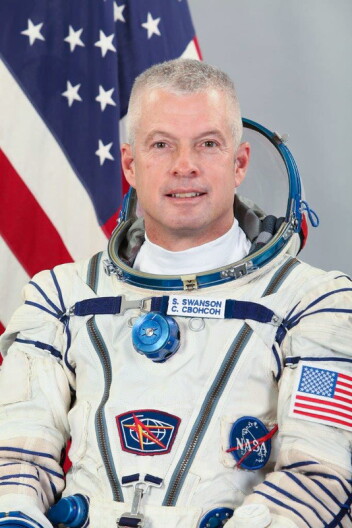
Show notes NASA astronaut Steve Swanson, Expedition 37 backup crew member, attired in a Russian Sokol launch and entry suit, takes a break from training in Star City, Russia to pose for a portrait.(Gagarin Cosmonaut Training Center / Flickr)
Have you ever wondered what it would be like to visit space?
Well, Dr. Steve Swanson has a pretty good idea. He's been there three times, serving different missions, one of which included a long stay on the International Space Station.
Idaho Decision 2024: Preparing for election season
Sep 10, 2024
Show notes( Canva)
2024 marks a historic election year. In November, voters will decide the future of our country for the next four years, as well as many key state and local races.
Because it’s a presidential election year, there’s been a lot of focus on not just who gets elected but also on how our election system works at both a national and local level.
To answer the questions that have come up this election season, we asked Idaho's Secretary of State, Phil McGrane, to join Idaho Matters each Tuesday to take a closer look at these issues.
Read the full transcript below:
GAUDETTE: From the studios of Boise State Public Radio News. I'm Gemma Gaudette. This is Idaho Matters. 2024 marks an historic election year. Come November, voters will decide the future of our country for the next four years, as well as many key state and local races. Now, because it is a presidential election year, there's been a lot of focus on not just who gets elected, but also on how our election system works at both a national and local level. So to answer the questions that have come up this election season, we asked Idaho Secretary of State Phil McCrane to join us each Tuesday leading up to Election Day to take a closer look at these issues. So he's joining us now. Phil, it's always nice to have you on the show.
McGRANE: Gemma it is always great to be with you. So thanks for doing this. I'm excited as we head into the November election coming up.
GAUDETTE: So before we get started with this week's questions, can you just give folks an overview of what the Secretary of State's job is.
McGRANE: Yeah, especially as it relates to this. So I serve as the chief election official for our state. The county clerks are the chief election officials for each of the counties, and we are all working very closely together right now preparing for the November 5th election. Um, our role is to oversee the voter registration system, all of the tools that the county clerks use, and to make sure that elections are run uniformly across the entire state. So whether you're in Bear Lake or Boundary County or here in Boise, the process should be relatively the same, and every Idahoan should be able to have confidence in the voting process. And so we've been working closely with all of them, gearing up for what is really set to be a record election.
GAUDETTE: So when you say you have to prepare for every election, can you kind of quickly walk us through what that looks like? I mean, what kinds of things actually go into putting an election on? Because, you know, on Election Day, I walk into my precinct, I get a ballot, I vote, and I'm out the door.
McGRANE: You know, and if it works the way it's supposed to, that's exactly how it should be. We want it to be a seamless process for all Idahoans who show up to the polls, whether they're voting absentee, voting early, or voting in person on Election Day. And really, in terms of the preparation, it started last spring. As you know, we had the primary election back in May. That's really what kind of tees everything up. Most candidates had to file way back in March in terms of this election. So all the legislative candidates, the county candidates, others that started a long time ago. And now that we're through the primary election, we know who the nominees are for all the various positions related to the party offices. Um, we've also had the Republican National Convention and the Democratic National Convention. We're now at the phase where we are really assembling the actual mechanical pieces. So last Friday was the deadline for anything to go on an Idaho ballot. And so the county clerks have been designing the ballots and sending off everything to the printer. So this week, really, we are printing ballots, gearing up to get ready for everything beyond that, one of the unique things our office does, and I'm sure we'll talk about more as we get closer, is the Idaho Voter pamphlet. Um, we're currently printing 850,000 copies of the voter pamphlet to go out to voters. Um, just to put it in perspective, that's 17 million pages, and it takes a little while for the printers to run that many pages. So a lot of things go into the preparations, really to make it possible and to make the voting experience seamless. I think, you know, at the county clerk level, they're really gearing up, getting all their supplies ready. And I think one of the big things right now is getting all the people ready that are going to be required to run the election. So those poll workers, all the election officials that were going to use across the state are one of the key components that we have to get ready now in September so that everything is in place for October and November.
GAUDETTE: So I want to talk about the poll workers in a moment. But before we get to that, you mentioned, you know, the the ballots are now off to the printers and the one one of the things you did last week was announced the official list of presidential candidates who have qualified for Idaho's general election ballot. And we should note, there are a lot of candidates on that list, not just Kamala Harris and Donald Trump. So first off, how does that process work of qualifying a candidate to be on the ballot?
McGRANE: Yeah, it's interesting, and it's a great question because we've had a lot of interest to know, you know, people are watching the news nationally and trying to understand what's going to happen. And I think, as you pointed out, Gemma there are more names you're going to see on the ballot than you realize. There's the big names that we all hear about, but there's plenty of others and headed into this. The president is unique. It's the only office that crosses state lines. Everything else is contained within each of the 50 states. So this process is a little different. I think all of us are more familiar with the big National Party. So the Democratic Party, the Republican Party. The same rules apply to the Constitution and Libertarian parties, where each of the states nominates at their national convention who they want. And then the national convention determines the nominees both the presidential candidate as well as the vice presidential candidate. and those are submitted by the parties. So each of the local parties, Dorothy Moon and Lauren Necochea. Notified us of their candidates that would appear on the ballot.
McGRANE: Beyond that, though, we have five independent candidates. These are names that people will also probably recognize. So Robert F Kennedy Jr is one. Jill Stein is another that will appear on the Idaho ballot. And all the independent candidates had to go through a little bit different process. They actually had to petition Idahoans, and they needed a thousand valid signatures from Idahoans in order to get their names to appear on the ballot. Each of the five independent candidates did exactly that, and they had to file those by the beginning of August. So we spent August verifying the clerks, verifying the signatures, our office making sure that their electors were set correctly so that they could appear on the ballot. And I'll note one other thing that just, you know, the election nerd in me can't help is when people see their ballots, they'll also see all of the electors listed. And technically, voters are voting on the four electors for Idaho, who will appear at the Electoral College to nominate the candidate who ultimately wins our state.
GAUDETTE: So, Phil, I want to go back to a candidate that you mentioned, Robert F Kennedy Jr, because he came out, pulled himself out of the race, endorses Donald Trump, and now he wants to take his name off the ballot in some states. As you mentioned, he's on the ballot here in Idaho. So if someone has made it on the ballot in our state, is there a process to take their name off?
McGRANE: There is a process where we're really past that point. The date to withdraw was last Friday and it is interesting, especially with the Kennedy. We've all seen in the news. Um, not only is he not withdrawing in Idaho, he's actually fought pretty hard to make sure he could be on the ballot here in Idaho. And so, you know, from my understanding, nationally, there are some battleground states where he's chosen to withdraw, but other states like Idaho, he's very much intending to remain on the ballot. We've had no indication from the Kennedy campaign that they want to be removed, but a candidate could have been removed. But we're now past that point because, as I mentioned, ballots are being printed and we're coming up quickly. Uh, Friday the 20th. So ten days from now will be when the very first ballots hit mailbox, like go out in the mail to head to those very first absentee voters. And that's really intended to get to all the people overseas or in the military and people who aren't here in Idaho.
GAUDETTE: Okay, let's talk about Election Day. Who are the people working in the polls? Um, you know, they're the ones that look up your name. They hand us the ballot, you know, make sure everything runs smoothly.
McGRANE: I think, you know, Gemma like, I have a fondness for all the people who are willing to serve as poll workers in our state. That's actually how I got my start years and years ago was training poll workers here in Ada County. Um, it's surprises people, but we really rely on the community in order to be able to pull off elections. Across the state we will use about 5,000 poll workers in order to pull off an election of this scale. So that's your your neighbors. It's often like retirees or there are people who stay at home. It's a long day on a Tuesday. And so it requires a commitment. But we love when we get to see whether it's high school students serving as poll workers or I think lots of voters, when they picture their local polling place that they picture, you know, the the group of little old ladies who've been doing it for decades, who have whether it was punch cards when we did it before to the systems we use now, they've been consistently running their polling locations. They're always a friendly face when you head in to vote. And I will say, you know, one of the big things right now for all the clerk's offices, they need poll workers. If there's people who are listening, who are willing to step up and to serve, and whether they can take a day off or commit that Tuesday. We need more poll workers to be able to serve this election. And so I'm hopeful that we'll see people sign up and anybody who's interested can visit VoteIdaho.gov. And under the resources tab, there has become an election worker. And that information will all be submitted to the. Doesn't matter what county you're in here in Idaho, we'll get that information to the county because I know they're looking for people.
GAUDETTE: Phil I only have a little bit under two minutes with you. I am assuming there's training that that poll workers would, would have to undergo beforehand.
McGRANE: Yep, there definitely are. I always you know, you and I talk all the time about our election laws and how the process works. And you can appreciate so can your listeners. I'm not the one who's actually on the ground doing it. It's our poll workers. All of the counties provide training to those poll workers. And there's different roles that people can serve in, whether that's issuing ballots, whether that's helping set up the equipment or run the poll books. We have some great systems we've implemented across the state with now our electronic poll books. I'm sure we'll talk about that more as we get closer. But all that training is provided, and it really is a great experience in terms of civic engagement. You know, I know that politics these days often gets a bad rap. People like the noise and we'll see the campaigns picking up as we go. But this is a great way, regardless of your partisan stripes or anything, just to serve everybody in your community and really help kind of democracy work. And so I'm excited for Election Day, and hopefully there's people here who are ready and willing to serve our state.
GAUDETTE: I have to say, I when I go to my polling place, I love seeing the poll workers there. They do just such a great job and they always have a smile on their face. So Phil, thank you so much for taking time today. We look forward to talking you ever talking with you every Tuesday leading up to Election Day, we've been speaking with Idaho Secretary of State Phil McGrane on how Idaho is getting ready for the November election. Remember, they need poll workers. So Phil mentioned where to go. We will, of course, put information on our website. He will be here every Tuesday to answer questions about how the election process works. Thanks so much for listening to Idaho Matters. Boise State Public Radio and Idaho Matters are members of the NPR network. It's an independent coalition of public media podcasters. You can find more shows in the network wherever you get your podcasts. I'm Gemma Gaudette. We'll see you tomorrow.
Creating greener health systems in Idaho
Sep 10, 2024
Show notes(<a href="https://www.flickr.com/photos/schill/">Scott Schiller</a> / Flickr)
Giving the environment a voice is something that has motivated Aparna Dial. She’s the Senior Director of Facilities, Engineering and Sustainability for the Ohio State University Wexner Medical Center.
OSU has a huge footprint—29,000 employees and 65,000 students — and a medical center complex that uses a huge amount of energy and resources, not all of them friendly to the environment.
So Dial started making changes to make OSU more green and sustainable, and through training and conversation, OSU and especially the Ohio State University Wexner Medical Center have made incredible strides toward helping our environment.
Dial will be talking about this journey on Wednesday, Sept. 11, as part of St. Luke's lecture series on climate and health, and she joined Idaho Matters along with Dr. Ethan Sims, the founder of Idaho Clinicians for Climate and Health, to talk more.
How do scientists measure voter emotions?
Sep 10, 2024
Show notes
Are you planning to watch the debate Tuesday between former President Donald Trump and Vice President Kamala Harris? How do you feel about the candidates? That’s a question that scientists who study human behavior would really like to answer.
But you can’t measure feelings ... or can you? Dr. Paul Bolls of the Murrow College of Communications at Washington State University will spend tonight measuring the emotions of voters during the debate.
Morning Edition George Prentice joined Idaho Matters to talk more with Dr. Bolls about how he plans to do this.

 Our TOPPODCAST Picks
  Stay Connected