TopPodcast.com
Menu
  • Home
  • Top Charts
  • Top Networks
  • Top Apps
  • Top Independents
  • Top Podfluencers
  • Top Picks
    • Top Business Podcasts
    • Top True Crime Podcasts
    • Top Finance Podcasts
    • Top Comedy Podcasts
    • Top Music Podcasts
    • Top Womens Podcasts
    • Top Kids Podcasts
    • Top Sports Podcasts
    • Top News Podcasts
    • Top Tech Podcasts
    • Top Crypto Podcasts
    • Top Entrepreneurial Podcasts
    • Top Fantasy Sports Podcasts
    • Top Political Podcasts
    • Top Science Podcasts
    • Top Self Help Podcasts
    • Top Sports Betting Podcasts
    • Top Stocks Podcasts
  • Podcast News
  • About Us
  • Podcast Advertising
  • Contact
Not in our directory?
Add Show Here
Podcast Equipment
Center

toppodcastlogoOur TOPPODCAST Picks

  • Comedy
  • Crypto
  • Sports
  • News
  • Politics
  • True Crime
  • Business
  • Finance

Follow Us

toppodcastlogoStay Connected

    View Top 200 Chart
    Back to Rankings Page
    Home & Garden

    GREEN Organic Garden Podcast

    The GREEN Organic Garden Podcast will inspire, teach, and promote earth friendly techniques by interviewing organic gardeners who share their journeys, tips, and tricks to simplify the process of growing your own delicious healthy food. Whether you want to have a small bed in your backyard or a full grown farming operation, our guests will help you reach your gardening goals and offer you resources and solutions to everyday gardening challenges, and inspiration to dig down in the dirt and get growing!

    This podcast uses the following third-party services for analysis:

    Spotify Ad Analytics – https://www.spotify.com/us/legal/ad-analytics-privacy-policy/

    Advertise

    Copyright: © 2015

    • Apple Podcasts
    • Google Play
    • Spotify

    Latest Episodes:
    319. WWOOF-USA® | Samantha Blatteis | Special Programs Manager May 17, 2020
    Show notes

    Organic Oasis Master Class 2.0 | Begins June 1, 2020 May 16, 2020
    Show notes

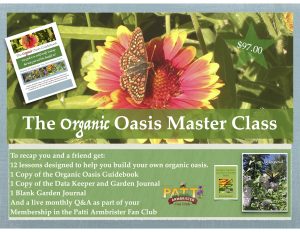
    Hey everyone it is Monday, May 11, 2020! I am here behind the mic to tell you that we are officially launching the Organic Oasis Master Class 2.0 on June 1, 2020.

    Master Class 2.0

    It's a 6 week course where we are going to walk you through the Organic Oasis Guidebook but there is so much more then that! Can you go buy the book on your own? Sure. But having Me and Mike and Patti Armbrister by your side, to make sure you complete all the lessons in the book. walk you through and hold your hand

    That's going to help you be successful in your garden. We're gonna make sure your organic oasis is complete, that you know all the parts and pieces!

    GARDEN SUCCESS!

    I feel like this year, I've had more experiences were I have been been explaining to somebody a chapter in the book or explaining something in the class. People keep asking me questions that we answer in the book?

    What did you say? Why do you want to plant sunflowers on April 22? You plant sunflowers because they get rid of aphids?

    Especially at Free the Seeds! Not only are you getting my incredible knowledge. When you join you get membership in the Patti Armbrister Fan club where you get to do a monthly question and answer all the way through your Thanksgiving harvest!

    PattiArmbristerFanClubXTRLgcopy

    If you can't figure this out:

    Tomato blossoms have beautiful flowers but you aren't getting any fruit or your eggplants are bushy?

    Whatever you questions are? This is my struggle there. You have access in the Facebook group but also you will get extra attention and a chance to ask her personally what's going on at your space.

    Patti and I are going to a webinar where we answer all the questions that have been in the Facebook Group!

    People have asked me things like:

    How do I take care of this banana plant or this coffee tree? Or what do I do about these squash beetles? The biggest question is repeatedly, how do I keep away pests and how do I keep my plants healthy?

    Hard copy as long as you are in the US

    People say things like I don't really want to journal all that much! I mean just because it has a space for every day, you don't have to document every day, you want to do it once a week, I'm sure on Friday you'll still remember what you at this week, or maybe your the opposite of me and you know this is what I am going to make next week!

    The point is to make you conscious of what am I eating in November because when you're standing in the seed store you're not thinking about what you were eating in the fall or last summer in August, you're just thinking of what looks good now!

    BROCCOLI

    This year we are going to grow more broccoli because I know broccoli is my number one food, even above pizza, I would try to bring broccoli pizza if I was stuck on a desert island. Broccoli is my super food! And number one favorite thing to eat!

    Mike grows it it is so incredible, we had a big squirrel problem, this year we are putting it closer to the house where it can be guarded better and we can put row cover over it. We don't know if that was a drought year or what?

    But we're supposed to be talking about your garden challenges.

    The new vegetable garden challenge. I know there is a big difference between being a vegetable gardener and growing a nice landscape. We're gonna talk about what's the difference between a garden and an organic oasis. Or maybe a farm. Like in Mike's mini-farm there's nowhere to sit. There's no designated paths!

    In the book the Lil Gardener the other day, she was talking about it's important for a space to be inviting!

    Even though the class is 6 weeks it's designed to walk you through the lessons in the Organic Oasis Guidebook.

    The Master Class Also Includes Extra Lessons and Value

    For each section of the book, theres I think 12 podcasts that talk about that topic. There's additional reading like inJM Fortier's Market Gardener, in Jacob Jeavins book.

    I could only make this book 145 pages, when I buy a copy it costs me $20, so I made it as short as I could but I wanted it to have the most valuable

    Annuals VS Perennials

    I just made a video for Instagram about the difference between annuals and perennials, I am the kind of person who comes home from the nursery and I'm like hey I bought strawberries and broccolis and don't you want to put these all together in the same bed, but you don't want to put those together because strawberries because strawberries are perennials that come back and spread every year and broccolis or brassicas are plants that need to be planted in a new spot each year.

    Your can get in for $75.00 if you click on the link in this or somewhere there is a podcast special. It opens June 1st so if you want to get a copy of your Organic Oasis Guidebook, before it starts!

    click here to enter


    This podcast uses the following third-party services for analysis:
    Spotify Ad Analytics - https://www.spotify.com/us/legal/ad-analytics-privacy-policy/

    Julie Cerny ~Little Gardener Book Giveaway and May 5, 2020 Update May 05, 2020
    Show notes

    Enter Here

    https://mailchi.mp/7e1910df349e/littlegardener

    Listen to our awesome interview here:

    https://organicgardenerpodcast.com/podcast-2/318-little-gardener-julie-cerny/

    Connect with Julie on Facebook Here

    and on Instagram here

    Purchase the book here:

    The Little Gardener: Inspire Children to Connect with the Natural World


    This podcast uses the following third-party services for analysis:
    Spotify Ad Analytics - https://www.spotify.com/us/legal/ad-analytics-privacy-policy/

    Replay of my interview with Scott Mann from the Permaculture Podcast Apr 27, 2020
    Show notes

    In my most recent interview with Julie Cerny she recommends Scott Mann's Permaculture Podcast so I thought I'd go ahead and post a replay from our conversations back in July 2019.

    The Permaculture Podcast host Scott Mann shares his amazing journey into permaculture and podcasting in this must listen episode.

    Learn about The Possibility Handbook: A Toolkit for Transformation

    So I ask myself today what lesson can I learn since all the work I did this weekend evaporated when my computer crashed yesterday. I am going to release it so I can listen on my way to work tomorrow and hope for the best. Sorry if there are any mistakes but I think Scott was an amazing guest you will enjoy hearing from unedited!

    To see my unedited notes click here.

    But I did put on my rose colored glasses on my way to work and ended up enjoying the sunny skies and beautiful Montana forests! Enjoy Green Future Growers! Here’s to technology challenges and hopefully better solutions! At least I didn’t lose my whole computer as I still have about 6 episodes in the bank to release!

    Show notes coming someday!

    I did want to make sure I include some important links Scott mentions. Two books and a website.

    David Holmgren’s site and info at Permaculture Principlesand the Poster Download that lists the principles to follow along as we talk.

    David Holmgren’s book:

    Permaculture: Principles and Pathways Beyond Sustainability

    and

    Toby Hemenway’s

    Toby Hemenway Permaculture

    Gaia’s Garden: A Guide to Home-Scale Permaculture


    This podcast uses the following third-party services for analysis:
    Spotify Ad Analytics - https://www.spotify.com/us/legal/ad-analytics-privacy-policy/

    318. Little Gardener | Julie Cerny | Environmentalist and Garden Educator Extraordinaire | Hudson Valley, NY Apr 27, 2020
    Show notes

    The Little Gardener: Inspire Children to Connect with the Natural World It's truly a book out of my heart. BOOK GIVEAWAY: Enter here to win!They are giving one to a listener.Connect with The Little Gardener author Julie Cerny Here:Find Julie on instagram @https://www.instagram.com/thehappylittlegardener/and on Facebook at https://www.facebook.com/The-Little-Gardener-101235494924539/Do you have any questions for me?Well, I was wondering about your journey a little bit.Well, I call my audience Green Future Growers, mostly they are interested in growing a lot of food, they have large backyard gardens, they are master gardeners, but I have gotten a lot of new listeners so there might be more new gardeners. I started my podcast in January 2015, and I have done 318 interviews with backyard gardeners, market farmers, etc and so I feel like since I started my podcast I could keep a class of students alive if I had to. My husband and I live on 20 acres in NW Montana, so deer is a big challenge here. Many listeners etc say that is a giant challenge. Mikes goal is trying to grow as much of our own produce as we can but this year we are trying to do more, we are even looking into having a WWOOFER coming to stay and maybe help Mike because we feel like this land should produce as much as it can and more then Mike can by himself in case we need food in the fall.It wasn’t until I saw children in a garden—holding seeds, planting them, touching the soil, and smelling, harvesting, and tasting food (nature)—that I knew they were truly perceiving their place in the natural world. And it made perfect sense. The most direct and intimate way to connect with nature is, clearly, to eat it. A small part of it becomes a small part of you—and it fills you up a little more every time. Eventually you begin to realize that you have always been 100 percent nature, that you are made of the same components of all that you see in the natural world—your body made of water and carbon, same as the flower stalks. Gardens remind us that everything is connected, and that “everything” includes us.The Little Gardener: Inspire Children to Connect with the Natural World Here's my amazon review:Five stars*****All you need to help inspire the little gardener in your life. Don't forget to leave yours so this book gets shared by all who need it: Illustrations bring gardening to life in this little workbook that is designed by someone who obviously knows kids + gardens and how to love and enjoy them together! Fantastic read. LOVE LOVE LOVE!It is Friday April 24, 2020 It's truly a book out of my heart. They are giving one to a listener.IDK where you are?Find Julie on instagram @https://www.instagram.com/thehappylittlegardener/and on Facebook at https://www.facebook.com/The-Little-Gardener-101235494924539/Tell us a little about yourself.Hudson Valley in NY State. 2 hours of NYC.I grew up on Long Island till I was ten. My family moved upstate to where my dad had a hunting cabin. Moving from the suburbs at the age of 10 for a fledgling 6th grader, but looking back on it, I'm so glad they did. How lucky were you to get to move upstate.I loved the close knit community in the suburbs, but I'm a nature girl at heart, more of a country girl and I'm glad I got to develop a stronger love of nature. Me too!Even when we lived on Long Island, we had a tiny postage stamp backyard, and most of that, probably 20-30% of that backyard, we had in vegetables all along the perimeter of the yard. There was never any question with the connection to where food came from because we always had tomatoes growing etc. That was natural.That connection was made pretty naturally, when we moved upstate dad really expanded his garden, put in an orchardThey had:5 acresstill live on that landapple trees are my dad’s heart and soulhelping in the gardenonce I got to be a teenager I wasn’t super duper excited about it. But that really gave me a foundation and a jumping off point for a connection to nature.not along of the typicalfortsstreamsmud-piesalways had this connection to natural world that began to manifest belonging to an environmental group in high school and then going to an environmental science and forestry program here in sunny Syracuse NYWhat I started feeling that educationbeing an outdoor educator felt like my patheducational fellowship my last couple of yearsinner city SyracuseI felt like this is it! Connecting kids to nature is what I want to do!!That manifested over a few yearsfew different jobsNY state parksadirondack mountain clubtaking kids hikingtaking kids in canoeslooking at pond water under a microscopenature still feltWhen I would engage with nature, yes let’s identify this tree or this animal trackit didn’t feel like enough!Nature still felt like an otherthis oneTaconic Nature CenterI've been there (but really I went to the Ashokan outdoor center about 45 minutes away)It's a great programing.We didn't have blacksmithing but there was a farm nearby that had more of those historic skill type stuff. We had amammals courseaquatics courseproject adventure ropes course for team buildingwe did have a lot of 6th graders, aligning with the 6th grade curriculumAlong with the quote from the book, watching kids eat from a bookI love identifying treesI love identifying birdsobserving in things in naturebut engaging in it is something totally different and actually putting a piece of nature into your body takes it to next levelnature communication and nature interpretationNature is food so I said, let me check out this organic farming. I tried this organic farming just for a weekend and I was sold.I moved out to Colorado to intern farmpart educationalproductioninterest to sustainable living off grid 9000 feet elevationworking with the land and allowing it to be part of our livesThat was a big shift, watching where all my food camealso took a course with the Audubon in Maine3 week intensive just before I went to coloradojust watching, we took it back to basics!we want to bake bread then somebody startsgrind the wheatsplit firewoodtaking it back to basics is different then the part of me that climbs a mountain to see a pretty view the working with kids to check it out flipping logs over and playing in streamsIt came full circle back to gardeningits a really excusable way to connect with nature intimately and personally.Do you want to explain about the little gardener big gardener and how it starts out, because people probably don't alway know how to start with a kid?The Little Gardener: Inspire Children to Connect with the Natural World the book is designed to be read by a big gardener to help guide little gardeners to create:dreaminggrowingharvestinglearningtogether! The book is laid out pretty chronologically, in terms of setting intentions, and mindfulness and always coming back to that dream to guide you and where you want your garden to go.visualizing your gardenconnecting your landobserving your environmentwhat kind of garden is going to work for this placeI love that you start out talking about an inviting garden!the most the gardens I felt most wowed by a real energy shift by just walking into it, it was part wild and cultivated, when you walked into it there were places to sitdefined pathsit just had that element of wild natureand "domesticated nature"I think that is so true, because like Mike has his minifarm that is production for vegetables but then we have our garden area that I refer to as the organic oasis because it's a place where we hangout and have picnics and bar-b-ques with the kids etc and I like to paint and relax and read. A place to be and enjoy is very different then a farm that just produces food.the more kids feel invited into the garden, just like adults the more they are going to want to be in thereWhen they are a part of setting those intentionsbuilding the structures that allow the garden to come alive that's gonna be a space they connect to moresomething that’s wovenecological literacythe idea that natural systems support all life on this earth!We are a part of those systems, it's important to understand they sustain us and how to co create with those systems to create ideally a more sustainable societyIn a garden that you are co creating with it's more easy to see how your actions affect your immediate environment for better or worsethey will have a better sense as they grow looking beyond nature in their backyard and garden to oh, I can have an affect on the nature in my communityI think gardening is a lesson in so many things!I think it allows us to see what we are capable of doing with our own two hands and in our minds in nature.I love that so eloquent. It's amazing to me, when I look at your book, I'm like wow! because I like a lot of the things in your book are very similar to what we put it in our book the organic oasis guidebook is similar like the bean teepee and deep beds but I love your layout! I think it is so timely right now, we've been teaching online for a month now, I am trying to think of different ways to engage my families. We just had Earth Day, we did just teach in Wonders Mc Graw Hill's curriculum for earth day we had great stories on recycling and solar power etc that we've been reading but I think there are so many ideas in your book I can use with them. It’s a blessing and a curseat our local nursery I can do a garden activity and book signing!these things that are described in the bookmy heart breaks a little bit not being able to do it.but honestly the book is about parents and children for families to create and grow in their garden and parents are all stuck at home with their children so what could be more perfect?pining for this connection to naturehow connected we are to the biology of the planetthere couldn’t be a more perfect time for the book to come outOne thing I wanted to add, there is this big gardener, little gardener dynamic throughout the book, people ask me is it for kids or for adults?it’s for both of youMost of the text is designed to be read by an adultthere are these side bars that are written for little readers, just a short paragraphdesigned to pick up the book themselvesOne of my friends, she has 2 twin five year olds, and she had a picture of Nora reading the book in a chair, so I was so excited!the five year old is picking up the book!it’s so good!it’s so good!I’m glad that I’m hearing from adultspicking it up on their ownI think the illustrations are invited, draw a garden map, that you phrase it like that, just like you said, I could see my 3rd graders reeaing a good percentage of this especially the side bars, the way it goes in chronological order, the journal prompts and the planting calendar, and the illustrations of teh tools. It's like workbook and draw in it or hav ea notebook with it. The layout is fantastic!Yea the harvesting olympics!I feel like the illustrations capture the vibe of the book, it’s a perfect balance between being able to something that was really important to me was if there’s an illustration of a seed or a plantif it’s a raspberry bushI want ti to look like a raspberryplant physically correctsoft and welcomingEsemie the illustrator just nailed it.I think you guys totally nailed it. Do you want to talk about the content in it? My listeners are always interested in what can they do to be more productive and grow more vegetables in their spaces. It's all gold!The most important piece of advice I have used in gardening is observe observe observe.one reason I like to water is it gives me time to stare at the plantsdrip tape is super efficient, and turing on a sprinkler is super efficient tooBut watering by hand is one of the ways that helps me get to observe and know what is going on in my gardenPermaculture Design TipsThe other thing is I took a permaculture design course some years ago, some of the suggestions that come through in permaculture is to observe your space for an entire year!Don't screw around, really get to know that space.where does the frost settle?where does it lift first?where do the puddles form?where is it more rocky?where does itbeforeSometimes we get so excited about getting our plants into the groundfoundational pieces that are going to be important and trickle downmaking sure your soil is good before you beginor you're gonna be heartbroken!If you are all excited about growing carrots and potatoes and you find out bedrock 6 inches down or less or your soil is filled with slate or shale piecesI think it's worth taking the time inthe beginningor you put it where the tree is going to grow up and be shaded in all of august or it's gonna burn in Augustget to know where your sun and shadows are moving!it’s a very joyful and mediative processgrow your potatoes in those fabric potato sackshave a raised bed to start and incorporate back to the garden later once you have a sense of the ecology of your spacerelationship between being efficient and being joyfulcome up agains rather, I feel like it ends with being productive and having a good time in the garden. I’m gardening for a lot of reasonsone is for production and one is for joymany other reasonsthis mantra I try to embodyI am peacefully productive and mindfully efficienttaking both of those worldsI feel good about both of them, I am at peace but getting things done, learning to find the joys of being efficientif I am being efficient I feel like I have to move really fast then I am not really connecting to my garden in that spiritual, sacred way we connect to our land and there is a way to do both so I tried to weave mindfulness within the book.I think that it's one way if listeners will bond with their children if they do the activities in the book, because like you mentioned the interview I did with Joel he talked about growing up with awful memories of just weeding, weeding, weeding... that was what he was forced to do where as you're talking about all the joys of a garden you can get and they are going to eat but they are going to look back on with fond memories!I really want tothis is kind of what I wanted to say before about ecological literacybeing in your garden that you are out in natureI’m so glad you decided to share that one quote at the beginning of our conversation because my main goal for the book is to use gardening as a tool to understand that we are part of nature and we have the ability to co-create in a really positive way to make us healthier, good and more connected to our families and communities!This is such an important time for that. In redneck Montana, there are lots of people don't want to wear masks, I mean our grocery stores are good, and people are staying home but I continually see things that say, people are gathering here. I just feel that people who are protesting, we need to reach out to them personally, like literally call them on the phone, not through email, and reach out to them and say hey:the red cross needs help - most of their volunteers are seniorsfood banks need helpwhat if we doubled all the backyard gardens where people are already growing and said if you grow food if we build you an extra bed would you grow moreexpand community gardensschool gardensWe're gonna use part of our stimulus to help Mike grow more food because who know what is going to be like this fall. I feel like there are places in our community. You could probably build a deep bed safely on your own. I also wanted to ask you about your club in high school, like I think if there was an environmental group, I think I would have been an environmental lawyer. Let's get the people who are wanting to be out to work...

    Full show notes at the publisher

    317. Save the Honeybees! | EARTH DAY BONUS EPISODE | HEATHER WOOD RETURNS! | Evergreen Urban Bee Sanctuary Apr 19, 2020
    Show notes

    From the Evergreen Urban Bee Sanctuary Heather Wood is here to share with us about natural beekeeping and why it is so important for everyone to have a hive on their property big or small.Donate to the Evergreen Urban Bee Sanctuary and help Heather continue her work on her Shunpipe donation page here.Welcome to the GREEN Organic Garden Podcast it's Saturday • April 18, 2020 and I have an awesome guest back here to talk to us because she is just like you and me and all the green future growers out there so I know you are going to love every single golden seed that is going to come out of her mouth! So, I have so many new listeners since I was on the Melissa Norris show so they maybe haven't heard of you. Bonus Care Bellamy's informative Permaculture garden tour of her food forest and pollinator beds:https://youtu.be/C6SQUlsQq8wTell us a little about yourself.Returned to college a little later in lifetaking a biodynamics class just different aspects of farm including beekeepingwatched a series of films, I said this is what I wanted to do. So I started a non-profit. Everything was in sync with other events.We got to host Corwin Bell of Backyard HiveHe has done all sorts of research on Honeybee Geneticscoloradonatural style beehive that bees might preferhoneybee geneticsnon-profit to build natural beehives awareness to catch honeybee swarmsstraw hivesstarted to build his design which is the top bar hivestill have the sun hive which is the woven business just about 150 top bar behaves nowso that’s pretty phenomenal for me, I didn't know anything about woodworking and I have developed a proficiencyGot my certificate in bee keepingWhere did you learn all this? I guess from Corwin?local association before I We hosted him to come and speak that drew all these people to the area and through my class and I became aware of this movement natural bee keeping that is geared toward local organic farming as opposed to giant mono-cropping and opposed the artificial insemination of honeybeesI just graduated in 2014 and I'm in my 6th year so I'm learned about genetics, I knew it was important but haven't done a ton of homeworkstill scratching the surfaceThe male honeybee is derived from an unfertilized egg!You can imagine all of those worker bees you see, there are 10s of 1000s of bees in any colonymost are female!foragingdoing workqueen of course laying eggsThe males represent a small percentage of the colony derived from unfertilized eggs so they only have mother s DNA! So that puts them back need of diversity! That puts them back exponentially from having strong genes!In nature the queen bee, is mating with 20 drones so she has tons of genetics there whereas now that we have been dependent on these mono crops there became a need for artificially inseminated queens because we go through bees that quickly now! They die at a faster rate for various reasons that we could talk about too!They depend on artificially inseminated queens! They don’t take sperm from 20 drones from nature right? different drones because it's time efficient from a couple of drones that are invariably related to the queen.So when you buy that package bees that queen from who’s inbredThey didn’t teach this in the entry level bee keeping class and I didn't learn this for a couple of years without doing a lot of my own research I really want to bring this aspect to the public!Although there several layers to thisnot that difficultwe cold be teaching this to our kidsdesigning our own curriculum for public so now we’ve got these artificially inbred queens they send these out, we all buy these packagesall the big commercial beekeepers, and small beekeepers, there are tons of small beekeepersbecause they're dyingbuying from these few different malesspermpathhere’s one of the cruxThe crux is that when a queen bee is laying eggs she chooses, or the colony chooses which kind of eggs is she gonna laydo they need workers? or do they need drones?they don't need drones, they need workers, so they tell her, however they decide we need workers.She starts drawing sperm out of her sack, she fertilizes the egg with that sperm, which gets all mixed up, I don’t think she knows which sperm she’s drawing from those twenty choices, when she is artificially inseminated the sex ileles fo the sperm matches to her own DNA and turns the female worker bees into mutant males.Mutant MalesIsn't gonna be the bonus at the end of this, the more flowers you can plant the better it will be. I will talk about how that is COVID related, because yesterday I went to the nursery to get potatoes and they said the nursery was closed because they couldn't sell bedding plants and my mom can't stay away from the nursery in NY where they are selling bedding plants.Keep going this is fascinating, I don't know any of this!See we are not learning this! they are essentialwho’s in charge of the info were being taught, I think the states or the university and to change the curriculum in beekeeping is a lot of work and politics.with this system of government, none-the-lessThis is why I have gone around to all of the many of the libraries in king countytaught this informationcreated a poster board game to drive it homehere’s what happenssmell that mutant drone who would destroy everything and wreak havoc in the colony, they cull it out before it has chance to hatchcone where there is an minbarThey call it shot broodculled out those mutant dronesyou could do a measurement say it's 50% shot brood, this hive isn't gonna live through the winter and probably get eaten by wasps in the fallso that is just where it ispesticideover developmenttaking away hivesthis is just a new element, so I decided ... every year I have to ask myself what does the community at large need to do this yeara couple of years ago I created this poster gamewe hang up different queensthey get to velcro the dronesmating ritualswatches of color that representwhat does it look like if they are all the same color?that hive is not going to make it over the winterwritten songs honeybee songswhat do we need? National beekeepers what we strive for getting these genetically diverse colonies?If they don't make it over the winterhow do we produce them?came to needI would call on people to become new beekeepersI have collected funding to purchase all of the materials to build the hivesI have them all in my apartmentI'm putting the lids togethercalled on volunteers who cut the pieces out of the lumberwe ordered packagesThere are 22 packages coming 22 new colonies18 new beekeepers80 mile radiusand we have agreed to be in this club where anyone can participatethe core is that we support helping with new queensif there’s a swarm or we catch one out of one of these hives. We can share or give it awaySomebody told me, and I was like but we have to make money, that years ago people gave honey to each otherthis year it dawned on mewe need to have beekeepers!it’s not occurring to us as a group yet, I don't think, it's beginning to, obviously, that we need to give it away to each otherPeople are selling and giving away diverse queens that cost a lot of moneynot about a sliding scale for poor peopleculture and need to get diverse queensteachevery childWe need to help everybody who has an inkling of interest how to set a beehive on their property and LEAVE IT ALONE AND let the bees go!You know I love this! Mike and I have struggled so hard to get bees to go, our hives are sitting here, our bees have either swarmed, or not made it to fall, IDK if it's because of pesticides. Here we are in quarantine, in Montana, I think our governor did a great job, but there are so many people who don't believe in it, but what if we doubled every gardener who is growing things or building beds for community gardens, IDK how you would do things social distancing wise.I love the bees! So many people have said on my show, guests who have said, I didn't know how much my vegetable production would increase from planting flowers like the pollinator border around the Brooklyn grange. How do your make money? I know you have a non-profit? Do you do this for free? Do people pay?so I have the non-profit, I have a fiscal sponsor, I'm going through Shunpike, which is sort of an art thing.They support projects with art involved.I'm also working with Christopher Gerber because I put beehives on rooftops and he's painting an entire rooftop with a big honeycomb on it and side of a building! painting I got a little job that I am just thrilled to do.really funding this project this yearI think everything we do people see and it can become a new template for others to think about and envision and inspire people!But this is what I do, it's important because it's my passion and I need to do it!You know what's so interesting isCare Bellamy on the other side of the country in Florida you are both community minded beekeeping help your neighbors keep bees, share compost and grow flowers!Bonus Care Bellamy's informative Permaculture garden tour of her food forest and pollinator beds:https://youtu.be/C6SQUlsQq8wSo we’ve got farms taking thesebees going on rooftops29th bees do come inwe need the beesIn nature, honeybee colonies do divide, that’s how they grow in numberI took the Cornell design but they are made with windows, but I took out the windows, so you are tempted to go into the hive, but I made them without windows because it's hard to insulate around window latches. We want to insulate the hives! These are swarm growing hives!The goal is to get them to live through winter!I made them a few inches shorter. So they will fill it up and swarm! That's really what we want the bees to multiply and divide!When the hive is full of stores, they are confident they can let half the colony go and the old queen will go with them and they will hatch out the new queen, they will have fewer honeybees in there and feel confident they have stores of foodhive is a little smaller so we encourage them to do that, that’s one difference in this years batch of hives! It's exciting every year it changesmaybe in the winter or next spring we will find out.So I think I missed something? Do people buy the hives? There was some pipe thing what did you call it? Shunpikesponsor other groups who are doing projects around art. I decided to use them, or we did because I do artistic things too:write songs about beesposter gamesmurals with other artistsfiscal sponsor when it’s art relatedpeople have the option of yearly joining membership fee if they wanted to$45/yearkind of a token commitment. It's a commitment right? This year I did fund all this myself, at my job excluding the volunteer work Scott Bishop who has spent hundreds of hours cutting lumber for me to spec!this year the private donations really came from several memberships and then my job passion thingShunpikeEvergreen Urban Bee Sanctuaryon Facebookpassionif you are in this areaget on the listwe can figure out how you can have bees yourselfEvergreen Urban Bee Sanctuary website and Facebooksome times I get on there and do some workI’m building beehives right nowI have to finish these lids by the 29thspend the day delivering them in a vanI got them from a local company in Monroe Snohomish Bee CoThat's where I bought the packages, they're traveling to, to pick them upI believe they are artificially inseminated queens, like Corwin told me years agobees are better then no beesGet some bees even if they are packaged bees and work with it, so in order to make this program work, I am doing that and I am encouraging them to swarm.Last year, we were sponsored to take a class at Western Washington University with Sue Cobeyhow to grow new queensnot necessarily super natural, but it involves scooping an egg out of a cell and putting that in a vertical position so the honeybees will grow it out as a queenThere are different projects in the making to get new queens that are local growing biggest best thing but the biggest and best thing is to get an exponential amount of new beekeepers who want to have a hide in their yard! And be part of a network of people who are sharing and giving bees to each other.The most natural way I can see available to me to do!This is perfect, last week this woman I interviewed Joan Gregorson, I interviewed for Earth Week, had the Earth Summit, and her podcast is the GREEN TEAM ACADEMY and you are the perfect example of what she is talking about look at you connecting with 18 other people and maybe my listeners are thinking wow is there someone in our community who is doing this? They say that's super important to have someone a mentor to help and look at your hives, because it's expensive to get started.Do you do that treatment free, like Jacqueline Freeman...

    Full show notes at the publisher

    Care Bellamy's informative Permaculture garden tour of her food forest and pollinator beds is something you won't want to miss! Apr 19, 2020
    Show notes

    Bonus Care Bellamy's informative Permaculture garden tour of her food forest and pollinator beds:https://youtu.be/C6SQUlsQq8w and then listen to my interview with her last January while you're waiting for me to publish this great interview I did with Heather Wood yesterday!I’m so excited I have a listener on the line who is going to share a ton of golden seeds! I talked to her before from Florida and she is going to share with us about her Sustainability Project! 1. Tell us a little about yourself.By day, I’m a REALTOR® and beekeeper. I’m also a 3rd generation farmer. My grandparents owned a 100 acre wheat farm on the prairie in rural Dufresne, Manitoba. My family lived off the land, they grew their food seasonally in a 1 acre vegetable garden. After the local community collectively brought in the fall harvest, they would busily preserve and can their produce for storage in their root cellar.These people were a hardy bunch, they managed to survive the brutually harsh winters with minimal resources using a wood burning stove for heat, crude electric and no running water or indoor plumbing. They kept and cared for livestock and only took what they needed to survive, my ancestors practiced “The Tragedy of the Commons” method. That’s how they managed to raise a family of 8 in rural Manitoba.And Manitoba is where people go to see the polar bears right?Yes Churchill Manitoba is where the polar bears are.Then you went to the opposite end of the continent practically to Florida.Yes I did I got hired to work for Disney at the Epcot Center back in the early 80s and that’s where I met my husband two weeks later and we’ve been here ever since!That’s so romantic! I always wanted to work for Disney, I tried to get a job or get into art school at the California Institute of Arts in LA.Well, they must have liked me! I managed to beat out 64 other people fro the job! So yay for me!And you worked there for a long time right?Yes 35 years!2. Tell me about your first gardening experience?We used to visit the farm in the summer time every two years, however my mom! When my mother moved to the big city of Toronto, Ontario, she became a backyard farmer and composter carrying on her family farming tradition. I began helping my mother garden as a young child, she taught me valuable lessons in planting, harvesting and food preservation skills. All these years later I’ve been utilizing this and it’s been working out fantastic for me. Luckily for me, both my parents were award winning gardeners so pulling weeds or fresh carrots comes naturally. So then is it challenging down in Florida? Do you have to learn different practices to grow in that climate?Well, gardening is pretty much the same wherever you go. IT’s just the conditions and the climate. In Florida there is a sandy soil, where my parents lived it was a deep rich soil. You have to plant things things that grow wellI’m in climate zone 9b, it’s way different climate. They get snow and here we don’t get any snow, we hardly get any freezes?3. How did you learn how to garden organically? My mother taught me, she was a big time composter of our organic kitchen waste. In fact, she had 3 bins under the sink. one forregular trashrecycables andstrictly for organic wasteShe didn’t use toxic chemicals as there were few available when she grew up, instead she did pest control by hand and by natural methods. She would plant different plants with different vegetables using companion planting as well.They had to learn how to grow their own food and preserve it or they didn’t eat. So they had to learn quick!And probably some of it was passed on from generation to generation!Yes, of course.4. Tell us about something that grew well this year.It is winter, but you can grow crops in Florida all year long.Adding 2 beehives to my garden mix was a huge plus this year.I grew delicious Beefsteak tomatoes just like my mother did. We also had great success growing a wide variety of herbs, including our own organic oregano and basil. We’ve growncucumbers bananas sunflowers jalapenossalsa garden peppers which are super hot!bell pepperslimeslemonsmini orangesblueberriesblackberriesfruit and nutspineapplesended up growing delicious What are pineapples like to grow?Pineapples are so easy to growleave like an inch of the topseed in some waterkeep adding watertransplant to pot or soilNext thing you know you have a new pineapple growing!So you can just eat the pineapple and grow a new one?Yes there’s no waste! You can do it with onions and some other things. Including strawberries as well.I think I knew that about strawberries, or at least I thought they would send runner out.Yes, it’s like recycling the whole plant!And fruit is so expensive, I hoping to add more fruit to our garden next year!my sunflowers did greatMexican sunflowerthey are wonderful especially for pollinators!5. Is there something you would do differently next year or want to try/new?I would like to design a permaculture garden to maximize my urban growing space. Right now I have 2 raised beds, and when I mean raised beds they are like 3 feet off the ground, you don’t have to bend over at all! Using raised bed gardens is a great way to grow food and not injure your back in the process!! My husband built these.Me Too! What’s he building them out of ? What’s he making them out of 2x4s?I’m excited to take the soil out next year and paint them like my beehives! We want to do the same thing with our raised beds! Make it more impressive!My husband’s a graphic designer and they just look great!I painted a mailbox for my mom years ago I thought would be a great place to keep my pruners and tools. 6. Tell me something that didn’t work so well this season. Pumpkins, they were devoured by some grey larvae. I haven’t had any luck with pumpkins.They start to grow, they’re great if you sprout them chop off the leaves and eat them! But as far as actually growing any pumpkins they just keep getting eaten!I don’t like to use any pesticides, or use chemicals on propertybeesnon-toxic and organicLast year my friend Dacia gave me a pumpkin right after Halloween and that’s what I am hoping is going to work for us. She got it from a local grower and it grew right out of her compost pile.Someone recommended to me, that I could actually spray pumpkins with a kaolin clay and that would coat them and prevent them from eating by this larve.I have to do some more investigation and see how that’s used and applied.Let us know or I’ll see if I can do some investigation. My mom’s biggest struggle is the squirrels want to eat them when she puts them out at Halloween. I told her put clay pumpkins out.I’m gonna look in there.FLORIDA’S EDIBLE WILD PLANTS: A GUIDE TO COLLECTING AND COOKINGlocallyyou can actually grow a seminal pumpkinThey’re like mini gourdsgreenthey’ve been growing them and selling themvery heartysoil conditionsheat will kill them when it’s 90º+ but it’s great for growing peppers! Peppers grow like weeds. We grow bell peppers and jalopenos! Do you make salsa? I need a good salsa recipe. What do you do with all your peppers?We eat them in saladsauté them with other vegetables a lot of timeI make my own salsagrow my own cilantroonionssalsa peppersjalepenosI chop them all up, not the corn, I grow corn, not too much it’s an experiment. We’re growing peaches and cream corn this year. take the cornkernelsadd that with the salsa peppersonionsvinegaragave nectarcornIt sounds delicious!And it’s good for you, it’s excellent for you!almost everything is fresh!not too much that I don’t growI like to eat organic that’s why I grow a lot of stuff I want to know where a lot of my stuff is coming from!Let’s take a minute to thank our sponsors and affiliate linksPlease support us on Patreon so we can keep the show up on the internet. It cost close to $100 a month just to keep it up on the internet for the website etc so if you could help by supporting it with an $8/month contribution or $10/month to join the Green Future Growers Book Club where we can delve deep into some of the best gardening books that have been recommended on the show! GoDaddy even is bugging me for dollars just to have the domain name…https://www.patreon.com/OrganicGardenerPodcastGetting to the Root of Things!WHICH ACTIVITY IS YOUR LEAST FAVORITE ACTIVITY TO DO IN THE GARDEN?Pulling weeds and deterring pests!I don’t like pulling weeds, it used to be a chore of mine when I was little. I never wanted to do it! They never did anything with toxic chemicals! They were all organic. It was like a little garden tool! It was like a little weed popper! IDK what you call it but it was almost like a golf club but it has like a hammers head and throw them in the compost bin! Do you feel like you do thing now to reduce your weeds like mulch etc. I find with mulch and having such a water shortage at our house if there is no weeds where you don’t water. Just recently when I bought my FLORIDA’S EDIBLE WILD PLANTS: A GUIDE TO COLLECTING AND COOKINGThere are a lot of weeds that I used to pull that in the last couple of weeks since I’ve been following the guide, I’m actually not pulling them and I have beesI notice that on my wood sorrel they have flowers that are pink! I thought why would I pull this, it’s bee food!it’s right be side my behavesorrel looks like shamrocksit’s bee-fedd and I’m gonna keep themhawksbeardthistle with the little yellow flowersI haven’t been pulling them, I have been leaving a good portion for the bees and butterfliestrying to keep my bees nourished and healthy!Is that part of your Sustainability Project? Do you want to tell us about that?It’s called the Sustainability projectIt’s a community composting project, where I encourage all of my neighbors to drop off their compost so i can compost it in the garden so I can grow fruits and vegetables that nourish bees and butterflies and keep them healthy so I can grow organic food and return the surplus! IT’s fantastic.How is that working for you? Do you give them a bucket? I love this idea! How is it all working?People can drop off their paper bags, drop off to me, on my door step, really any day of the week, my husband is retired and he can turn it to them.I just turn it into garden soil. I know some people, they have a few acres of property. I take them the excess if I can’t use it all. compost everythingwe should composting food on the surface of the earth!instead of sending it to the landfillthis is how people created garden soilkeep bees and pollinators healthy and nourished.The big questions people have been asking me, with my garden course, because I start with healthy soil, and I think composting and personally I think it’s an easy clean garden job. But they are worried about getting animals in it. Do you get animals in your compost?no I started experimenting with a tiny little old-fashioned apple barrel!I started composting originally in that, I wanted to see how it would do?it doesn’t smellweekseat a banana and throw the peal into the grass, it disintegrates back into the groundbucket or something, something that breathes, because wood breathesthat’s why I picked that little basket the first time.it doesn’t smell it doesn’t smell at allif you are just using organic scraps it doesn’t smell. If you add, potato peels, don’t add potato peelsthat I learned quicklypotato products will attract rodents! But if you just use vegetable clippings and scrape them into the bowl and add to your compost pile. Just turn it once in a whilewhenever you can.We keep our pitchfork in there so it’s easy to turn when you walk by.don’t get a chance what I didI noticedit’s so funnymetal lid that had a little holefruit fliesI was seeing lizards sitting on top of the lid where the whole was, waiting for the fruit flies to come out so they could eat them. I start to see this whole ecosystem developing!then I have all these black soldier fly worms they were voracious. They ate through tea bagsriceanything organicthey ate every bit of itI thought this is nature at work!what I ended up doingI needed moreput stuff in a bigger areacompost pilego back with a rake and I turn everything! It’s really great!I agree and I love your enthusiasm! I love also that it is so forgiving! If you can’t turn it for a few days. I don’t find that it smells.The only thing is if you put onion peels in there they will smell for a couple of days, until they start decomposing, other then that it doesn’t smell, I have never had an issue with anything getting in there, any kind of verminWhat I do, I have a fake decoy owl sitting on a pole. Maybe that’s why!8. What is your favorite activity to do in the garden? Say hello to all my plants, and my bees, and all the butterflies in my garden! I wanna make it a really pleasant place!We’re all a part of nature! I like to connect with everything, including the trees!I have my favorite trees!I want a really good vibe in my garden! Kind of following in my mother’s footsteps.I love all of this, we talk about building an organic oasis, not just growing vegetables because we want you to create a beautiful place to hang out in.I go barefoot in my garden all year round. I want to feel the dirt under my feet and between our toes. You and I are different there! I also live in Florida, the standard shoe is flip flops. That was actually one of my biggest garden barriers, I finally got some awesome shoes from the Animal Rescue Sitein Seattle. Because what I would do is...

    Full show notes at the publisher

    312. No more weeding! | Straw Bale Garden Club | Joel Karsten | Roseville, MN Apr 19, 2020
    Show notes

    https://www.strawbalegardenclub.com/joel@strawbalegardens.comhttps://www.facebook.com/learntogrowastrawbalegarden800-901-9902 • 651-470-2096​Minnesota, Roseville Minn- St PaulTell us a little about yourself.12 days straight. I'm 3/4 of the way through a paitn job.Roseville, MN between St. PaulTuesday March 24, 2020! The beginning of a crazy time! We are on spring break so I hope youare getting outdoors. HEre's Joel Karsten from stra balegardeningI'm in MinnnesotaI grew up in Southern Minnesota on a crop and dairy farmgrew up on a farmmoved to the city in collegeWas gonna go back to the farm but I met a girl, never made it back to the farmauthorwriterspeakergardenerinvolved in several community gardenstravel around esp. in the winter and spring speaking at home and garden shows here in the US and some in Europe as well about the straw bale garden method29 springsWhere do you want to start Pioniering this method, one thing my shuanbend who grew up on a ranch is there is a difference btwetn straw and hay.straw is what remains cereal grains are harvested like Wheats and oatmealbale up the stalksbedding for livestockhas hollow stalksstems are hollowhold airacts like insulationlivestock can lay on the bed of straw has this amazing path to suck up and hold on to moisturethat’s what makes it so good at holding on to large capacity moisture inside a bale which will hold 5 gallons of wateracts as a reservoir for urine forson or pitchfork in the manure spreader so it's like a diaper for livestockhay is food ~ Fodderif you say I’m feeding my dairy cows a hay bale that usually meansalfalfa cloverif your are feeding horses it could mean alfalfa or clover but it could be grass haybale up grass that has seed headsnutritional valuealfalfa has lots of proteins so it's a very valuable crop it's easy to growgrow it to bale it and feed it to livestocknot a byproduct of oats or wheatstraw is a by-proudctreasons you grow hay is to feed it to livestrockmore expensiveheavierhas a lot of protein in itprotein breaks down into thecould use a hay bale but it's more expensivebreaks down quickerdoesn't hold moisture as wellhay bale you only get one seasons of growthhe uses it mostly for mulch, he says you get weed seeds in the gardenthe ifdepends on when you cut the crop when you get to 3 times4 times2 timescut when you get to 1/10th flower so when one in ten plants has a flower with seeds are matureweeds that have mature seedshopefully not too many weedsif you are balling like grass hay usually it depends becuase if you cut it a couple of times a year the seed has won’t matureIf you don't cut it at all and you just cut it in the fall and bale your ditch grass, that could have all kinds of seeds in itsprouting standpointdependssometimes same with straw if you get a really good combine that gets all seeds off when harvesting but if you have a combine that is not adjusted right you can get a bale of straw that has lots of seeds in it toohappens early in the seasonprepping the bales getting to plantspray with a little vinegar and knock them back, then you don't have to deal with the weedsdelights of straw bale gardening is you don't have to deal with weedsHow does somebody start?Process called Conditioning.I should go back a bitwhen I started straw bale gardennecessity of the mother of all inventiongrew up on a dairy barnWhen we had a broken bale, the string we would just toss against the barn and say we will come back down but as soon as it gets raining it's never used and you always say is never bed your baby with a wet diaperrained on all summernatural decompositionThe biggest vegetables are growing out of the balesMy dad would say hey kid run and get the pitchfork and put it on the manure spreadertry to pick it up with the fork it would fall through the tines of the fork so decomposedgo to college and get a degree in horticulture first instinct is to grab the shovel and run to the yard and see what kind of soil you have so I had a had a half inch of top soilCollege kid I just bought a househad no money to build raised bedsI remembered back to when I was on the farm and the great big thistles to grow the cornsame nutrient profile to grow thistles as it does to grow tomatoes and peppersGot some bales and did some experimentingtried different methodsFirst year I did this, about 2-3 months into the seasonsI knew I would never go back to traditional gardenperfected the method over the first couple of years. I always say for the first 14 years I did this there weren’t a lot of people who caredcolleagues15 years ago this spring, I got on the local news channel 11 affiliate, the NBC affiliateit just exploded, the next day they started calling the tv station saying where do you get this?early days of the internetbuilt a little websiteself published bookletthat little booklet started going all over the worldearly days of FacebooktwitterInstagramstarted to spreadthis techniquefirst published bookstraw bale gardening in 2013 for cool spring press started this explosion30 languages60 countriescult within gardening the straw bale gardening community is really sort of a familyteach each otherencourage each otherteach each other the techniques for people who are just startingFIRST stepis to understand that plants down’t grow very well in plain strawrecently decomposed strawtake the bale 12 day prep processcalled conditioningrapid composting inside the balethe inside of that bale is going to become soil it's in very early stage, by the time we plant the inside of the bale will bedon't just buy a bale of straw and pop a plant inside it, it doesn't work you need to do this conditioning process first!amazingly well over traditional gardening methods in my opinon.Do you have to buy other stuff besides the straw bale? What do you put in it? Or do you put compost in the middle of it?straw bale metodoverdo I just dig the bale out and put the dirt out t there then your just soil gardening up in the air - defeating the purposeYou need to get some source of nitrogenorganicblood meal works really well for this methodwe like to use pork blood mealfeather mealcorn glutena lot of people who are vegan or vegetarianyou can find alternativesYou need something that has minimum of 5% nitrogen contentchicken manure if you have access to pure manurewhat I discourage people from doing if you have bedding mixed in with your chicken manure if it has lots of wood shavings etcsawdustwood chipsstraw mixed with the manurebecause then you get enough stuff worked down into the bale theresomething with at least 5% nitrogen contentuse it every day for ten day periodwater every daynitrogen is going to feed the bacterianot about feeding plant rootsinvisible process you can’t see it what we are doing is feed the bacteria inside the baleyou can't see it hapen but you can feel it happenfeel that bale get warmcomes from the colonizing bacteriametabolize the strawwork together with mother nature’s other tools from her tool kitinsectswormsfungimoldbacteria > the heavy lifterthey begin decomposing and metabolizing the strawbreaking down the leaves and stalks of the bale of the oats or wheat into the cells broken into compound then broken down into individually charged molecules of things we would recognizepotassiumnitrogenphosphoruszinccalciummagenesemicro and macro nutrients that the plant used to grow theions and cat ionsroot of a new plant to absorb through the rootswhen you put the tomato in the baleabsorb through the rootsindividual ionsnew compoundsnew cellsnew stems and new fruits that come out and grow out of this balebasic biological processdecompositionnew growth from plants you put in the baleYou put plants not seeds right?You can plant seeds bigs ones like beans and peas, something as big as your pinky fingerstick them right into thetiny seeds like carrots or radishes or something real small seedsneed to make a seed bedI recommend you buy a bag of planting mixdon’t want anything that is going to have disease or soil borneif you take a shovel of top soilyou have introduced weed seeds or potentially disease that harborstiny plantinglots of advantagescommon question I get is why would I want to grow in straw bales when I have all this soil in the backyard?no weeding thingYou go the whole summer! we get lots of posts on Facebook and twitter and InstagramI am so excited I have gone all summer and not pulled one weed out of my garden. I should have been doing this the last 20 years.The other common oneI will never go back to planting in soil, this is the greatest thing ever!They do that say that!people fall in love with this method of gardening, it's hard to explain how it excited people become! It spreads very quicklywhy do you think it has become this phenomenon?it’s so conspicuousYou could walk your dog every night, and a friend could ask you does that blue house, do they have a vegetable garden? you will say I don’t remember? but if they put in a straw bale garden then everyone will know that house and then they see them plantgrow out of these balesamazing harvest that they getsort of becomes an attention grabber for the neighbor! They see:Somebody did it!simpleeasy to donot a lot of maintenancebecome a teacherliterally pull over and ask questionswhat are doing here?is this vegetable garner explain how this work?You become a teacherspreads because o f thatBig advantage, you don’t have to bend overeveryone's doing to get to the point where you become a seasoned gardener, it becomes more and more difficult to prepare the bedsmodifying soil bedsthat’s a lot of physical laborroto-tilling your gardenThat's a lot of physical work!Once you get the bales in positionIf you can get the delivery personno physical work left after that no weeding or hoeing, or lifting!might need a pruning sears have a planting trowelYou could put a lawn chair next to the bale and do your planting from a sitting position. If you are in a wheel chair from a comfortable positionyou do have to buy the balesstrawYou are gonna use it for 2 seasonsfirst year you are going to grow warm seasons cropspepperstomatoescucumbersthings that like warm rootsThe second year you need to squeeze it together put chicken wire around it - they do slop into one. I like to squish 2 bales into onethen you plant your cool season cropspotatoescarrotsbeetsetcby the time you get to the 3rd spring you go and use what remains this beautiful compostmaking your own miracle grow at homecontainersflowers on the patiowindow boxessometimes you get it as a potting mix inside of a containerYou really get 3 distinctive uses or seasons of use out of that 5-6$ balecount up all the weeding time and watering you savedoesn't grow any weeds so you don't have to weed your gardeneliminates all that labor that you would normally spendSignificantlyA lot of my listeners are green future growers because they like to create green businesses and maybe they are thinking I can grow bales for people, like a landscaper who comes and does the lawn, since this seems like it doesn't require as much time per house.I think it's a great idea?We actually threw around a concept talked to a garden center. We called it snap fresh vegetable gardensmarket it through home and garden showsorder a vegetable garden based on what do you like to eatThat garden would be delivered and set up by the garden center and all the prep would be done in advance, the bales would be delivered ready to plant or even planted. All the family would be responsible for the harvesting processTo be able to walk out your back door and get pounds of vegetables out of 6-8 ten bales of straw and in the Fall the garden center would come back in the fall take it all awayit would be for many familiesbreak down wasThe garden centers said its a labor issueearly in the springof course you need one of your quality employeestake them away from the traditional garden center businessfor many of them that's their busiest time, and they thought taking key employees out of my garden center or nursery would be bad for business.downfallthat it was a high laborA couple of your full employees committed to doing thisWe thought about it a lot. I think if it was the only thing someone was doing. IDK I would think there are seasonal workers who would be looking for work.I can come up with a business idea like every couple of hours.I like people like that!So what's next? I get a lot of people, who I talk to who are like, I don't have a Mike to build my deep garden beds, or get my soil all prepped for me. One of the reasons I don't do it is I'm usually working full time. This would be good for people who are busy. There are days where I don't see the garden by the time I drive and stop at the store etc.good for a modern familykidsorganic stuff for your kidsteach your kids how gardens workIf you don't have experience gardeningI grew up gardening with my grandma Josephineeven for the parents would be valuable for them to learn to garden as welltraditional gardeningwhat kind of soil do you have?What kind of soil modification are you doing?fertility levelvariablesinsect and disease problemspests that harbor year to year in the tomato blightthey can cause tomato decline or tomato failurein peoples gardensa great solution is to not use your soil anymore and go to a straw bale that sits on top of your soil, as long as you don’t touch the soil and then touch the plant, the disease won't go to your plantrotate cropscan be really important if you can move your tomatoes on your ranch or farmif you have a small lot and you get the blight, you can’t really grow tomatoes for 4-5 years while it goes away out of your soilpeople thatcan’t grow potatoesbuild up of disease problemsswitching to this method allows you to not have to worry about doing any crop rotationevery time you bring in a bale you're starting freshgreat solution for lots of those soil borne problemsModern family who is busy and doesn't have time to doweedingconditioningreally of prepliterally 45 sec per balesprinkle fertilizer on top, spray with your hose with your done45 secs on each bale45 sec on 10 bales 10 minutes a day for 10 days12th day18 days for the blood meal to add fertilizer for waterlet it sit for another 8 days let the bacteria growif you didn’t grow your starts outget your tomatoes already startedif you are doing seeds you can direct plantright into the balesfor most of your crops if you normally grow them by seed you can plant them by seeds in your balesIf you have other crops where you sometimes start crops and other times you plant seeds, try the seeds because you will see the bale is so much warmer so you get faster root growth inside the balecatch uptoss upgo with the seeds its less expensiveset up an irrigation systemsoaker hosehose and timerdon’t have to remember to water your hose and timer will water for younumber one mistake is they over water their gardensIf you over water you get symptoms will look like they are underwater they wilt, exacerbates the problem, think they need more water and it exacerbates the problemImportant part of straw bale gardening is never water more then one gallon per bale perone gallon will saturation the bale, dehydrate if you put more then that on it's gonna run through the bale and carry with it all your soluble nutrientscalciumnitrogrenthings your plants are gonna need inside that baledon’t over waterautomated waterone gallon per balehow fast does the water come out of the spotone minute you get a 2 gallons then in five minutes you get ten gallons As the plants get bigger you maybe increase frequency but never increase the doseevery other dayevery day when its really hot8 foot tall tomatoesmight water 2x3x a dayclick dial on your hose end timerSo this is my question? What do you put under the bale if it's on the patio? or soil?if you are d…

    Full show notes at the publisher

    April 18, 2020 Update What's growing at Mike's Green Garden Apr 18, 2020
    Show notes

    I got a kale bed ready I am just about to plant. Mike started some heirloom tomatoes and broccolis. He's been working on the fence and we are getting ready to plant our garden!

    I have over 20 years of garden data and most of them say that Mike starts things in the soil between April 7-14 so this year we're just a little bit late considering there was a big snow the first of April we are doing good.

    What about you?!


    This podcast uses the following third-party services for analysis:
    Spotify Ad Analytics - https://www.spotify.com/us/legal/ad-analytics-privacy-policy/

    From Earth Day 2015! Heather Wood shares her passion and energy with listeners! Apr 18, 2020
    Show notes

    This is a replay from 4/21/15 my first year! And when I release this year's bonus Earth Day episode you will love her even more when you hear what she's up to now!

    Meet the amazing Heather Wood saving the world one compost pile and bee hive at a time as she shares her journey to connect communities and show what living locally looks like. You’ll be truly touched by this mothers passion and commitment to the environment and world she lives in as she peddles compost from hub site to hub site, and bravely gathers wild swarms of bees to be relocated in a loving home with tenderness and excitement. Be ready to celebrate Earth Day after you hear this fantastic interview with one of the world’s young and inspiring modern day movers and shakers.

    Tell us a little about yourself.

    I was looking forward to graduating college and I was researching alternative styles of composting all over the country. When I was young I saw a show about a learned about a community in Italy using mules for collecting garbage and decided that was what I wanted to do. At the same I time I was getting my apprenticeship in Beekeeping.

    Got two business licenses

    non-profit: Urban Evergreen Bee Sanctuary Sun Hive and Swarm.

    CompostCollectorBike

    Community Compost Collection that’s 100% bicycle powered!

    CompostBin

    Got her degree from the Evergreen State College, in the capital of Washington, in Olympia. Grew up in Tacoma, Washington. Studying physics and animation. Started studying biodynamics beekeeping and biodynamics farming which sort of takes organic a little further. Always wanted to be a beekeeper.

    Was able to get my apprenticeship through the Washington State Beekeepers Association. I also got to sit in on a workshop with Corwin Bell of Colorado

    More then Honey and Queen of the Sun documentaries that talk about the harm that the bees are in. Wanted to get involved and believed that she could be involved.
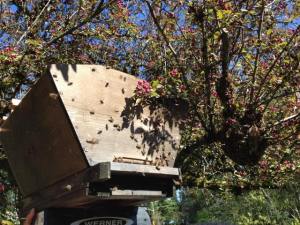
    SwarmProfile

    Decided to build beehives. Sun hives – wild swarming … a step away from conventional bee keeping … talking about stepping away from conventional bee keeping which is wild swarming. Conventional bee keeping means we prevent our bees from swarming.
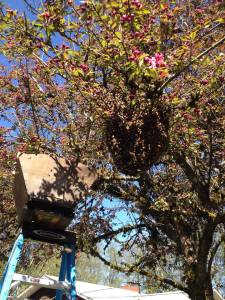
    SwarmInCrabAppleTree

    Natural swarming means ½ of the colony will leave with the old queen so we can have genetic diversity. If we catch wild swarms and trade them we are encouraging biodiversity and local native populations that will withstand winter better and will be stronger.

    Bees start to swarm in the spring… Earlier that you can get a swarm to keep in the box the better, because they will have time to build up storage for the winter.

    A swarm is a cluster (in the shape of a V or a football) on a branch – about 7-10 feet off the ground. This is about ½ of the colony, right before the new queen is about to hatch, the bees start pestering the old queen to leave and she takes about ½ the colony with her to find a new home. They have a better chance of surviving if we provide them one.

    When they are in the cluster they have gorged themselves to carry food to their new home, so they are not wanting to sting, plus the queen is emitting a pheromone so they are sort of in a “love zone.”

    Can shake them into a box, or use a net, be prepared they are going to be warm and heavy.

    Start fanning their wings that “we found a home!! we found a home!!” They will recognize a home. If it’s new they’ll think its dark and like a hollow of a log.

    Build sort of file boxes that have lids to them. Put a rectangular window and a screen, tape flaps so bees don’t get crushed, then cut a baby door on the bottom. After put the bees in the box and I have the lid on and they can get in and out. As long as the queen is off the branch and in the box, they are gonna be happy. Bees all go home after dark, and you can shut the door and then you can transport.

    If you have bees you can sit with them and learn their language and be able to recognize when they are ready to swarm.

    In Scotland bee keepers will put nets out so that they swarm right into the net.

    Paul Stamets, fungi man, famous for studying mushrooms is out in Olympic National Forest too.

    Compost ties in with bees because the Mycelium feeds the bees and its anti-viral sap from the mycelial roots, the bees drink the sap and it is anti-viral for them. So my compost hubs site have mycelium cubes which turns into compost for people to put in their gardens but it also feed the bees.

    CompostWithFood

    So a compost hub site allows me to transport compost mostly to community gardens mostly in community places, sometimes neighbors and community members will open yard and allow me to build compost bins around town. So I donate the compost to the community garden. People can pay me to bring compost to them. Eventually I might sell it. They can come pick it up and take it to their garden or pay me to bring it on my bicycle to them.

    I was researching the mules in Italy and found East side compost peddlers in Austin, TX … 100% bike powered composting so I found a guy in Portland OR, Tom’s cargo bikes ….

    Bike

    donated mountain bike, and Tom helped me put it together.
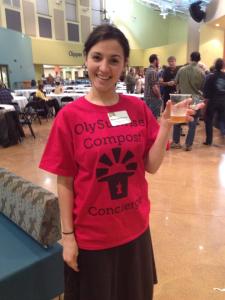
    HEather?

    Found customers by talking to people, found clients on Facebook, at local community gardens, got a website up.

    When people ask me why I want to do this, it’s because I want to show people what it looks like locally. We don’t need to have giant diesel trucks come by to grow food, so this is what it looks like, it’s this simple, it just takes doing. And eventually this could lead to job creation.

    Also pick up leaves, grass clippings, anything that will turn into compost. I can provide a 5 gallon bucket, I come around and collect the compost, I spray it with vinegar water, provide a new paper bag with the food coop’s logo stamped on it, and then they just put it out once a week and I come pick it up.
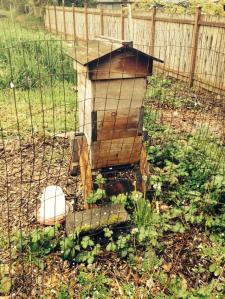
    BiodynamicHive

    Installing apiaries in town, going and catching bees,

    Lots of volunteers…

    In June going to ID, National Blue Grass Convention,

    Honey bees …

    Honey bees are what I work with right now and they are what I recognize. Not doing Bumble bees or mason bees etc. Mason bees are excellent pollinators but they don’t collect honey.

    Want people to not be afraid of swarms, and that we call the appropriate person to come get them. Look up local bee association or Facebook group and someone will want that swarm no doubt, you might even be able to sell it to them!

    Gaia bees.com

    Toward Saving the Honey Bee by Gunther Hawk

    Honeybee Democracy

    Keeping Bees with a Smile

    Connect with Heather at the Urban Evergreen Bee Sanctuary or on Facebook and Twitter

    OGPFinalLogo

    Thanks for visiting Mike’s Green Garden. If you like what you heard on the Organic Gardener Podcast we’d love it if you’d give us a 5 star rating on iTunes so other gardeners can find us and listen to. Just click on the link here:

    https://itunes.apple.com/us/podcast/organic-gardener-podcast/id962887645

    If you have any comments, questions, guests you’d like to see, or topics you’d like us to cover please send us any feedback positive or negative. We’re here to serve our audience and we can only improve with your help!!! Thanks for visiting Mike’s Green Garden changing the world one garden at a time.


    This podcast uses the following third-party services for analysis:
    Spotify Ad Analytics - https://www.spotify.com/us/legal/ad-analytics-privacy-policy/

    Previous 1 17 18 19 20 21 30 Next

    Related Podcasts

    The Fine Homebuilding Podcast – Fine Homebuilding Magazine

    1

    The Fine Homebuilding Podcast – Fine Homebuilding Magazine Education
    The Money Pit Home Improvement Podcast

    2

    The Money Pit Home Improvement Podcast Education
    Gardenerd Tip of the Week

    3

    Gardenerd Tip of the Week Games & Hobbies
    Encyclopedia Botanica

    4

    Encyclopedia Botanica Arts
    kiwimana Buzz Beekeeping Show – A Beekeeping Podcast/Show

    5

    kiwimana Buzz Beekeeping Show – A Beekeeping Podcast/Show Games & Hobbies
    Small Farm Nation

    6

    Small Farm Nation Education
    footer-logo

    Contact Us

    Toll Free: 844-670-7747

    Links

    • Home
    • Top Charts
    • Networks
    • Apps
    • Independents Podcasts
    • Podcast Advertising
    • Podcast News
    • Contact Us
    • About Us
    • Analytics & Insights

    Stay Connected

      Privacy, Terms of Use & Our Code of Ethics Protecting Content Creators Copyrights