Our TOPPODCAST Picks
 Stay Connected
Insights for Results-Focused Leaders
- Home
- Top Charts
- Top Networks
- Top Apps
- Top Independents
- Top Podfluencers
- Top Picks
- Top Business Podcasts
- Top True Crime Podcasts
- Top Finance Podcasts
- Top Comedy Podcasts
- Top Music Podcasts
- Top Womens Podcasts
- Top Kids Podcasts
- Top Sports Podcasts
- Top News Podcasts
- Top Tech Podcasts
- Top Crypto Podcasts
- Top Entrepreneurial Podcasts
- Top Fantasy Sports Podcasts
- Top Political Podcasts
- Top Science Podcasts
- Top Self Help Podcasts
- Top Sports Betting Podcasts
- Top Stocks Podcasts
- Podcast News
- About Us
- Podcast Advertising
- Contact


 Addressing the nation’s — and the world’s — biggest challenges will require learning and doing what works. A powerful tool for doing that is the randomized evaluation, also known as a randomized control trial (RCT). It is a tool that is increasingly being used in the U.S. and around the world. Well-designed and well-implemented RCTs can provide strong evidence about what works — not only whether a program works or not, but also which strategies within a program or policy work best.
 The
 Allegheny County, which includes Pittsburgh, is

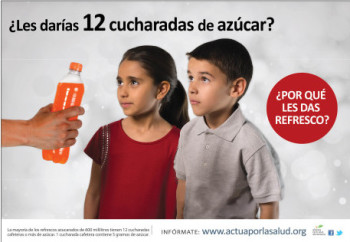
 Can a tax on sugary drinks reduce consumption and therefore fight obesity? The nation of Mexico, which has similarly high rates of obesity as the United States, is putting that question to the test. In 2013, Mexican lawmakers passed an excise tax on sugary drinks of 1 peso (about 8 cents) per liter, which is about a 10 percent tax. It also passed a tax on junk food.
 How can schools use low-cost solutions to help children make healthier food choices?
 Mexico consumes a lot of soda and its soda industry (particularly Coca-Cola) is very powerful. Even so, in 2013, Mexico’s congress was able to successfully pass a nationwide one-peso-per-litre (about 10%) tax on sugary drinks, over the opposition of the soda industry. How did it happen?
 of the Solutions Journalism Network.
 The Annie E. Casey Foundation, through its juvenile justice
 Increasing the graduation rates at community colleges is an important national challenge. Nationally, less than 40 percent of community college students attain a degree or certificate — and students who come to campus underprepared for college-level work (those needing developmental or remedial classes) have graduation rates below 30 percent.
 To